-
-
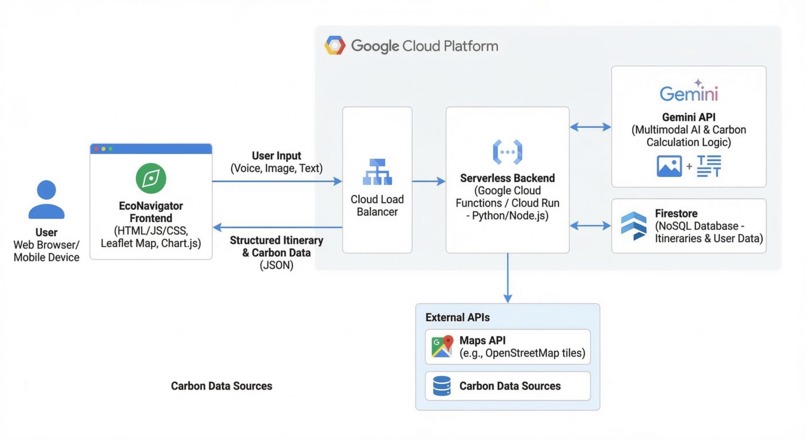
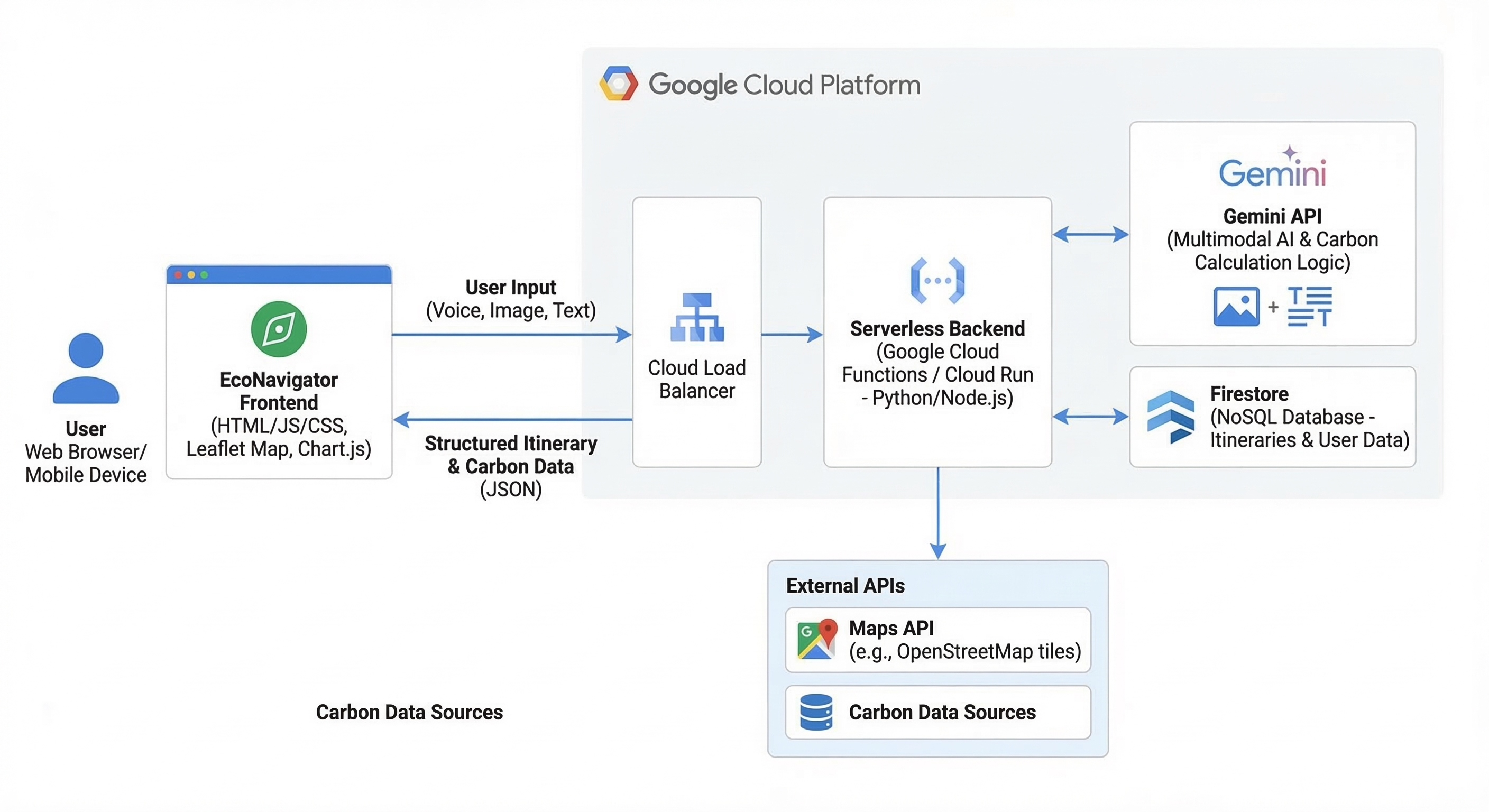
Architecture Diagram of EcoNavigator
-
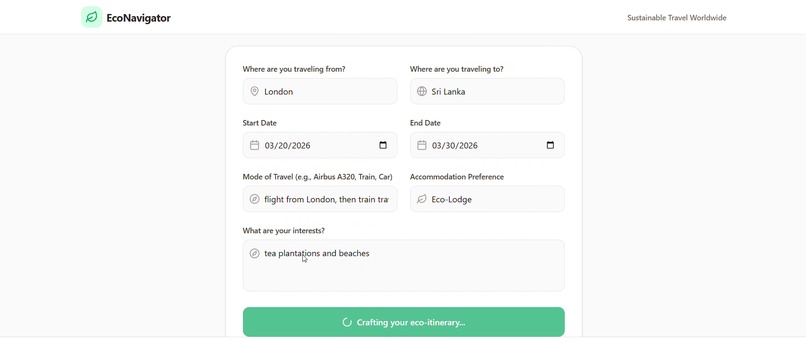
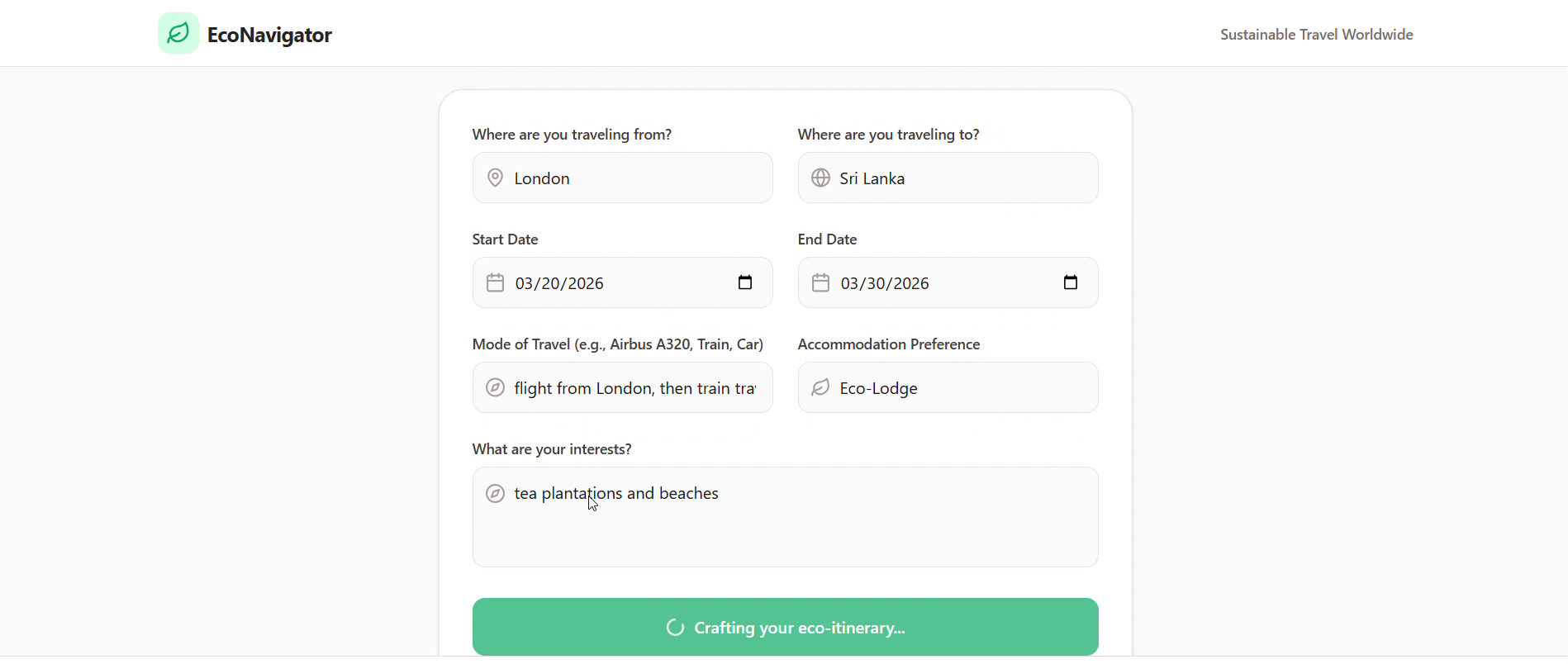
App Home
-

Talk to navigator
-
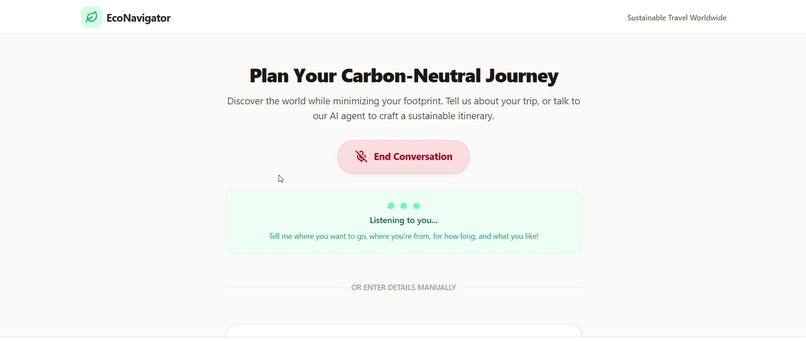
Speaking with Navigator
-
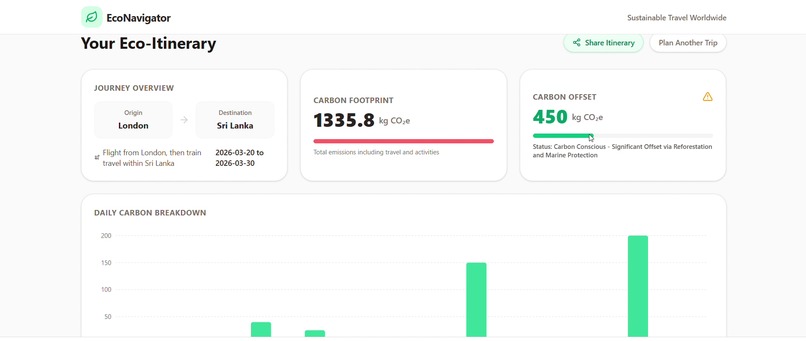
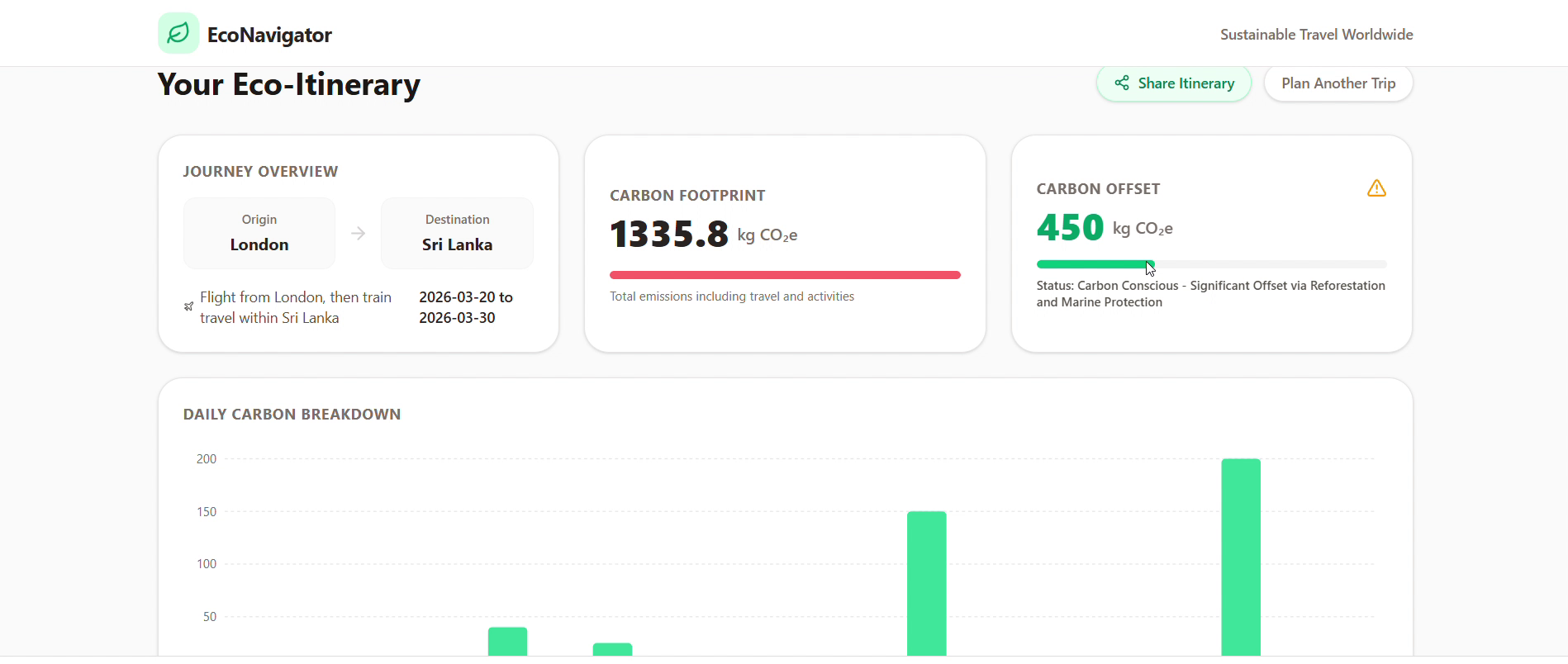
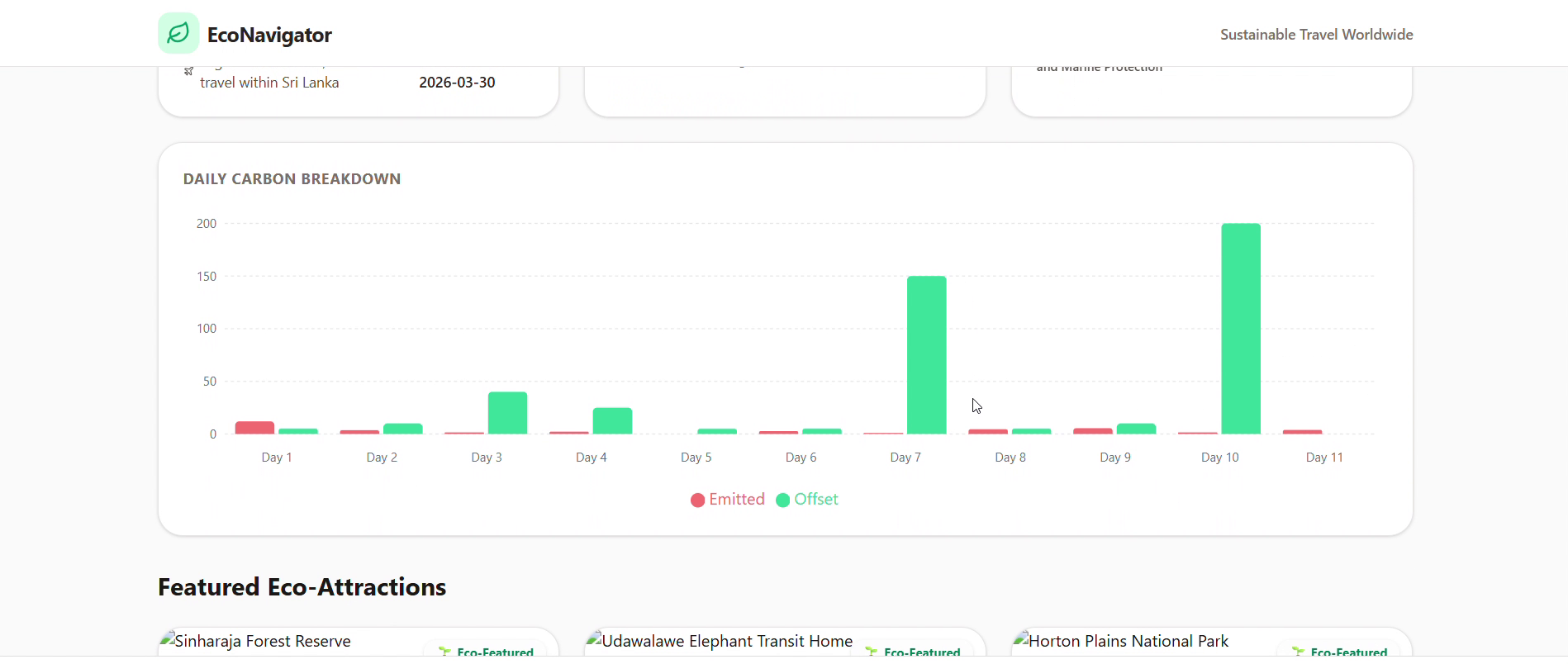
Trip Carbon Stats
-
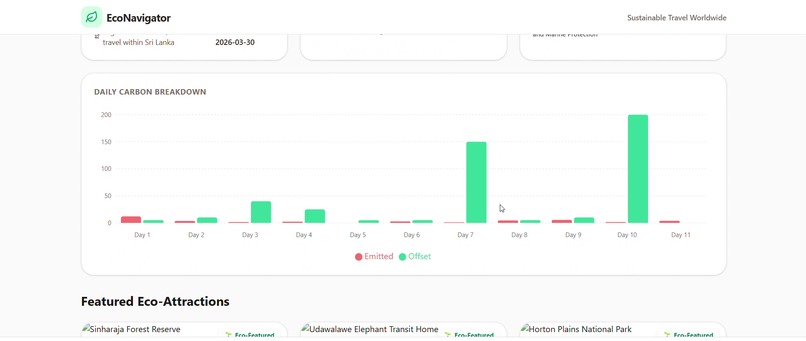
Daily offset
-
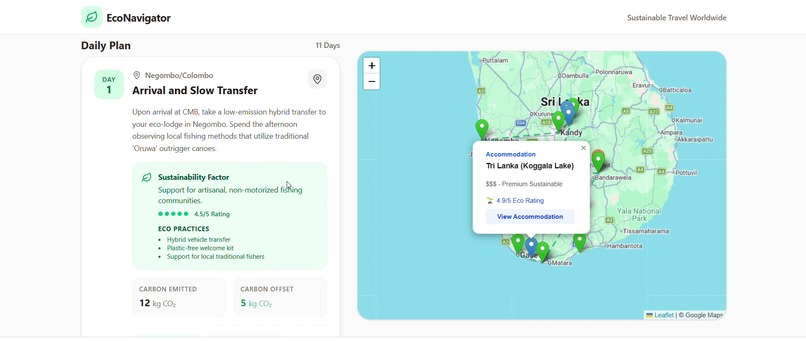
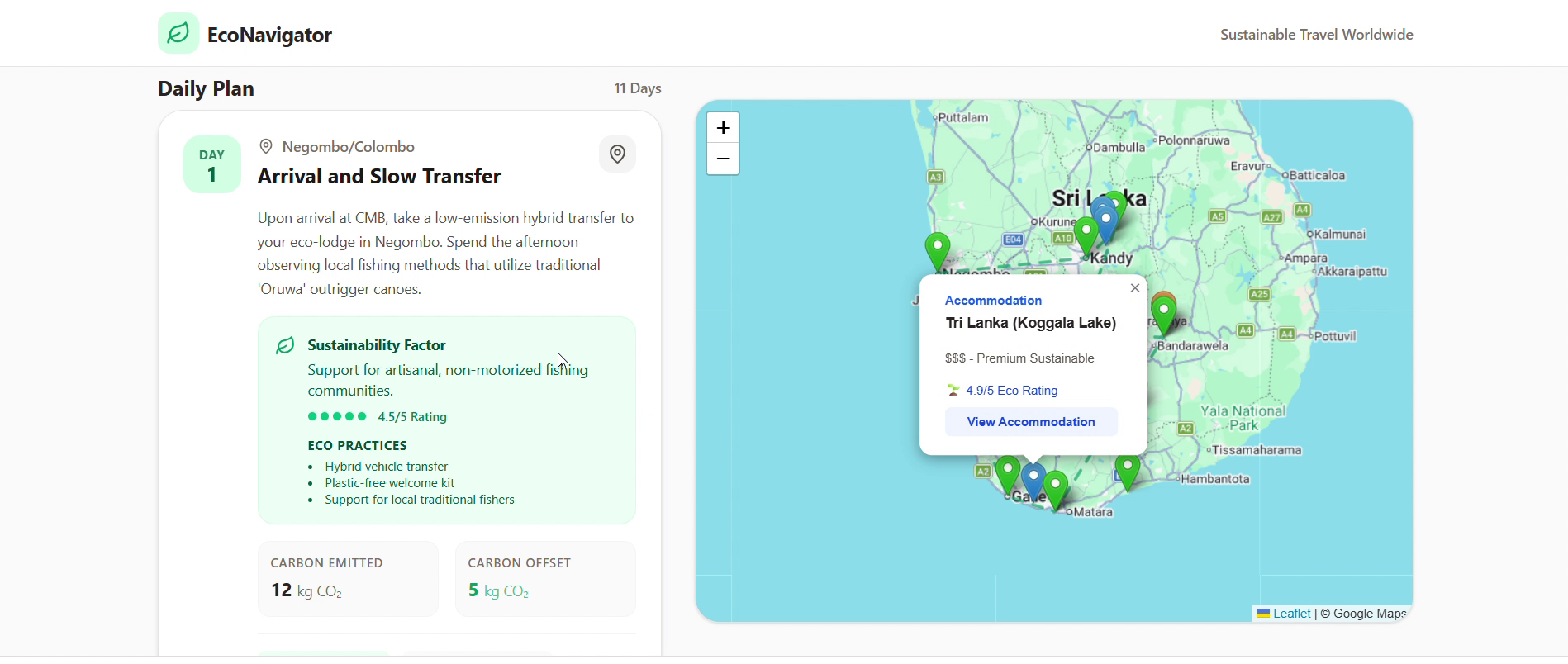
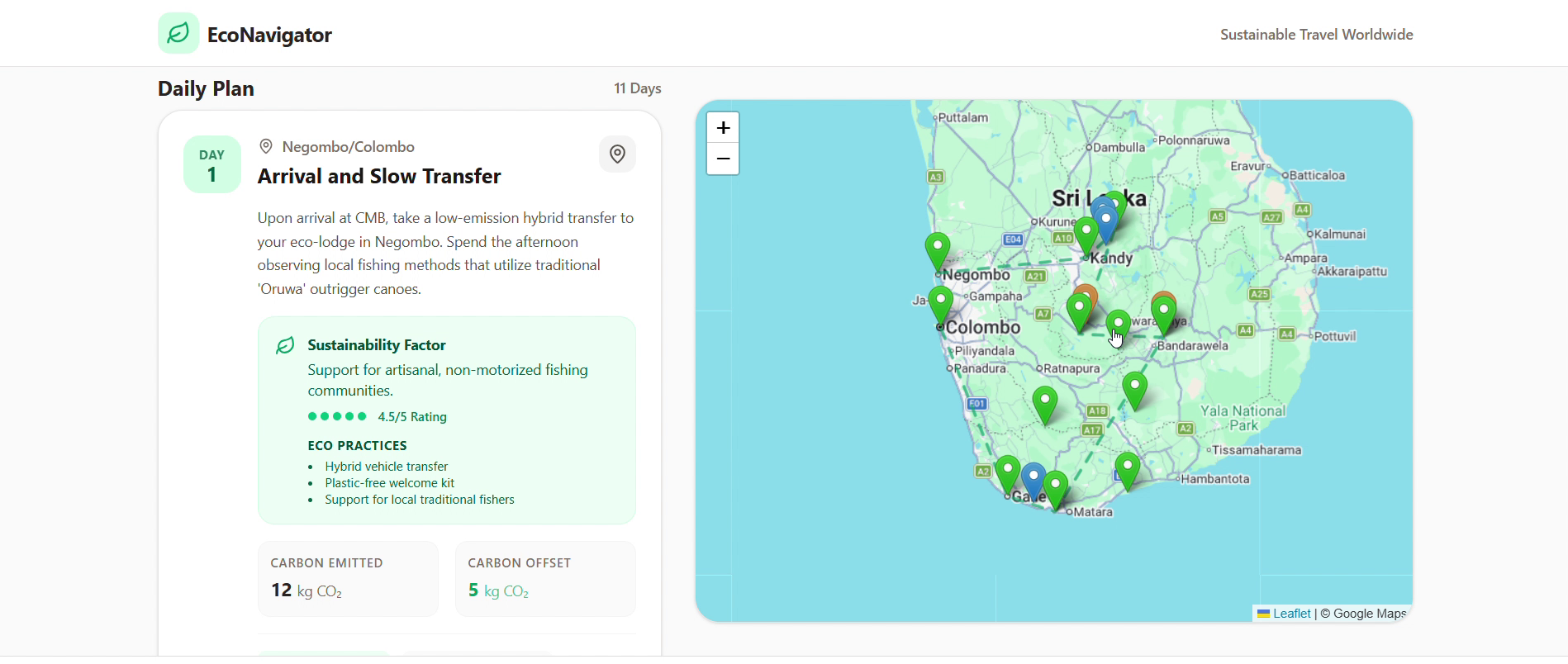
Itinerary Map Function
-
-
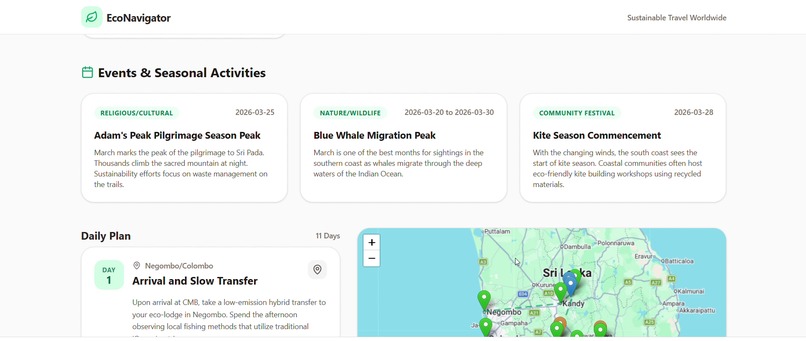
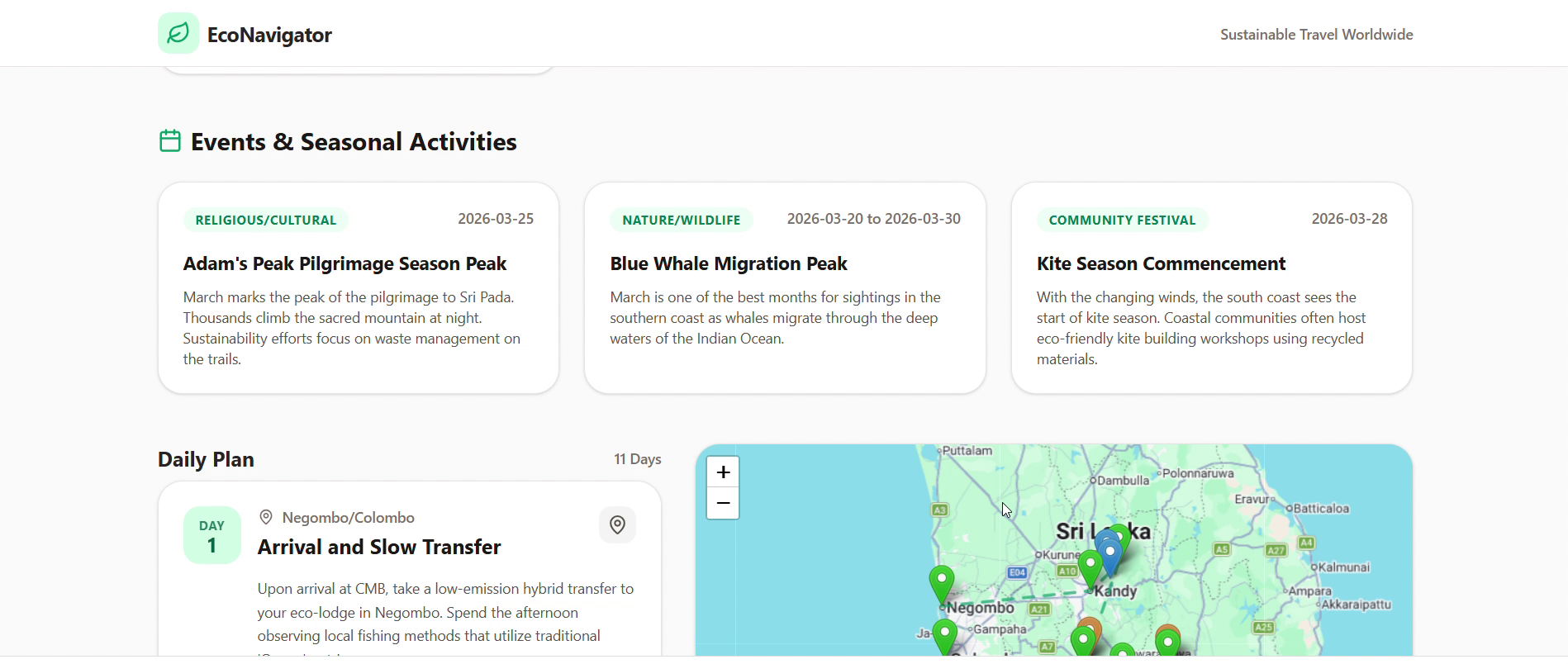
Seasonal Events
-
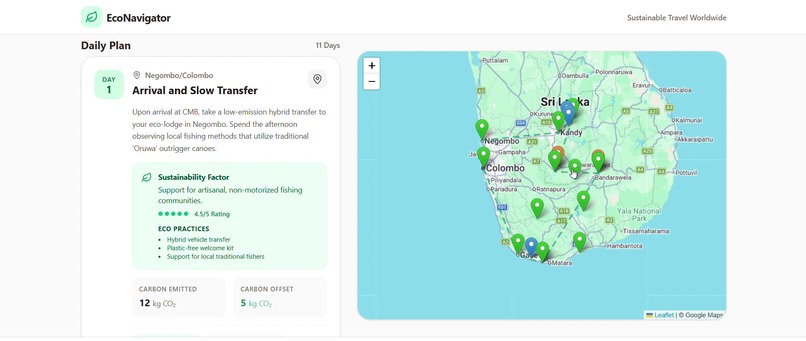
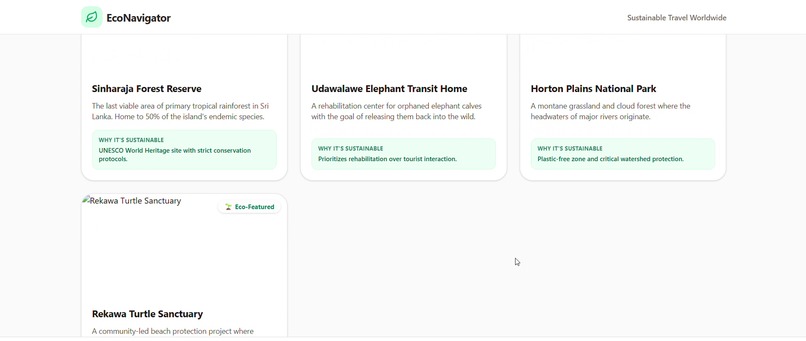
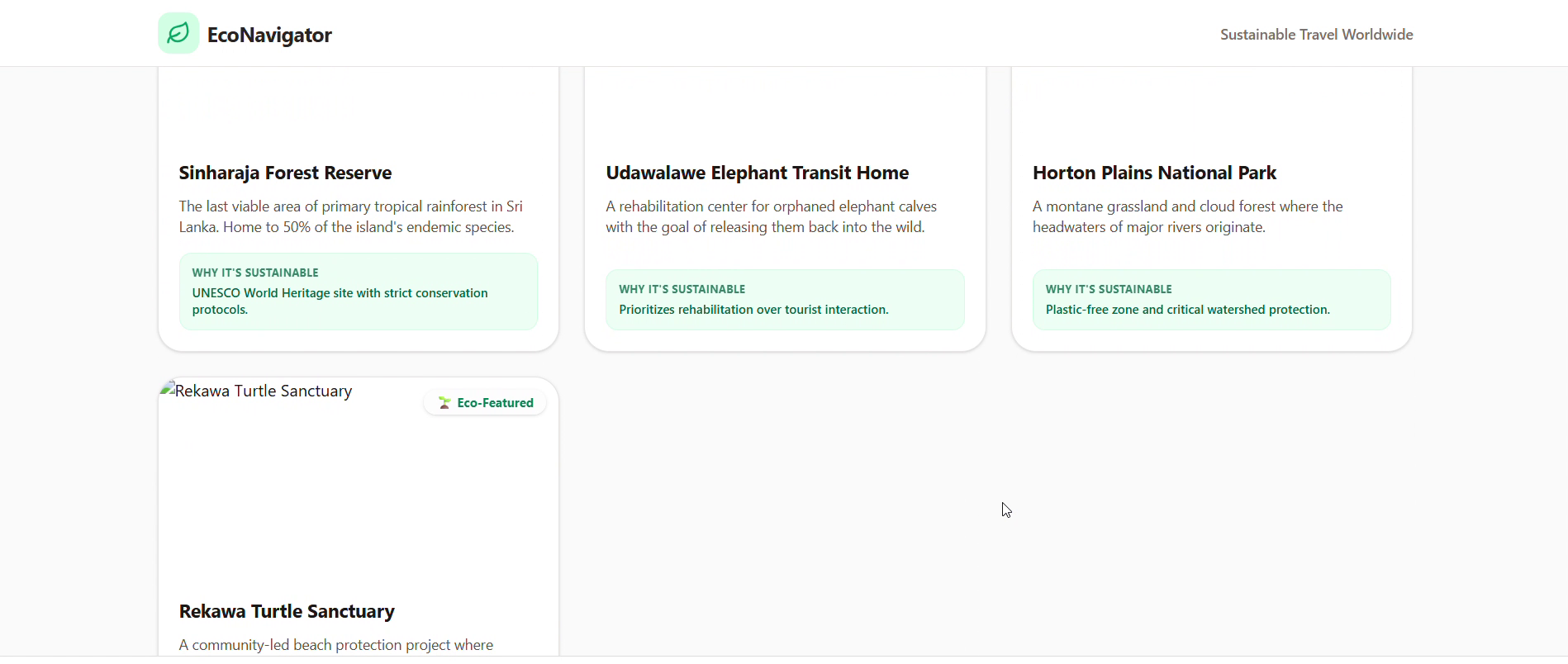
Sustainable activity card
-

Card links take you to observe the activity.



Inspiration
The seeds for EcoNavigator were planted during the intensive research for my MSc in IT and Strategic Innovation dissertation. While the academic data highlighted the severe ecological impact of global travel, data alone rarely changes hearts. The true spark for this project came from a much more personal place: two of my beloved former teachers.
They shared a profoundly moving TED Talk with me featuring Tshering Tobgay, the former Prime Minister of Bhutan. Hearing him speak with such warmth and conviction about his country not just being carbon-neutral, but officially carbon-negative, fundamentally shifted my perspective. It was a revelation. I realized that tourism doesn't have to be a necessary evil or a burden on our environment; when guided correctly, it can be the very mechanism that heals it. I wanted to build a bridge between that beautiful Bhutanese ethos and everyday travelers, empowering them to explore the world—starting with the breathtaking landscapes of Sri Lanka—while actively leaving it better than they found it.
What it does
EcoNavigator is a proactive, multimodal AI travel companion that transforms passive tourists into active climate contributors.
Instead of forcing users through rigid, stressful booking forms, EcoNavigator lets them plan their journey naturally. A traveler can simply upload a picture of their flight ticket or use their voice to describe their travel plans. The agent instantly calculates the baseline carbon footprint of their arrival and generates a beautiful, interactive itinerary map.
But it doesn't stop at visualization. EcoNavigator dynamically suggests local, high-impact sustainable activities—like riding the scenic train to Kandy instead of driving, or participating in coastal mangrove restorations. Users can converse with the agent to swap activities on the fly, watching the dashboard instantly update to reflect how their eco-friendly choices are neutralizing their carbon footprint.
How we built it
We embraced a rapid, continuous improvement workflow, heavily utilizing Google AI Studio to prototype the multimodal agent's brain.
The core logic is powered by the Gemini 1.5 Pro model. We engineered precise system instructions that allow Gemini to process images (like tickets), understand voice intents, and output structured JSON data. This data is then seamlessly fed into a modern, responsive frontend built with Tailwind CSS, Leaflet.js for the interactive mapping, and Chart.js for the dynamic data visualization.
At the heart of the agent's logic is a continuous evaluation of the user's environmental impact, which can be expressed through the following carbon balancing model:
Net Carbon = Σ (E × d) − Σ (O)
Where:
- E represents the Emissions factor of a specific travel activity.
- d represents the distance or duration of that activity.
- O represents the quantified carbon Offset of a sustainable choice.
By using Gemini's function calling, the application recalculates this mathematical balance in real-time every time the user interacts with the map, ensuring the UI always reflects their true environmental impact.
Challenges we ran into
One of the most significant hurdles was moving away from a traditional "chat" interface into a truly agentic UI. Ensuring that the Gemini model consistently returned strictly formatted JSON—rather than conversational text—was a challenge. If the JSON structure broke, the map would fail to render.
Additionally, calculating accurate carbon offsets for hyper-local activities required careful prompt tuning. We had to ensure the AI agent didn't just invent sustainability metrics, but grounded its suggestions in realistic, scientifically sound estimates that the user could trust.
Accomplishments that we're proud of
We are incredibly proud of the seamless, multimodal user experience. Seeing the map instantly redraw itself and the carbon charts balance out simply because a user spoke to the AI is a magical feeling.
We successfully took a highly complex, often guilt-inducing topic—climate change and carbon footprints—and turned it into an engaging, empowering, and visually beautiful storytelling experience. We built an AI that doesn't just process data, but actively advocates for the Earth.
What we learned
We learned the profound power of multimodal AI as an empathy engine. By combining vision, voice, and dynamic UI generation, we discovered that users are far more willing to make sustainable choices when the alternatives are presented to them visually and frictionlessly. Technically, mastering Gemini's structured output and function calling opened our eyes to how AI can transcend the text box and become a true software navigator.
What's next for EcoNavigator, For Sustainable Travel
This prototype is just the beginning of the journey. Our immediate next step is to integrate real-time booking APIs, allowing users to instantly reserve the sustainable hotels and eco-tours the agent suggests.
Furthermore, we plan to expand the agent's localized knowledge base beyond Sri Lanka, partnering with certified eco-tourism boards globally. Ultimately, we envision EcoNavigator as a standard integration for major travel platforms—a quiet, powerful digital ninja ensuring that every journey taken helps to heal the world.
Built With
- api
- docker
- gcp
- gemini
- live-agent
- maps
- tailwind
- typescript
- web-scrape


Log in or sign up for Devpost to join the conversation.