-
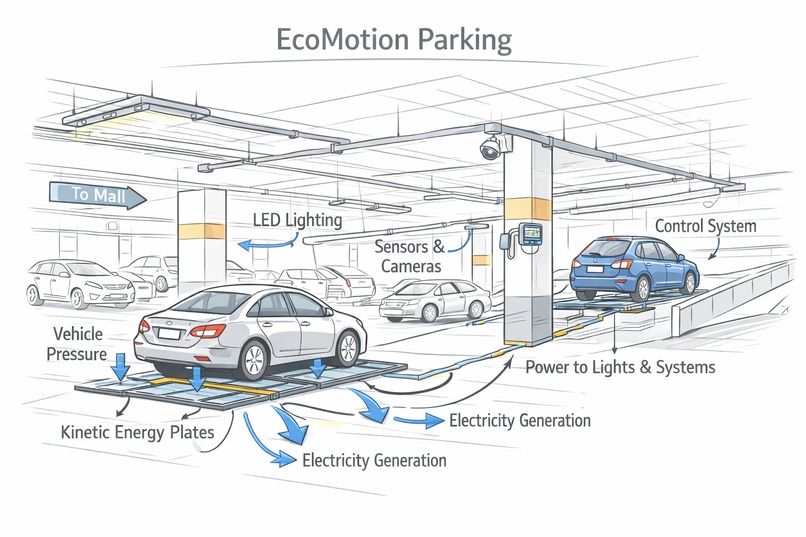
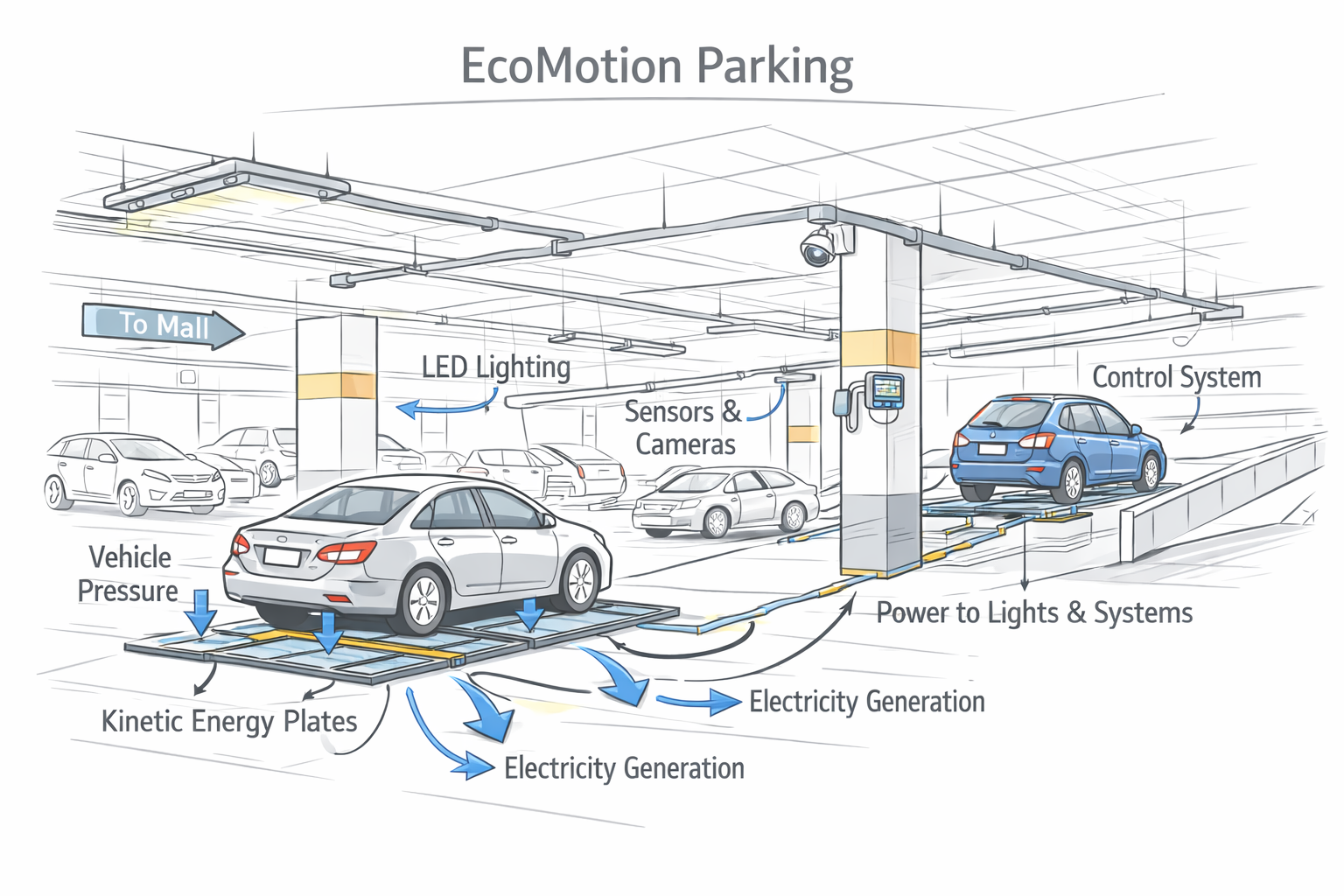
Principle applied in the project. (AI for an easier understanding of the concept)
-
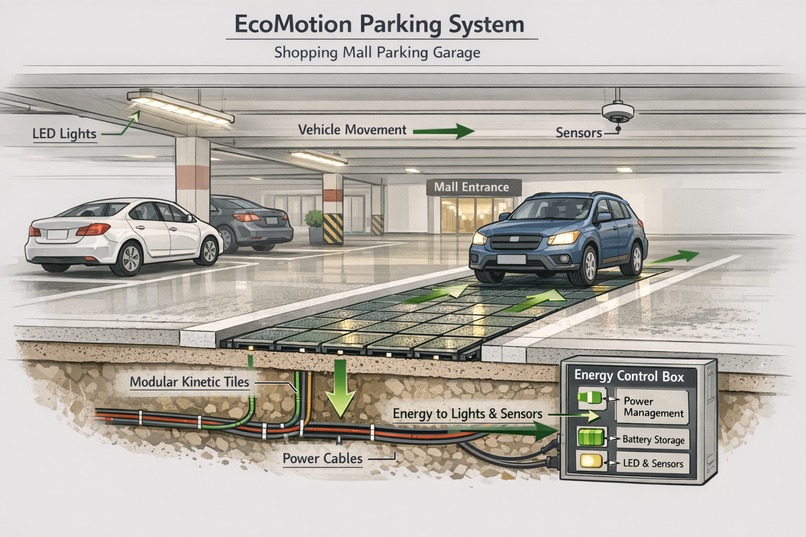
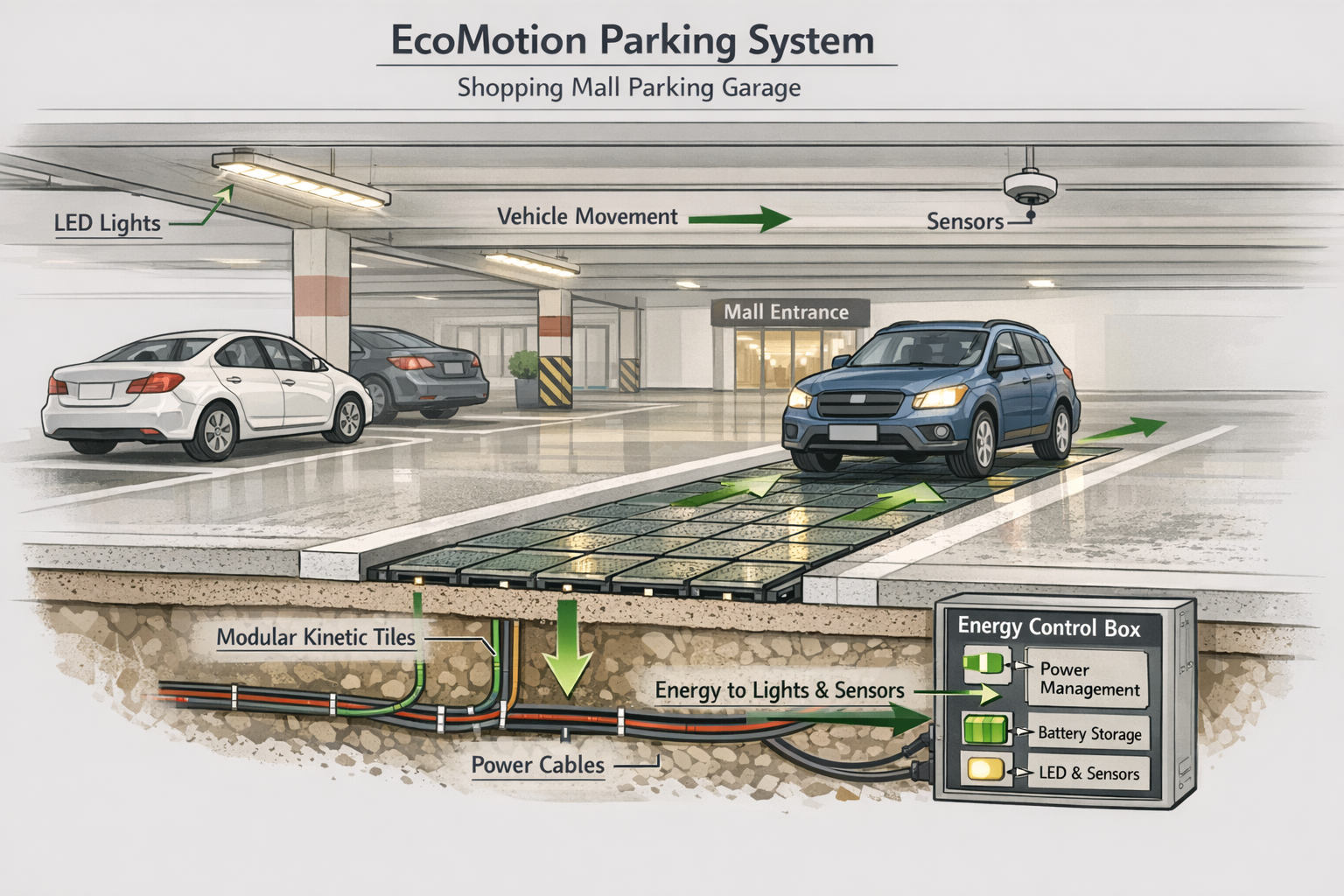
Another example to demonstrate the principle applied to the project. (AI for an easier understanding of the concept)
Inspiration
Large car parking facilities continuously consume energy for lighting, access control, and monitoring, while thousands of vehicles pass through them every day without any energy being recovered. Inspired by the thesis that movement and weight — already present — could become a local energy resource instead of being wasted, the EcoMotion Parking project was born.
What it does
It converts the movement and weight of vehicles in large-scale parking lots into electrical energy. Discrete kinetic modules installed at strategic points such as spots, braking zones, and barriers generate energy used locally to power lighting, sensors, and parking systems.
How we built it
A modular energy harvesting system based on controlled micro-deformations caused by vehicles. The concept combines kinetic energy generation with local energy storage and a monitoring layer that tracks production and consumption in real time.
Challenges we ran into
The main challenges were balancing durability with energy efficiency, selecting realistic deployment points, and avoiding overpromising energy output. We focused on a realistic scope: powering local systems rather than full energy autonomy.
Accomplishments that we're proud of
We take pride in having developed a clear and coherent concept, based on real-world constraints. Throughout the project, the idea was continuously updated with the aim of focusing on a realistic yet innovative case study.
What we learned
Realistic innovation arises from combining the right technology with the right environment. Weight, repetition, and controlled movement are far more valuable than speed when harvesting kinetic energy in urban infrastructure.
What's next for EcoMotion Parking
The next steps include moving forward in the competition with the main goal of seeing our project become increasingly refined and come closer and closer to reality.
Built With
- infrastructure-design
- physical-principles
- research


Log in or sign up for Devpost to join the conversation.