-
-
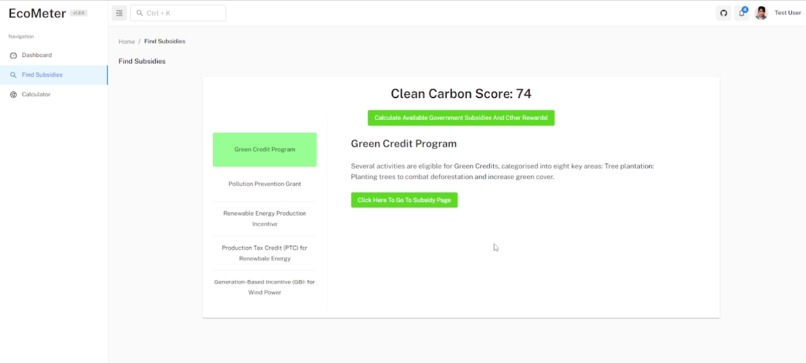
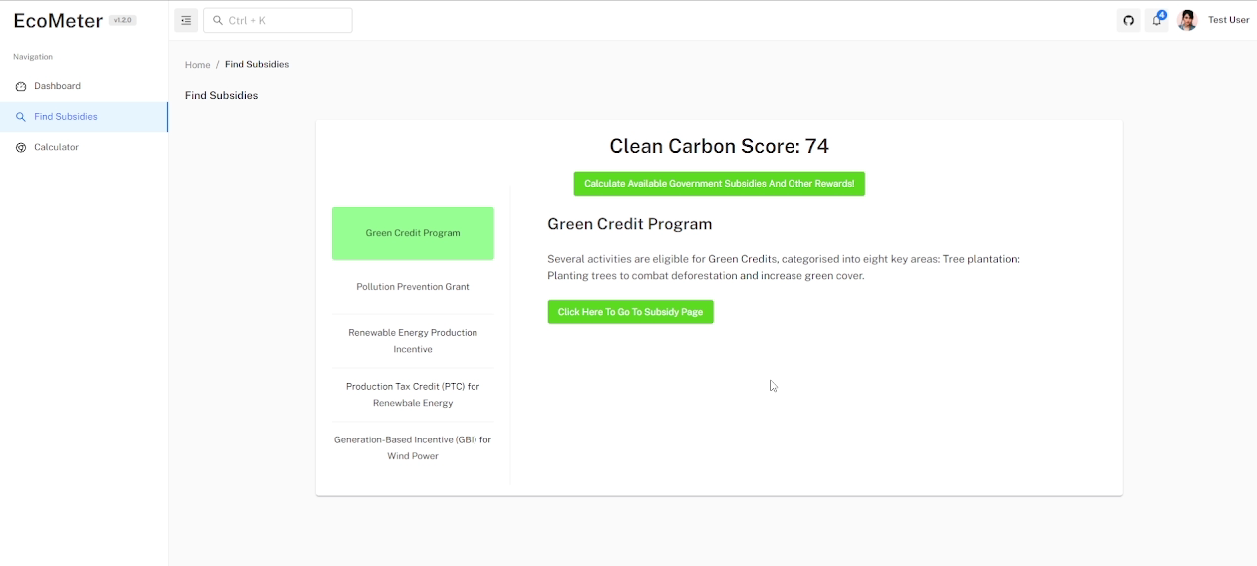
Subsidy Finder
-
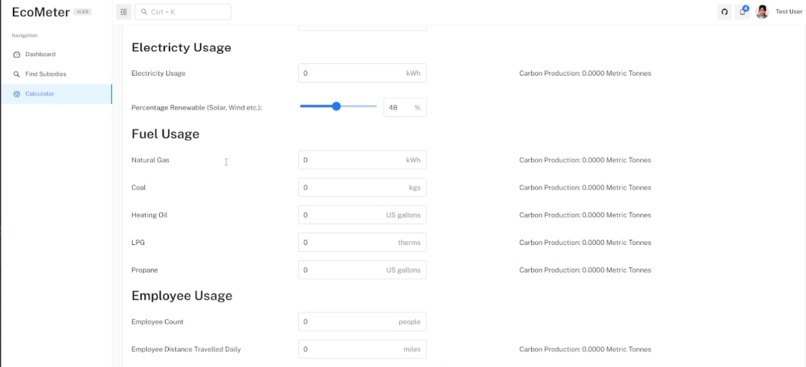
Carbon Footprint Calculator
-
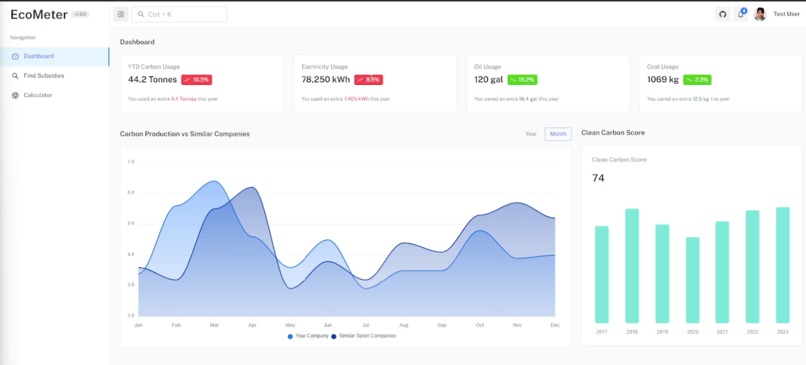
Dashboard
Inspiration
Research shows that the industrial sector is a significant contributor to carbon emissions. In the EU, industrial processes alone account for 2.7% of total GHG emissions, while industrial sectors accounted for 59% of total EU greenhouse gas emissions in 2021. In the US, the industrial sector accounted for 30% of total greenhouse gas emissions in 2022.
In light of the escalating global concern over climate change, the imperative to mitigate carbon emissions has never been more critical. While larger corporations have often been subject to regulations mandating disclosure of their carbon footprint, the focus is gradually shifting towards small and medium businesses (SMBs) which collectively comprise around 90% of global enterprises. Recognizing the disproportionate carbon output of smaller businesses per unit of production, primarily due to the lack of economies of scale, enjoyed by their larger counterparts, it becomes evident that addressing their emissions is pivotal in the fight against climate change.
My App EcoMeter is fueled by a passion for environmental sustainability and a recognition of the pressing need to combat climate change. EcoMeter empowers SMBs to effortlessly calculate their carbon footprints, enabling them to meet regulatory standards, unlock financial subsidies, and enhance their market competitiveness.
Inspired by the lack of accessible tools for small scale companies to measure and reduce their carbon footprints, I embarked on a journey to create a solution that addresses this critical issue. Drawing insights from existing carbon footprint calculators and academic research, I developed a comprehensive tool to quantify carbon emissions for small businesses.
I was motivated to explore avenues for incentivizing sustainable practices within organisations. By integrating with national and international awards and subsidies, my project offers a seamless way for organisations to assess their eligibility for recognition and support. The project also aims to facilitate practical steps towards carbon reduction by establishing connections with external organizations dedicated to environmental conservation.
In essence, my project embodies a commitment to leveraging technology for positive environmental impact, empowering organisations to take meaningful action towards reducing their carbon footprints and contributing to a more sustainable future.
What it does
EcoMeter empowers SMBs to effortlessly calculate their carbon footprints, enabling them to meet regulatory standards, unlock financial subsidies, and enhance their market competitiveness.
EcoMeter has multiple uses for customers
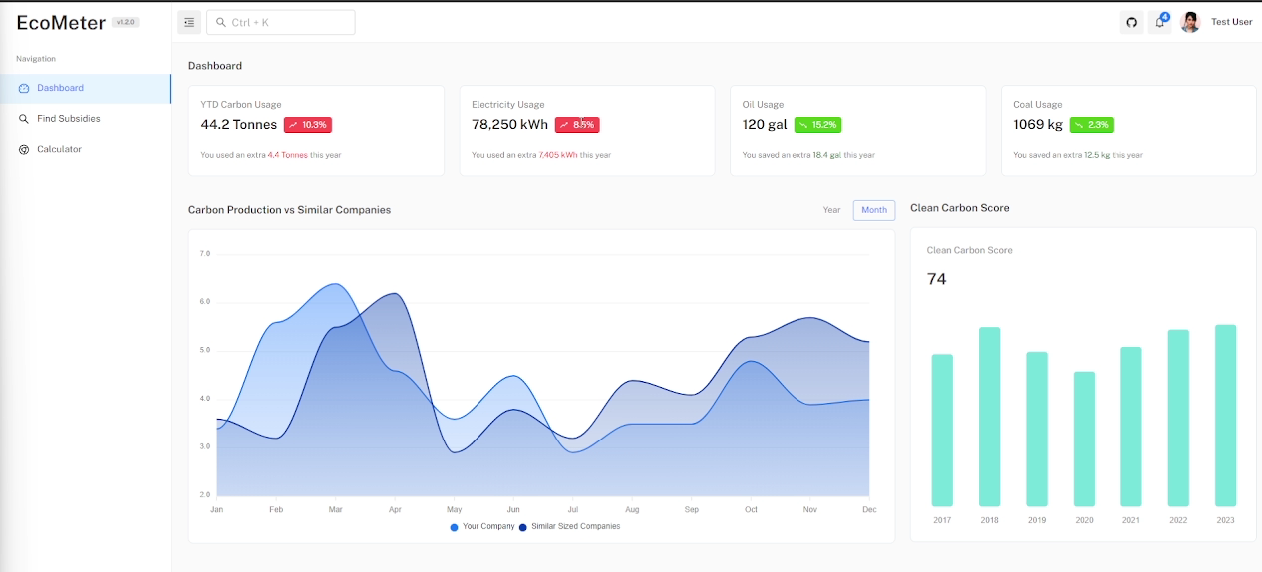
1] It provides a cost effective solution specially for SMBs to track their carbon footprint. 2] Provides customers with a way to take control of their Carbon usage - as they can effectively visualise their usage they can identify areas where they can improve to decrease their carbon footprint. 3] Provides customers with relative insight about how they are doing relative to companies of their own size so they can take actions accordingly . 4] Provides customers with capital savings and gains by connecting them to different matchable subsidies and awards.
How we built it
To create EcoMeter, I utilized several technologies and frameworks to ensure a smooth user experience and efficient data management.
Frontend Development with React: We chose React for the frontend development of EcoMeter due to its dynamic rendering capabilities and ease of use. React's component-based architecture allowed us to create reusable UI elements, making the development process more efficient. Additionally, React's virtual DOM implementation helped optimize rendering performance, ensuring a seamless user experience.
Material UI for Aesthetic Design: For the aesthetic design of EcoMeter, we incorporated Material UI components. Material UI provides a library of pre-designed components and styles inspired by Google's Material Design principles. By leveraging Material UI, we were able to create a visually appealing and user-friendly interface for EcoMeter while maintaining consistency and coherence in design elements.
Backend Data Management: Currently, EcoMeter's data is stored in a local database on the backend. We chose this approach initially for its simplicity and ease of implementation during the development phase. However, as EcoMeter scales and grows, we plan to upgrade to a cloud database solution like MongoDB. Cloud databases offer scalability, flexibility, and reliability, allowing EcoMeter to handle large volumes of data efficiently while ensuring data integrity and accessibility from anywhere.
By combining the frontend capabilities of React with the aesthetic design features of Material UI and implementing efficient data management strategies, we were able to develop EcoMeter as a comprehensive solution for SMBs to calculate their carbon footprints and take proactive steps towards environmental sustainability.
Challenges we ran into
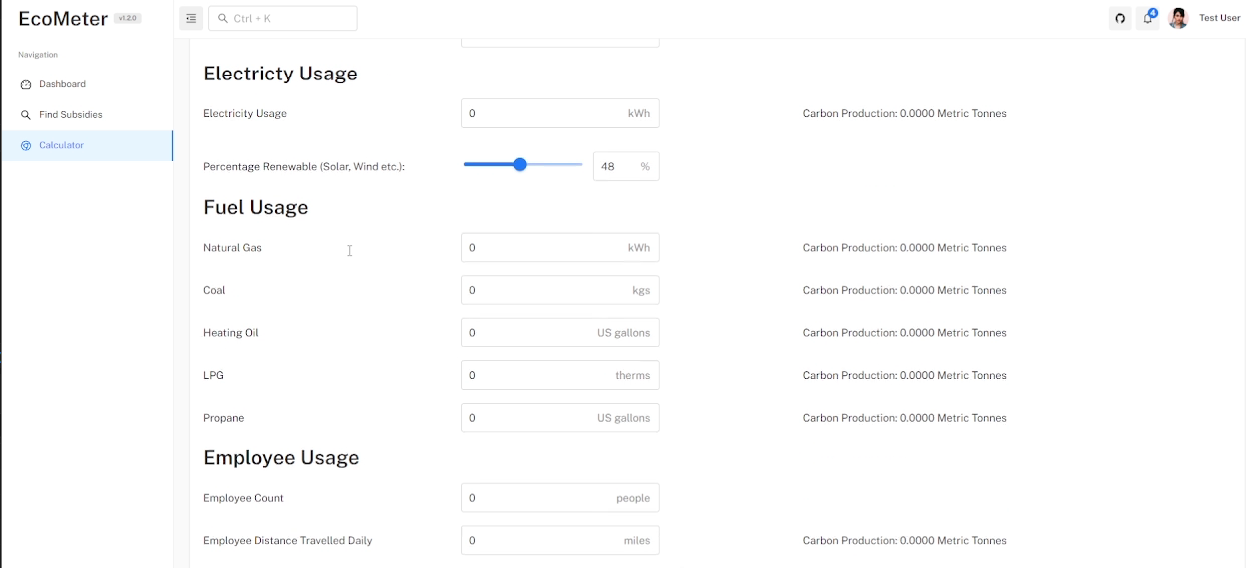
Measuring Carbon Production: Each industry has a lot of different ways they produce carbon. This made it very difficult for me to find a subset of information that the user could provide to get a good indicator of how much carbon they produced. I settled on focusing on the few major primary sources of carbon production - the burning of fossil fuels like oil, gas, coal and propane, and some secondary and tertiary sources like electricity and carbon produced due to employee travel.
The differences in methodologies employed by companies in calculating carbon footprint made a significant difference in the final numbers. These inconsistencies inhibit consumers from being able to compare and contrast corporate emissions and progress towards climate goals. I had to try and find a simpler way to calculate the carbon footprint which gave comparable results.
Accomplishments that we're proud of
I am a solo participant from India. Even under these constraints, I successfully built a large skeleton of the entire app idea that I had ideated. I provided most of the features that I wanted to, and ensured that my app was usable.
Throughout this project, I spent a lot of time researching how carbon is produced by different industries, from direct production due to the burning of fuel, to indirect production due to the usage of nonrenewable electricity. This taught me a lot about how Carbon is produced and increased my knowledge and the impact of this problem. I also learned a lot about how different countries have different types of subsidies and how they all help make the Earth more green! I am happy that I could build a skeleton of a project that I am very proud of as i hope that in the future it will help make an impact on a global scale
What we learned
Participating in this hackathon provided me, a high school student, with invaluable insights into various aspects of environmental sustainability and climate change . Understanding Pollution and Greenhouse Gases: Through my research and project development, I gained a deeper understanding of the major sources of pollution and greenhouse gases. I learned about the different industries and activities that contribute to environmental degradation, including industrial processes, transportation, and energy production. Understanding the sources of pollution helped me appreciate the complexity of environmental challenges and the urgent need for solutions. Impact of Industries on the Environment: I delved into how specific industries contribute to pollution and environmental degradation. By analyzing data and researching industry practices, I uncovered the significant environmental footprint of various industries. Government and Private Sector Initiatives: Researching governmental and private sector initiatives to counter climate change provided me with insights into the diverse approaches and strategies being implemented worldwide. I learned about policy interventions, such as carbon pricing and emissions regulations, aimed at reducing greenhouse gas emissions. New Approaches to Data Analysis: Throughout the project, I experimented with new techniques and methodologies for data analysis and representation. From designing algorithms to calculate carbon footprints to visualizing data insights, I explored various tools and frameworks to effectively process and communicate information. This hands-on experience enhanced my analytical skills and broadened my understanding of data-driven decision-making in environmental sustainability.
What's next for EcoMeter
1] Award badges to certify if a user has a good Clean Carbon Score - this allows users to use these badges as PR, saving them a lot of money since a lot of the big companies use a lot of PR money to advertise their carbon usage, but now they can just show off this award that we will give them.
2] Reporting and Certification: Develop capabilities to help businesses prepare official reports on their carbon emissions for regulatory bodies or voluntary sustainability audits. This could also include features that help businesses achieve and maintain certifications like ISO 14001 (Environmental Management], etc.
3] Customised Reduction Strategies: Offer personalised advice and action plans tailored to specific industries or individual business needs. This could include integration with project management tools to help businesses implement and track sustainability initiatives.
4] Partnerships for Offset Projects: Connect businesses with carbon offset projects, allowing them to invest in environmental projects such as reforestation or renewable energy to balance out their carbon footprint. The app could facilitate the purchase of carbon credits directly.
5] Marketplace for Green Solutions: Create a marketplace within the app where businesses can find and procure environmentally friendly products and services, from green web hosting to eco-friendly packaging solutions.
6] IoT Integration: Streamline data-collection and increase accuracy of the data.
7] Make a Mobile Version

Log in or sign up for Devpost to join the conversation.