-
-
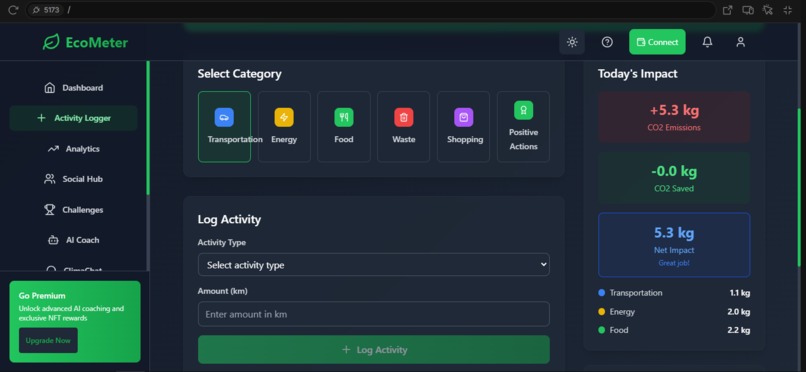
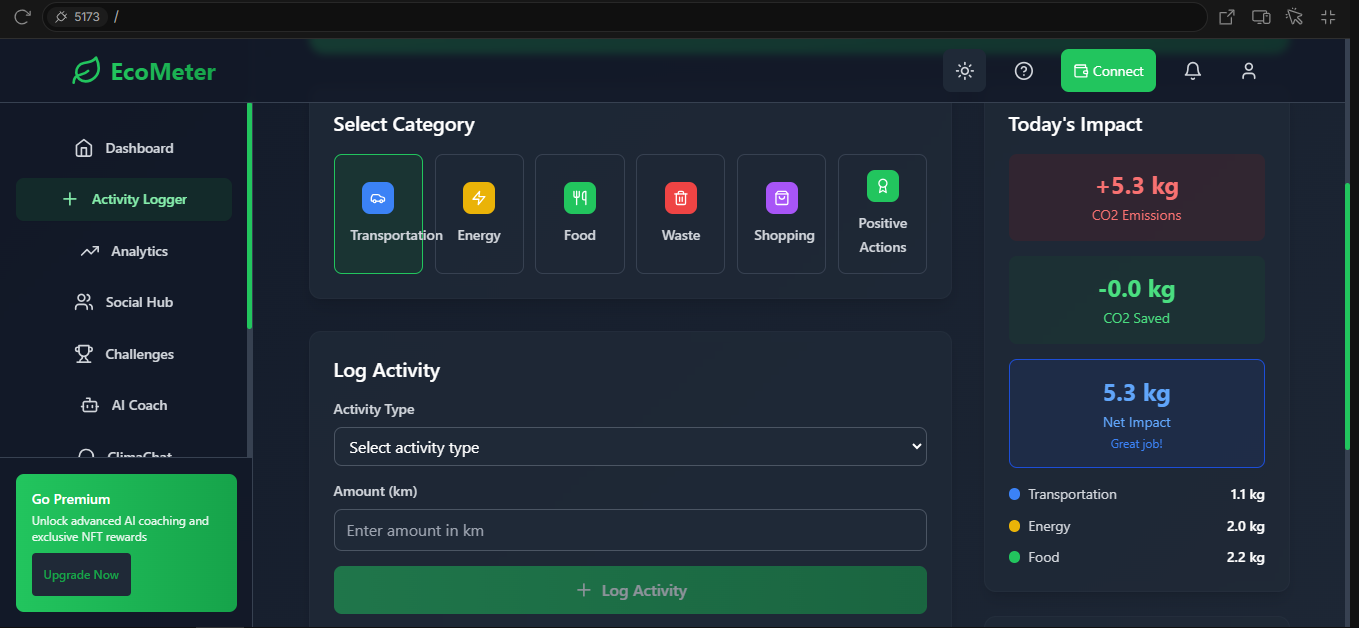
Activity Logger Page
-
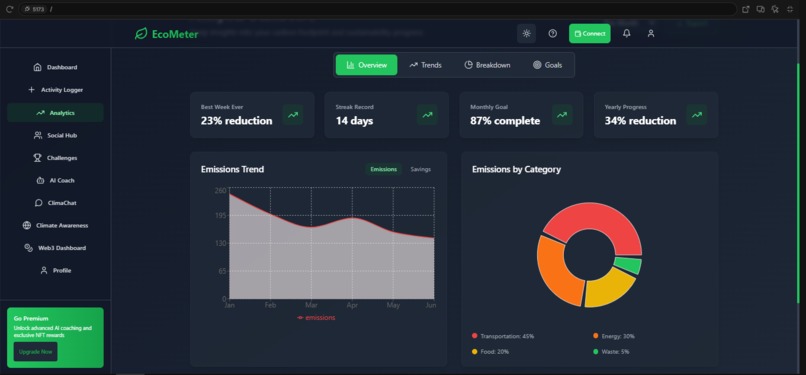
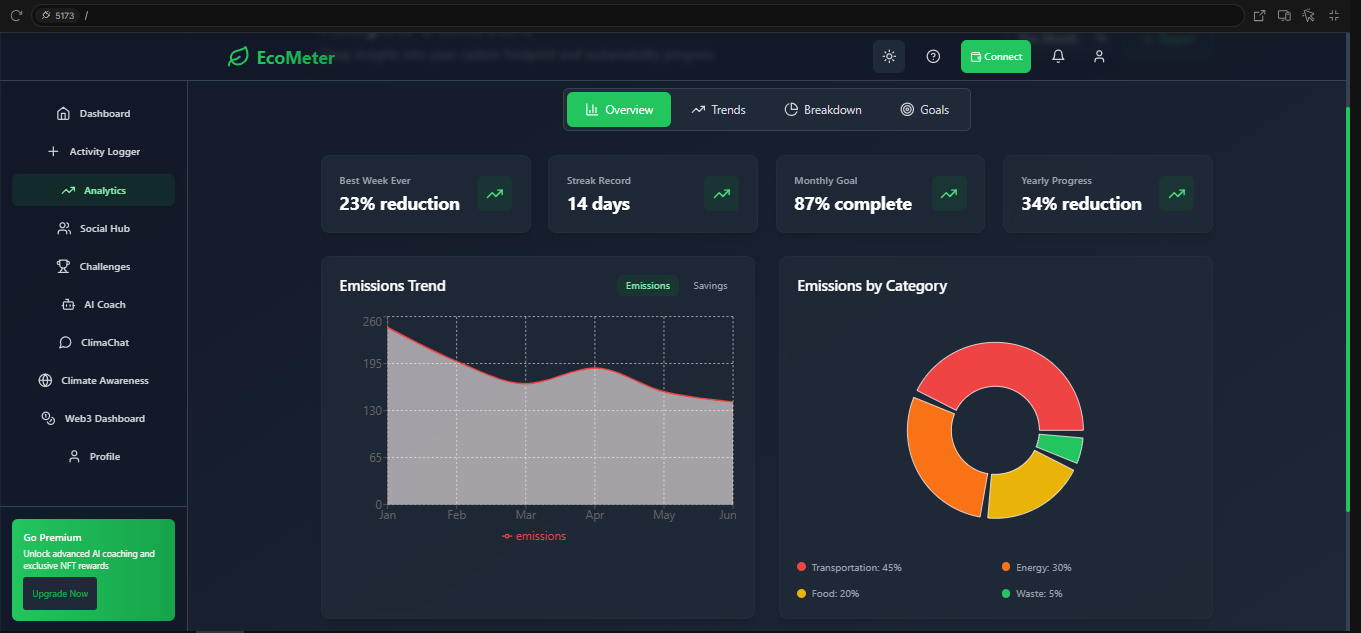
Analytics Page
-
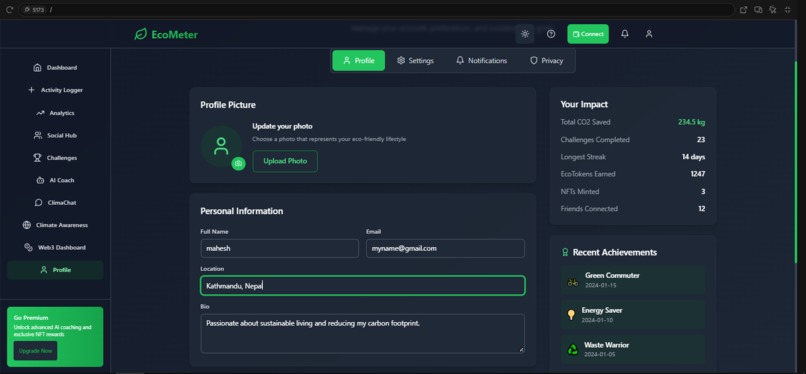
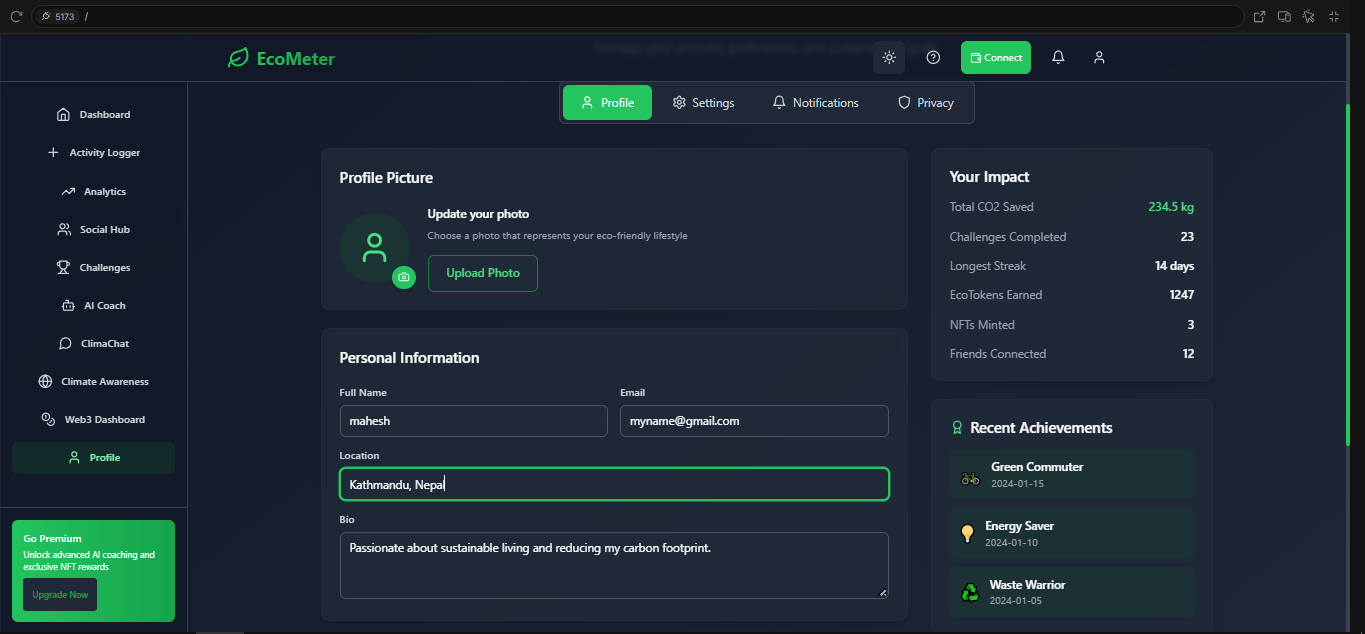
Profile Page
-
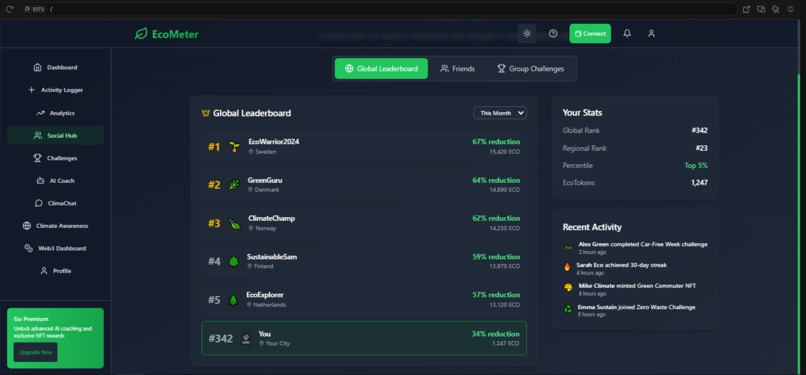
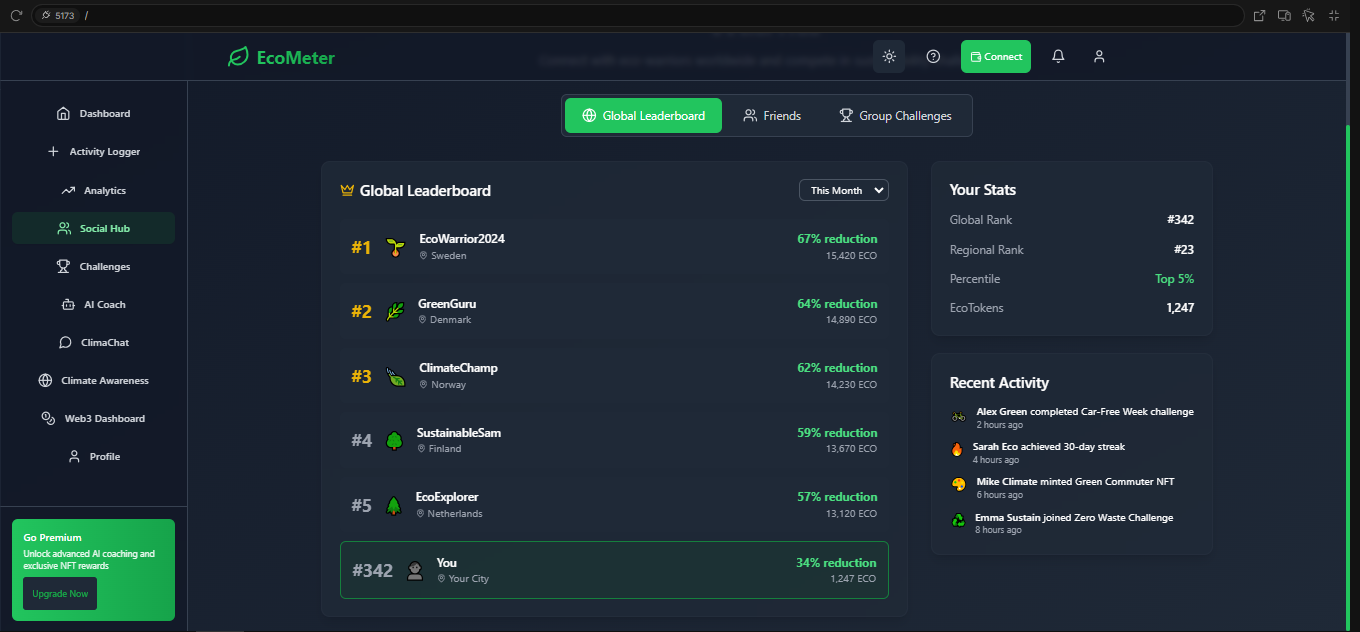
Social Hub Page
-
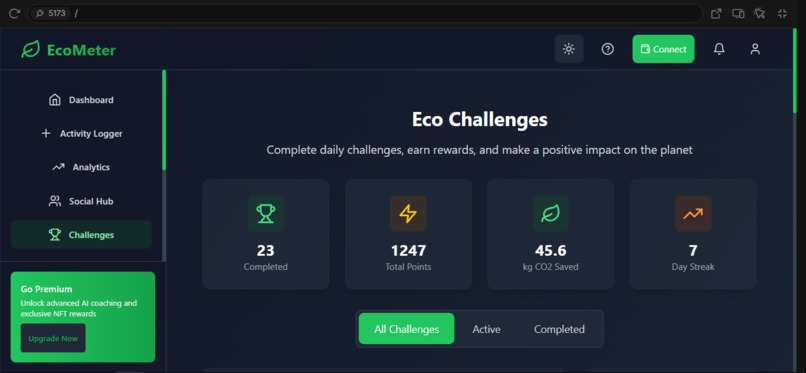
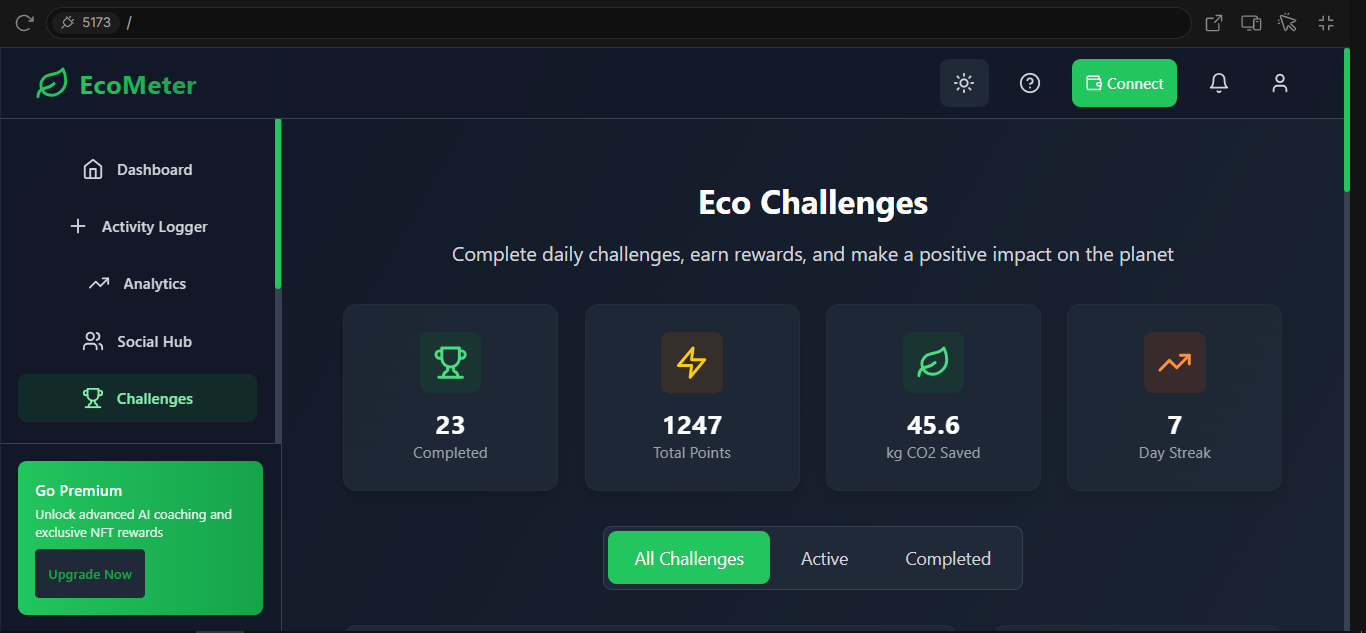
Challenges Page
-
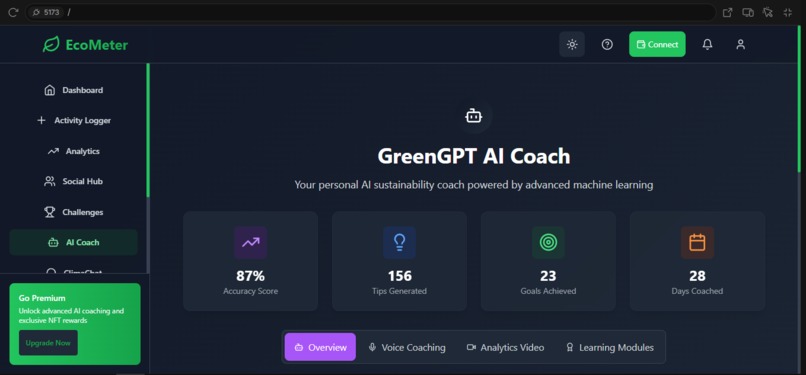
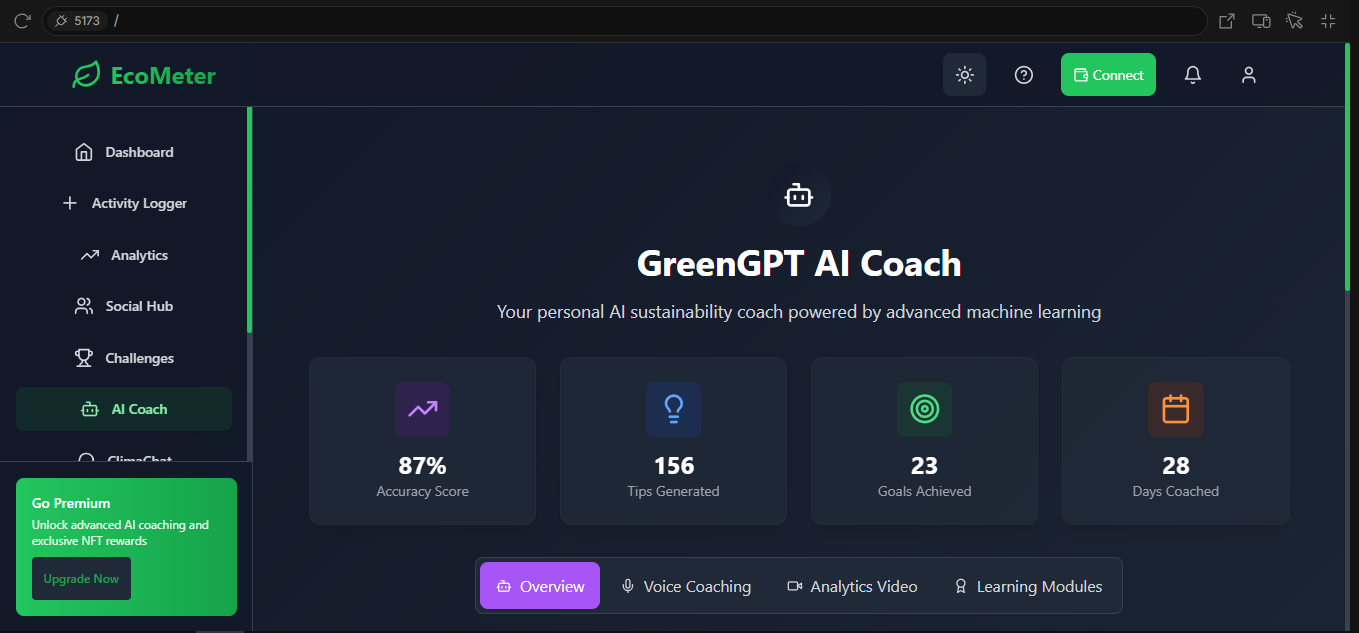
AI Coach Page
-
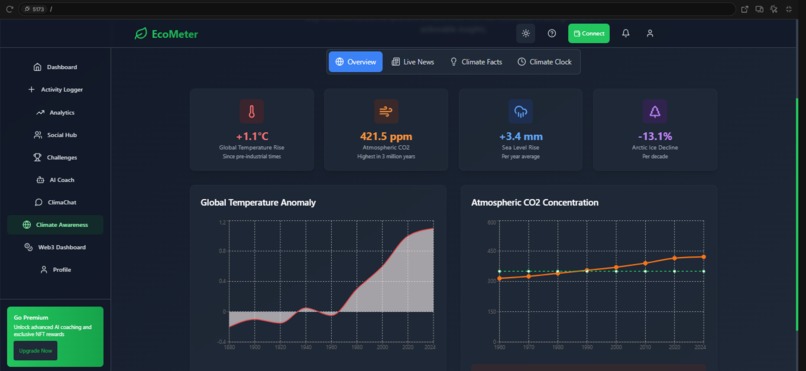
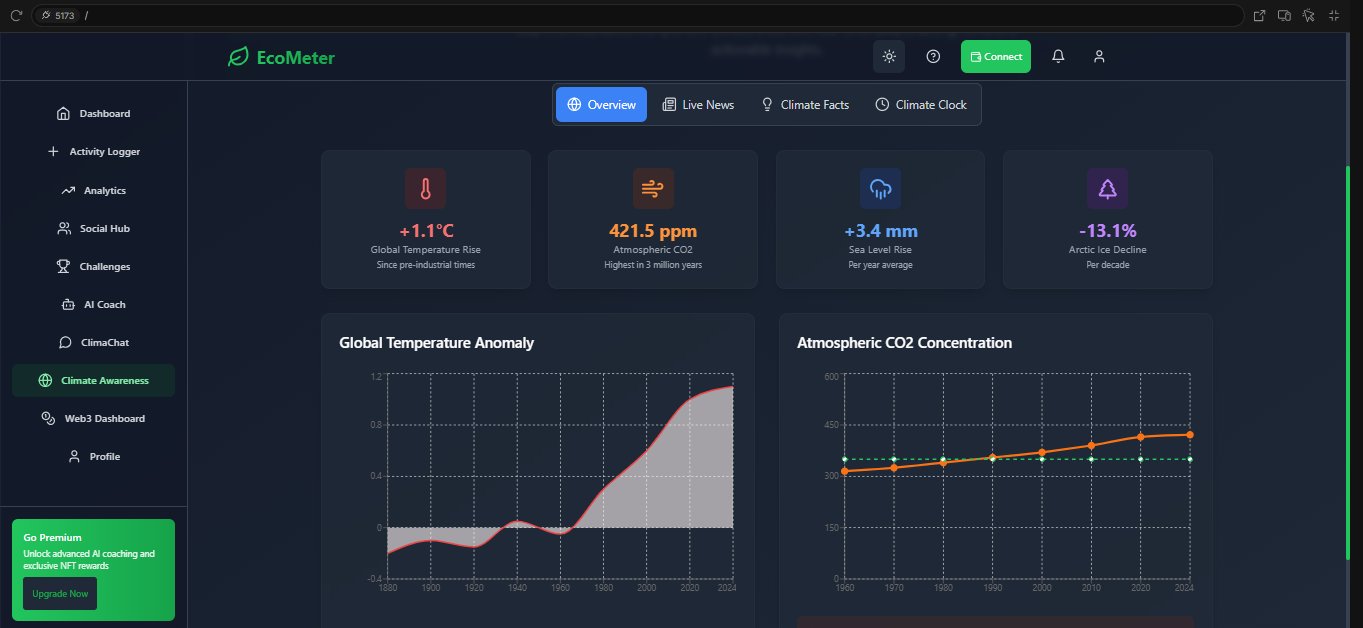
Climate Awareness Page
-
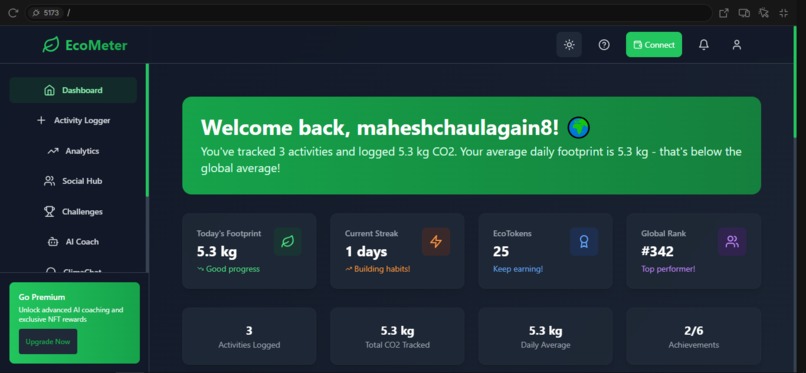
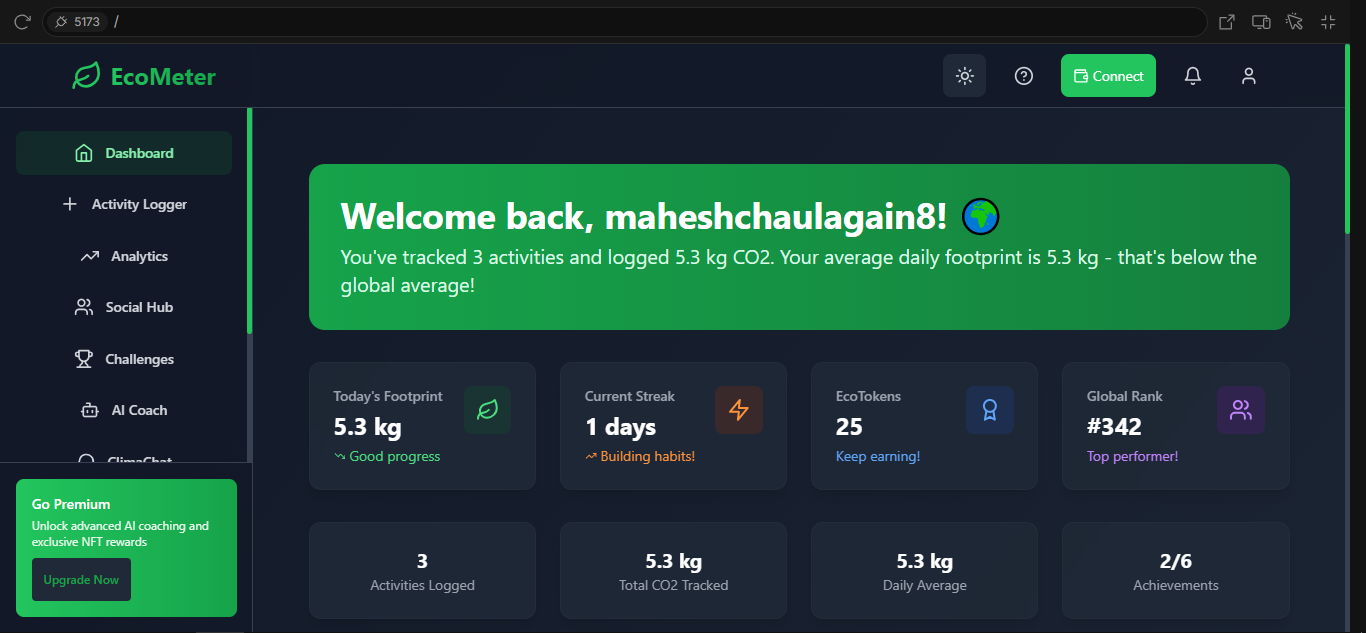
Dashboard
Inspiration
The inspiration for EcoMeter came from a real-life conversation with my sister, who works as an environmental and sustainability consultant in Nepal. During a discussion with her colleague, she realized that no comprehensive project or tool currently exists to calculate or track the carbon footprint in Nepal. This gap caught our attention.
Curious about whether any reliable data or tools existed for this, we started researching the carbon footprint situation in Nepal. Surprisingly, we found very little — no apps, no public calculators, and no accessible resources tailored to our local context. That's when the idea hit me: "Why not build an app that helps individuals understand and reduce their carbon footprint — starting from Nepal, but scalable globally?"
What it does
EcoMeter is a simple yet powerful app that allows users to:
- Log daily activities like travel, food, energy usage, and consumption habits.
- Calculate their personal carbon footprint based on scientifically accepted emissions factors.
- Visualize their carbon footprint over time through graphs and dashboards.
- Receive personalized eco-friendly tips based on their lifestyle.
- Take part in sustainability challenges like "No Meat Monday" or "Car-Free Day" to lower emissions.
- Track achievements, build habits, and make a real impact on the environment.
How we built it
We designed EcoMeter using [Bolt.new] as the framework for quick deployment and scalability. The backend utilizes [Supabase] to handle authentication and data storage, and we used [Netlify] to deploy the web app.
The carbon emission calculations are based on publicly available data from sources like the IPCC and EPA. We created a simple model where users input daily habits, and the app computes estimated CO₂ emissions for each category.
Challenges we ran into
- Data scarcity for Nepal: Finding reliable, locally relevant emissions factors was one of the biggest challenges. Most datasets are global or based on Western consumption patterns.
- Simplifying the user experience: Breaking down complex sustainability concepts into something non-technical users can easily understand was challenging.
- Balancing accuracy and simplicity: Making sure the carbon calculator is accurate enough without overwhelming users with excessive data entry.
- Design hurdles: Building an interface that feels friendly, motivating, and not guilt-driven was surprisingly challenging.
Accomplishments that we're proud of
- Turning a real-world problem in Nepal into a fully functional app prototype.
- Making carbon footprint tracking accessible and actionable for everyday users.
- Designing a user experience that makes sustainability feel engaging rather than intimidating.
- Adding gamified challenges and achievement systems that motivate positive habits.
What we learned
- Sustainability starts with awareness. Most people, including ourselves, underestimated how daily choices affect the environment until we visualized it.
- We learned a lot about the lifecycle emissions of food, travel, energy, and products.
- We gained experience in building deployable apps using Bolt.new, Netlify, and Supabase.
- The power of combining environmental data with intuitive design for social impact.
What's next for EcoMeter
- Integrating location-specific emissions data to make the calculator more accurate for Nepal and other countries.
- Expanding the app into a mobile version with offline functionality.
- Partnering with local NGOs, schools, and businesses to encourage widespread usage.
- Adding features like community leaderboards, carbon offset integrations, and deeper analytics.
- Scaling EcoMeter to become a global tool for climate-conscious living while keeping local relevance at its core.
Built With
- bolt
- netlify
- react
- supabase

Log in or sign up for Devpost to join the conversation.