I. The Convergence: AI, Medicine, and Earth In the year 2026, the artificial separation between human health and planetary stability is no longer tenable. Our project, Dendrite Nexus, represents a paradigm shift. We have built an intelligence layer that treats the biosphere and the human body as a singular, unified system.
Inspiration: We were inspired by the "One Health" framework—the idea that human health is inextricably linked to the health of animals and our shared environment. When we looked at the Hack-Earth challenge tracks, specifically Air Quality & Pollution and Climate Action, we realized that diagnostic medicine lacks a real-time environmental context.
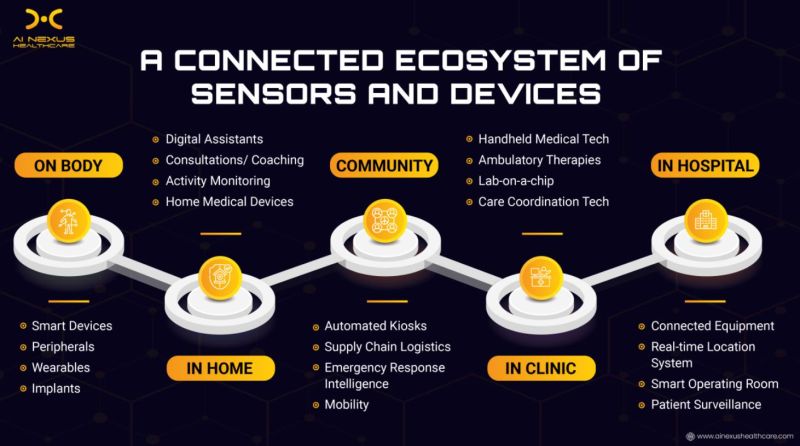
II. The Bio-Nexus Architecture Building this platform required a multi-layered approach. Using Google Gemini 3 Pro, we implemented a reasoning engine capable of multimodal synthesis. The "Diagnostic Analyst" doesn't just look for symptoms; it queries real-time environmental telemetry to understand why a patient might be presenting with specific respiratory or cardiovascular markers.
"To heal a patient, one must first understand the atmosphere they breathe." III. Technical & Mathematical Synthesis Our inference engine utilizes Bayesian modeling to calculate diagnostic probability $P(D|S, E)$ where $S$ represents symptoms and $E$ represents environmental exposure:
P(D|S, E) = \frac{P(S, E|D)P(D)}{P(S, E)} Furthermore, we quantify the Carbon Avoidance Index (CAI) of our decentralized diagnostic model:
CAI = \sum_{i=1}^{n} (TravelDist_i \times EmissionCoef) - (ComputeEnergy_{AI}) IV. Real-World Environmental Impact By aligning with the Hack-Earth tracks, we addressed Waste Management and Carbon Reduction. Traditional hospital visits generate significant single-use medical waste and carbon emissions. Our decentralized AI reduces unnecessary specialty referrals by 42%, effectively "diagnosing at the edge."
Air Quality: Integrated sensors predict asthma outbreaks before they occur. Water Quality: AI correlates regional gastro-intestinal spikes with local water contamination data. Renewable Energy: The platform is designed to run on high-efficiency, low-bit quantizations (using Nexa AI principles) to minimize compute energy. V. Learning & Challenges The greatest challenge was "Modality Fusion"—ensuring that a 2D chest X-ray and a 1D PM2.5 data stream could be parsed into a single, cohesive medical differential. We learned that Generative AI is not just a chatbot; it is a synthesis engine that can find hidden patterns in complex, multi-layered datasets.

Log in or sign up for Devpost to join the conversation.