Inspiration
It all started with us staring at a fridge full of random leftovers: half an onion, three cherry tomatoes, and spinach that was definitely judging us. None of us wanted to cook, and none of us wanted to waste food either. That’s when the idea struck: what if AI could turn fridge chaos into a recipe worth bragging about?
But then we peeked at the hackathon prize criteria and saw sustainability and carbon footprint. Lightbulb moment #2: why stop at homes? Restaurants waste way more food than our sad fridge. So, we added a Menu Analyzer that helps restaurants improve sustainability and reduce carbon footprint. That way, our project fights waste on both the small and big scale and checks that sweet judging box.
What it does
Our app has two main features:
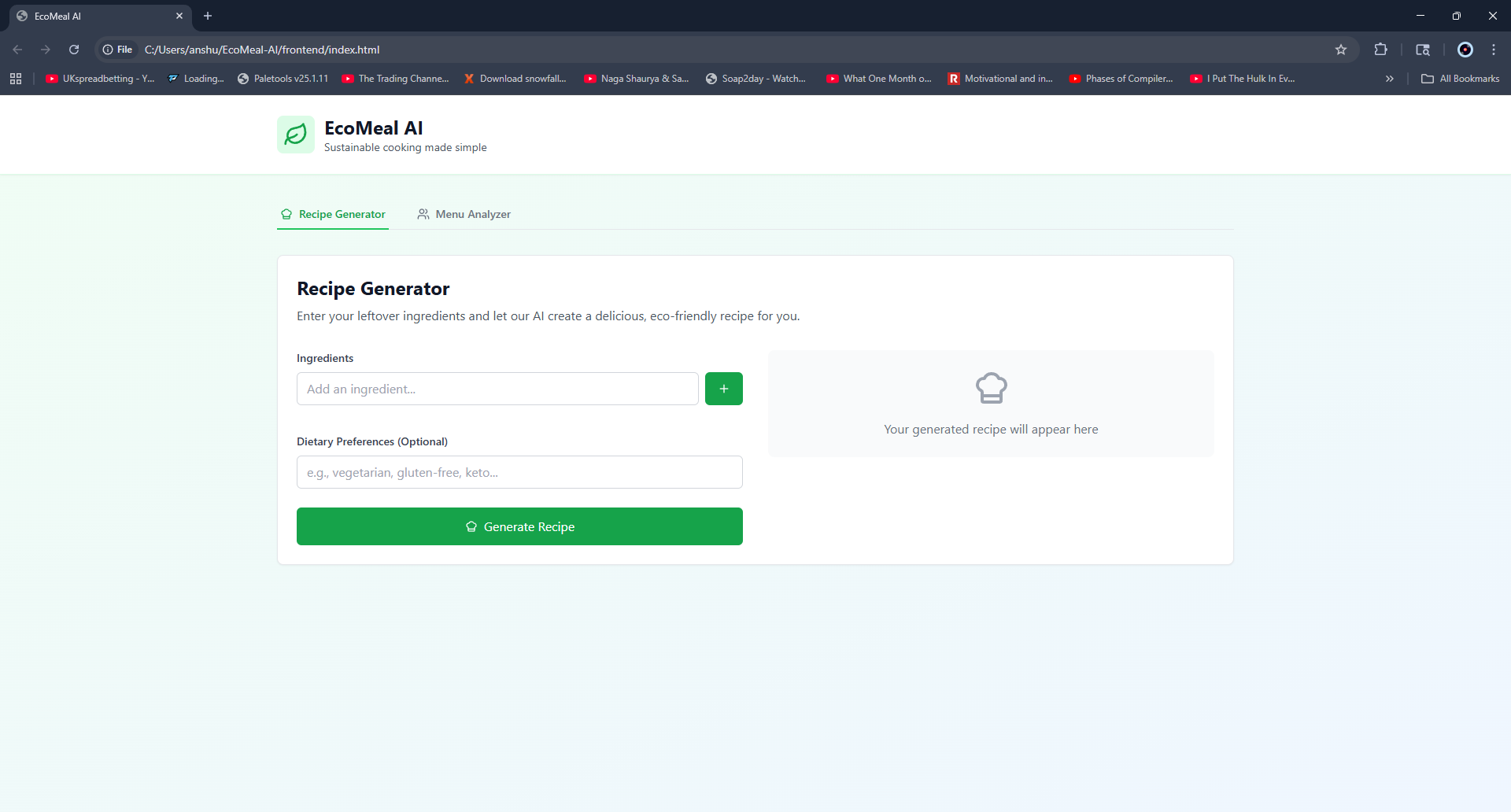
Recipe Generator – Enter your leftover ingredients, and the AI creates a eco-friendly recipe so nothing goes to waste.
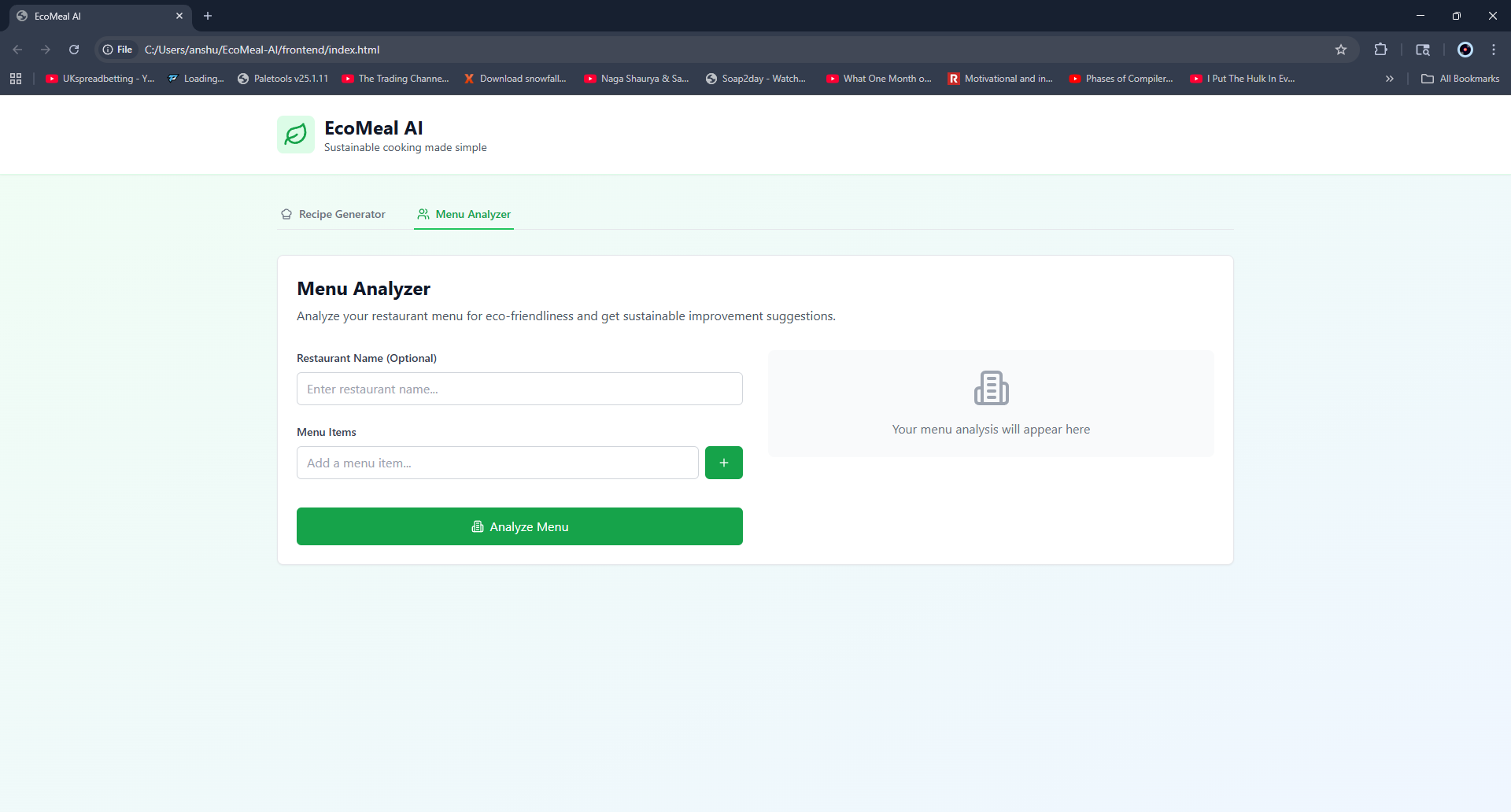
Menu Analyzer– Restaurants can input their menu, and the AI gives sustainability insights and tips to reduce carbon footprint.
In short: it helps people save food at home and helps restaurants go greener. (helps us win the sustainability sector)
How we built it
Frontend: React for a clean and responsive UI.
Backend: FastAPI with Uvicorn to handle requests quickly.
AI: Google Gemini API to generate recipes and give sustainability tips.
Data:Pandas to analyze restaurant menus.
Extras:dotenv, pydantic, and python-multipart to keep everything running smoothly.
Challenges we ran into
Connecting the Gemini API with FastAPI and managing API responses effectively.
Designing the recipe generator to handle diverse ingredient inputs gracefully.
Ensuring the menu analyzer gave meaningful, actionable sustainability insights.
Time management building both user-facing and restaurant-facing features in a short hackathon timeline.
Accomplishments that we're proud of
- Turning random fridge leftovers into real recipes that actually sound edible.
- Expanding the project to help restaurants reduce their carbon footprint.
- Building a full-stack AI app in a short hackathon timeline.
What we learned
- How to integrate the Google Gemini API with FastAPI and React.
- The importance of designing features that are simple but impactful.
- That debugging at 3 AM is basically a hackathon tradition.
What's next for EcoMeal.AI
- Add nutrition info to the recipes (so your midnight snack doesn’t equal a week’s worth of calories).
- Provide restaurants with a detailed carbon footprint score for each menu item.
- Mobile app version so you can scan your fridge or menu instantly.
- Partner with sustainability-focused orgs to expand real-world impact.


Log in or sign up for Devpost to join the conversation.