-
-
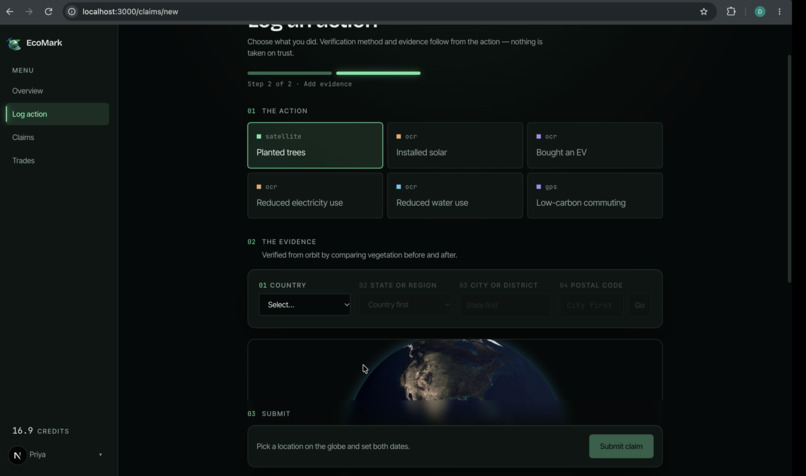
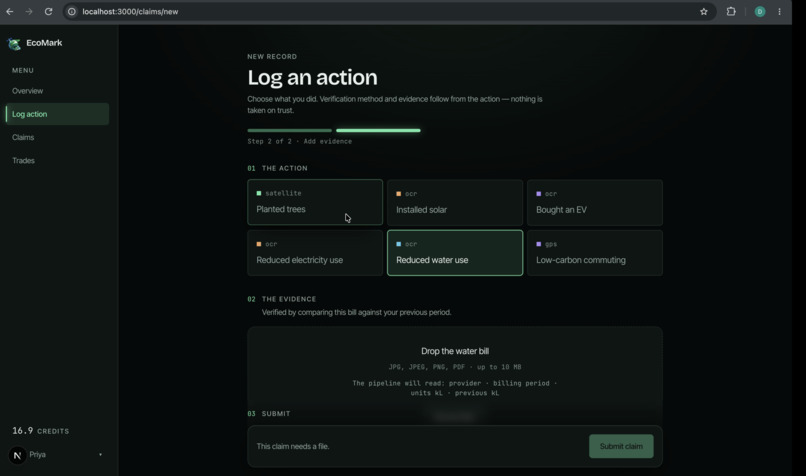
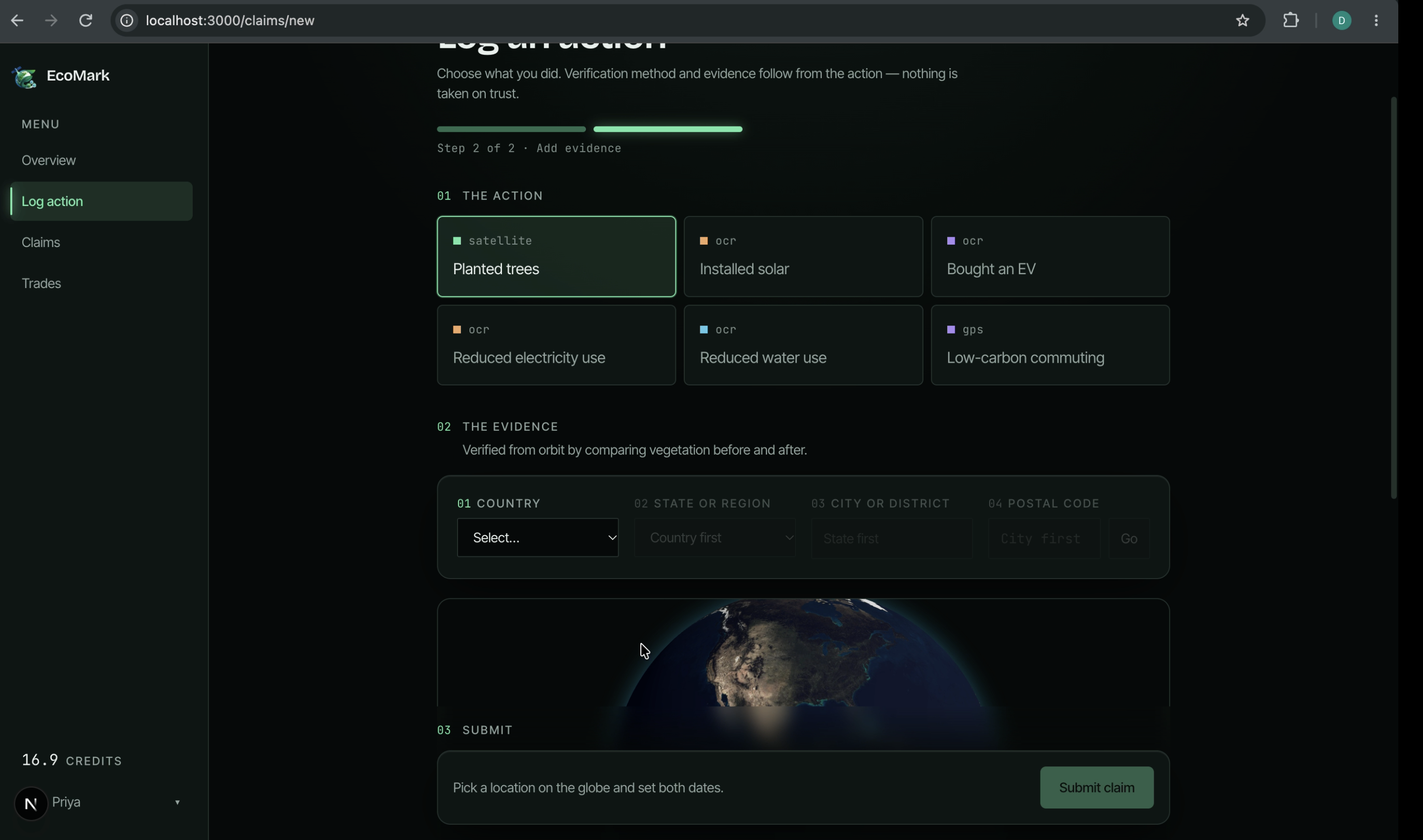
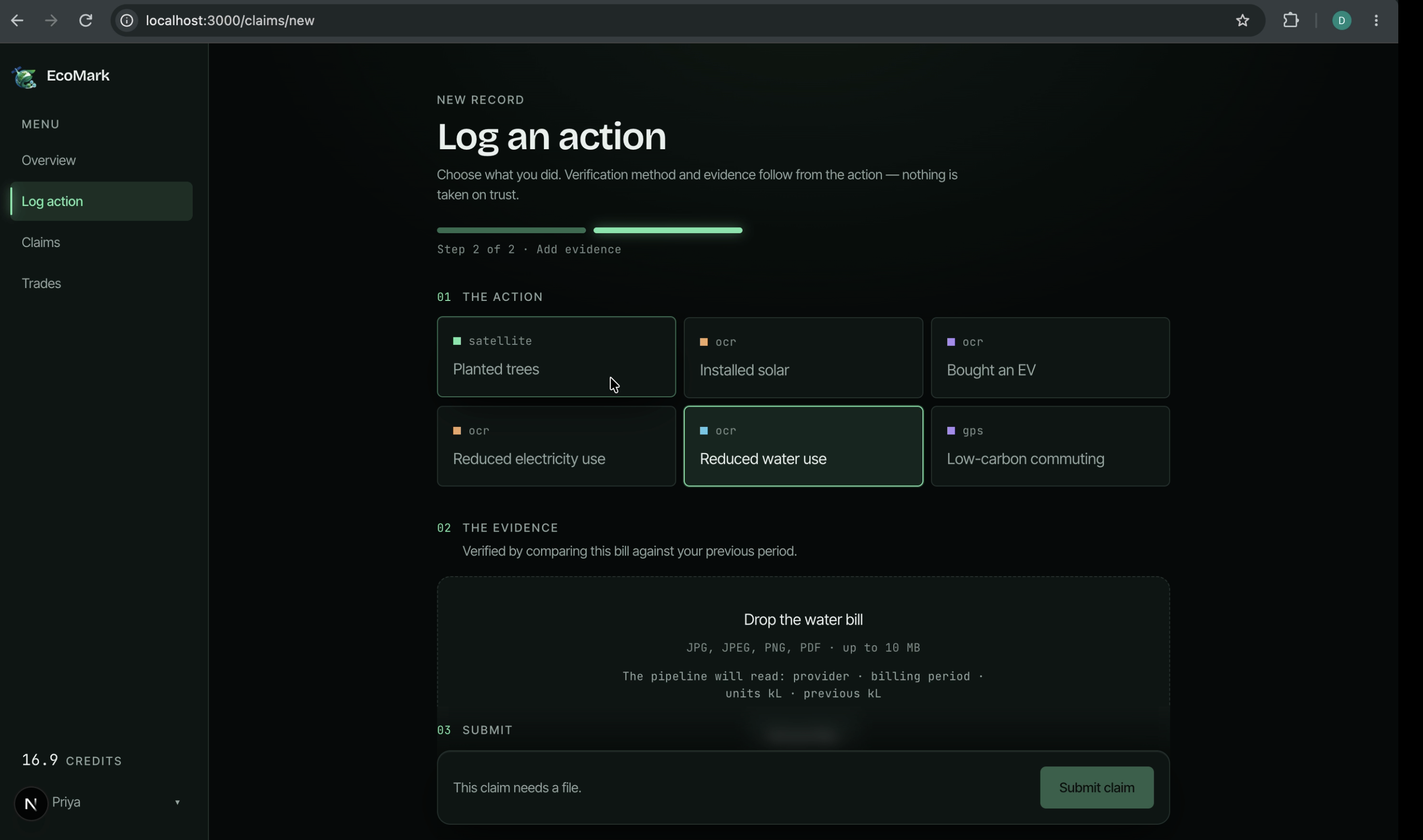
Adding your log action with proof
-
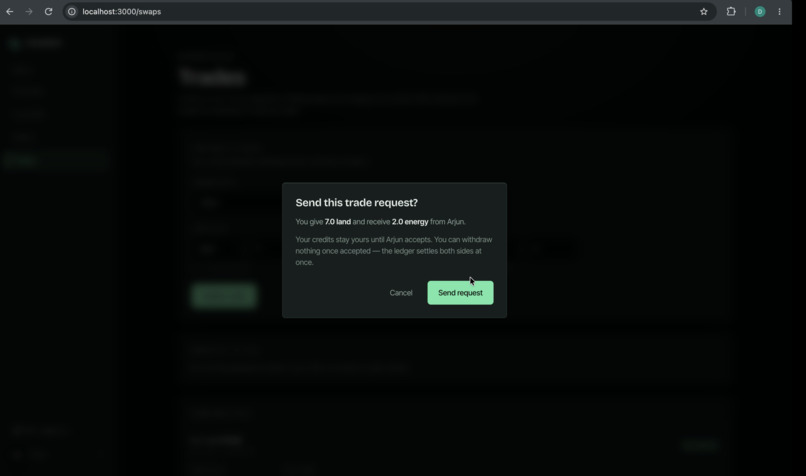
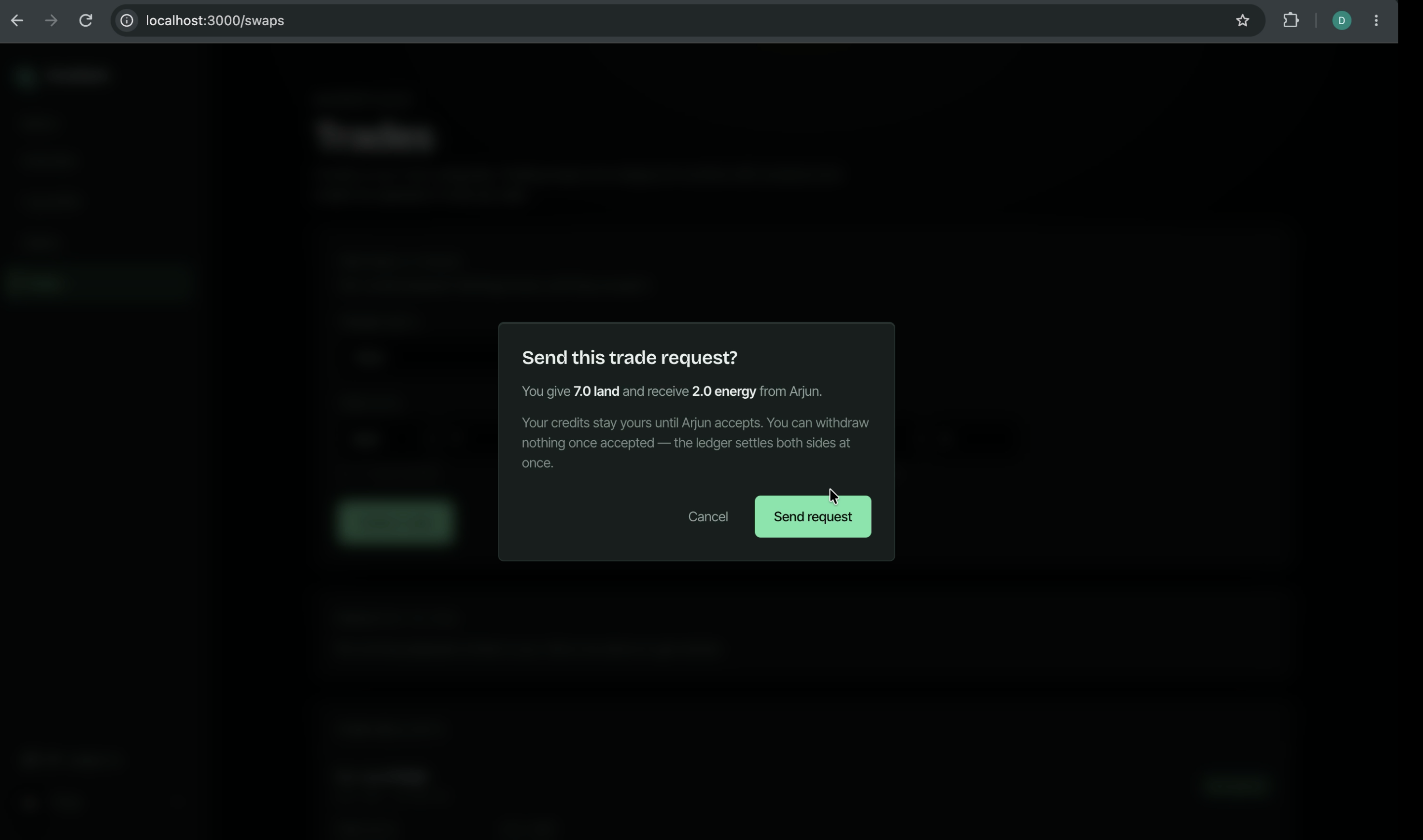
Request pop up
-
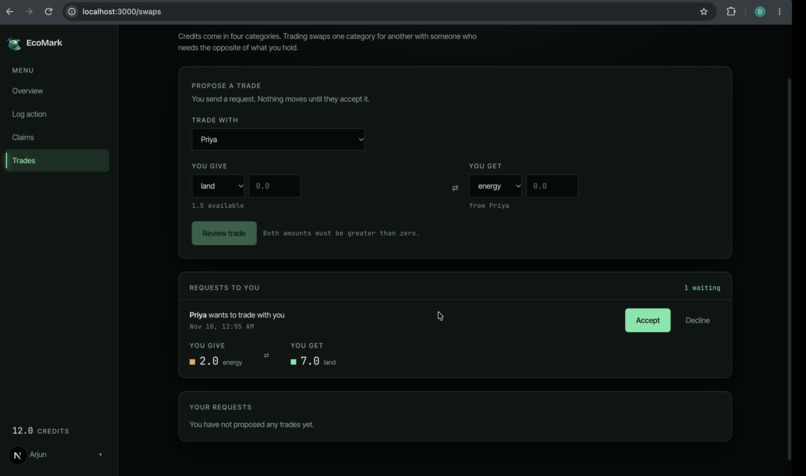
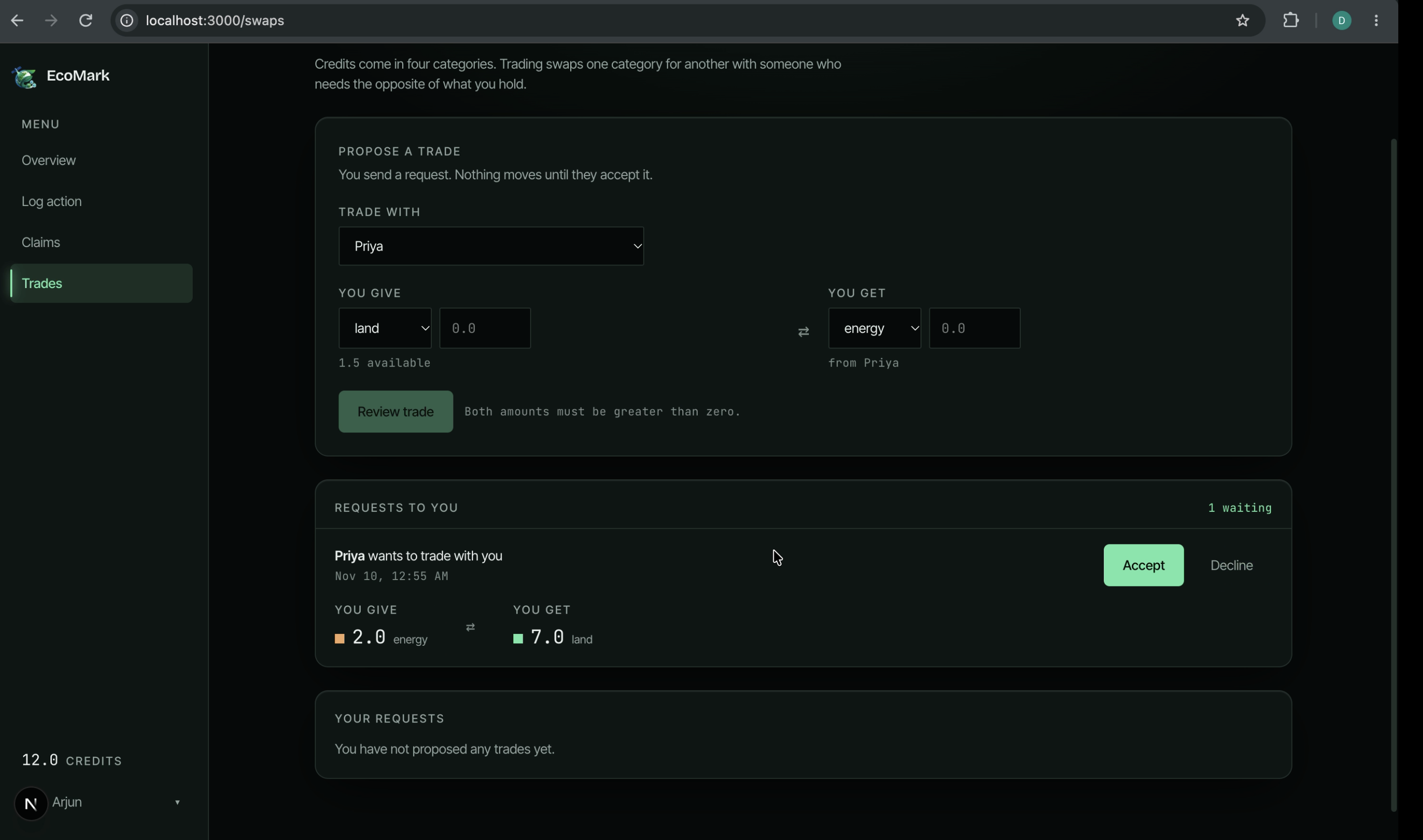
Trade request (Receiver side)
-
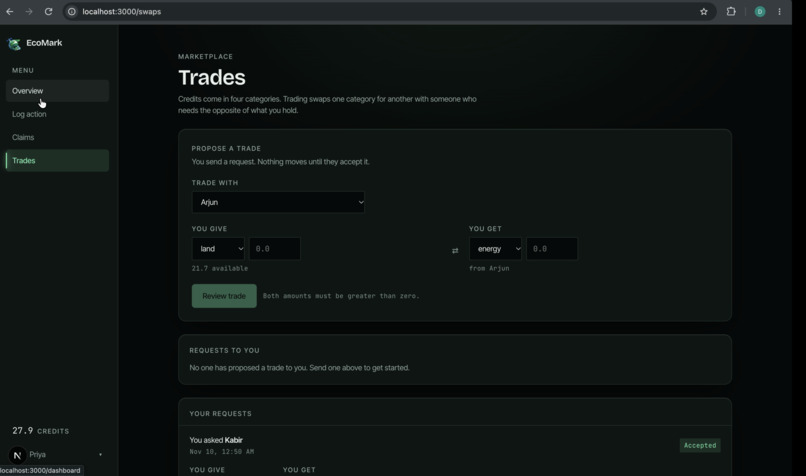
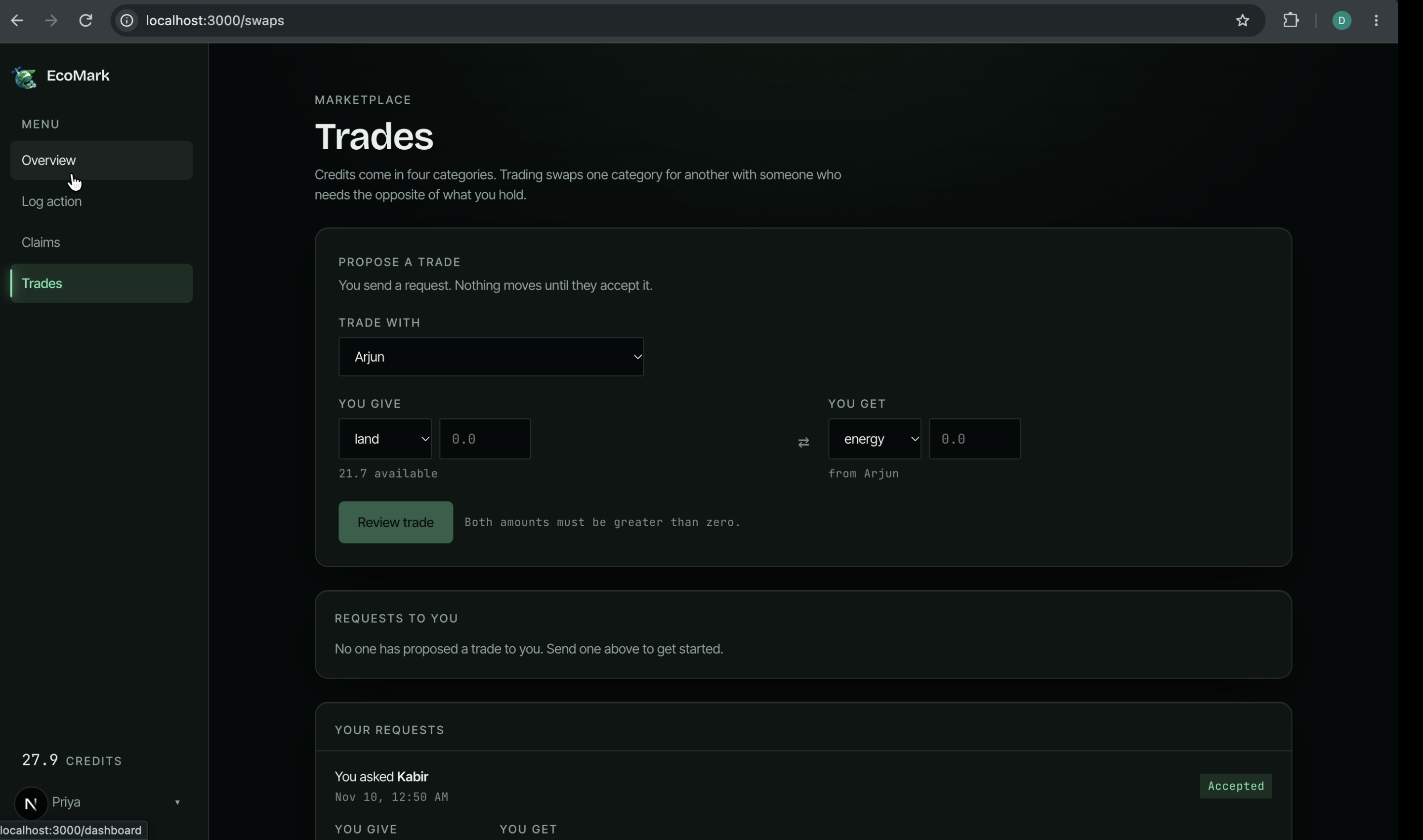
Requesting trade of credits
-
-
-
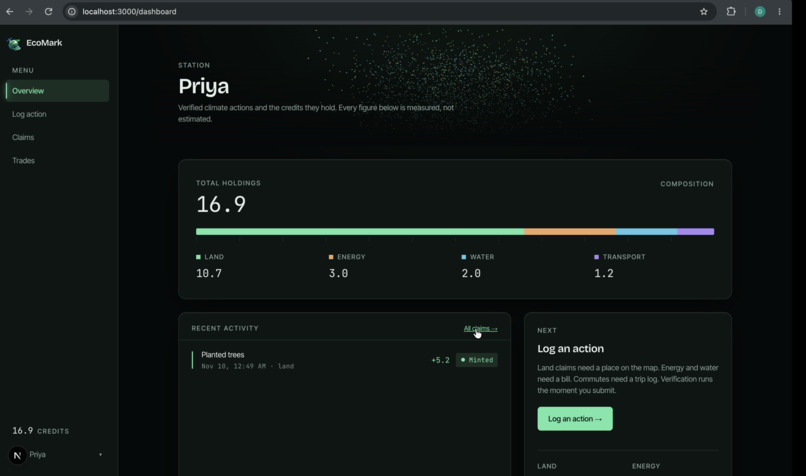
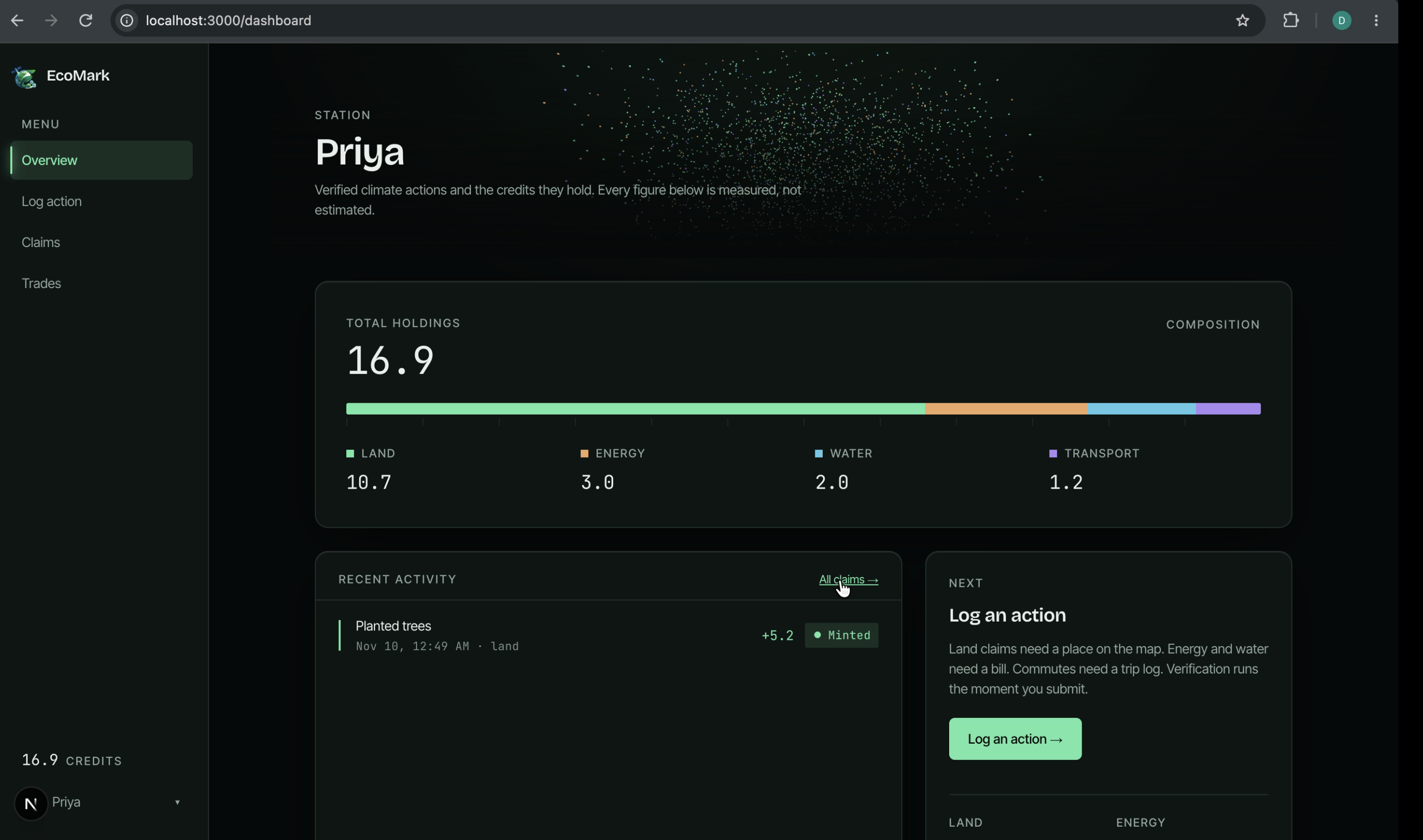
Dashboard
-
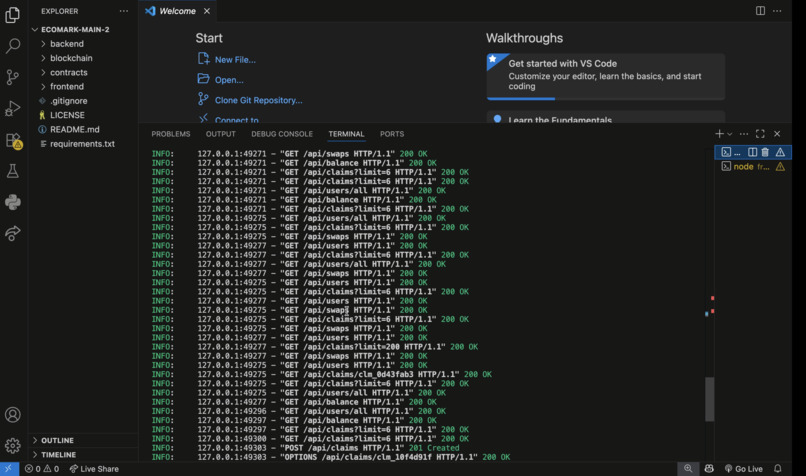
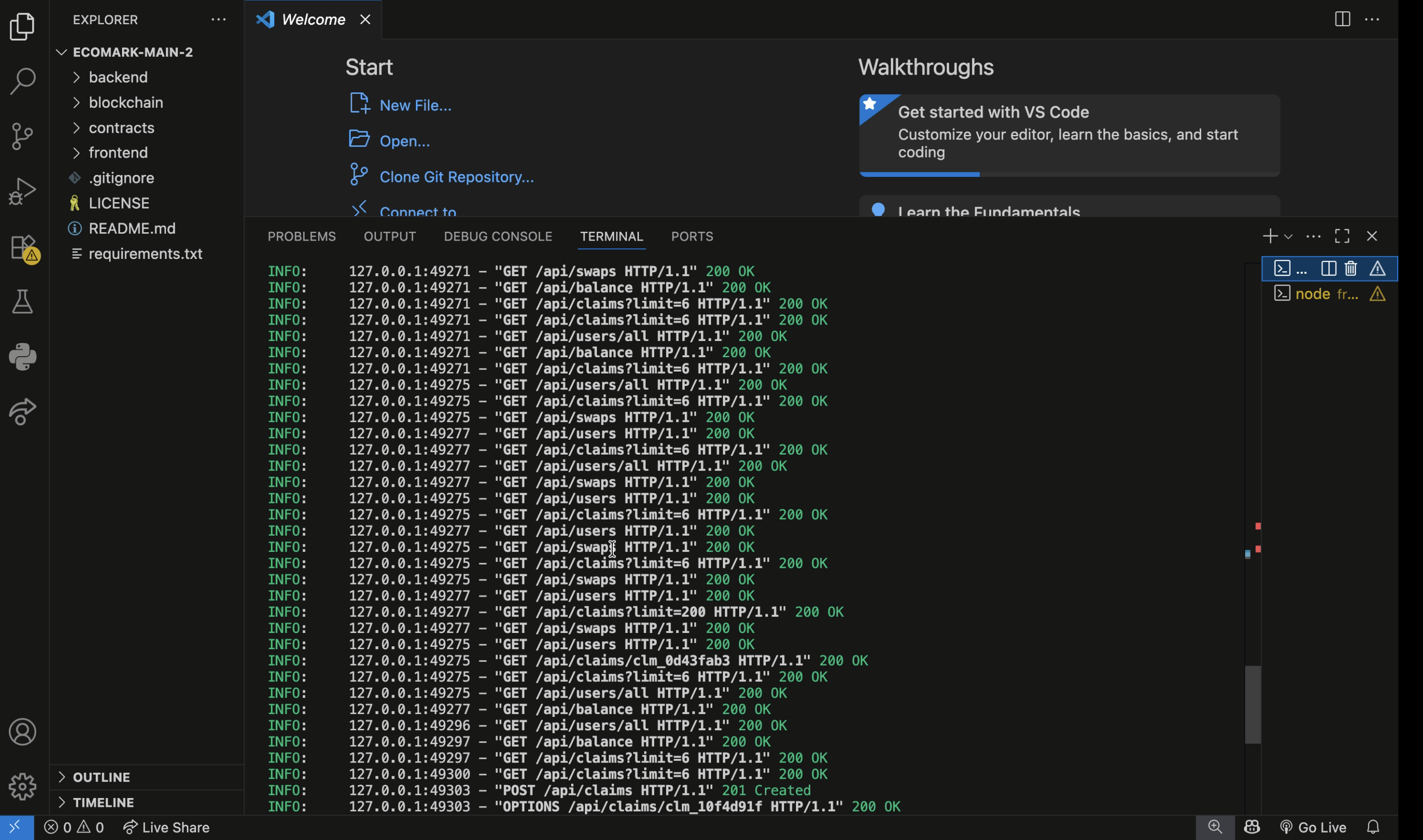
Backend Verification
-
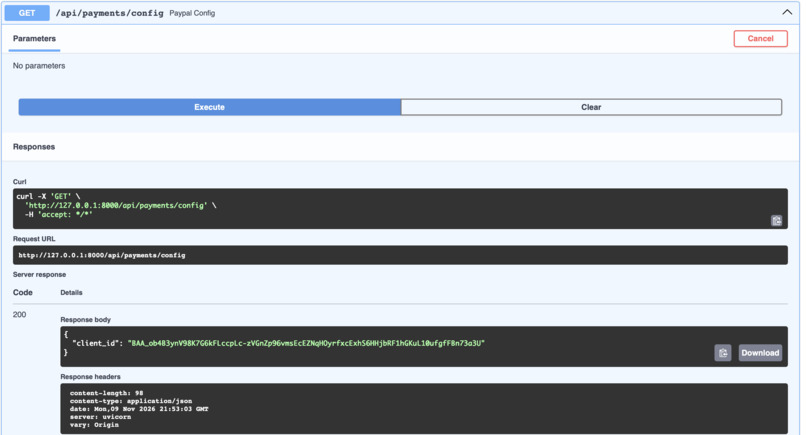
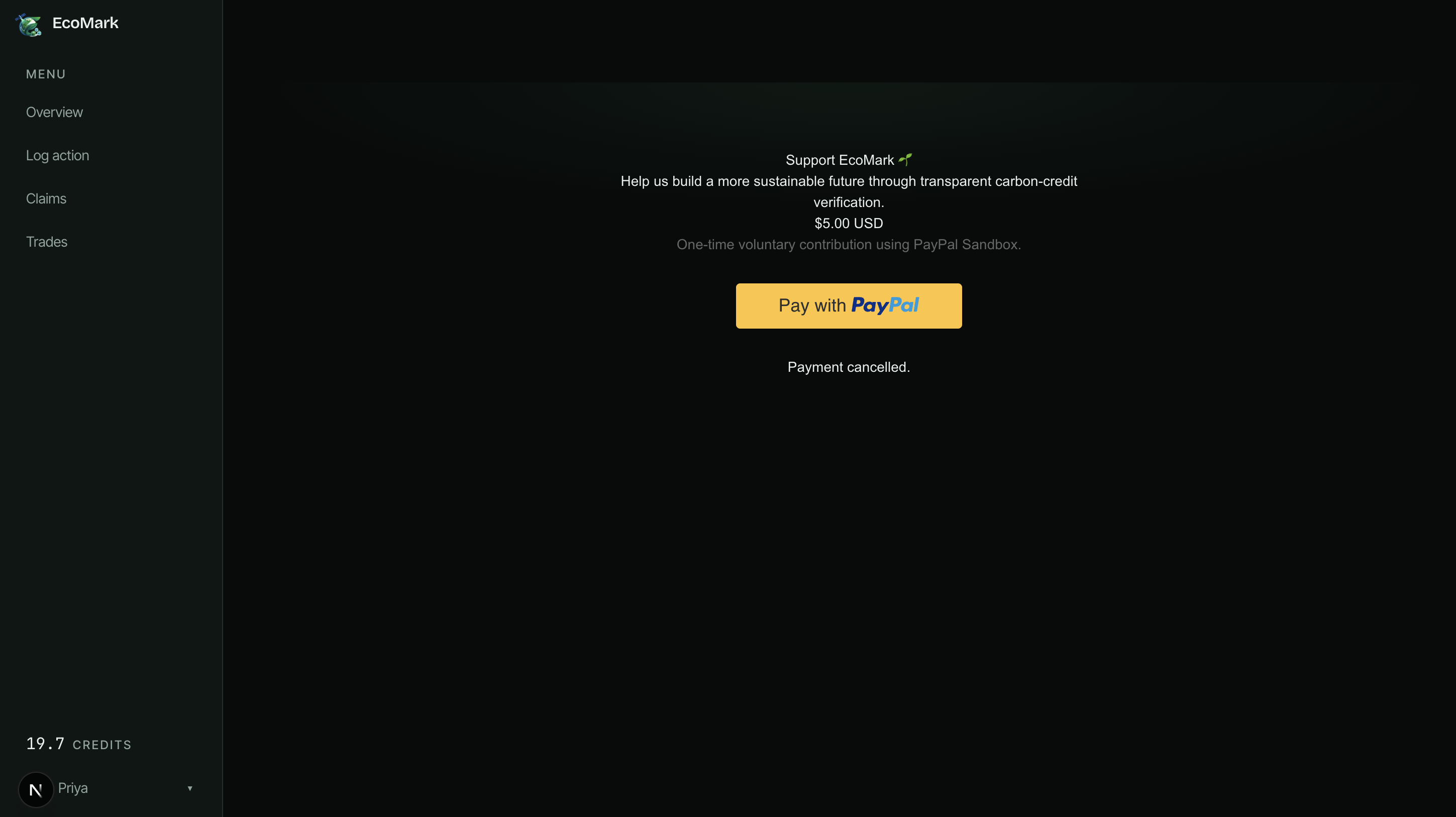
PayPal demo transaction
-
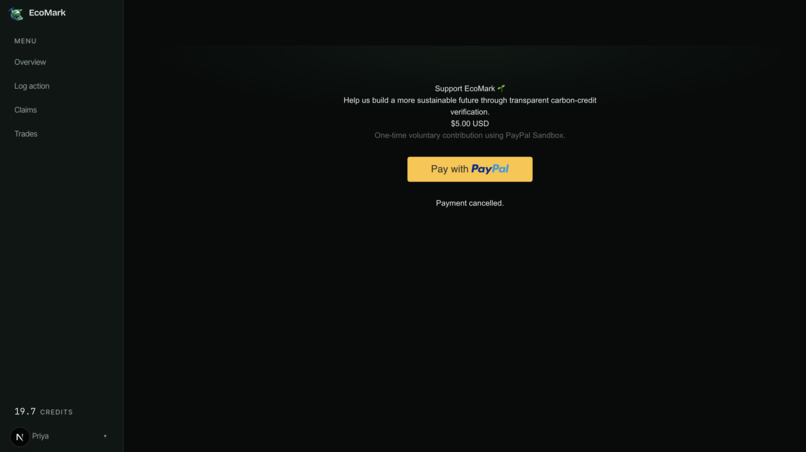
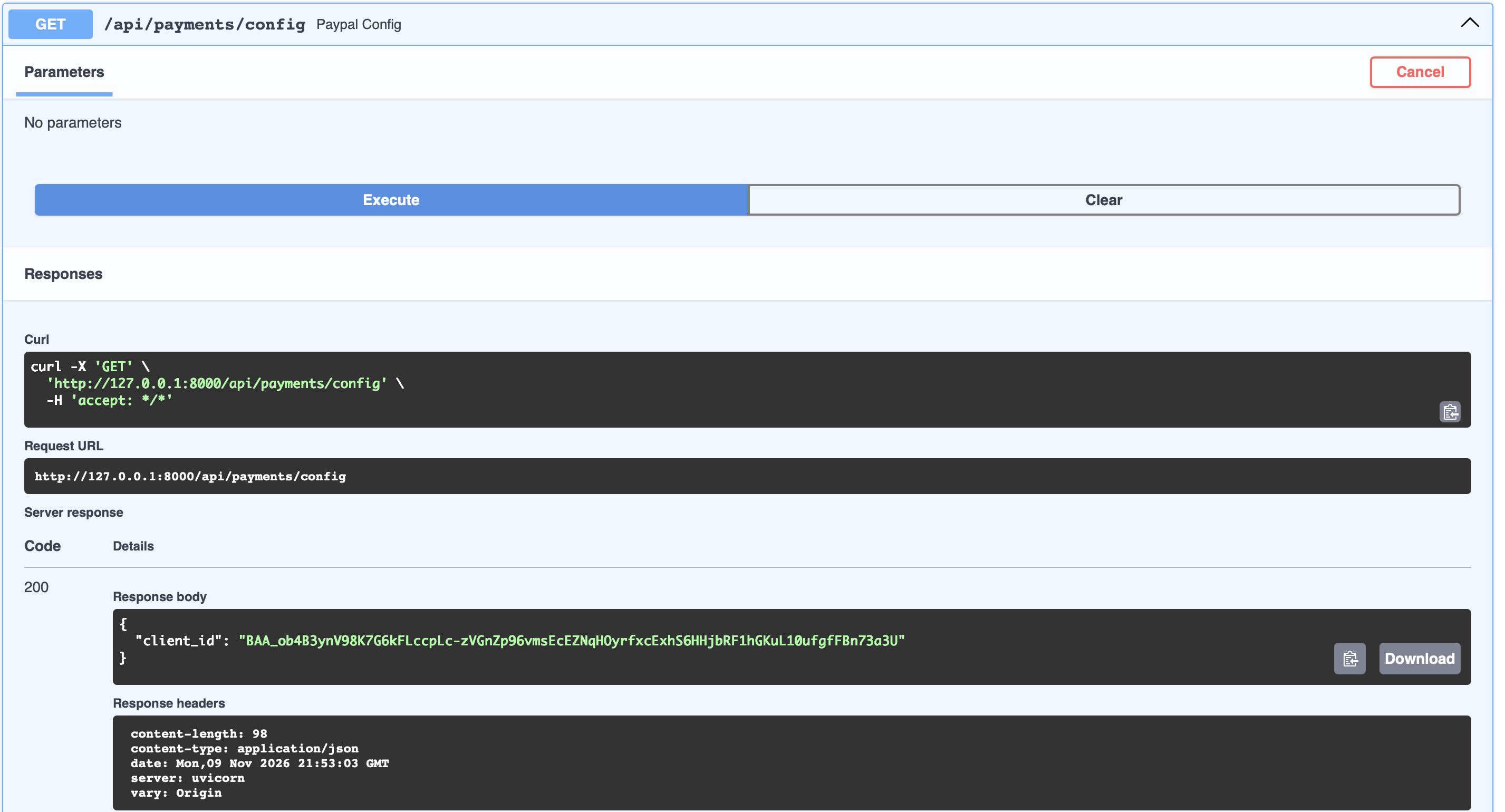
PayPal Integration
Inspiration
I started thinking about how many small actions people take every day to live more sustainably, from planting trees and saving electricity to choosing greener ways to travel. These actions make a difference, but measuring their actual environmental impact and getting them recognised is still a challenge.
I wanted to explore how technology could help bridge that gap. That's how EcoMark came to life: an attempt to make everyday climate action measurable, verifiable, and rewarding.
What it does
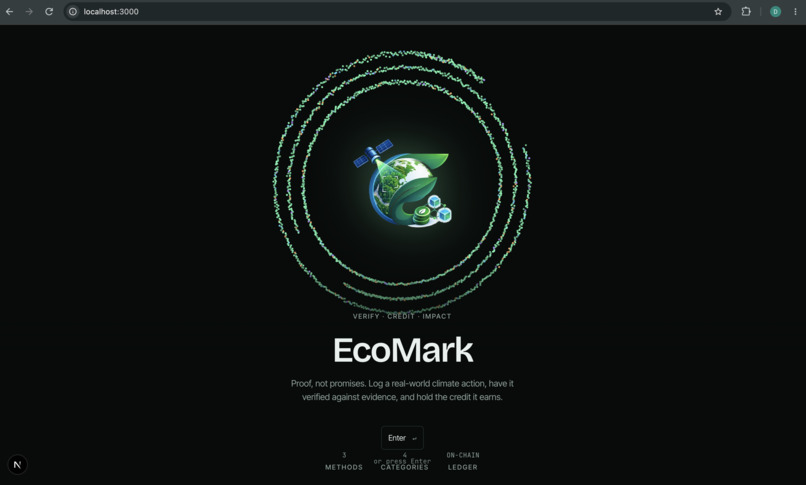
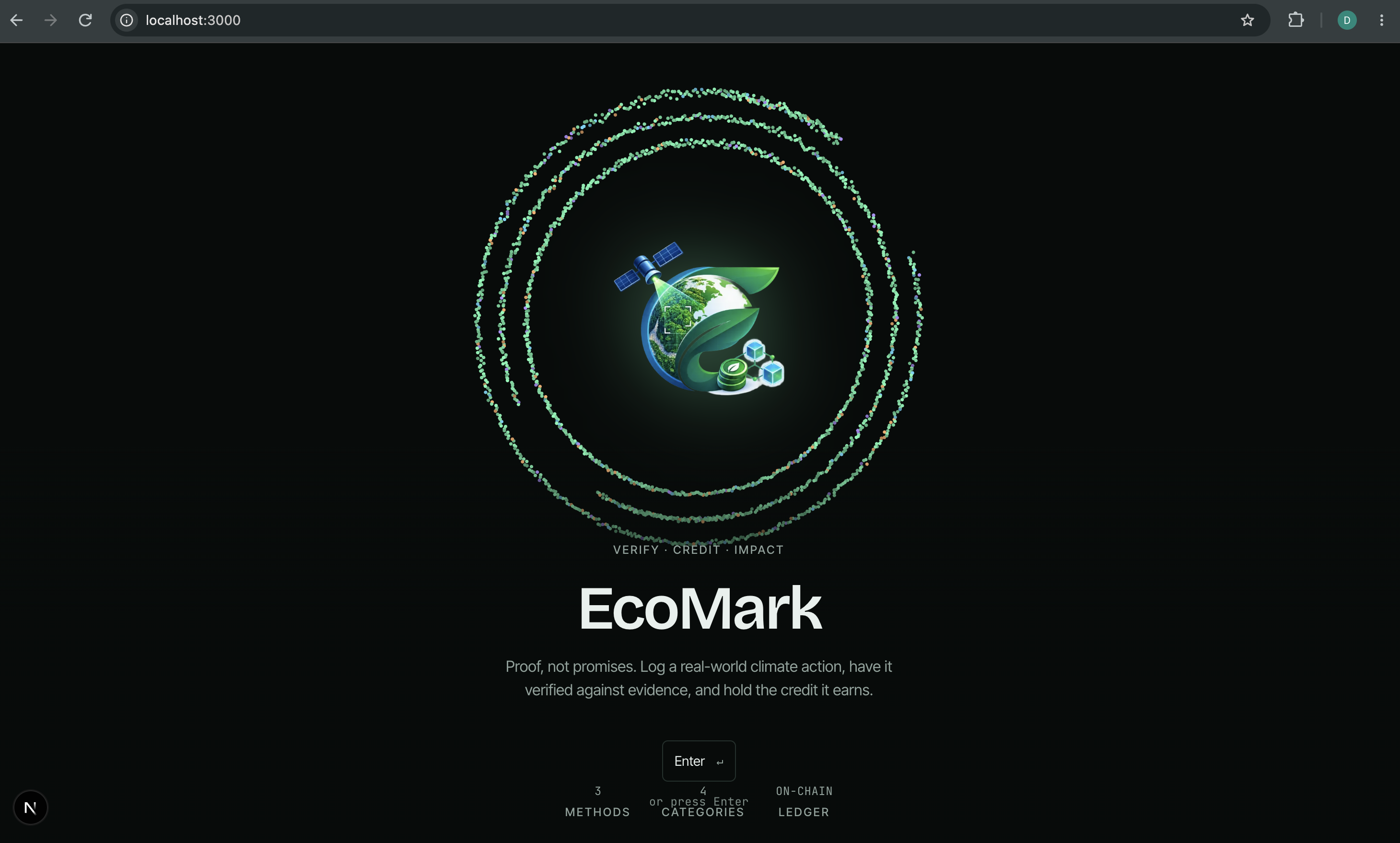
EcoMark is a climate-action verification and carbon credit platform that turns sustainable activities into measurable environmental contributions.
Users can submit activities, upload supporting evidence, get their claims verified, and earn carbon credits that they can track and exchange with others.
What makes EcoMark different is that it doesn't rely on a single verification method. It adapts to the type of activity:
Tree Plantation: Uses satellite imagery and NDVI analysis to assess changes in vegetation. Energy and Water Conservation: Uses OCR to extract consumption data from utility bills and compare it against baselines. Sustainable Purchases: Analyses invoices to identify eligible purchases, such as solar installations and electric vehicles. Green Transportation: Uses GPS trip information and low-carbon travel heuristics to evaluate sustainable commuting.
Verified contributions can then be converted into carbon credits, with blockchain-based accounting designed to improve transparency and prevent duplicate claims.
How we built it
I built EcoMark using a combination of technologies, with each part serving a specific purpose.
Frontend: Next.js, React, and TypeScript for an interactive user experience.
Backend: Python, FastAPI, and SQLModel for APIs, application logic, and data management.
Verification: Satellite-based analysis, OCR using Tesseract, and GPS-based evaluation for different climate activities.
Blockchain: Solidity and Hardhat for credit management and transaction handling.
I also developed mock integrations to test the application's core workflows without depending on live external services. This helped me bring the different components together and test the overall experience.
Challenges we ran into
One of the biggest challenges was realising that not every green action can be verified in the same way. A tree plantation claim requires a completely different approach from an electricity bill or a GPS trip.
Another challenge was bringing multiple technologies together while keeping the application consistent. Connecting the frontend, backend, verification workflows, and blockchain layer required a lot of testing and problem-solving.
Working through these challenges taught me that building a useful product is not just about getting individual technologies to work, but making them work together.
Accomplishments that we're proud of
Turned an idea around sustainability into a working full-stack prototype.
Developed multiple verification workflows for different categories of climate action.
Connected an interactive frontend with a FastAPI backend.
Incorporated blockchain-based credit management into the platform.
Brought together technologies from web development, AI, geospatial analysis, and blockchain in one project.
Built mock integrations to test the application's core functionality independently of live external services.
What makes me most proud is seeing an idea that started with a simple question, "What if every genuine green action could count?", take shape as an actual application.
What we learned
I gained hands-on experience with full-stack development, API integration, smart contracts, satellite data, and OCR. More importantly, I learned how challenging it is to turn real-world environmental activities into measurable and trustworthy digital records.
What's next for EcoMark
I hope to improve verification accuracy, integrate more real-world data sources, and make EcoMark accessible to more people.
I want EcoMark to move beyond simply tracking carbon credits and become a platform that helps people see the value of the sustainable choices they make every day.
