-
-
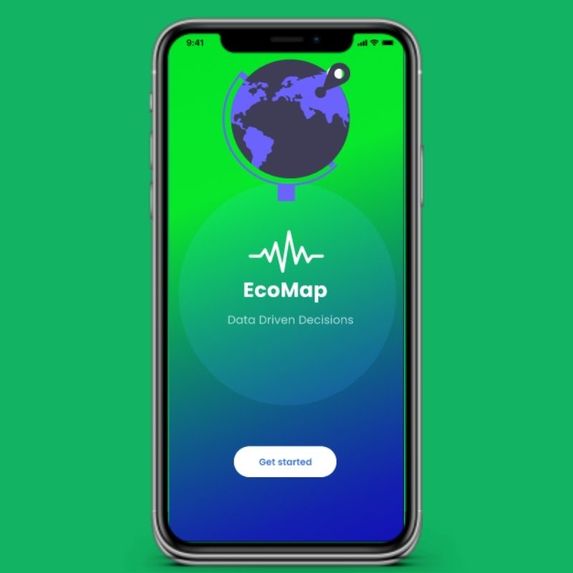
EcoMap Mobile Application
Inspiration
The Prairies are home to one of Canada’s richest and ecologically diverse habitats. They were once filled with the symphony of songbirds, however, all of that has now changed as it’s now become home to another sound, human activity. Using Machine learning, EcoMap wanted to generate real-time strategies to protect endangered ecosystems globally, and provide researchers with software to analyze their local environments and compile them against the cloud.
What it does
EcoMap ensures that sustainability is at the heart of decision making and provides the software needed for the transition to a low-carbon economy. Our software serves as a valuable asset within any sustainability strategy that works towards securing a net positive impact on biodiversity. With the help of nanomaterials and next-generation sensory equipment, our algorithm will measure factors such as song diversity and variability in corrosivity. This technology is scalable and can be implemented at a variety of operating sites, cheaply, and efficiently. On the mobile device, an individual can utilize the app to record and scan for the sounds of the birds or detect surface tension to determine the corrosivity of the environment they are within. Once they have detected the sound/location, a Hot Map will be displayed to determine the state of the biodiversity and the corrosivity of the pollution. EcoMap strives to combat the rapidly evolving problem of climate change using technology such as machine learning and nanotech.
How we built it
EcoMap was built using an online prototyping software called Figma. Using Figma, the general functionality of the application was effectively demonstrated as users have the opportunity to visualize the practicality of the software application. EcoMap also integrates an online library named BirdNet, which is based on an artificial neural network. The video editing software utilized to illustrate this project was Movavi Suite.
Challenges we ran into
Unfortunately, the only thing predictable about a hackathon is that they are unpredictable. Due to unforeseen circumstances, we lost half our team early into the hackathon and were unable to find last-minute replacements for our star programmers. We discussed quitting then and there, but we realized that hacking has nothing to do with being a competent programmer. We decided to pursue our idea to the end because hackathons are all about endurance.
Accomplishments that we're proud of
Early at the beginning of the hackathon, we were placed in a difficult situation due to the loss of two important team members. However, we managed to deliver our idea through the means of prototyping design. Collectively, we learned the core functions of Figma, how data visualization functions, and the techniques used for video editing. We were proud of our effective communication and our organizational skills as we managed to complete all tasks and attend workshops at their respective time.
What we learned
In the beginning, while searching for an innovative idea, we were able to grasp the various issues about sustainability and biodiversity which further expanded our learning about the ecological systems around the world. This hackathon allowed us to grasp various innovative solutions to solve modern-day problems. Also, it permitted us to gain knowledge of various new applications such as Figma, Movavi Video Editing, Machine Learning, and data visualization.
What's next for EcoMap
EcoMap will develop an extensive library of sounds regarding wildlife situated in all locations around the world by forming a partnership with Teck Resources. With a more developed library, researchers will be able to collect, showcase, and interpret data efficiently to reduce ecological problems and protect endangered ecosystems.
Built With
- canva
- figma
- machine-learning
- movavi-suite
- python


Log in or sign up for Devpost to join the conversation.