-
-
-
Slide 1
-
Slide 2
-
Slide 3
-
Slide 4
-
Slide 5
-
Slide 6
-
Slide 7
-
Slide 8
-
Slide 9
-
Slide 10
Inspiration
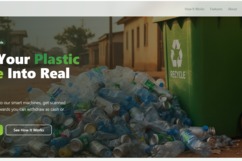
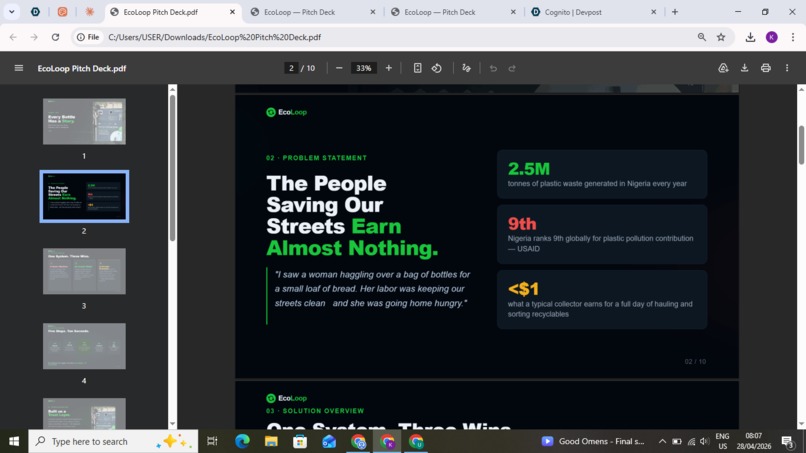
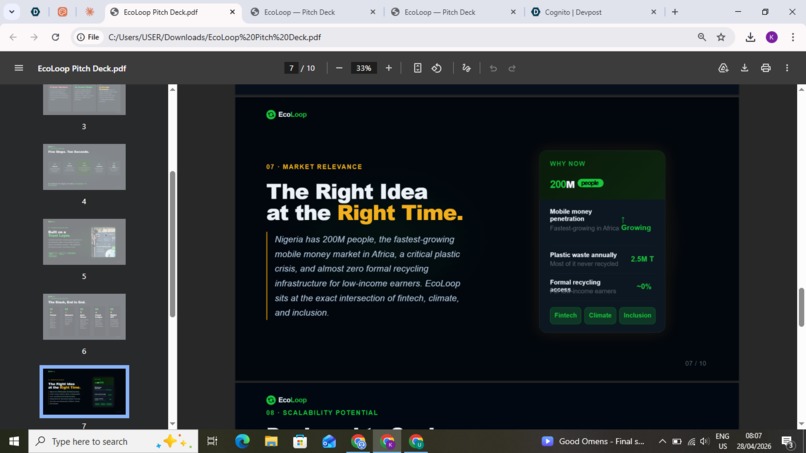
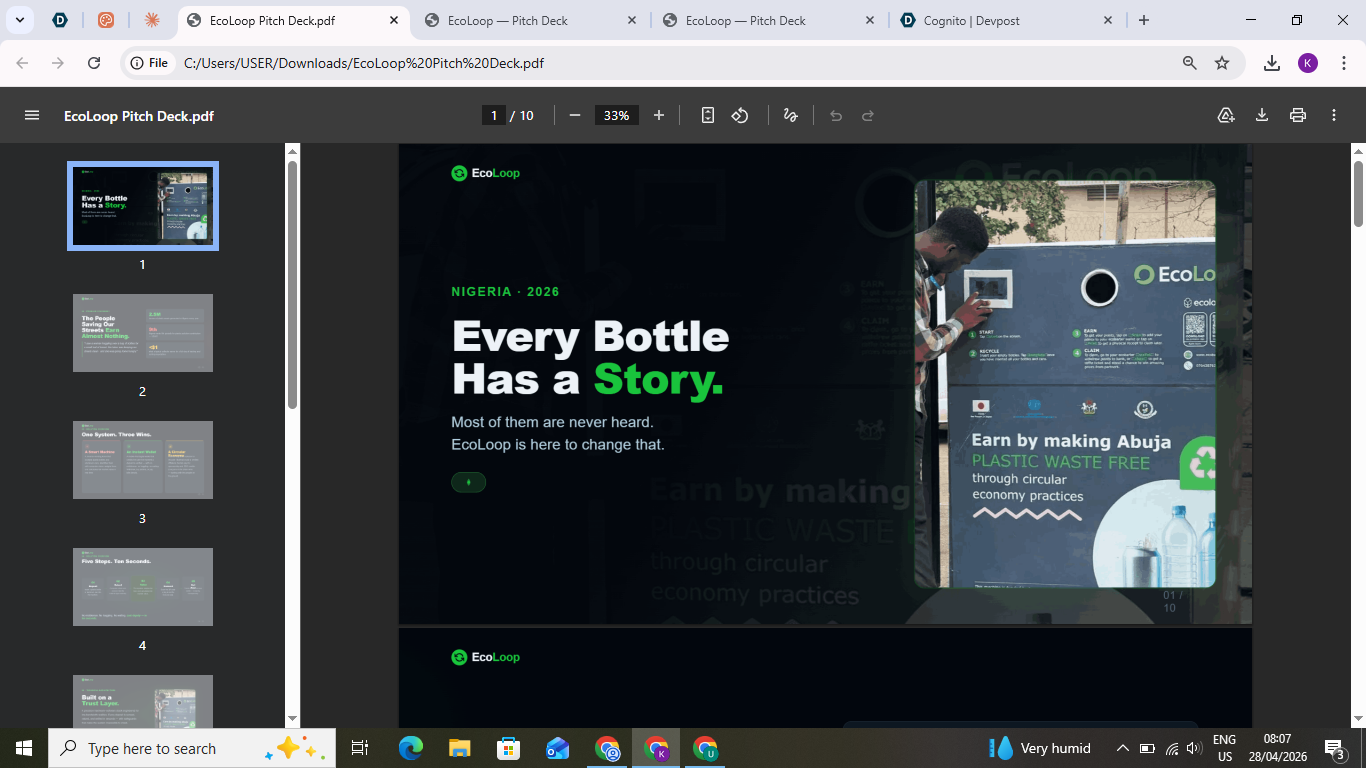
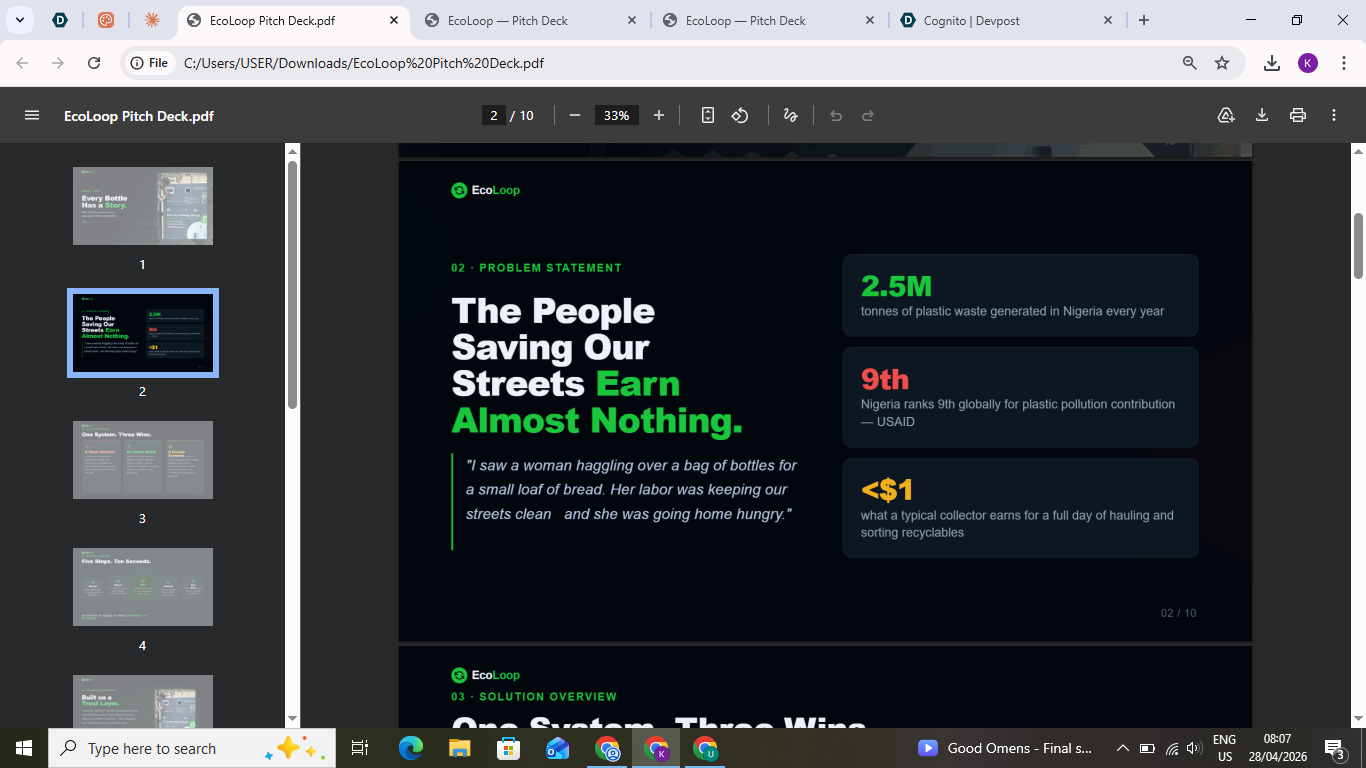
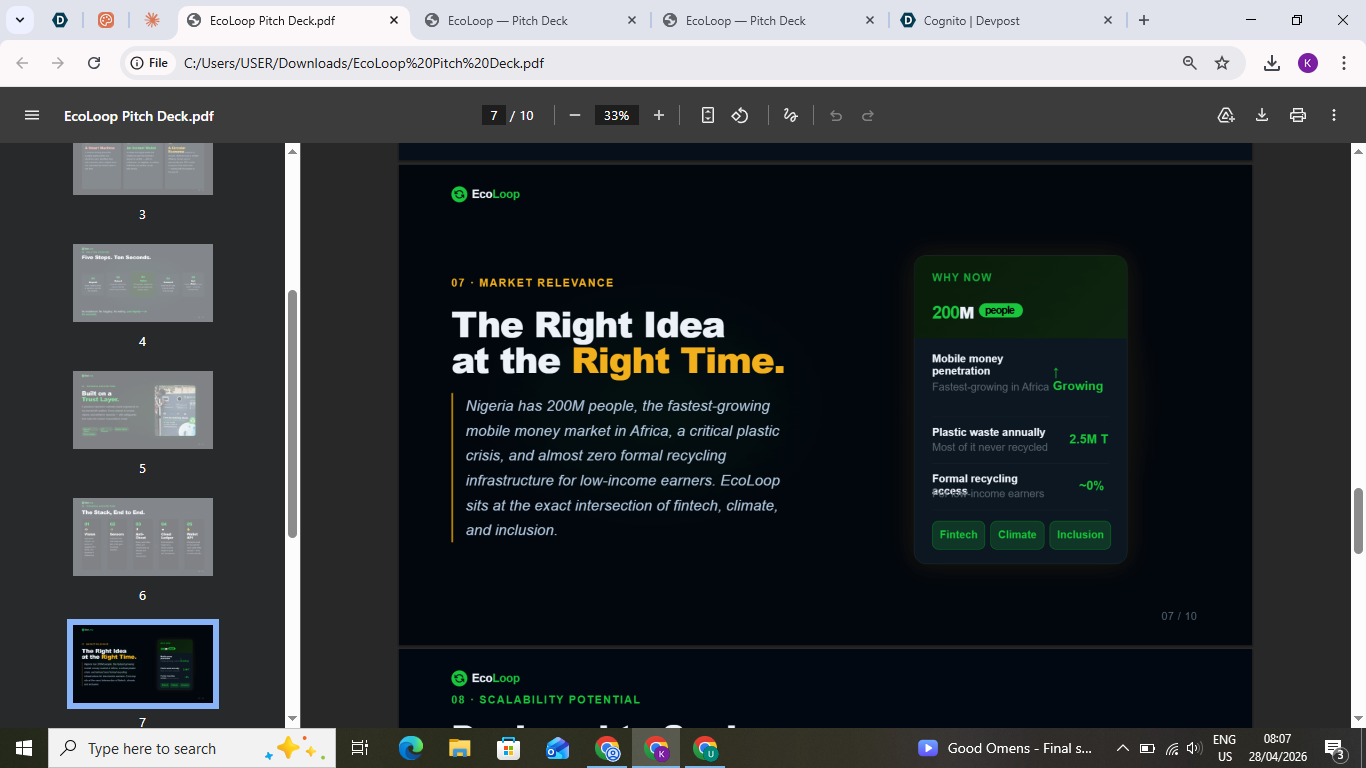
The idea for Ecoloop didn’t come from a textbook; it came from walking the streets and seeing the hidden economy of waste. In every Nigerian city, you see people often mothers, young men, or elderly folks lugging massive, bursting bags of plastic bottles for miles under the scorching sun, risking their health just to earn a few Naira from a middleman. Their hands cut and blister, their backs ache, their lungs fill with dust and yet, their labor, which keeps our environment from drowning in waste, barely earns them a meal.
I remember seeing a woman trying to trade a bag of bottles for a small loaf of bread. The haggling over its “value” wasn’t just unfair it was heartbreaking. And it hit me: the waste isn’t the problem. The problem is access. These everyday heroes are doing the heavy lifting to save our streets, rivers, and communities, yet the system rewards them the least.
The consequences extend far beyond their wallets. Open trash invites disease. Polluted streets poison our air and waterways. Plastic left in the sun leaches chemicals into the soil, impacting everything from crops to children playing nearby. Every uncollected bottle, every dumped sachet, is a small wound on the health of our people and the ecosystem we rely on.
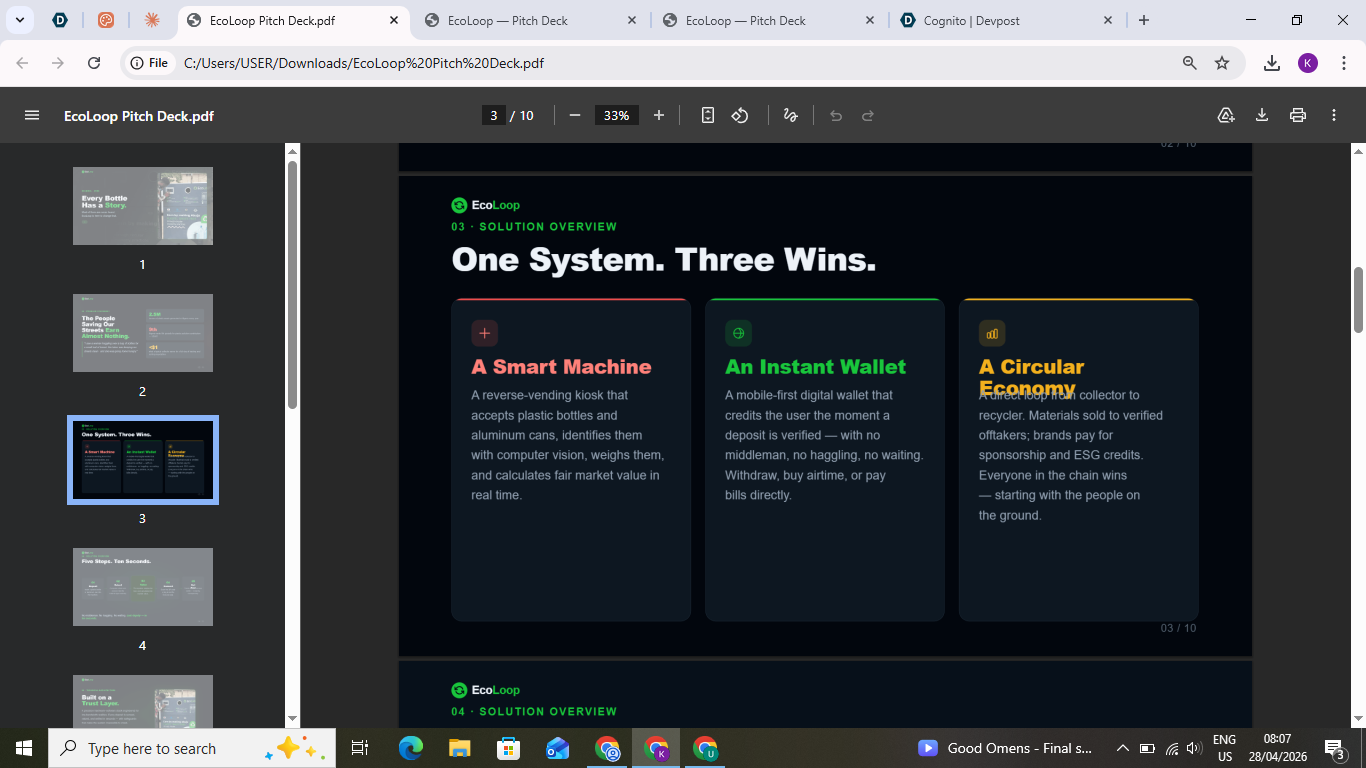
As a designer, I asked myself: why is it easier to send money across the world than to pay someone fairly for cleaning their own street? Ecoloop was born to change that. To remove friction. To return the power, the profit, and the dignity to the people who deserve it. We’re not just cleaning streets; we’re protecting health, nurturing ecosystems, and digitizing the hustle turning the invisible labor of saving our environment into real, recognized value.
What it does
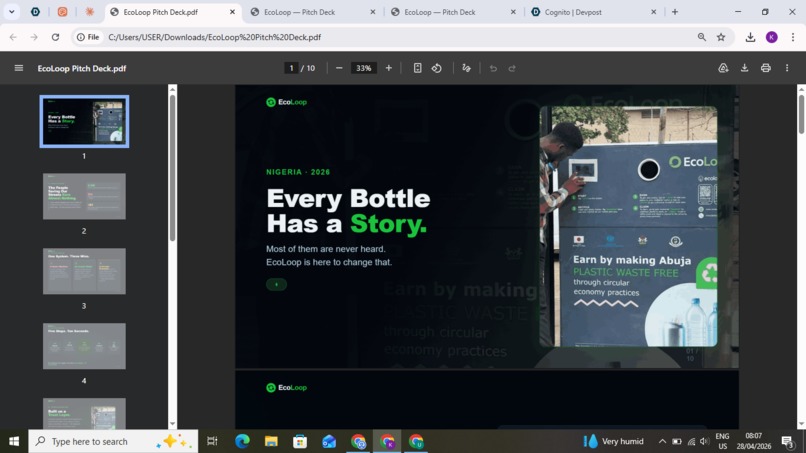
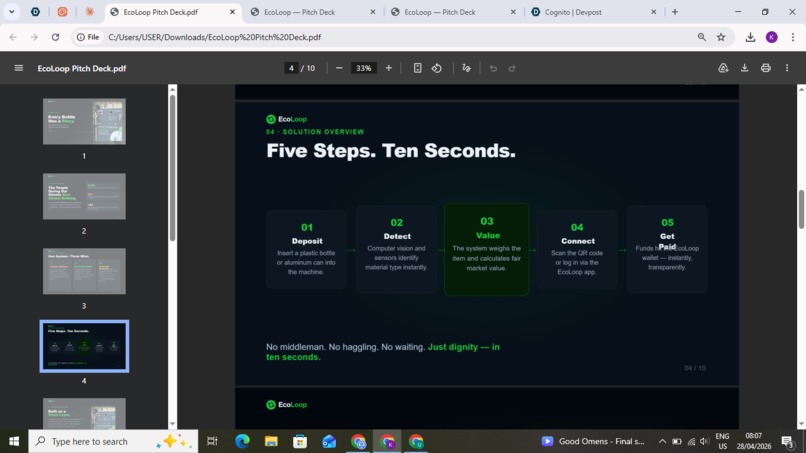
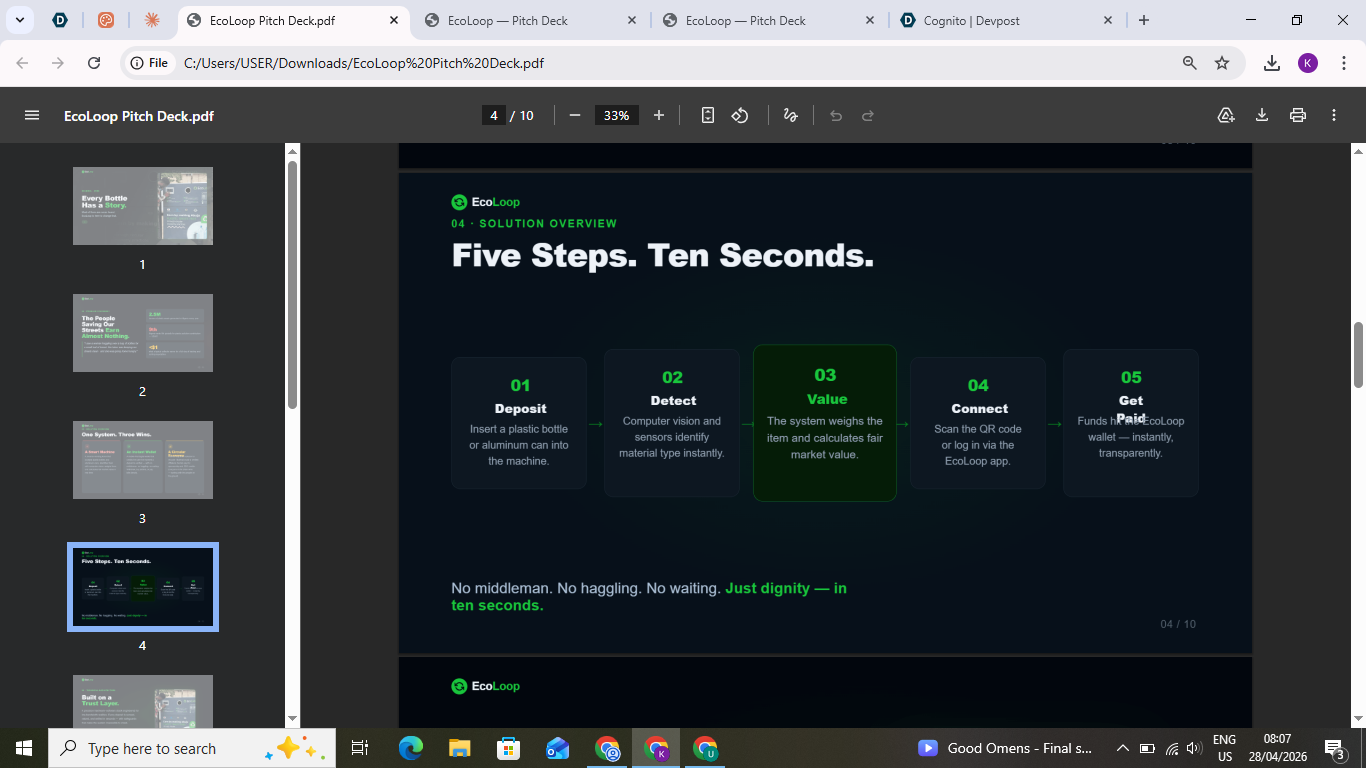
We’ve turned the recycling process into a 10-second digital transaction:
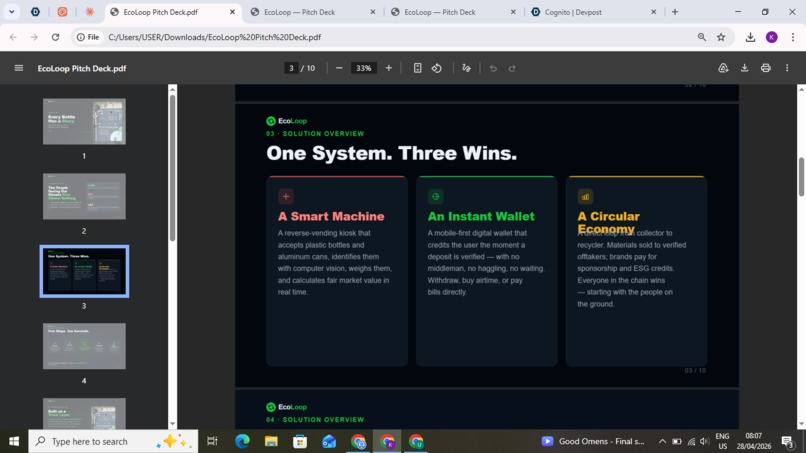
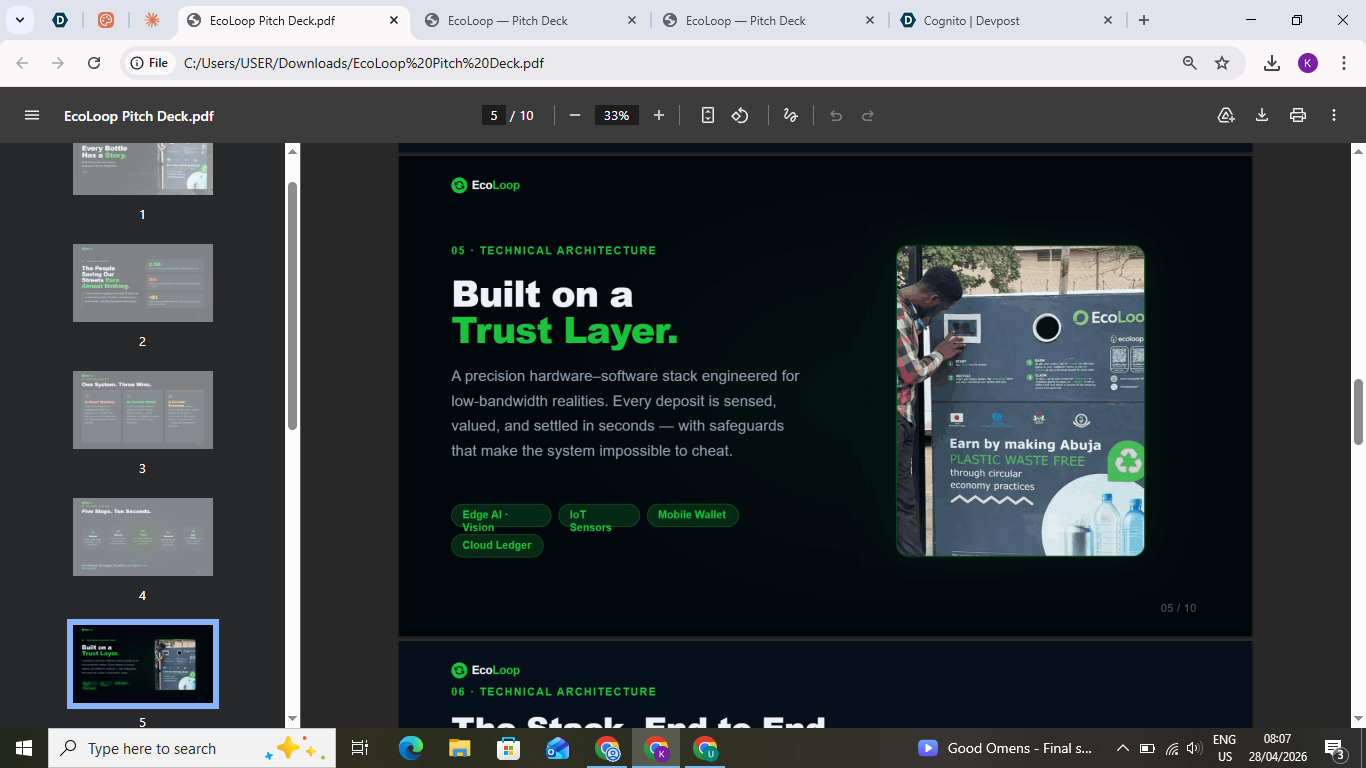
The Deposit: You insert a plastic bottle or aluminum can into the Ecoloop machine.
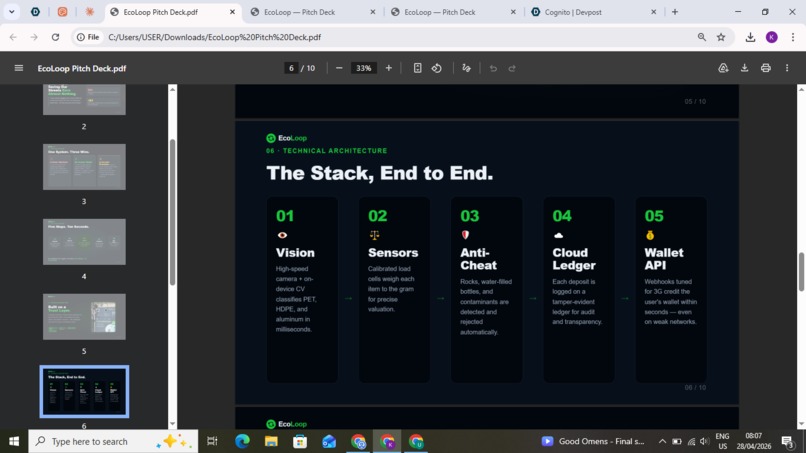
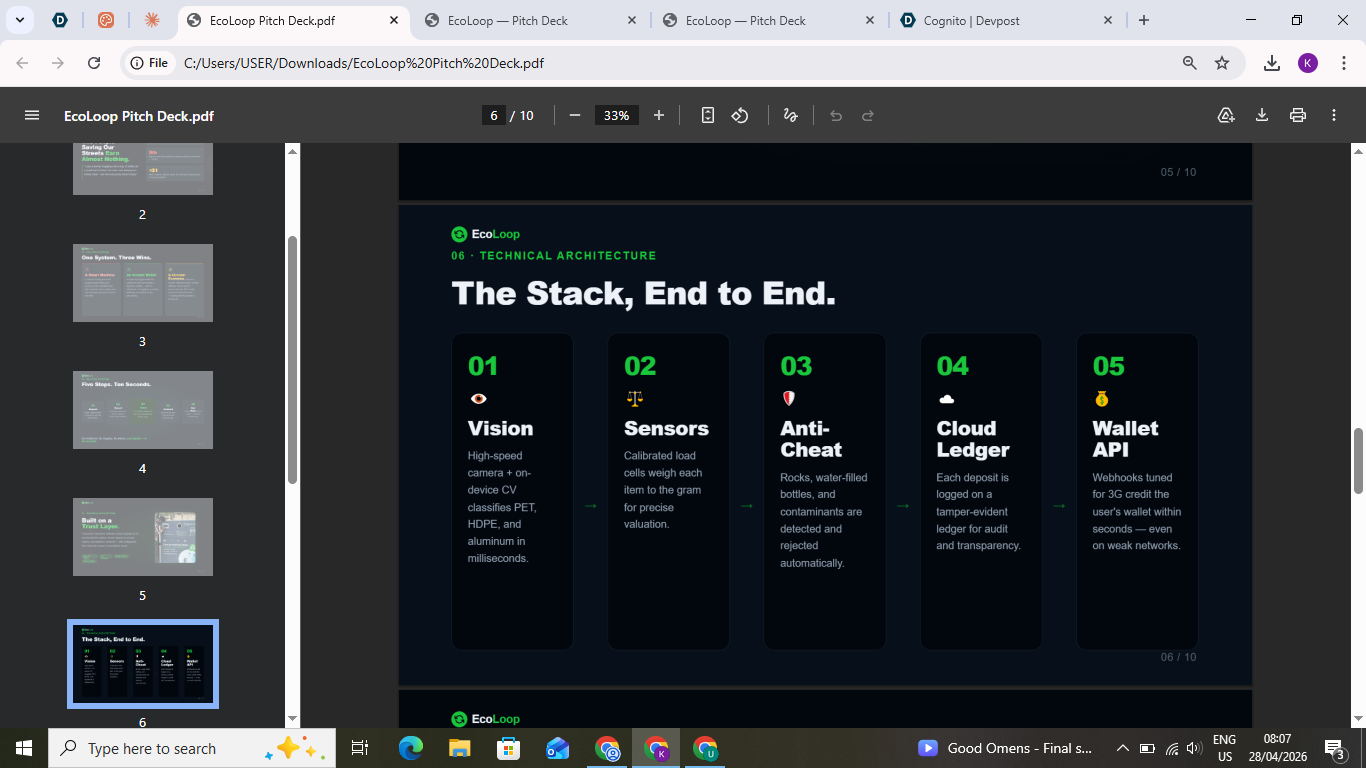
The Intelligence: Inside, a high-speed camera and sensors instantly identify the material and size, ensuring it’s a valid item (and blocking any "cheating" attempts).
The Valuation: The system weighs the item and calculates its real-time market value plastic for a steady reward, aluminum for a higher premium.
The Connection: You either scan a QR code printed by the machine or log in via the app beforehand to sync your account.
The Payout: The funds hit your Ecoloop wallet instantly. You don't have to wait for a "collector"; you can withdraw to your bank, buy airtime, or pay your electricity bill right then and there.
How we built it
We prioritized a "frictionless" experience. I started the journey in Figma, designing a UI that works for everyone from a tech-savvy student to a market woman who just needs her balance to show up clearly.
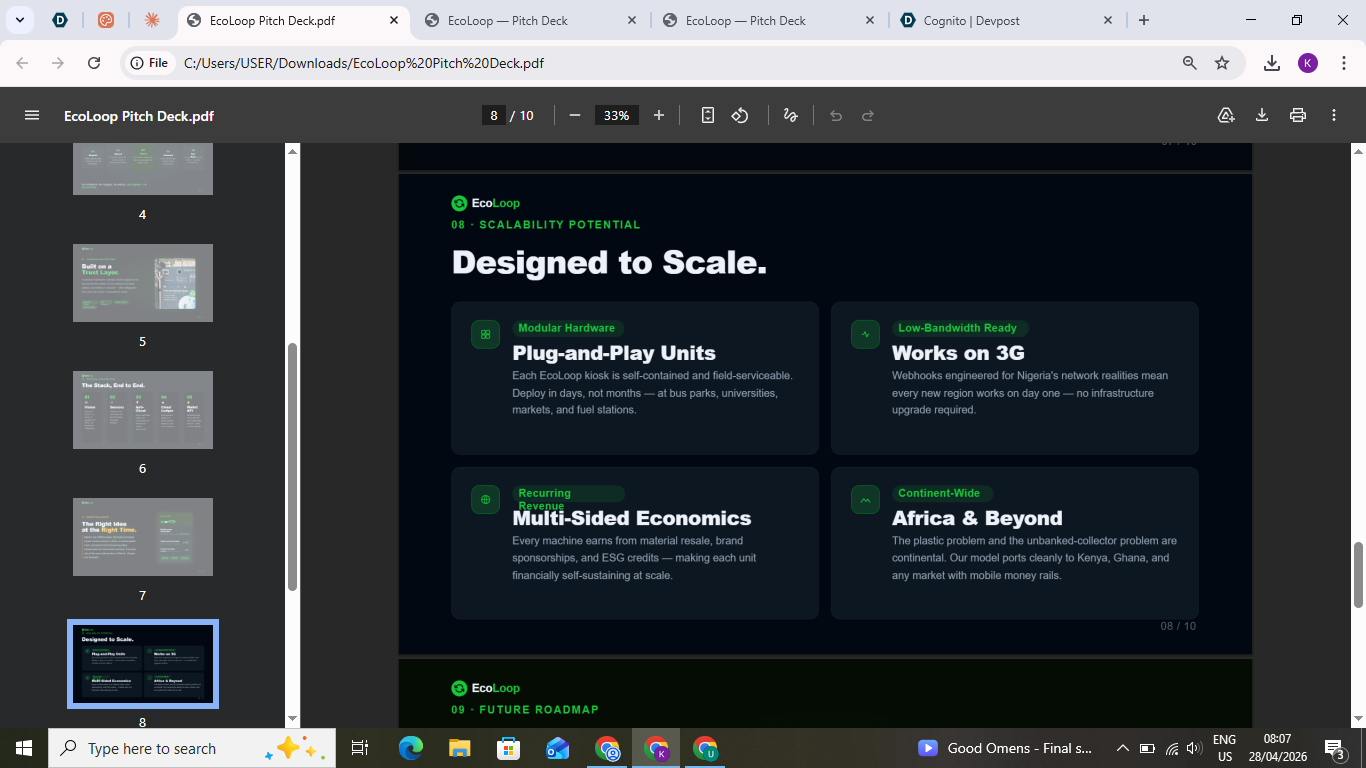
The Tech: We used React, Vite, and Tailwind CSS to keep the app light and fast, even on shaky 3G connections.
The Logic: We built a custom backend that translates physical sensor data (weight/material) into financial micro-transactions.
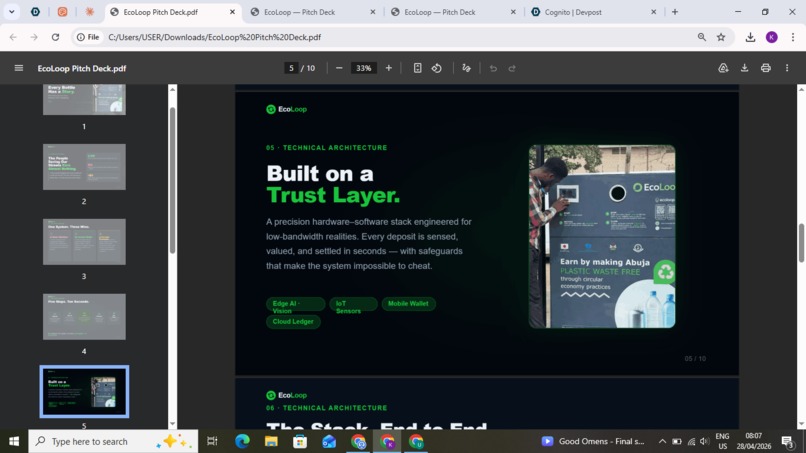
The Hardware: We integrated computer vision and weight sensors to create a "Trust Layer," so the machine can’t be fooled by rocks or non-recyclables.
Challenges we ran into
The "Nigeria Factor" was our biggest hurdle. How do you maintain a "real-time" experience when the internet is spotty? We had to optimize our webhooks so that the "credit" reflects in the wallet within seconds of the bottle dropping. Another challenge was hardware reliability designing sensors that can handle the dust and heat of our environment while still being sensitive enough to tell the difference between two different types of plastic. We went through several iterations to ensure the "Anti-Cheat" system was airtight without making the machine feel "stubborn" to the user.
Accomplishments that we're proud of
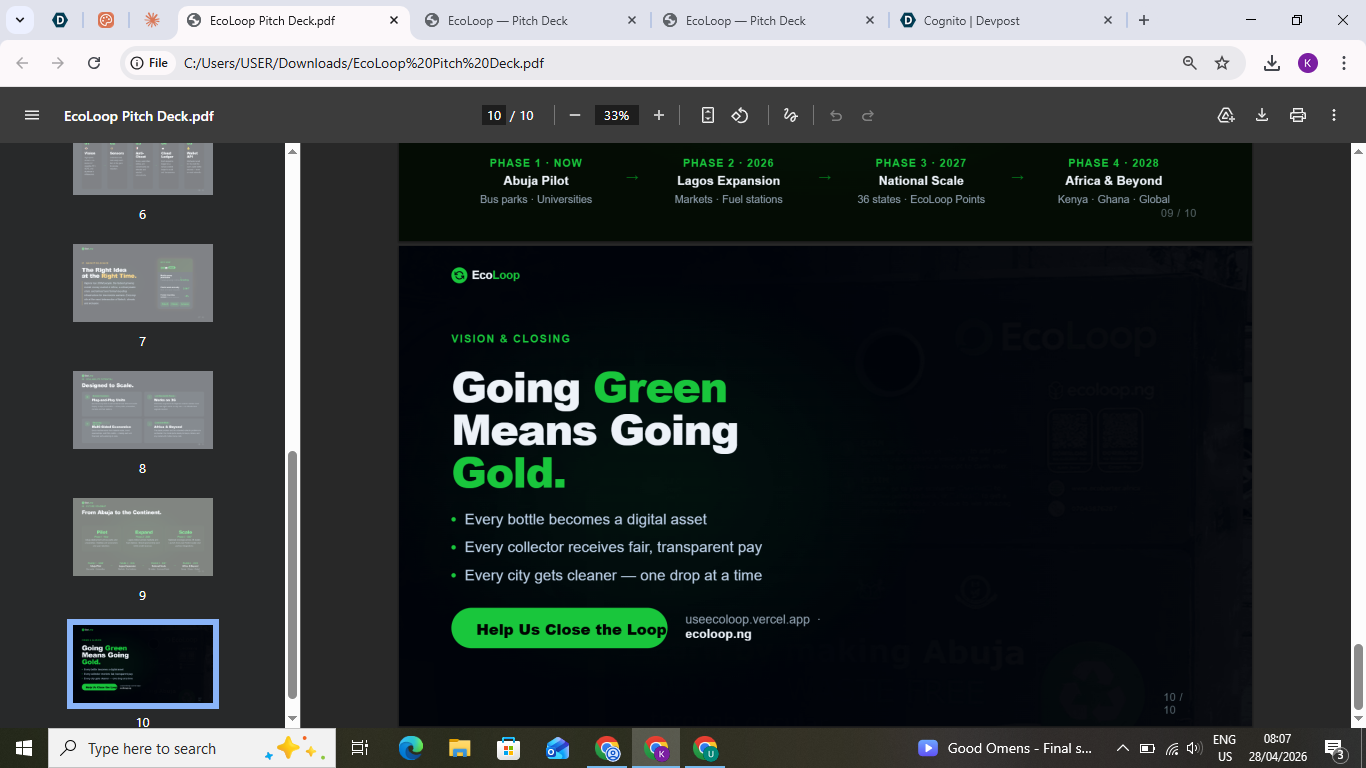
We are most proud of the "Moment of Truth." That second when a user who has never used a "smart" machine before drops a bottle in and sees their digital wallet balance tick upward. We’ve successfully bridged the gap between physical waste and digital finance. We didn't just build an app; we built a bridge for the unbanked and the environment-conscious to finally get paid what they are owed.
What we learned
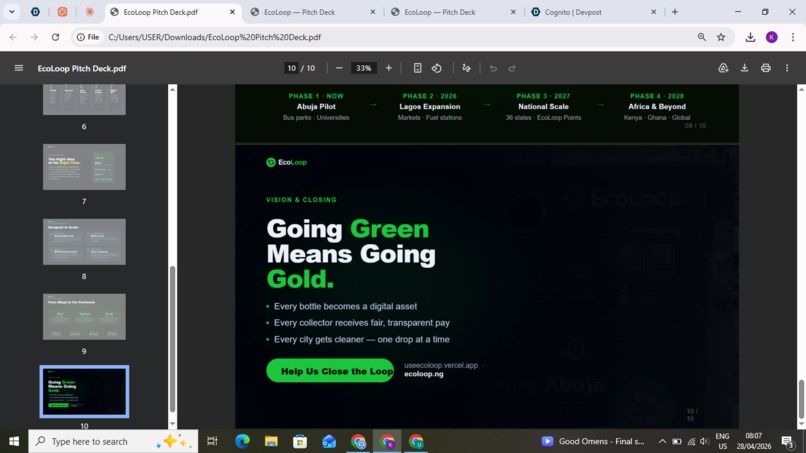
We learned that "Green" isn't enough it has to be "Gold." People in our communities want to do the right thing, but survival comes first. If you make recycling profitable and incredibly easy, the environment cleans itself. We also learned that as designers and developers, our greatest tool isn't just code; it's empathy for the user's daily struggle.
What's next for Ecoloop
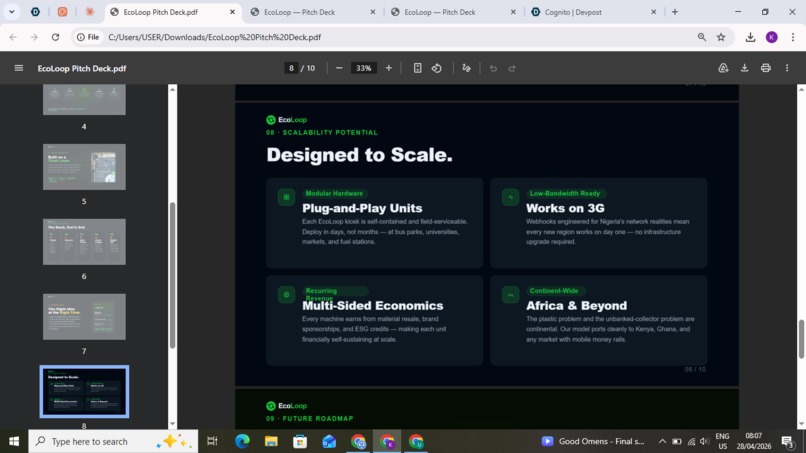
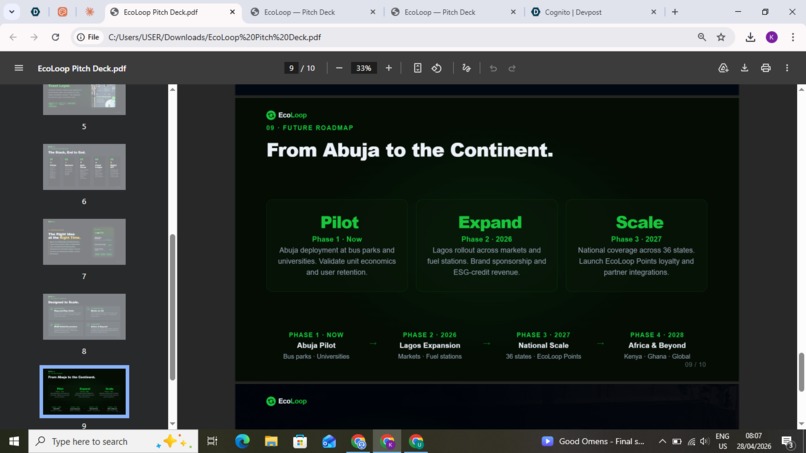
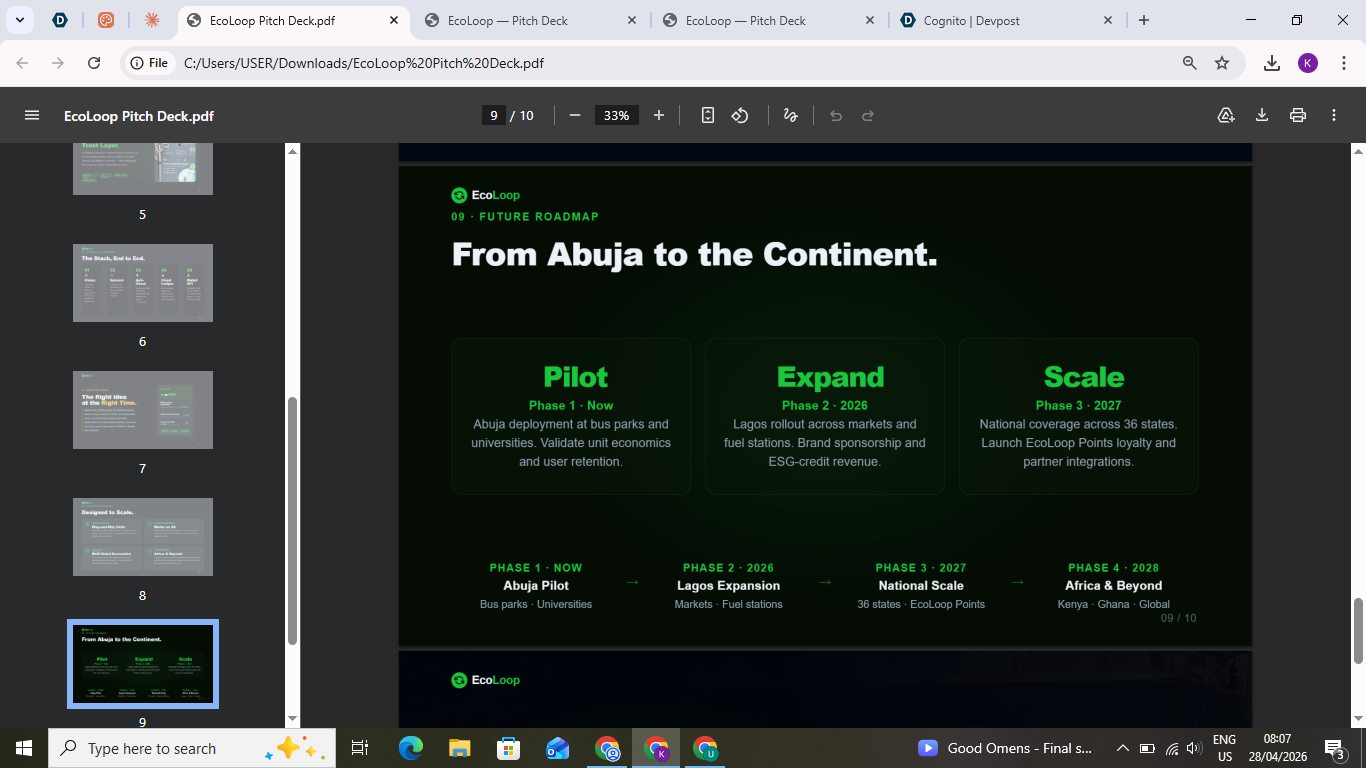
Winning this contest is the "Green Light" we need. This isn't just a project for Abuja; it’s a blueprint for Nigeria. With your support, we will move from prototype to the pavement deploying machines at bus parks, universities, and markets nationwide. We plan to introduce "Ecoloop Points" and leaderboards to make recycling a national sport. We are ready to turn every gutter-blocking bottle into a digital asset.

Log in or sign up for Devpost to join the conversation.