


Inspiration
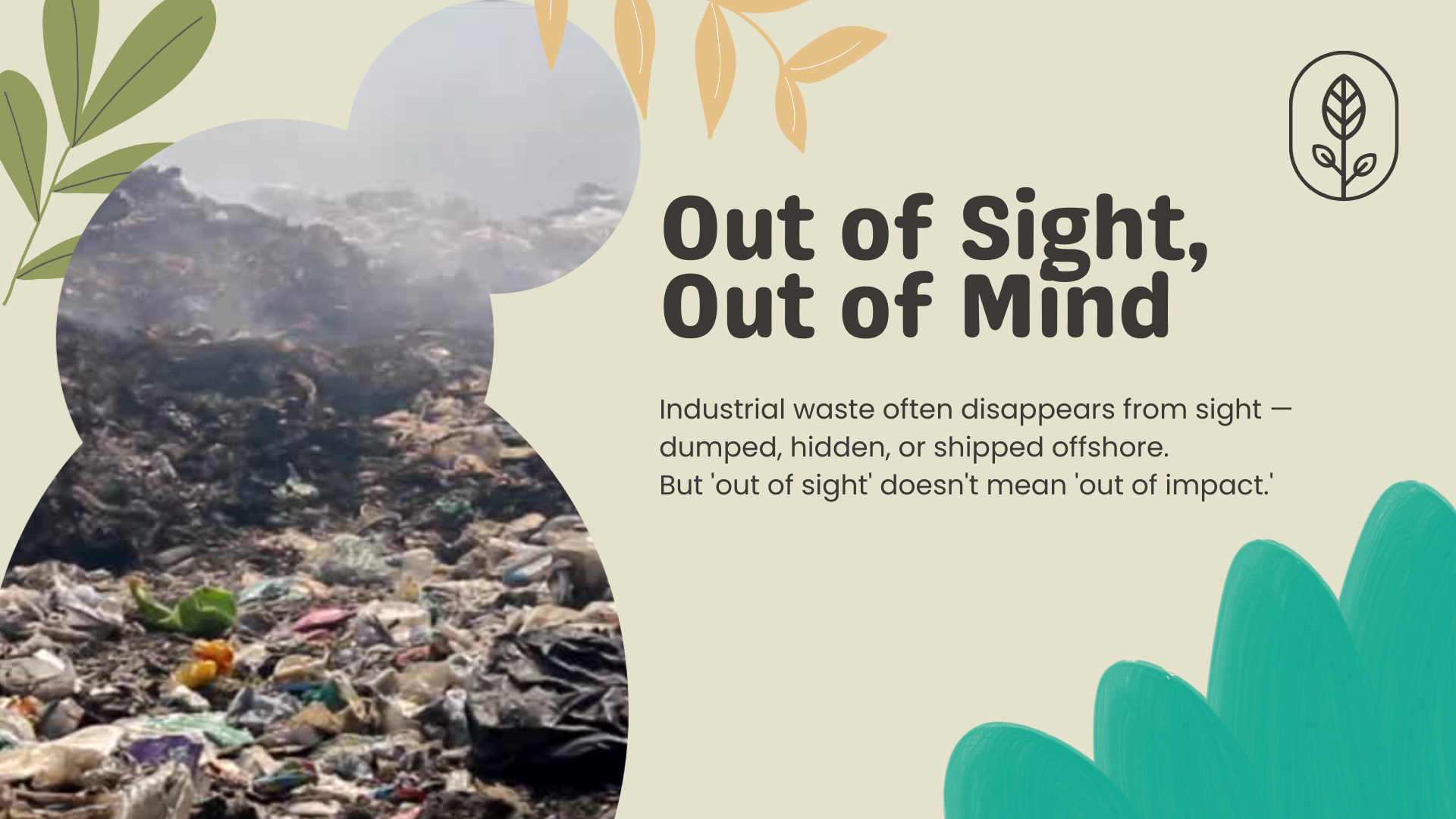
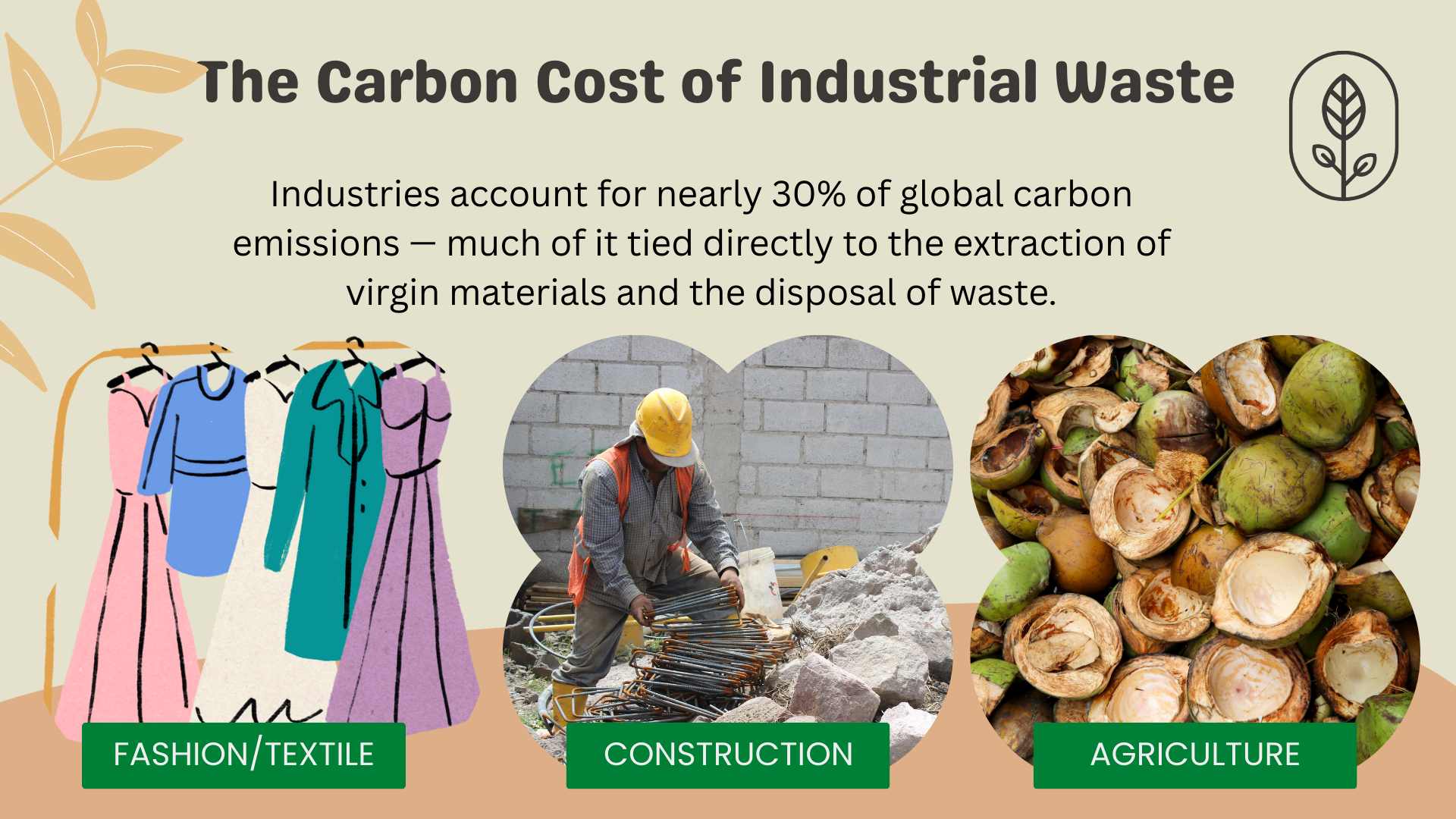
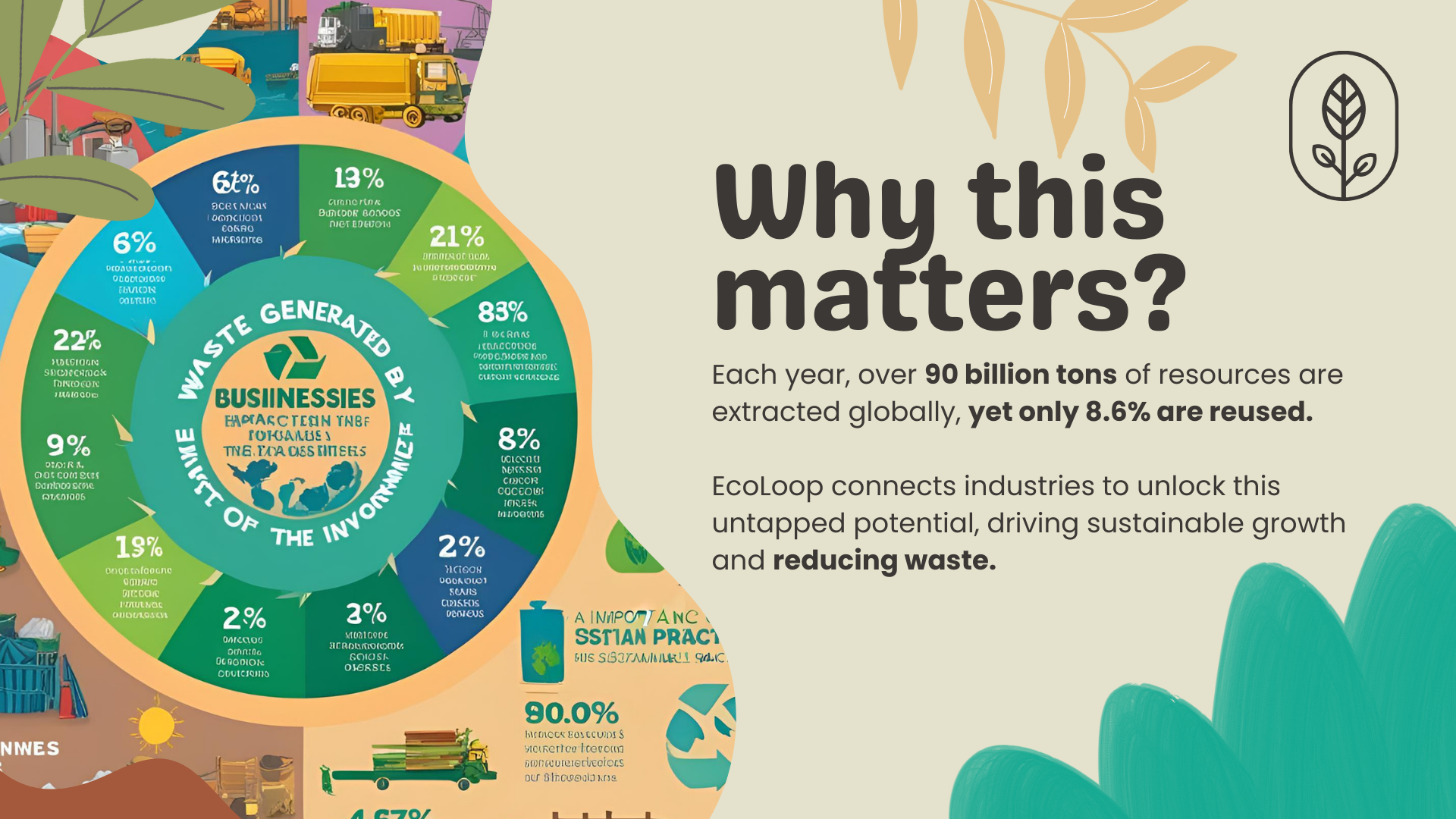
Today’s industries operate in isolation — generating surplus materials and byproducts that often go underutilized or discarded. Meanwhile, global emissions continue to rise, and resource extraction accelerates unsustainably.
We asked ourselves:
What if byproducts from one industry could become building blocks for another?
EcoLoop was born to bridge industries, transform surplus into opportunity, and drive profit with purpose, creating a circular economy where resources flow seamlessly and sustainably.
What it does
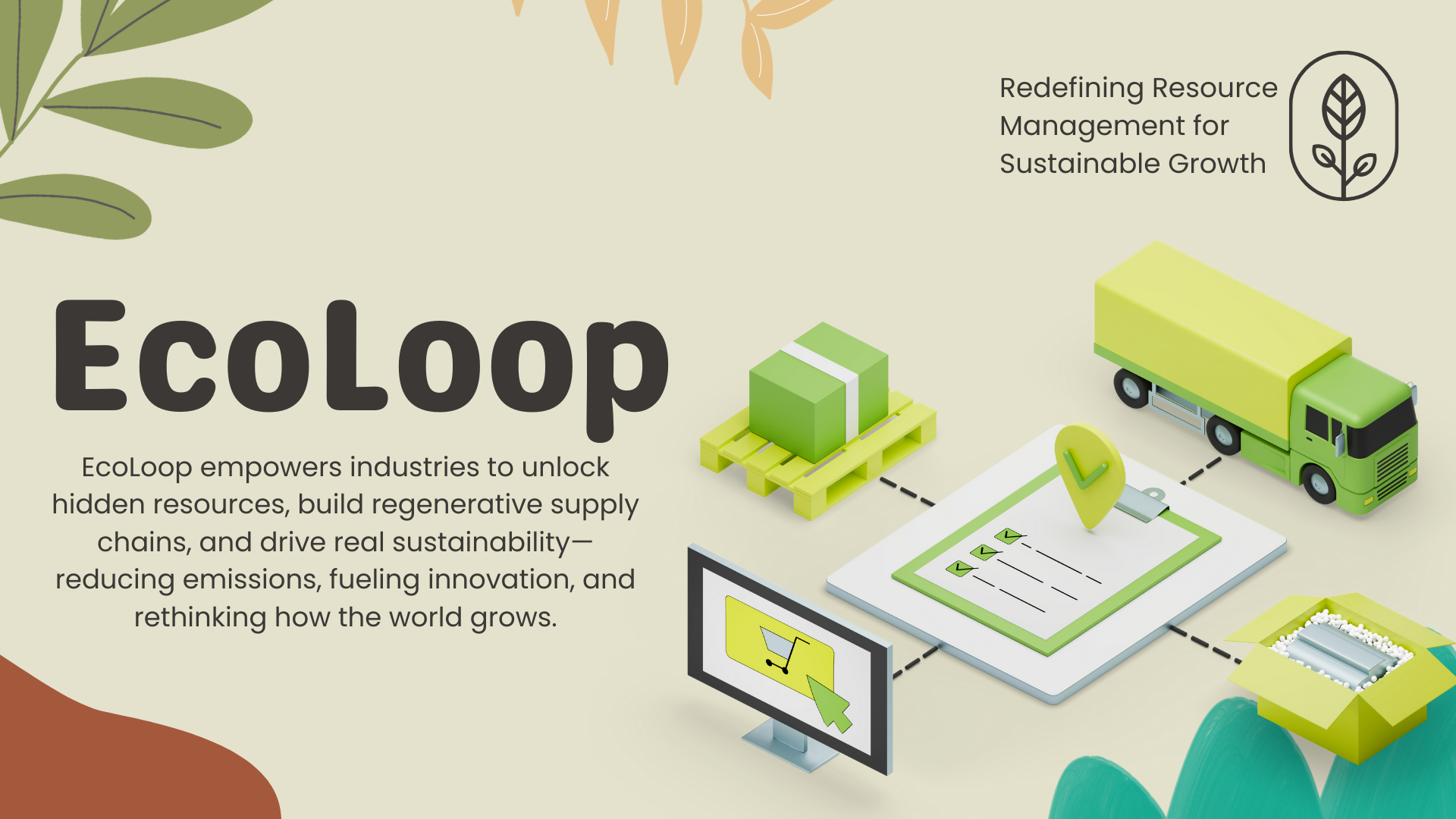
EcoLoop is reshaping industrial growth by turning surplus materials and byproducts into valuable resources across industries.
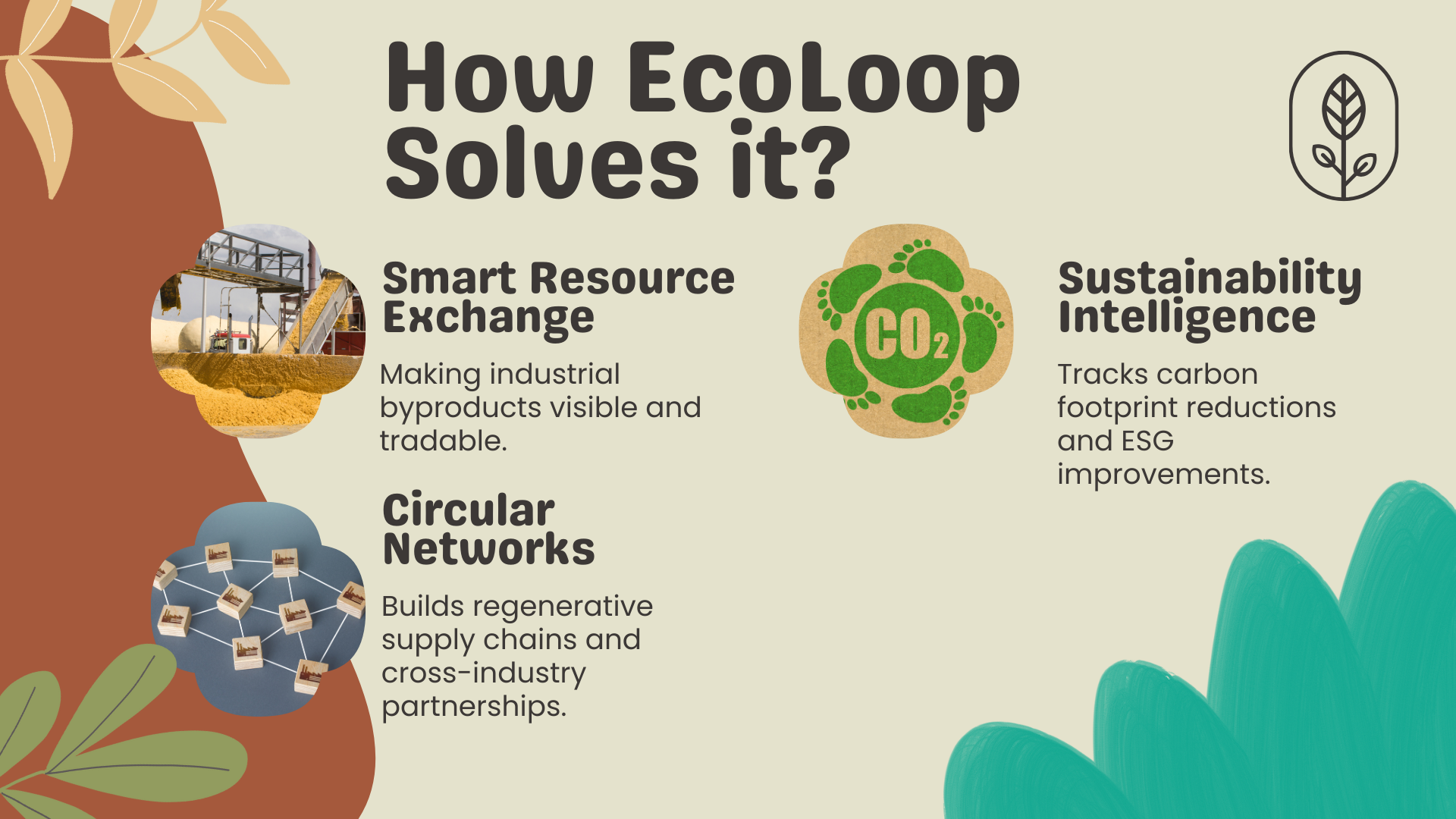
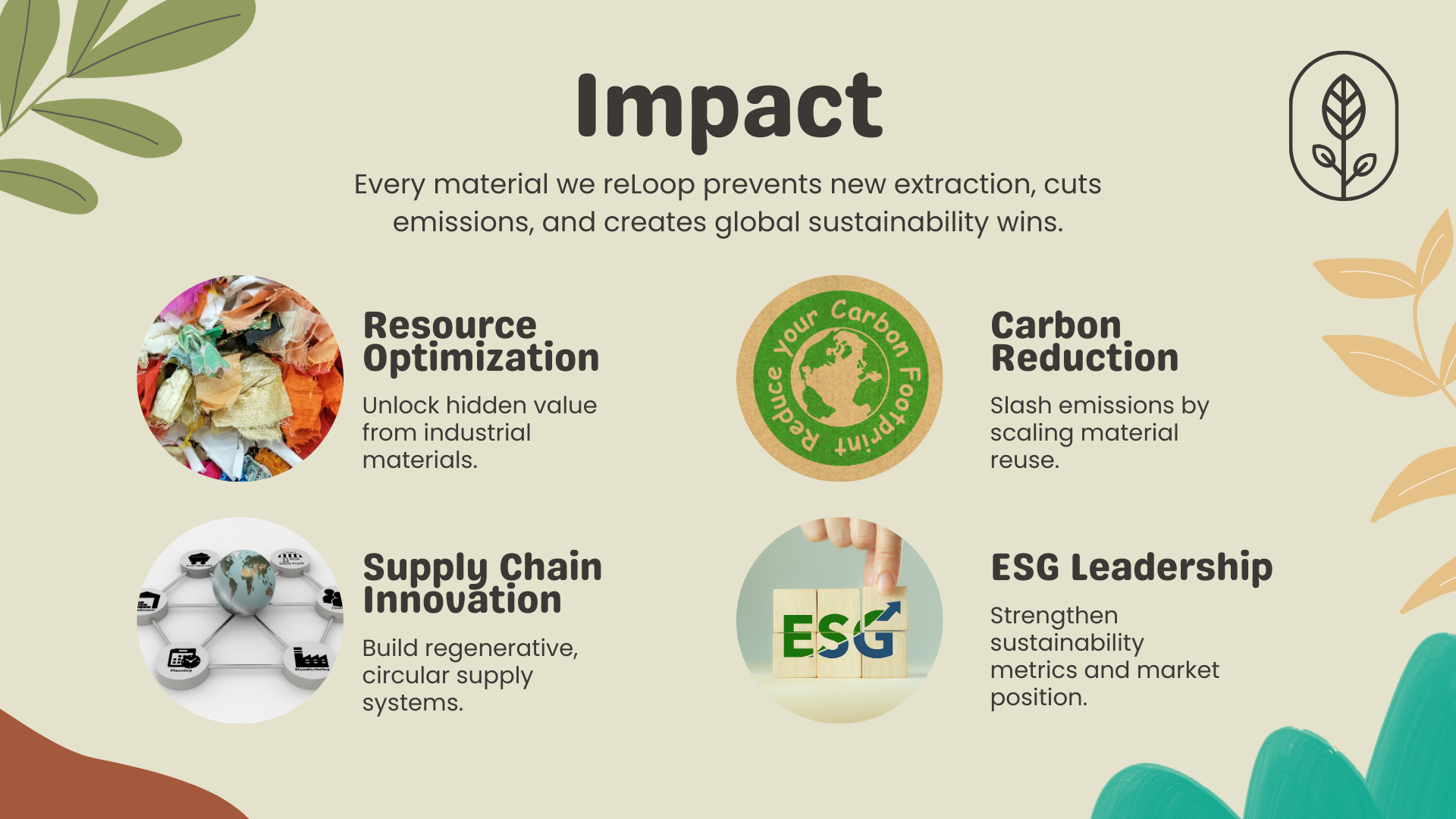
Instead of waste, we see opportunity — connecting businesses to lower costs, reduce carbon emissions, and build regenerative supply chains.
With EcoLoop, profit and sustainability are no longer trade-offs — they move together.
Profit. Planet. Progress.
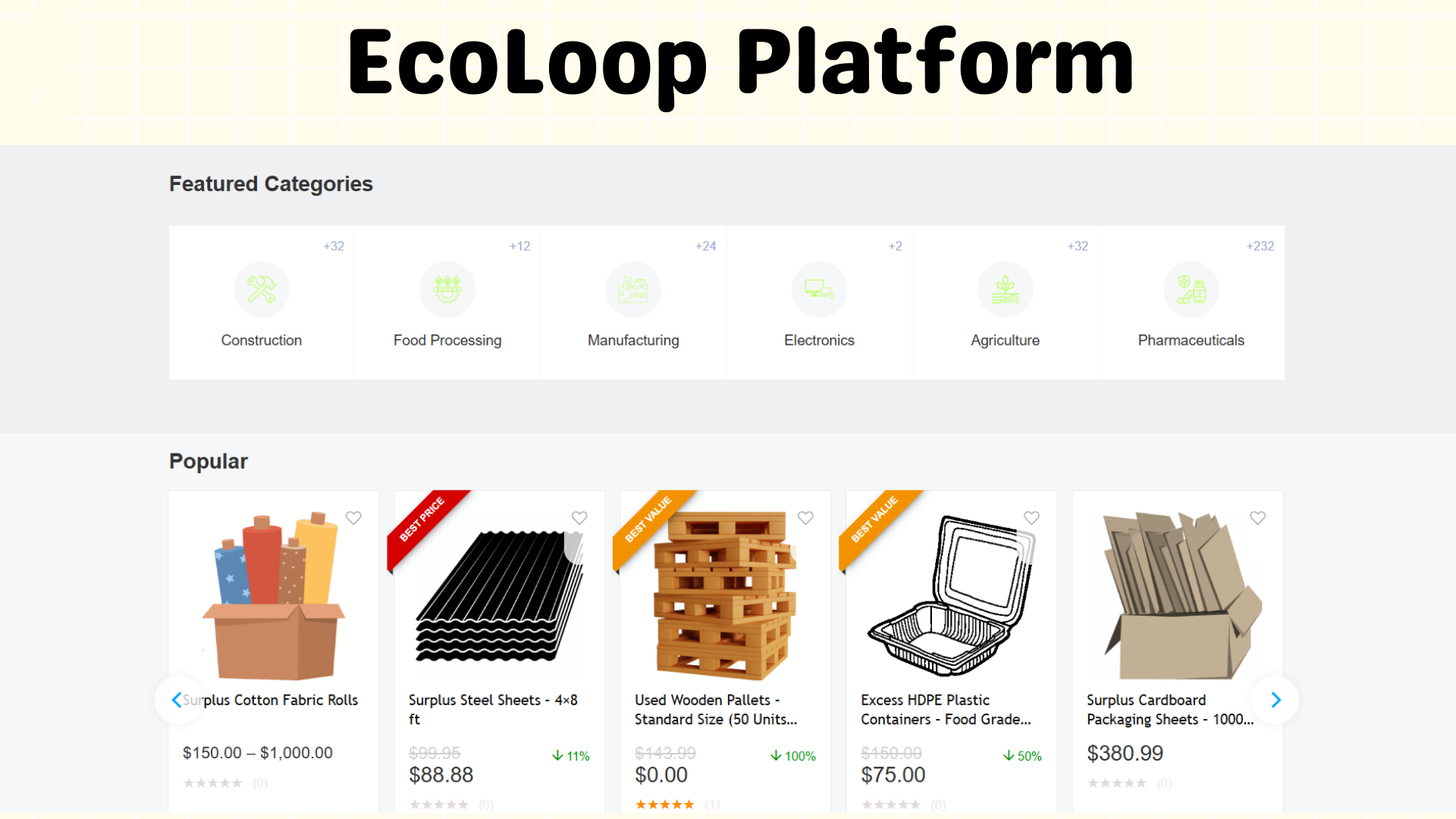
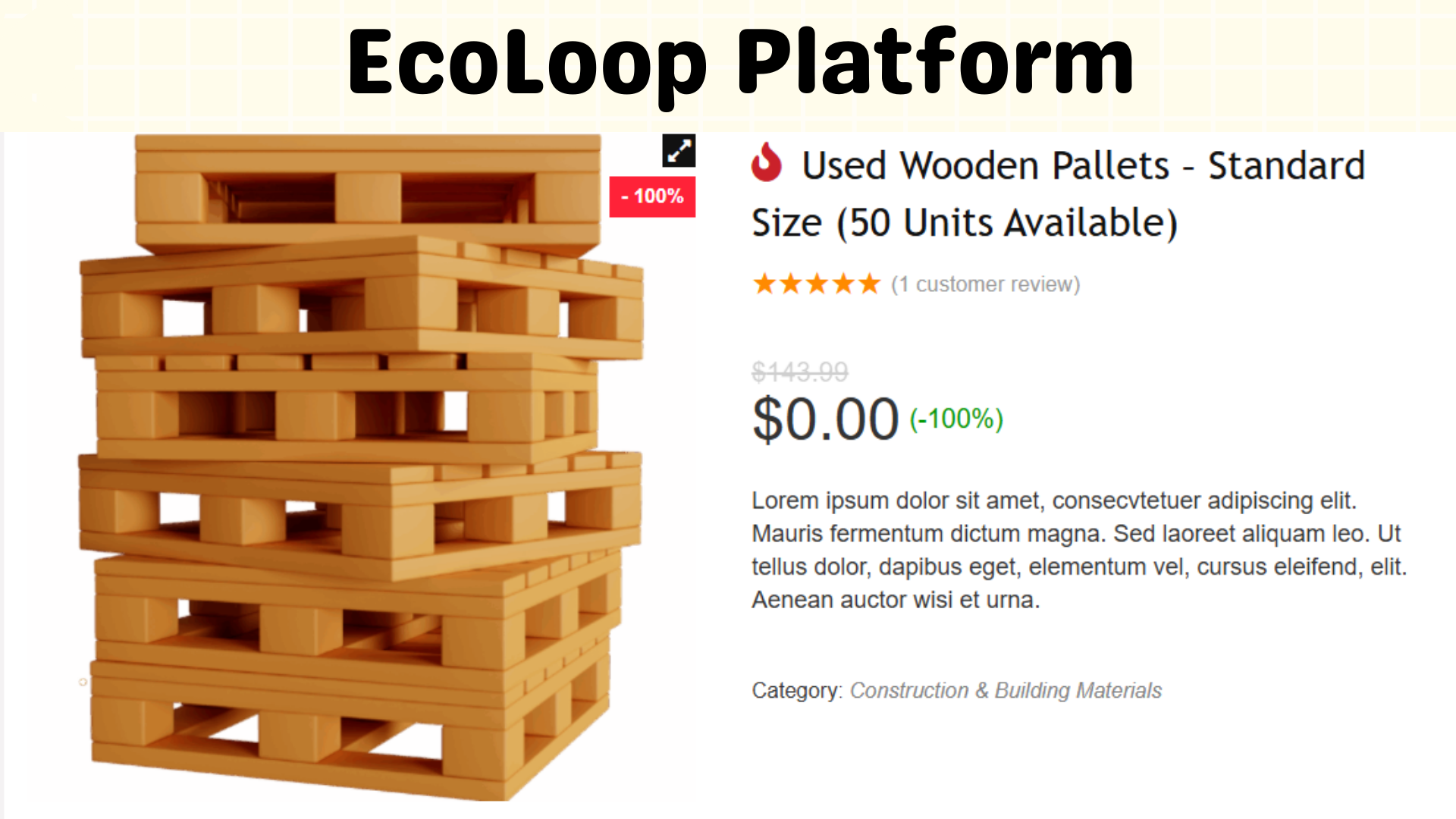
Sellers list available materials; buyers discover affordable, sustainable inputs.
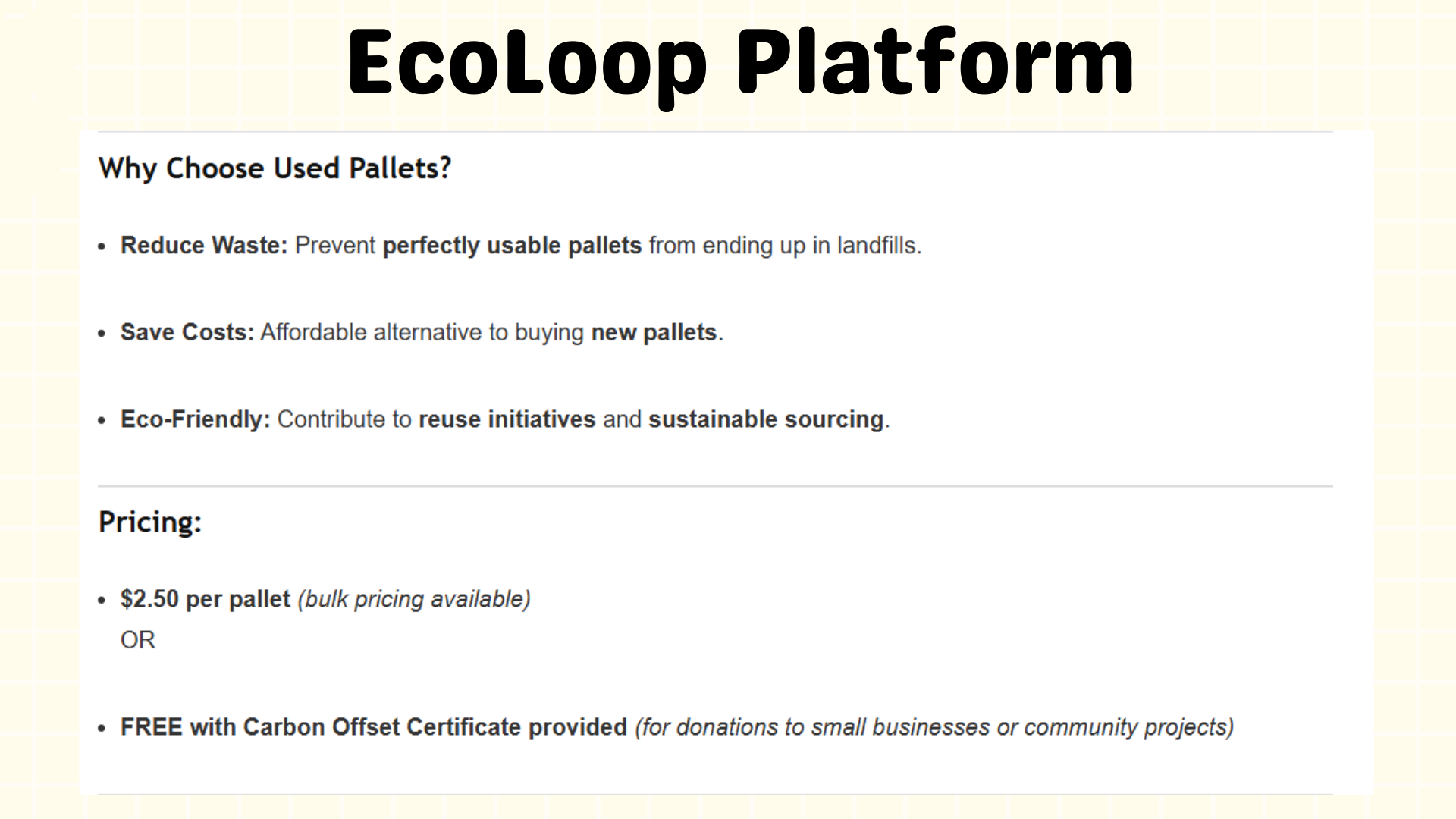
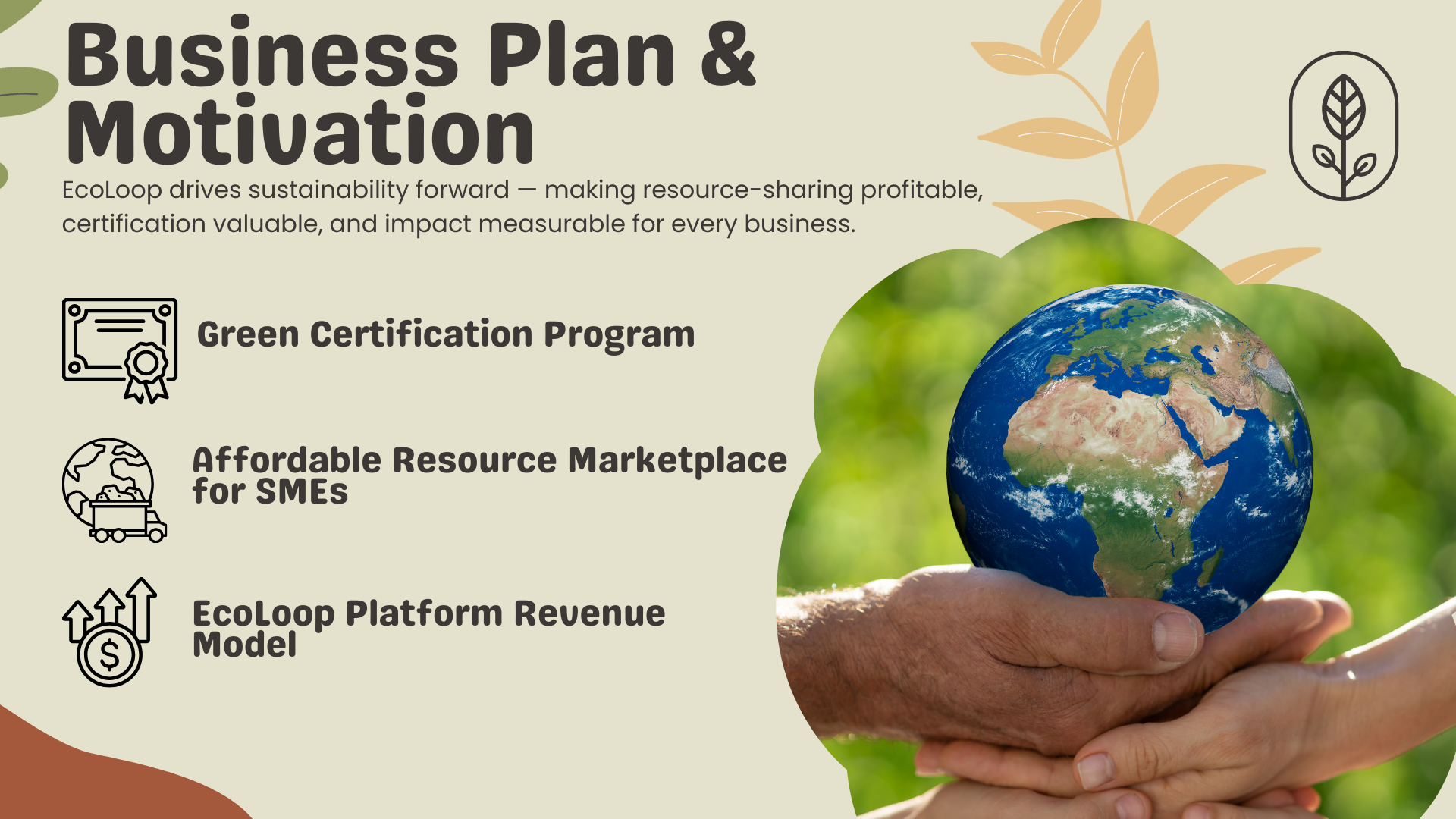
EcoLoop also provides Green Carbon Footprint Certification, rewarding businesses for their contributions to resource circularity and sustainability leadership.
Through smarter resource flows, EcoLoop cuts carbon emissions, drives economic value, and builds regenerative supply chains.
How we built it
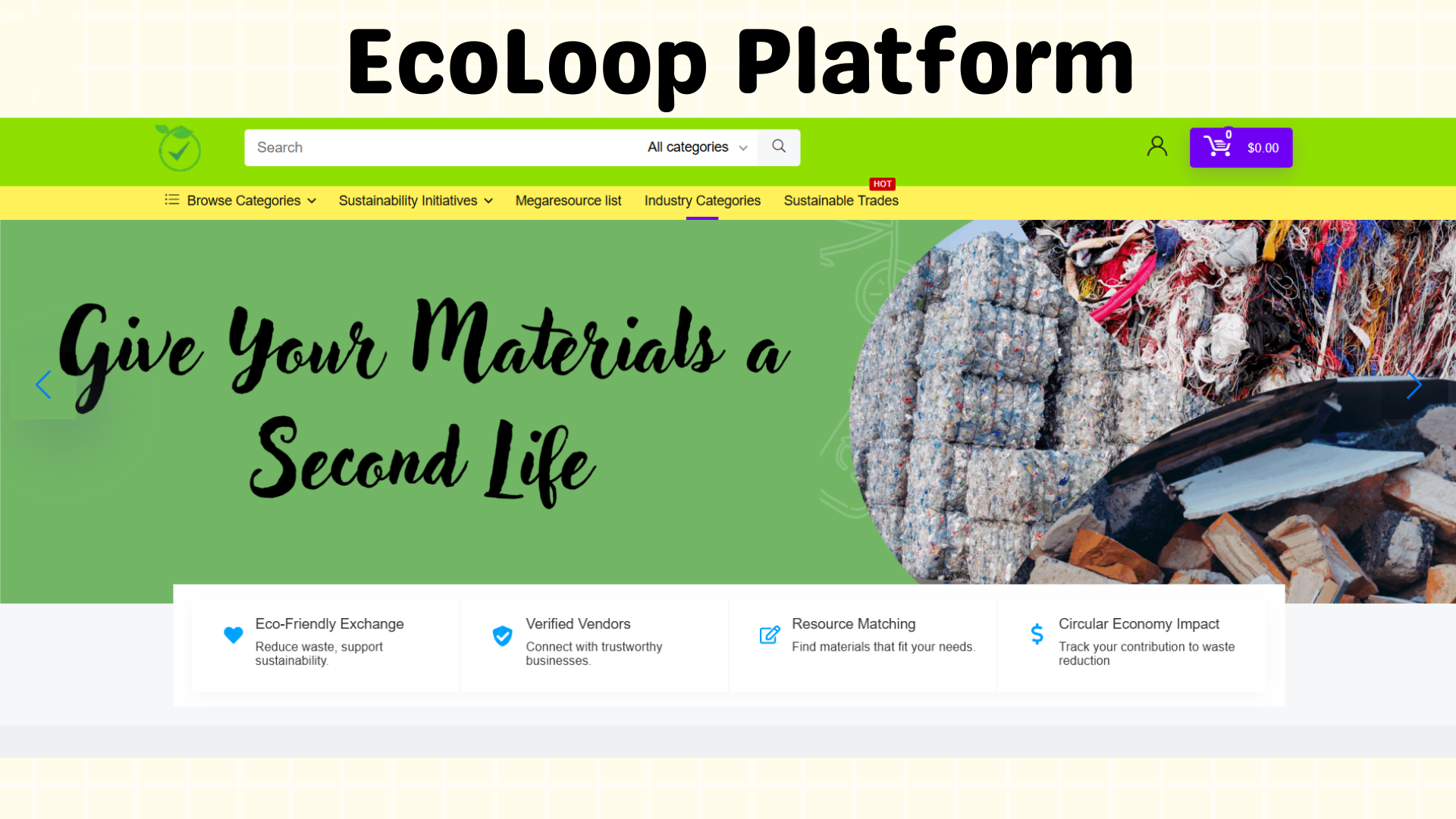
We built EcoLoop as a modular B2B marketplace using WordPress, powered by the REHub theme and WooCommerce multi-vendor plugins.
The platform features:
- A smart listing system (tagged by industry, material type, and location)
- A matchmaking flow connecting sellers and buyers across industries
- A carbon offset certification mechanism to reward sustainable exchanges
For the prototype:
- We designed frontend elements in Figma
- We mapped backend logic (resource matching and sustainability tracking) using Node.js/Express concepts
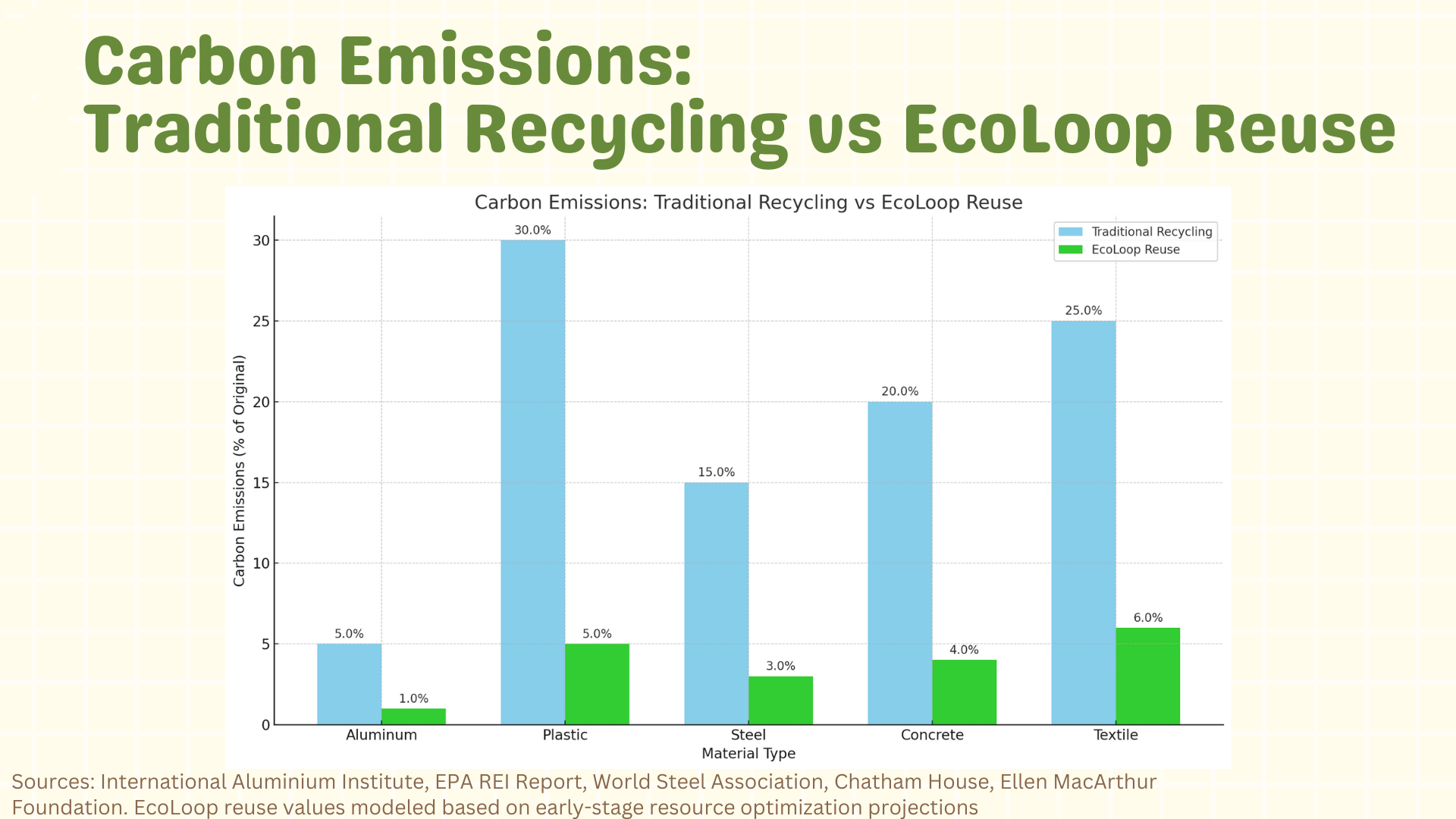
- Our carbon savings calculations are modeled based on real-world data.
Challenges we ran into
One major challenge was reworking traditional e-commerce templates to fit a material exchange model instead of selling regular products.
We needed to ensure the design clearly communicated sustainability goals while remaining intuitive and easy to use for businesses of all sizes.
Other key challenges included:
- Framing the narrative: Moving beyond "waste management" to focus on resource regeneration and smart resource flows.
- Building realistic projections: Estimating potential emissions reductions credibly while maintaining a visionary model.
- Scalability logic: Designing EcoLoop to scale globally and connect vastly different industries without becoming overly complex.
- Creating real business incentives: Developing the Green Carbon Footprint Certification to provide both environmental recognition and branding value for participants.
Accomplishments that we're proud of
- Shifting the conversation from "waste management" to resource optimization and profit-driven sustainability.
- Designing a system where profit and purpose align, helping companies reduce emissions while improving operations.
- Quantifying how early resource reuse can dramatically outperform traditional recycling in terms of carbon savings.
- Creating a full business model, not just a technical solution — including platform revenue streams, SME access models, and impact tracking.
What we learned
- Circular economy thinking is much bigger than recycling — it's about redesigning systems at every level.
- Resource surplus across industries is massive — and mostly disconnected today.
- Sustainability must be made profitable for businesses to adopt it at scale.
- Vision and execution must go hand-in-hand — it's critical to back bold ideas with real-world data and pathways to adoption.
What's next for EcoLoop
- Partnering with early adopter businesses to pilot cross-industry resource exchanges.
- Expanding the Green Certification program to provide ESG reporting tools linked to carbon savings.
- Integrating AI-driven material matching to maximize efficiency and discover unexpected resource synergies.
- Continuing to refine our impact models and validate carbon reduction assumptions with live marketplace data.
Built With
- cloud
- express.js
- figma
- iea
- multi-vendor
- node.js
- php
- platform
- plugins
- rehub
- woocommerce
- wordpress


Log in or sign up for Devpost to join the conversation.