Inspiration
We talked about our perspectives on concurrent information awareness and how it's particularly missing in underserved communities. We decided that we wanted to streamline information from disaster sites to make it more accessible to our viewer base. This is in addition to wanting to raise awareness towards under-represented ecological disasters around the globe.
About Ecology Keystone Network (E.K.N)
Ecology Keystone Network is a software that informs people on localized concurrent natural disasters and global ecological disasters.
We have two primary goals for our project. The first is to be able to inform people about localized concurrent natural disasters near them and precautionary guidelines they can take to establish their safety. The second is to be able to inform people about various ecological disasters affecting the globe and how they can learn more.
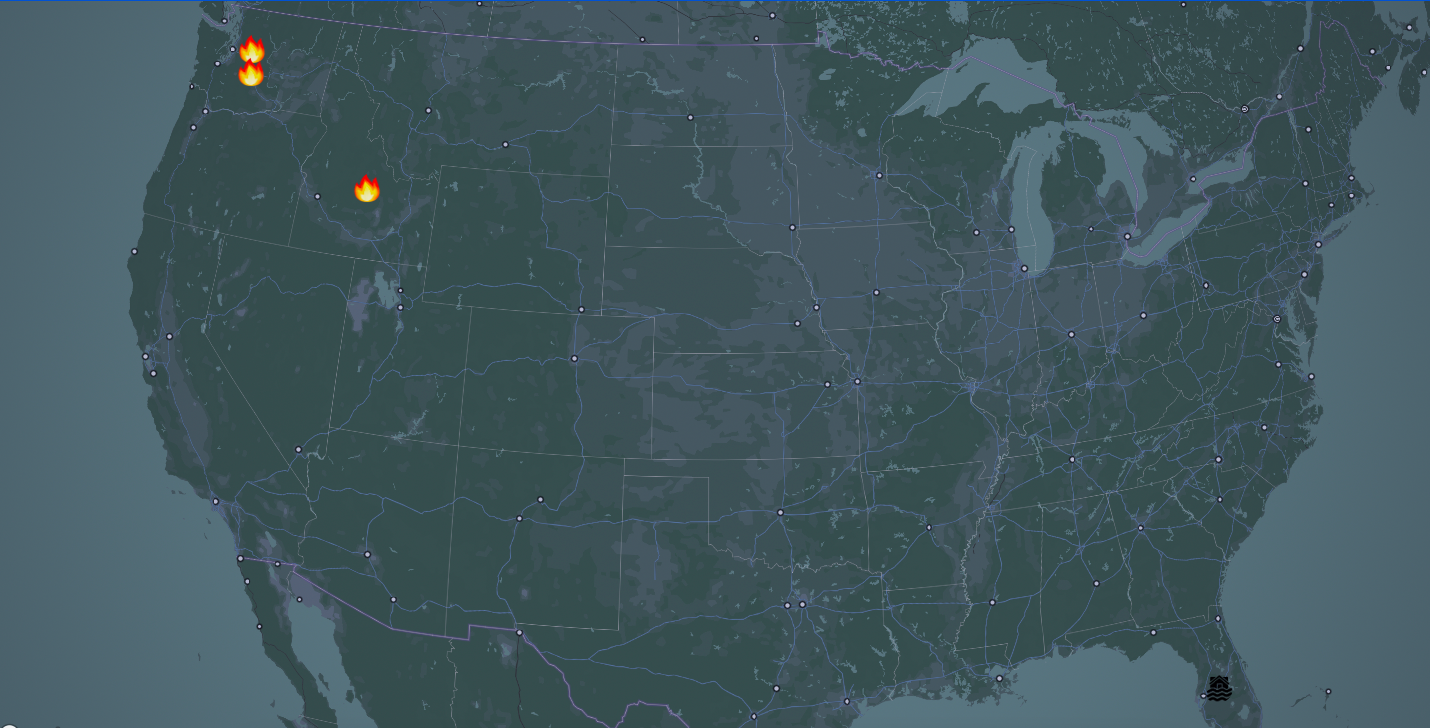
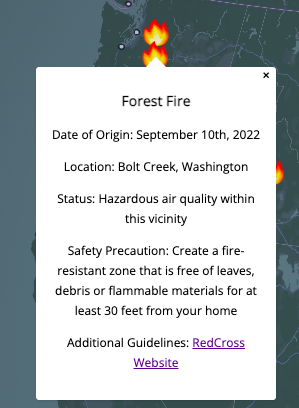
Our project is a full-stack web application that runs on Netlify. You traverse a 2d map of your local area or across the globe and can click on certain keystones to learn more about them. These keystones are concurrent natural disasters in your local area and/or ecological disasters across the globe. By clicking these keystones, you are informed about the type of event it is, its date of origin, its region of impact, as well as additional information and safety guidelines from an embedded hyperlink.
For both keystone types, concurrent natural disasters and ecological disasters, we have an automated system that scrapes the internet and government databases for keywords, phrases, and location matching to identify and publicize these natural and ecological disasters as unverified keystones. We then have a small team verify the legitimacy of the event and its details before we officially verify it as a keystone on our map. With localized concurrent natural disasters specifically, we also aggregate from local news stations and online sources in the area of the reported concurrent disaster. We chose this method because we figured that the speed at which disasters are reported is the fastest when done by local observers and new stations assigned to particular regions of geography. Our keystones update as information from our sources updates. Once the natural disaster passes, we store its information in our history of previous natural disasters in that localized area and remove its keystone from the 2d map.
Some different features that we have implemented and/or are attempting to implement are the following. A search option that allows you to filter for certain characteristics such as wildfire disasters, floods, localized disasters, or global ecological disasters. A proactive tool that tracks your localized location and creates a “disaster bubble” around you to specifically highlight and inform you of specific hazards to avoid. A connectivity feature is that when you hover over a particular type of natural or ecological disaster, other disasters of that type are also highlighted on the map to showcase similar areas of impact. An extension tool that allows you to look over an area's preexisting history of natural and/or ecological disasters. A broadcast system that allows you to watch new reports as they happen live through our application regarding concurrent natural disasters.
How We Built E.K.N
We built this project on an HTML file with many React components and features. We utilized Mapbox API in order for us to be able to have a map on our project and have certain icons of natural disasters for the user interface.
Challenges We Encountered
- We initially had trouble implementing the symbol pop-ups from the Mapbox API, but eventually, with collaborative effort, we were able to troubleshoot it.
- We took a considerable amount of time conceptualizing our proof-of-concept in terms of what we wanted our application to accomplish, how it would work, and features that made the most sense to prioritize.
Accomplishments We're Proud Of
- We were able to learn React on the spot and resonate with documentation in order for our projects to be in operation.
- We were also proud of our user interface as our initial version of it was a lot less intuitive and user-friendly.
What We Learned
- A portion of our group learned how to use React to a competent enough level to produce our project. 2. The other portion gained experience in what it's like to work in a collaborative and focused group working towards a singular goal.
- As a collective whole, we also learned how to prioritize certain minimal viable product features that constitute the basis of our project.
What's Next For Ecology Keystone Network
As mentioned earlier, we have a number of features we are concurrently attempting to implement. These features include but are not limited to:
- A search option that allows you to filter for certain characteristics and/or properties of our application
- The ability to track your localized location and have tailored information around you to specifically highlight and caution you of specific hazards
- An extension tool that allows you to view a keystone's disaster history
- A streaming feature that broadcasts new reports as they happen live through our application regarding concurrent natural disasters.


Log in or sign up for Devpost to join the conversation.