-
-
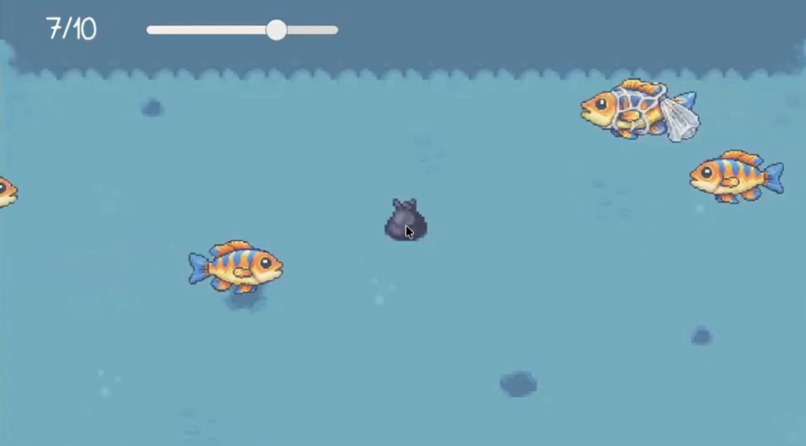
Mini-game#3: river pollution and fish
-
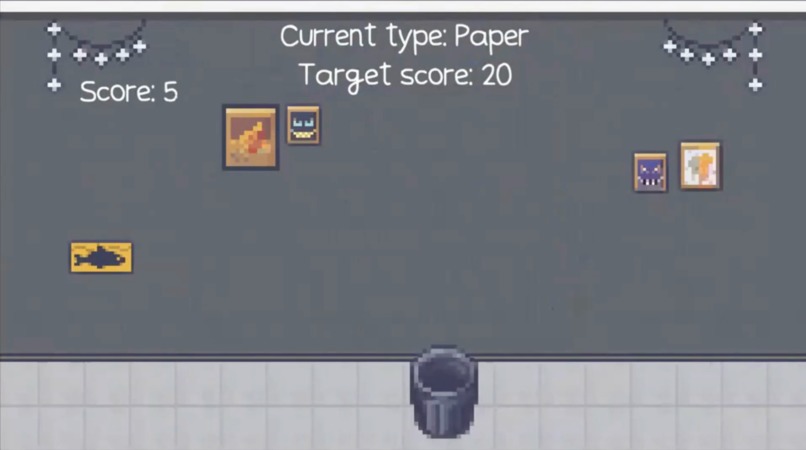
Mini-game#2: garbage sorting
-
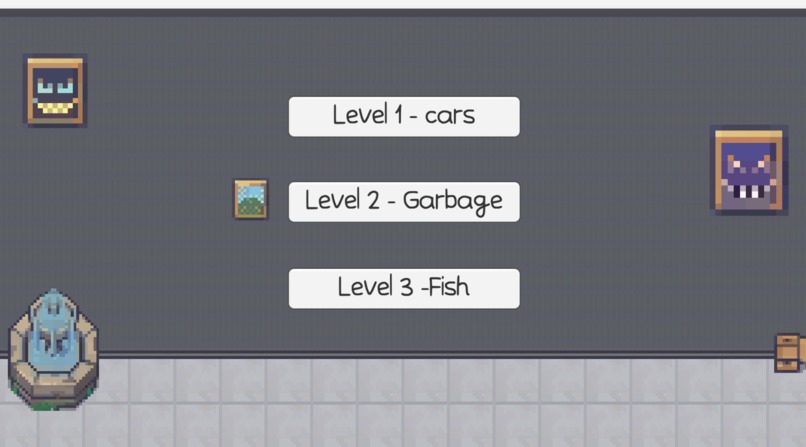
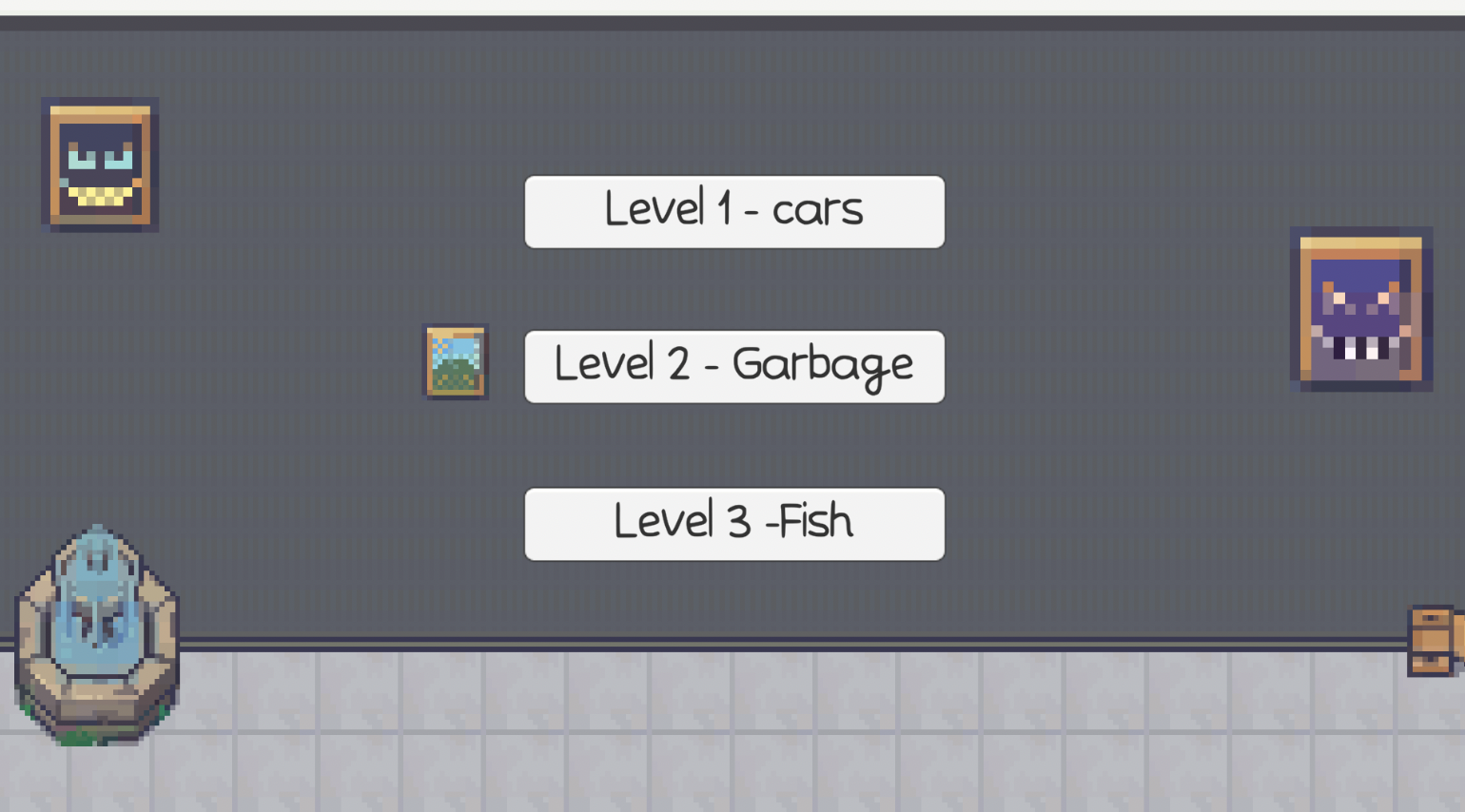
Menu of the game
-
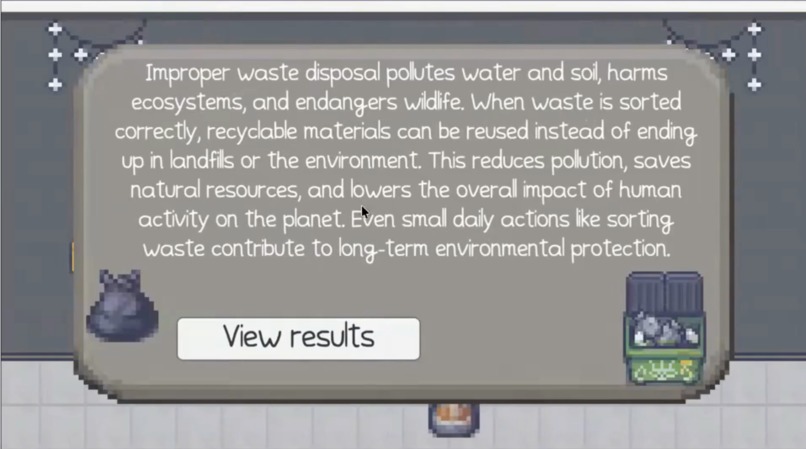
Mini-game#1: garbage explanation
-
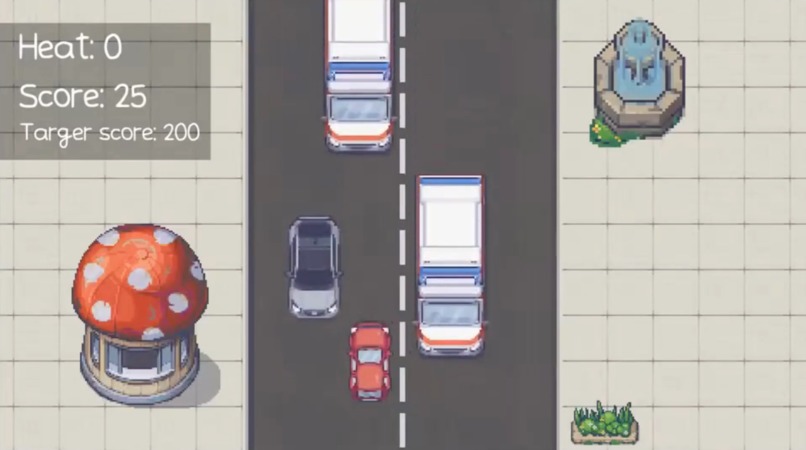
Mini-game#1: transportation choice
Inspiration
While going to school, we’ve always noticed the small garbage everywhere on the streets. Then, we saw a man throwing the trash nowhere near the bin. Discussing it with our friends, their reaction was something like, “Oh, yeah, sad". There was no way we could leave it this way. Realizing that every small action literally shapes the world we’ll be living for a lot more years made us finally step out of the comfort zone and create real projects. Finally, having some experience in games, both as gamers and developers, pushed us to try to make people aware through educational games.
What it does
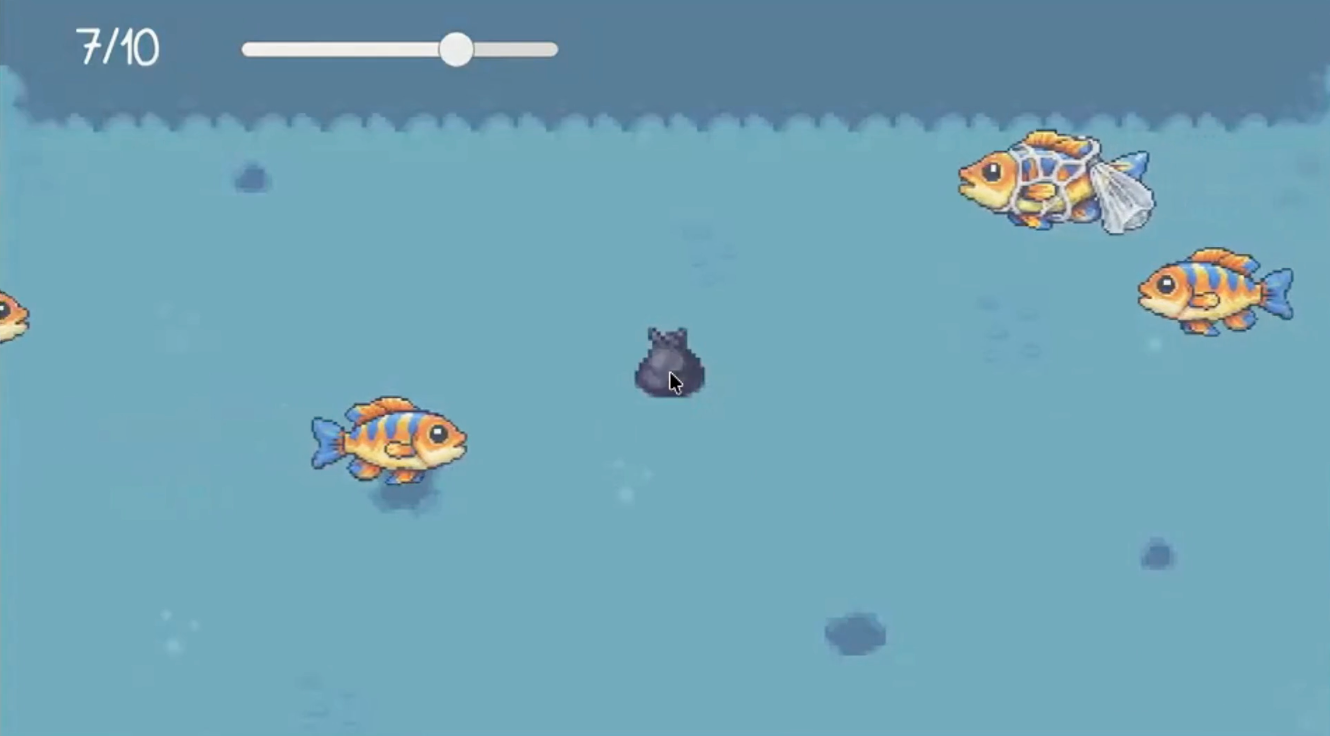
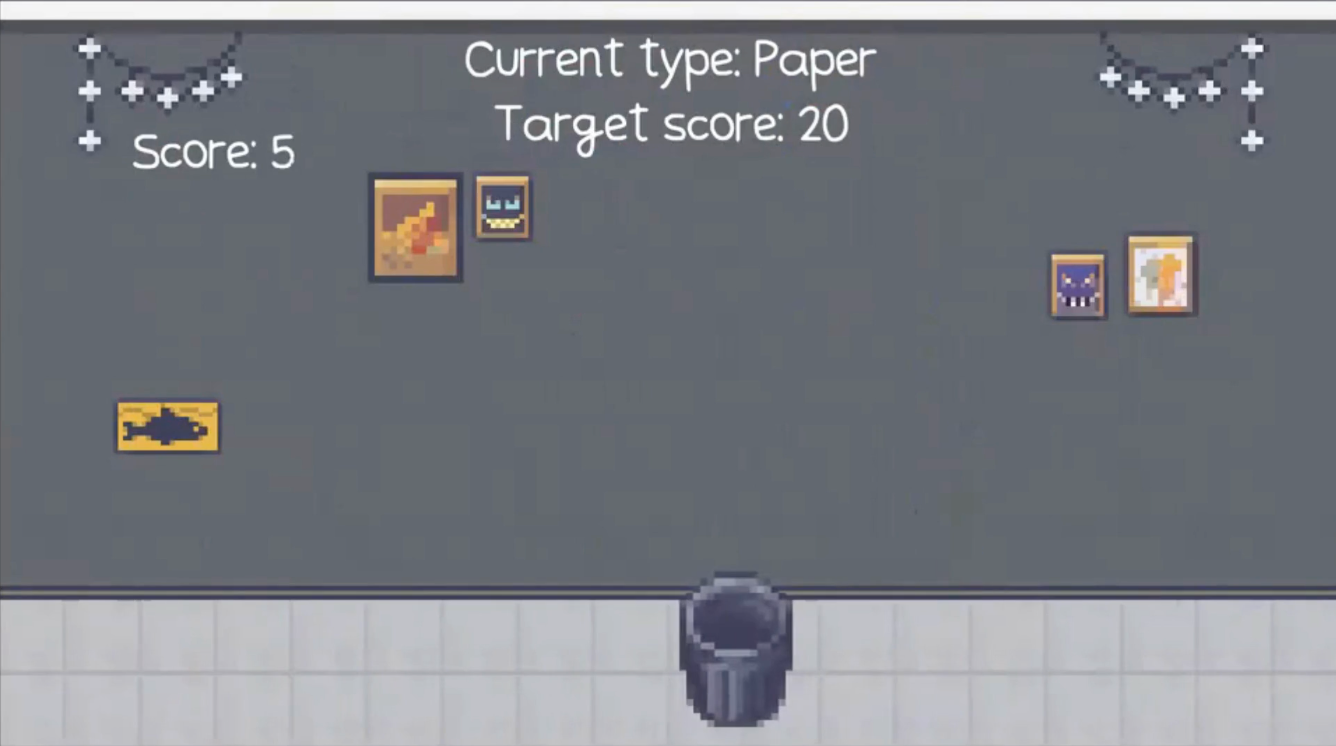
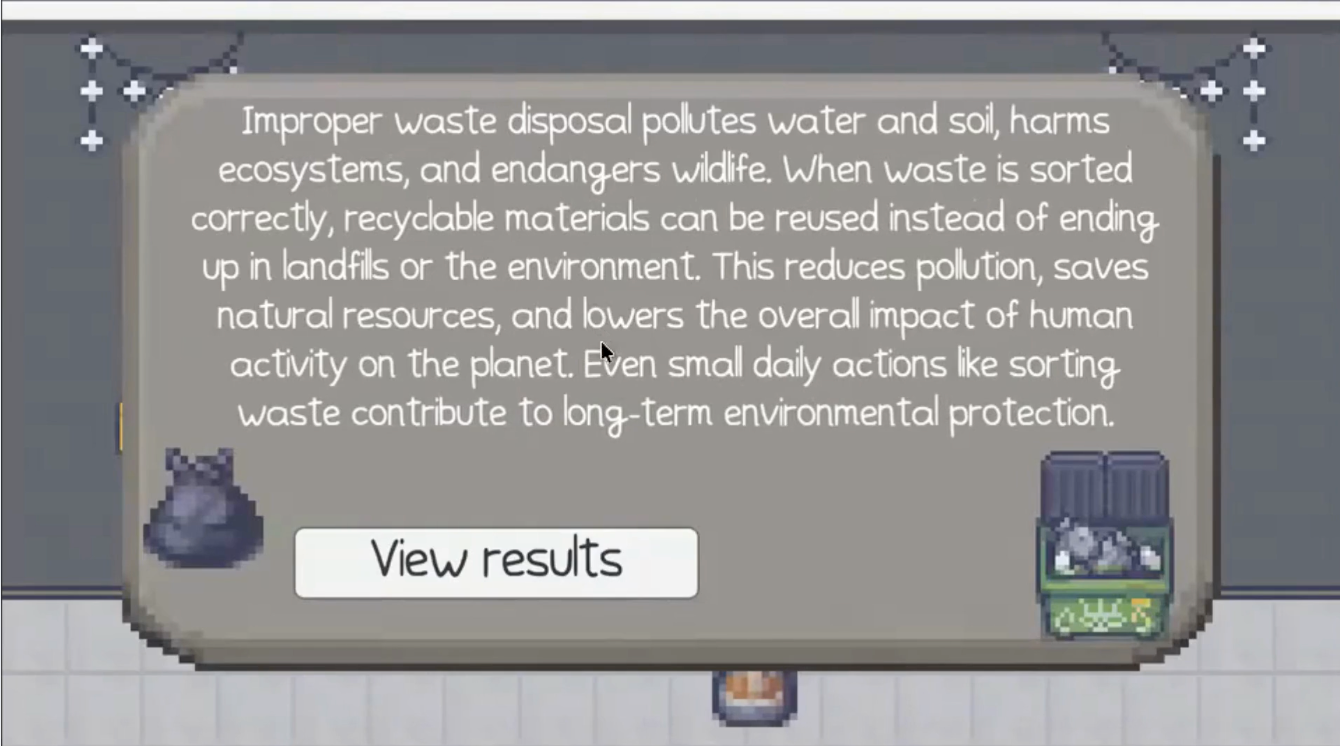
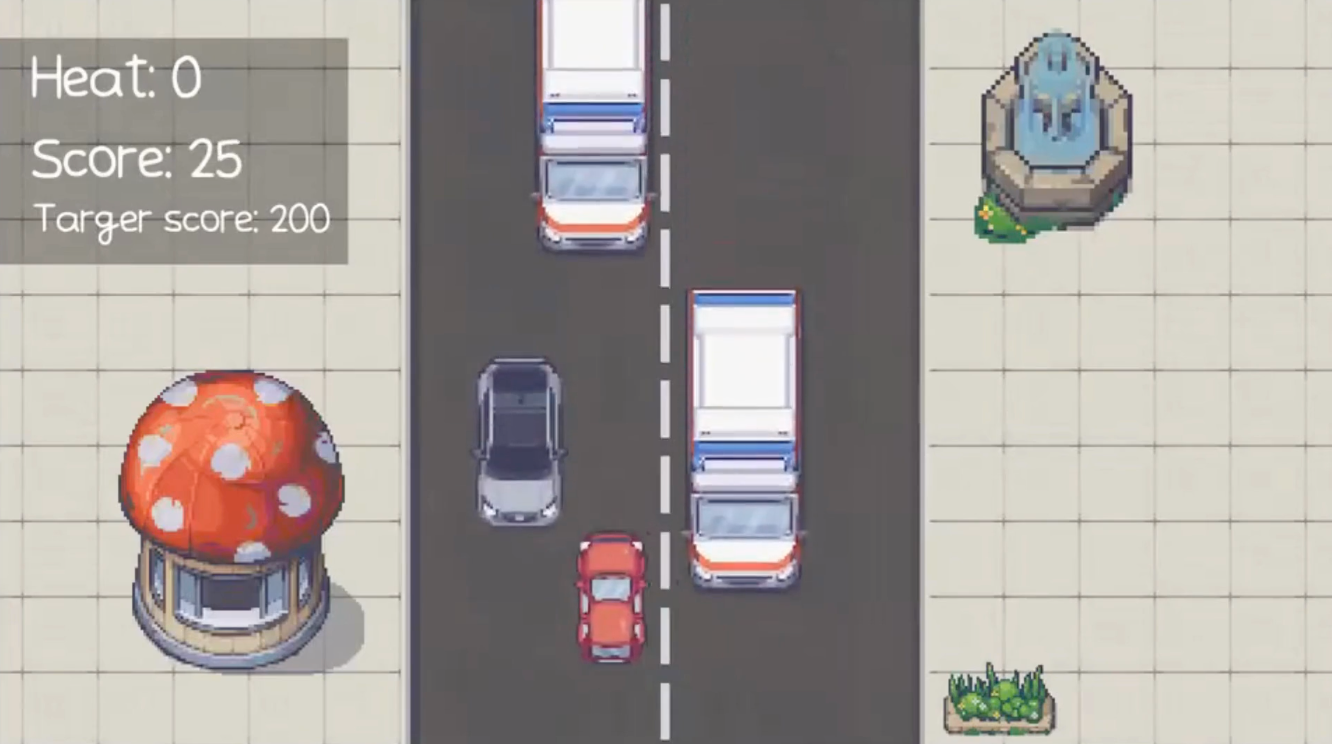
Ecology Choice is a three-minigame educational game where every level targets a different real-world environmental problem. In the first minigame, players have to choose transport and see how it can influence the whole city. In the second, garbage falls from above, and players must sort it into a paper, food waste, or glass bin. In the third, they fish in a polluted lake and must remove plastic from the fish they catch.
How we built it
We started by thinking, 'What is it that we care about, and what is our clear "why" behind doing this?'. After we decided to work on an educational game, we were identifying the first ecological problems that are directly connected to our everyday lives and the way we can tell people about them. Although there are many issues, we decided to start with transport, water pollution, and garbage sorting. Then, using C# and Unity for development, we split up the game between us to ensure we’d make it on time and started working. We designed mini-games without any lectures but with easy mechanics to relax for users to notice the problem themselves, trying to figure it out and learning what consequences their choices have. The game concept, some of the visual design (for those developed not by us, we have all the licenses), educational content, and scripts were all developed by us as a team. The project is built as a 2D game for a browser. Finally, we talked to several students, asking for their feedback on our ideas and project itself.
Challenges we ran into
One of the biggest challenges was keeping the balance between education and entertainment. We wanted to help students learn through our game, yet we didn’t want to look like a book or a random pop-up - boring. Our goal was to find a way to educate players engagingly, ensuring they wouldn’t forget anything after stopping playing. Another challenge we faced was staying focused on the problem we’ve chosen. Environmental problems are interconnected, and we wanted to cover as much as possible, but it was impossible. Narrowing each minigame to one sharp and memorable mechanic was our biggest priority.
Accomplishments that we're proud of
We're proud that all three minigame concepts are fully designed with structured mechanics and educational pieces. Every part talks about a problem that is both globally significant and personally relatable: the subway we take to get to school, the plastic bottle we throw away, and the fish living in a polluted river nearby. Moreover, it’s a fully playable game now. Although our prior experience in games creating wasn’t big, we tried our best to make the game satisfying in terms of both gameplay and design.
What we learned
We learned that the best way to teach people isn’t directly talking to them but putting them in a situation where they figure it out themselves. A player who feels the plastic on the fish will remember it longer than a player who reads an article about ocean pollution. Moreover, developing this game made us dive deeper into the topic and walk away with a lot more knowledge about it. Finally, through both our research and workshops we attended, we confirmed that environmental problems are not something distant. It's happening now. It’s happening everywhere.
What's next for Ecology Choice
The next step is expanding it, adding a lot more minigames, and covering many more topics, including but not limited to deforestation, energy consumption, and food. From there, we plan to keep testing it with real students and gather feedback on which mechanics are most effective for immersive education. We also want to become partners with schools, environmental companies, and eco-conscious brands to show the world how powerful educational games can be and how important it is to work on ecology awareness. Additionally, we are planning to add more languages for better accessibility for people all over the world.


Log in or sign up for Devpost to join the conversation.