-
-
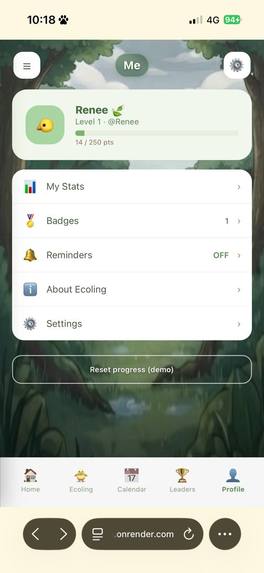
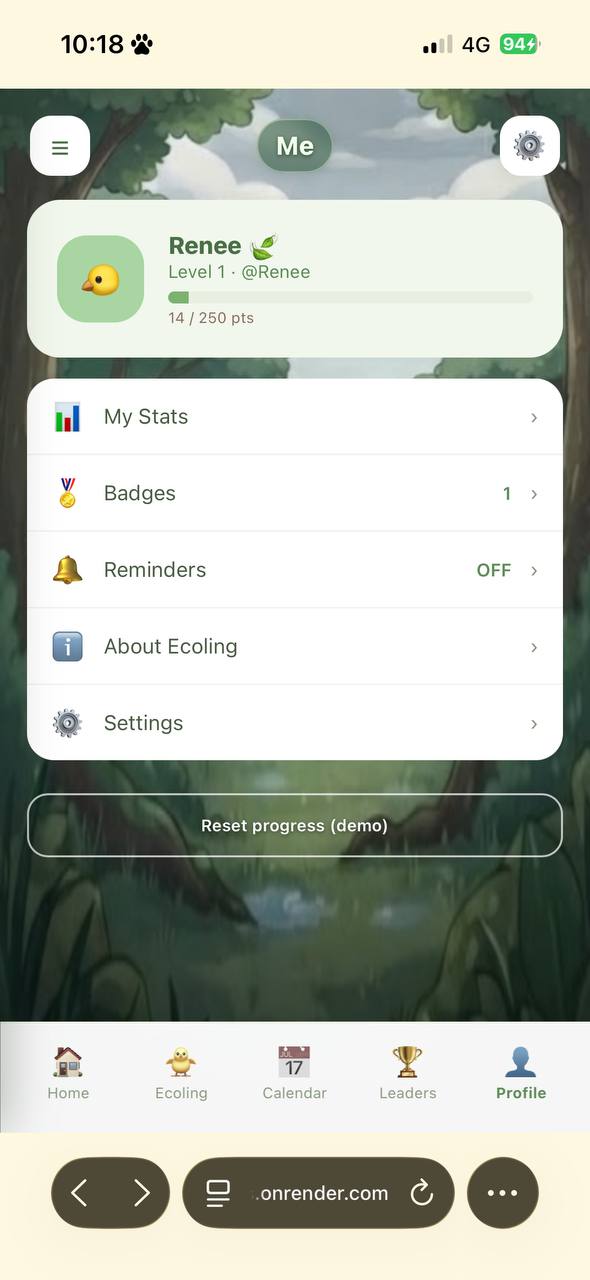
Profile page
-
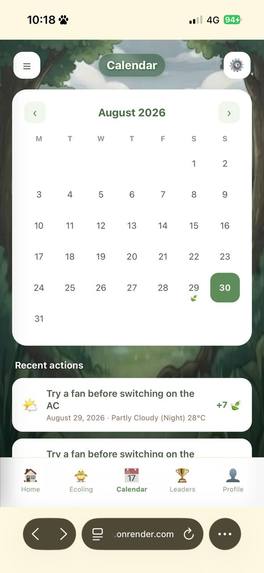
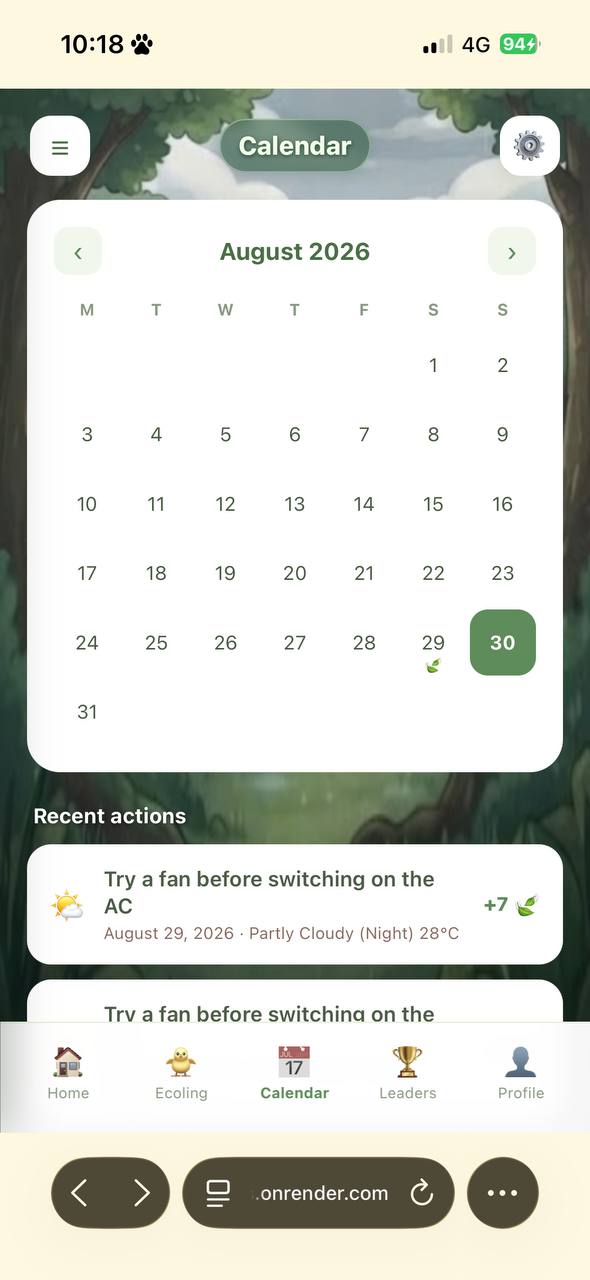
calender -- see recent activities
-
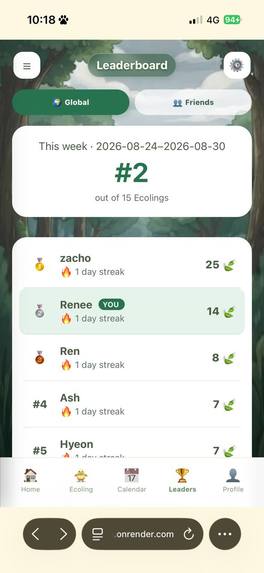
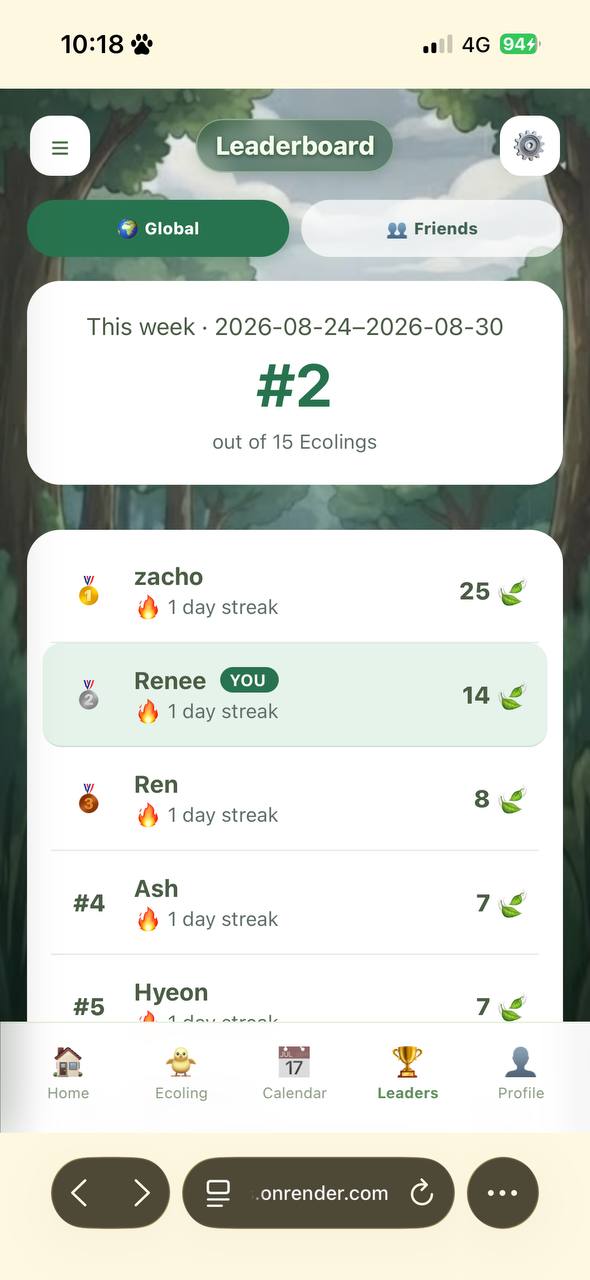
Leaderboard page
-
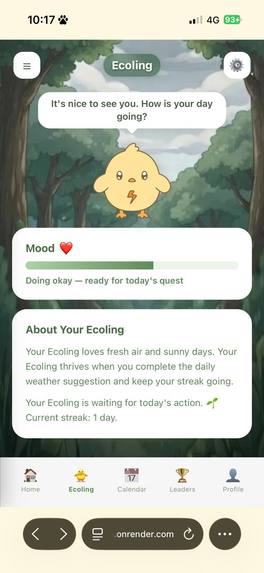
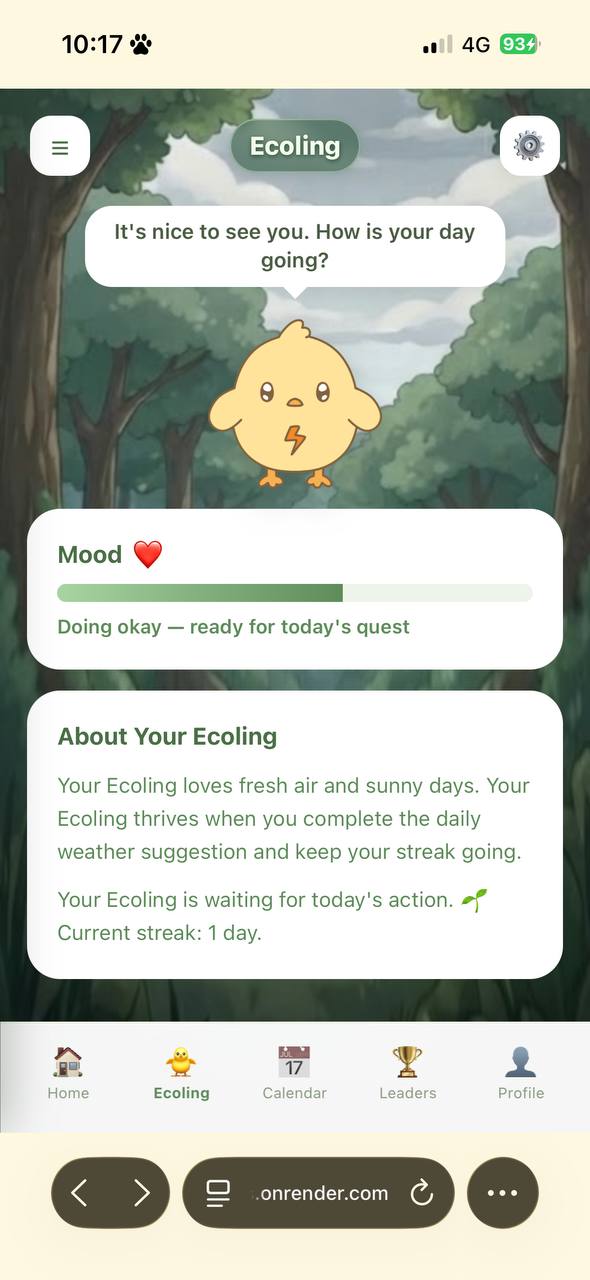
Ecoling page - see ur pet mood and suggestions
-
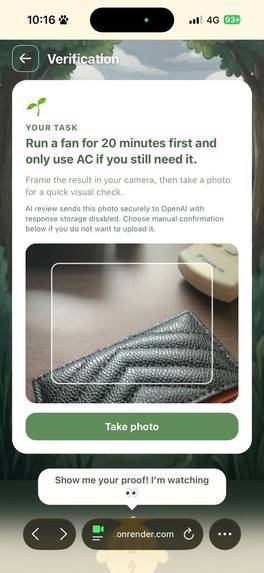
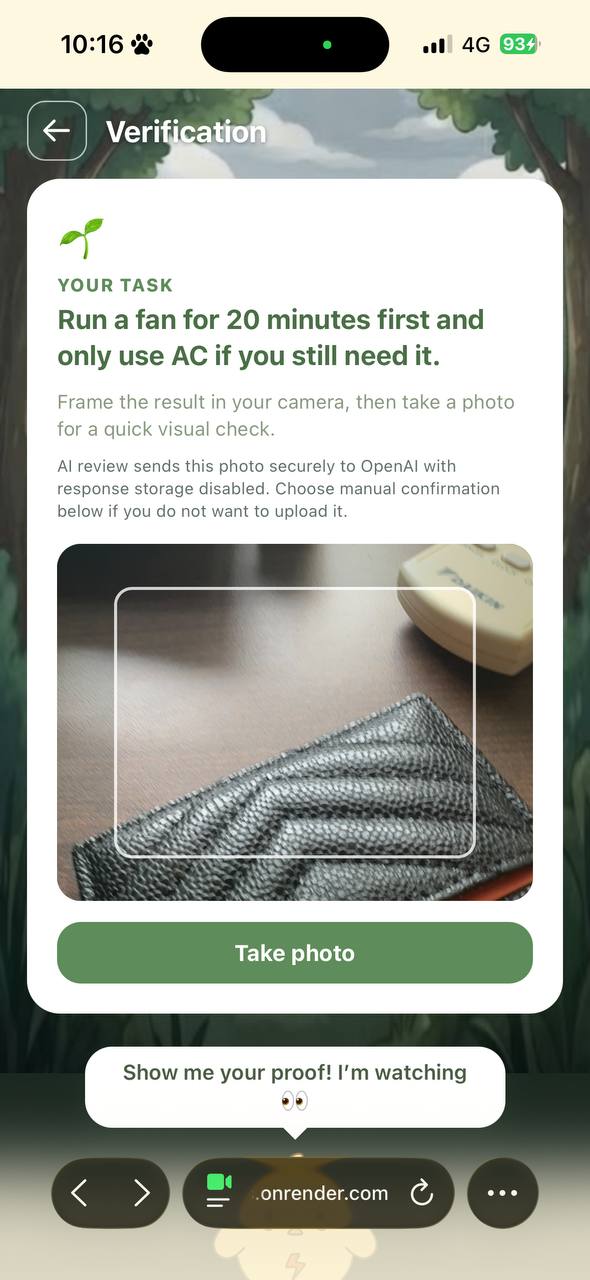
photo verification
-
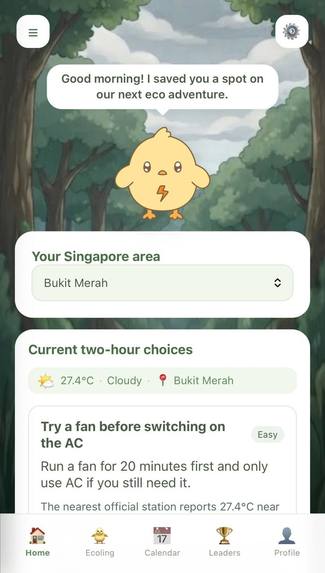
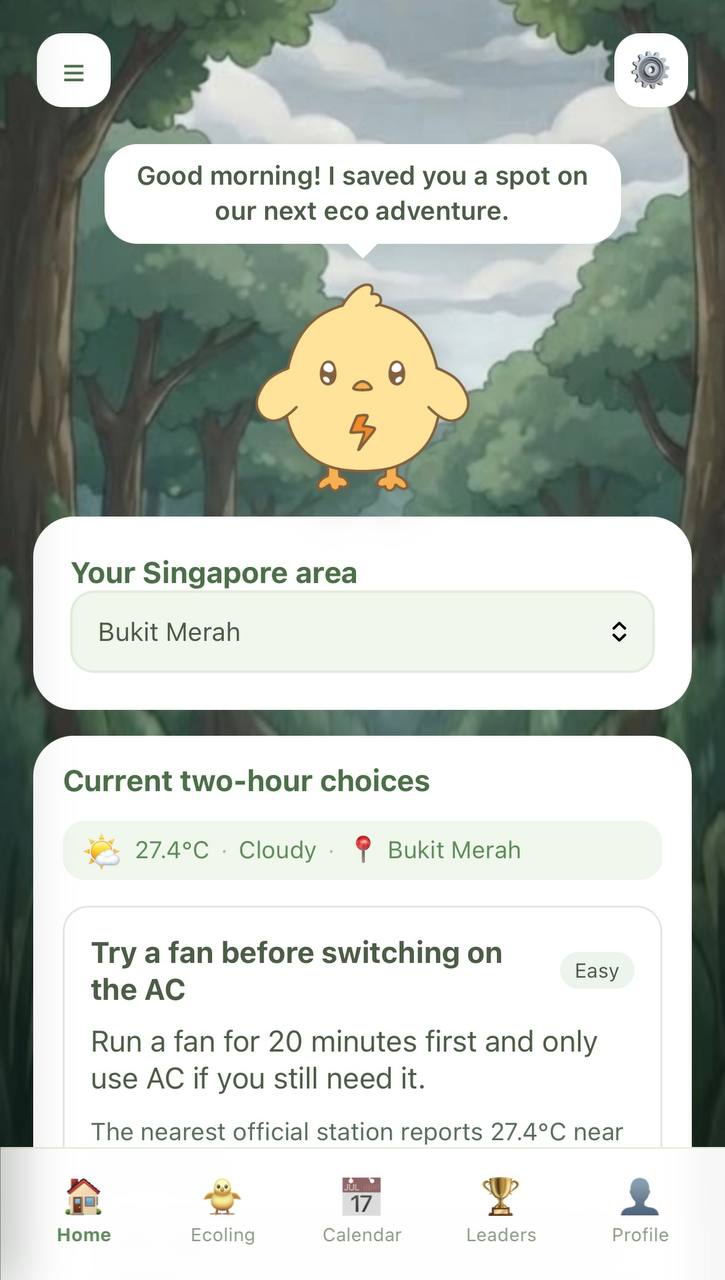
home page
-
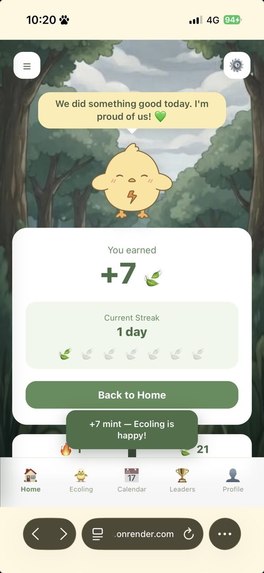
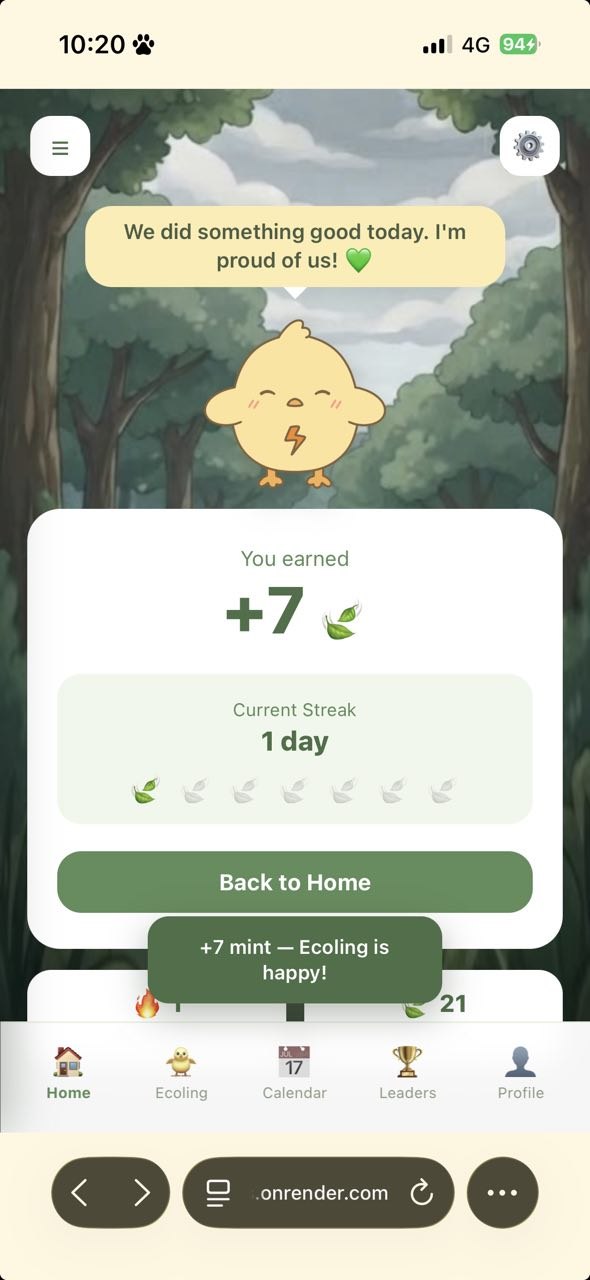
task complete page
Inspiration
We started with a frustrating observation: sustainability apps are boring. Most rely on static checklists—"turn off the lights," "use natural light"—that repeat endlessly regardless of context. After the first week, users stop opening them. The problem isn't that people don't want to save energy; it's that generic nudges don't stick.
Then we asked ourselves: What if energy-saving felt personal?
We realized that people care for things. They come back to games, to pets, to systems that react to them or that has a streak that they have to consistently show up to do. So we flipped the model: instead of another guilt-driven app, what if you had a small creature that visibly responds when you take action? And what if that action was actually relevant to your weather, right now?
That was the seed for Ecolings—a companion that doesn't just remind you to save energy, but makes you want to come back because something adorable depends on your choices.
What it does
Ecolings is a gamified companion game that turns weather-matched energy-saving actions into short, engaging quests.
Every two hours, the app: Reads your local weather (temperature, humidity, wind, rainfall, radar data) from Singapore's NEA feeds Generates a specific, context-aware quest (e.g., "Line-dry your laundry—it's dry and breezy" or "Try a fan before AC—it's mild today") Lets you log completion with a single tap + photo verification
When you complete a quest: Your Ecoling's mood improves—it becomes happier and more energetic You earn Mint (in-game currency) and EXP Your daily streak increments A difficulty-adjusted score updates based on how "hard" today's weather is
Beyond the solo loop: Weekly leaderboards let you compete against friends or global players Energy savings in kWh accumulate and convert to cost savings—a tangible metric of real-world impact Push notifications nudge you back when weather conditions shift
How we built it
The Tech Stack Frontend: React + HTML/CSS Backend: Python + JavaScript + Supabase (database) Weather Data: Singapore's NEA feeds via data.gov.sg Deployment: Render
The Architecture, where We kept the flow clean and intentional: Weather API → Rule Engine → Local State → UI Reaction
The Weather-to-Quest Engine Instead of using machine learning (which felt too risky for a 12-hour hackathon), we built a straightforward rule table where each weather condition maps to a specific, explainable quest. When it's dry and breezy at midday, we suggest you line-dry your laundry—a no-brainer that saves dryer cycles. On hot, humid afternoons above 28°C, we nudge you to try a fan before cranking the air conditioner; air circulation buys you time and saves energy. On cool, sunny mornings, opening your windows for natural light replaces indoor lighting and takes advantage of free daylight. When the weather radar detects rain approaching, we remind you to bring your laundry in—preventing the need to rewash and dry everything all over again.
Why This Approach? We chose this method for three reasons. First, it's transparent—judges and players alike understand exactly why each quest appears. Second, it's fast—no model training, just rules to code. Third, it's personable—every suggestion comes with a reason, so the app explains itself instead of feeling like a black box.
Accomplishments that we're proud of
We shipped a working end-to-end core loop in just 12 hours—from fetching live weather data to watching your Ecoling react to your actions to seeing your score update. That alone felt like a win.
But we're especially proud of integrating real, hyperlocal weather data from data.gov.sg's NEA feeds. Most apps use generic weather APIs; we went hyperlocal so every suggestion actually matches what's happening in your neighborhood right now. That's what makes Ecolings feel alive instead of generic.
Weather-adjusted scoring was another breakthrough we're proud of. It's the one mechanic a typical habit app can't easily copy without actually understanding weather. When you complete a quest on a sweltering 32°C day, the game rewards you more than the same quest on a mild afternoon. That felt like a real differentiator worth shipping.
We also nailed the photo verification flow—visual proof that builds trust and makes the action feel tangible. And most importantly, we built a companion that actually reacts to what you do. It's not just a mascot sitting beside a checklist; its mood is the feedback loop. That's the core of why players come back.
Finally, we're proud of how we learned and grew as a team—from zero backend experience to deployed APIs, from git merge chaos to clean workflows. We documented our design decisions clearly because we understand why every feature exists and what problem it solves.
What we learned
Context beats content. Most sustainability advice is "timeless"—true every day, relevant to no one. The real insight was realizing that energy decisions are deeply contextual. "Line-dry your laundry" is brilliant at 2 PM on a breezy day and useless when rain arrives in 30 minutes. Context transforms generic advice into genius.
Simplicity scales faster in sprints. We resisted the urge to add machine learning, complex animations, and backend sync. A rule table isn't infinitely scalable, but for a hackathon, it's faster to build and prove. Polish the core loop first; save the bells and whistles for version 2.
Feedback loops drive behavior. Most habit apps fail because they tell you what to do but don't show you what changed. Ecoling's visual reaction isn't just a feature—it's the entire point. Without it, energy-saving stays abstract. With it, it becomes personal.
Real data creates real engagement. Using live weather feeds from data.gov.sg made suggestions feel alive. When a user sees a quest tailored to their exact neighborhood's conditions, relevance jumps from zero to a hundred. Generic data produces generic reactions; real data produces real attachment.
Process matters, even in sprints. Clear naming conventions, daily syncs, and pair programming prevented the chaos of parallel work. Investing in process early—even in 12 hours—pays off in velocity and team morale.
What's next for Ecolings
Immediately After Hackathon
First, we want to add cross-device sync so players can pick up on their phone or web without losing progress. We'll expand the quest catalog beyond energy to include water, waste, and transportation—same hyperlocal, weather-aware approach, just applied to different sustainability areas. We're also planning personalized difficulty levels, so students can play in "relaxed mode" while eco-warriors can tackle "hardcore" challenges.
In the Next Few Months
We're imagining team challenges where friends compete together, not just individuals chasing leaderboard rankings. We want to partner with utilities to measure actual kilowatt-hours saved—turning in-game progress into real environmental impact. And we're designing Ecoling evolution mechanics where creatures breed and unlock new forms as players level up, adding a collection element that drives long-term play.
The Bigger Picture
Eventually, we want to expand beyond Singapore to other regions—adapting the rule engine for tropical, temperate, and cold climates with different energy grids. We're dreaming about smart home integration so actions (AC turned off, lights dimmed) auto-log for seamless questing. City-wide and workplace leaderboards with real sustainability outcomes would turn this into a community tool. And partnering with nonprofits to donate in-game rewards to climate organizations ties the game directly to real-world change.
The vision is simple: make caring for the planet feel as natural as caring for a pet.


Log in or sign up for Devpost to join the conversation.