-
Ecolife planner
-
Ecolife planner
Inspiration
The inspiration behind EcoLife Planner came from the need to make environmental awareness simple and engaging for young people. Many eco-friendly platforms feel too technical or boring, so we wanted to create something that motivates users to take small, positive actions every day. The idea was to build a tool that shows how even tiny habits—like saving water or reducing waste—can collectively make a big difference for the planet.
What it does
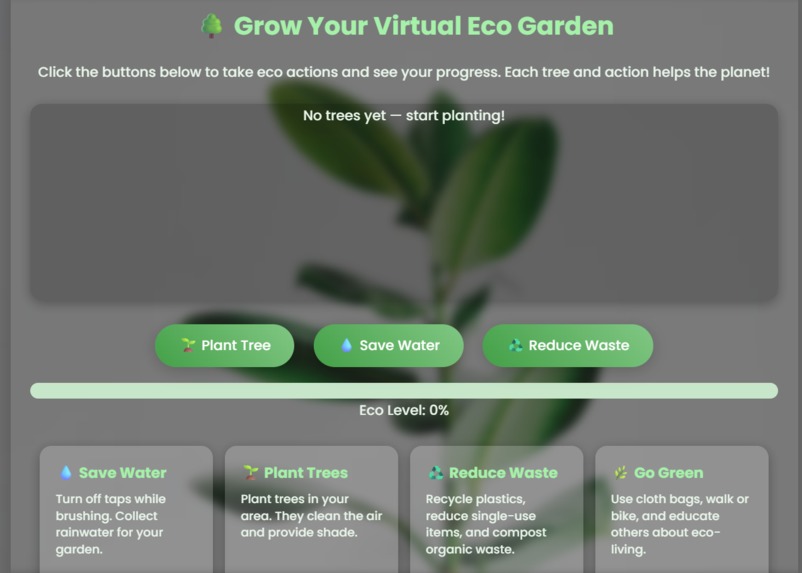
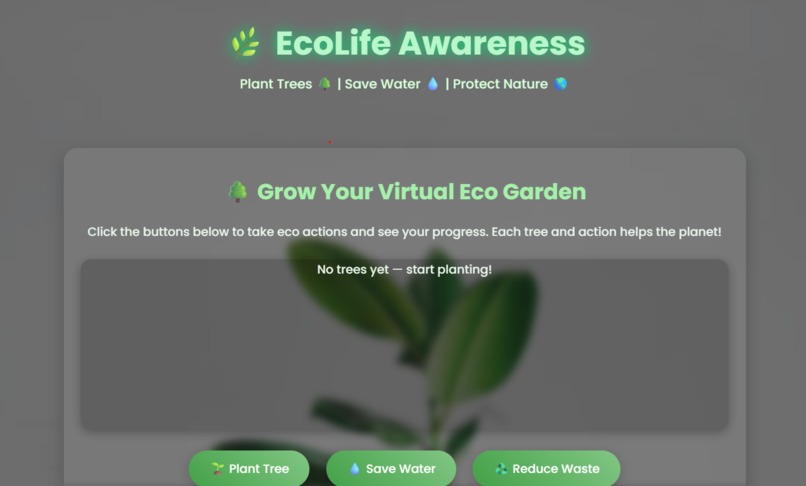
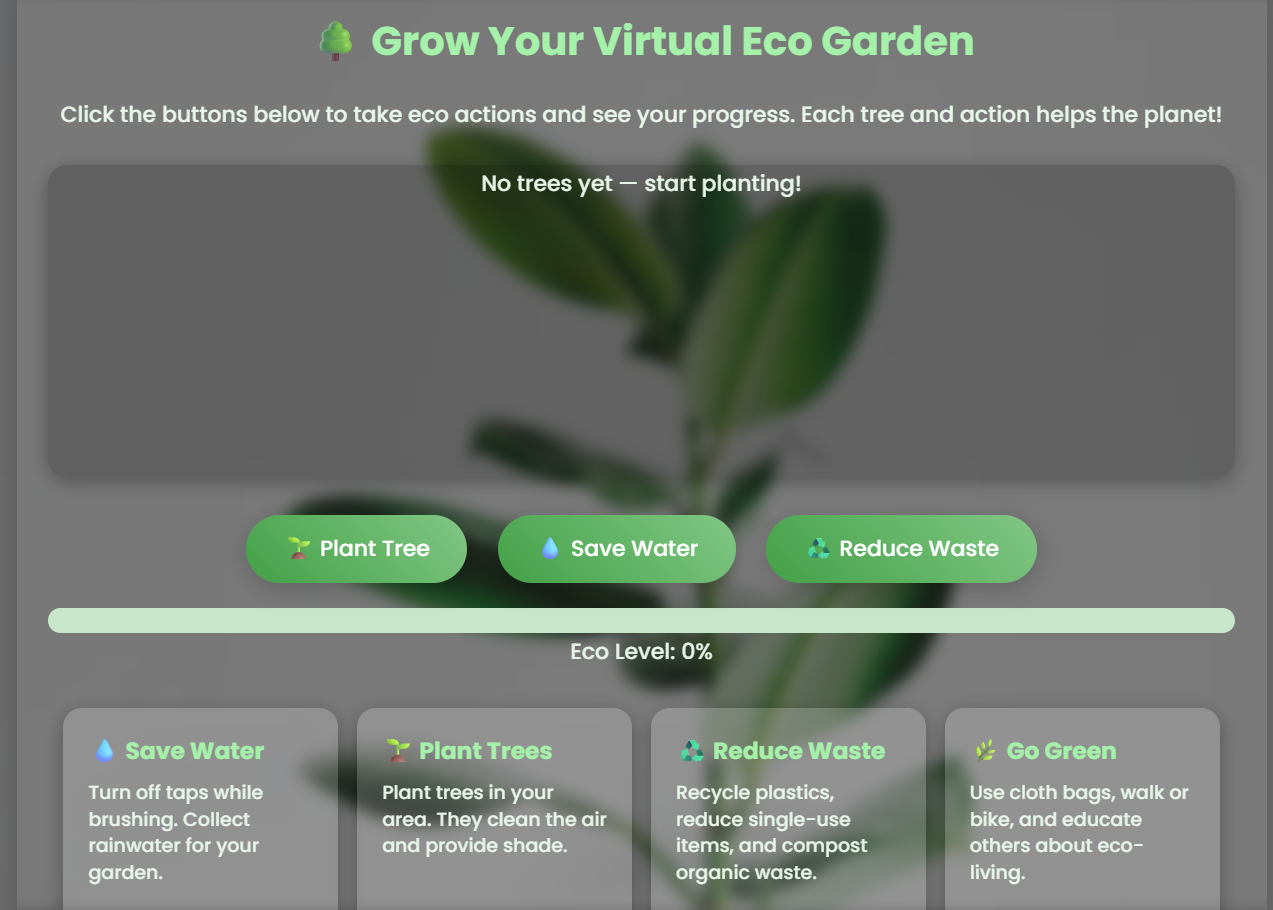
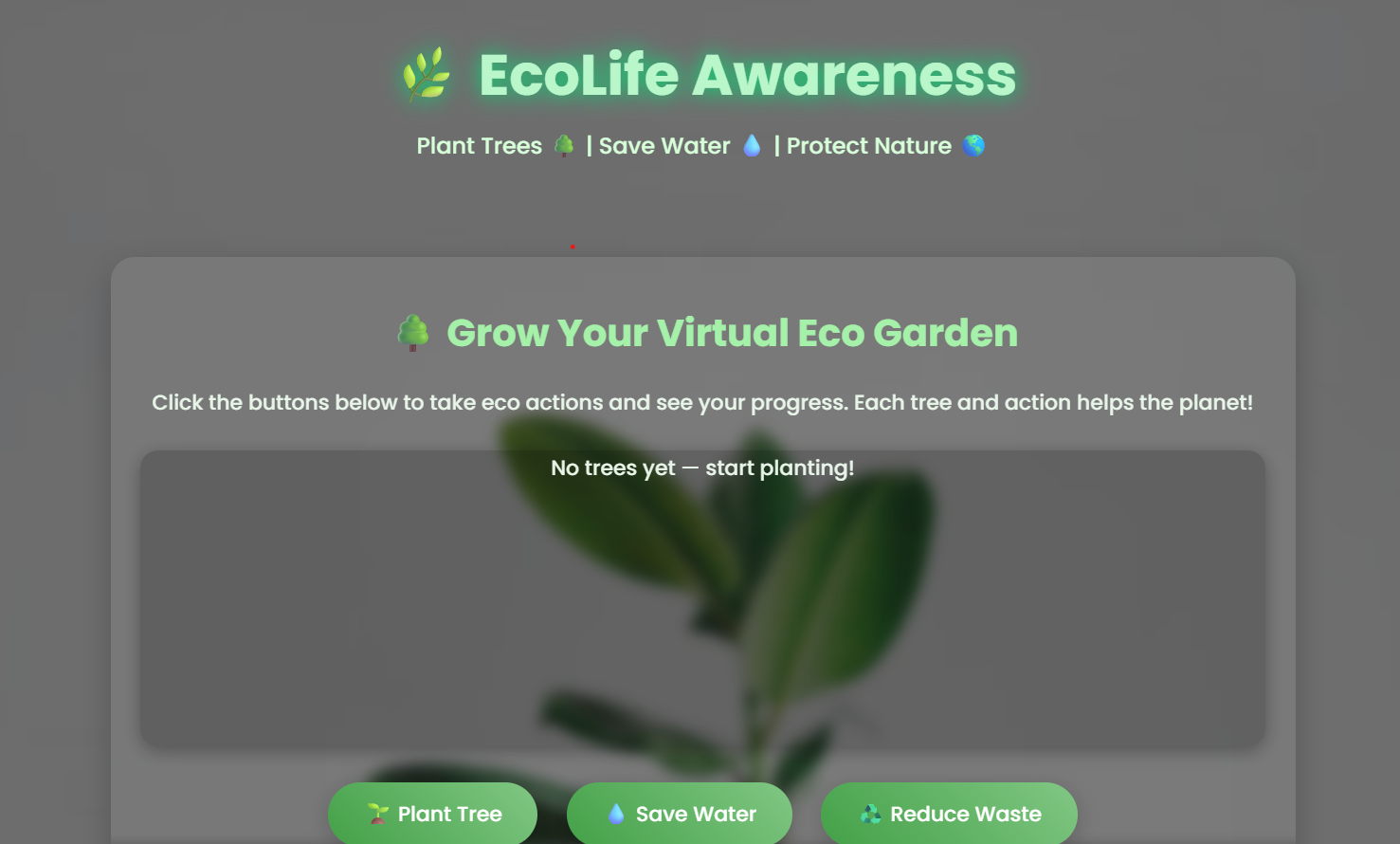
EcoLife Planner helps users track their daily eco-friendly activities in an interactive and enjoyable way. It provides suggestions, reminders, and progress updates that encourage sustainable living. The platform turns environmental responsibility into a simple, achievable routine that users can follow and learn from.
How we built it
We built EcoLife Planner using HTML, CSS, and JavaScript for the front end to create a smooth and visually appealing interface. For the backend, we used Python with Flask to handle logic, data flow, and future scalability. By combining these technologies, we developed a lightweight yet functional web-based planning tool.
Challenges we ran into
During development, we faced challenges connecting the frontend with the Python backend smoothly. Styling and creating a responsive layout also took time, as we wanted it to remain user-friendly across all devices. Understanding how to structure the project files correctly was another learning point, especially for integrating Flask with static web pages.
Accomplishments that we're proud of
We are proud of creating a working environmental planner that looks clean, functions well, and helps users adopt eco-friendly habits. Building a full project that includes both frontend and backend components is a major accomplishment and reflects strong learning and effort.
What we learned
Through this project, we learned how to structure a real web app, connect frontend and backend logic, and create a clean UI. It also taught us problem-solving, debugging, and how small design decisions impact user experience. Most importantly, we learned how technology can be used to promote meaningful social and environmental change.
What's next for Ecolife planner
Next, we plan to add more advanced features such as user accounts, habit-tracking dashboards, streak systems, and personalized eco-tips. We also want to include an AI-based suggestion system that guides users on how to improve their environmental habits. The long-term goal is to turn EcoLife Planner into a complete sustainability assistant.

Log in or sign up for Devpost to join the conversation.