-
-
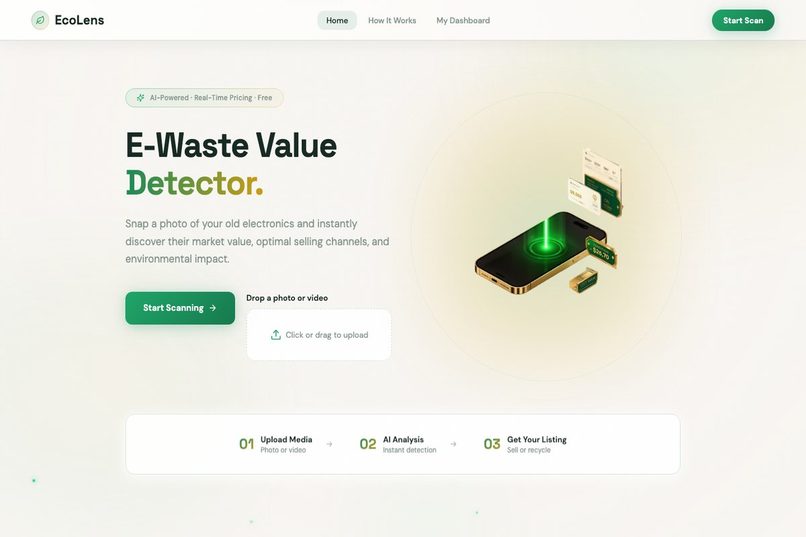
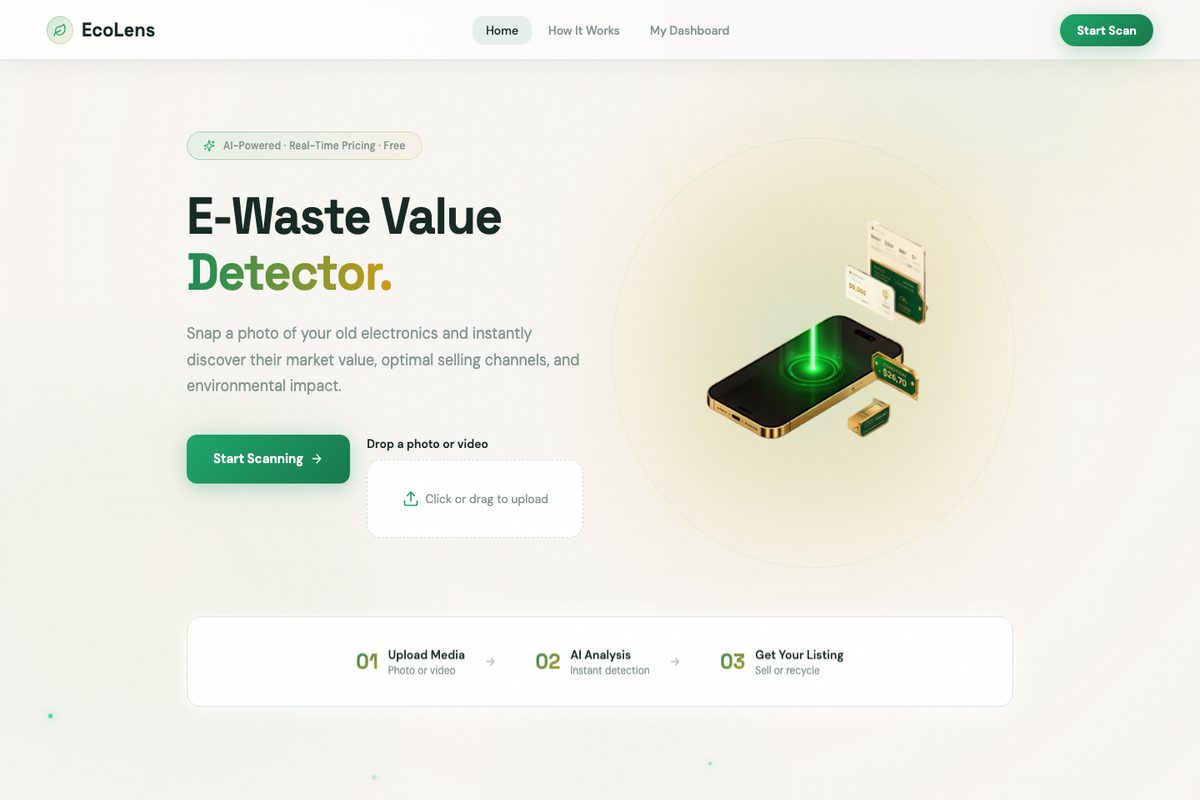
Home Page
-
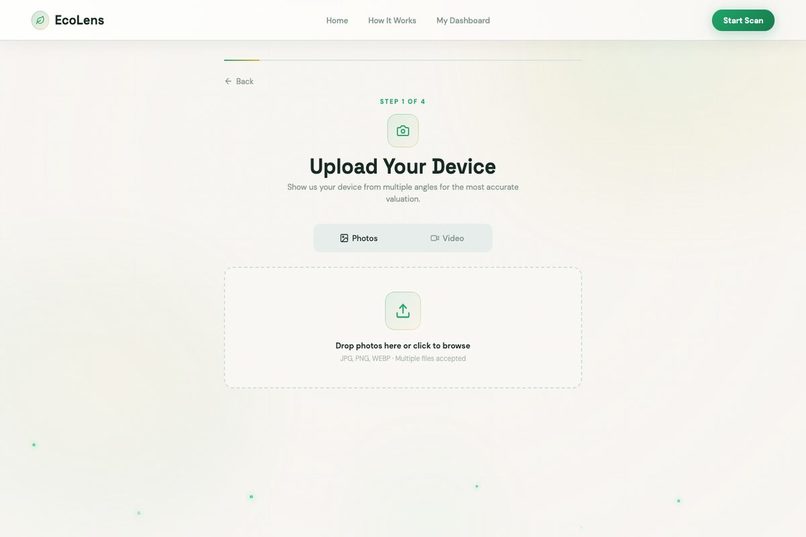
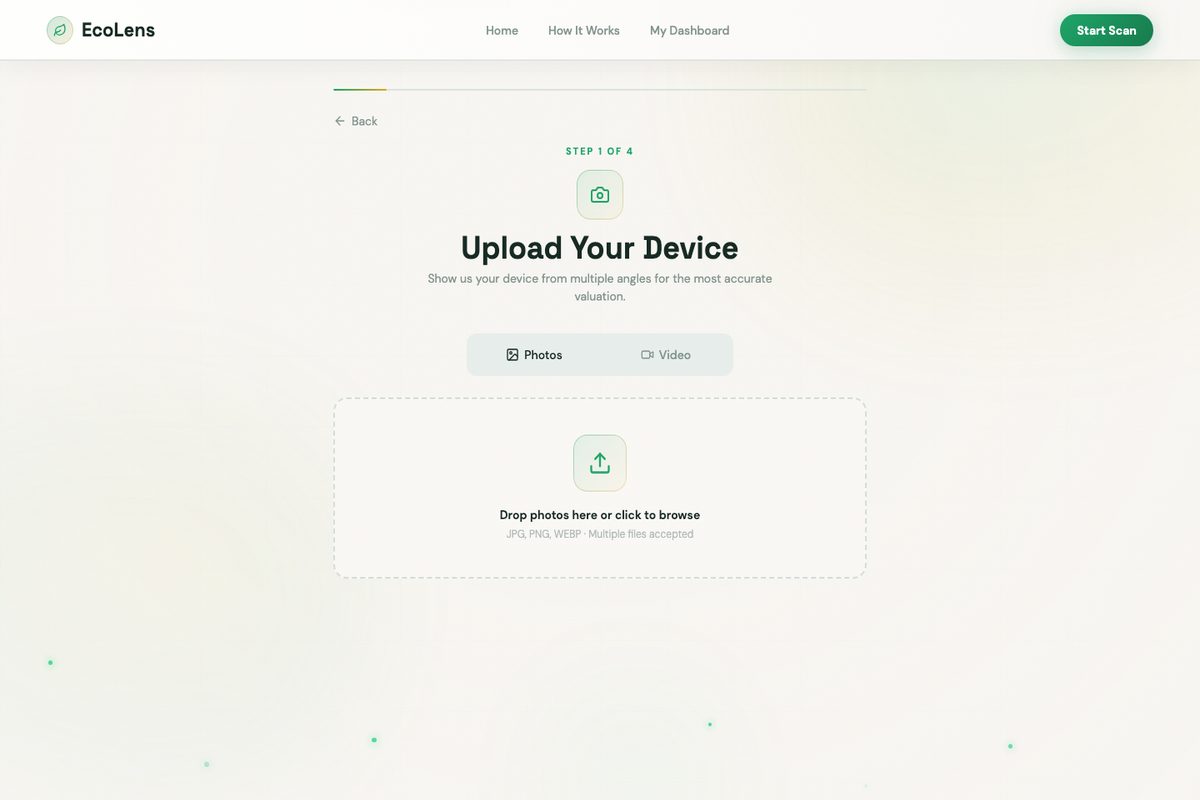
Upload Page
-
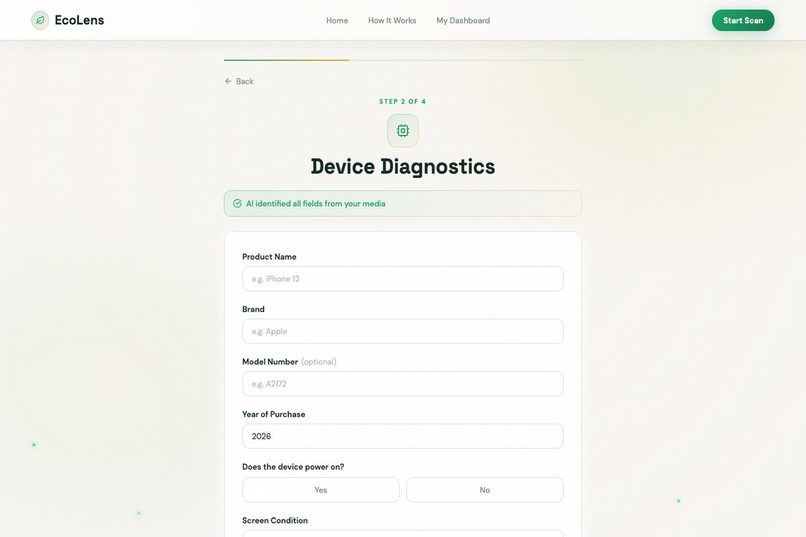
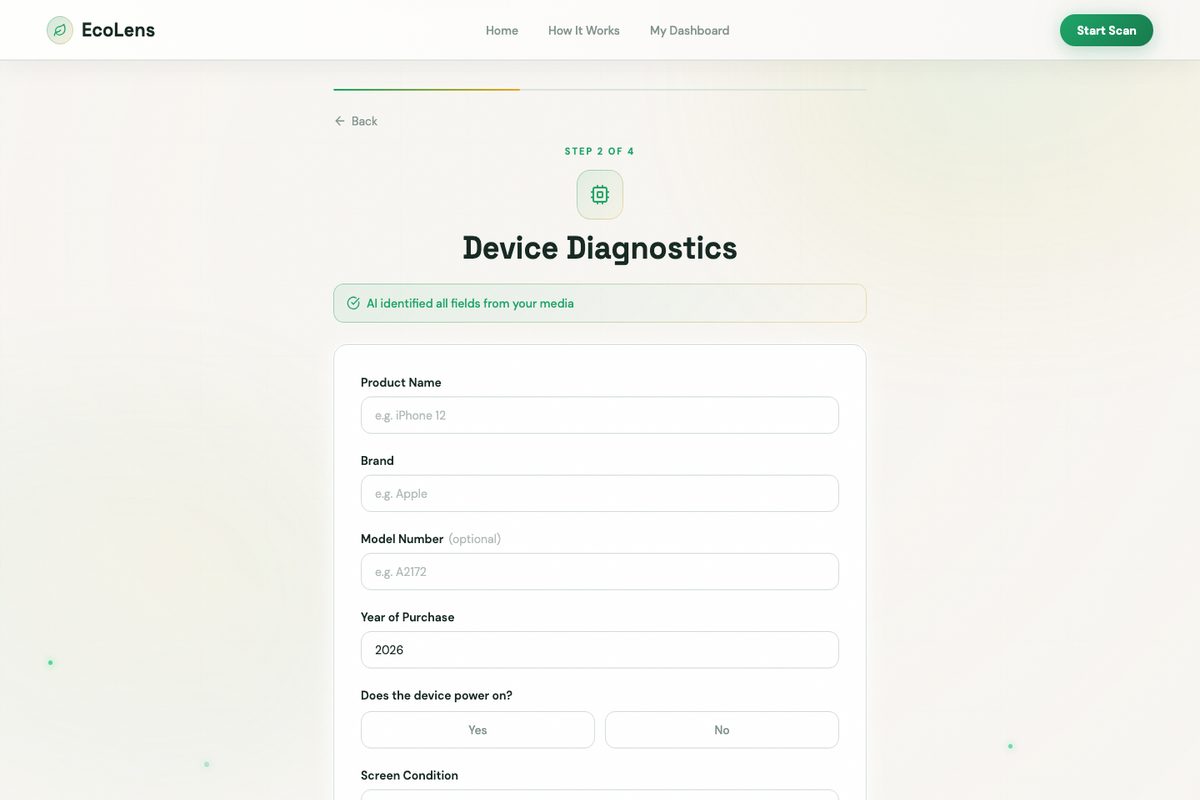
Device Diagnostic
Inspiration
E-waste is one of the fastest-growing waste problems in the world, and a lot of valuable electronic materials are lost because items are not identified or sorted properly. We wanted to build a project that could make e-waste recognition easier, faster, and more accessible using AI.
What It Does
Our project detects and classifies electronic waste items from images. The goal is to help users identify whether an object is e-waste and support better sorting, recycling, and disposal decisions.
How We Built It
We built the project using a machine learning model trained to recognize common e-waste objects. The system takes an image as input, processes it, and predicts the category of the electronic item.
At a high level, the model learns a function:
[ f(x) = y ]
where (x) is the input image and (y) is the predicted e-waste category.
We combined image preprocessing, model training, and a simple user interface so the detector could be tested easily.
Challenges We Faced
One of the biggest challenges was getting accurate results with limited and varied image data. E-waste can look very different depending on lighting, angle, damage, and background. We also had to make sure the project was simple enough for users to understand while still being useful.
What We Learned
We learned how computer vision can be applied to real-world environmental problems. We also learned more about dataset quality, model accuracy, image classification, and the importance of designing technology that solves a practical problem.
What's Next
In the future, we would like to improve the model with more training data, support more e-waste categories, and add recycling guidance so users know what to do after an item is detected.

Log in or sign up for Devpost to join the conversation.