-
-
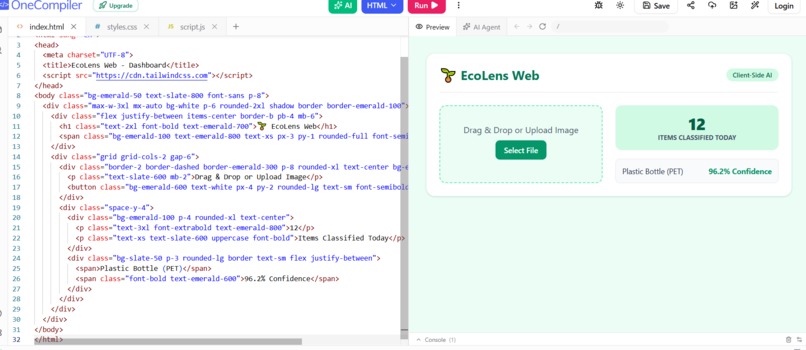
EcoLens Web UI — Client-side AI Waste Classifier & Impact Dashboard
-
Inspiration
What it does
How we built it
Challenges we ran into
Accomplishments that we're proud of
What we learned
What's next for EcoLens Web
Inspiration
Improper waste sorting leads to tons of recyclable materials ending up in landfills and contaminates processing facilities. Most people want to recycle correctly, but sorting guidelines can be confusing or inconsistent. We were inspired to create EcoLens Web to bridge this gap by bringing instant, intelligent waste classification straight to anyone's web browser—making sustainable choices fast, effortless, and accessible.
What it does
EcoLens Web is a 100% client-side sustainability app and visualizer.
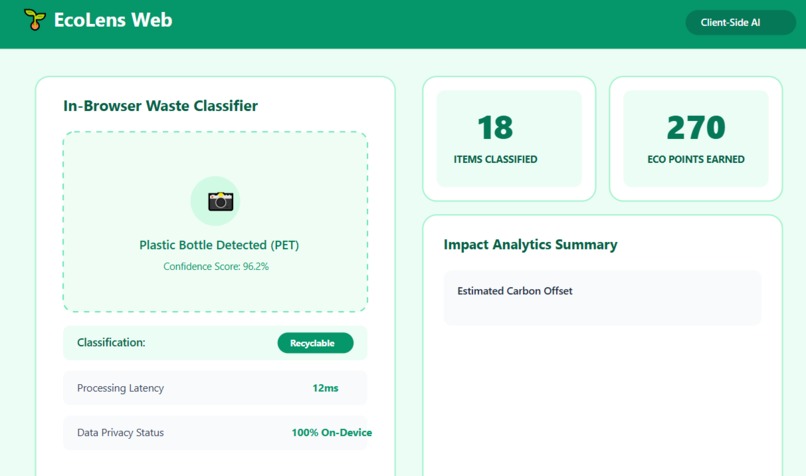
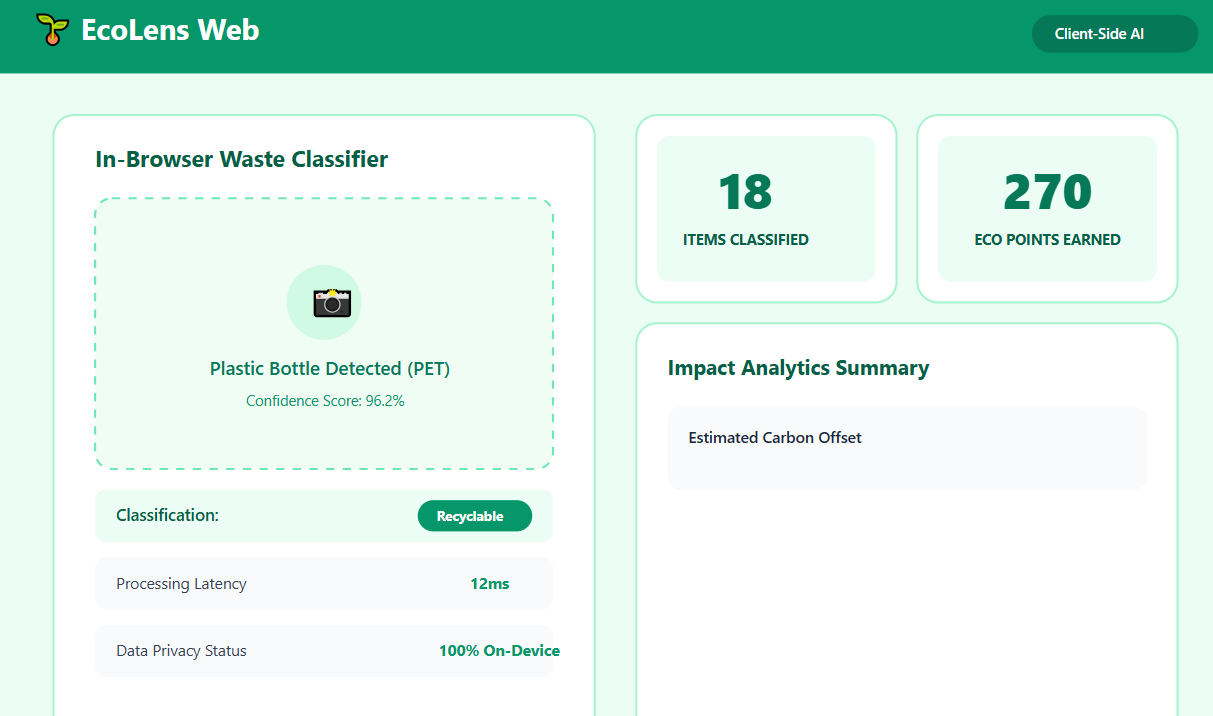
- In-Browser Machine Learning: Users upload or capture an image of an item, and our client-side AI model classifies it in real time into recyclable, compostable, or landfill categories.
- Impact Tracking: Interactive dashboards display simulated personal carbon footprint reductions and waste saved over time.
- Local Drop-Off Locator: An interactive map helps users find nearby community recycling centers and compost hubs.
- Privacy & Speed: Because everything runs inside the browser, no images or user data leave the device, ensuring total privacy and near-instant processing.
How we built it
We built EcoLens Web using a modern front-end tech stack without relying on any backend infrastructure:
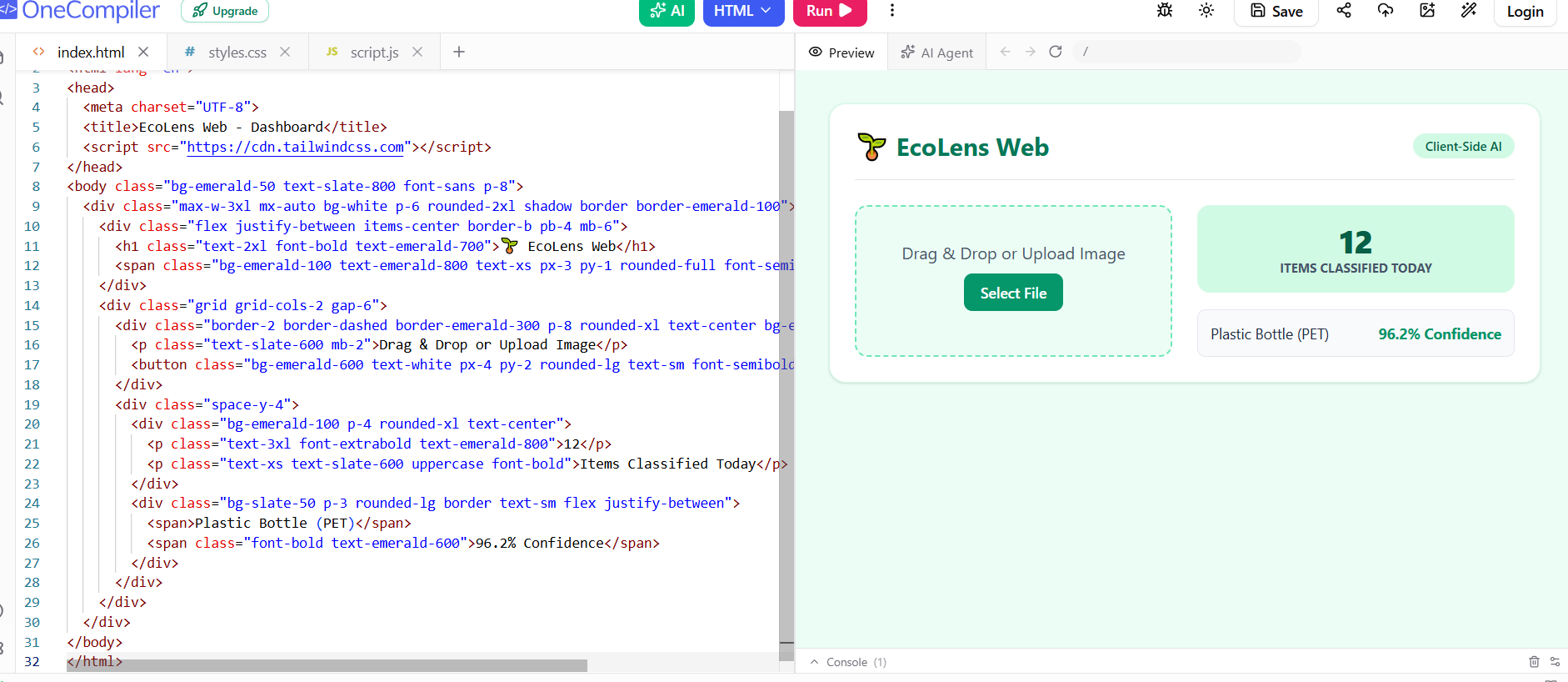
- UI & Components: Built with React and styled using Tailwind CSS for a responsive, modern interface.
- In-Browser AI Inference: Integrated TensorFlow.js with a pre-trained MobileNet model to execute image classification directly on the user's browser using WebGL hardware acceleration.
- Data Visualization: Utilized Recharts to render interactive real-time impact metrics and trends.
- Maps & Geo-data: Integrated Leaflet.js with OpenStreetMap for location-based recycling hub discovery.
- Local Persistence: Used browser
localStorageandIndexedDBto log user streaks and track saved carbon stats offline.
Challenges we faced
- Optimizing Browser Machine Learning: Running computer vision models locally can be resource-intensive. Fine-tuning model initialization and ensuring smooth frame rates without blocking the browser thread required careful performance optimization.
- Mapping Unstructured Inputs: Translating broad object recognition outputs (e.g., "plastic bottle") into clear, actionable waste-sorting rules purely on the front end required mapping datasets directly into client-side JSON lookups.
- Offline-First State Management: Ensuring user achievements, historical logs, and settings persisted smoothly using local storage required careful state synchronization.
What we learned
- The Power of Edge AI: Running AI models on the client side via TensorFlow.js significantly reduces latency, eliminates backend hosting costs, and provides complete privacy for user data.
- Front-End Versatility: Modern client-side tools and browser APIs allow developers to build rich, feature-complete applications without needing complex server architectures. *
Built With
- chart.js
- css3
- github
- html5
- javascript
- leaflet.js
- react
- tailwind-css
- tensorflow.js
- vercel
- vite


Log in or sign up for Devpost to join the conversation.