
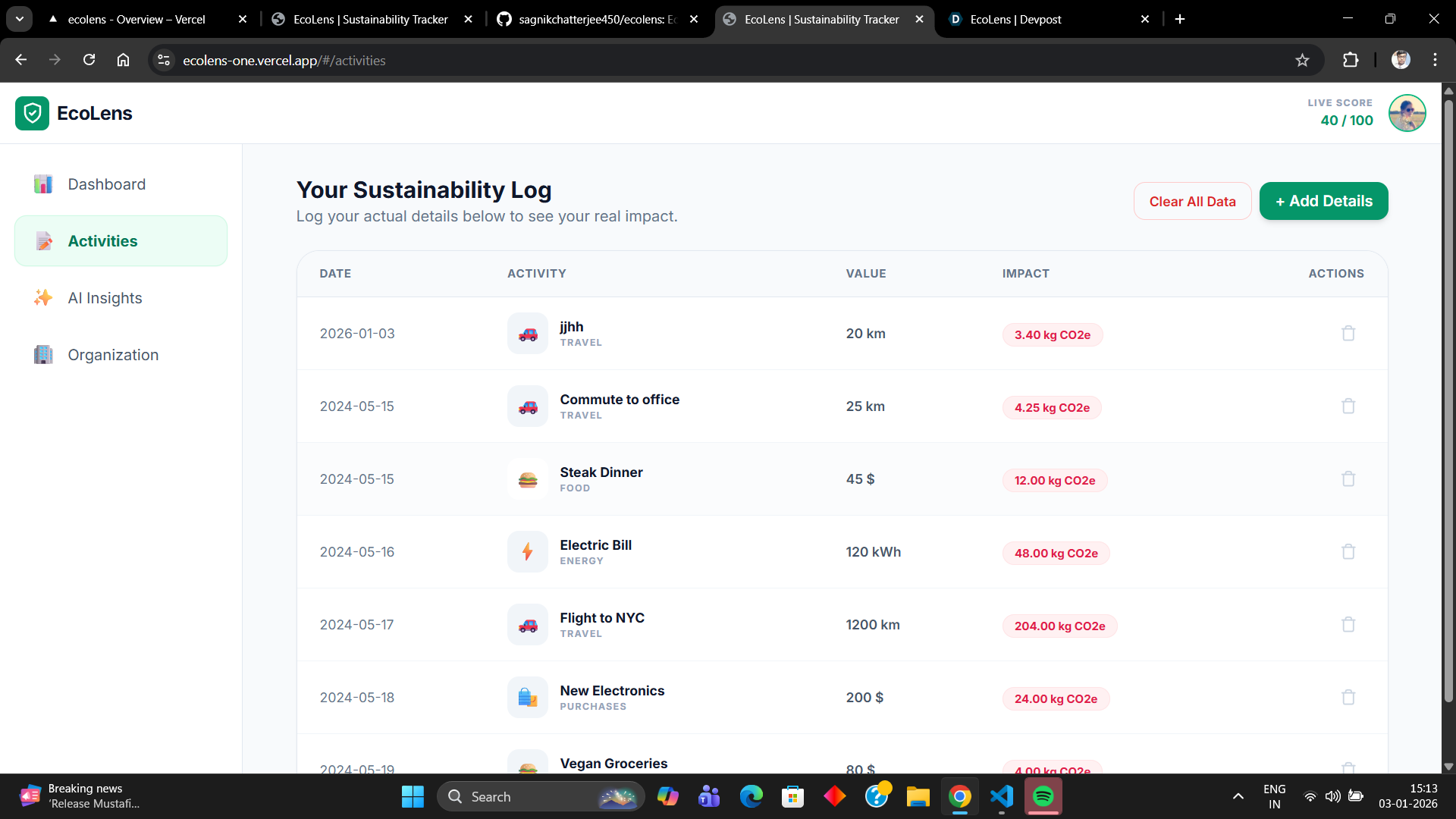
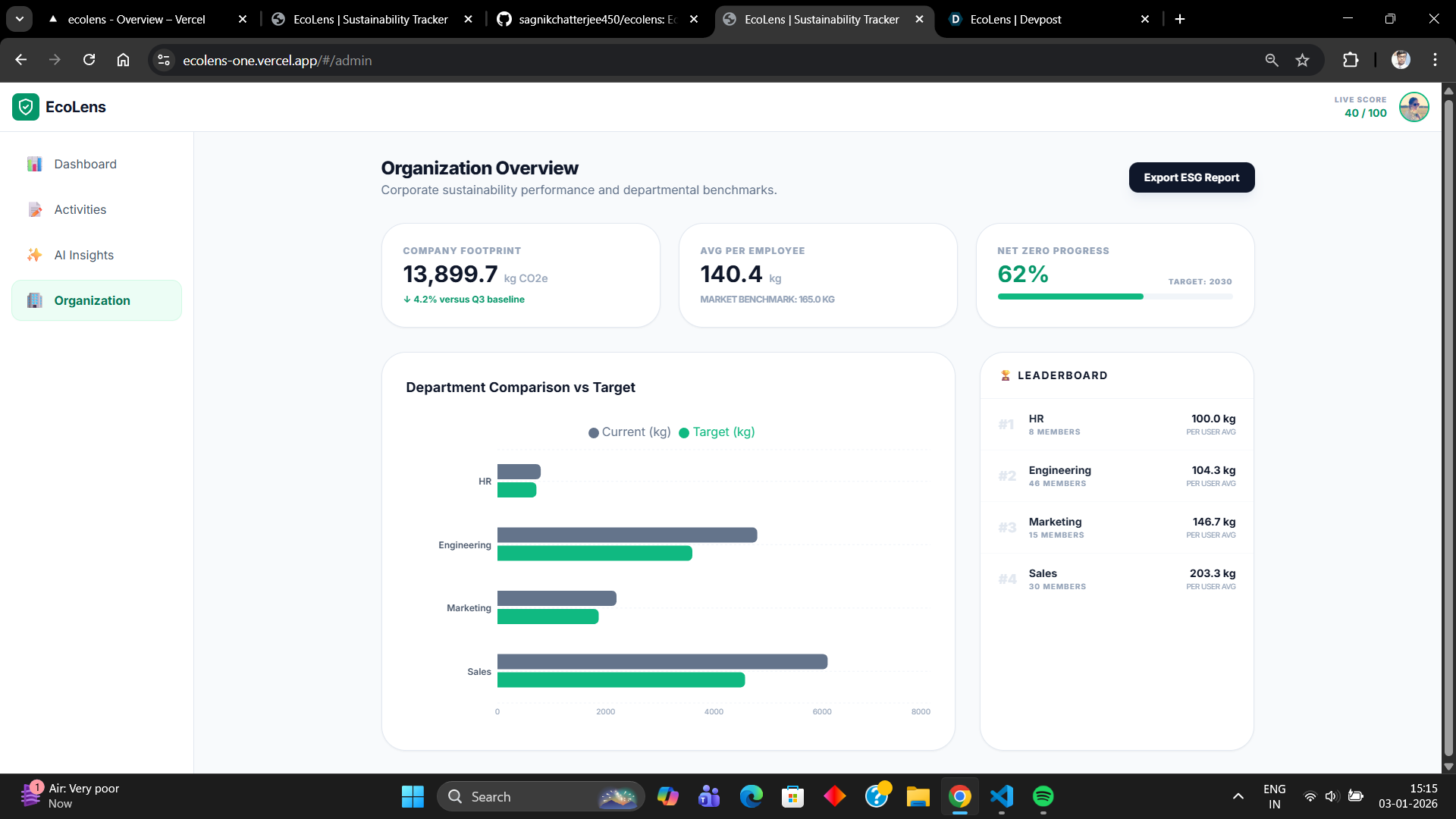
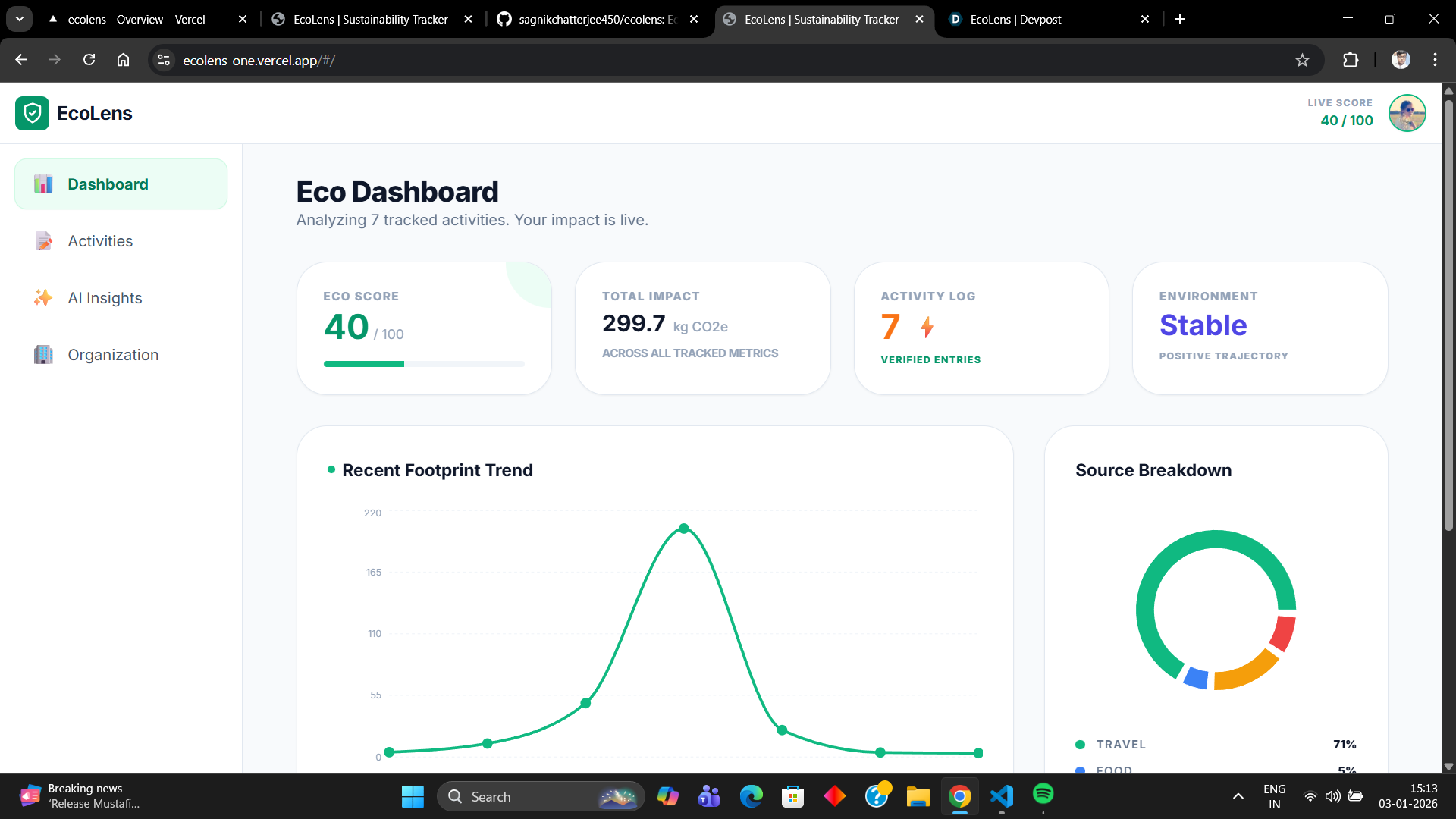
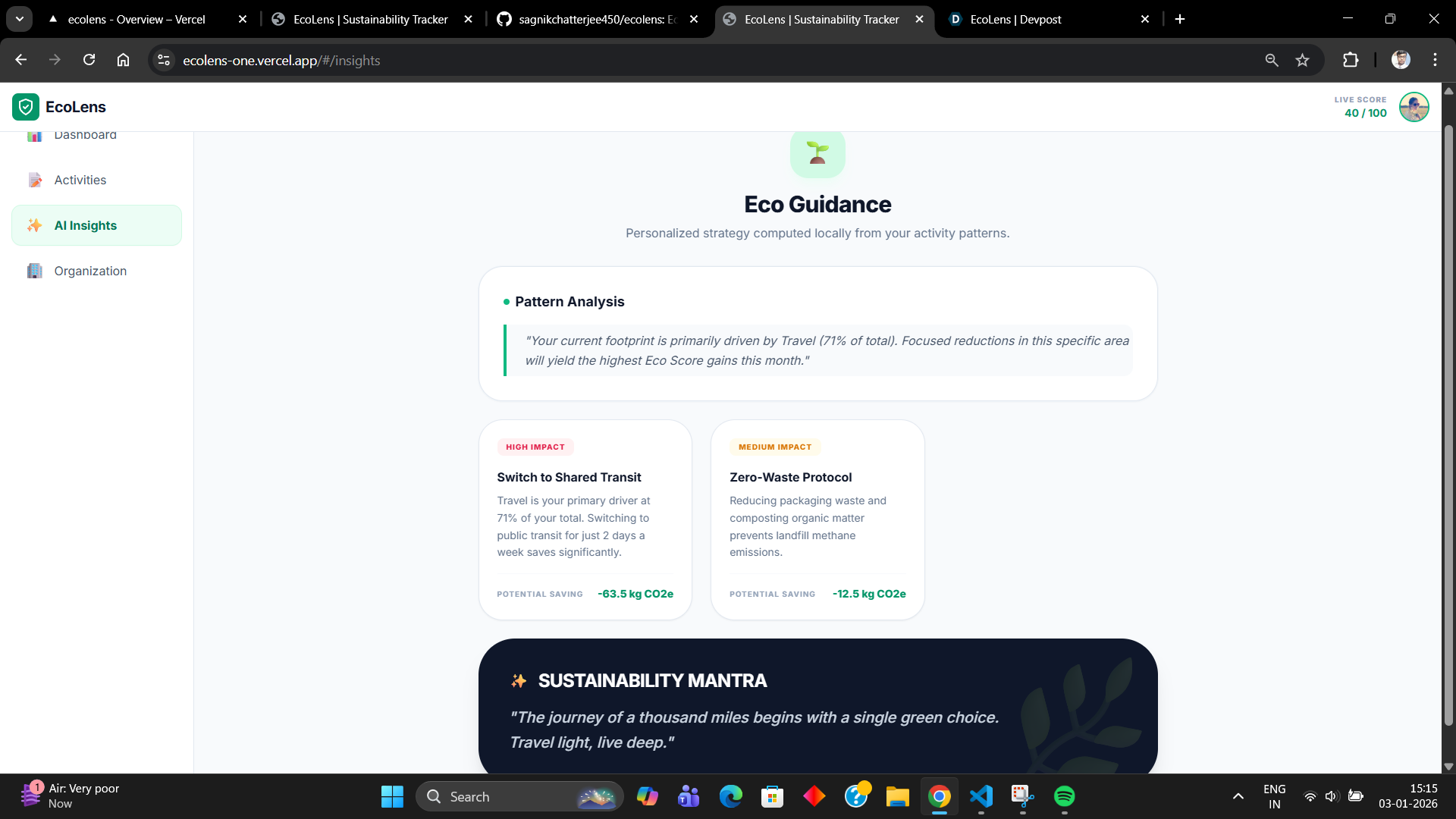
Today, individuals and organizations want to be sustainable, but they face three major problems: Sustainability data is scattered and complex Carbon tracking tools are expensive and built only for large corporations There’s no personalized guidance on how to reduce emissions As a result, good intentions never turn into real impact. EcoLens is an AI-powered software platform that turns everyday digital activity into clear sustainability insights. By analyzing data like travel patterns, online purchases, and energy usage, EcoLens: Calculates your carbon footprint Breaks it down into simple categories And gives actionable, personalized recommendations to reduce it Think of it as Google Analytics — but for sustainability.
Inspiration
Sustainability is often discussed, but rarely understood at a personal level. Most people want to reduce their environmental impact, yet they don’t know where they are contributing the most or how to make meaningful changes. We realized that sustainability data exists — but it’s scattered, complex, and inaccessible to everyday users. This gap between intention and action inspired us to build EcoLens — a platform that makes sustainability visible, measurable, and actionable for everyone.
What it does
EcoLens is an AI-powered sustainability intelligence platform that helps individuals and organizations understand and reduce their carbon footprint.
Analyzes user behavior such as travel, energy usage, and lifestyle patterns Estimates carbon emissions using intelligent modeling Provides personalized, actionable recommendations Tracks progress through sustainability scores and visual dashboards Encourages eco-friendly habits through gamification and challenges In short, EcoLens turns complex environmental data into simple, meaningful insights that drive real-world change.
How we built it
EcoLens was built as a software-first, scalable prototype using: Frontend: A responsive web interface displaying dashboards, charts, and insights Backend Logic: Rule-based and AI-simulated models to estimate carbon emissions Data Layer: Mock datasets simulating travel, energy, and consumption behavior AI Engine: Generates personalized recommendations and predicts emission trends Gamification Module: Badges, streaks, and sustainability scores to drive engagement We focused on clean architecture, clarity, and storytelling — ensuring the demo is intuitive and impactful even without real-world data integrations.
Challenges I ran into
Translating abstract sustainability metrics into something understandable Designing an AI system that feels intelligent without relying on real user data Balancing technical depth with simplicity for a hackathon demo Making sustainability feel empowering, not overwhelming Each challenge pushed me to think more creatively and design with the user in mind.
Accomplishments that we're proud of
Built a complete end-to-end sustainability intelligence platform in a short time Successfully translated complex climate data into actionable insights Designed a system that is scalable from individuals to institutions Created a solution that blends AI, UX, and environmental impact seamlessly Most importantly, we built something that can realistically drive behavioral change.
What we learned
Sustainability solutions must be intuitive to create real adoption AI is most powerful when it simplifies decision-making, not complicates it Gamification significantly improves engagement in serious domains Clear storytelling is just as important as strong technology
What's next for EcoLens
Our vision for EcoLens goes far beyond the hackathon: Integrating real-world APIs (Google Maps, utility data, carbon databases) Adding enterprise-grade ESG reporting tools Expanding into campuses, smart cities, and corporate sustainability programs Introducing community challenges and global impact leaderboards Developing a public sustainability score API EcoLens aims to become the standard platform for understanding and improving environmental impact.


Log in or sign up for Devpost to join the conversation.