-
-
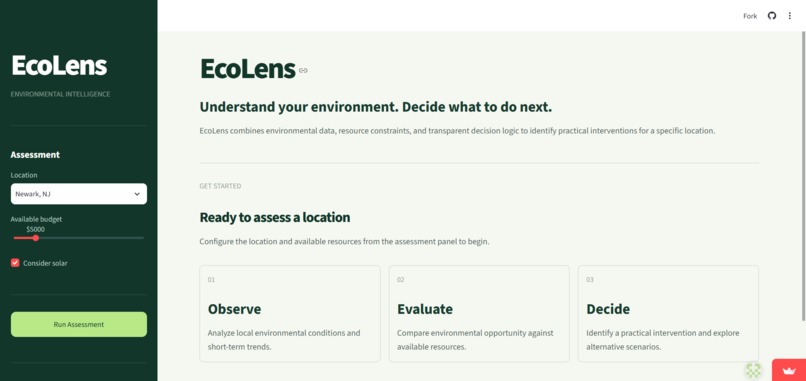
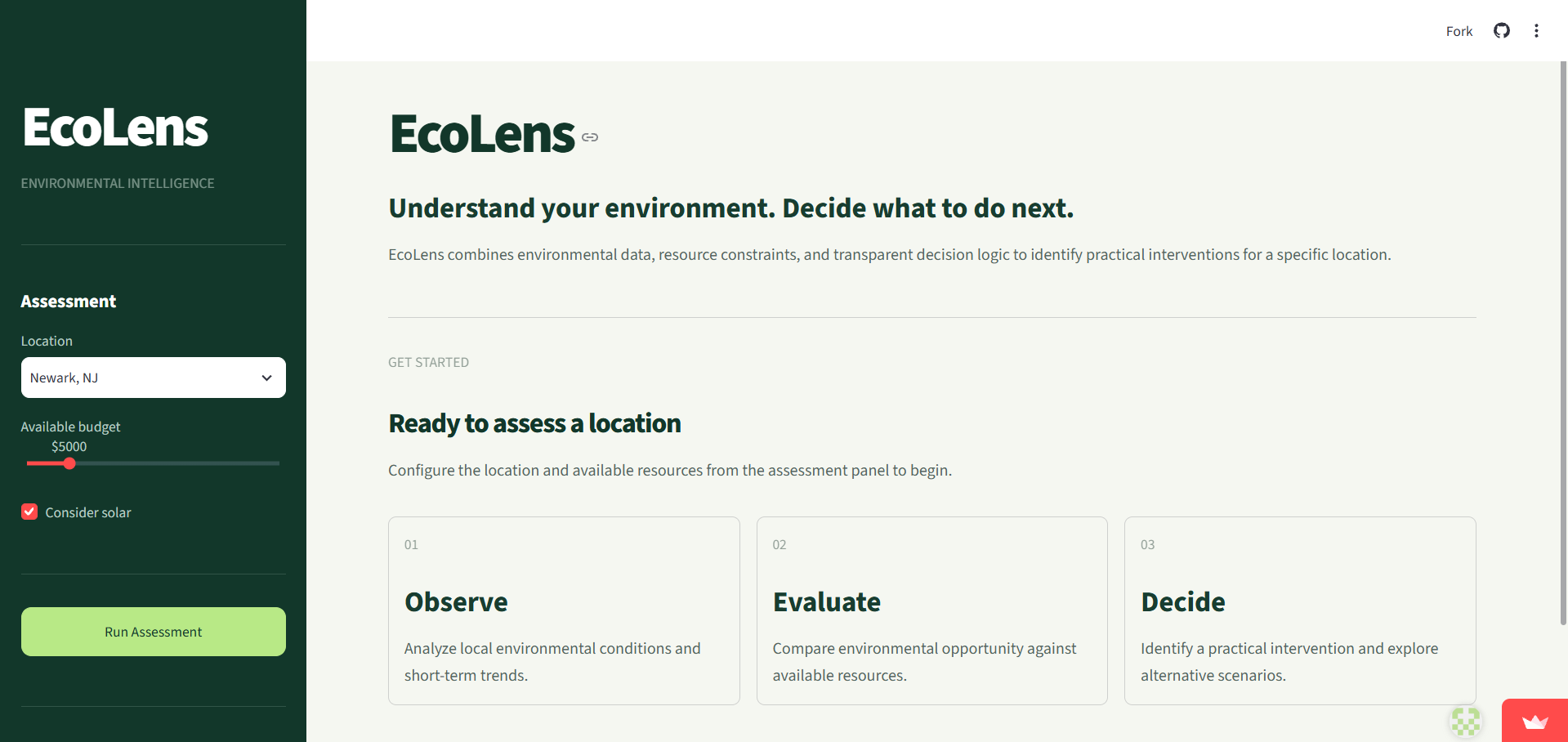
EcoLens dashboard: Configure a location, available budget, and solar preference to begin an environmental assessment.
-
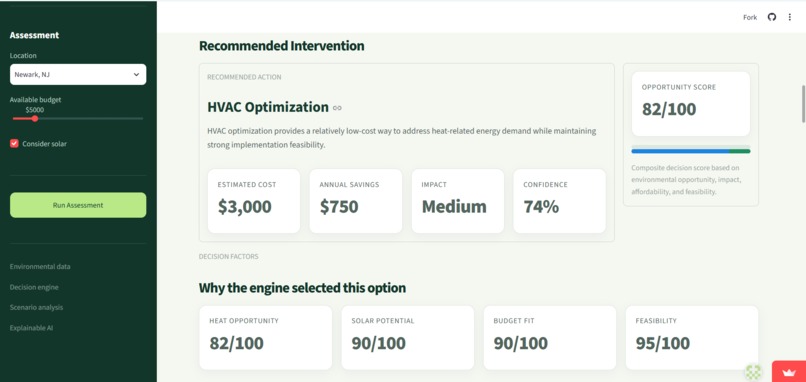
Environmental assessment: EcoLens combines current environmental conditions and short-term forecast data for the selected location.
-
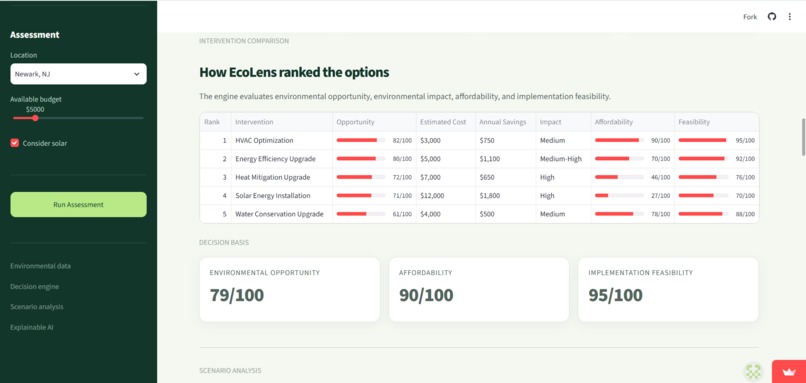
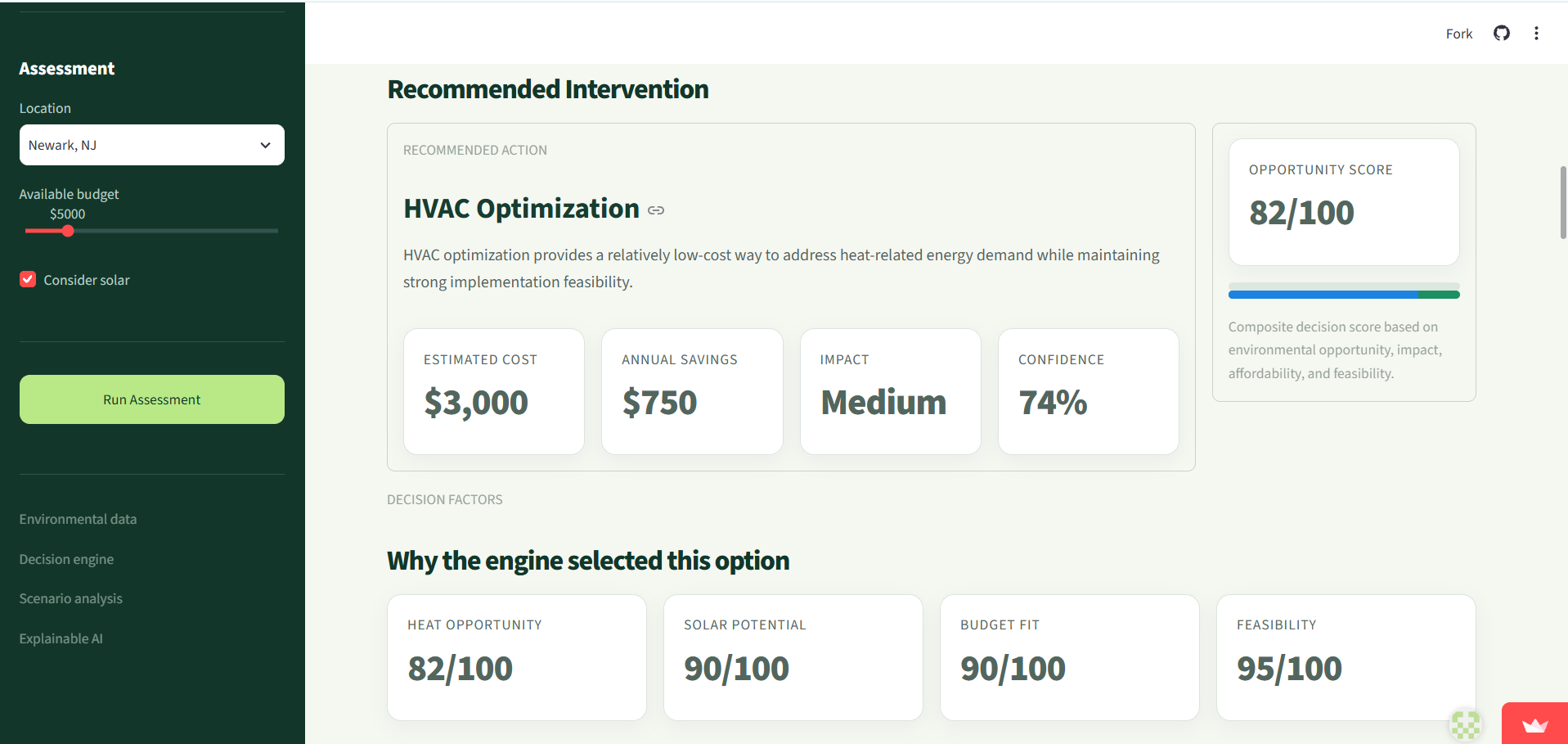
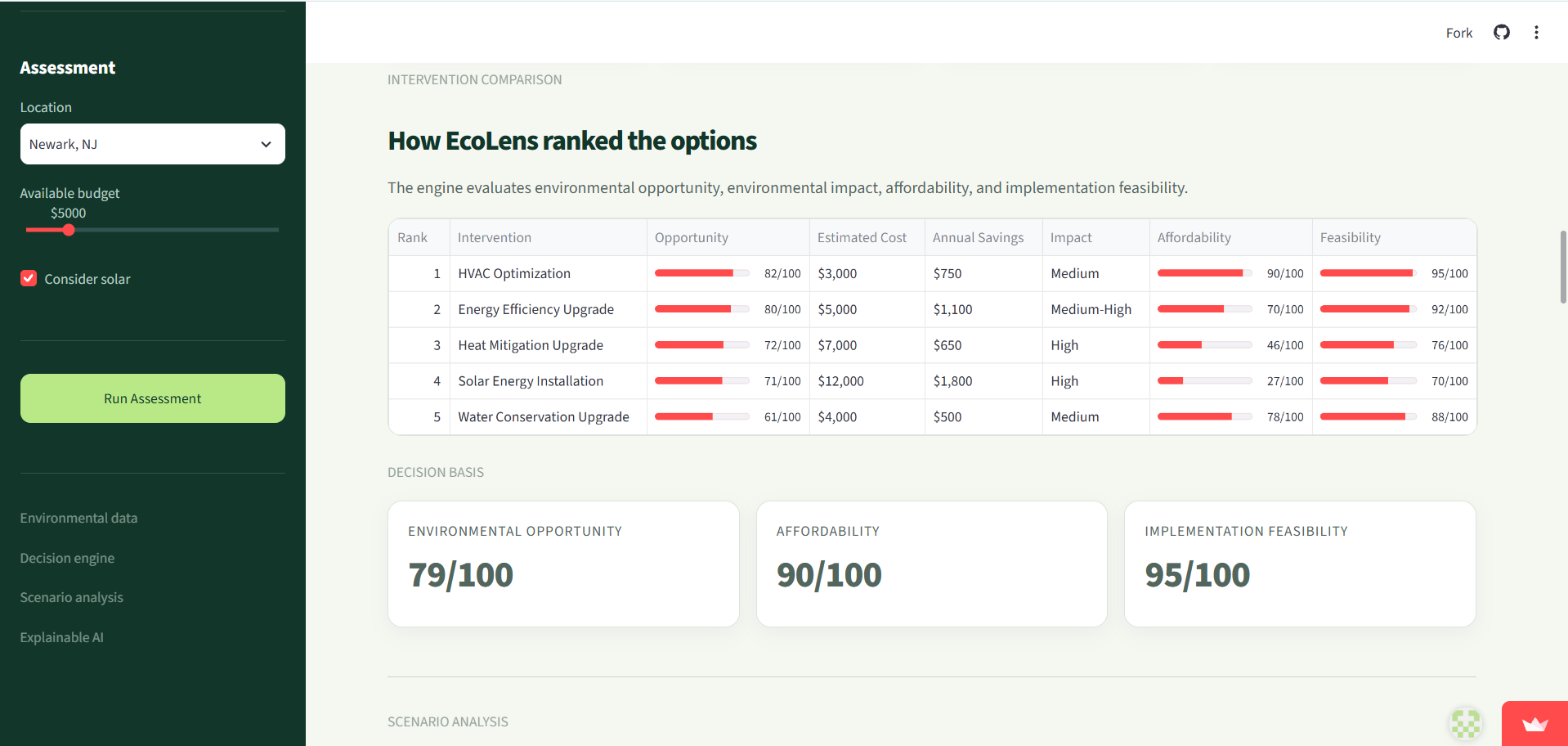
Decision engine: Interventions are scored using environmental opportunity, impact, affordability, and implementation feasibility.
-
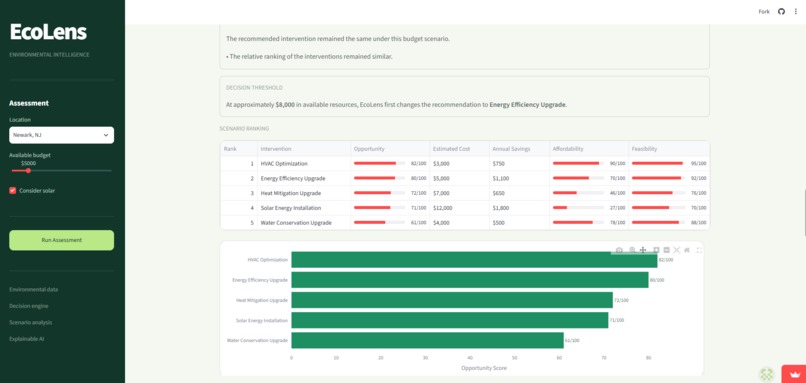
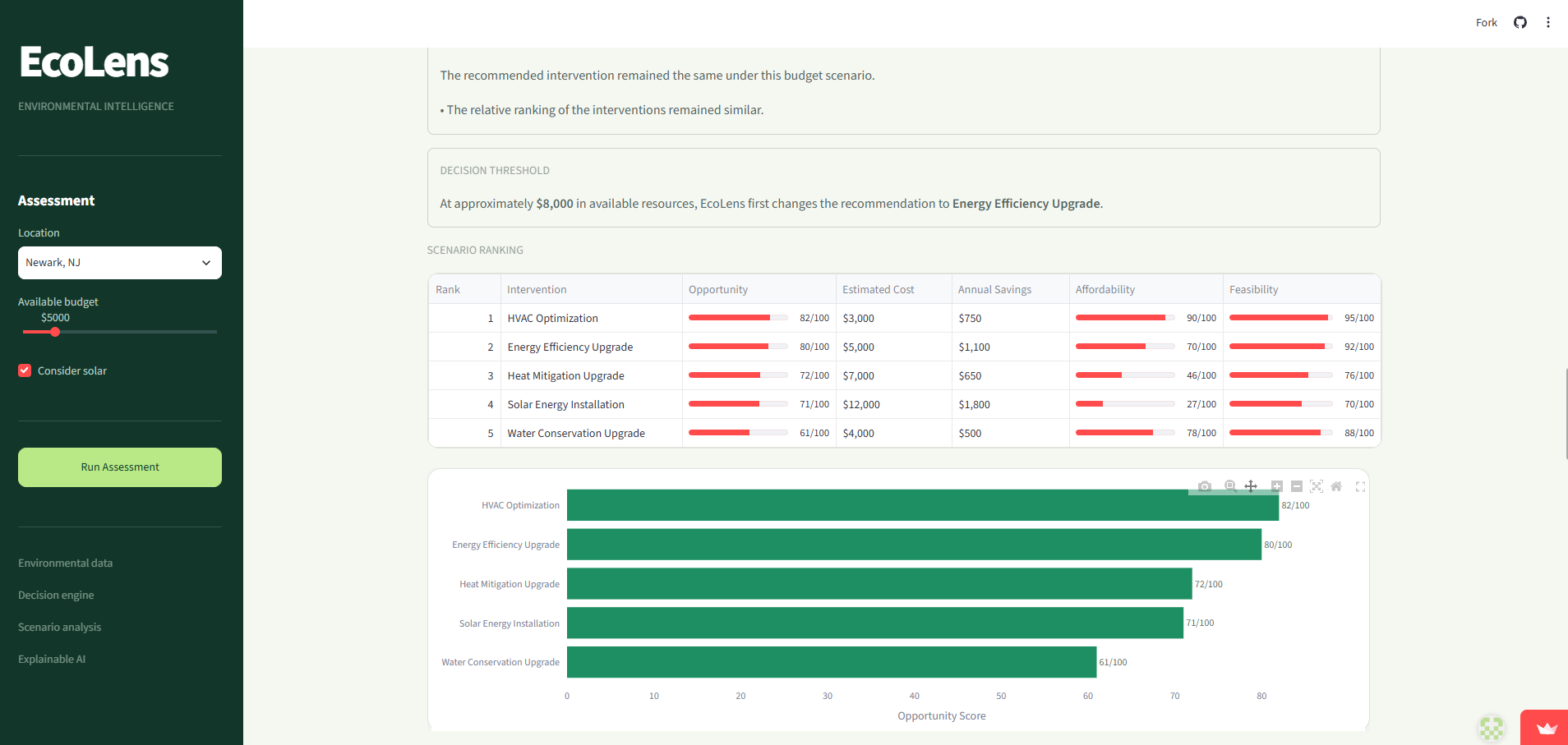
Intervention ranking: Compare potential interventions and see how the decision engine ranks each option.
-
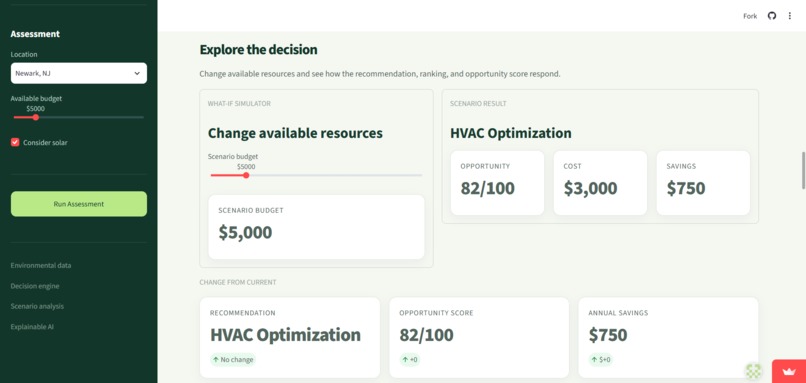
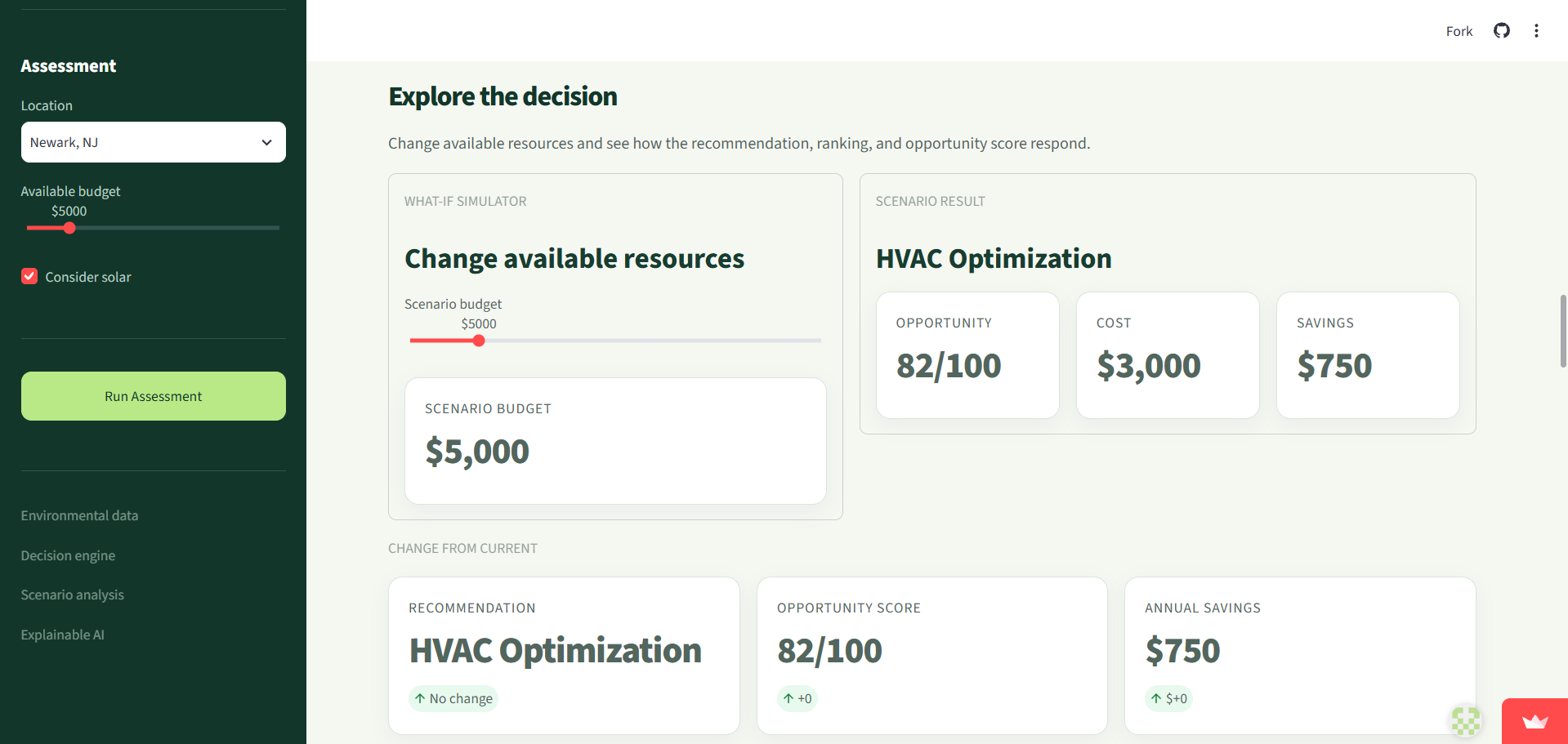
Scenario analysis: Change the available budget and see how the recommendation, score, and intervention ranking respond.
-
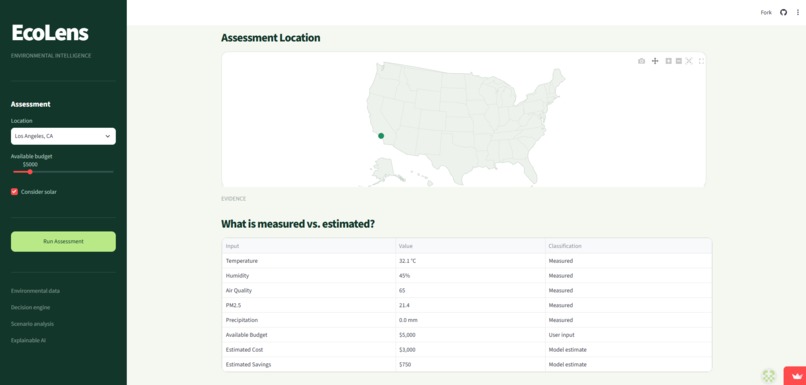
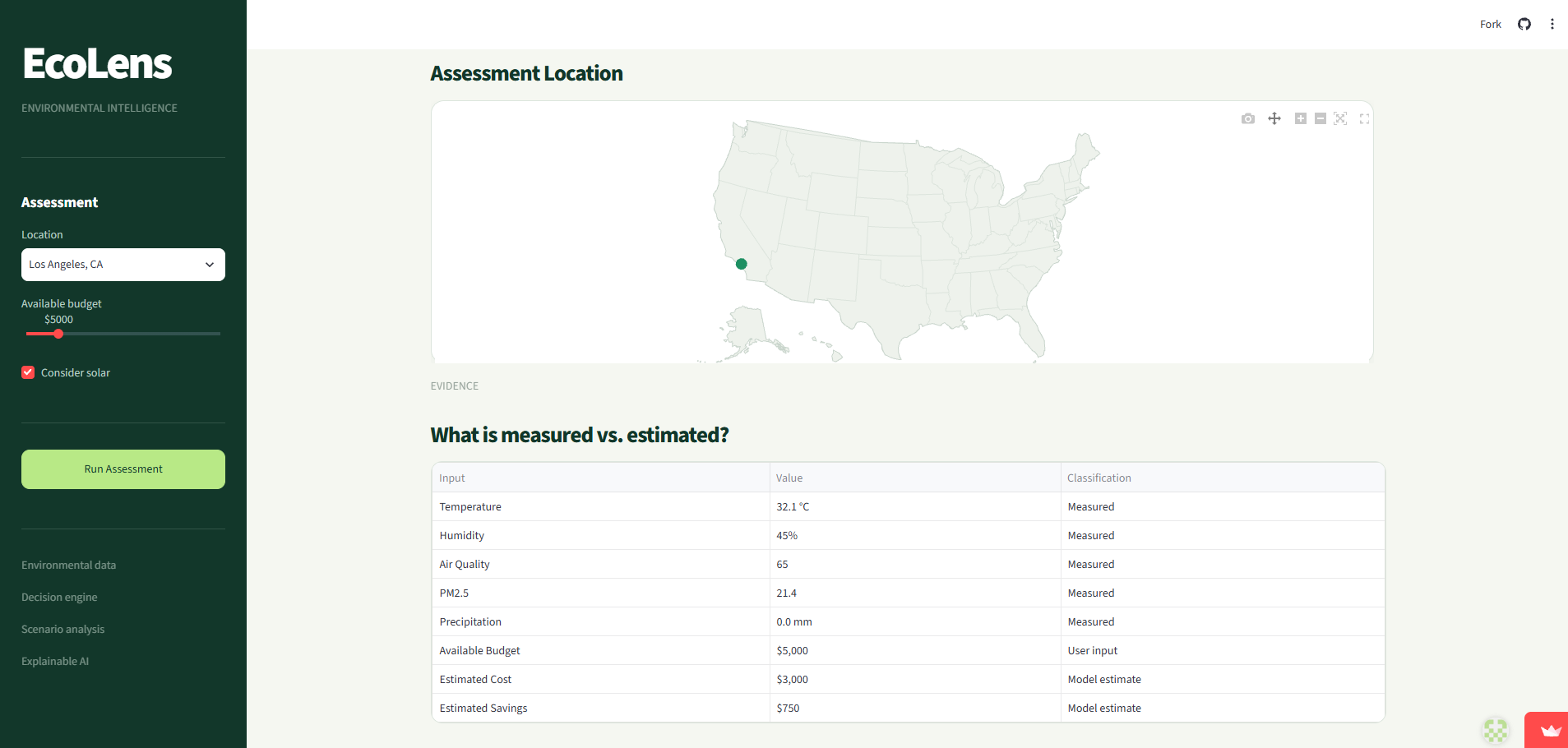
Location and evidence: View the assessment location and distinguish environmental measurements from model estimates.
Inspiration
Environmental decisions are rarely simple. A city deciding where to build, what infrastructure to invest in, or how to reduce emissions has to balance environmental impact, cost, resources, and long-term consequences. Yet the information needed to make those decisions is often scattered across datasets, reports, and technical sources.
We built EcoLens to answer a simple question:
What if decision-makers could understand the environmental consequences of a choice before making it?
EcoLens turns environmental data into an interactive decision-intelligence system that helps users explore trade-offs, compare alternatives, and understand the reasoning behind a recommendation.
What it does
A user describes an environmental or urban decision they are considering. EcoLens analyzes relevant environmental factors, compares potential outcomes, and presents:
- Environmental impact
- Key trade-offs
- Supporting evidence
- Recommended action
- Reasoning behind the recommendation
Instead of simply displaying environmental data, EcoLens is designed to help users make decisions with that data.
How we built it
We built EcoLens as an AI-powered web application combining a user-facing interface with data processing and AI reasoning.
The system takes a decision or scenario as input, identifies the relevant environmental factors, processes supporting information, and generates an explainable recommendation. We focused on making the output understandable rather than presenting users with raw datasets or model outputs.
What we learned
Building EcoLens taught us that environmental decision-making is not just a prediction problem. Different choices can improve one environmental metric while making another worse.
This pushed us to think about environmental problems as multi-dimensional trade-off problems rather than optimizing for a single number.
We also learned how important explainability is when AI is being used to support real-world decisions. A recommendation is much more useful when users can understand why the system reached it and what evidence supports it.
Challenges we faced
One of our biggest challenges was deciding how to turn complex environmental information into something that could be understood quickly.
Another challenge was balancing AI-generated reasoning with reliable evidence. We wanted EcoLens to provide useful recommendations without presenting AI-generated conclusions as unquestionable facts.
We also had to think carefully about how to present multiple environmental impacts without overwhelming the user.
What's next
Our goal is to expand EcoLens into a broader environmental decision-intelligence platform for cities, organizations, and individuals.
Future versions could incorporate more real-time environmental data, location-specific analysis, scenario simulation, and stronger quantitative impact estimates.
Ultimately, we want EcoLens to help people answer not only "What is happening?", but more importantly:
"What should we do next, and what will the environmental consequences be?"
Built With
- artificial-intelligence
- data-analysis
- data-visualization
- environmental-data
- generative-ai
- machine-learning
- python
- streamlit

Log in or sign up for Devpost to join the conversation.