-
-
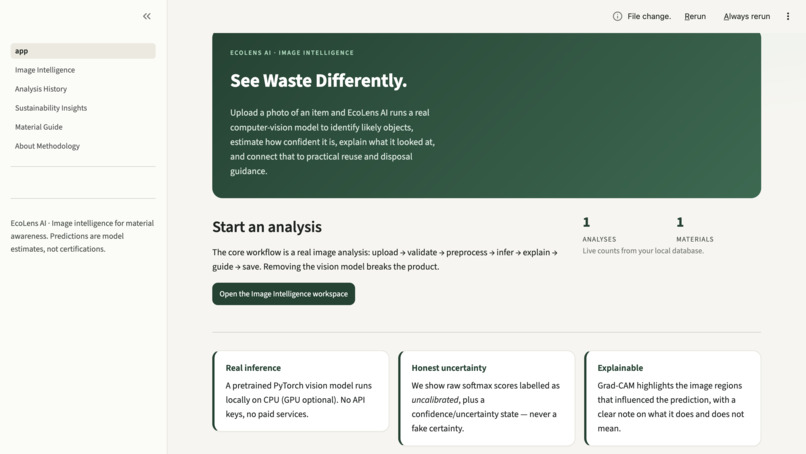
Home Page
-
-
-
-
-
-
-
EcoLens AI — Intelligent Material Awareness
Inspiration
Many AI-powered recycling tools can make recycling recommendations without clearly explaining what the model actually recognizes or what evidence supports the recommendation. Incorrect assumptions about material composition and recyclability can lead to confusion and poor disposal decisions.
We built EcoLens AI to explore a more transparent approach: show what a computer vision model recognizes, communicate uncertainty, and provide practical guidance without pretending that an object prediction proves its material or recyclability.
What it does
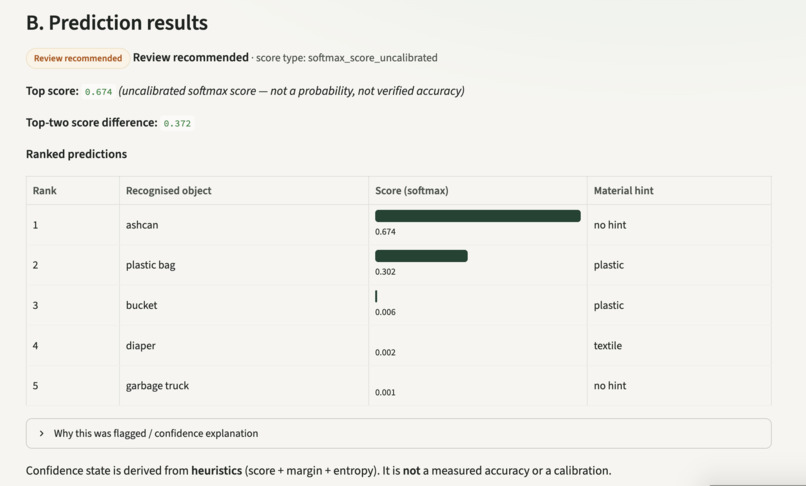
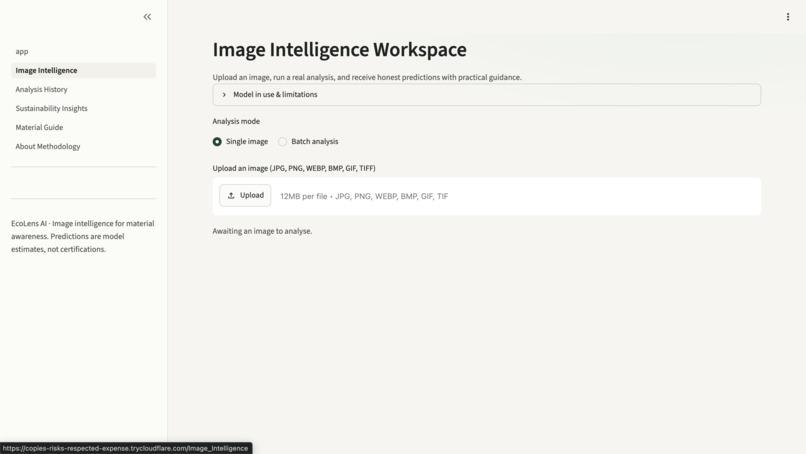
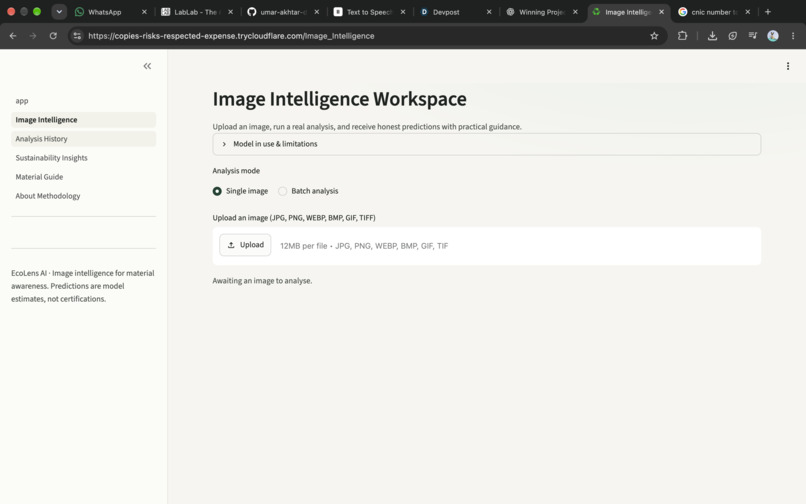
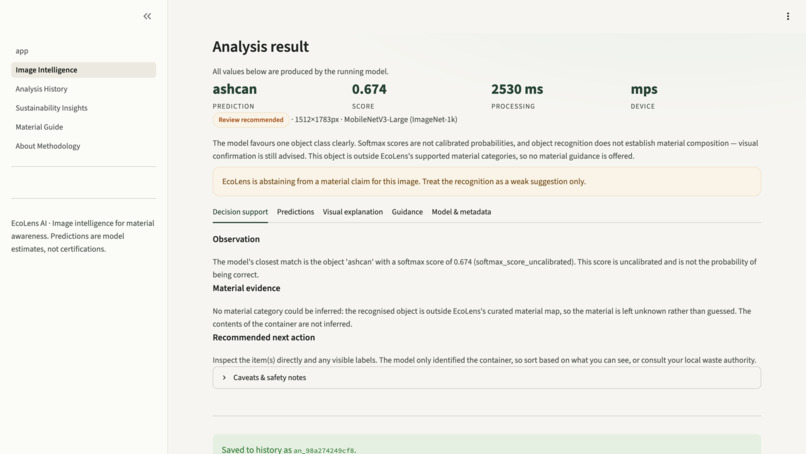
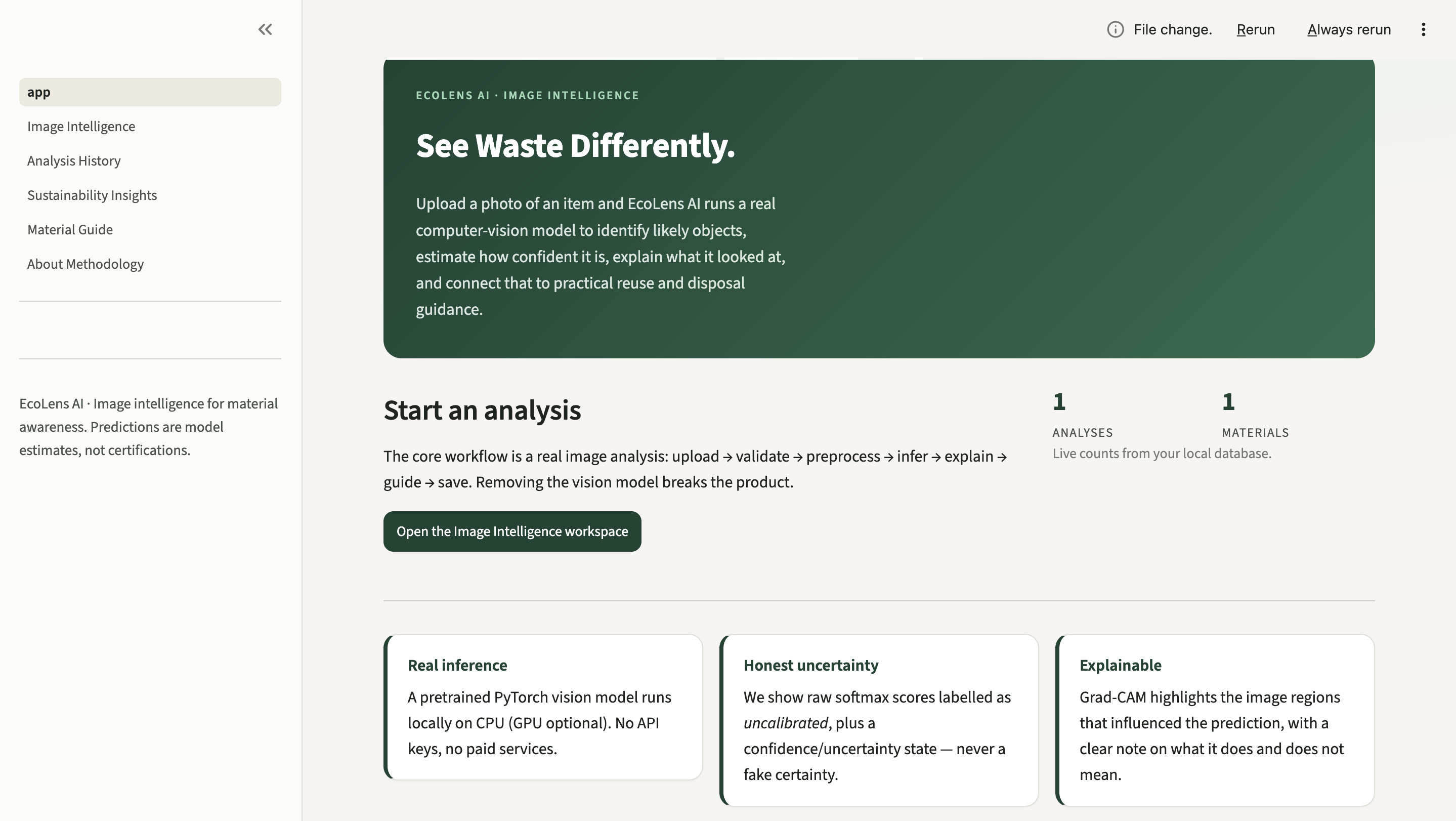
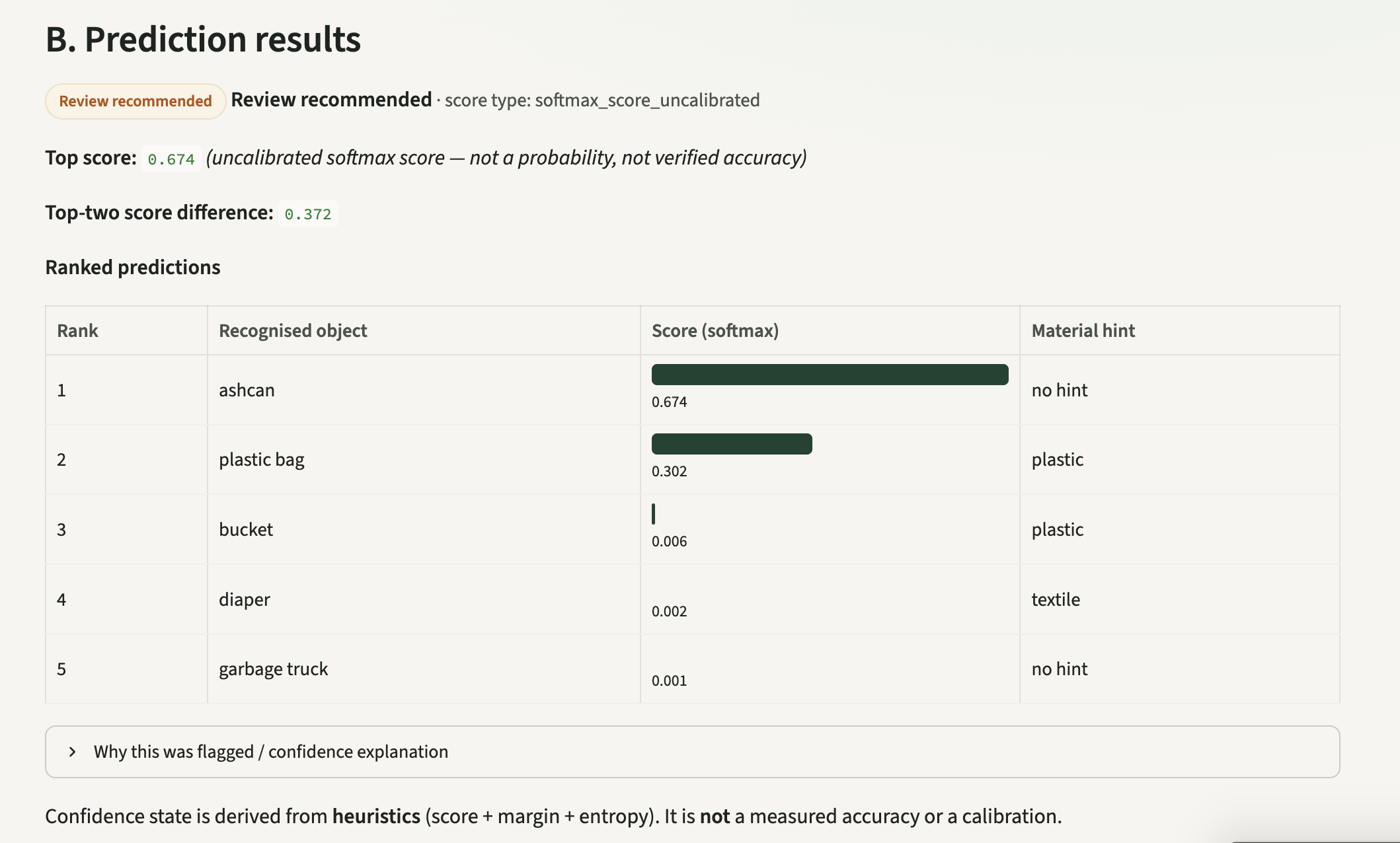
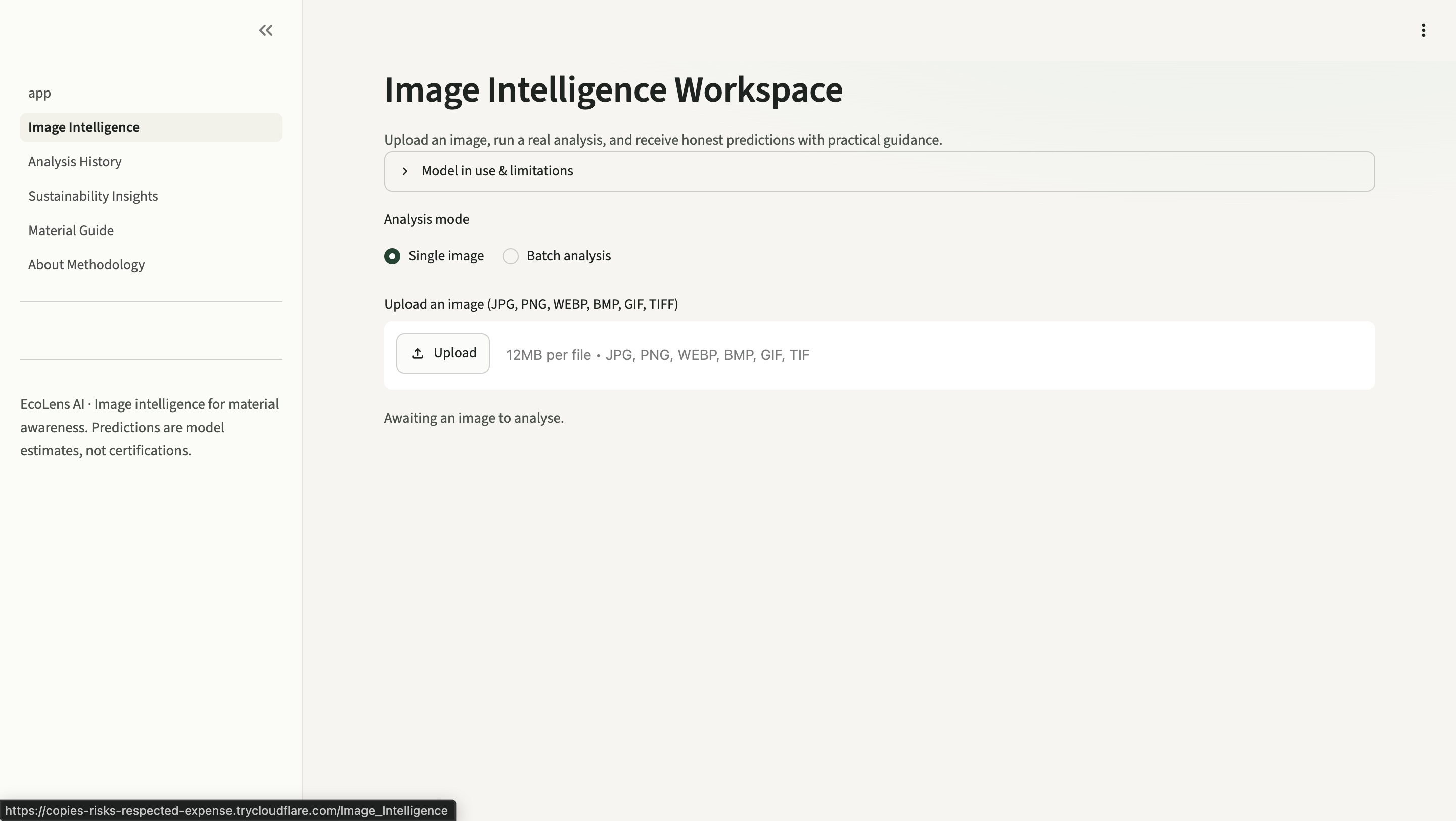
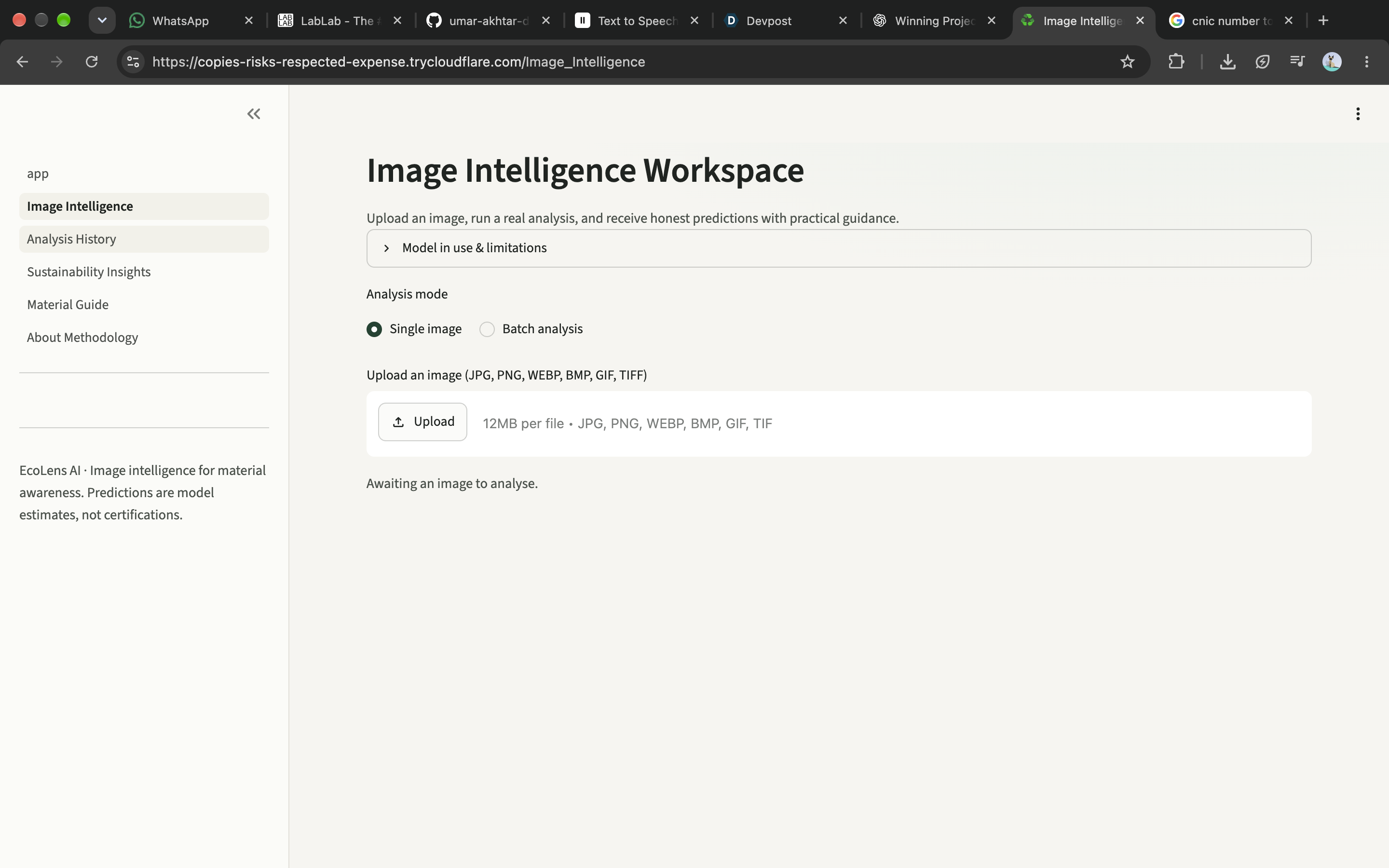
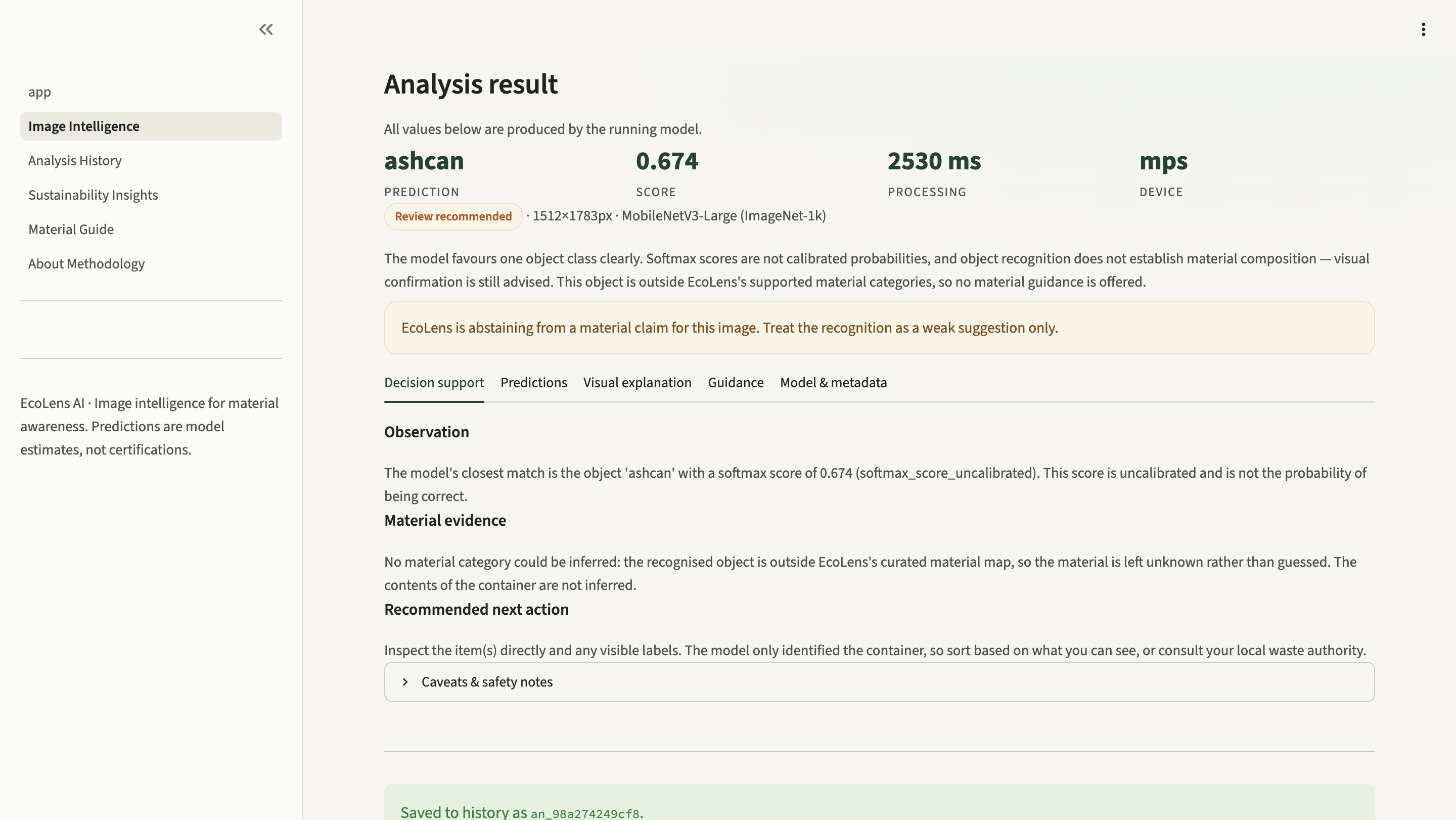
EcoLens AI is a local-first, AI-powered visual material-awareness application. Users upload an image and receive ranked object predictions, model scores, an uncertainty status, and general reuse and disposal guidance.
The application also provides:
- Image Intelligence: Analyze uploaded images using a real, locally running computer vision model.
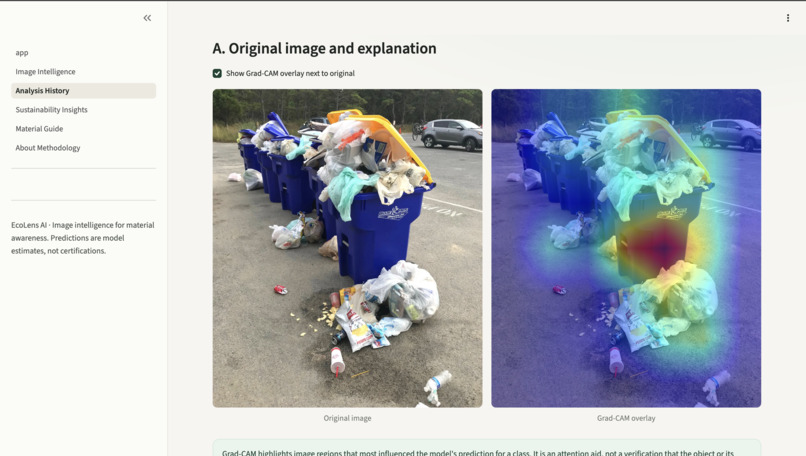
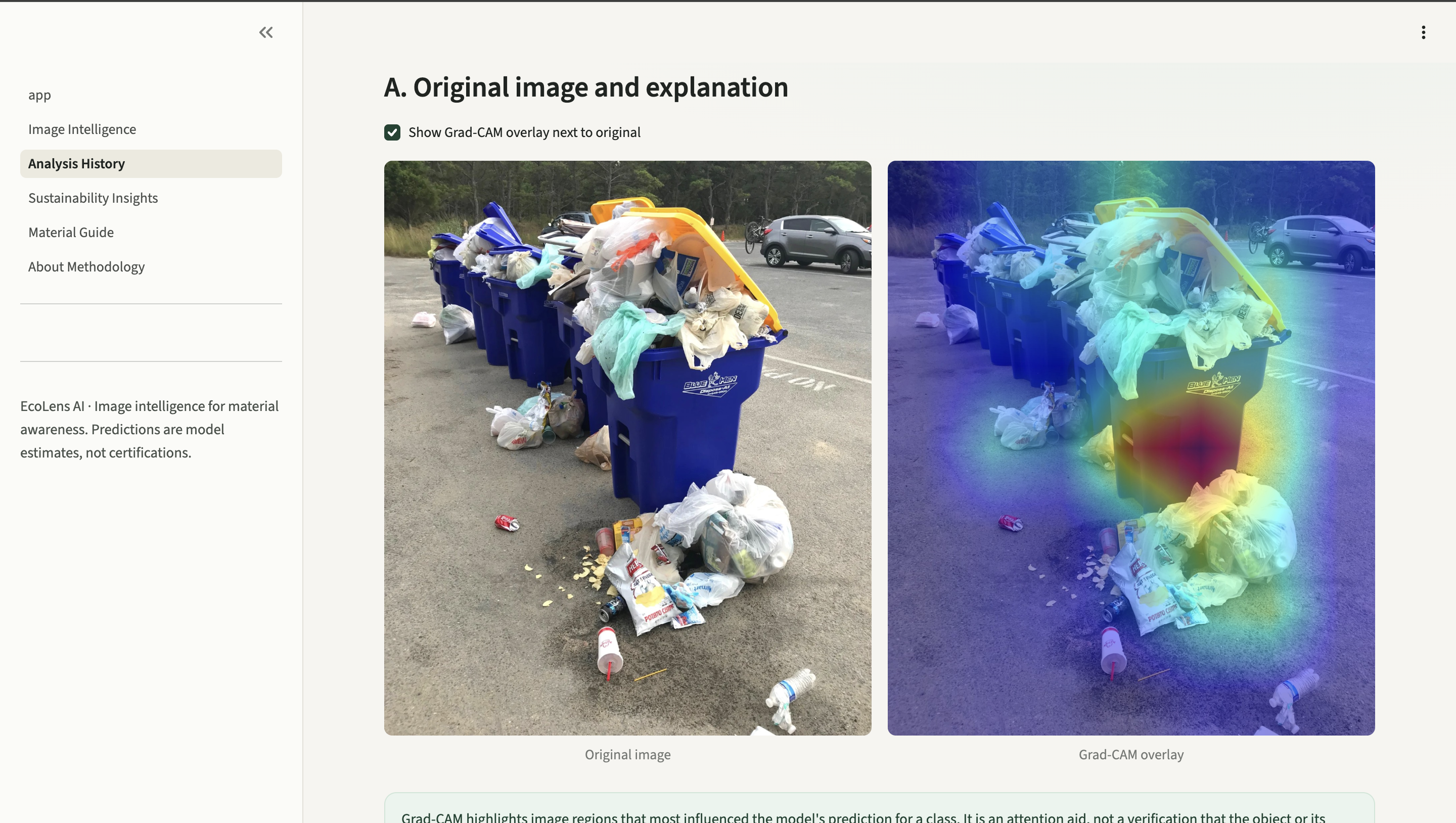
- Visual Explainability: View Grad-CAM visualizations where supported to understand which image regions are associated with a prediction.
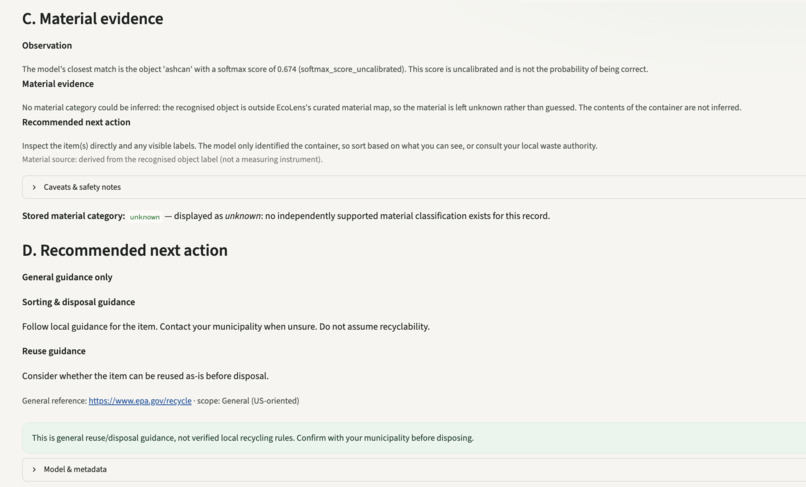
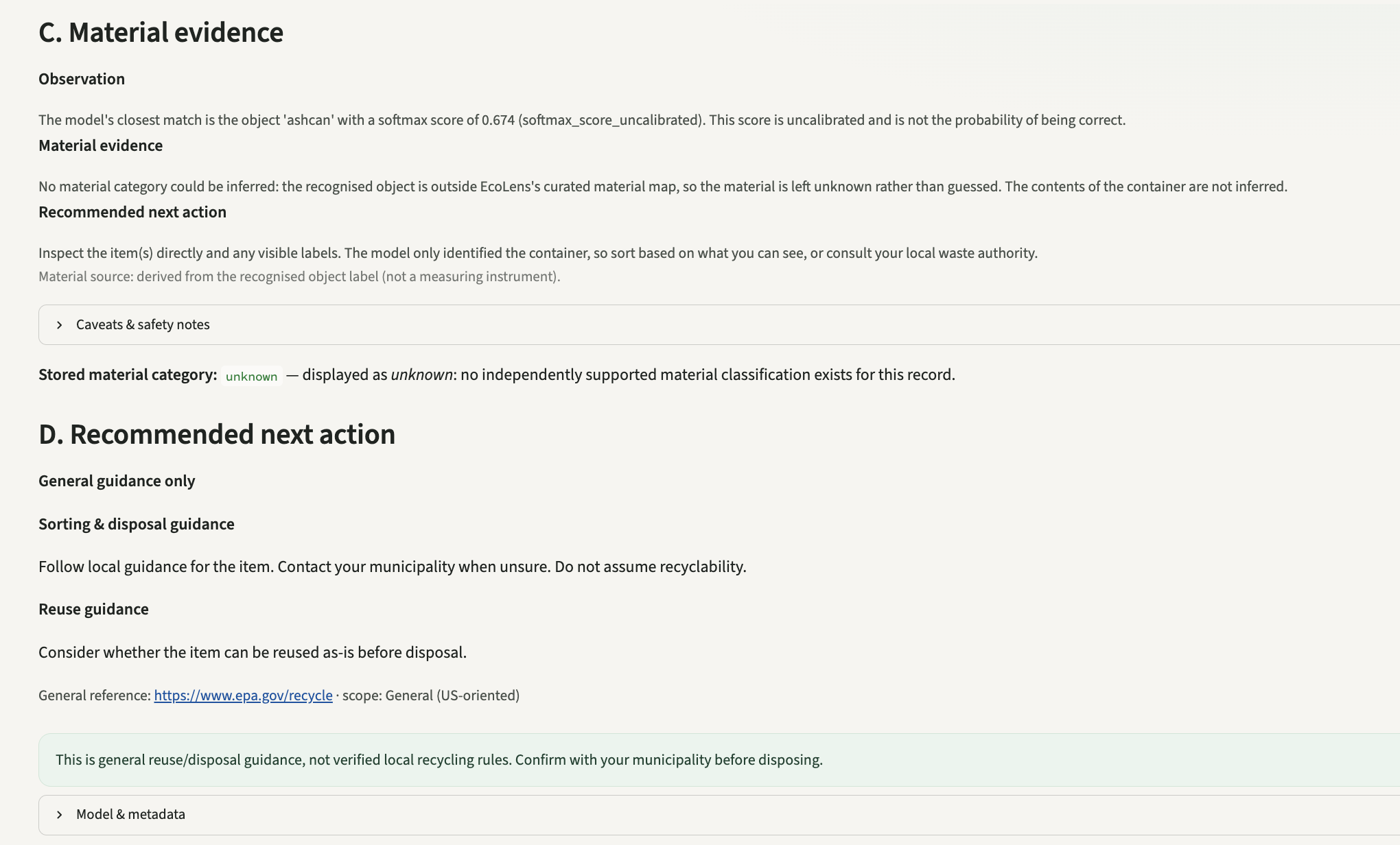
- Decision Support: Separate the model's observation from material evidence and recommended next actions.
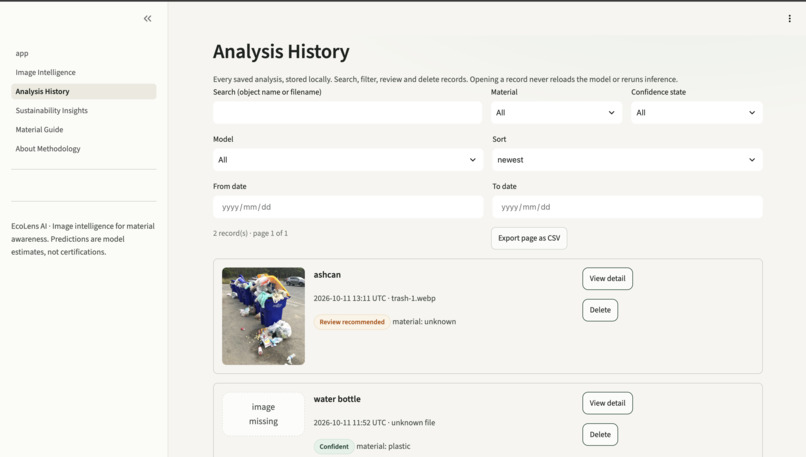
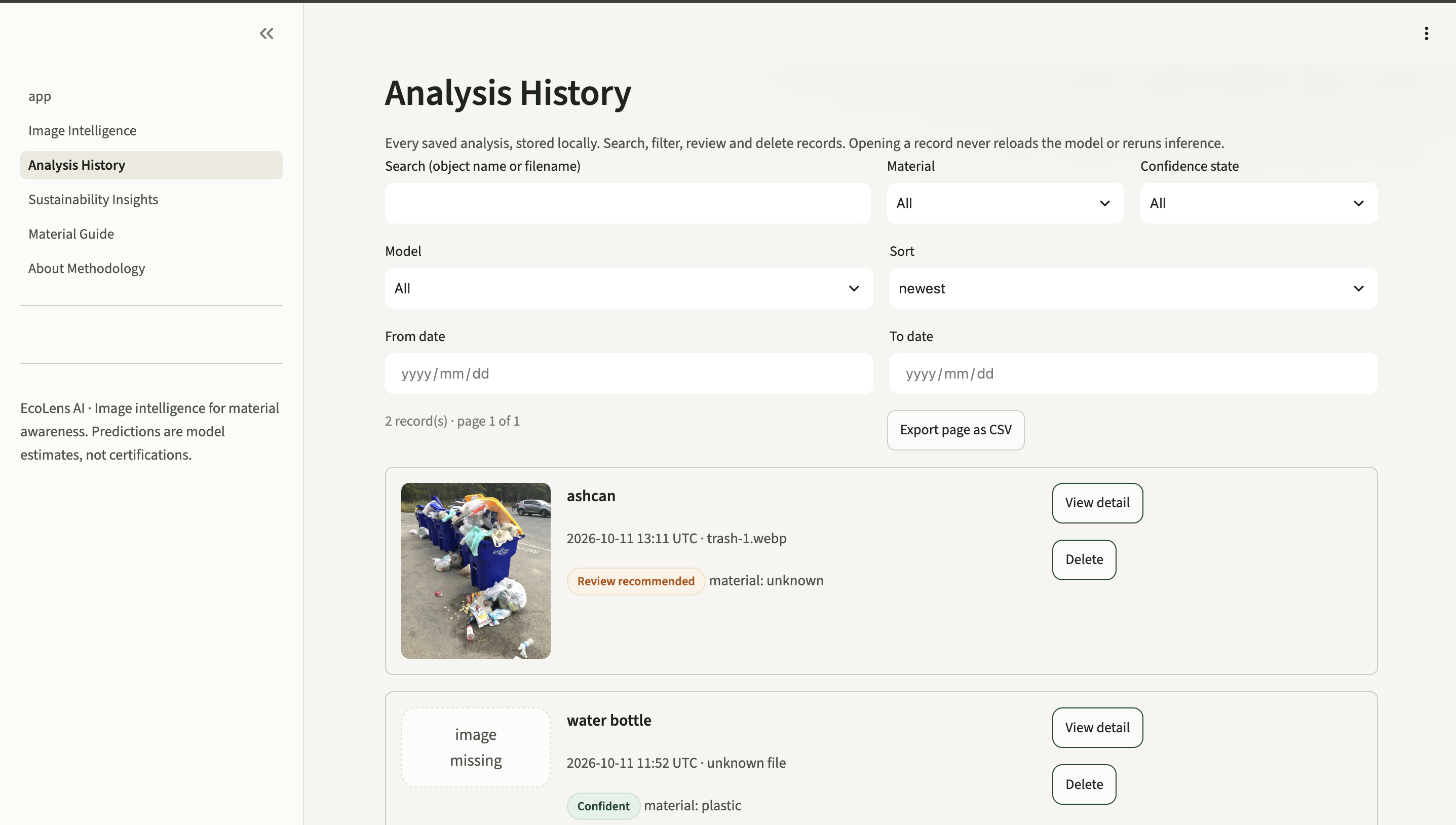
- Analysis History: Save and review previous analyses, including predictions, timestamps, and model metadata.
- Sustainability Insights: Explore statistics derived from saved analysis records.
- Material Guide: Access general material-awareness and disposal guidance.
How we built it
EcoLens AI uses Python, Streamlit, PyTorch, and torchvision. Its current computer vision model is MobileNetV3-Large pretrained on ImageNet-1k. Pillow and image-processing utilities handle uploaded images, while SQLite stores analysis history locally. Plotly supports data visualization.
The application runs without requiring paid AI API calls for its core inference workflow. Its modular approach separates image processing, model predictions, material guidance, and historical analysis.
An important design decision: honesty over false certainty
A general-purpose object classifier cannot independently verify an item's chemical composition, material purity, contamination, or local recyclability. Its softmax scores are uncalibrated model scores, not verified probabilities or accuracy measurements.
EcoLens AI makes these limitations visible. Material hints are not treated as proof, and disposal recommendations remain general unless supported by additional evidence. Visual explanations help users inspect a prediction but do not establish that it is correct.
Challenges and learning
One of our main challenges was distinguishing object recognition from actual material identification. A model might recognize an object resembling a bin or bottle without knowing the composition of its contents or whether an item is accepted by a particular recycling service.
Building EcoLens AI reinforced the importance of uncertainty communication, explainable AI, persistent data, and responsible product design. We focused on making the system's outputs inspectable rather than presenting every prediction as a fact.
What's next
Future improvements include integrating and evaluating a dedicated waste-classification model, validating uncertainty thresholds against labeled test data, expanding material-specific evidence, and improving feedback-based evaluation.
EcoLens AI aims to make AI-assisted material awareness more transparent, understandable, and responsible.

Log in or sign up for Devpost to join the conversation.