-
-
Overview
-
Input Page (2)
-
Home page
-
Analysis (1)
-
Analysis (4)
-
Input Page
-
Analysis (2)
-
Analysis (3)
Inspiration:
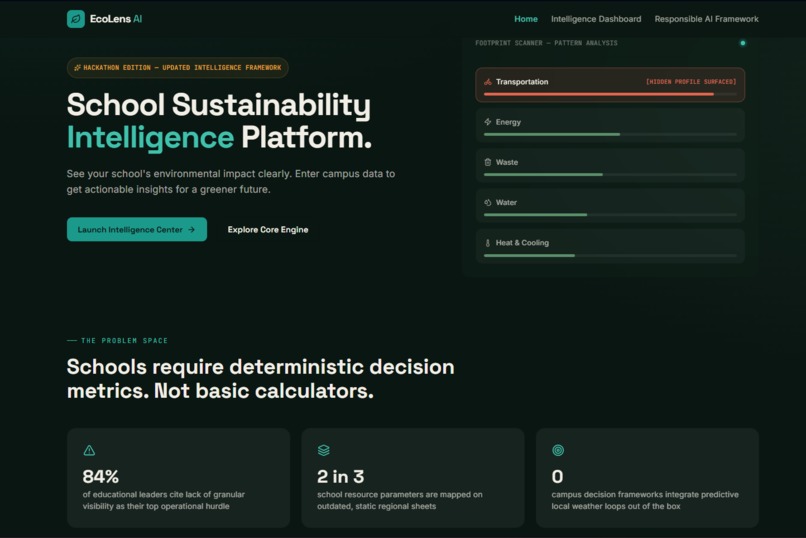
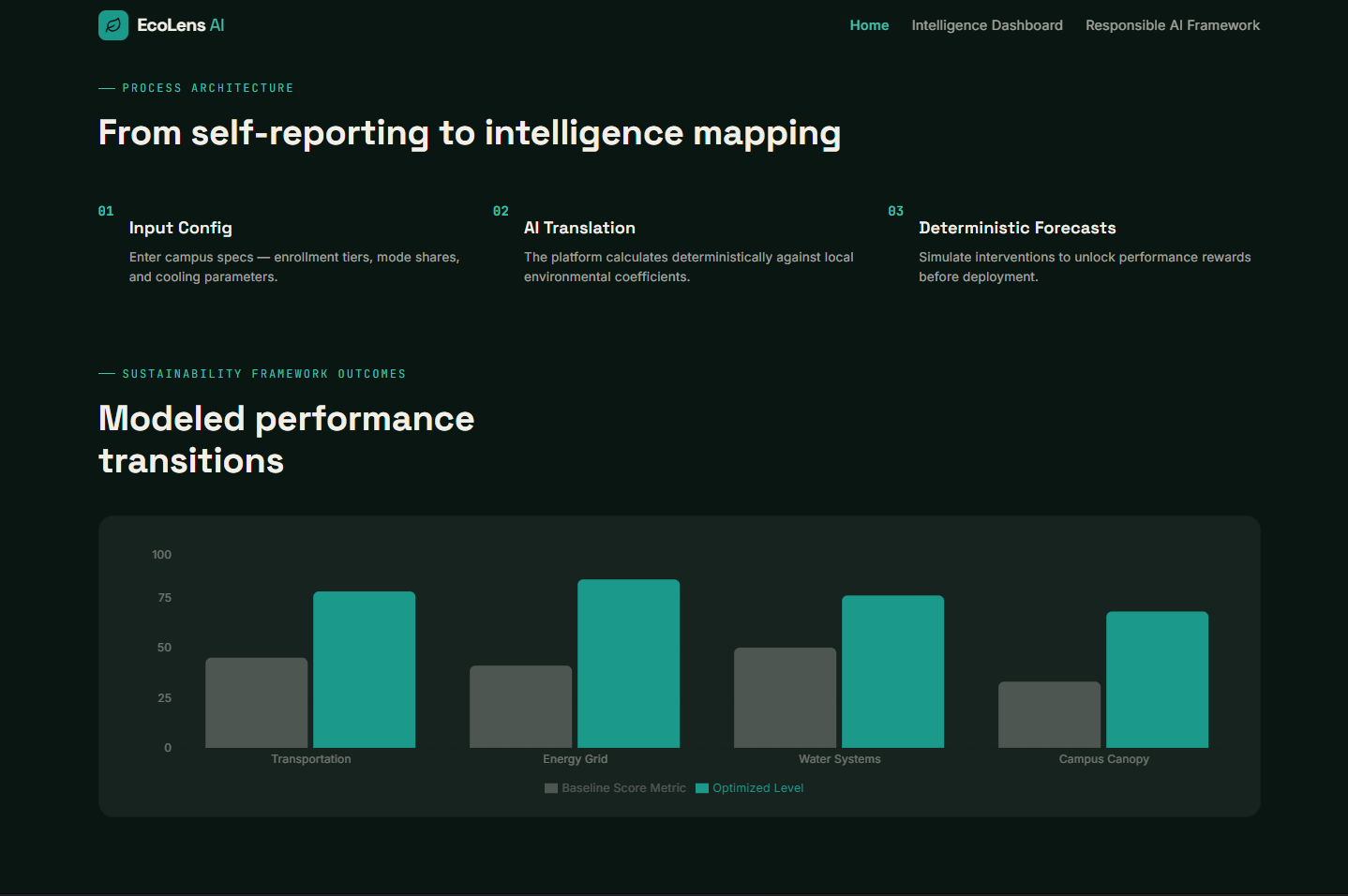
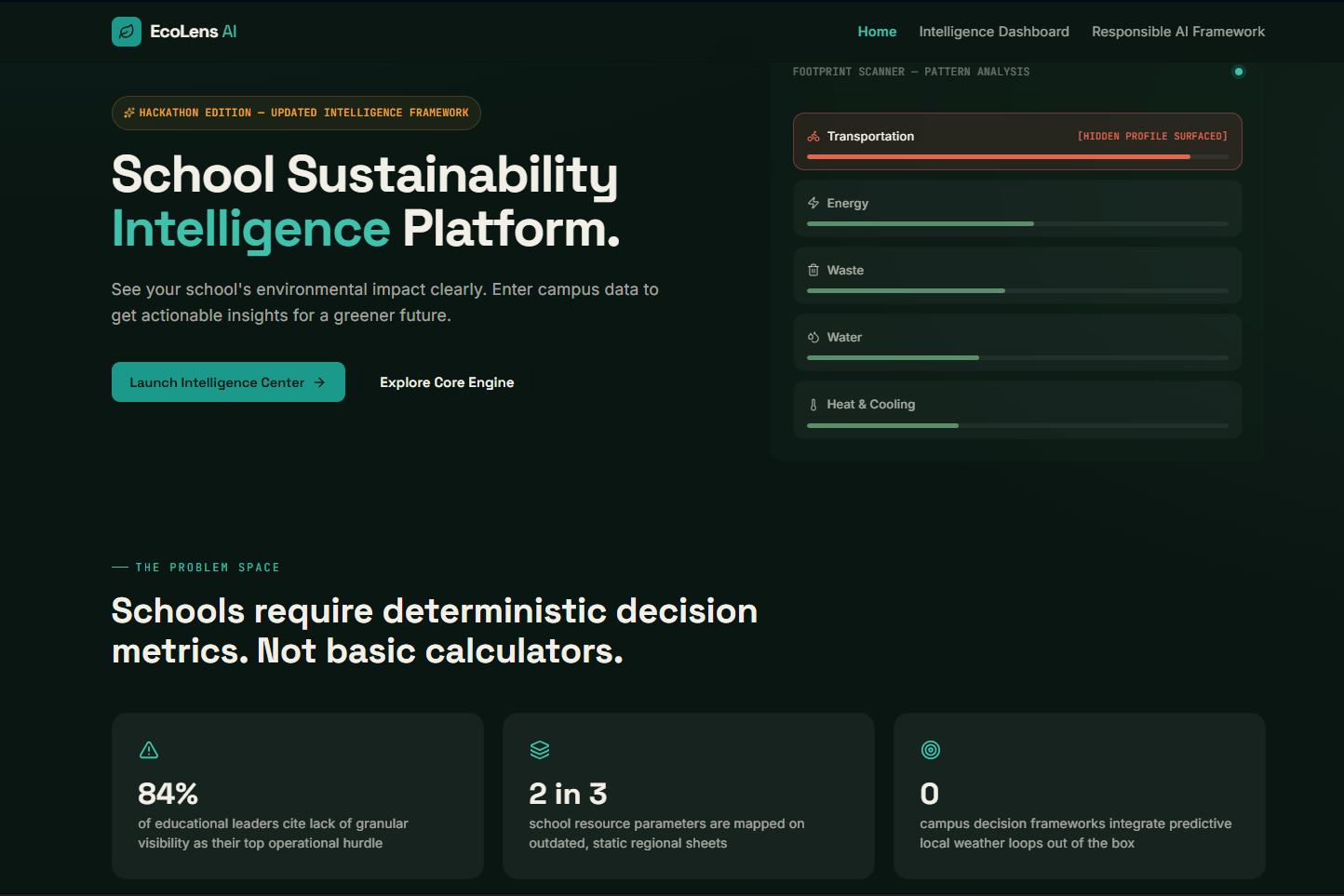
Schools often focus on visible sustainability metrics like electricity and water bills, while many environmental impacts remain hidden. We wanted to create a solution that helps schools uncover these hidden footprints and identify practical opportunities for improvement.
What it does:
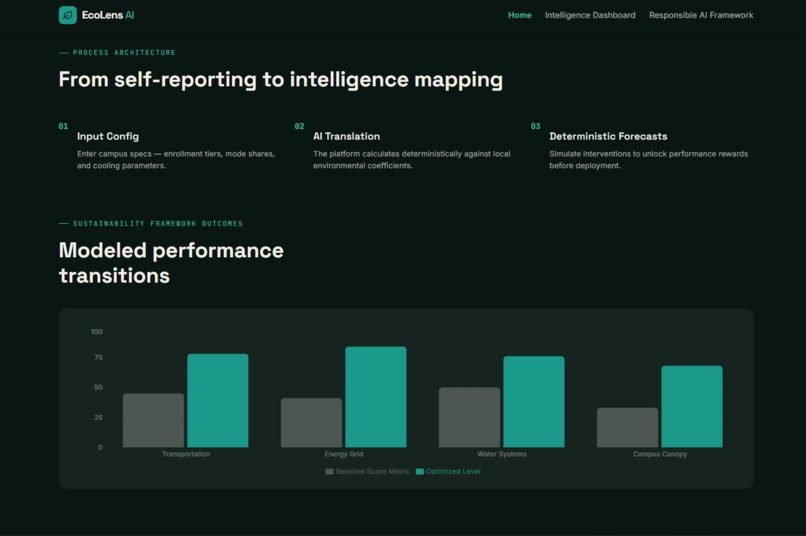
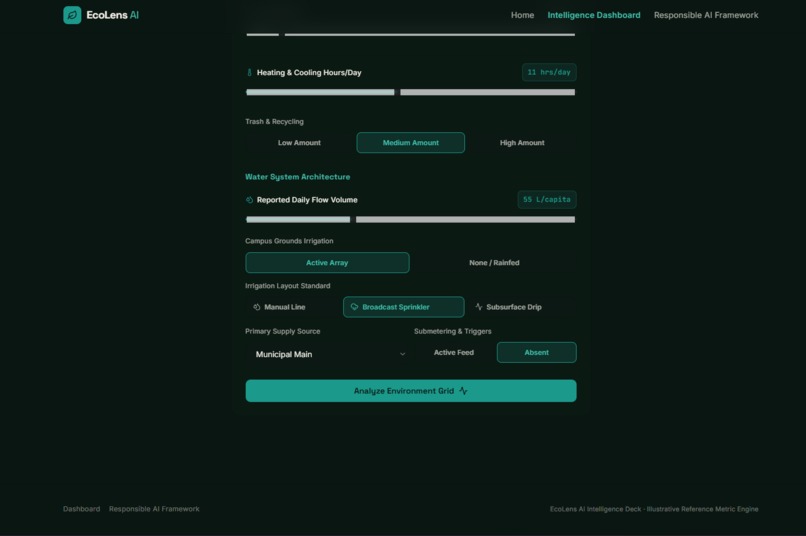
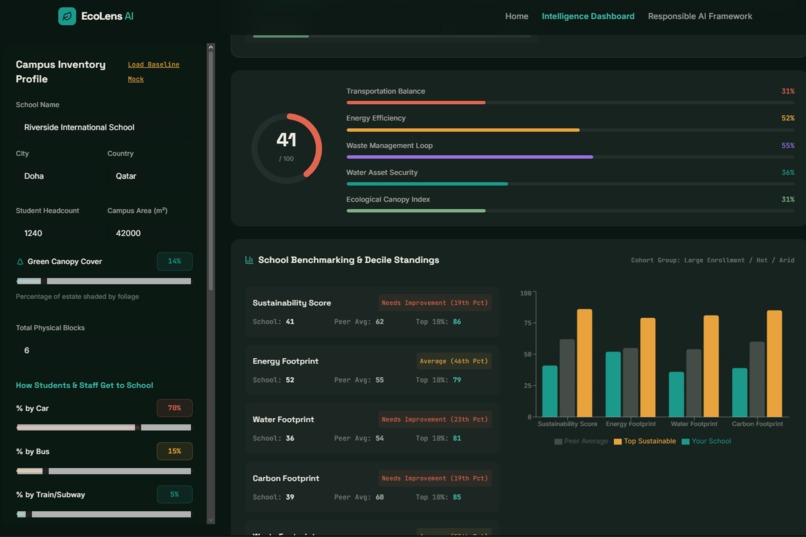
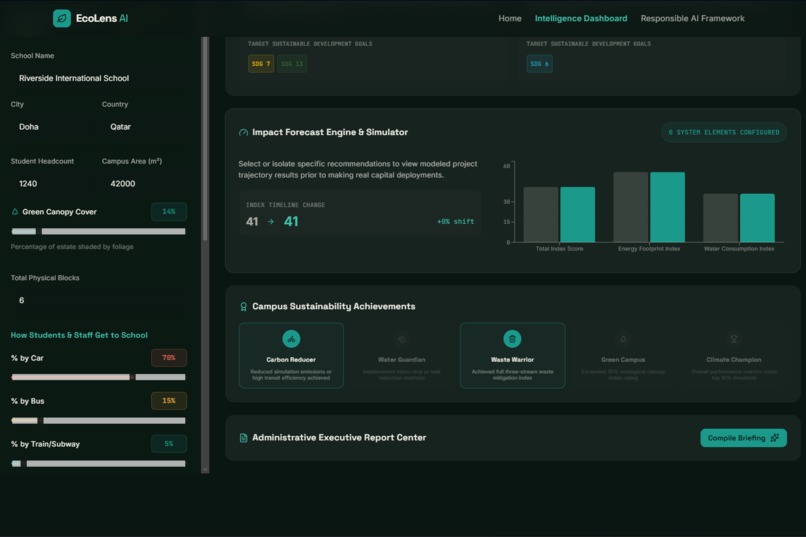
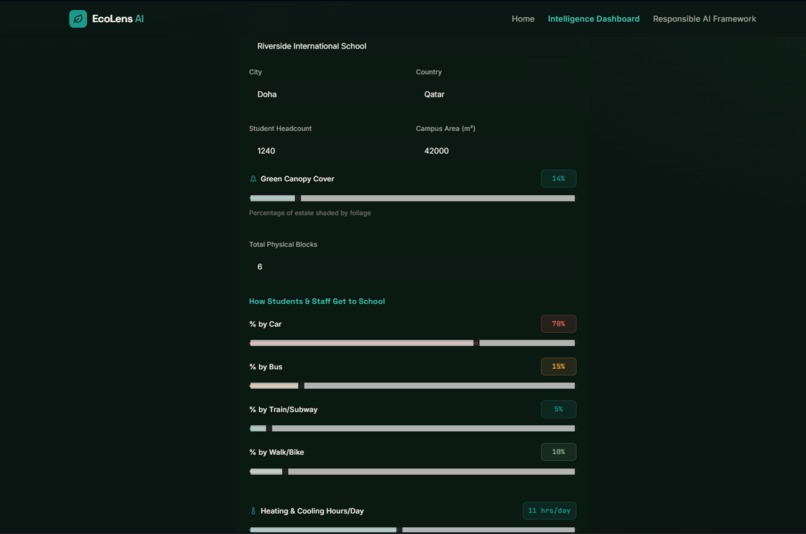
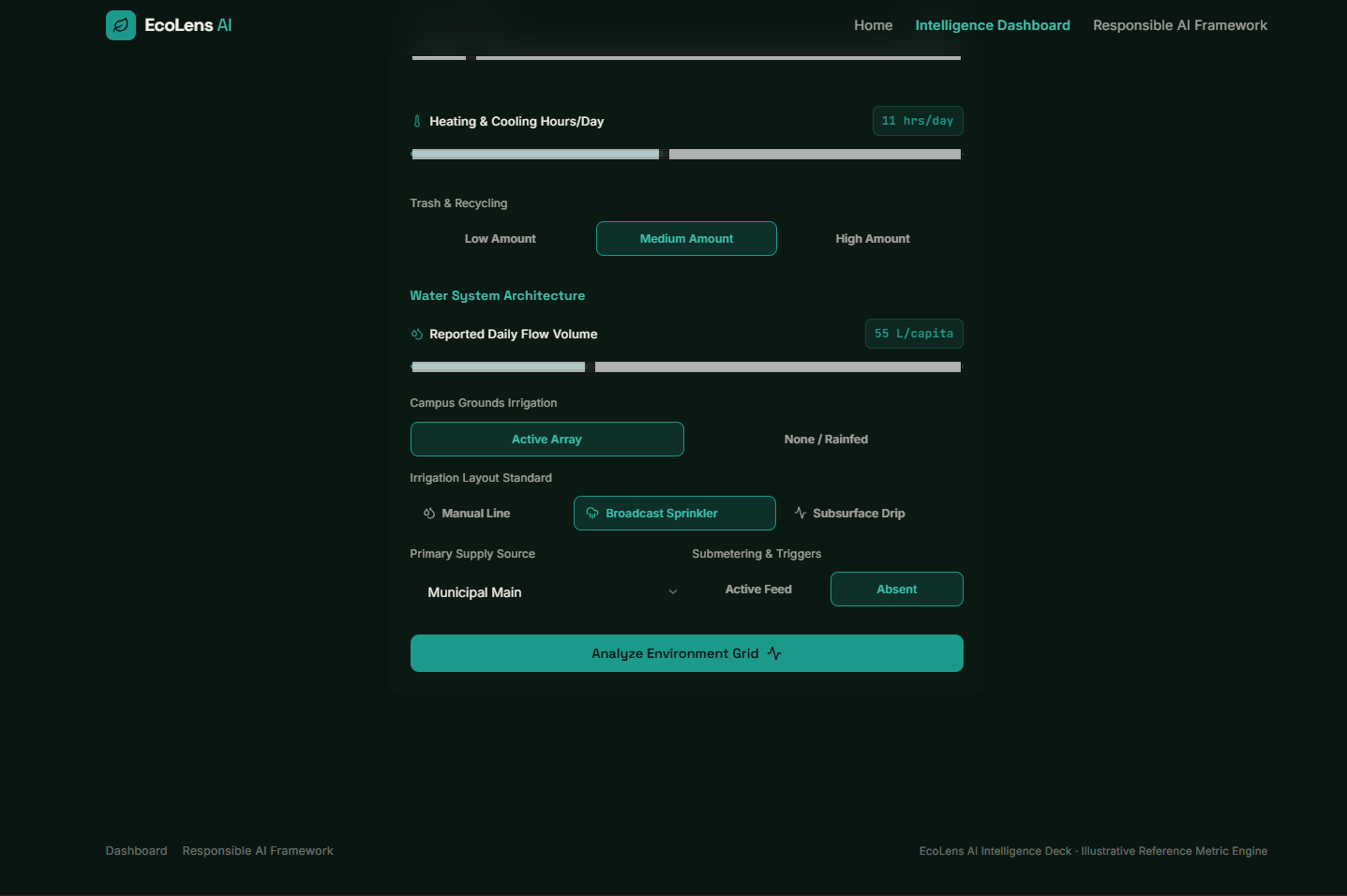
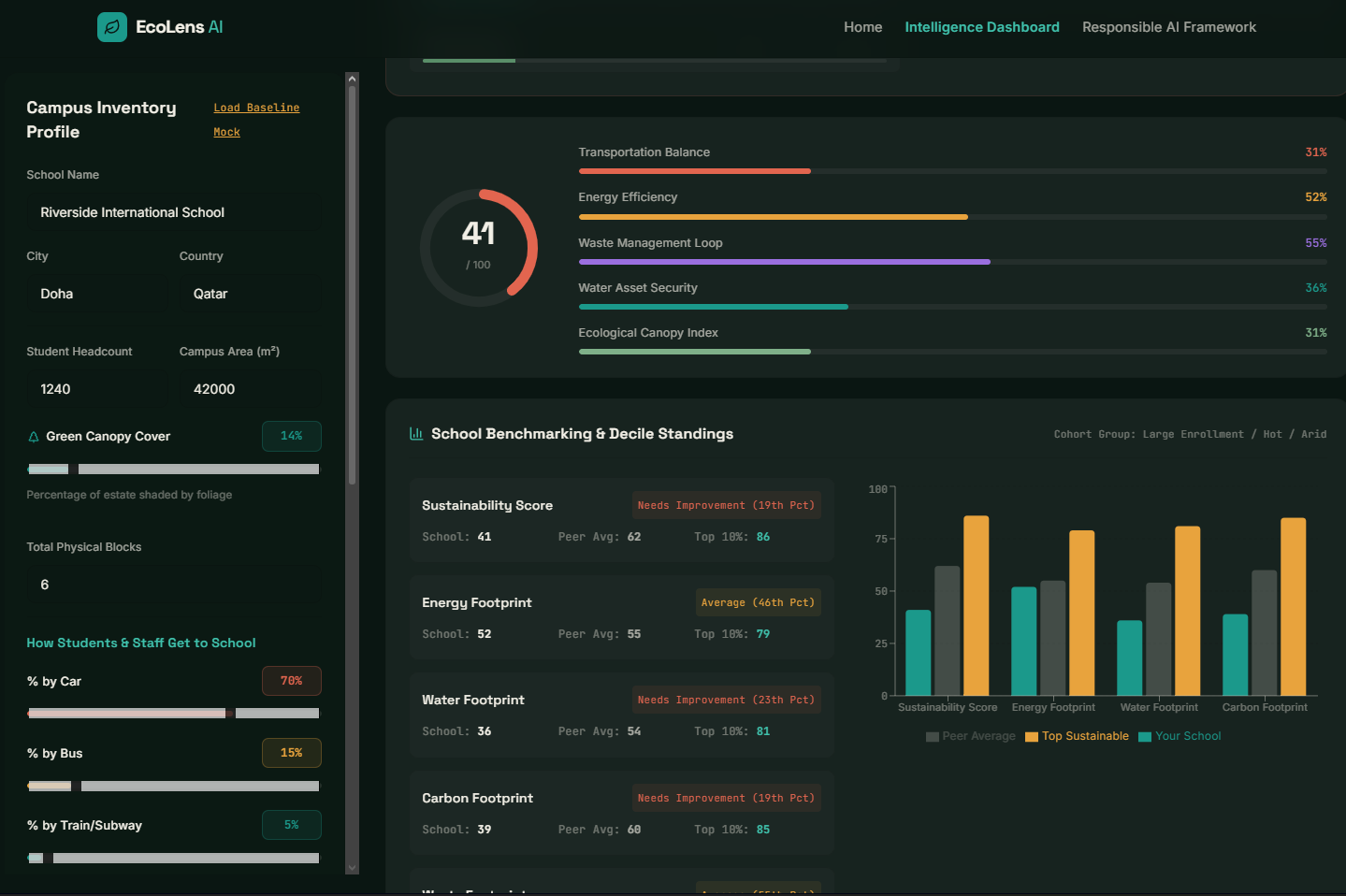
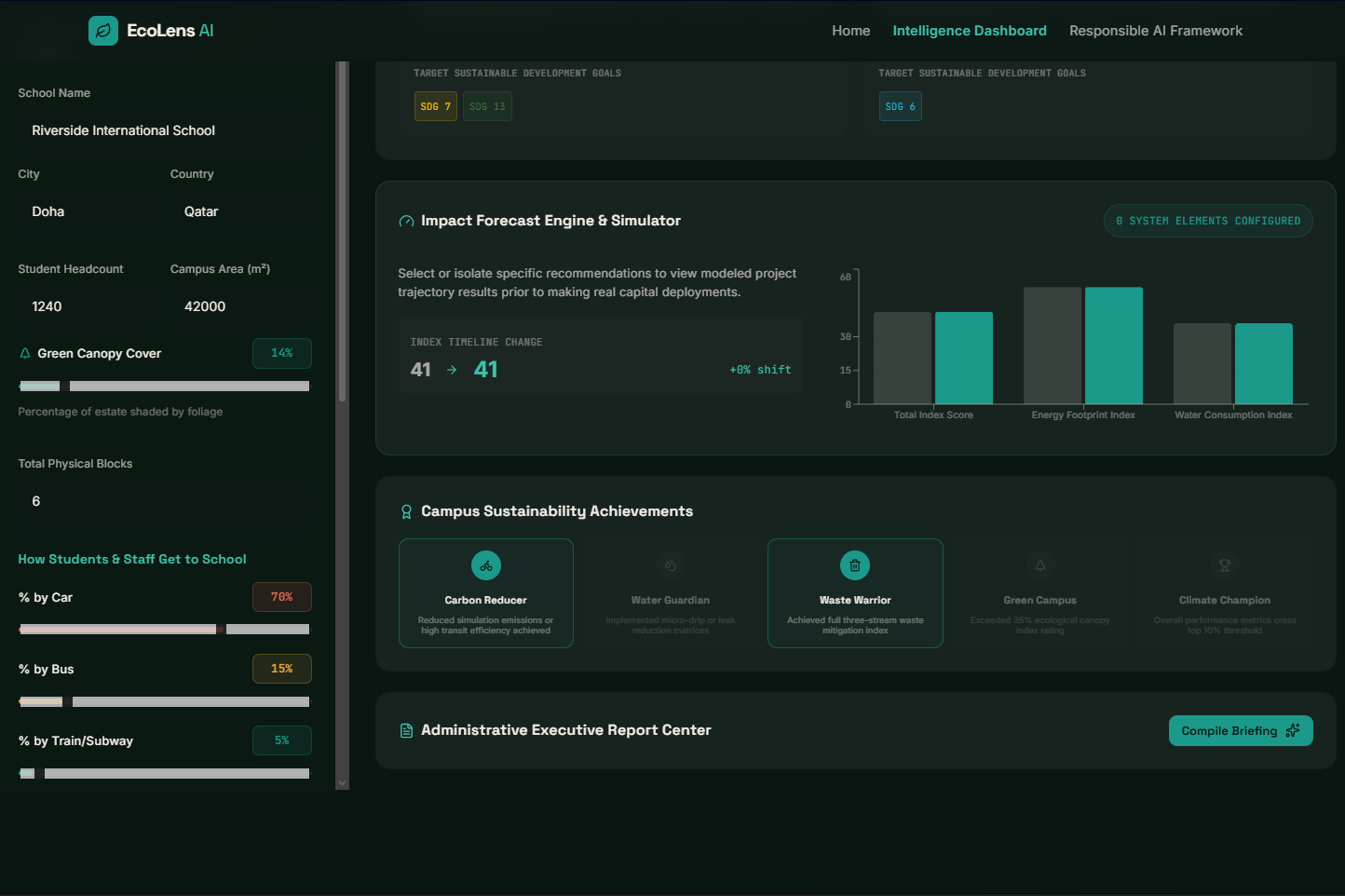
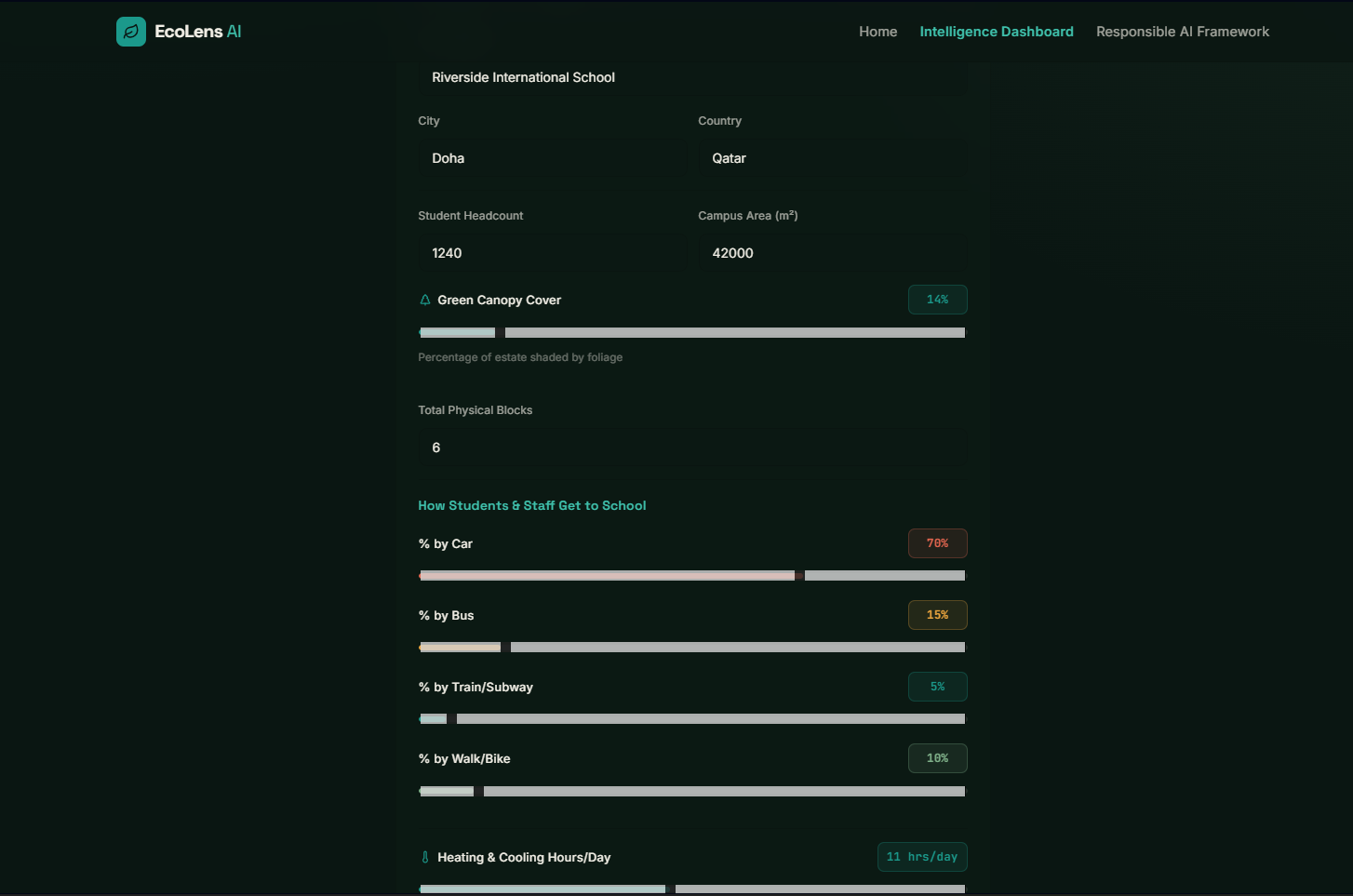
EcoLens AI transforms basic school information into sustainability intelligence. Using inputs such as student population, campus area, transportation methods, water usage, waste management, and green cover, it generates:
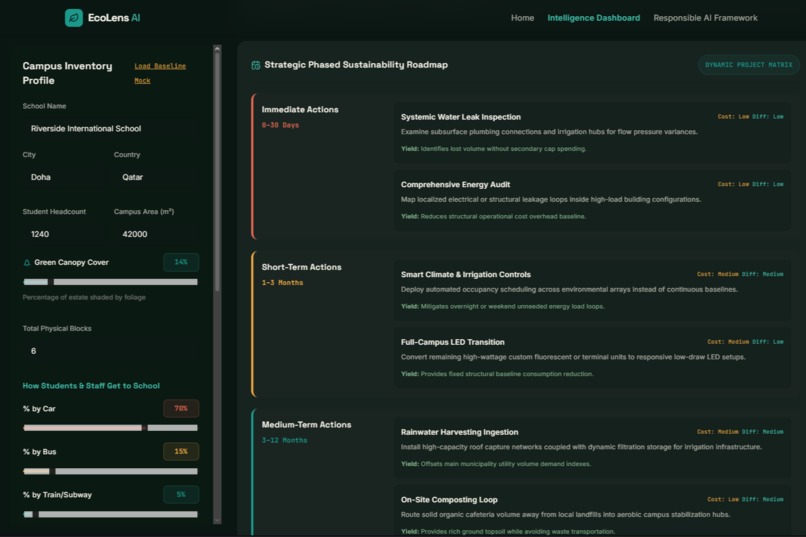
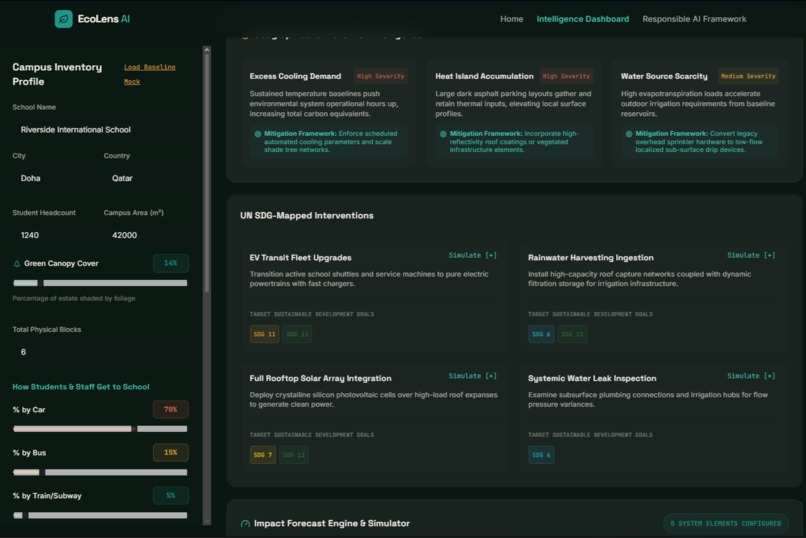
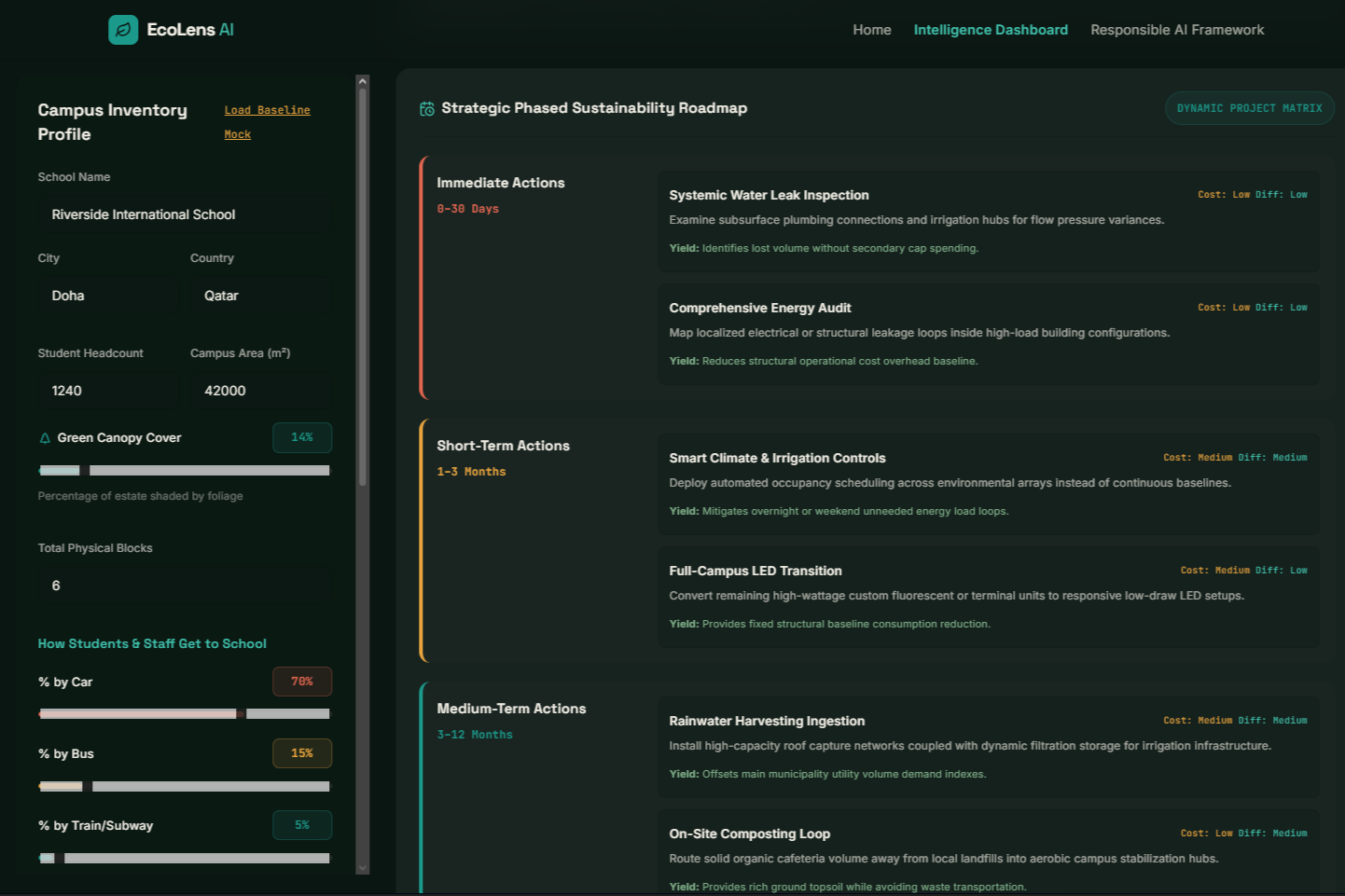
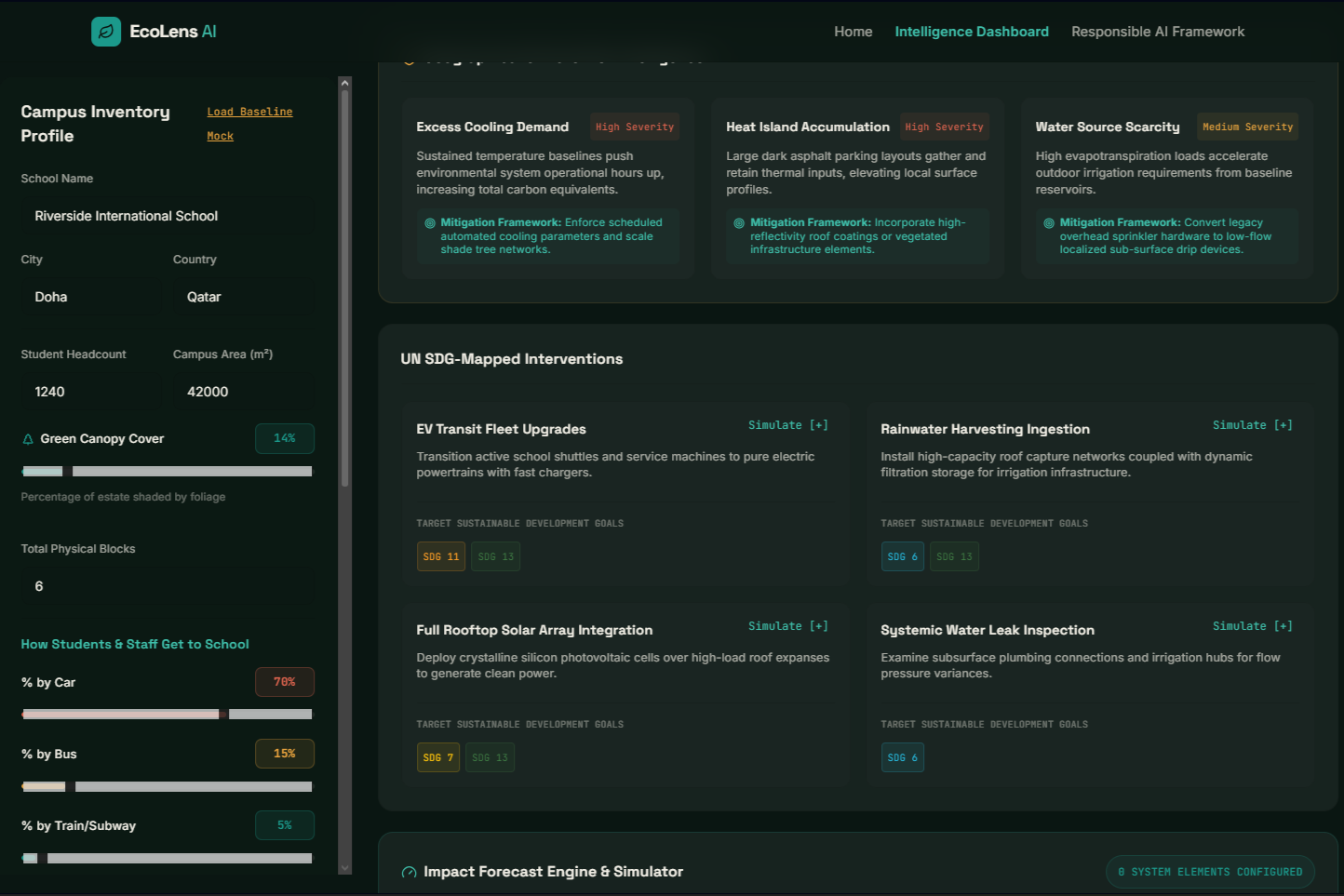
Hidden Footprint Analysis Sustainability Benchmarking Climate Risk Assessment Strategic Sustainability Roadmaps UN SDG-Mapped Recommendations Impact Forecasting & Simulation Sustainability Achievement Tracking Administrative Executive Reports
How we built it:
We built EcoLens AI using React, JavaScript, and Vite. The platform combines sustainability scoring models, climate analysis, benchmarking frameworks, and AI-assisted insight generation to convert school data into actionable recommendations.
Challenges we ran into:
One of our biggest challenges was generating meaningful sustainability insights without access to large-scale environmental datasets or real-time infrastructure data. We also worked to ensure that the platform remained easy to understand and useful for non-technical users.
Accomplishments that we're proud of:
Built a complete sustainability intelligence platform rather than a simple carbon calculator. Created a Hidden Footprint Detection system tailored for schools. Developed benchmarking, climate risk analysis, impact simulation, and roadmap generation in a single workflow. Designed clear, actionable outputs that help administrators make informed sustainability decisions.
What we learned:
Through this project, we learned how climate, transportation, infrastructure, water usage, and waste management interact to shape a school's environmental footprint. We also gained valuable experience building explainable AI systems for sustainability decision-making.
What's next for EcoLens-AI:
Our next goal is to integrate real-time weather and environmental APIs, improve benchmarking using larger datasets, enhance AI-powered recommendations, and enable schools to track sustainability progress continuously through live dashboards and reporting.

Log in or sign up for Devpost to join the conversation.