Inspiration
Most sustainability apps focus on helping large businesses track their impact, but there are very few tools designed to hold individuals accountable. We wanted to close that gap by creating something personal and actionable.
What it does
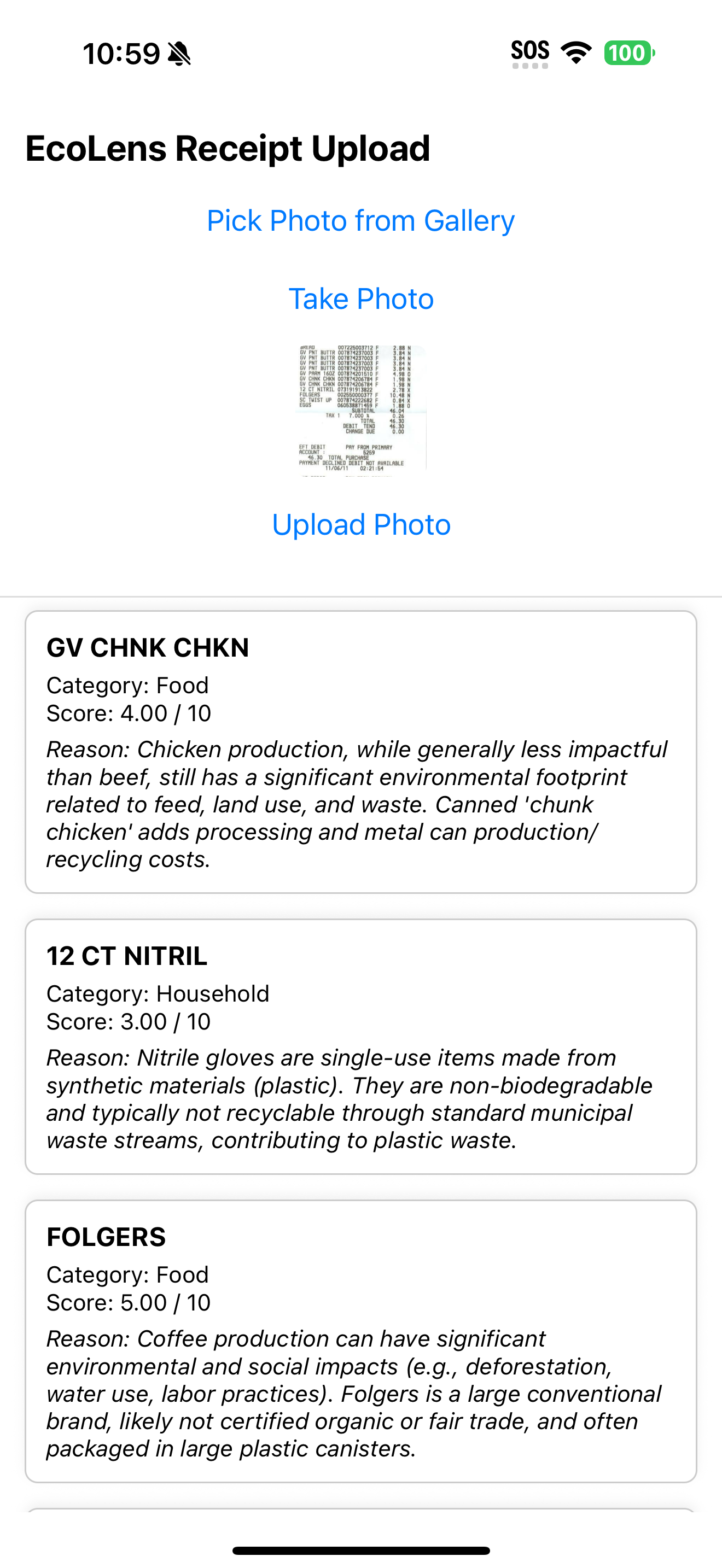
EcoLens lets users upload photos or scan items, then provides insights on their sustainability, along with tips and alternative eco-friendly options. For example, a purchase of red meat from the grocery store may return a lower sustainability score due to the high material cost to raise large animals, process meat, and ship it from a distant location, whereas local vegetables would return a much higher score.
How we built it
We built the app with React Native for the front end and Node.js with MongoDB for the backend, integrating image upload and OCR tools, with Gemini API to provide analysis to user submissions.
Challenges we ran into
We struggled with mobile setup issues like Xcode dependencies, package conflicts, and app crashes, which slowed development more than expected.
Accomplishments that we're proud of
We got the core app working end-to-end, from photo upload to backend processing, and created a clean, intuitive UI that makes sustainability feel approachable. Users are able to understand how their personal choices impact the world around them.
What we learned
We learned how to quickly set up and debug a cross-platform mobile app, and gained experience integrating AI/ML models into our work.
What's next for EcoLens
Though the app remains "gamified" in its current state, by providing users a score every time they upload an image, EcoLens would like to improve upon this by providing rewards for improvement over time—adding an additional level of user incentivization. A next important step for EcoLens would be to use the information collected and stored on the Mongo database to do a full analysis of the most common "unsustainable purchases" to help users further.


Log in or sign up for Devpost to join the conversation.