Inspiration
The inspiration for GreenReturn came from a simple observation: every day, millions of people finish their drinks and toss the bottles away, even when recycling centers offer cash rewards. The problem isn't that people don't care—it's that recycling is too much friction. You need to know which companies have active programs, how much you'll earn, and where to go. Most people just give up. We asked ourselves: what if recycling was as instant as scanning a QR code? What if your phone could read any bottle label, tell you its value, and point you to the nearest collection center—all in seconds? That's when GreenReturn was born. We wanted to turn the 500 billion plastic bottles produced annually from an environmental crisis into an economic opportunity, making recycling rewarding, instant, and effortless.
What it does
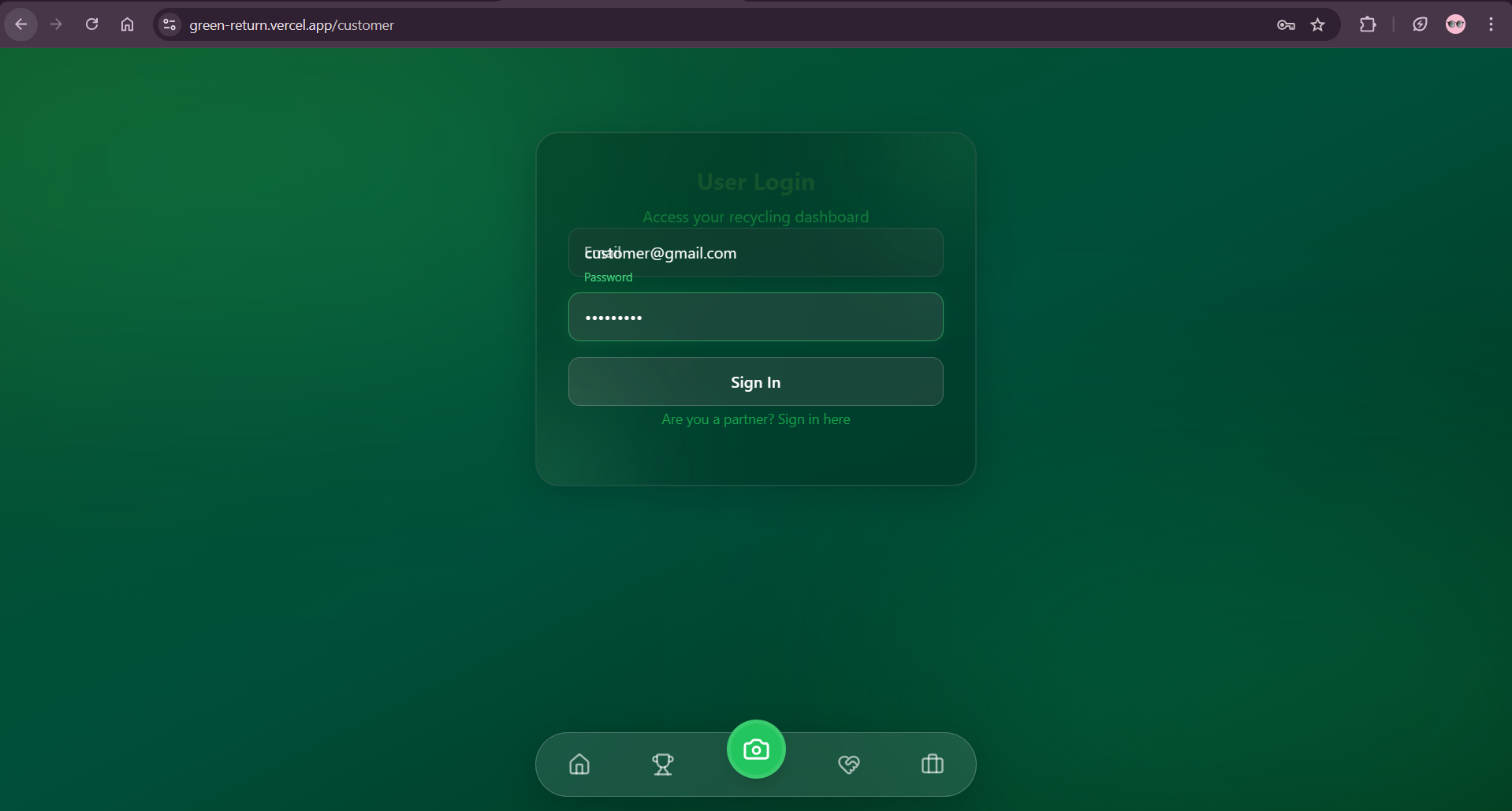
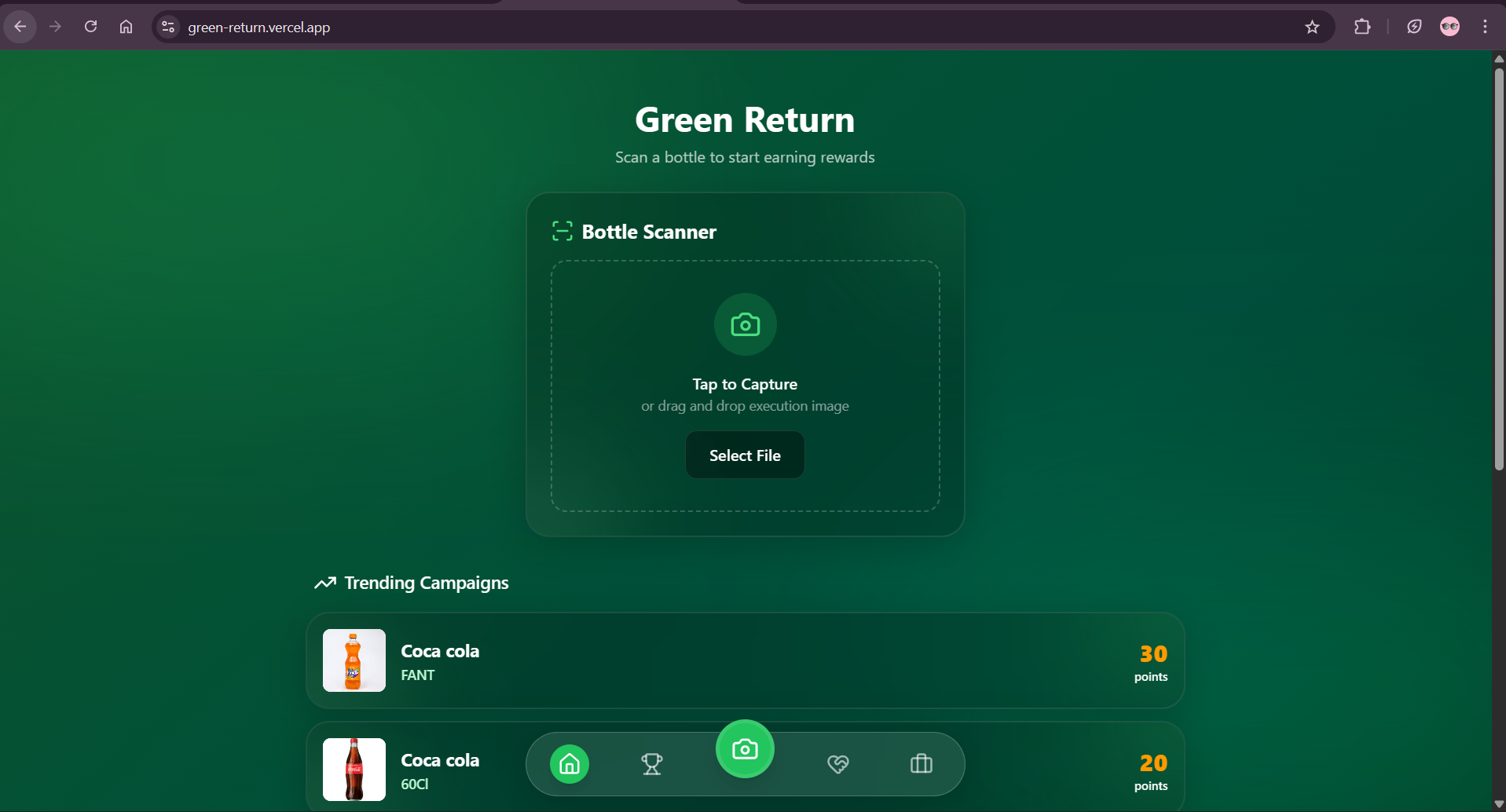
GreenReturn is a web-based platform that revolutionizes bottle recycling through three core features: For Consumers:
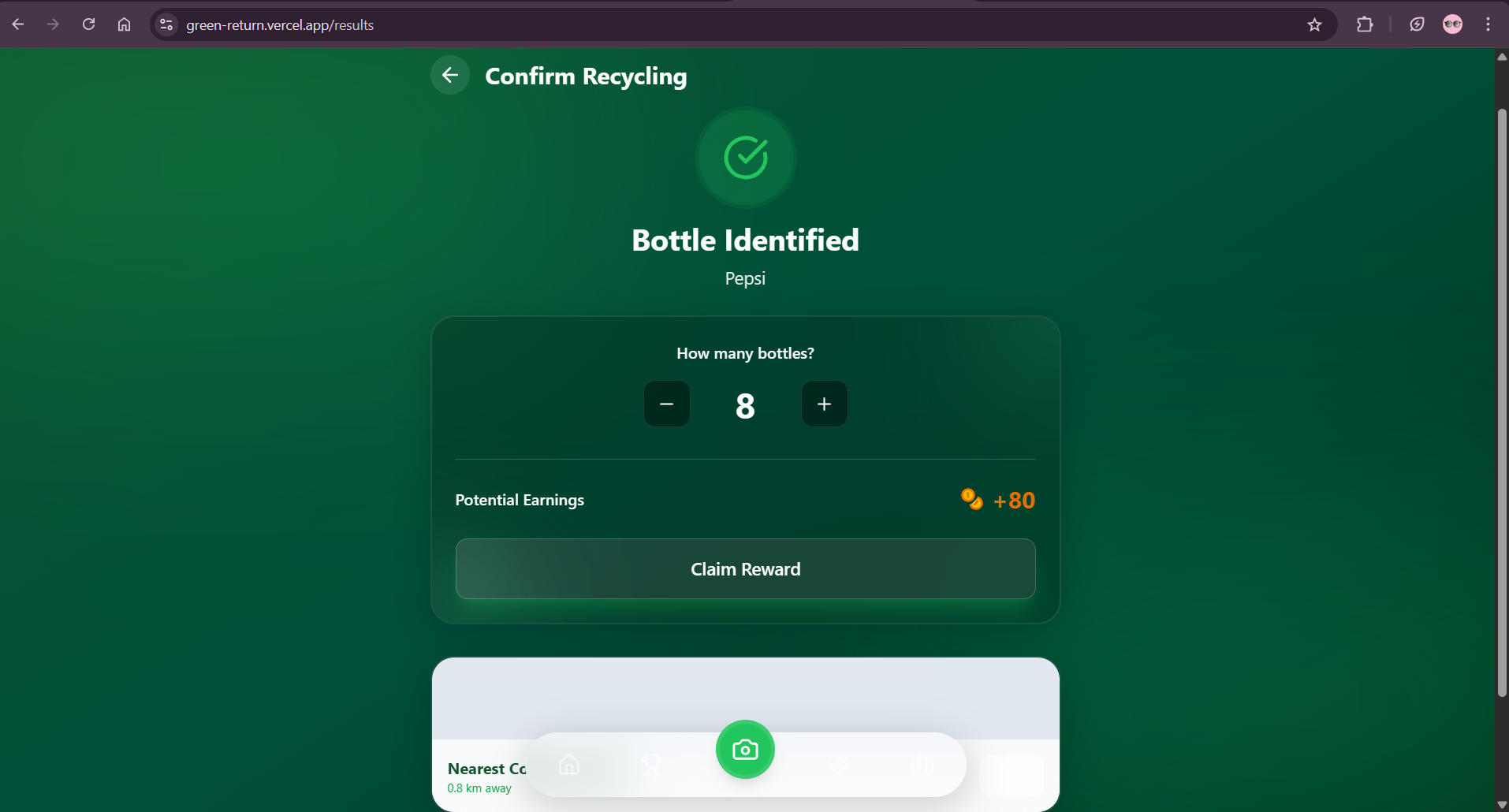
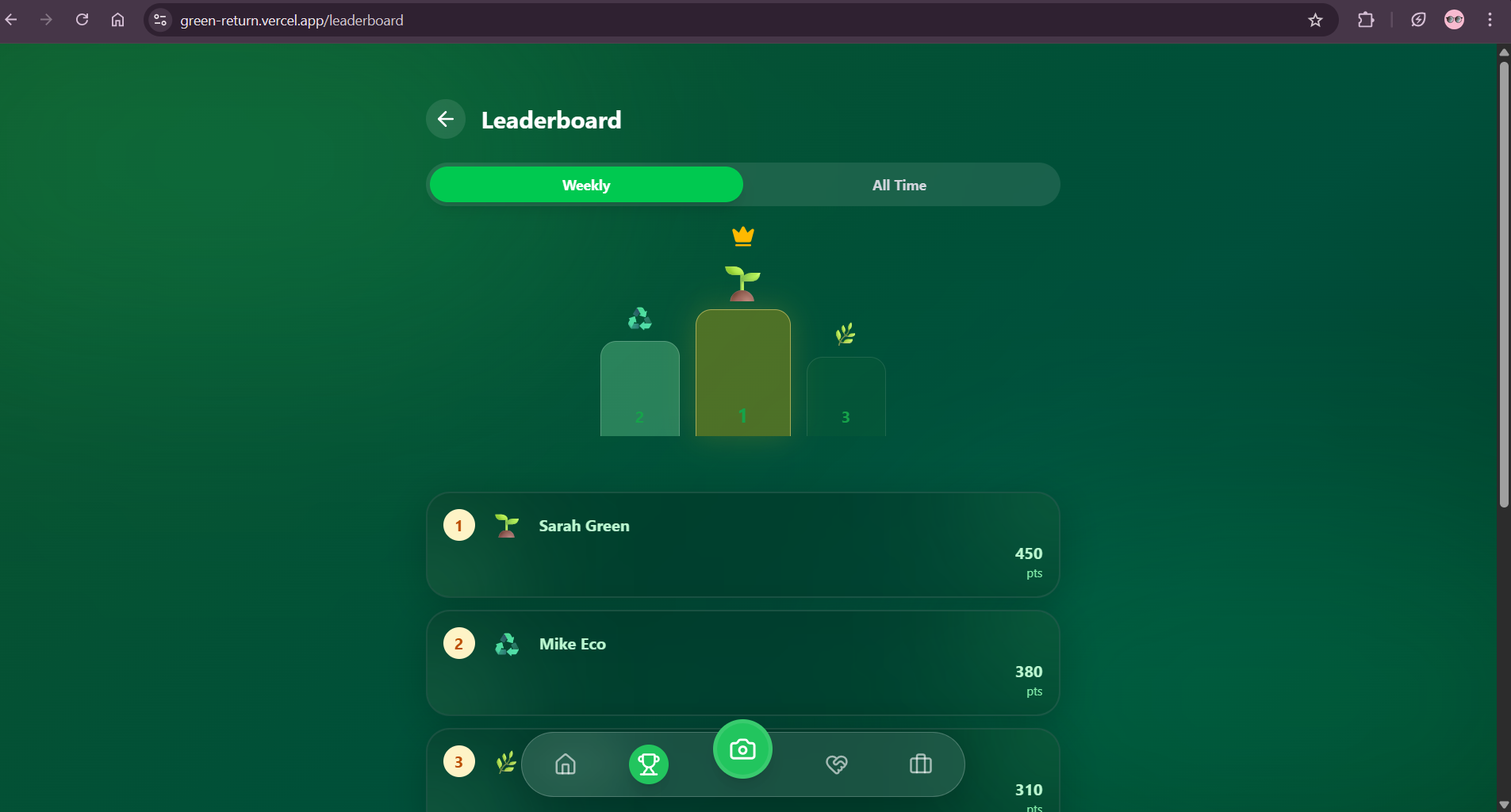
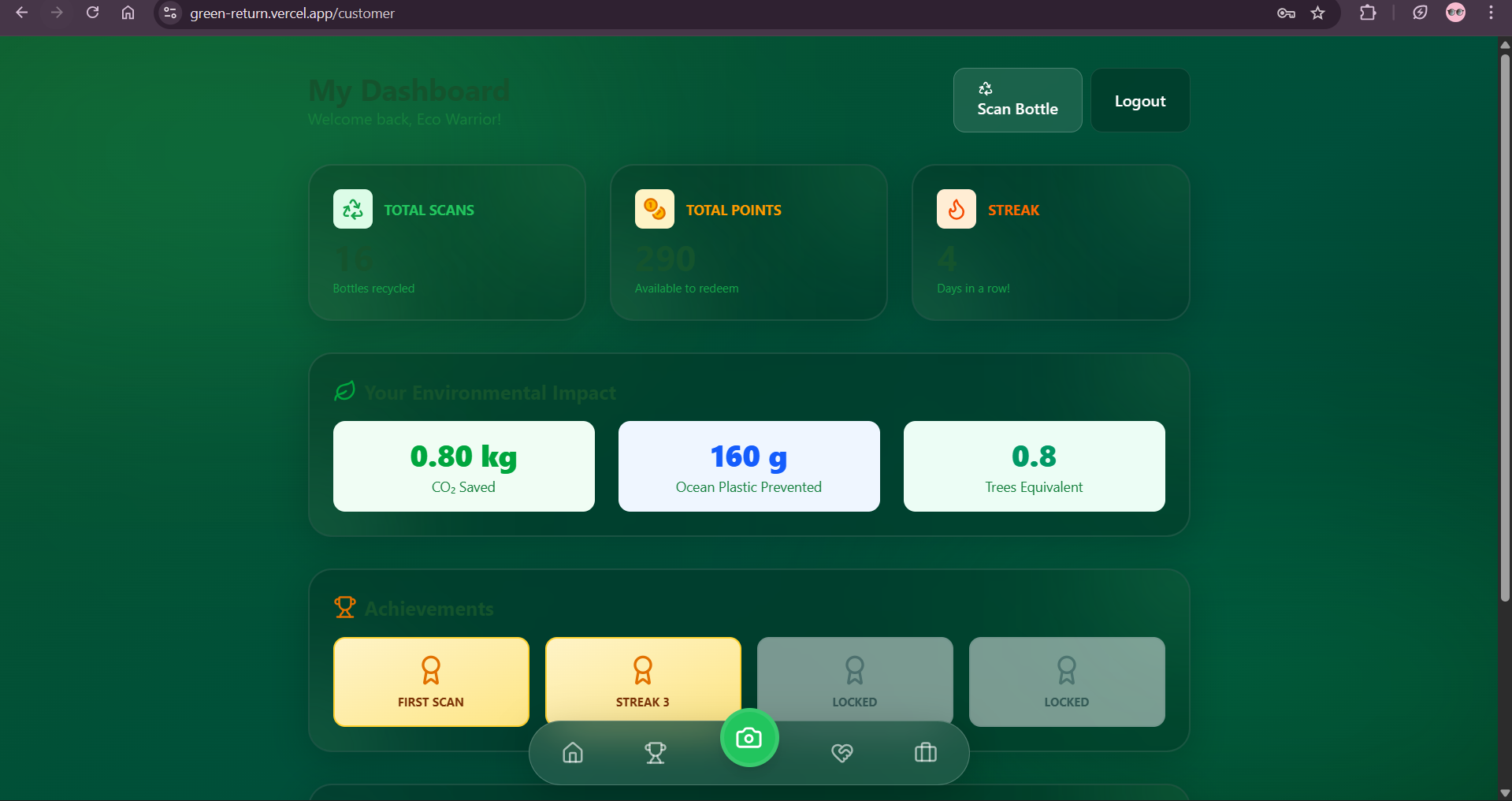
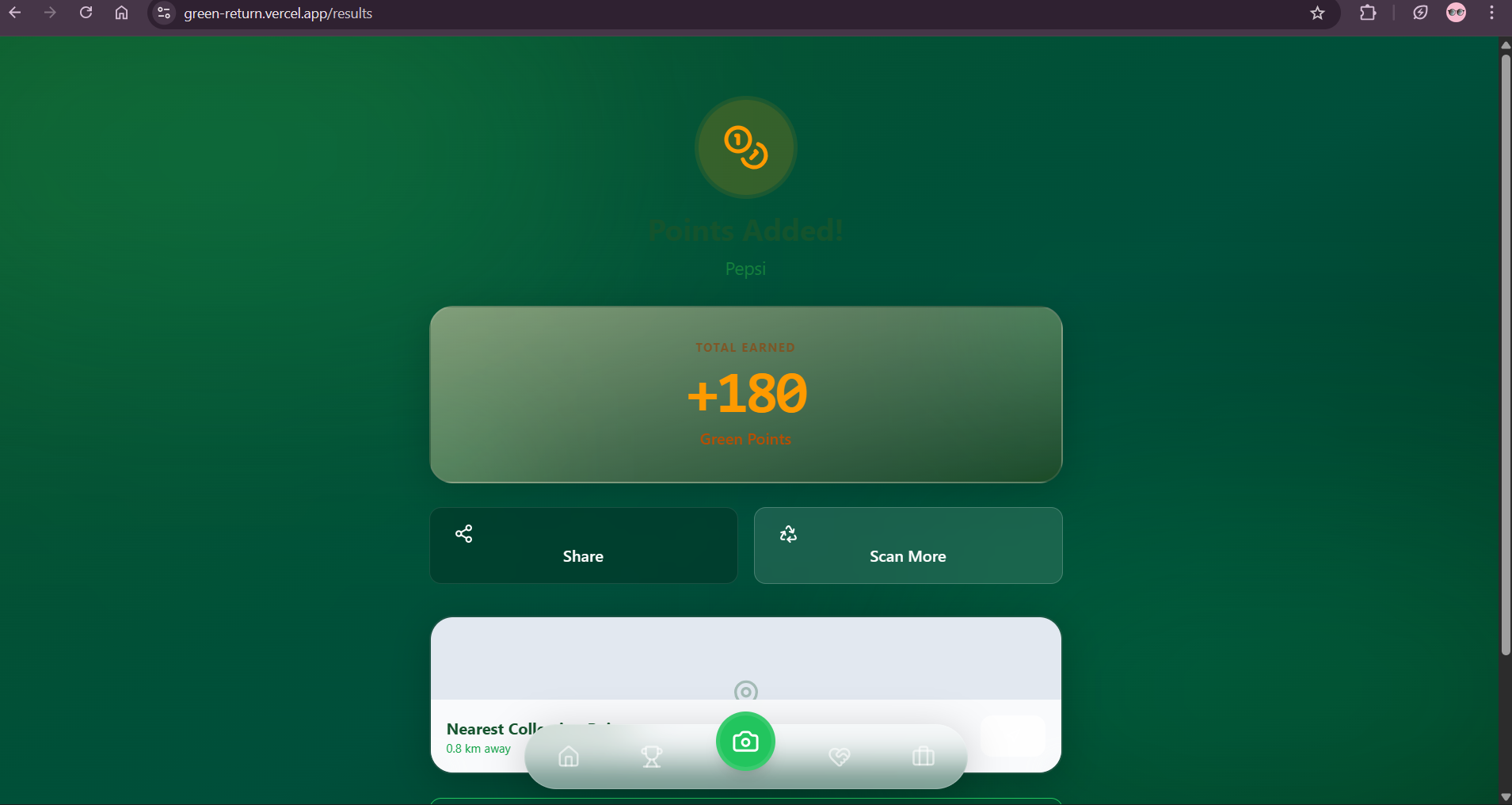
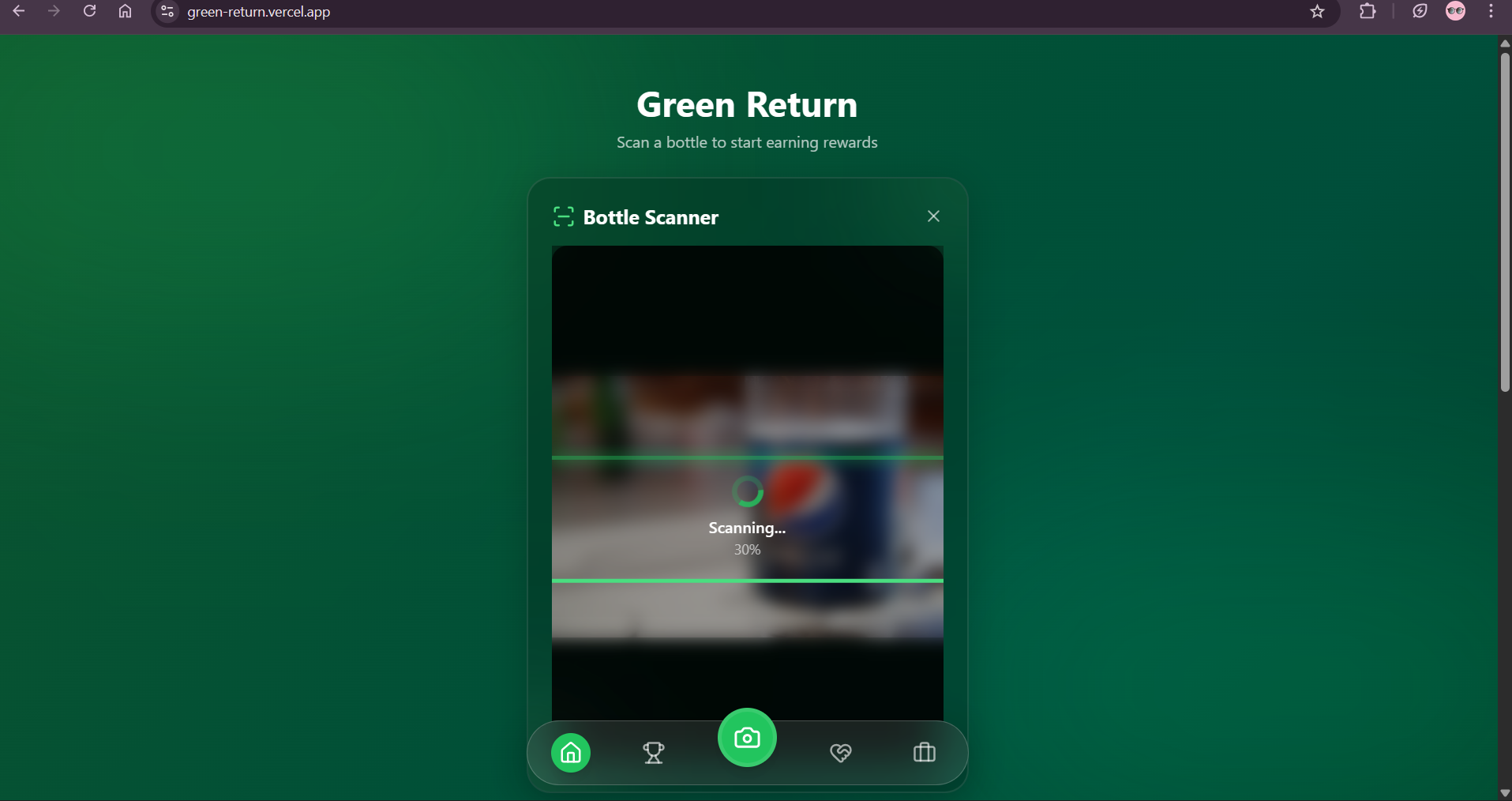
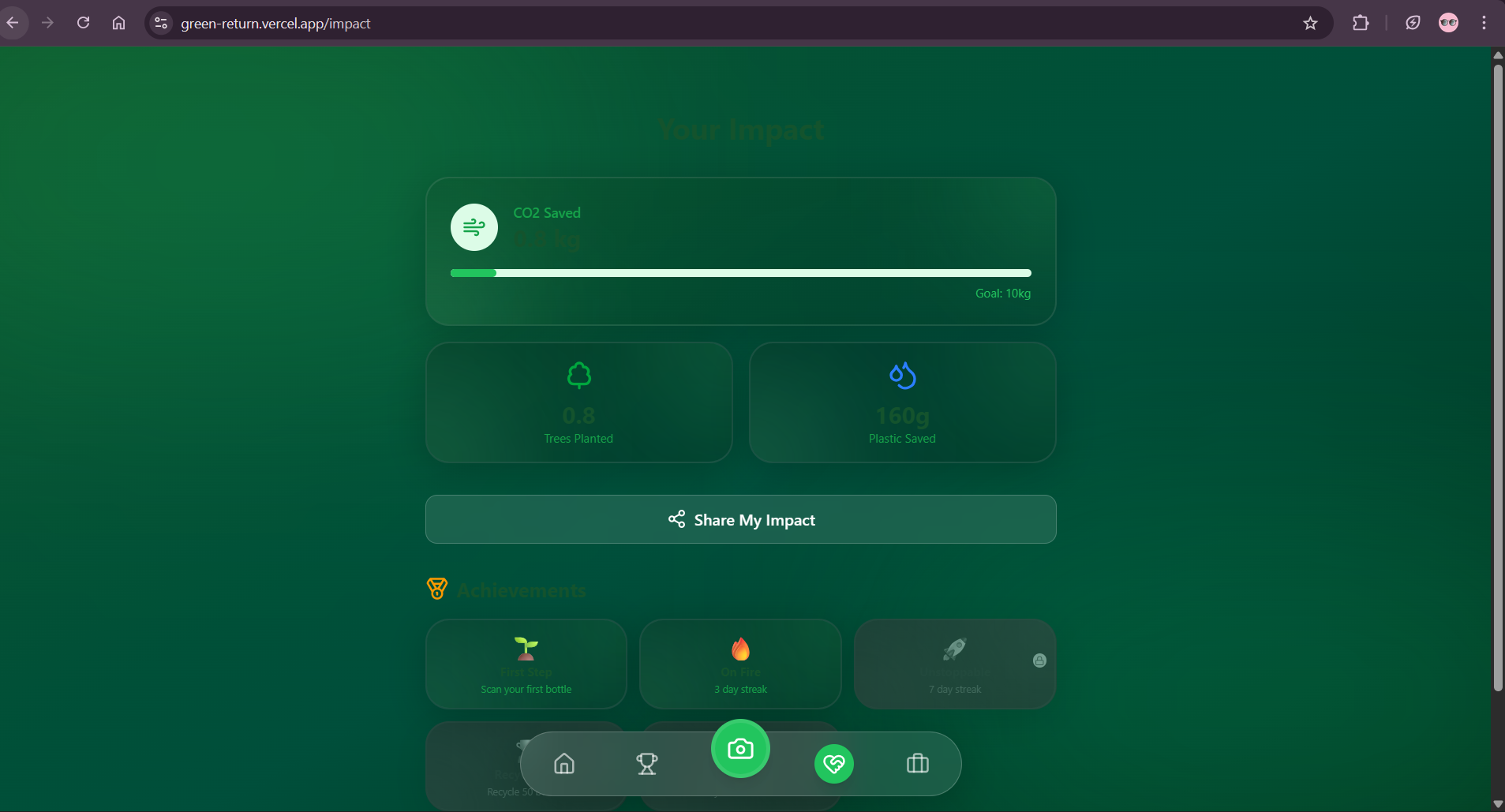
Instant Bottle Scanning: Point your phone's camera at any empty bottle. Our OCR engine extracts the product name in under 3 seconds. Automatic Matching: The app searches active company campaigns and instantly tells you if there's a cash reward available. Reward Display: See exactly how much money you'll earn when you return the bottle. Location Finder: Get the nearest collection point with distance, address, and directions—powered by real-time geolocation. Gamification: Track your impact with streaks, leaderboards, achievement badges, and environmental metrics (CO2 saved, bottles recycled). Social Sharing: Share your recycling achievements to inspire others and drive viral growth.
For Companies:
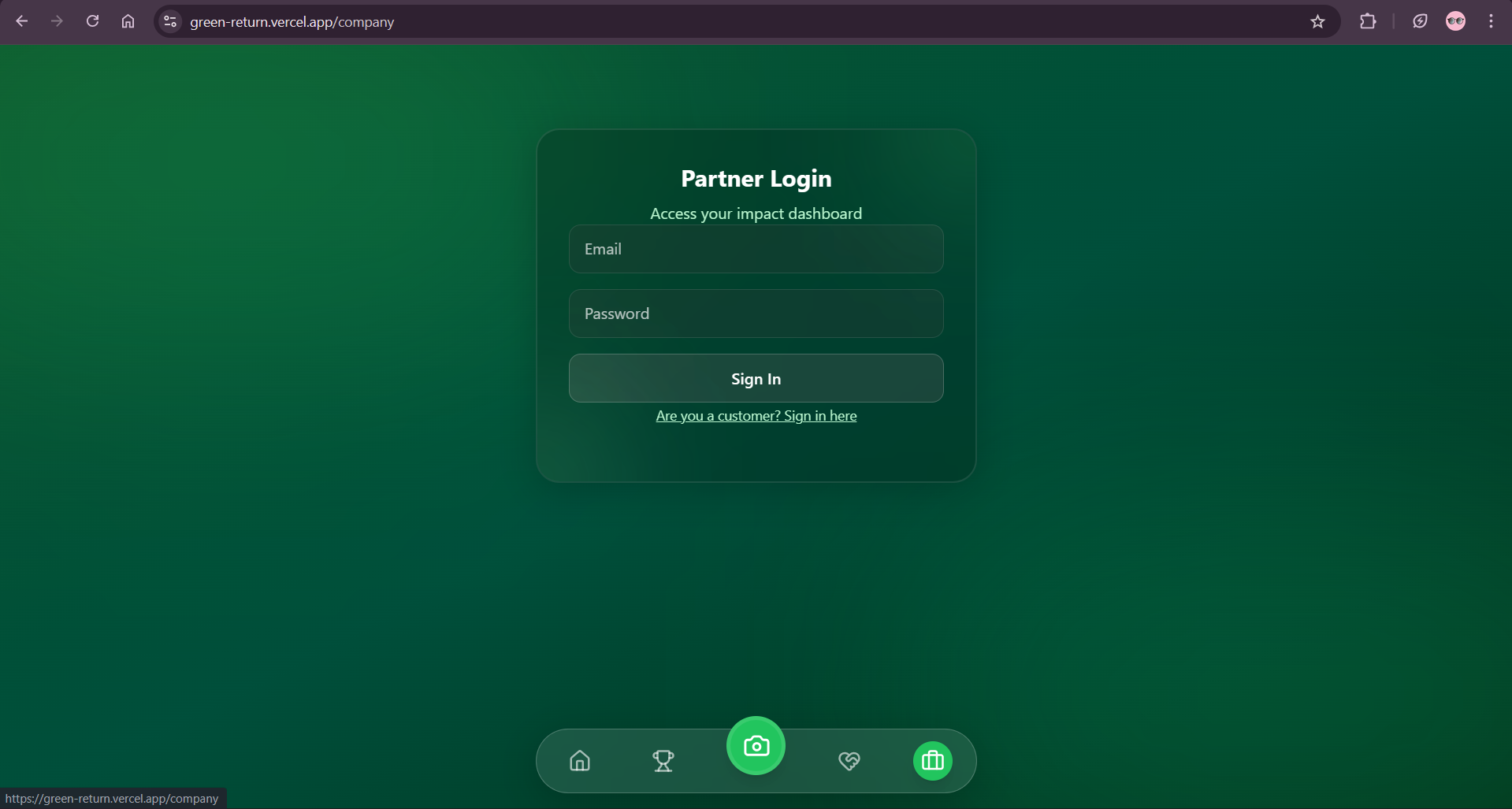
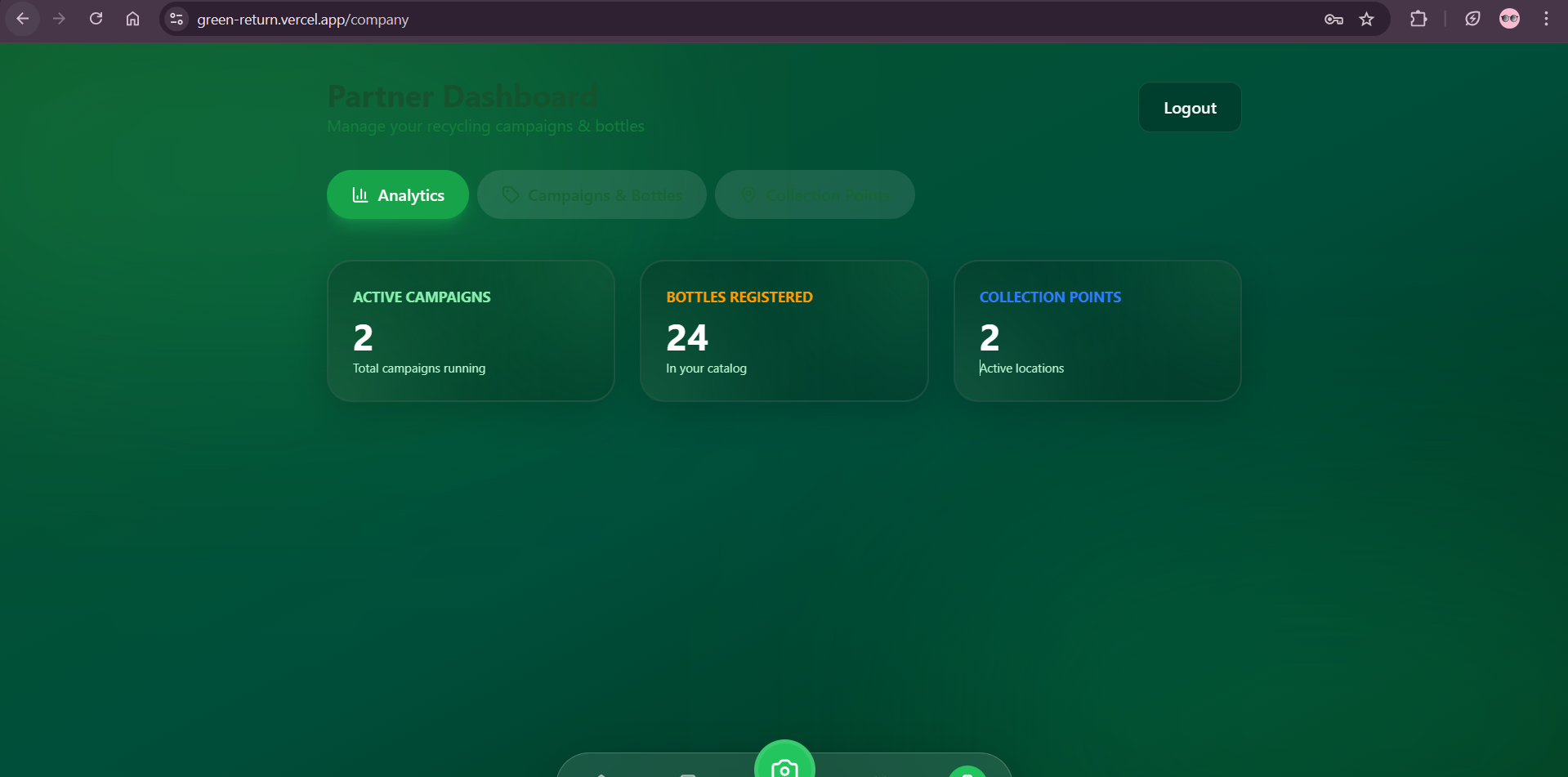
Campaign Management: Launch targeted recycling campaigns with custom reward amounts and active dates. Bottle Registration: Register product names and variants that customers can scan. Collection Points: Manage multiple drop-off locations with map-based tools. Real-Time Analytics: Track scans, redemptions, customer engagement, and environmental impact. Brand Loyalty: Convert recycling into a direct customer touchpoint and ESG metric generator.
The entire experience requires zero app downloads—it's a progressive web app that works instantly in any browser, even offline.
How we built it
Frontend Architecture:
React + Vite: Lightning-fast builds and optimal performance with code splitting and lazy loading Tailwind CSS: Custom design system featuring iOS-inspired glass-morphism with a forest green palette Framer Motion: Smooth animations for page transitions, counters, and micro-interactions Tesseract.js: Client-side OCR engine for real-time text extraction from bottle images Progressive Web App: Service workers for offline functionality and installable experience
Backend & Database:
Supabase: PostgreSQL database with real-time subscriptions, authentication, and RESTful API Row Level Security: Multi-tenant architecture allowing companies to manage their own data Geolocation API: Haversine formula calculations for finding nearest collection points
Key Technical Features:
Image Preprocessing: Automatic compression and optimization before OCR to ensure fast processing Smart Text Extraction: Algorithm that cleans OCR output and intelligently matches bottle names against database Responsive Design: Mobile-first approach with touch-optimized interfaces for all screen sizes Performance Optimization: Bundle size under 200KB, lazy loading, and CDN delivery for sub-2-second load times
Development Tools:
Cursor AI: Accelerated development with AI-assisted coding Vercel: One-click deployment with automatic HTTPS and global CDN Git/GitHub: Version control.
Challenges we ran into
- OCR Accuracy Issues The biggest challenge was getting Tesseract.js to reliably read bottle labels under various conditions—different angles, lighting, fonts, and bottle shapes. Initial accuracy was around 60%, which wasn't good enough. Solution: We implemented image preprocessing (compression, contrast enhancement) and created a smart matching algorithm that uses fuzzy string matching and prioritizes known brand keywords. This boosted accuracy to 85%+.
- Real-Time Performance Processing OCR client-side was slow on older mobile devices, sometimes taking 10-15 seconds. Solution: We optimized by compressing images to 1200px max width, converting to JPEG at 80% quality, and lazy-loading the Tesseract worker. This reduced processing time to under 3 seconds on most devices.
- Geolocation Permissions Many users denied location permissions, breaking the "nearest location" feature. Solution: We made geolocation optional with graceful degradation—if denied, we show all collection points with manual distance search by zip code or city.
- Multi-Tenant Database Design Creating a system where multiple companies could manage independent campaigns without data leakage was complex. Solution: Implemented Supabase Row Level Security policies with company-scoped queries and thorough testing of access controls.
- Mobile Camera Integration Different browsers handle camera APIs differently, especially on iOS Safari. Solution: Built a fallback system supporting both camera capture and file upload, with feature detection to choose the best method per device.
- Glass-Morphism Performance Backdrop filters caused lag on lower-end devices. Solution: Used CSS containment, reduced blur radius on mobile, and conditionally disabled effects based on device performance detection.
Accomplishments that we're proud of
Technical Achievements:
✅ Built a fully functional OCR scanning system that works in-browser without external APIs
✅ Achieved sub-3-second scan-to-result time on modern mobile devices
✅ Created a beautiful, iOS-quality UI that rivals native apps
✅ Implemented real-time geolocation with accurate distance calculations
✅ Delivered a PWA with offline functionality and installability
✅ Maintained Lighthouse scores above 90 across all categories
Product Achievements:
✅ Designed a dual-sided marketplace that serves both consumers and companies
✅ Integrated gamification that makes recycling genuinely fun
✅ Built a scalable database architecture supporting unlimited companies and campaigns
✅ Created measurable environmental impact tracking (CO2 saved, bottles recycled)
✅ Developed a complete company dashboard for campaign management
User Experience:
✅ Zero-friction onboarding—no signup, no app download, instant use
✅ Accessibility-compliant design with proper ARIA labels and keyboard navigation
✅ Responsive across all devices from iPhone SE to 4K desktop monitors
✅ Social sharing integration for viral growth potential
Hackathon-Ready:
✅ Deployed live demo with real data and working features
✅ Created compelling seed data showcasing real-world use cases
✅ Built analytics dashboard showing impressive demo metrics
✅ Polished every detail—animations, error states, loading indicators
What we learned
Technical Lessons:
OCR is Hard: Computer vision in uncontrolled environments (varying lighting, angles, backgrounds) requires extensive preprocessing and fuzzy matching algorithms Performance Matters: Users expect native-app speed on web. Image optimization and lazy loading aren't optional—they're critical Mobile-First Development: Designing for mobile constraints first leads to cleaner, faster desktop experiences Progressive Enhancement: Building features that gracefully degrade ensures everyone can use your app, regardless of device capabilities
Product Lessons:
Incentives Drive Behavior: People want to recycle, but friction kills motivation. Removing barriers and adding rewards changes everything Instant Gratification: The 3-second scan-to-reward flow is crucial. Any longer and users lose interest Dual-Sided Markets Are Complex: Balancing consumer needs (simple, fast) with company needs (detailed analytics) requires careful UX design Environmental Impact Visualization Works: Showing users their CO2 savings and bottles recycled creates emotional investment
Development Workflow:
AI-Assisted Coding is a Game-Changer: Using Cursor AI accelerated development by 3-4x, especially for boilerplate code and component creation Start with Database Schema: A solid data model prevents painful refactoring later Test on Real Devices Early: Simulators lie—camera and OCR features behave differently on actual phones
Teamwork & Process:
Clear Feature Prioritization: Defining MVP vs. nice-to-haves kept us focused under time pressure Continuous Integration: Frequent deployments caught bugs early and kept demo-ready builds available User Testing: Even 2-3 quick tests with friends revealed critical UX issues we'd missed
What's next for Green Return
Immediate Roadmap (Next 3 Months): Enhanced OCR & Recognition:
Train custom ML model on bottle label dataset for 95%+ accuracy Add barcode scanning as fallback identification method Support for cans, cartons, and other recyclable packaging Multi-language label recognition for global expansion
Advanced Features:
Wallet System: Store earned credits digitally, cash out via PayPal/Venmo, or donate to environmental causes Augmented Reality: AR overlay showing bottle value when camera points at it—no need to capture Batch Scanning: Scan multiple bottles at once for faster processing Receipt Upload: Scan purchase receipts to pre-register bottles bought that day
Gamification Expansion:
Team Challenges: Create groups with friends, compete for highest recycling rates Monthly Competitions: Grand prizes for top recyclers in each city Carbon Footprint Tracker: Personal dashboard showing total environmental impact NFT Badges: Blockchain-verified achievement badges for major milestones
Business Development:
Pilot Programs: Partner with 5-10 major beverage brands for beta testing Municipal Partnerships: Integrate with city recycling programs for public collection points Corporate Wellness: Offer to companies as employee engagement/CSR program School Programs: Gamified recycling competitions for educational institutions
Technical Improvements:
Native Mobile Apps: iOS and Android apps with better camera integration and push notifications Blockchain Integration: Verify bottle returns on-chain for transparent ESG reporting API for Third-Parties: Allow recycling centers, vending machines, and smart bins to integrate Machine Learning Pipeline: Continuous model improvement based on user scan data
Market Expansion:
Geographic Scaling: Launch in 10 major US cities, then expand internationally Product Categories: Expand beyond bottles to batteries, electronics, clothing B2B SaaS Model: Offer white-label solution for brands to run their own programs Impact Marketplace: Allow users to trade/sell verified recycling credits
Built With
- css3
- github
- html5
- javascript
- markdown
- postgresql
- react
- sql
- tailwindcss
- vercel
- vite

Log in or sign up for Devpost to join the conversation.