🌍 Inspiration
Climate change is no longer a distant threat — it directly impacts farmers through droughts, soil degradation, and unpredictable rainfall. At the same time, carbon markets exist but are often inaccessible, complex, and opaque for small farmers.
We envisioned ECOLEDGER as a bridge between rural farmers, government authorities, and carbon markets — using blockchain, AI, IoT, and AR to create a transparent, trustworthy, and scalable climate finance ecosystem.
⚙️ What it does
ECOLEDGER is a blockchain-powered carbon credit management and marketplace ecosystem that:
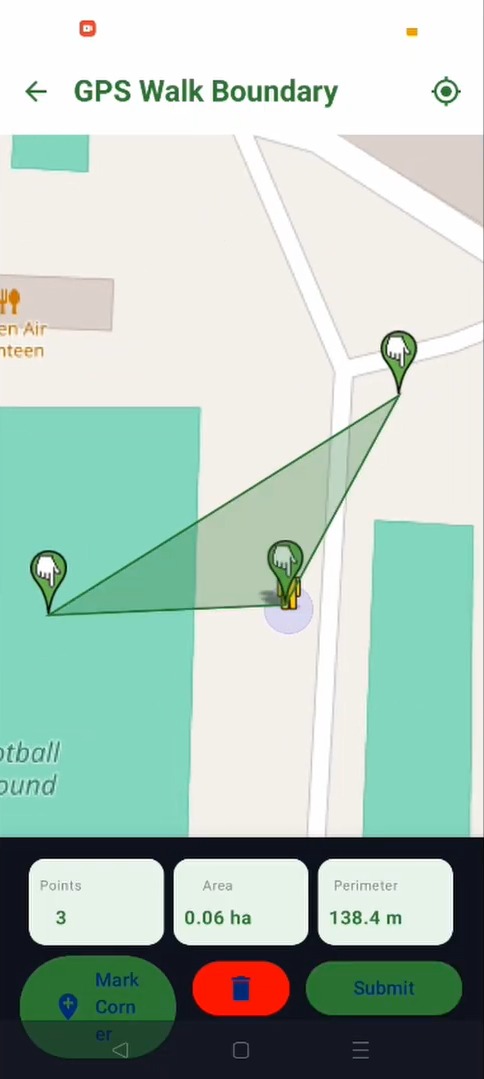
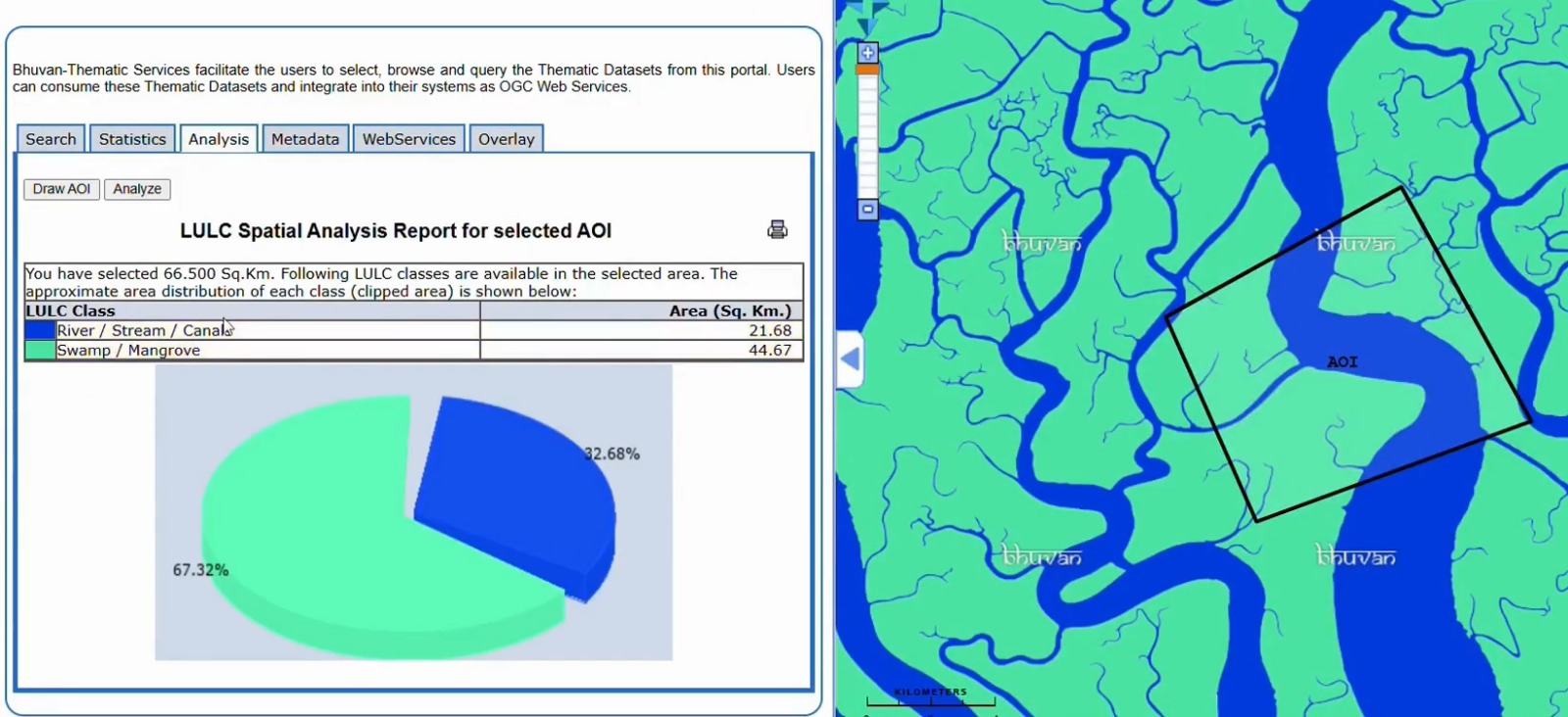
🌱 Allows farmers to register land by walking field boundaries using GPS.
🔗 Converts each verified land parcel into a unique blockchain asset.
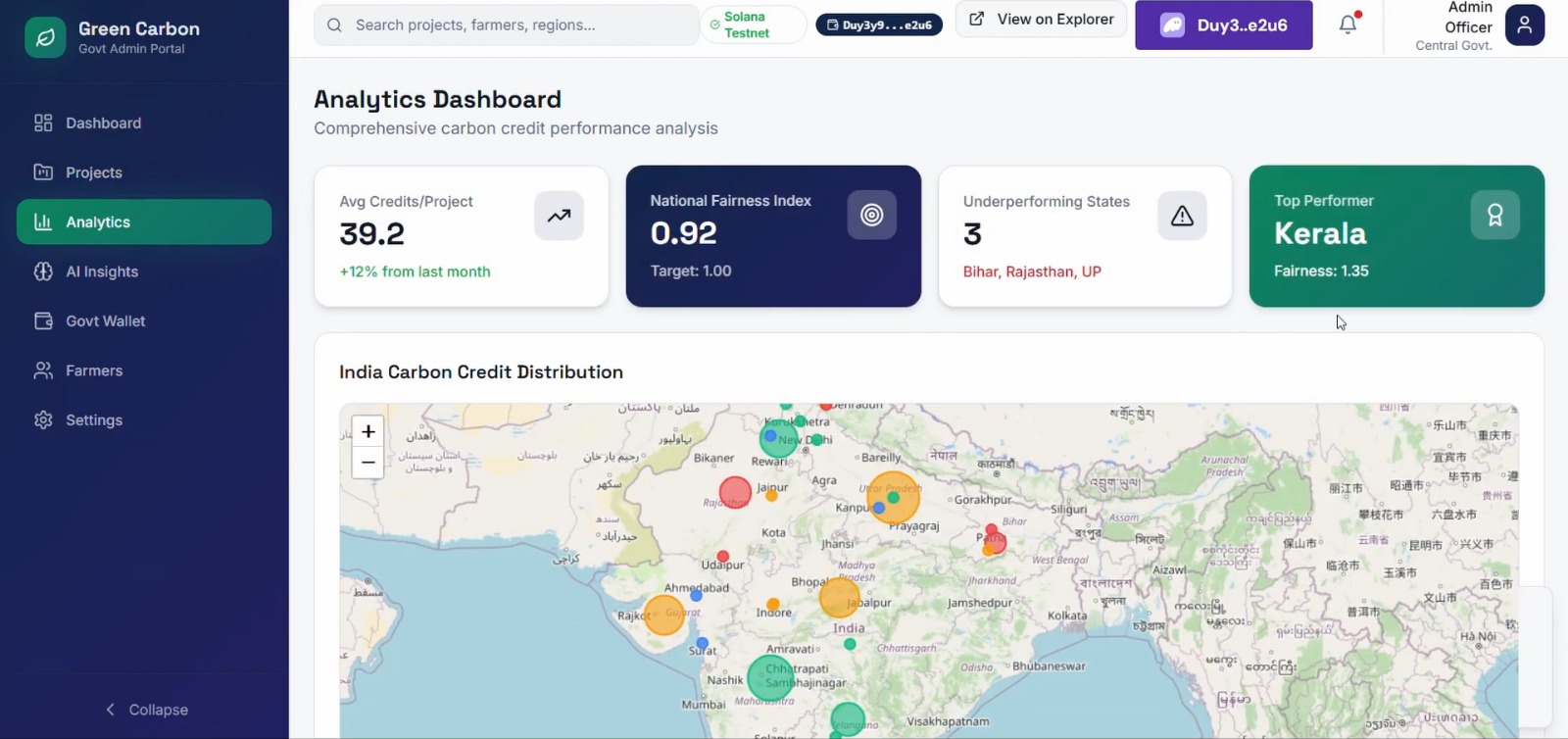
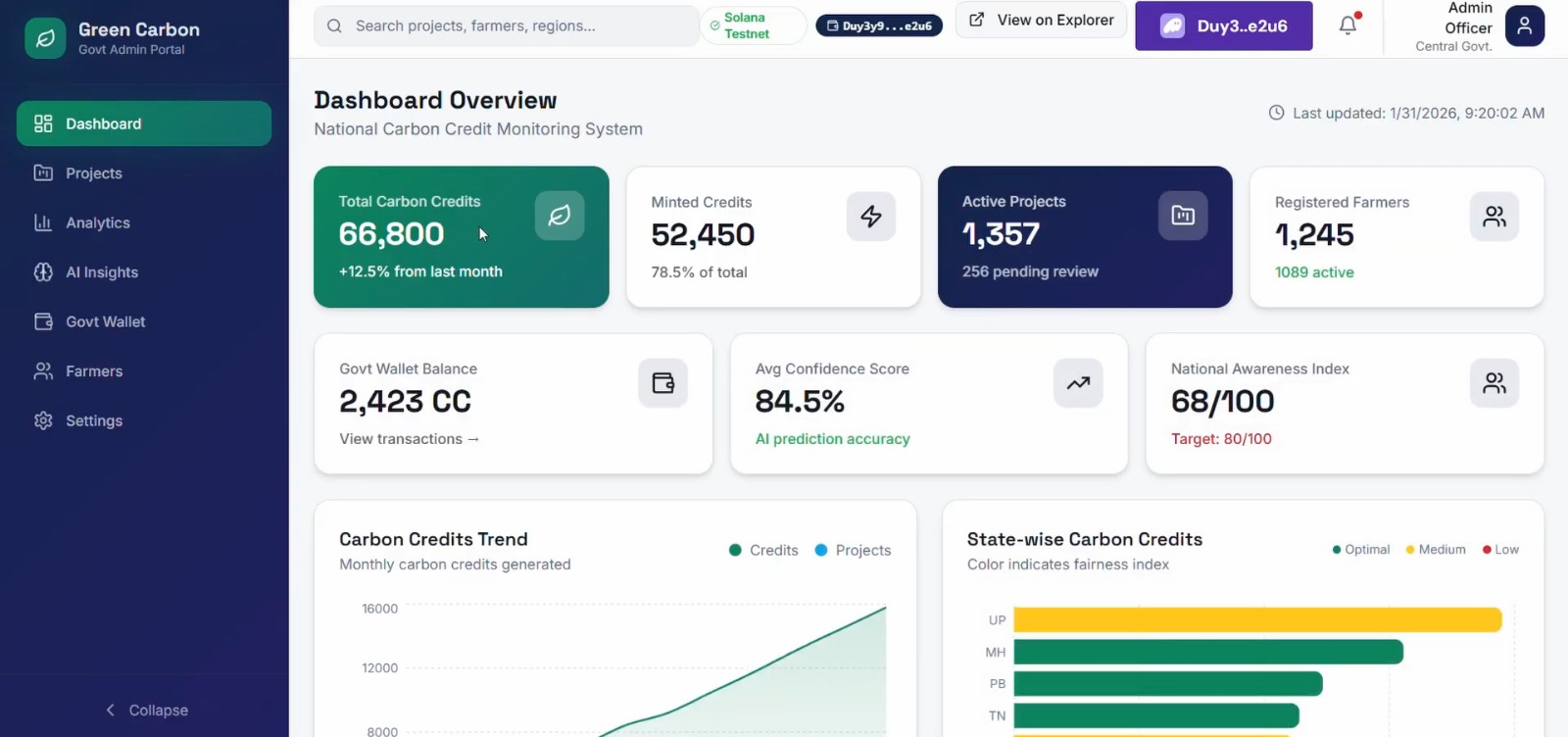
📊 Enables government authorities to verify, monitor, and analyze carbon production through AI dashboards.
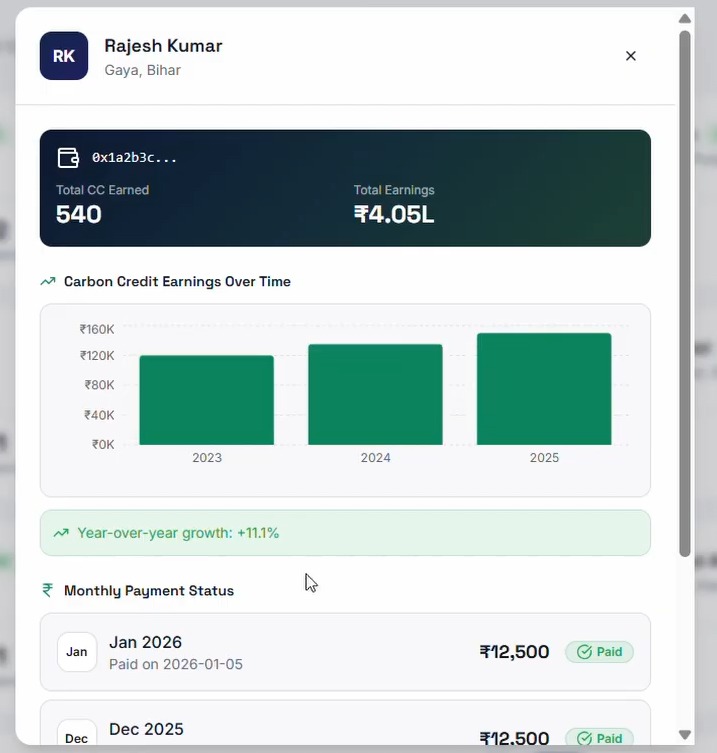
💰 Automatically tracks, locks, and distributes carbon credit revenue to farmers.
🏢 Provides a marketplace for companies to purchase verified carbon credits.
📱 Uses an AR-based field verification app for real-time geo-validated inspection.
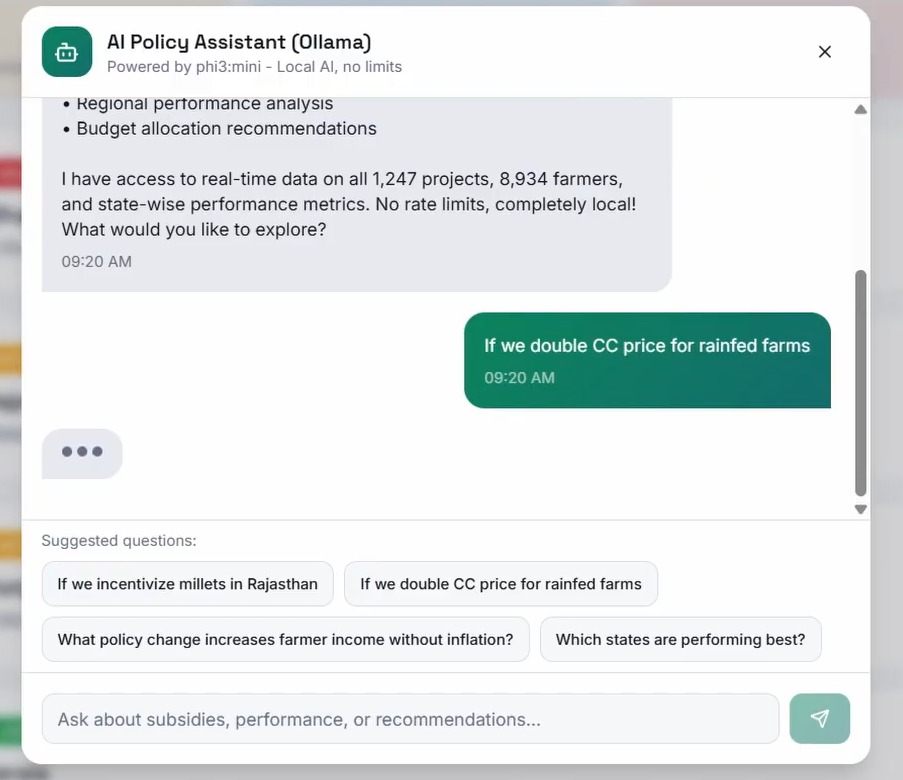
🧠 Generates AI insights for policy-making and state-wise performance tracking.
It ensures:
Transparency
Tamper-proof records
Fair farmer compensation
Trustworthy carbon credit trading
🏗 How we built it
🔹 Frontend
Farmer App (Flutter / React Native)
Government Dashboard (React + Chart libraries)
Carbon Marketplace (Next.js / React)
AR Verification App (Unity + ARCore)
🔹 Backend
Node.js / FastAPI APIs
PostgreSQL for structured data
Redis for caching
IPFS for document storage
🔹 Blockchain Layer
Smart contracts deployed on Polygon for:
Land tokenization
Carbon credit minting
Marketplace transactions
Transparent wallet tracking
🔹 AI & Analytics
Python (Scikit-learn / XGBoost)
Satellite data integration
Carbon yield prediction models
AI-powered decision support system
🔹 Advanced Features
Geo-fencing with GPS polygon mapping
IoT-ready architecture for soil carbon sensors
AR-based real-time land verification
Carbon credit staking & interest model for farmer financial security
🚧 Challenges we ran into
📍 Ensuring GPS accuracy for boundary mapping in rural areas.
🔐 Designing blockchain architecture that balances transparency and privacy.
📊 Creating reliable carbon estimation models using historical data.
🏦 Designing a financial model that protects farmers while maintaining liquidity.
📱 Integrating AR with real-time geo-location data without lag.
🧾 Handling land ownership verification and duplicate land detection.
🏆 Accomplishments that we're proud of
Successfully tokenizing land as blockchain assets.
Designing a transparent carbon credit lifecycle model.
Building a real-time government analytics dashboard.
Creating an AR-based geo-verification system for field officers.
Designing a farmer interest-based financial safety net model.
Developing an AI insights system for state-wise carbon performance evaluation.
📚 What we learned
Climate tech requires trust more than just technology.
Blockchain is powerful when used for verification and transparency, not speculation.
Data quality is critical in environmental credit systems.
Financial inclusion mechanisms must be simple for farmers.
AI insights must be actionable, not just analytical.
Field-level verification is essential to prevent fraud.
🚀 What's next for ECOLEDGER
🌐 Integration with national carbon trading frameworks.
📡 IoT sensor-based real-time carbon measurement.
🛰 Satellite-driven automated verification.
📈 Carbon futures and dynamic pricing engine.
🤝 International carbon marketplace integration.
🏦 Micro-loan system backed by future carbon yield.
📊 Advanced ESG reporting tools for companies.
🌍 Scaling across states and eventually internationally.
Built With
- geofencing
- ipfs
- kotlin
- postgresql
- react
- solidity
- tensorflow

Log in or sign up for Devpost to join the conversation.