Inspiration
The rise of digital platforms especially food delivery and e-commerce has massively increased convenience, but at a hidden environmental cost. Millions of small, daily decisions regarding packaging (plastic vs. biodegradable) and transport (gas-guzzling car vs. electric bike) add up to massive carbon footprints.
We realized that consumers want to make greener choices, but they lack the immediate, actionable data at the exact moment they hit "Pay." We built EcoIntellect to bridge this gap. Our inspiration was to create a "sustainability intelligence layer" that can be plugged into any digital platform to calculate emissions on the fly, gamify the experience with Eco Scores, and suggest real-time, eco-friendly alternatives before a transaction is finalized.
What it does
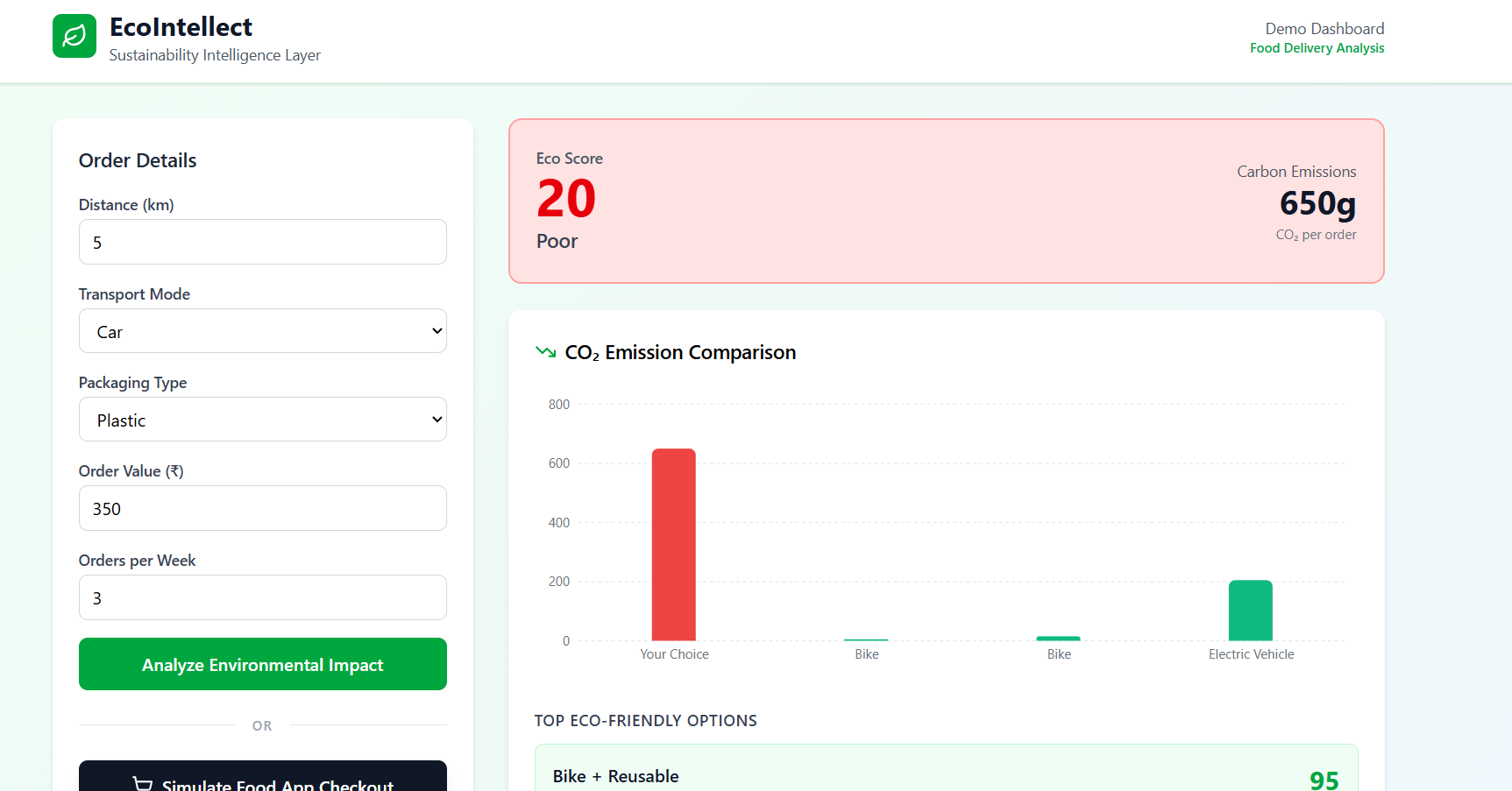
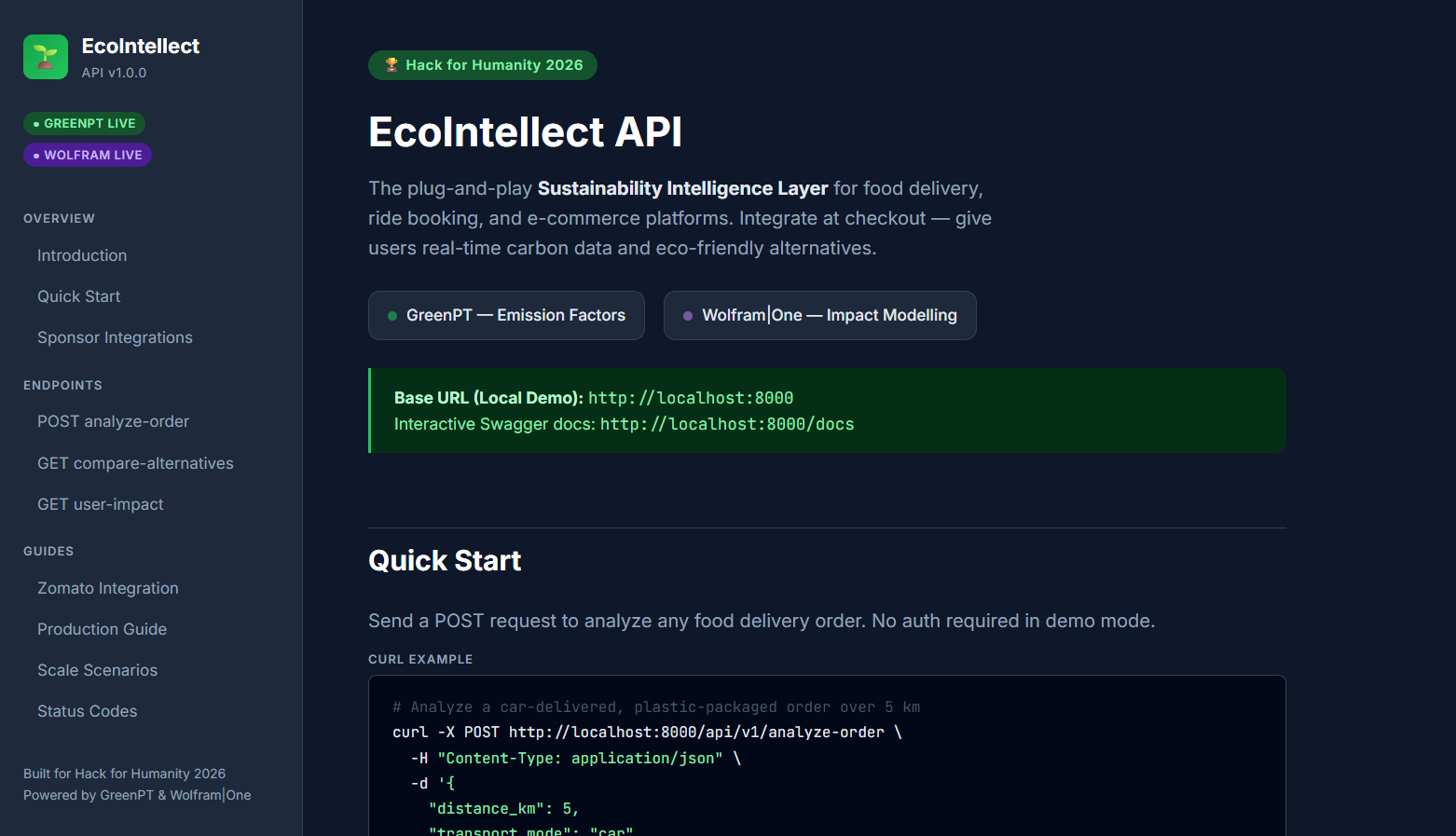
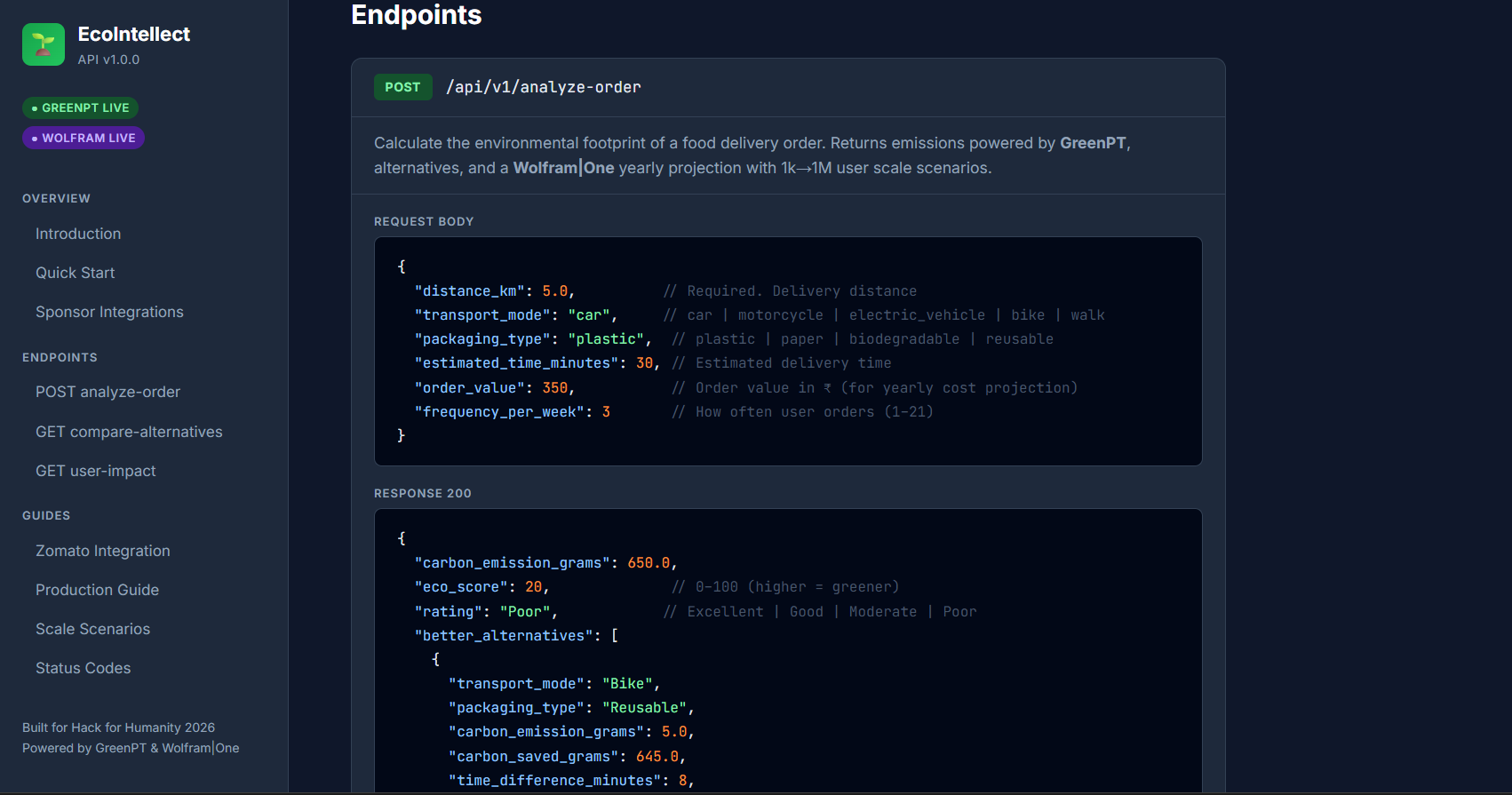
EcoIntellect is a powerful, headless API (with a demonstration dashboard) that intercepts checkout flows to inject sustainability metrics.
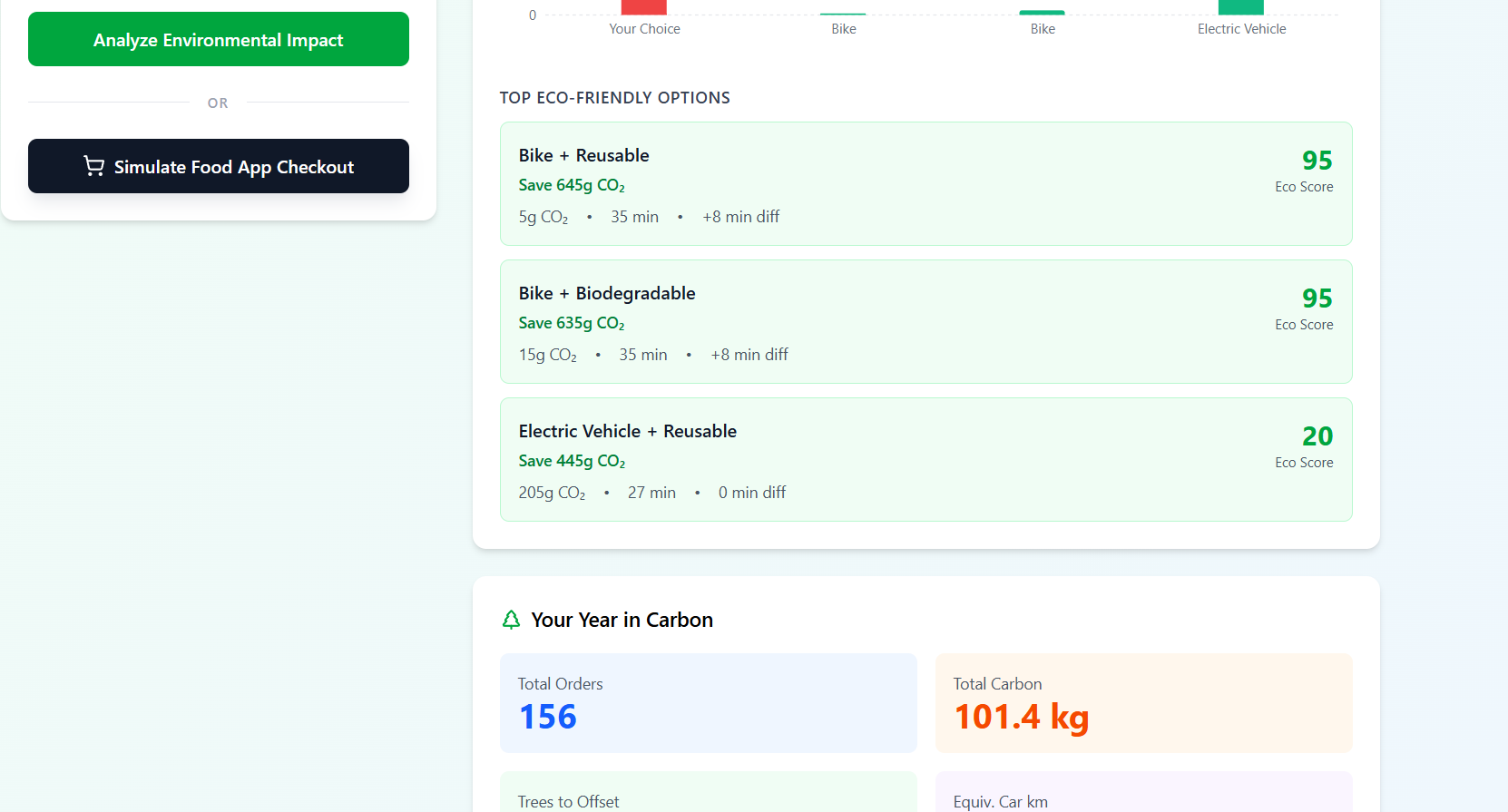
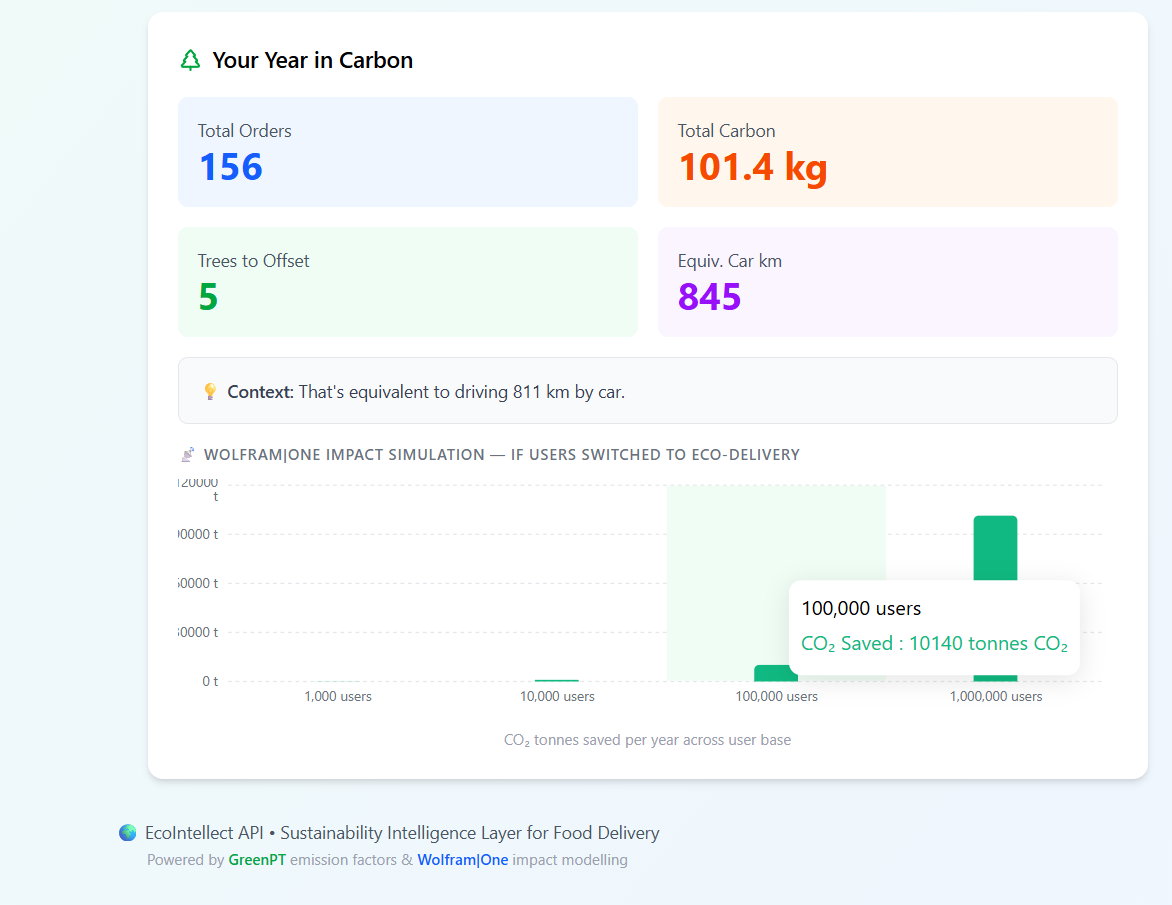
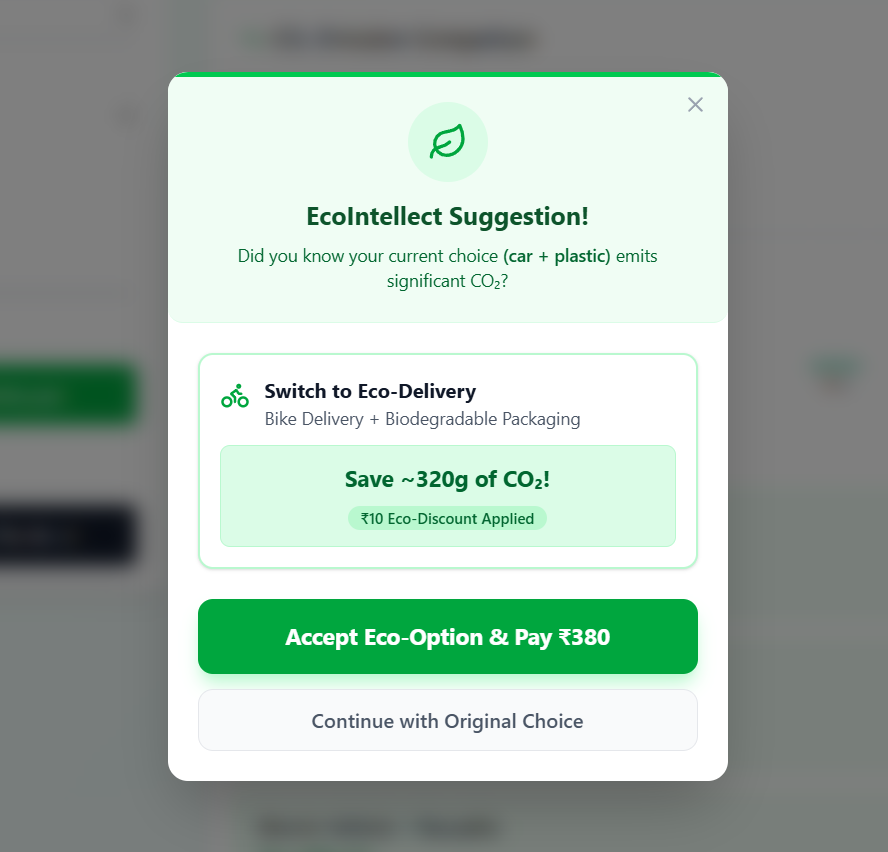
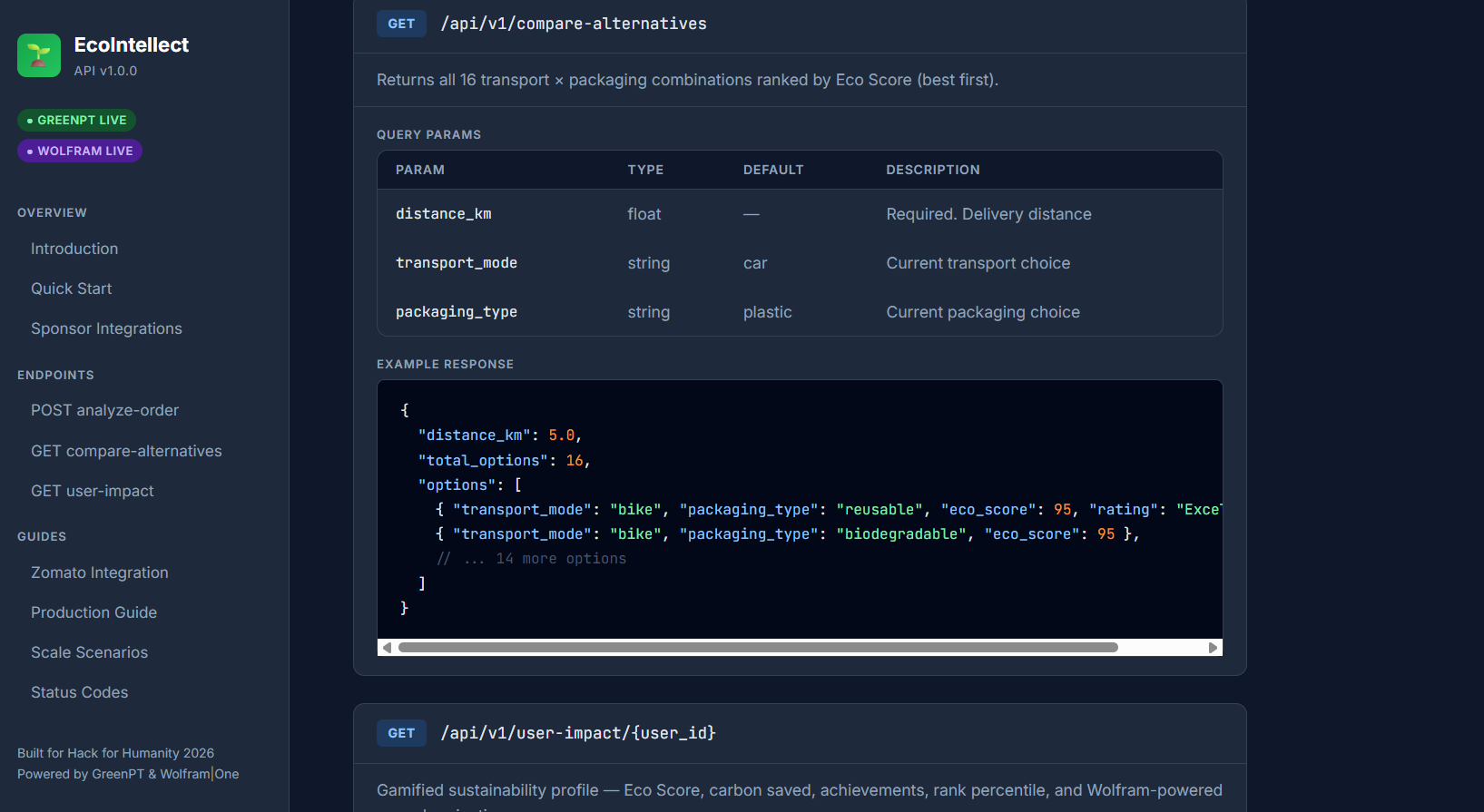
Real-time Carbon Analysis: It takes in logistics data (distance, transport mode, packaging) and calculates exact CO₂ emissions. Eco Scoring & Gamification: Users are given an immediate "Eco Score" (0-100) based on how optimized their delivery choice is compared to baselines. Smart Alternatives: It instantly computes the carbon savings of alternative choices (e.g., "Switch to Bike Delivery + Biodegradable paper to save 320g of CO₂") and offers them as one-click swaps. Long-term Impact Projections: It calculates what a user's yearly footprint looks like and scales that up to show platform-wide impact (e.g., "If 10,000 users made this switch, it equals planting 500 trees").
How we built it
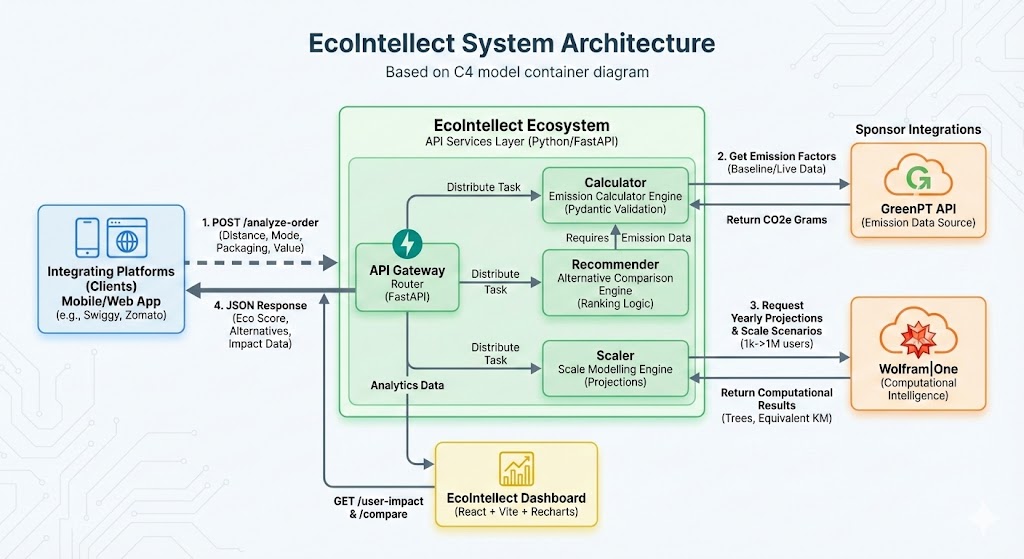
We adopted a modern, decoupled architecture designed for rapid integration:
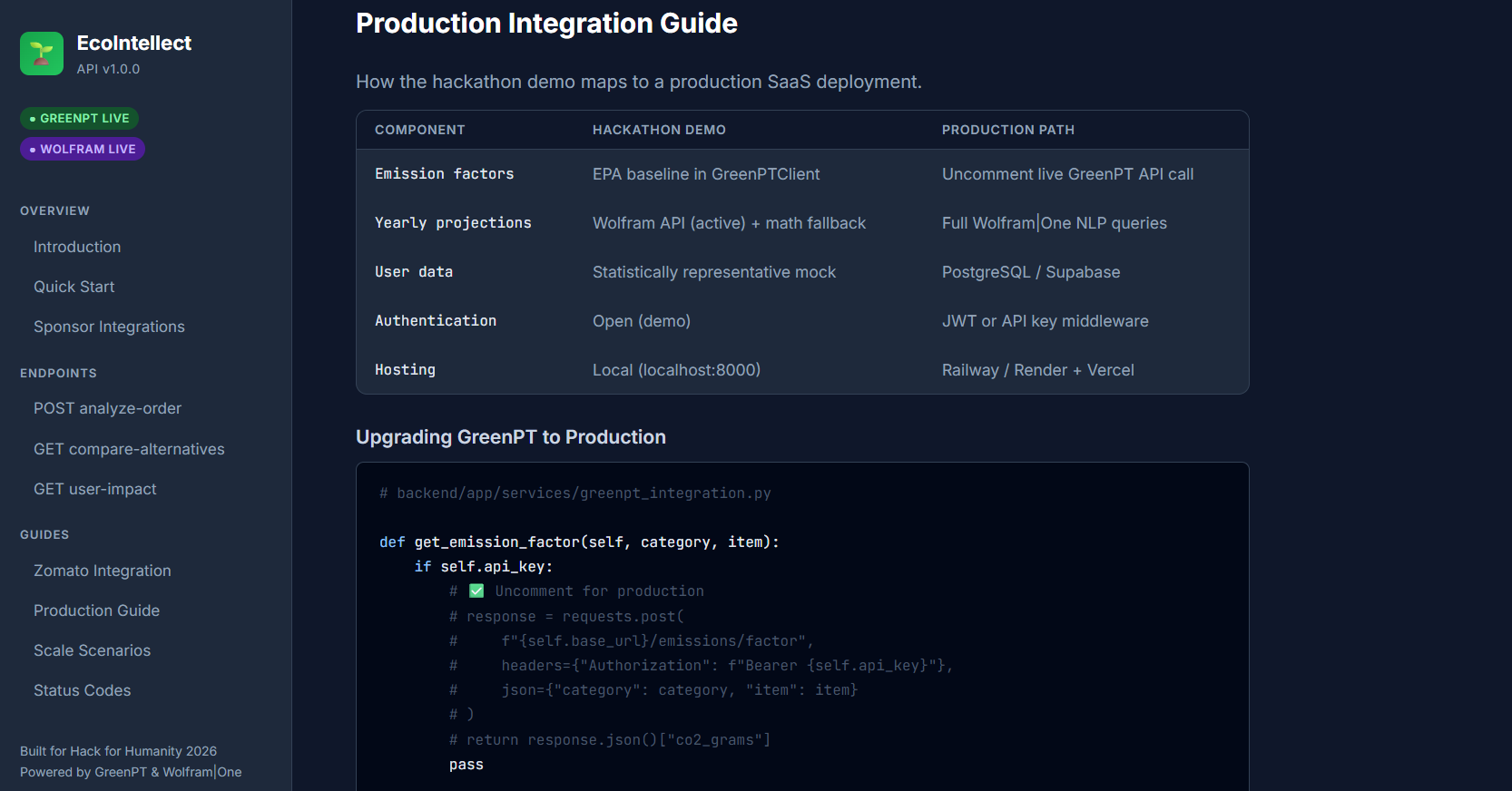
The Brain (Backend): We built a screaming-fast API using Python and FastAPI. It handles the complex routing, database management with SQLite/SQLAlchemy, and integration logic. Sponsor Integrations: GreenPT API: We integrated the GreenPT API to fetch reliable, verified carbon emission factors dynamically for various transport and packaging types. Wolfram|One: We utilized Wolfram Alpha's computational engine to perform heavy, real-time environmental context modeling—like projecting yearly carbon emissions and calculating exact real-world equivalents (e.g., equivalent car miles or trees required to offset emissions). The Face (Frontend): We built a demonstrative, interactive dashboard using React and Tailwind CSS to visualize the API's capabilities, complete with Recharts for data visualization and a mock "checkout interception" flow. Deployment & Infrastructure: The entire stack is containerized using Nixpacks and pushed to Railway for production-grade hosting.
Challenges we ran into
Building a complex data pipeline in a short weekend came with hurdles:
API Latency & Fallbacks: Relying on external APIs (GreenPT and Wolfram) during a fast-paced checkout flow meant we had to handle network timeouts gracefully. We built robust fallback systems using EPA baseline averages so the user experience never hangs or fails. Deployment Quirks: Getting a monorepo setup (React + FastAPI) to play nicely on modern PaaS platforms like Railway involved deep-diving into Nixpack configuration to ensure Uvicorn booted correctly and bound to dynamic ports. Mathematical Modeling: Converting raw grams of CO₂ into relatable metrics (like "number of trees") required careful prompting and validation of the data returning from the Wolfram computational endpoints.
Accomplishments that we're proud of
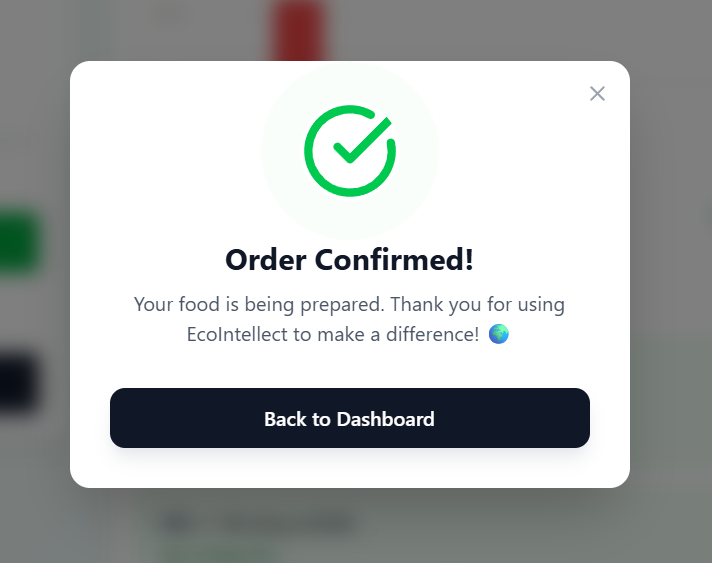
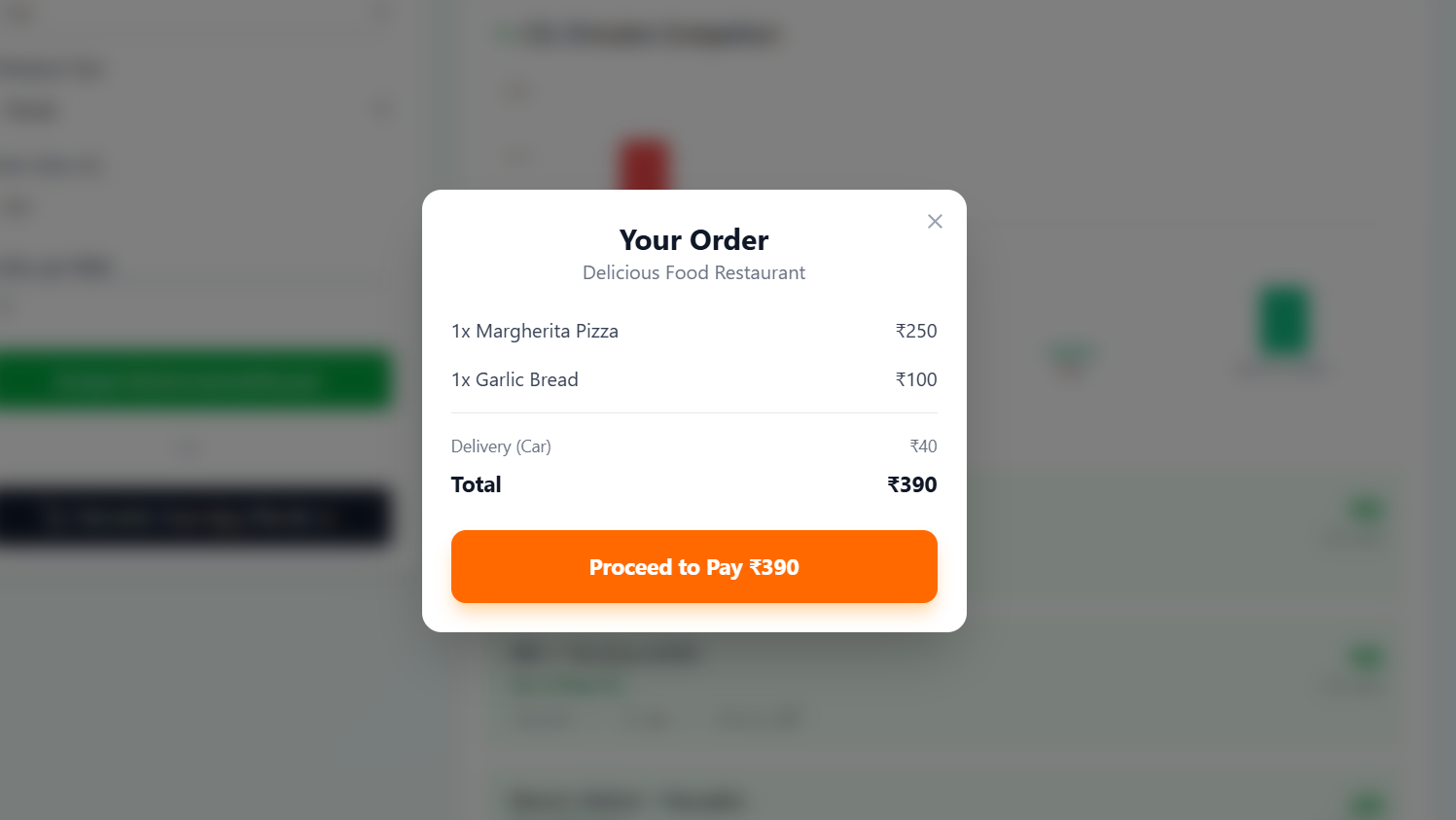
The "Checkout Interceptor" Flow: We successfully built a mock UI that proves how seamless our API is when embedded into an existing food delivery app's payment screen. It feels native and non-intrusive. Sponsor Tech Synergy: We didn't just tack on sponsor APIs for the sake of it. GreenPT provides the micro-level data (emission factors), while Wolfram provides the macro-level modeling (yearly projections). They work together beautifully. Production-Ready: Unlike many hackathon projects that run locally, we ensured EcoIntellect is fully deployed to a live URL, complete with auto-generated OpenAPI (Swagger) documentation.
What we learned
The Power of Asynchronous APIs: We learned a lot about managing event loops in Uvicorn/FastAPI and why you shouldn't use async def on CPU-heavy or blocking network calls without properly offloading them. Data Visualization Context: We learned that telling a user they emitted "500g of CO₂" means nothing to them. Telling them "That's like charging a smartphone for a year" changes behavior immediately. Context matters.
What's next for EcoIntellect API
B2B Plugins: We want to package this API into drop-in SDKs (npm packages, Shopify plugins, etc.) so any e-commerce developer can add sustainability metrics in under 5 minutes. Machine Learning Routing: Implementing geographic context. If the API knows a user lives in a hilly, snowy area, it shouldn't suggest a bicycle delivery alternative. Carbon Credit Market Integration: Allowing users to not just see their footprint, but actually click a button to purchase fractional carbon offsets directly in the checkout flow.
Built With
- fastapi
- git
- github
- greenpt-api
- lucide-react
- nixpacks
- pydantic
- python
- railway
- react
- recharts
- sqlalchemy
- sqlite
- swagger
- tailwind-css
- uvicorn
- vite
- wolfram-technologies


Log in or sign up for Devpost to join the conversation.