-
-
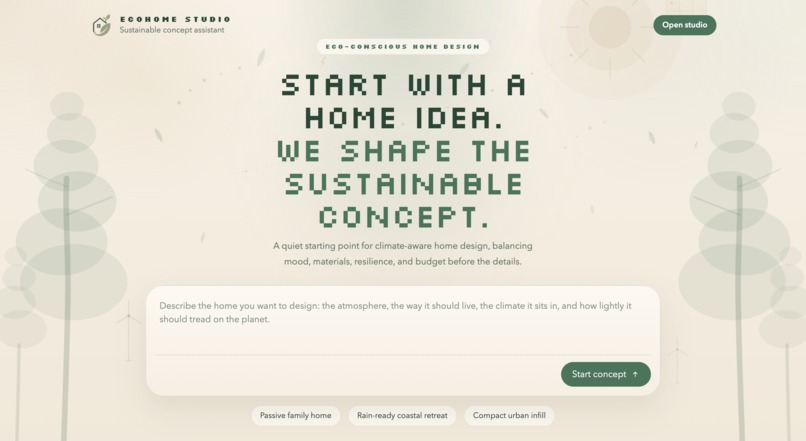
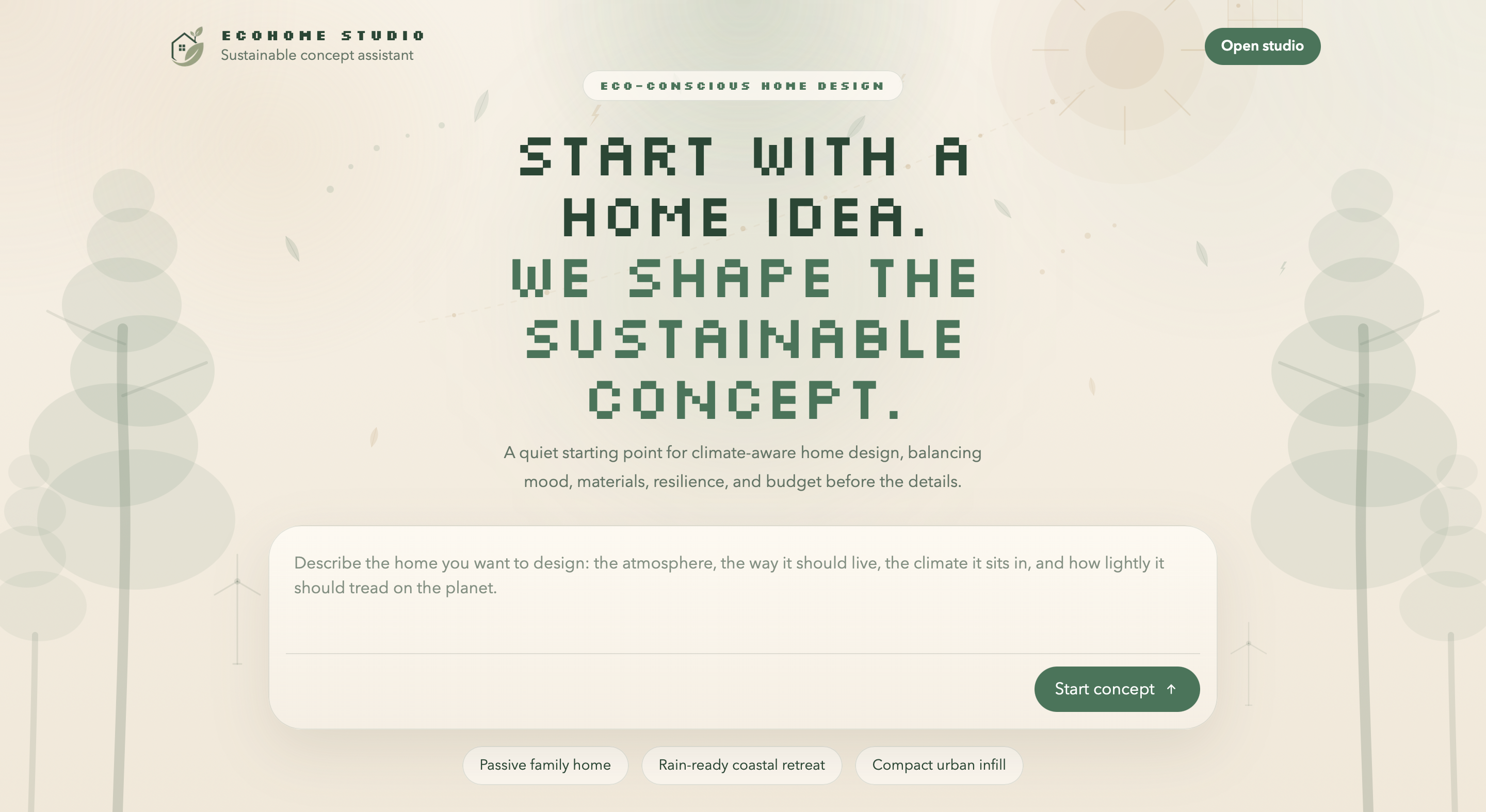
Homescreen view
-
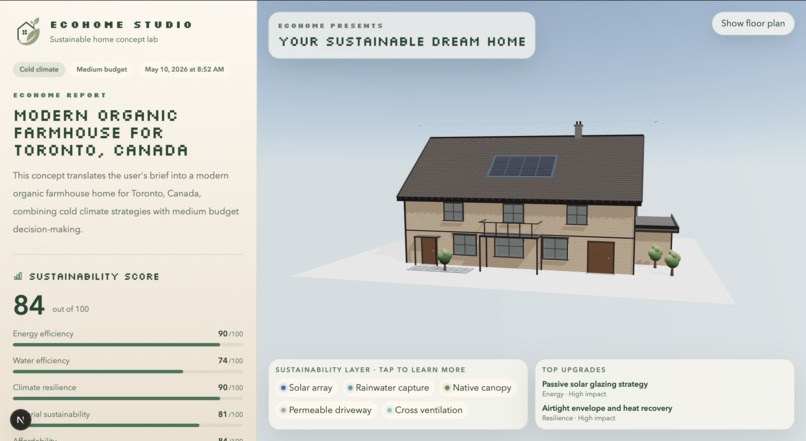
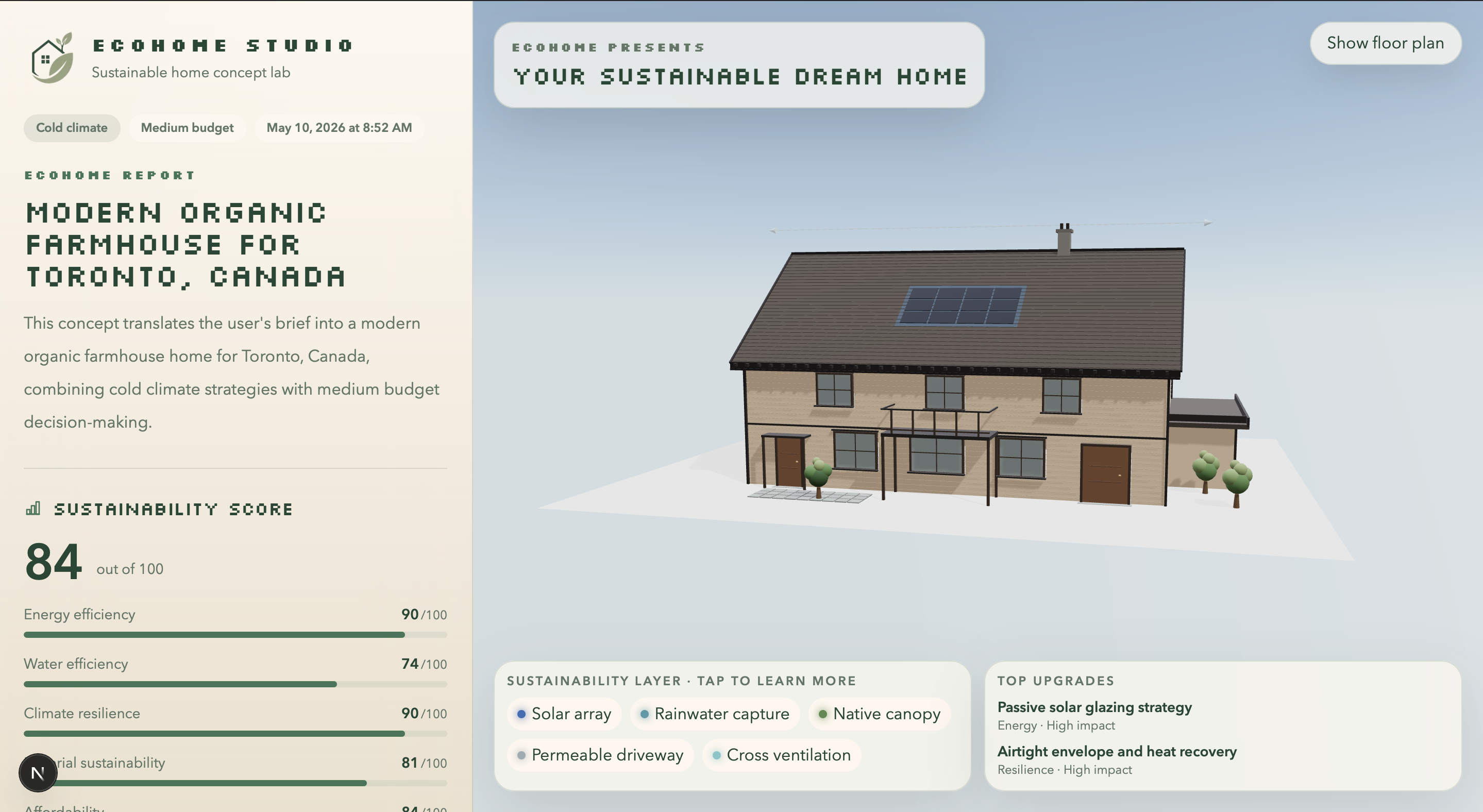
Studio view
Inspiration
Sustainable homes are becoming essential, but the design process is slow, expensive, and hard to visualize before anything is built. We wanted to make it feel immediate. What if you could describe your dream home and see it rendered in 3D, with all the eco upgrades already baked in, in under a minute?
What it does
EcoHome Studio takes your location, climate, budget, and style preferences and generates a complete sustainable home concept. You get a live 3D model you can orbit around, a room-by-room floor plan, a sustainability score across six dimensions, curated material picks, and upgrade recommendations all tailored to where you actually live.
How we built it
We built the frontend in Next.js with React Three Fiber handling the 3D scene from scratch. No pre-made models. Every wall, roof, dormer, solar array, and tree is procedurally generated from the AI output using a deterministic seeded renderer. The AI layer uses IBM watsonx and Featherless to generate structured JSON that validates against a strict Zod schema before anything hits the screen. A local RAG knowledge base grounds the recommendations in real climate and sustainability guidance.
Challenges we ran into
Getting the 3D geometry right was brutal. Roof seam lines were rotating wrong and stabbing out of the roof like black poles. Hip roofs were collapsing into pyramids instead of forming a proper ridge. Trees were spawning inside L-shaped wings. Every fix meant reverse-engineering the rotation math or replicating the same seeded random calls across two systems to get geometry to agree with itself.
Accomplishments that we're proud of
A fully procedural 3D home renderer that responds to AI output in real time, with no model assets, no 3D libraries, just math. The fact that the same prompt always produces the same house, deterministically, felt like a real win. The sustainability layer actually connects to real guidance, not generic tips.
What we learned
Structured generation is hard to get right. A language model that almost follows your schema is worse than one that fails cleanly, because almost-valid data crashes at render time in creative ways. We learned to validate aggressively and build rich fallback geometry so the scene never just breaks.
What's next for EcoHome Studio
Export to PDF and shareable project links so people can actually bring these to an architect. Richer interior visualization. Support for multi-unit and laneway housing. And tighter integration with real cost data so the budget estimates mean something.
Built With
- featherless
- ibm-watson
- langchain
- nextjs
- react
- tailwind
- typescipt


Log in or sign up for Devpost to join the conversation.