-
-
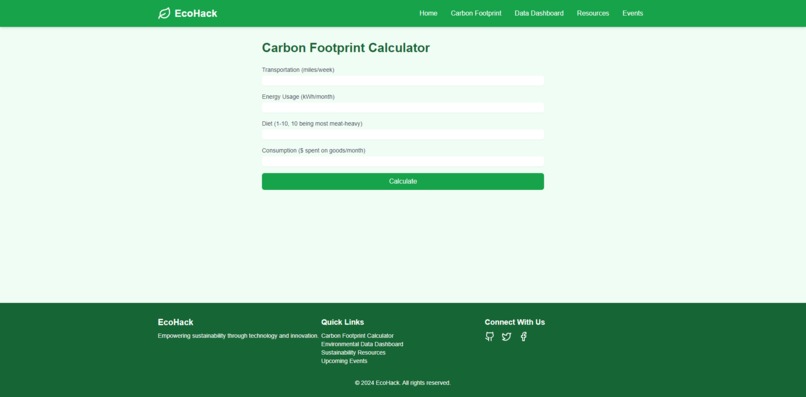
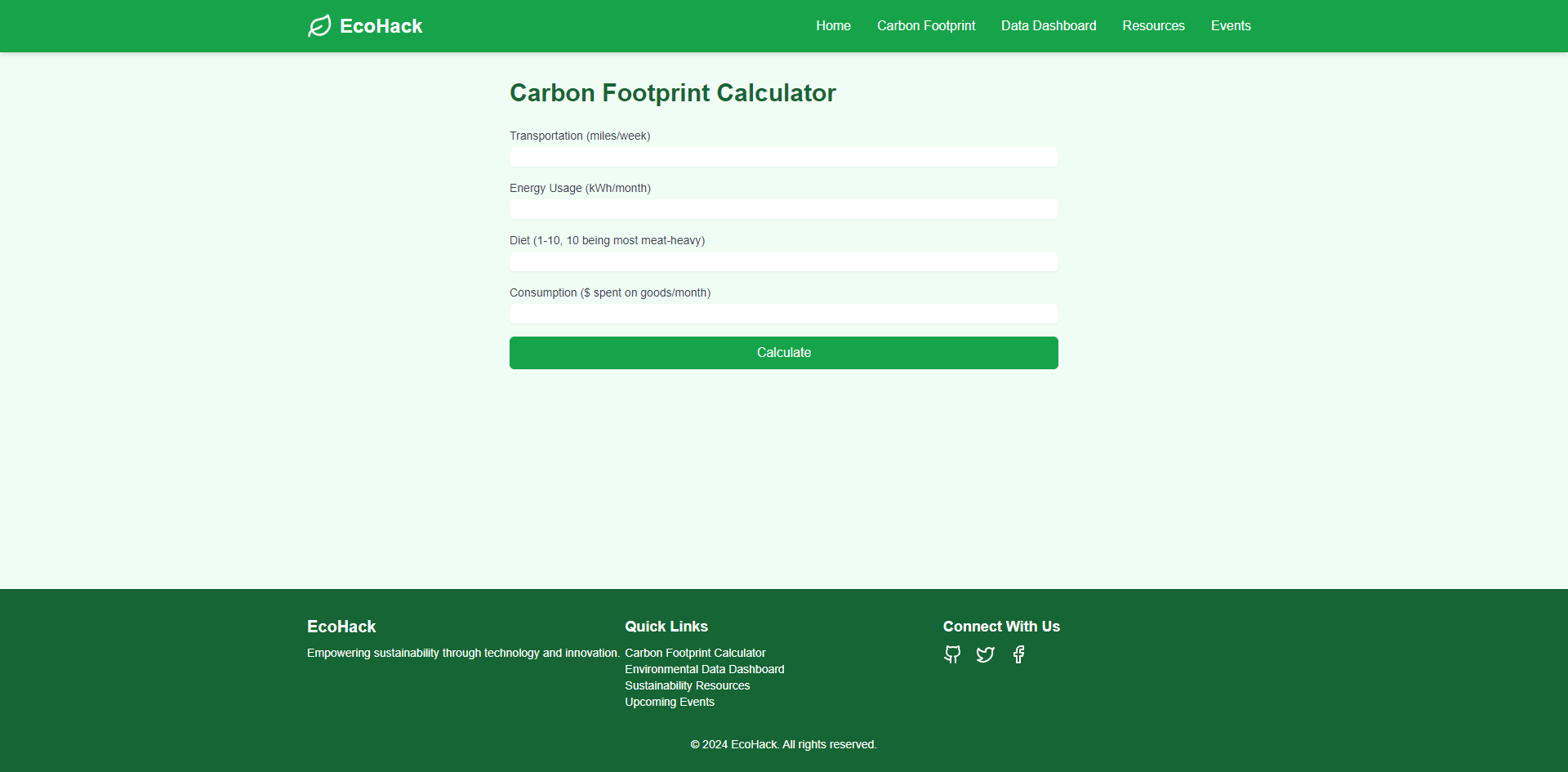
Carbon Footprint Calculator
-
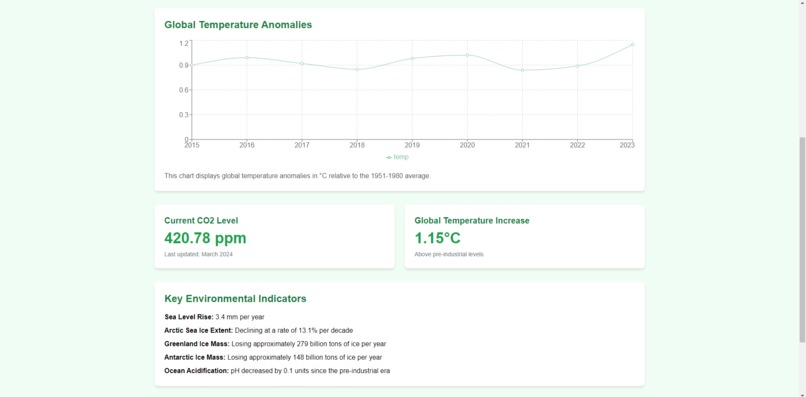
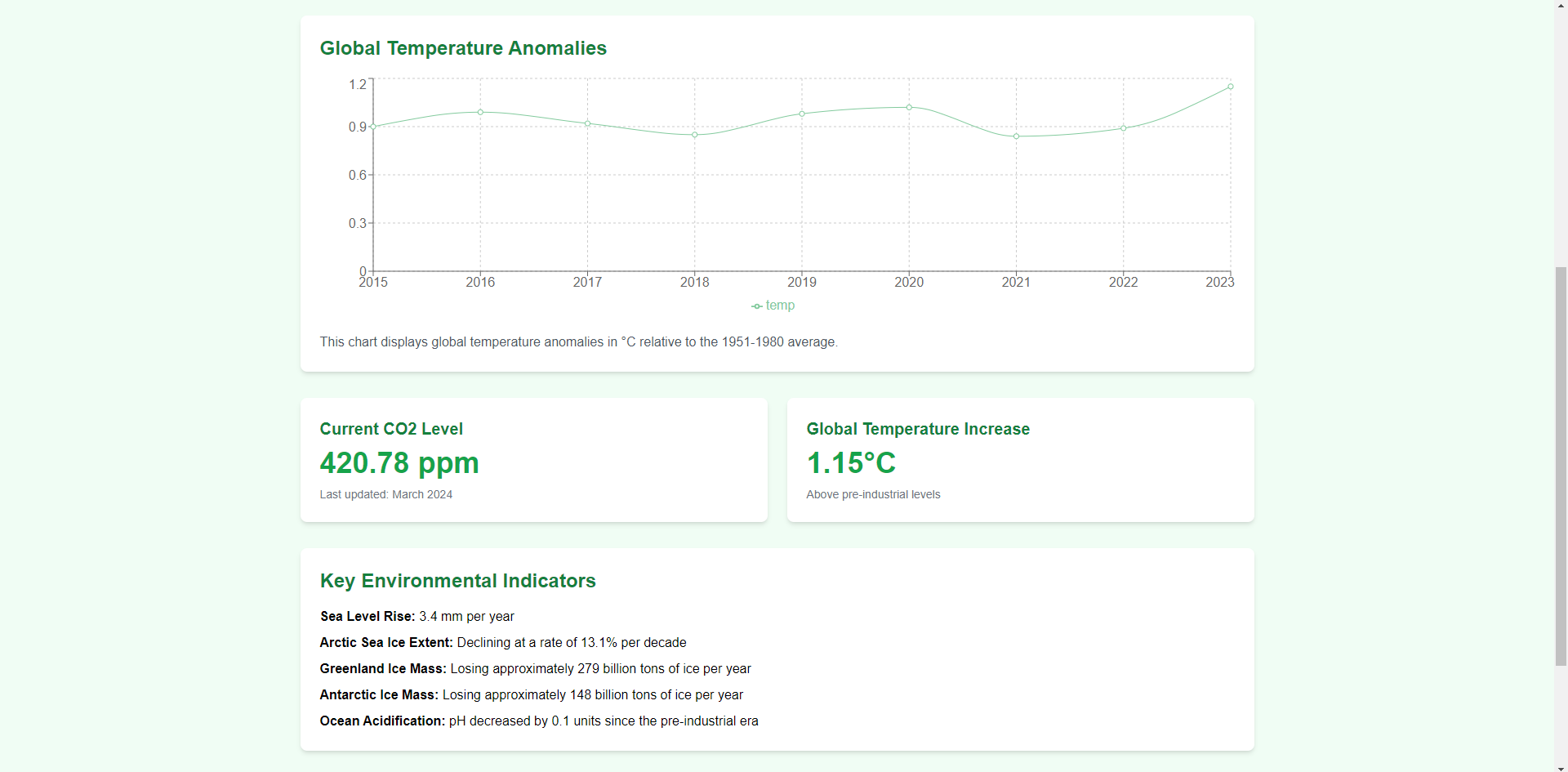
Environmental Data Dashboard
-
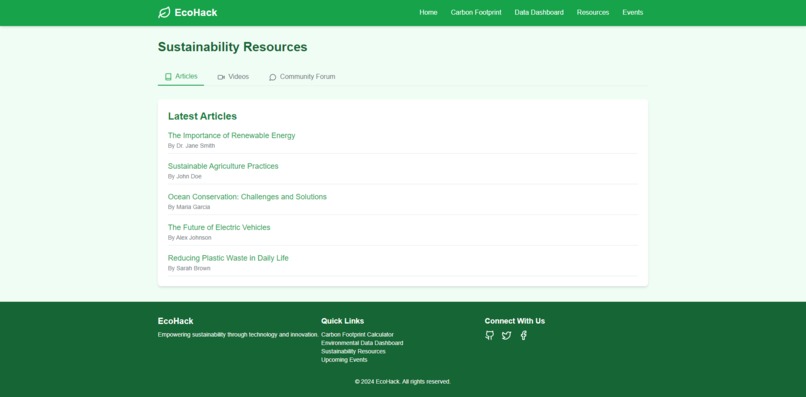
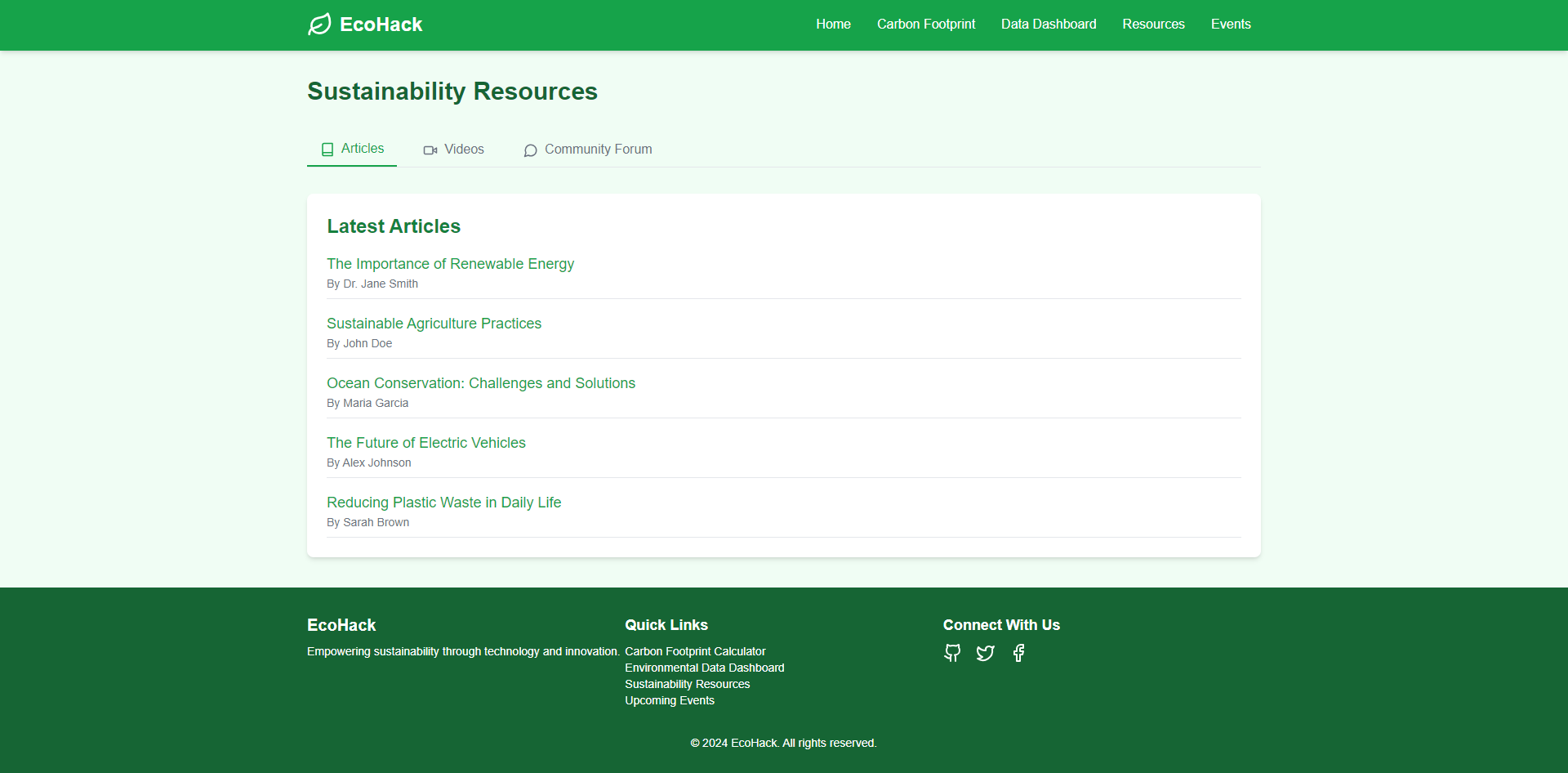
Sustainability Resources
-
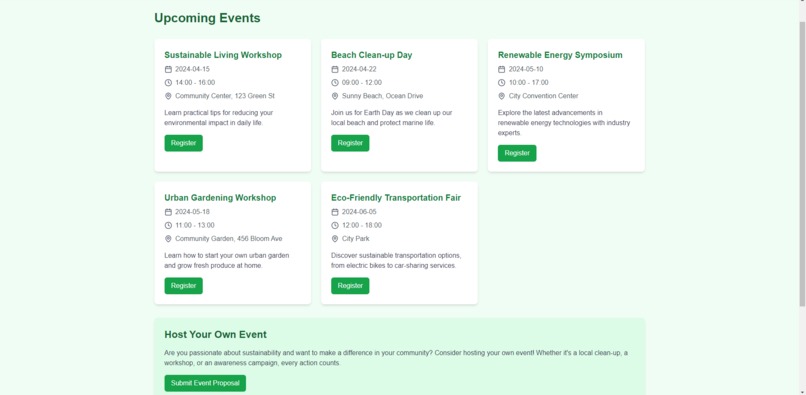
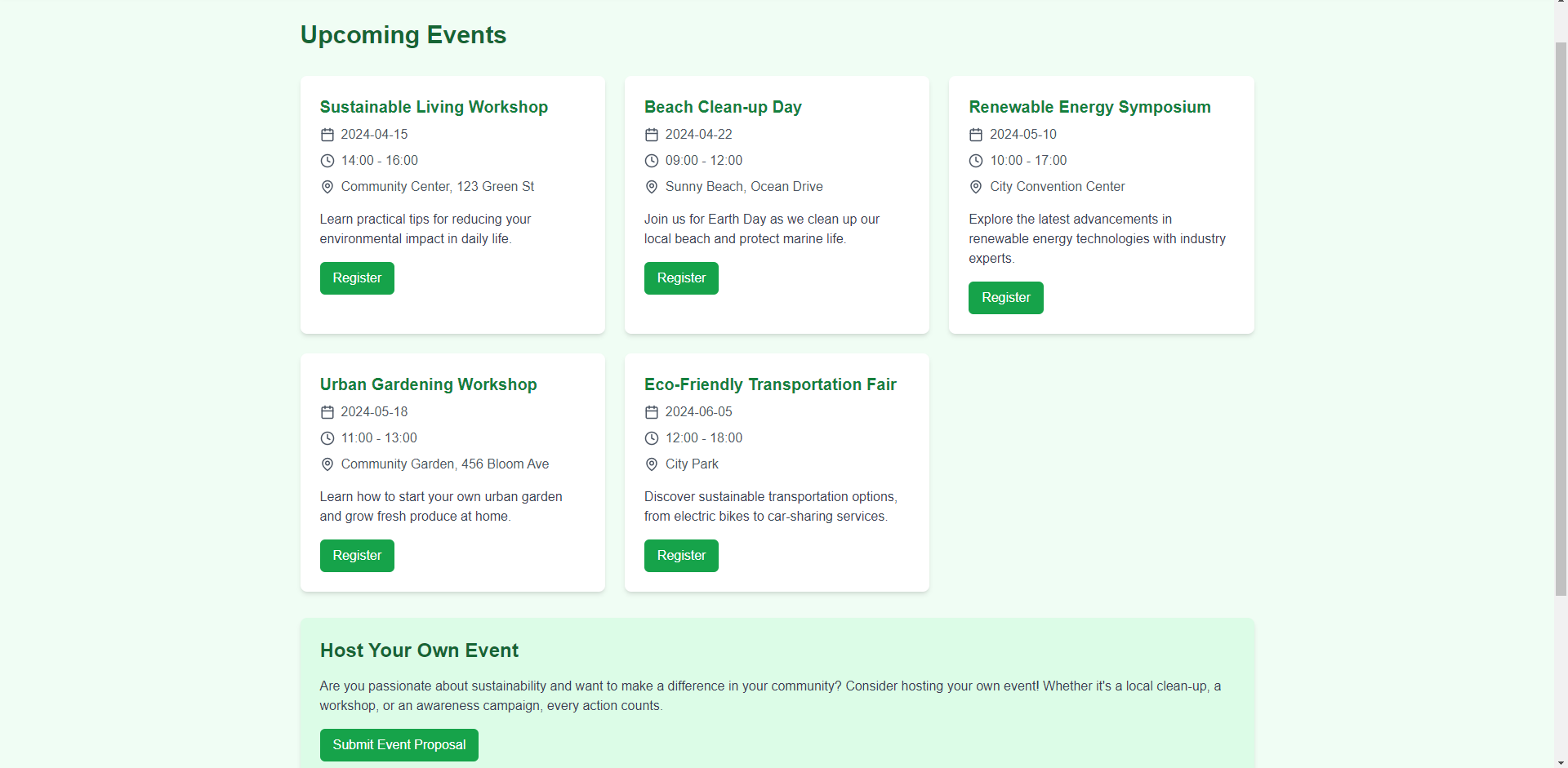
Upcoming Events
-
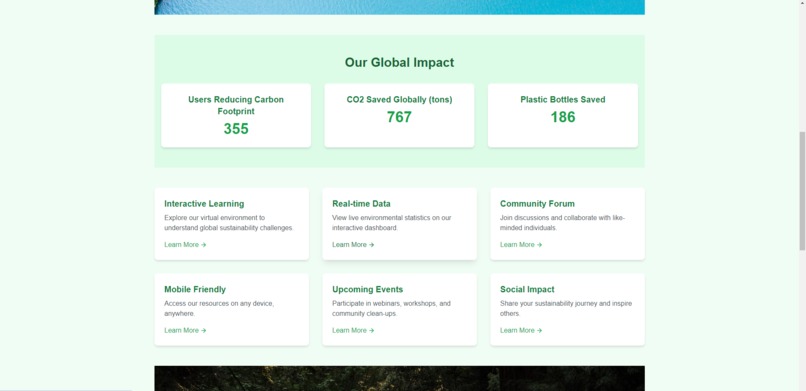
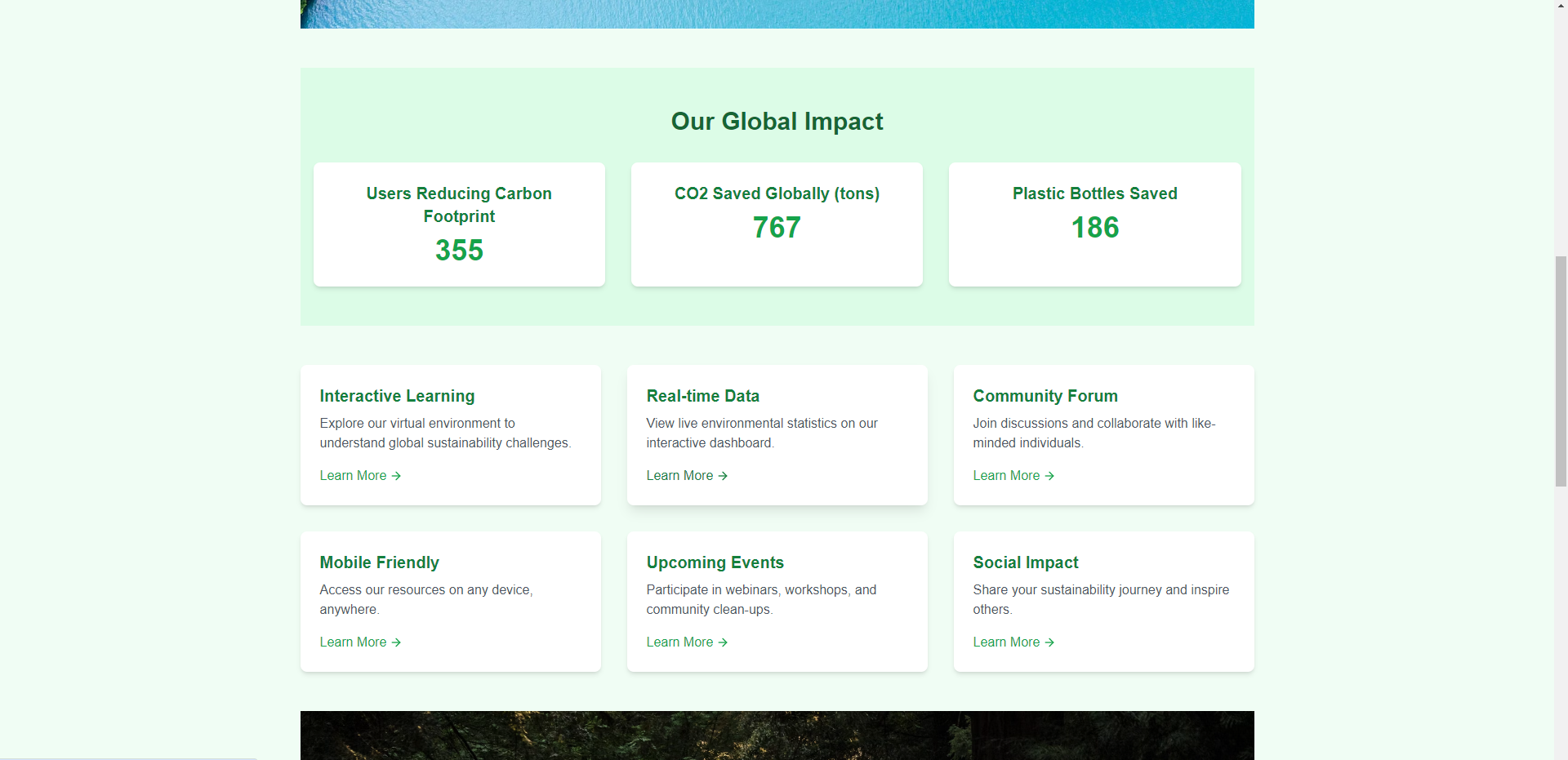
Global Impact
-
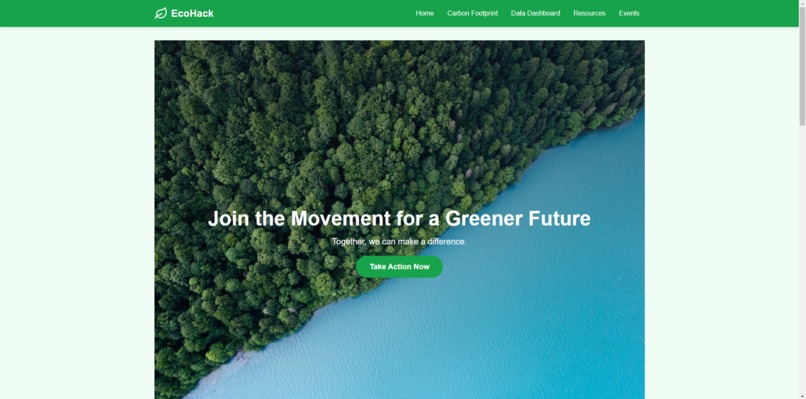
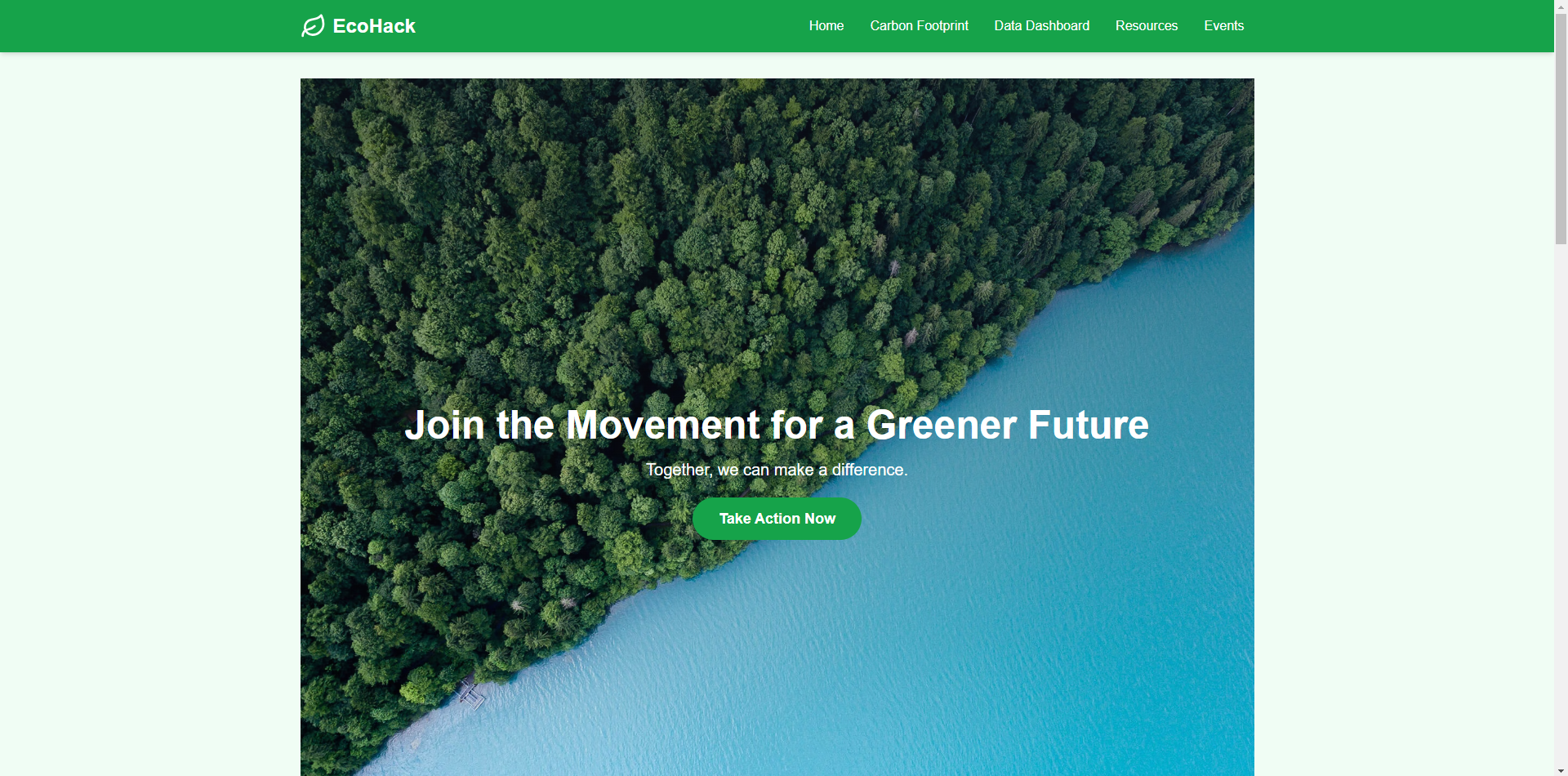
Home Page
About EcoHack
Inspiration
The idea for EcoSphere was sparked by a growing awareness of the urgent need for sustainable solutions to global environmental challenges. As we learned more about the devastating effects of climate change, pollution, and resource depletion, we felt compelled to create a platform that not only educates users but also empowers them to take actionable steps toward a greener future. Our inspiration came from grassroots movements, innovative technologies, and the belief that collective small actions can lead to significant change. We envisioned EcoSphere as a community-driven initiative where individuals can come together to share knowledge, experiences, and solutions.
What it does
EcoSphere is an interactive platform designed to raise awareness about sustainability issues and provide users with the tools they need to make a difference. Key features include:
Carbon Footprint Calculator: An interactive tool that allows users to estimate their carbon footprint based on their daily activities, such as transportation, energy use, and waste generation. It provides personalized feedback and actionable steps for reduction.
Community Challenges: EcoSphere hosts ongoing sustainability challenges that encourage users to participate and share their progress. Challenges like “Plastic-Free Month” or “Energy-Saving Week” promote engagement and foster a sense of community.
Real-Time Environmental Data: The platform provides users with access to live statistics on global sustainability efforts, such as renewable energy usage, deforestation rates, and pollution levels, enabling them to stay informed and motivated.
Educational Resources: A library of articles, videos, and infographics covering a wide range of sustainability topics, from climate science to practical tips for eco-friendly living, helps users expand their knowledge and skills.
How we built it
Building EcoHack involved several stages, utilizing various technologies and methodologies:
Front-End: We utilized HTML, CSS, and JavaScript to create a responsive and engaging user interface. Our design process focused on creating an intuitive navigation system and visually appealing layouts that encourage exploration.
Back-End: The server-side was built using Vite, React, TypeScript, enabling efficient data handling, user authentication, and real-time updates. We employed a robust database system to store user data, progress tracking, and content management.
Interactive Tools: Features like the carbon footprint calculator and quizzes were developed using JavaScript frameworks to provide a seamless user experience. We emphasized interactivity and engagement to keep users motivated and informed.
Challenges we ran into
Throughout the development of EcoSphere, we encountered several challenges that tested our problem-solving skills:
Simplifying Complex Concepts: One of the biggest challenges was presenting complex sustainability concepts in a way that was easily understandable and engaging for users with varying levels of knowledge. We conducted user testing to refine our messaging and ensure clarity.
Real-Time Data Integration: Integrating live data from multiple APIs posed technical challenges, particularly in ensuring data accuracy and synchronization. Extensive debugging and collaboration were required to create a smooth user experience.
User Engagement: Keeping users engaged over time was crucial for the success of EcoSphere. We experimented with various features, such as gamification elements and social sharing options, to encourage ongoing participation and interaction.
Accomplishments that we're proud of
We are incredibly proud of the impact EcoSphere has made in its short lifespan:
User Engagement: Our platform has attracted a diverse community of users who are actively participating in challenges, sharing their experiences, and encouraging others to adopt sustainable practices.
Successful Implementation of Interactive Tools: The launch of the carbon footprint calculator and personalized roadmaps has received positive feedback, helping users understand their impact and take actionable steps toward sustainability.
What we learned
This project has been a profound learning experience for our team:
User-Centered Design: We learned the importance of prioritizing the user experience in every aspect of our design and development process. Feedback from our users has been invaluable in shaping the platform.
Technical Skills: The development process has significantly enhanced our technical skills, particularly in web development, data integration, and responsive design. We gained hands-on experience with various programming languages and frameworks.
Community Building: We discovered the power of community in driving sustainable action. Engaging users in challenges and discussions has fostered a supportive environment where individuals can share knowledge and motivate each other.
What's next for EcoHack
Looking ahead, we have ambitious plans for EcoSphere:
Feature Expansion: We aim to add more interactive features, including gamified challenges, a virtual eco-garden, and a marketplace for eco-friendly products to further engage our users.
Enhanced Community Engagement: We plan to strengthen community engagement by hosting webinars, workshops, and local events in collaboration with environmental organizations, providing users with hands-on opportunities to get involved.
User-Generated Content: We want to incorporate user-generated content to inspire collective action. This could include a section where users can share their own sustainability tips, success stories, and eco-friendly projects.
Global Reach: Our vision is to expand EcoSphere's reach globally, adapting our content and challenges to address local sustainability issues while fostering a worldwide community dedicated to environmental stewardship.

Log in or sign up for Devpost to join the conversation.