
Inspiration
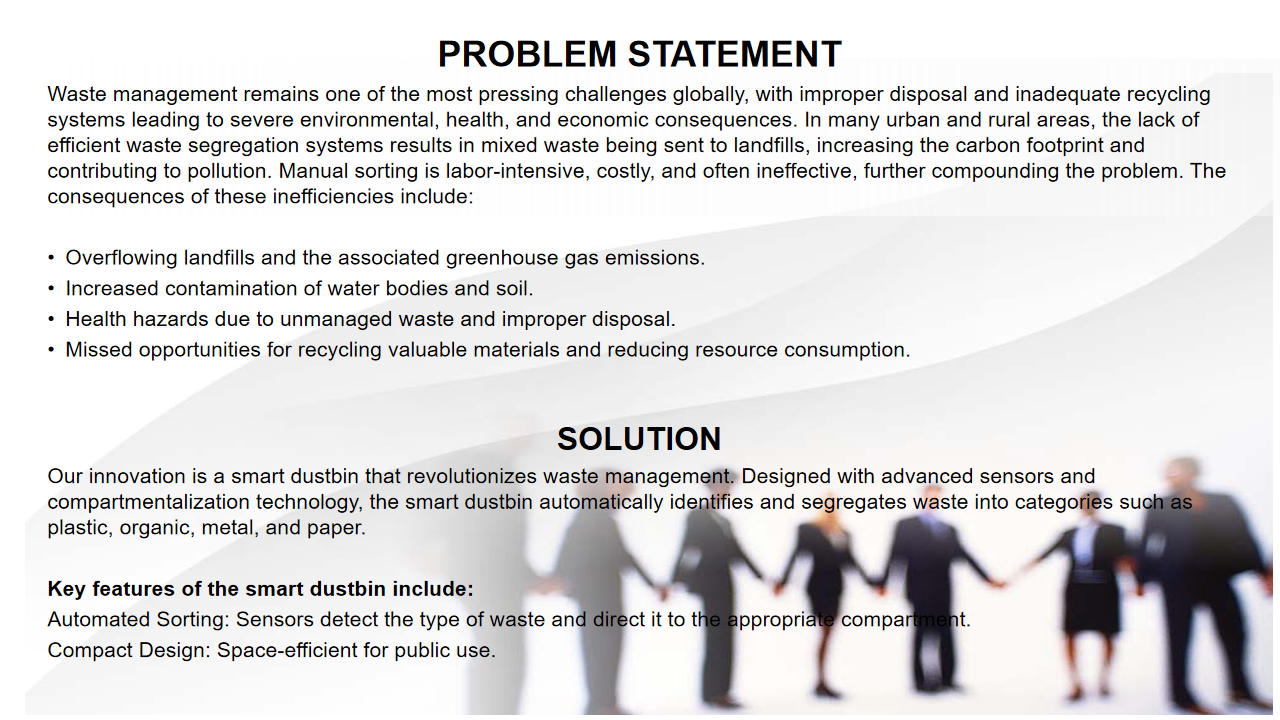
We was inspired to create this system because I have seen the significant challenges posed by solid waste to our environment. Our passion for sustainability and my desire to make a positive impact on ecosystem conservation drove us to think creatively on how we can create a positive impact regarding this issue. Through our vision we aim to create a space for working with Factories, manufactures and various creative industry (waste-based innovations), We realized the potential to transform waste into main valuable usage. This motivated us to design a system that not only detects waste but also contributes to a cleaner and healthier environment which will positively affect the citizens and Universe.
What it does
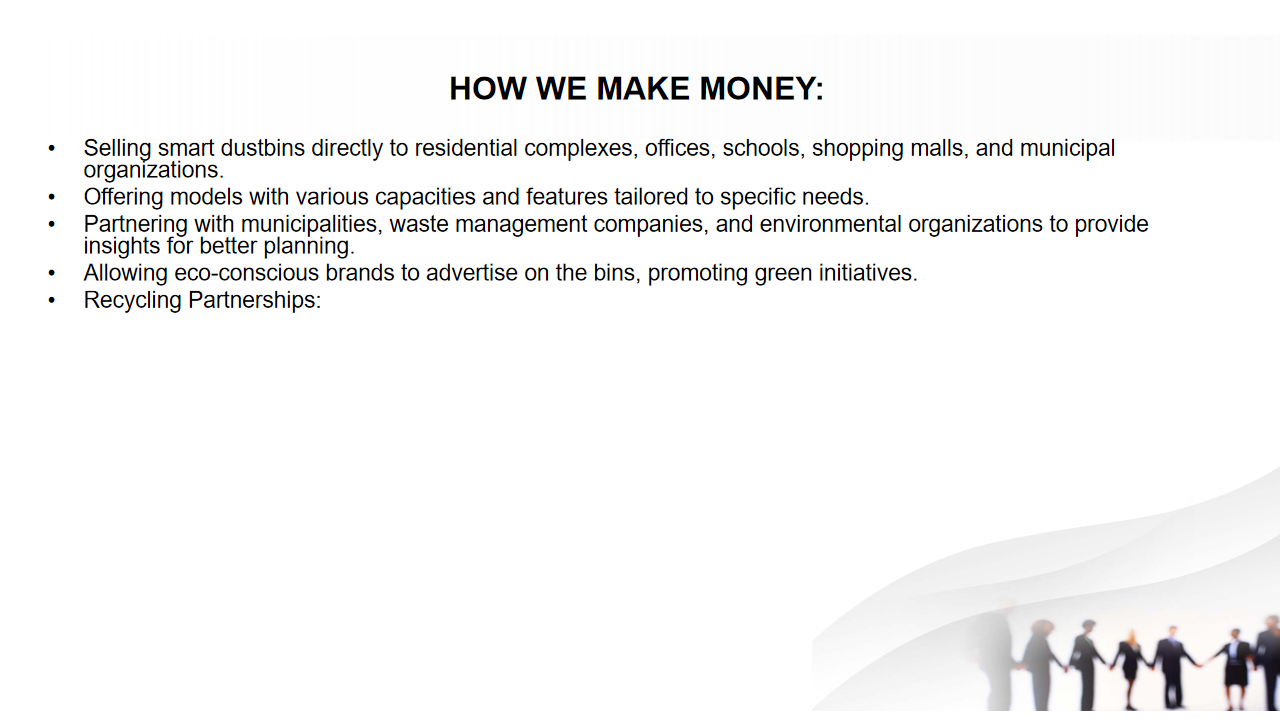
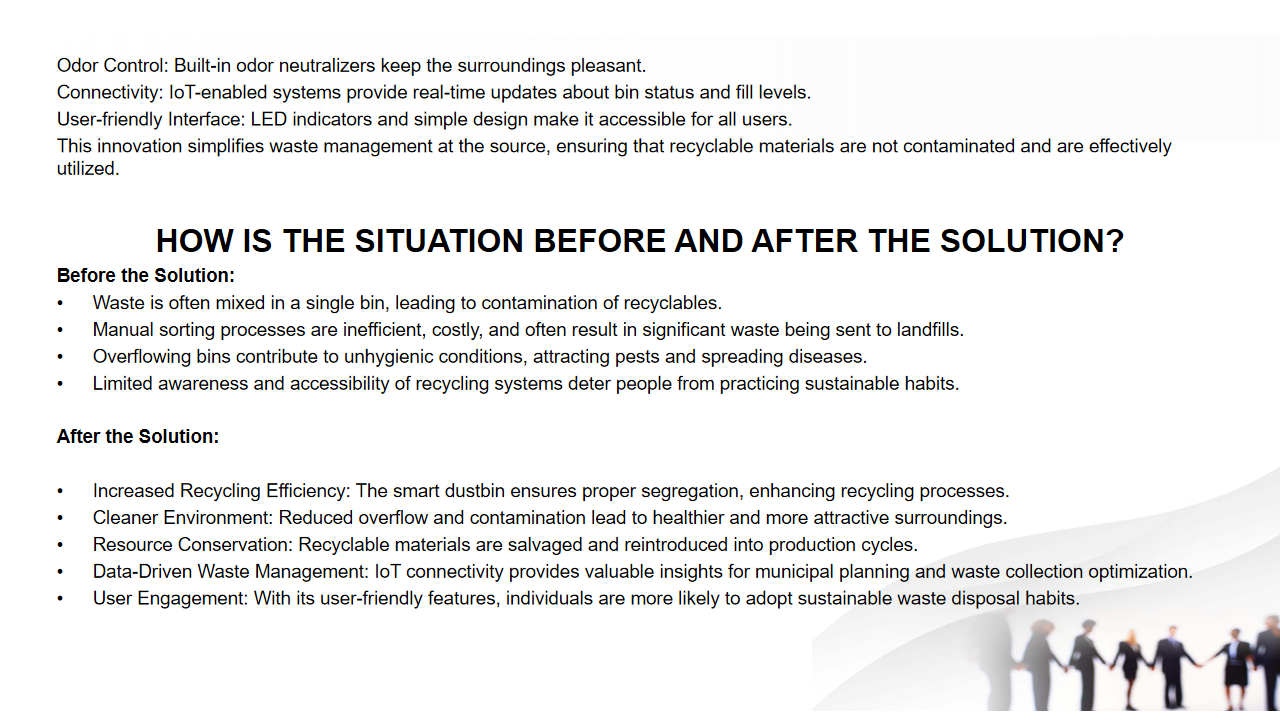
The system is an innovative dustbin equipped with a camera that scans and detects the type of waste being disposed of. It then sorts the waste into specified compartments within the dustbin based on its category. Additionally, the system generates a unique scanning code that citizens can use to earn tokens for their contributions to proper waste disposal. Once the dustbin is full, it automatically notifies the waste collection service, ensuring timely and efficient management. This system not only promotes responsible waste disposal but also stimulates citizens while contributing to ecosystem conservation.
How we built it
We built EcoGuardian by combining cutting-edge technology with a user-centric design. The system uses a camera integrated into a smart dustbin to scan and detect waste items. We employed COCO-SSD, a pre-trained machine learning model, to identify waste types such as plastic bottles, cans, and paper. The dustbin is equipped with compartments that automatically sort waste based on the detected category. To incentivize users, we developed a token reward system that generates a unique QR code for each successful waste disposal. Citizens can scan this code to earn tokens, which can be redeemed for rewards. Additionally, the system notifies waste collection services when the dustbin is full, ensuring timely waste management. The entire system is powered by a combination of Spring Boot for backend logic, Thymeleaf for the user interface, and TensorFlow.js for real-time waste detection in the browser.
Challenges we ran into
Building EcoGuardian came with its fair share of challenges. One major hurdle was integrating the waste detection model into the system. Initially, we struggled with the performance of the model, as it took too long to process images and update the bin's fill level. We also faced difficulties in designing a reliable sorting mechanism for the dustbin compartments. Another challenge was ensuring the system could handle real-world scenarios, such as varying lighting conditions and different types of waste. Additionally, creating a seamless user experience for token redemption required careful planning and testing. Despite these challenges, we persevered by optimizing the code, improving the model's accuracy, and iterating on the design based on user feedback.
Accomplishments that we're proud of
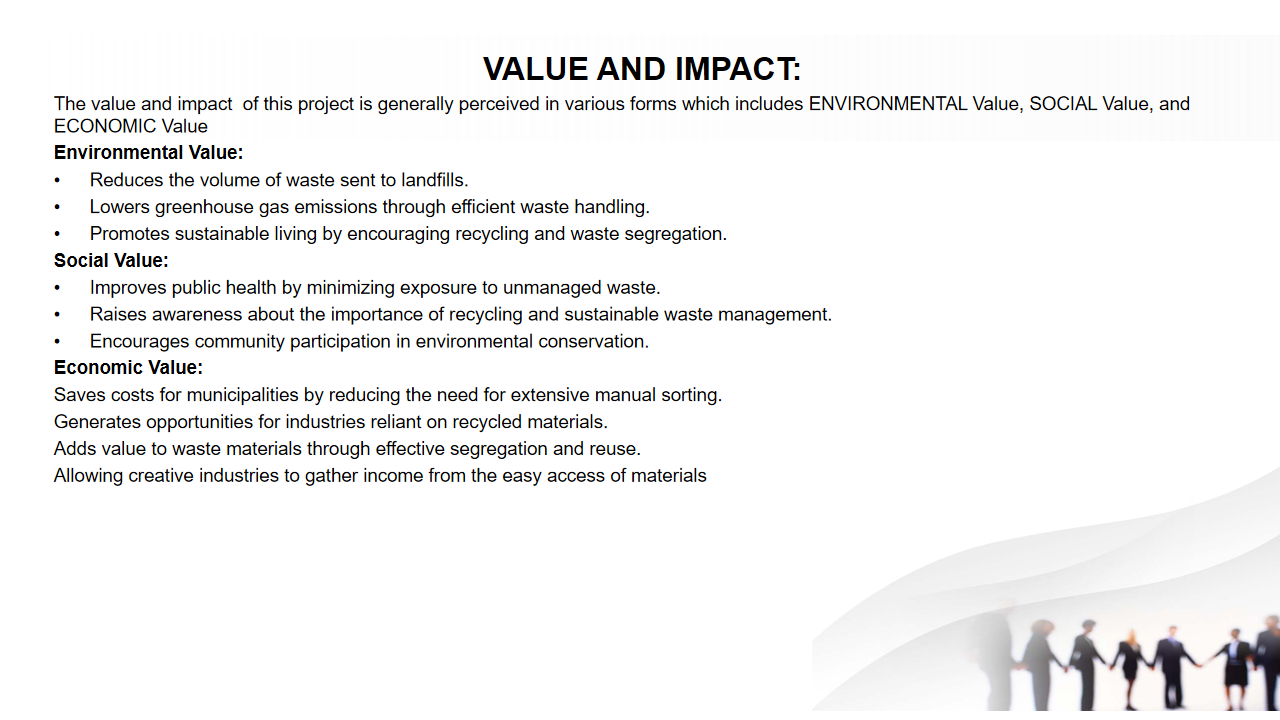
We are incredibly proud of several key achievements in this project. First, we successfully integrated a machine learning model into a real-world application, enabling the dustbin to detect and sort waste accurately. Second, we developed a token reward system that not only incentivizes users but also promotes environmental awareness. Third, the system's ability to notify waste collection services when the dustbin is full ensures efficient waste management. Finally, we created a user-friendly interface that makes it easy for citizens to interact with the system and track their contributions. These accomplishments represent a significant step forward in our mission to promote sustainability and responsible waste disposal.
What we learned
Throughout the development of EcoGuardian, we learned valuable lessons about technology, teamwork, and problem-solving. We gained hands-on experience with machine learning models, particularly in optimizing their performance for real-time applications. We also learned the importance of user feedback in shaping the design and functionality of the system. Collaboration was key to overcoming challenges, and we discovered the power of combining diverse skills to achieve a common goal. Additionally, we deepened our understanding of the environmental impact of waste and the role technology can play in addressing this issue. These insights will guide us as we continue to improve and expand the project.
What's next for EcoGuardian
The next steps for this project focus on turning the idea into reality and expanding its impact. The first priority is building a working prototype of the dustbin. This will include a camera to detect waste, a sorting mechanism for different compartments, a token reward system for users, and a notification feature for waste collectors. Once the prototype is ready, we’ll test it in a small area like a school, park, or community center. Feedback from users and collectors will help improve the system. Alongside, we’ll develop a mobile app where users can track their tokens and redeem them for rewards like discounts or others. To make this project successful, public awareness is key. We’ll run campaigns to educate people on how the system works and its benefits for the environment. Partnering with schools, NGOs, or local governments can help spread the message and encourage adoption. As the project grows, we’ll expand to more locations and tailor the dustbins for different needs, such as industrial or urban settings. Collaborations with recycling and composting facilities will ensure the waste is processed efficiently. We also plan to continuously improve the system by using advanced technology, for sustainability. Over time, the project will measure its impact on reducing waste and protecting ecosystems, which can inspire broader changes in waste management policies. This project combines technology, community engagement, and environmental conservation to create a cleaner and healthier future.
Built With
- coco-ssd
- java
- javascript
- mysql
- springboot
- thymeleaf

Log in or sign up for Devpost to join the conversation.