Inspiration - Nature often gives us warning signs before an ecosystem reaches a critical state, but these signals are difficult to understand when environmental and biodiversity data is spread across different sources.
We were inspired by one simple question: What if we could recognize ecosystem stress early and know what action to take before the damage becomes difficult to reverse? EcoGuardian was created to turn environmental information into something people can understand and act on.
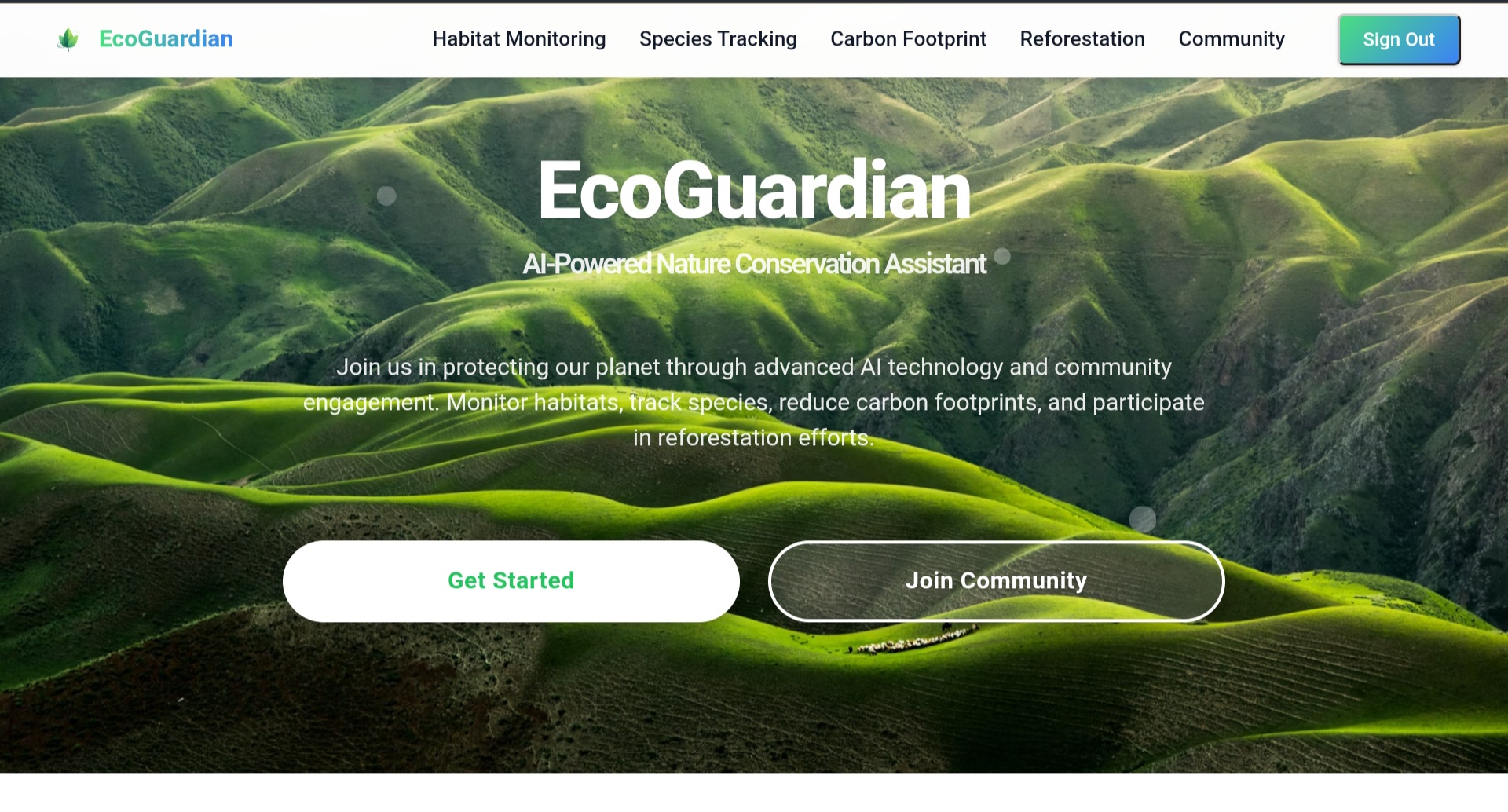
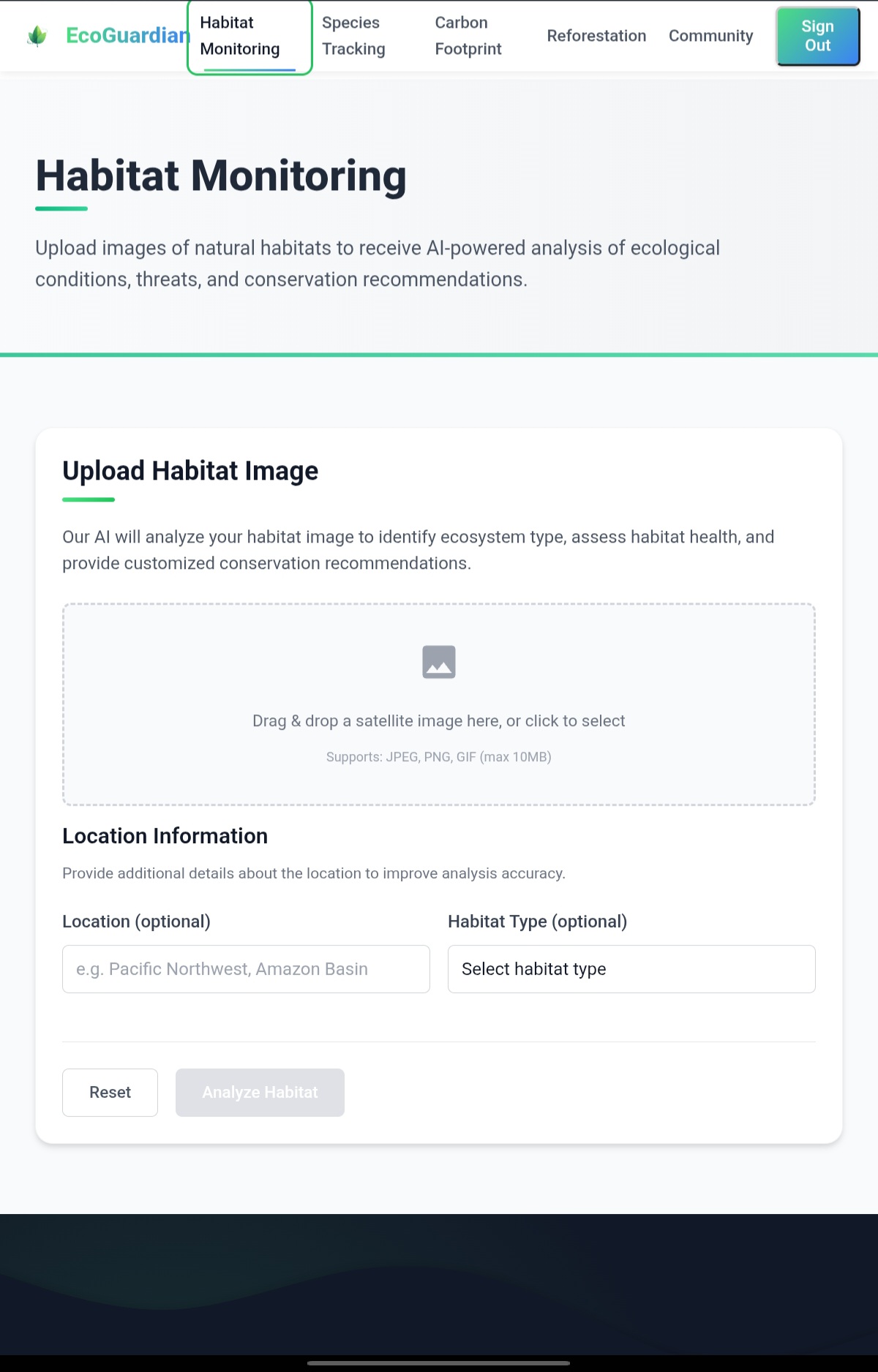
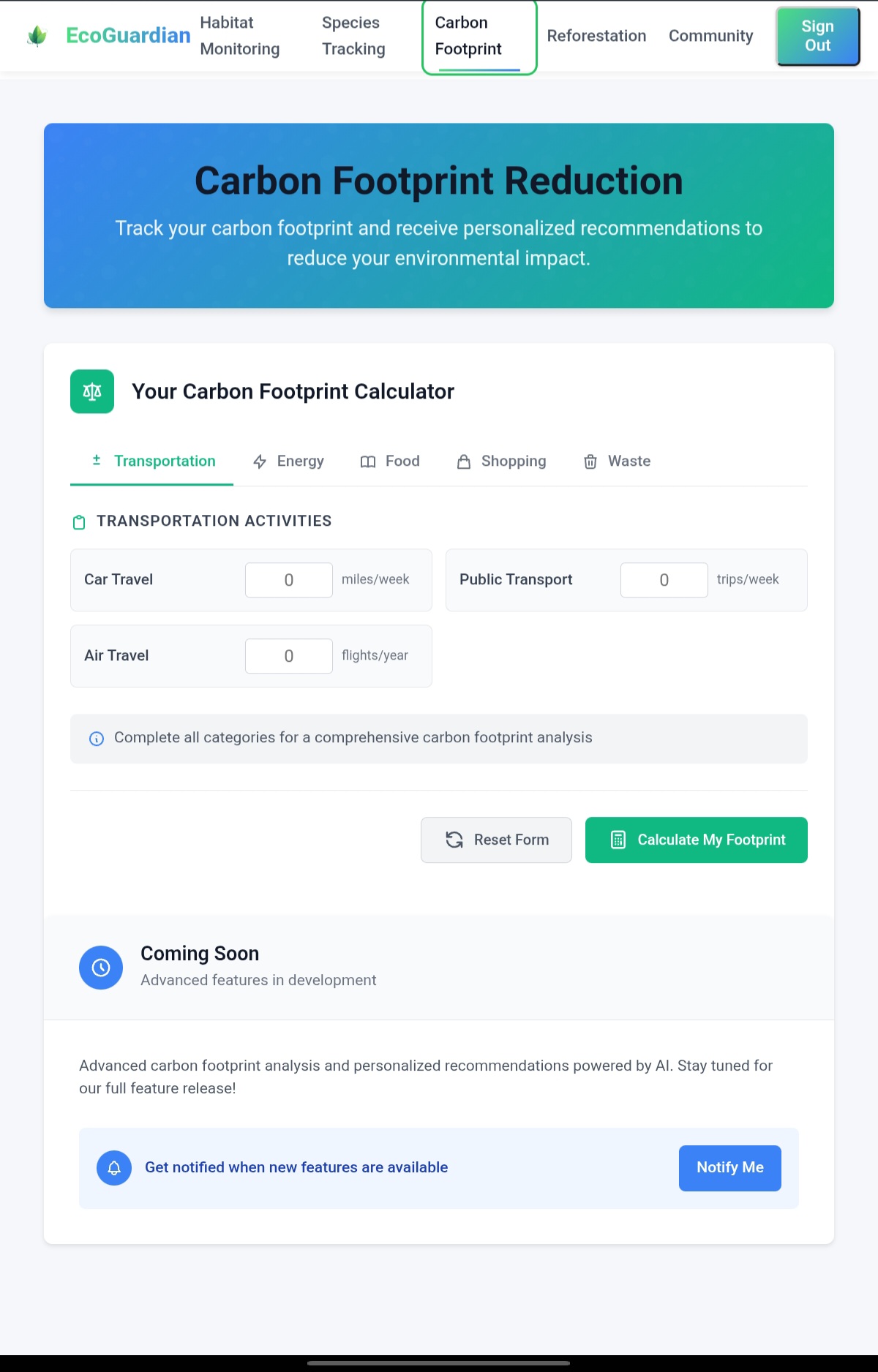
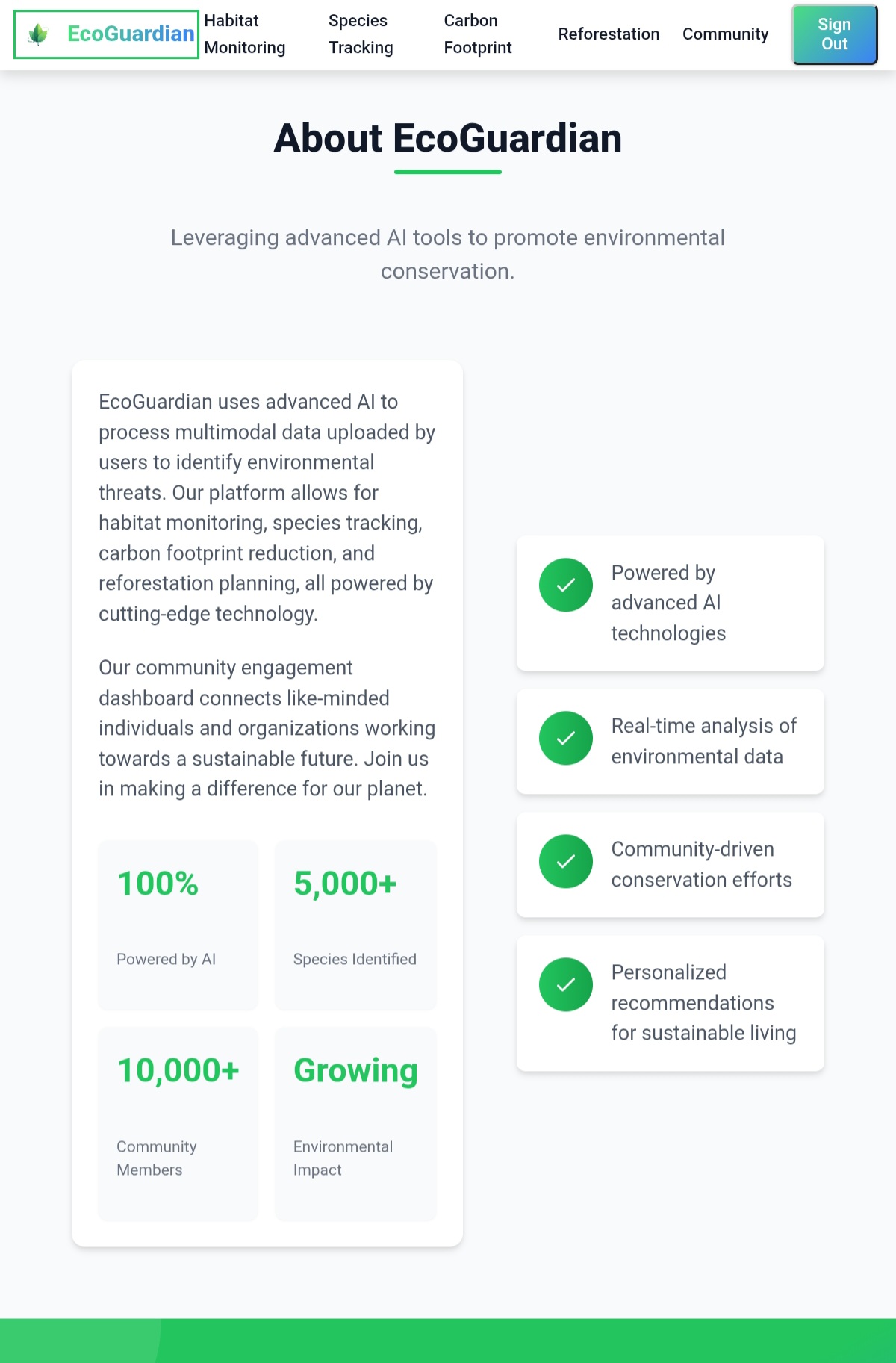
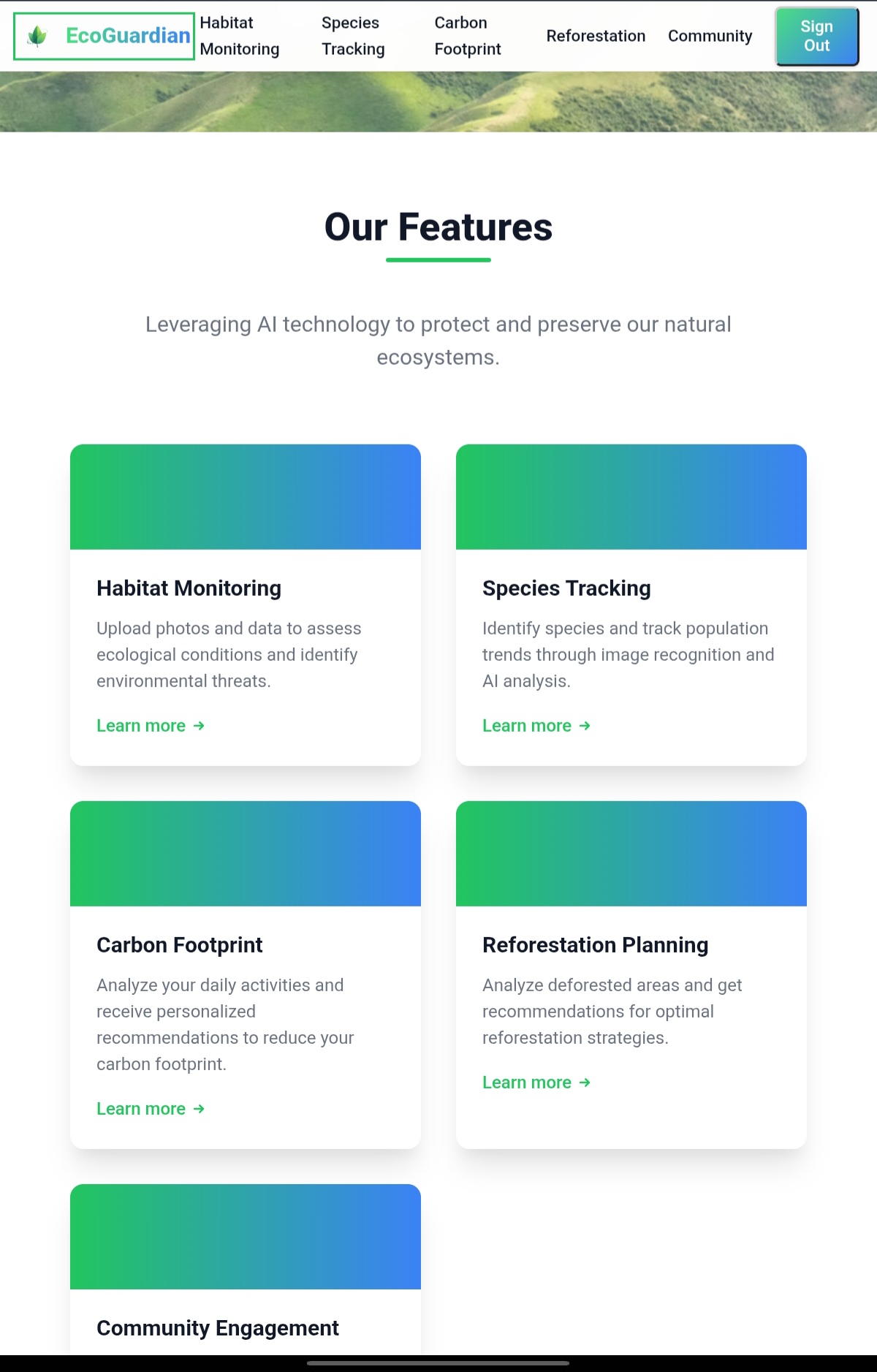
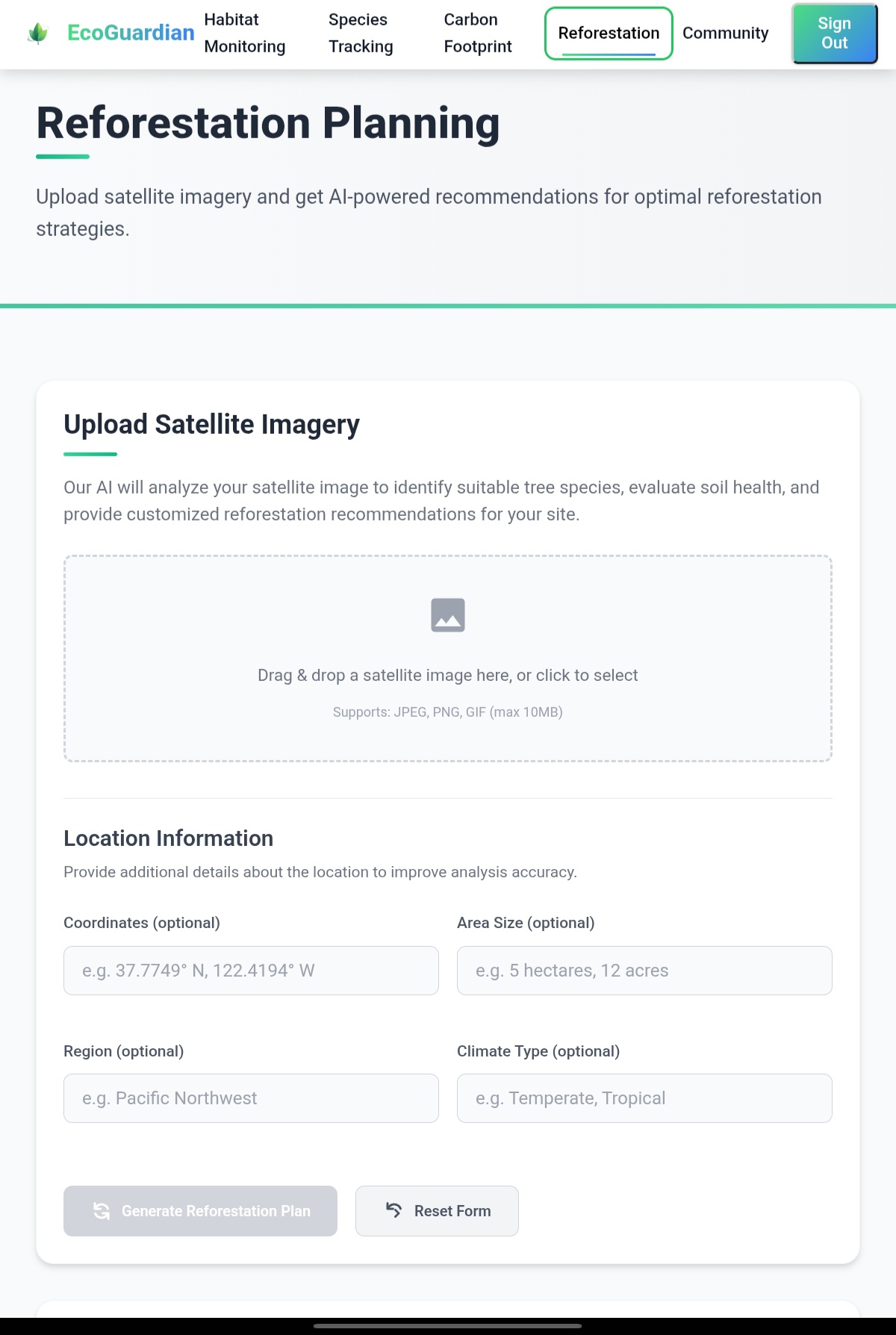
What it does - EcoGuardian is an AI-powered ecosystem early-warning and conservation intelligence platform.
It combines environmental and biodiversity data to identify ecosystem stress across factors such as climate conditions, water stress, habitat health, wildlife observations, and fire risk. The platform converts these signals into an understandable Ecosystem Risk Score, explains the major factors behind the risk, and uses AI to suggest practical conservation actions. Data → Understanding → Action → Conservation
How we built it - We built EcoGuardian as a web-based environmental intelligence platform with a data-driven risk engine and an AI interpretation layer.
The workflow is: Environmental + Biodiversity Data ↓ Data Processing ↓ Risk Calculation ↓ Ecosystem Risk Score ↓ AI Analysis ↓ Conservation Recommendations ↓ Human Action The risk engine uses a transparent and explainable scoring model. AI does not invent environmental measurements. Instead, it analyzes validated results, explains potential risk factors, and generates practical recommendations while acknowledging limitations.
Challenges we ran into - One of our biggest challenges was balancing the complexity of real-world environmental monitoring with the limited time available during the hackathon.
A complete ecosystem monitoring system could involve satellite imagery, climate models, IoT sensors, biodiversity databases, and large historical datasets. Instead of trying to build everything, we focused on creating a reliable end-to-end prototype. Another challenge was using AI responsibly. We wanted AI to be useful without allowing it to become an unreliable source of environmental facts, so we separated the data-driven risk engine from the AI interpretation layer.
Accomplishments that we're proud of - We are proud that EcoGuardian goes beyond being a traditional environmental dashboard.
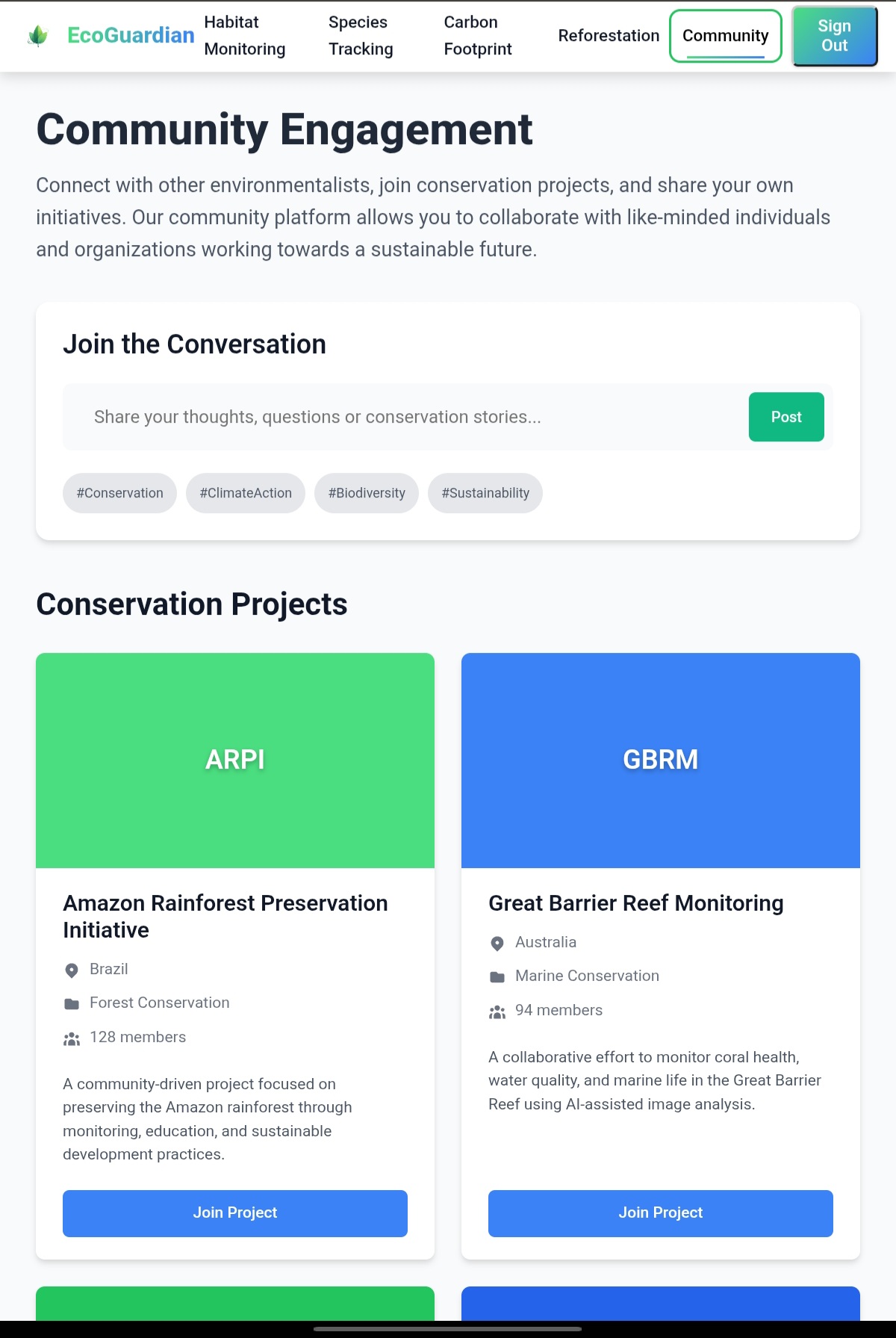
The platform connects: Environmental Signals → Risk Detection → Explanation → Recommended Action We are especially proud of the explainable risk system. Instead of showing users a mysterious score, EcoGuardian helps them understand which environmental factors are contributing to the risk and why an ecosystem may require attention. Most importantly, we built the project around a practical goal: helping people move from simply observing environmental problems toward taking informed conservation action.
What we learned - We learned that environmental technology is not only about collecting more data.
The real challenge is turning data into trustworthy, understandable, and actionable information. During this project, we learned about: Working with real-world environmental and biodiversity data Data validation and provenance Explainable risk calculations Responsible use of AI Environmental data visualization Designing technology around real-world impact Building a useful product under severe time constraints We also learned that AI works best when it complements a reliable data and logic layer rather than replacing it.
What's next for EcoGuardian - EcoGuardian is only the beginning.
Future versions could include: Satellite-based vegetation and habitat monitoring
Built With
- ai
- data
- environmental
- leaflet.js
- learning
- machine
- next.js
- postgresql
- react
- supabase
- typescript
- visualization


Log in or sign up for Devpost to join the conversation.