InInspiration
Climate monitoring and decentralized environmental networks rely heavily on continuous data feeds from IoT sensors. However, fragmented infrastructure leaves these data pipelines vulnerable to spoofing, tampering, and malicious data poisoning. EcoGuard was built to ensure that the environmental metrics driving climate models and decision-making remain secure, accurate, and completely trustworthy.
What it does
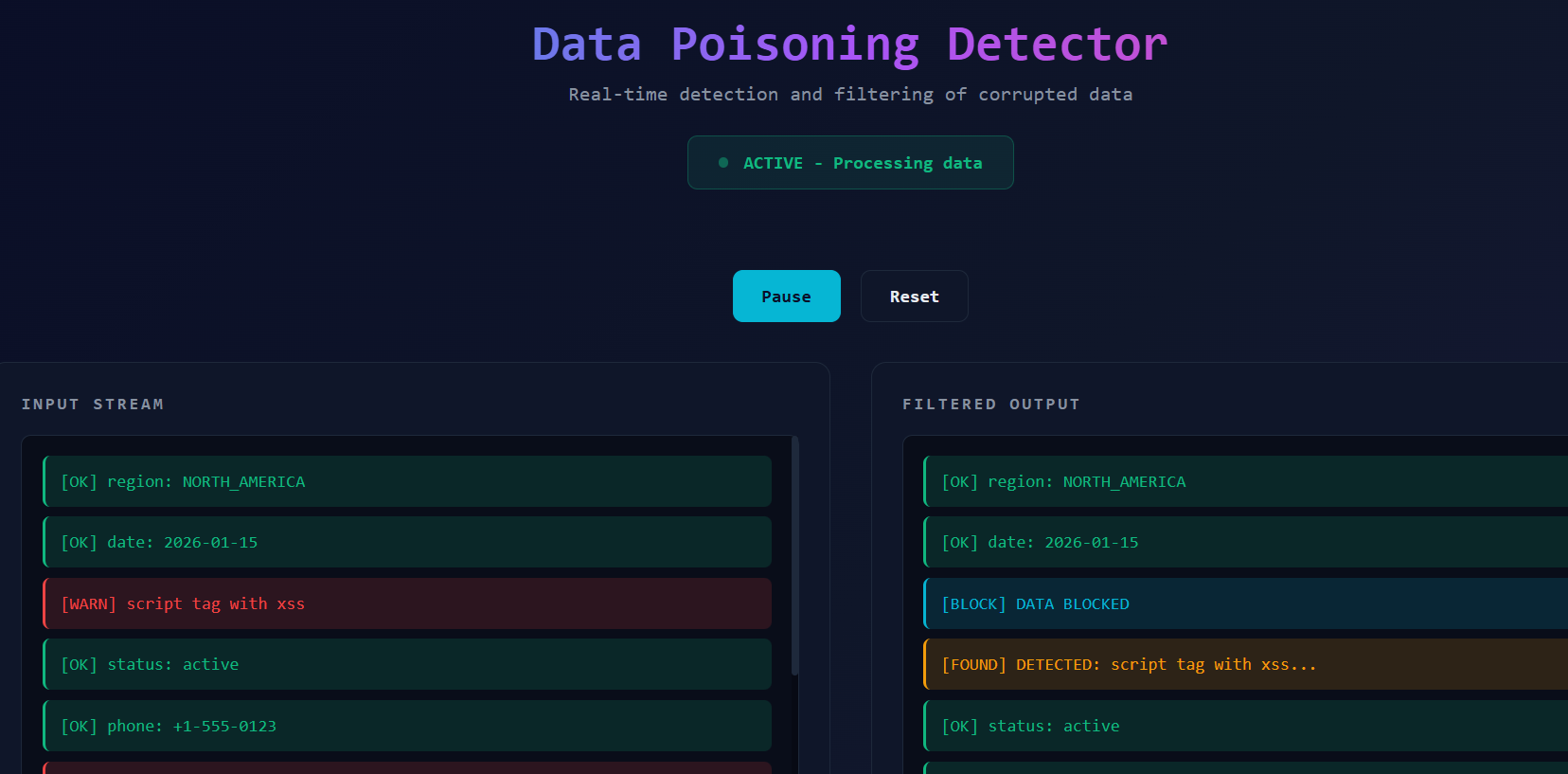
EcoGuard provides real-time detection and filtering of corrupted sensor inputs. It processes incoming environmental telemetry on the fly, instantly identifies anomalies or poisoned data points, and filters them out before they can compromise downstream analytics or climate reporting tools. How we built it EcoGuard is architected as a real-time stream-processing and validation pipeline designed to intercept and sanitize IoT environmental data feeds. The frontend interface—deployed live via Netlify—provides an active monitoring dashboard that visualizes telemetry flow and anomaly alerts. Under the hood, the detection engine evaluates incoming data points against historical baselines and statistical thresholds to flag injected anomalies or corrupted sensor inputs on the fly. We prioritized a clean, spec-driven development pattern to ensure the codebase remains modular, lightweight, and easy to audit.
Challenges we ran into
One of the primary challenges was balancing real-time processing speed with detection accuracy, especially when handling erratic environmental telemetry that can naturally fluctuate due to weather events. Distinguishing legitimate extreme climate spikes from malicious data poisoning required fine-tuning our anomaly detection thresholds to minimize false positives without letting corrupted data slip through the pipeline.
Accomplishments that we're proud of
We are particularly proud of successfully turning a core machine learning security concept—data poisoning detection—into a production-ready application tailored specifically for climate infrastructure. Achieving a seamless, responsive UI that clearly indicates active filtering states while maintaining high-throughput data processing was a major technical milestone.
What we learned
Building EcoGuard reinforced the critical importance of Zero-Trust data architectures in environmental monitoring. Even the most advanced climate models and decentralized verification networks are only as reliable as the raw data entering the pipeline; securing the perimeter against ingestion-level tampering is just as vital as securing the storage layer.
What's next for EcoGuard
Looking ahead, we plan to integrate automated smart-contract triggers that log data integrity incidents onto a distributed ledger whenever poisoning attempts reach a defined risk threshold. We also aim to expand the sensor profile library to support multi-variable climate feeds, making it an all-in-one security layer for global environmental monitoring networks.
Built With
- ai
- iotsecurity
- javascript
- netlify

Log in or sign up for Devpost to join the conversation.