-
-
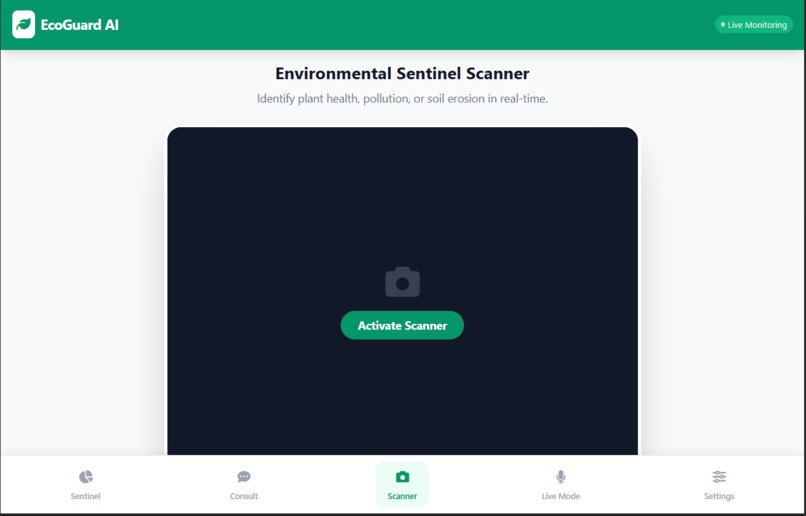
Live Scanner
-
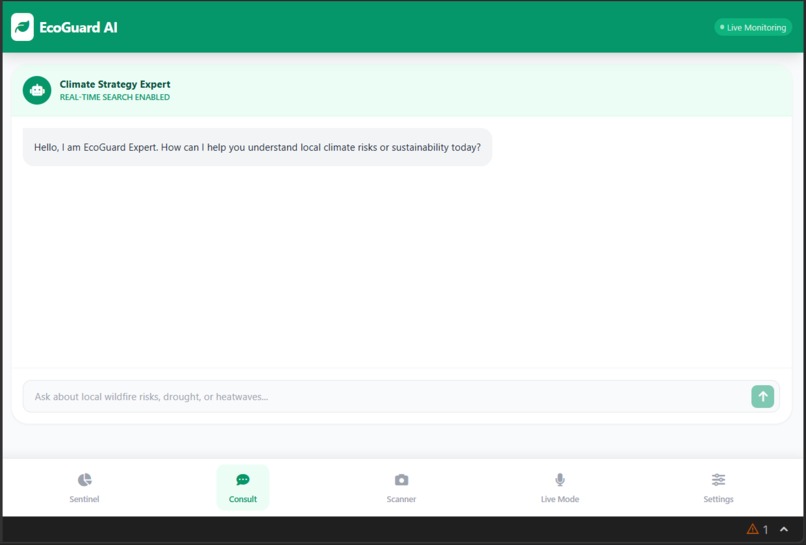
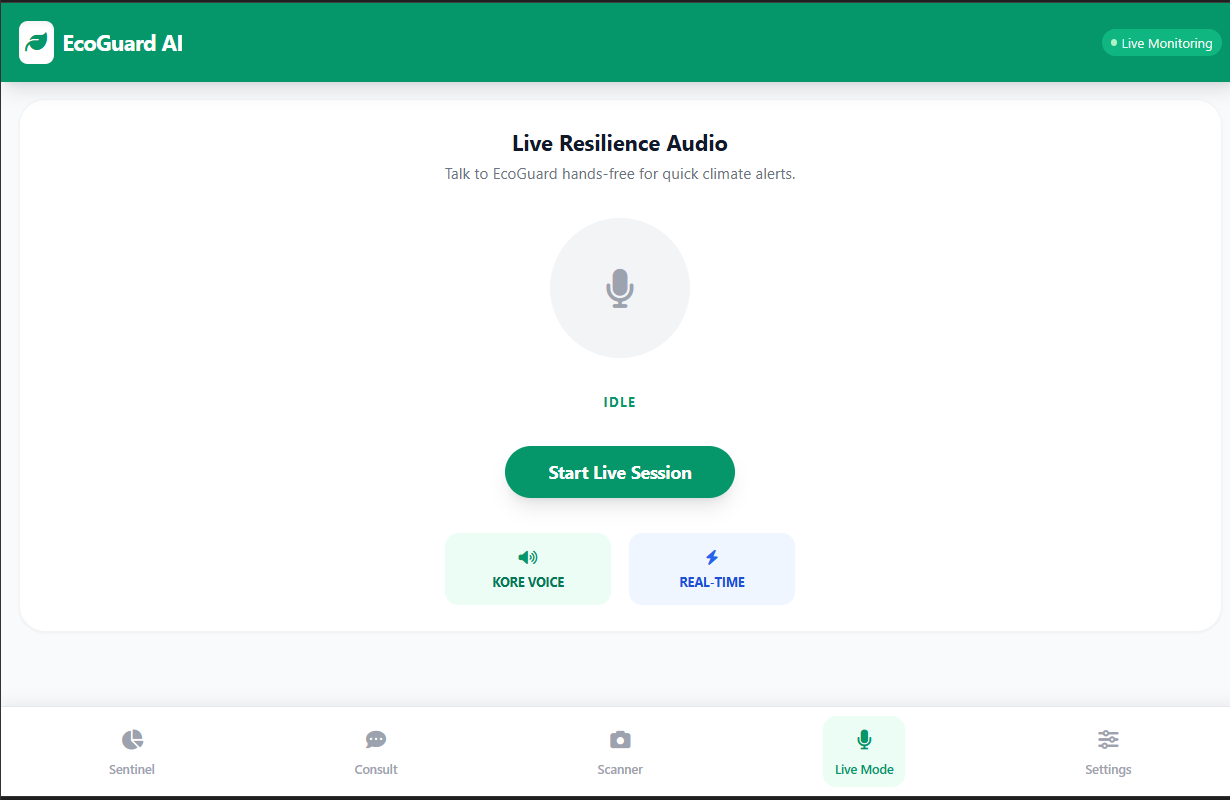
Ai chatbot
-
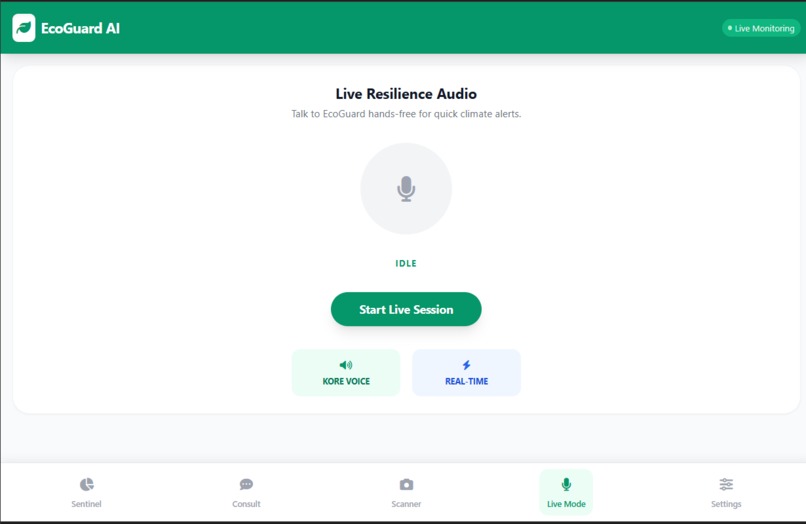
Realo Time Talk
-
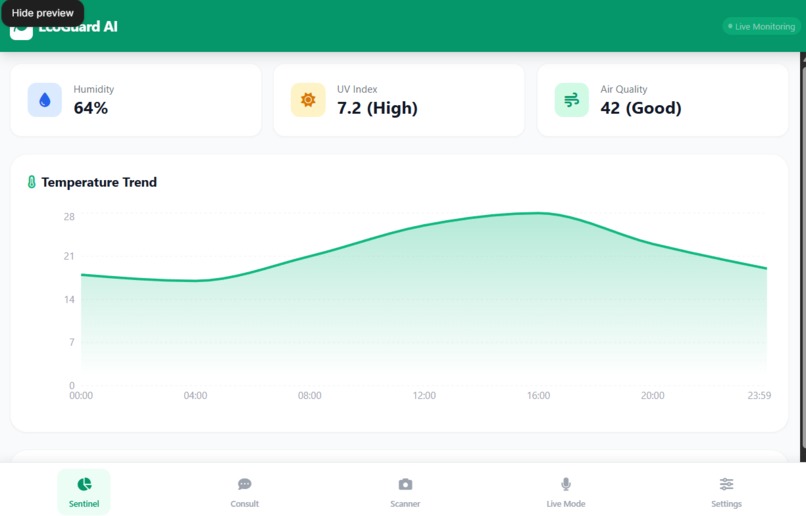
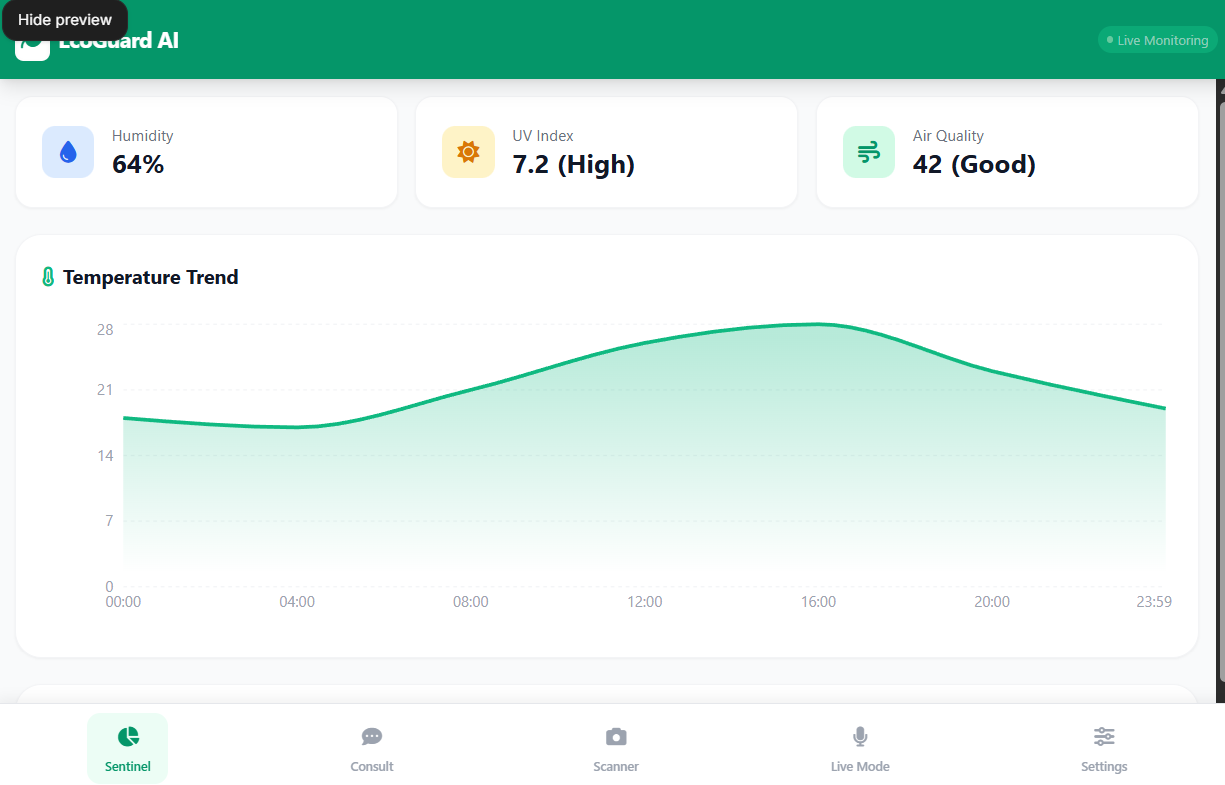
Graph and Analytics
-
About
-
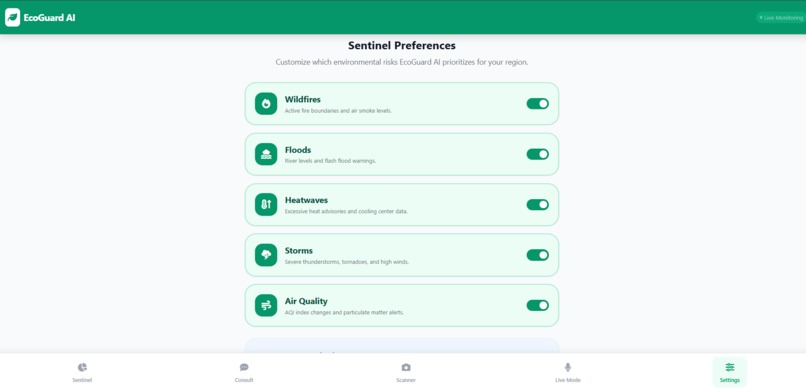
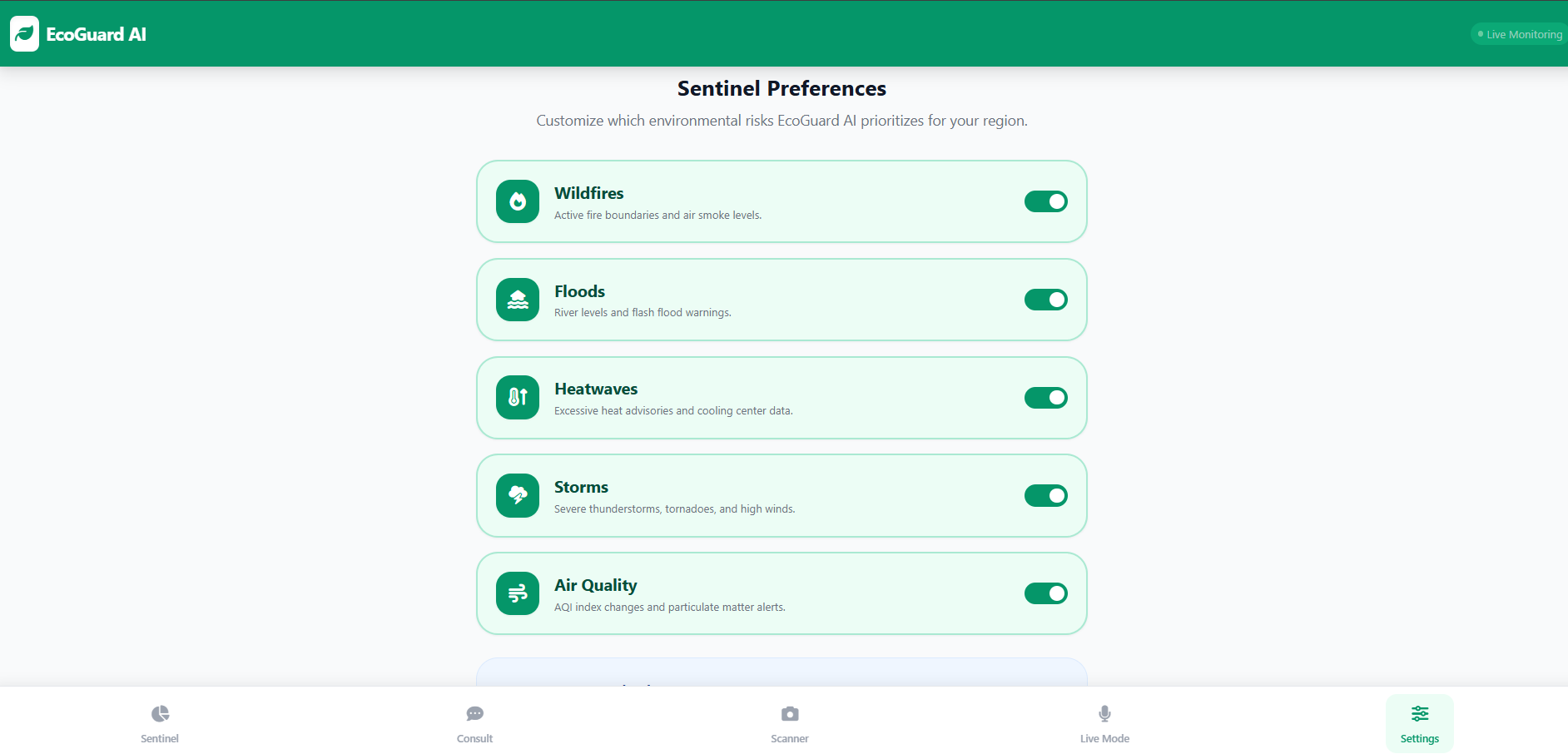
Settings
Inspiration
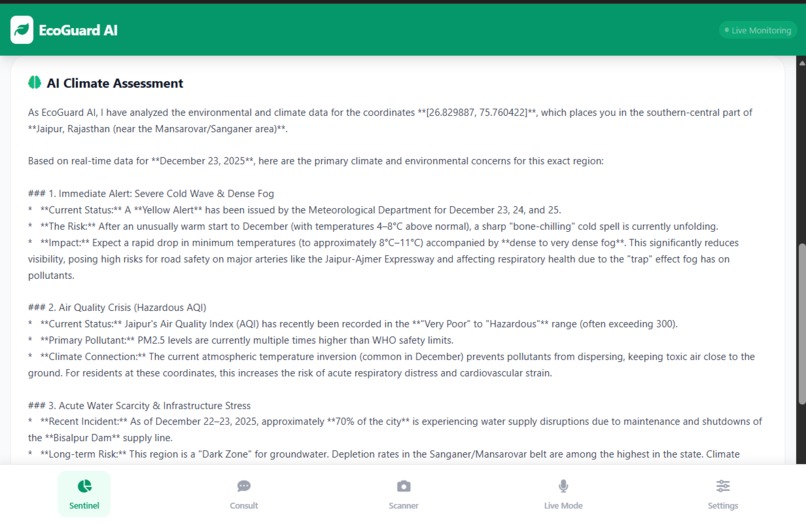
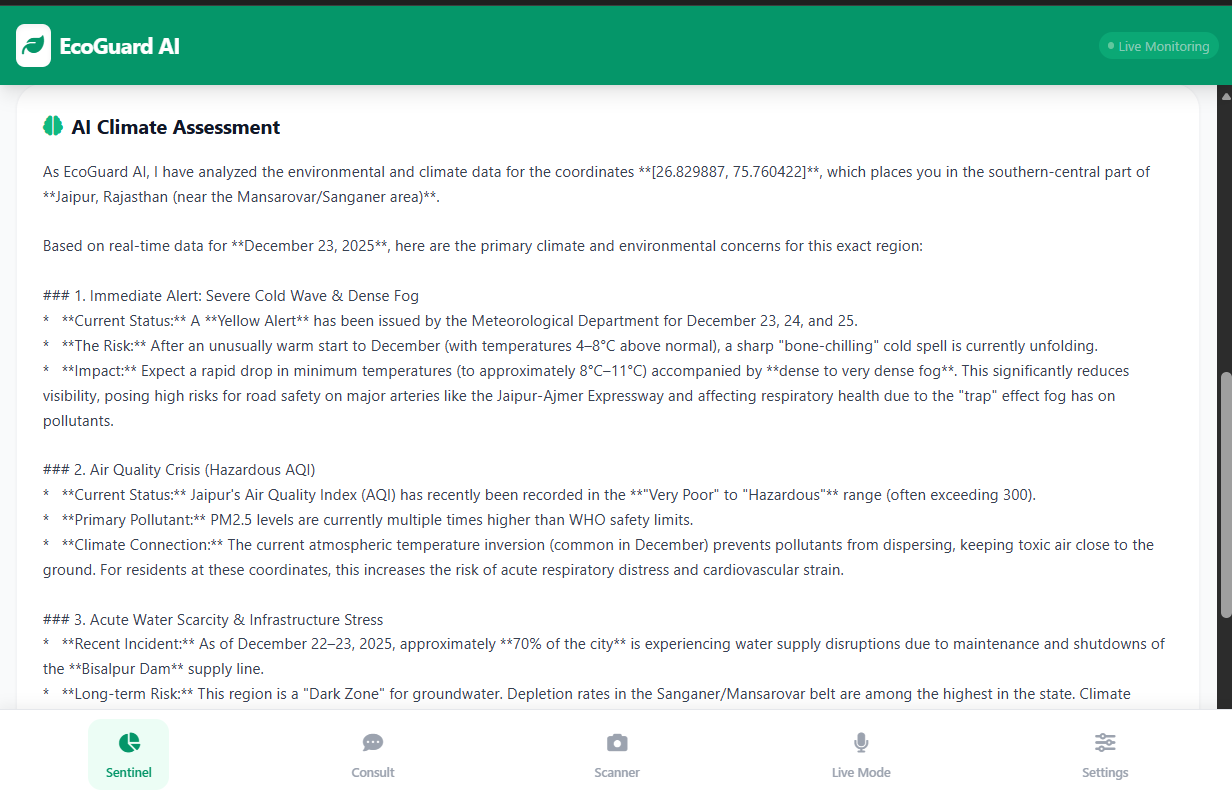
The 2025 winter in North India has brought severe climate challenges: dense fog reducing visibility to near-zero, bone-chilling cold waves, hazardous air quality from trapped pollutants, and water scarcity alerts in regions like Rajasthan. On December 24, 2025, places like Jaipur face yellow alerts for cold waves, dense fog impacting traffic and health, and AQI frequently in the poor-to-hazardous range due to temperature inversions. These events, amplified by climate change, leave communities vulnerable without real-time, accessible tools. EcoGuard was inspired by this urgency — turning Gemini 3's multimodal, agentic, and real-time search powers into a personal climate sentinel that empowers everyday users to monitor, understand, and respond to local risks.
What it does
EcoGuard is a comprehensive, Gemini 3-powered AI climate resilience app that acts as your personal environmental sentinel. Key features include:
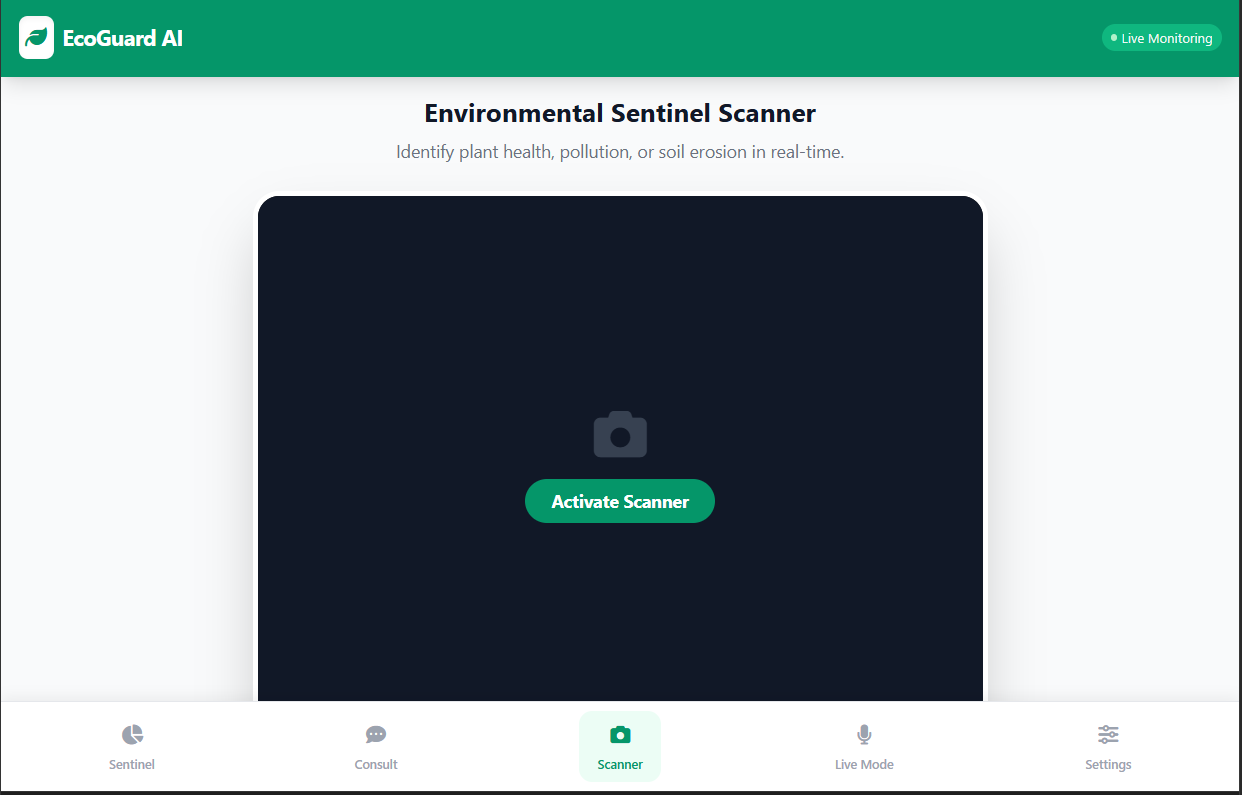
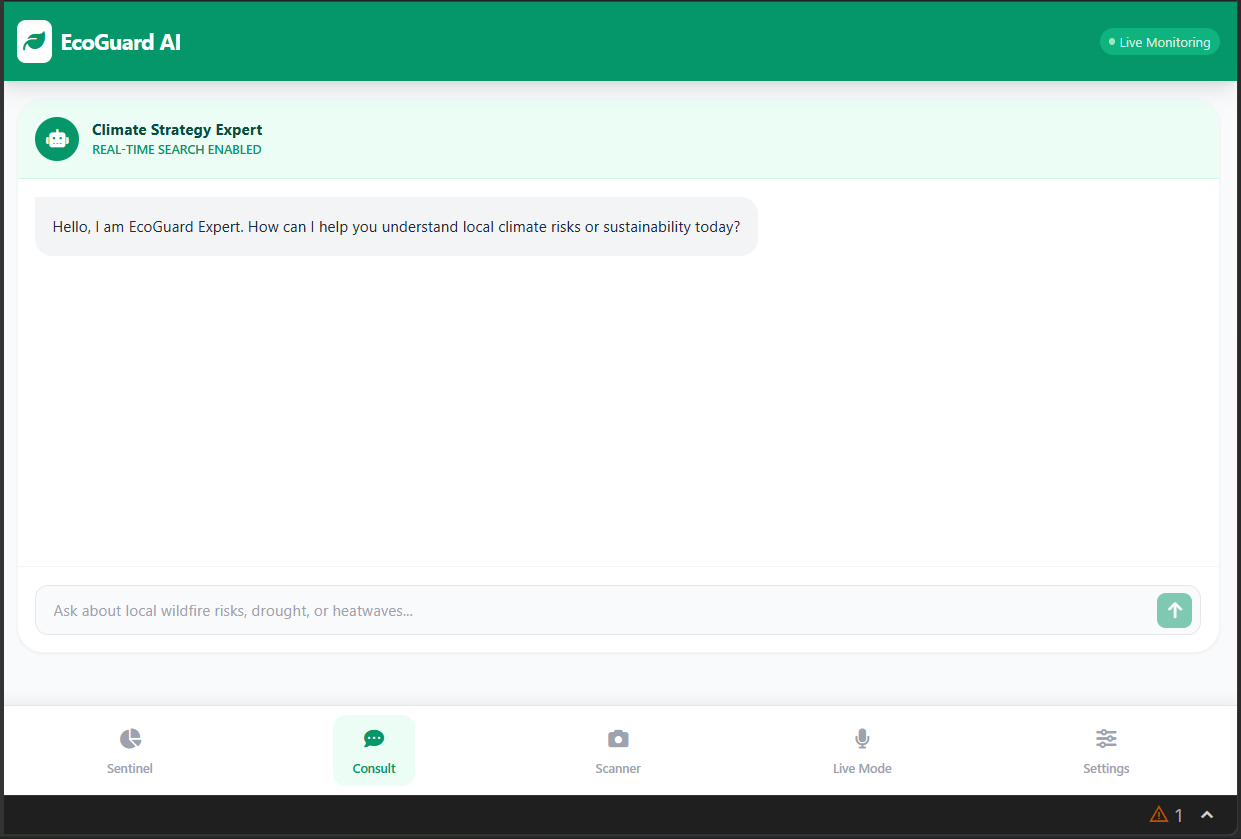
Consult Mode — Chat with the Climate Strategy Expert (real-time search enabled) for instant assessments of local risks, like cold waves, fog, AQI hazards, or water scarcity. Scanner — Activate camera to analyze photos in real-time for pollution, plant health, soil erosion, or other visible issues. Live Monitoring Dashboard — Displays current temperature trends, humidity, UV index, and air quality metrics with beautiful graphs. Live Mode — Hands-free voice interaction for quick climate alerts and resilience advice. Sentinel Overview — Aggregates all data into proactive warnings and mitigation strategies.
It delivers grounded, location-specific insights (e.g., your Jaipur assessment on cold wave, dense fog, hazardous AQI, and water disruptions). Modern eco-dashboard vibes like this make monitoring intuitive and engaging:
How we built it
We built EcoGuard using Gemini 3 as the core intelligence, leveraging its multimodal reasoning (for scanner/image analysis), high thinking level (for deep assessments), agentic tool use (real-time Google Search grounding), and low-latency capabilities (for live voice and instant responses).
Frontend/UI — Modern green-themed interface with tabs (Sentinel, Consult, Scanner, Live Mode, Settings), graphs, and interactive elements (likely using Flutter, React Native, or similar for cross-platform). Backend Integration — Gemini 3 API for all reasoning, chat, image analysis, and voice processing. Real-time Features — Grounding with search for weather/AQI data; coordinates-based hyper-local alerts. Prototyping — Started in Colab, evolved into full app deployment (possibly via Google AI Studio + custom hosting).
The entire system runs serverlessly where possible, focusing purely on Gemini 3's strengths.
Challenges we ran into
ntegrating real-time data accurately — Balancing search grounding to avoid outdated or conflicting sources while keeping responses fast. Multimodal precision — Ensuring scanner reliably detects subtle issues like soil erosion or pollution patterns in varying lighting. Voice/live mode latency — Tuning for hands-free reliability without sacrificing reasoning depth. UI/UX polish — Creating an intuitive, accessible design for non-technical users in crisis situations.
Accomplishments that we're proud of
Transformed a Colab prototype into a polished, multi-modal app with live dashboard, voice, and camera — truly "next-generation" beyond basic chat. Delivered hyper-local, actionable insights during real 2025 events (e.g., Rajasthan's cold wave + fog + pollution trap). Showcased Gemini 3's full power: multimodal + agentic + real-time search in one seamless experience. Built something genuinely impactful for vulnerable regions facing escalating climate risks.
What we learned
Gemini 3's agentic capabilities shine brightest in real-world, multi-step tasks like combining search, coordinates, and multimodal analysis. Real-time grounding is transformative for dynamic fields like weather/climate — but requires careful prompt engineering. User-centric design (voice, scanner, dashboards) makes powerful AI accessible to everyone, especially in low-resource areas. Climate AI must be proactive, not reactive — alerts and trends prevent harm.
What's next for EcoGuard: AI-Powered Local Climate Sentinel
Expand to community features: Aggregate anonymized user data for regional heatmaps and early warnings. Add predictive modeling: Use Gemini 3's reasoning for short-term forecasts and personalized resilience plans. IoT integration: Connect to local sensors/drones for automated monitoring. Global scaling: Support more languages/regions and partner with NGOs for deployment in high-risk areas. AI Futures Fund collaboration: Turn this into a full platform for planetary climate resilience.

Log in or sign up for Devpost to join the conversation.