-
-
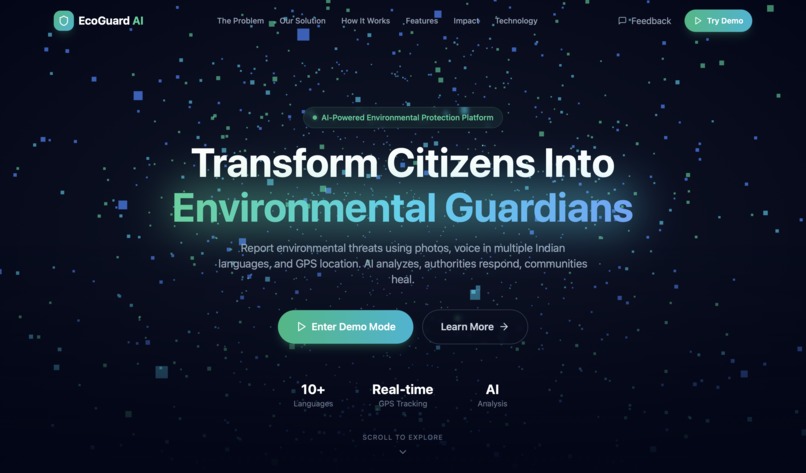
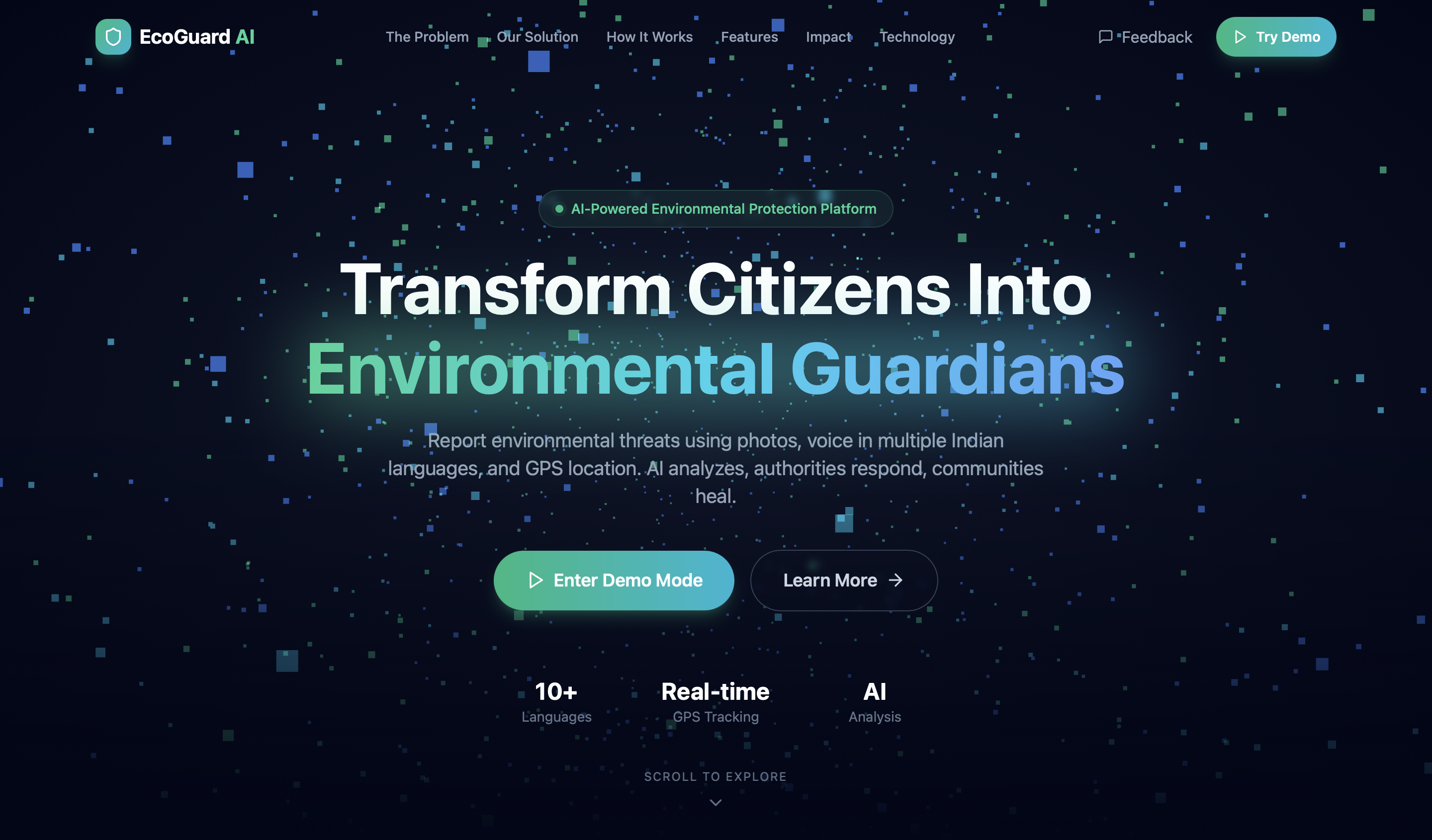
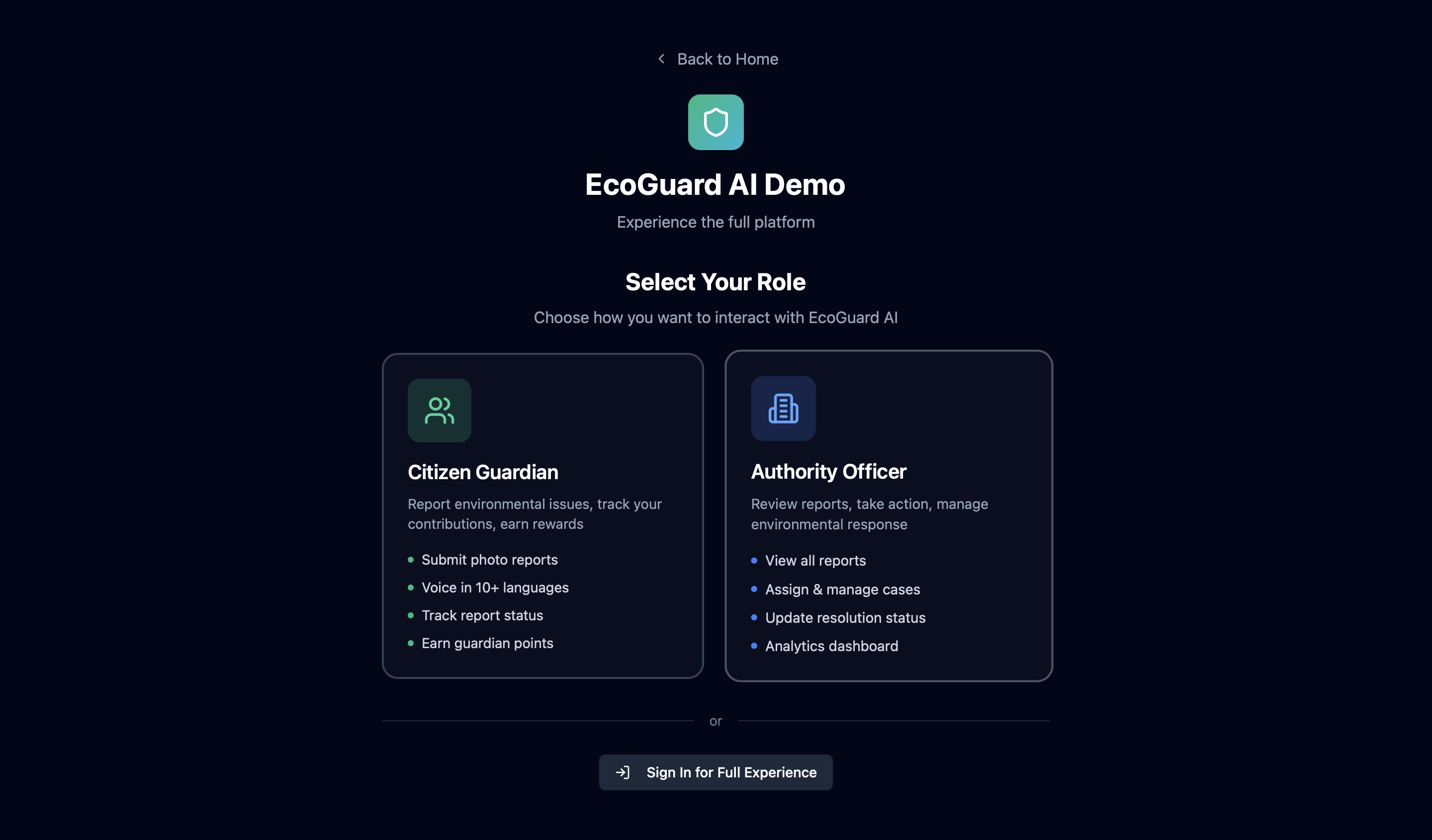
Landing Page
-
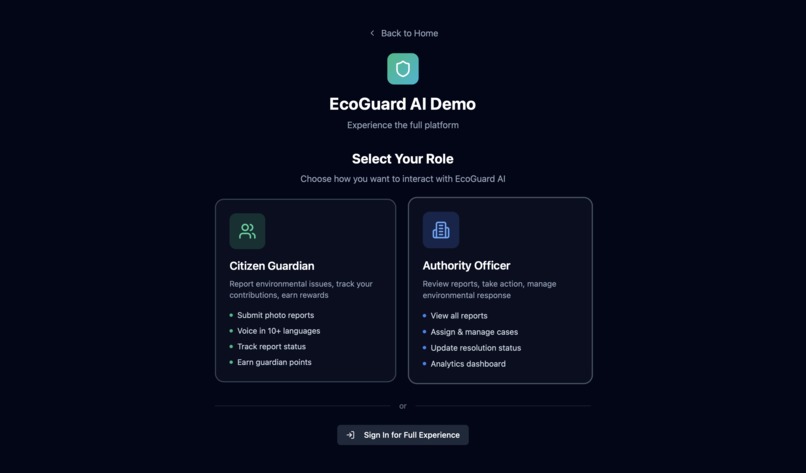
role based dashboard
-
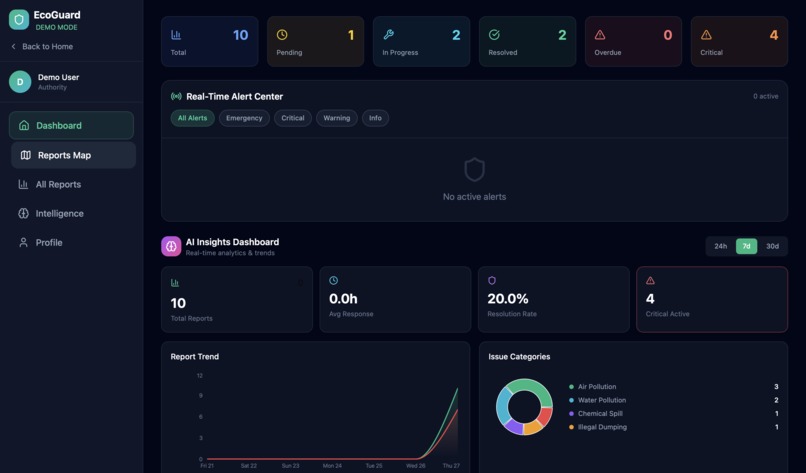
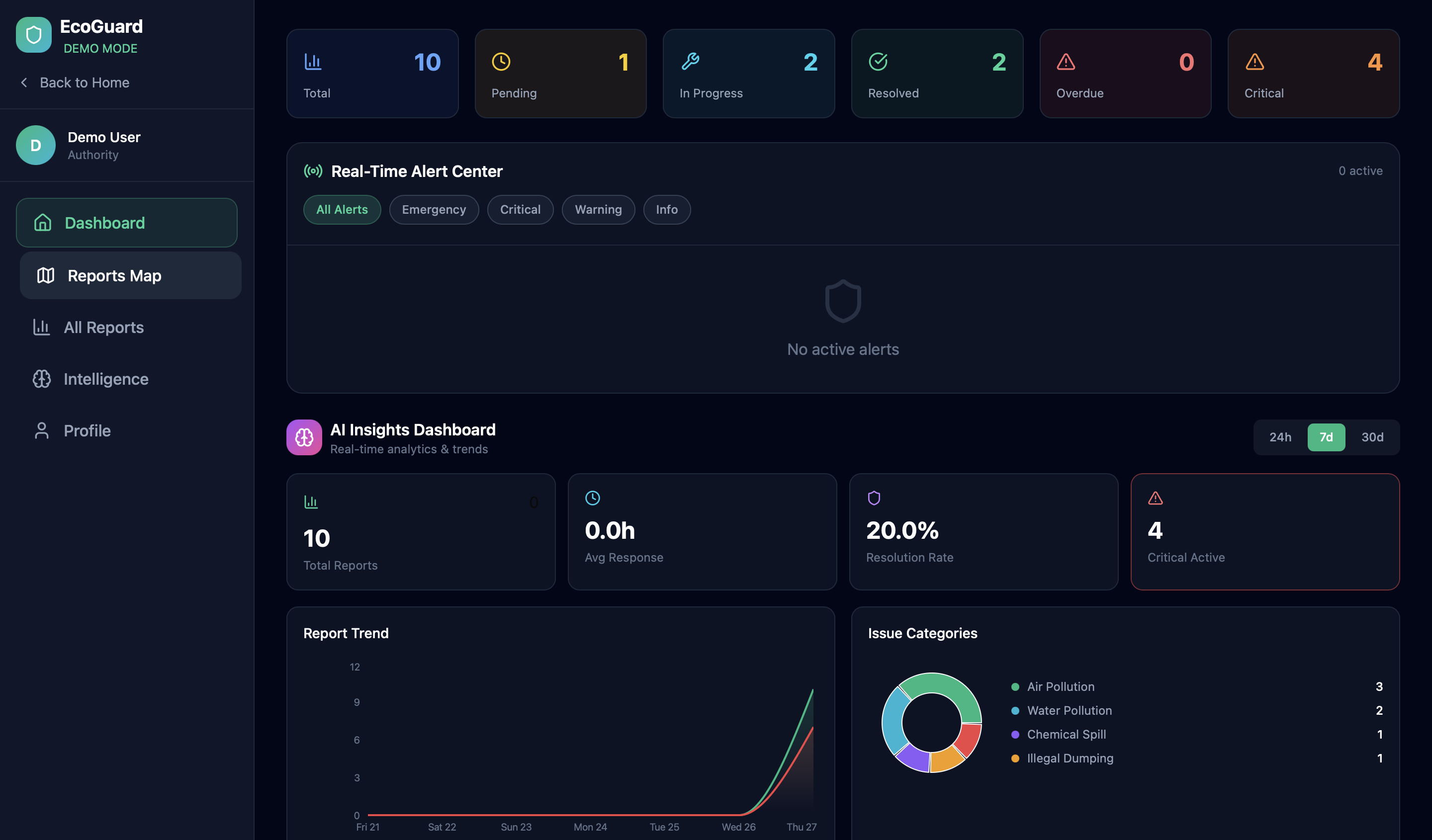
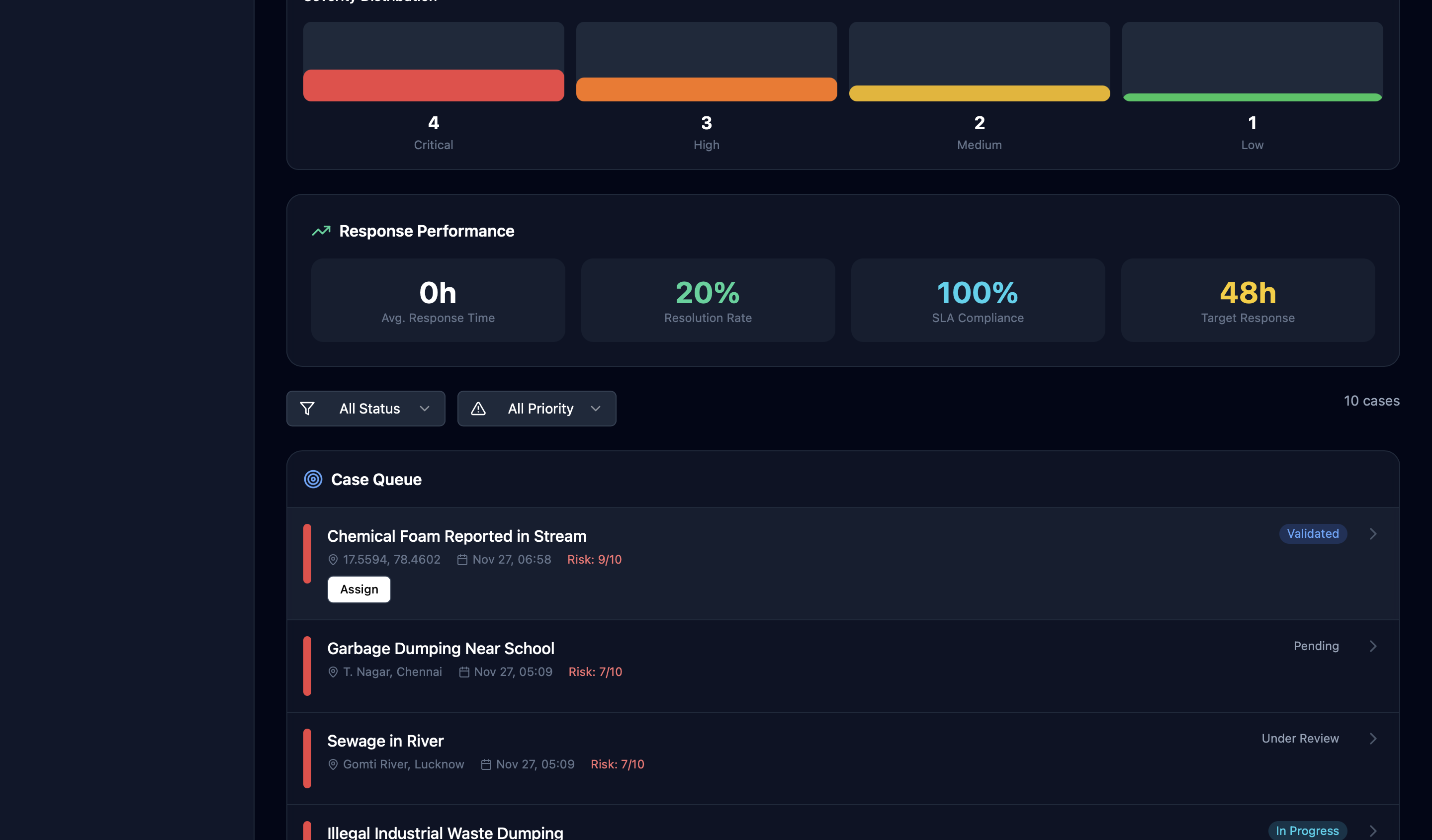
Authority Dashboard
-
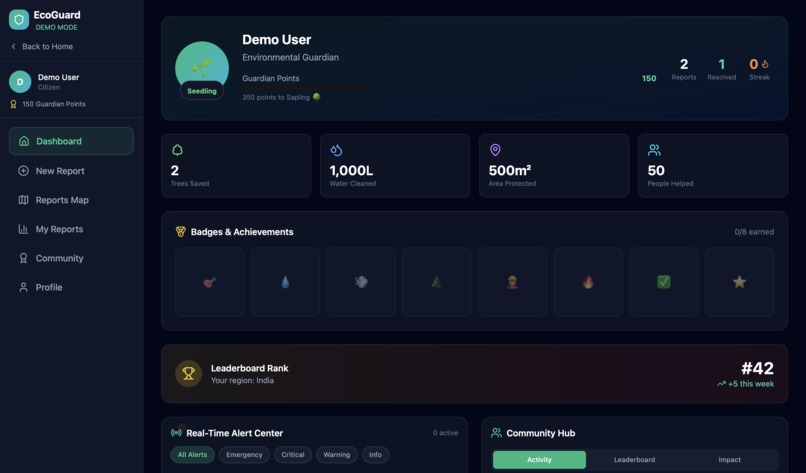
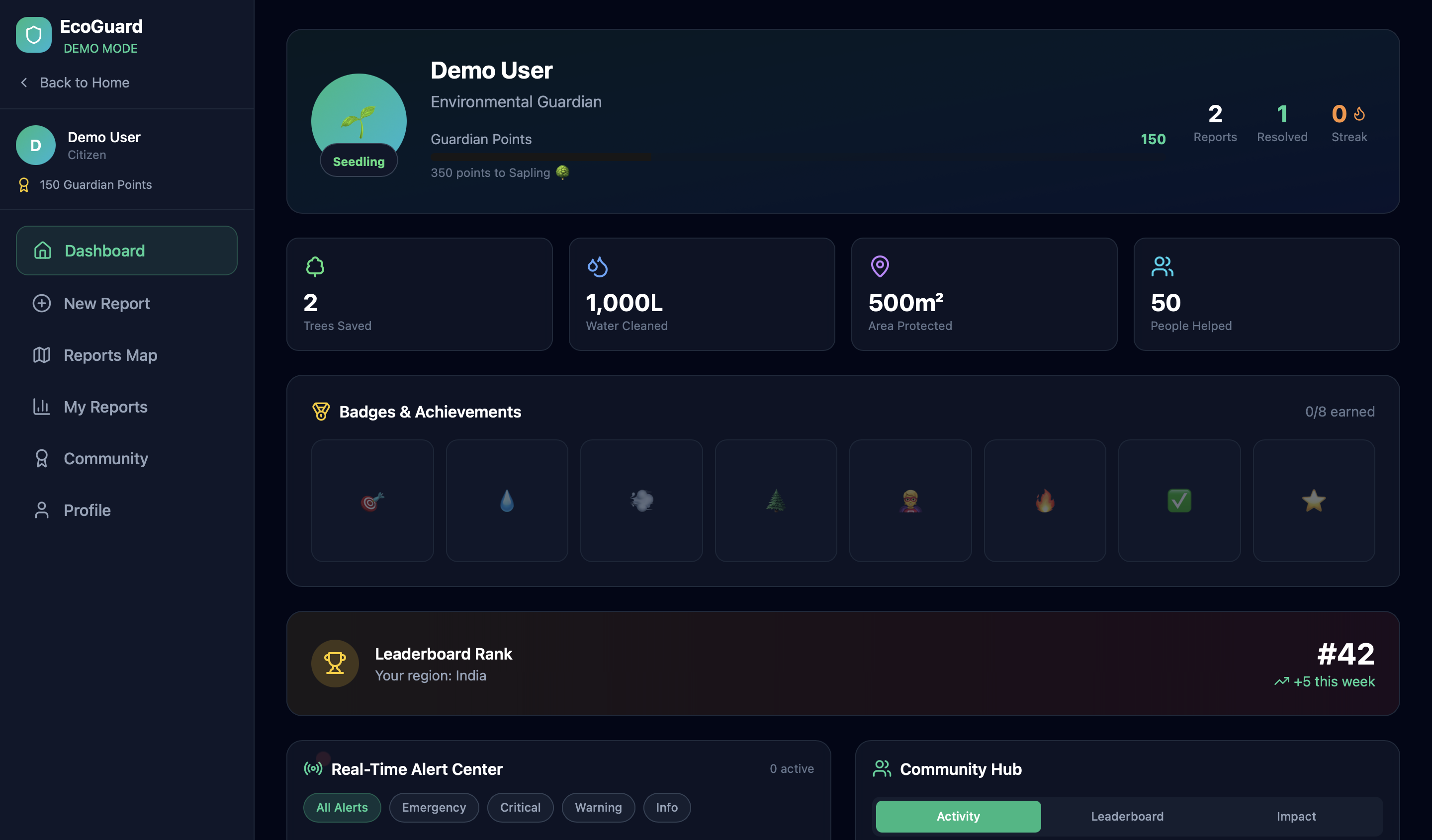
guardian Dashboard(citizens)
-
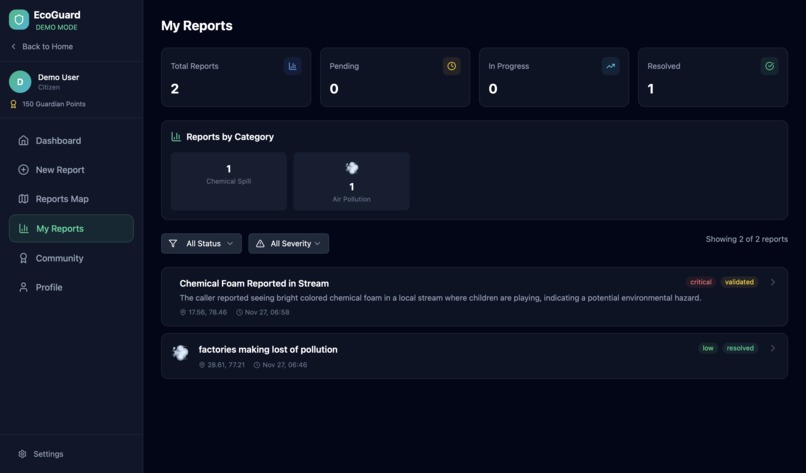
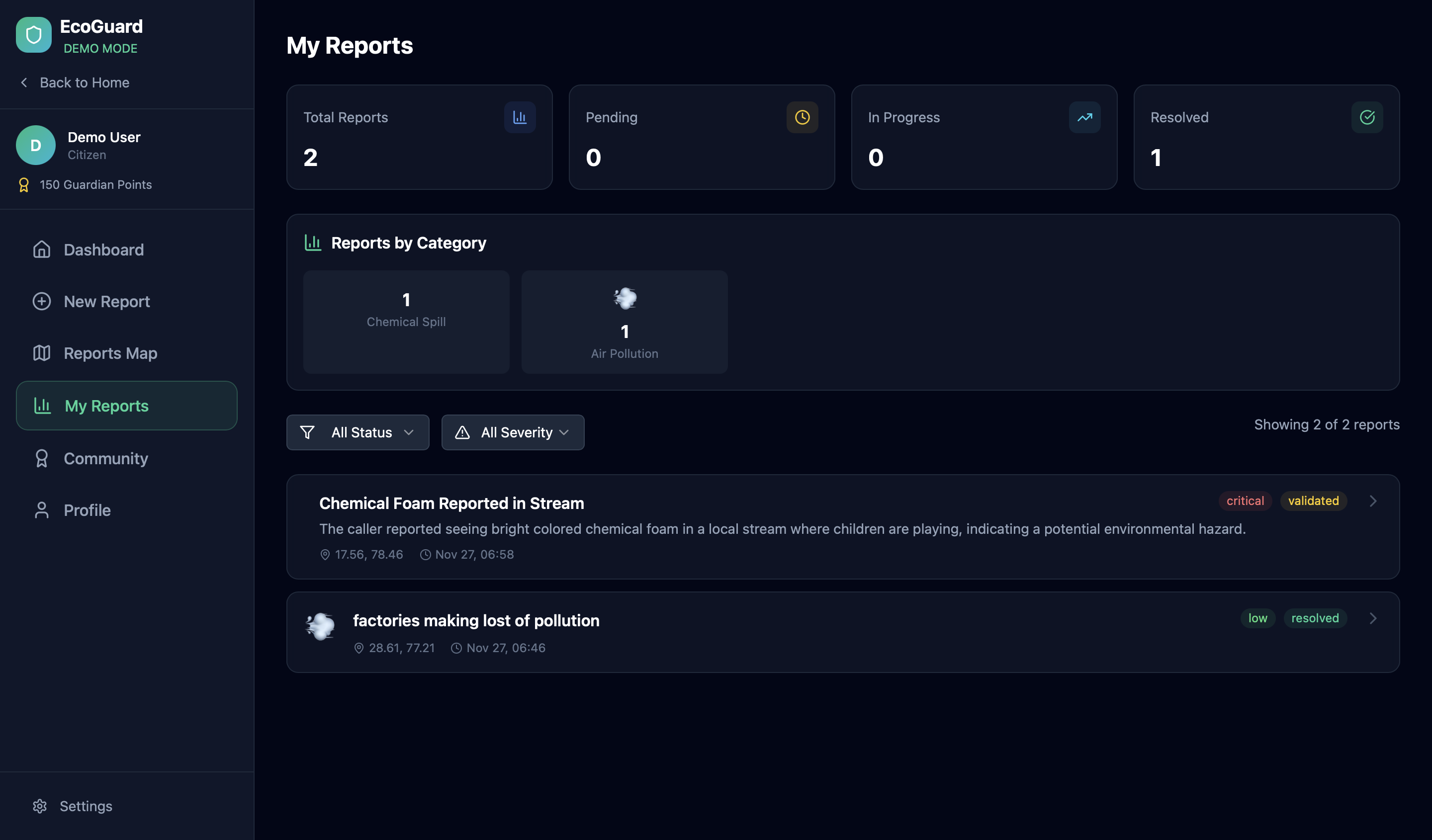
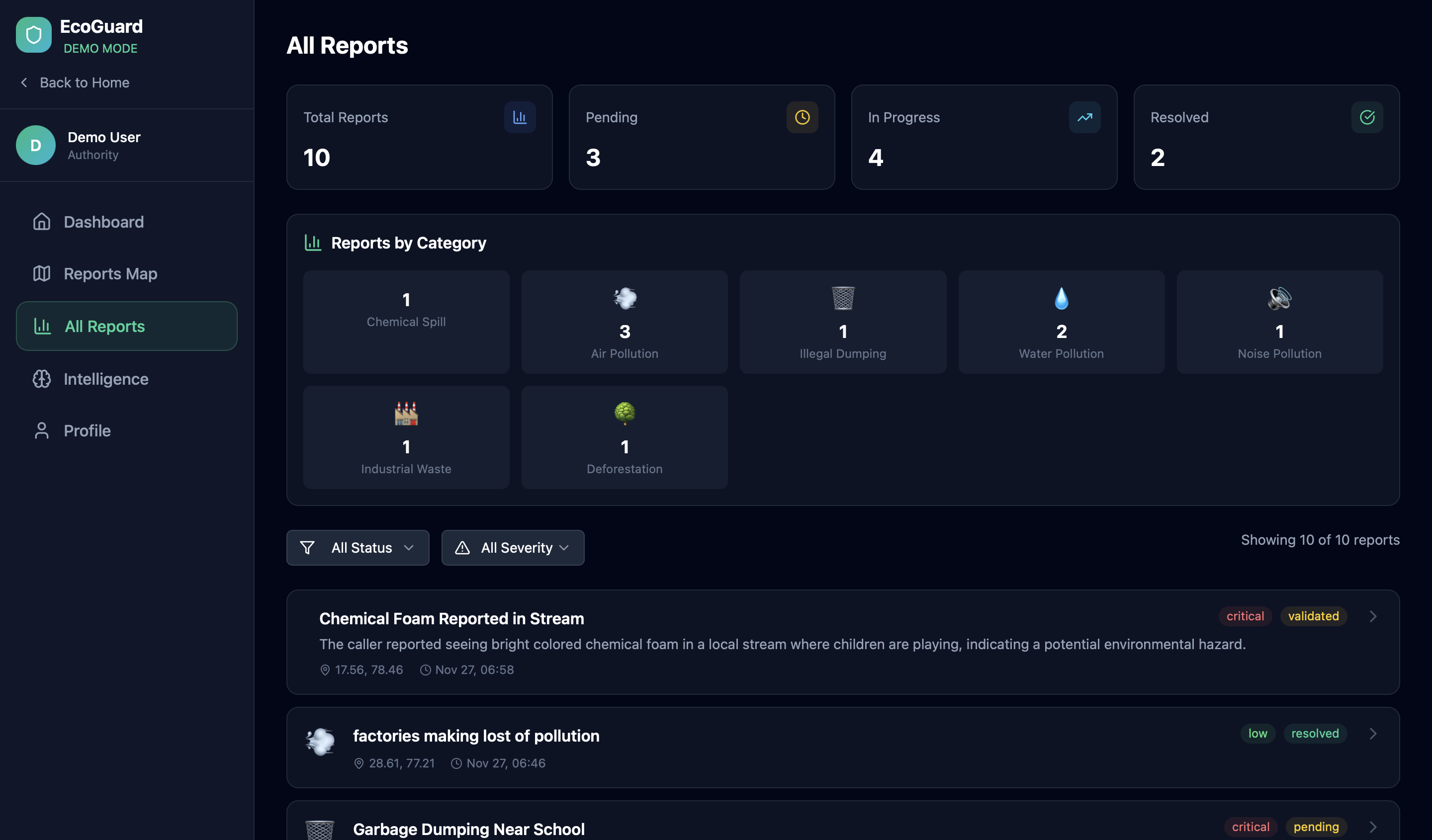
guardians reports
-
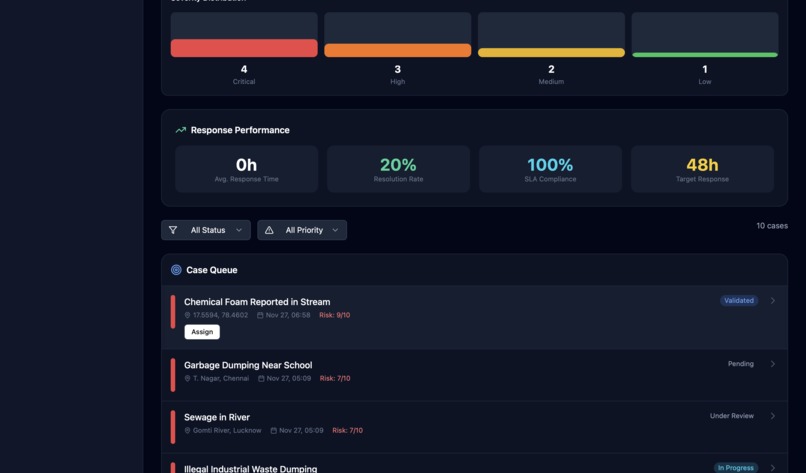
Authority views reports
-
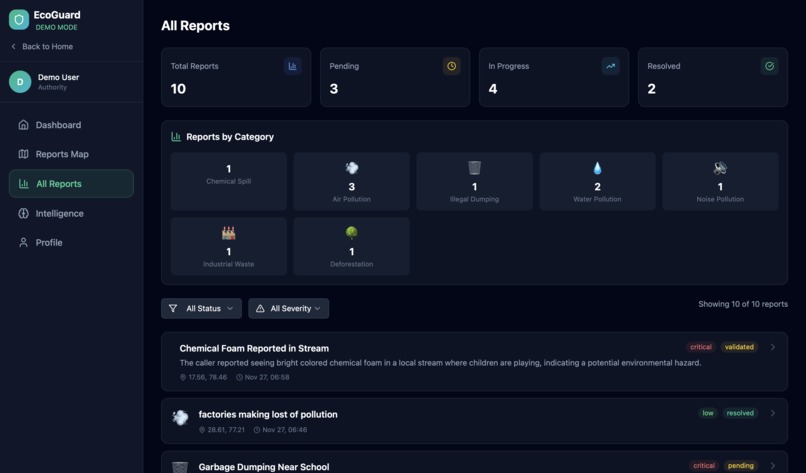
All reports shown to authority
-
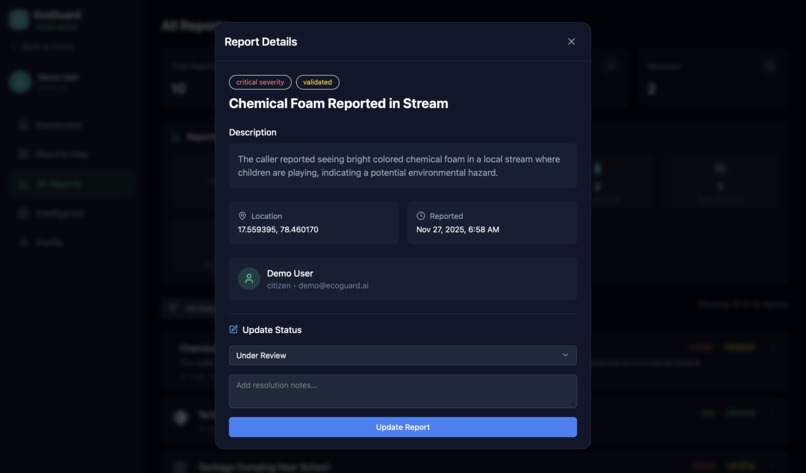
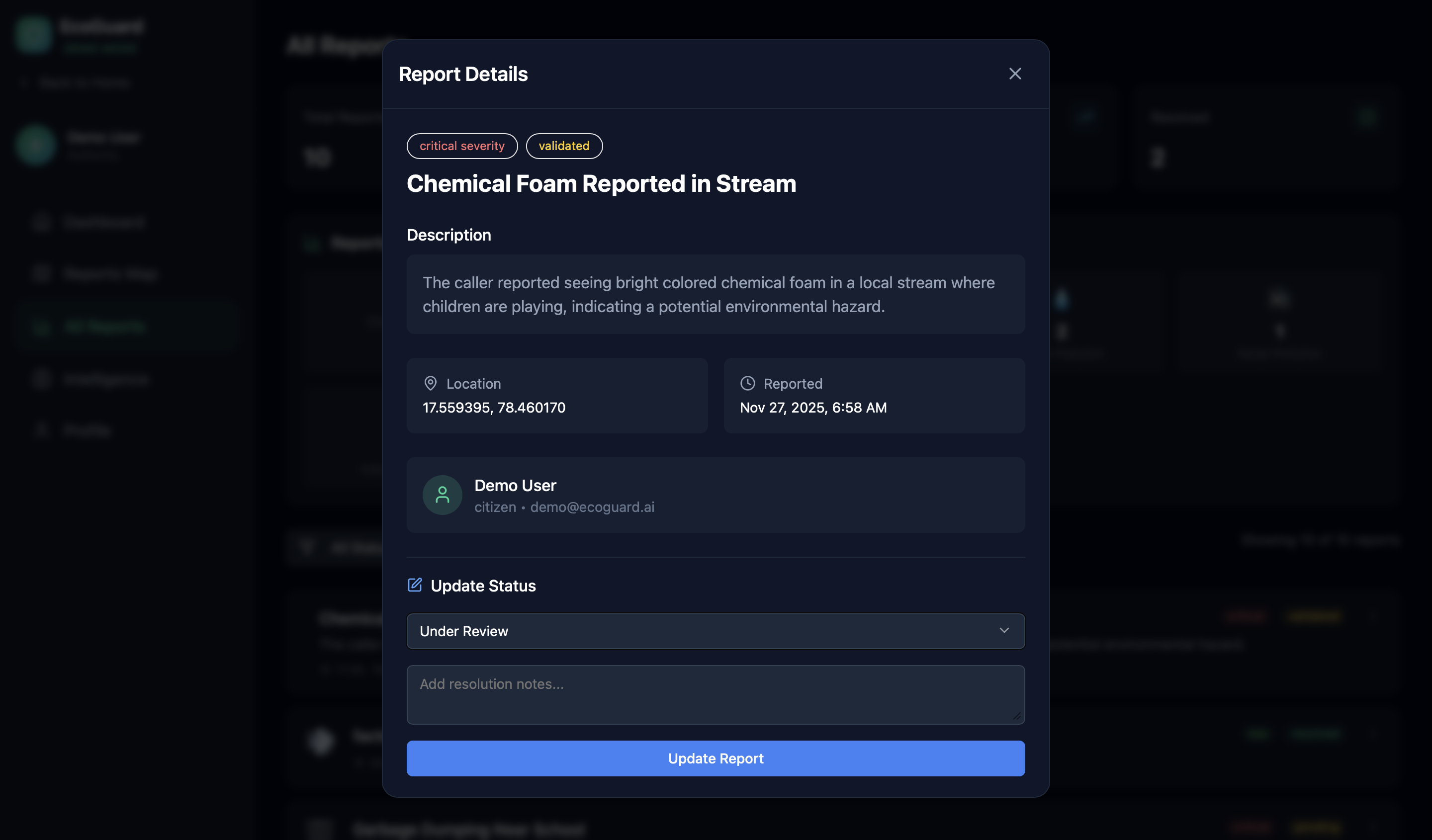
Authority resolving reports
-
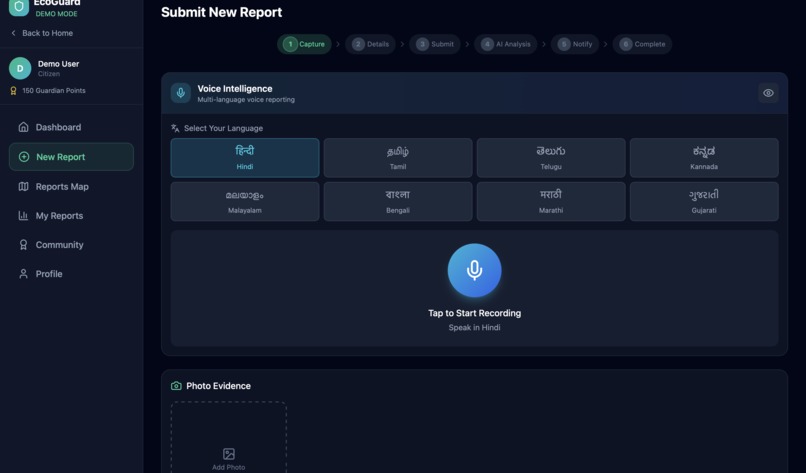
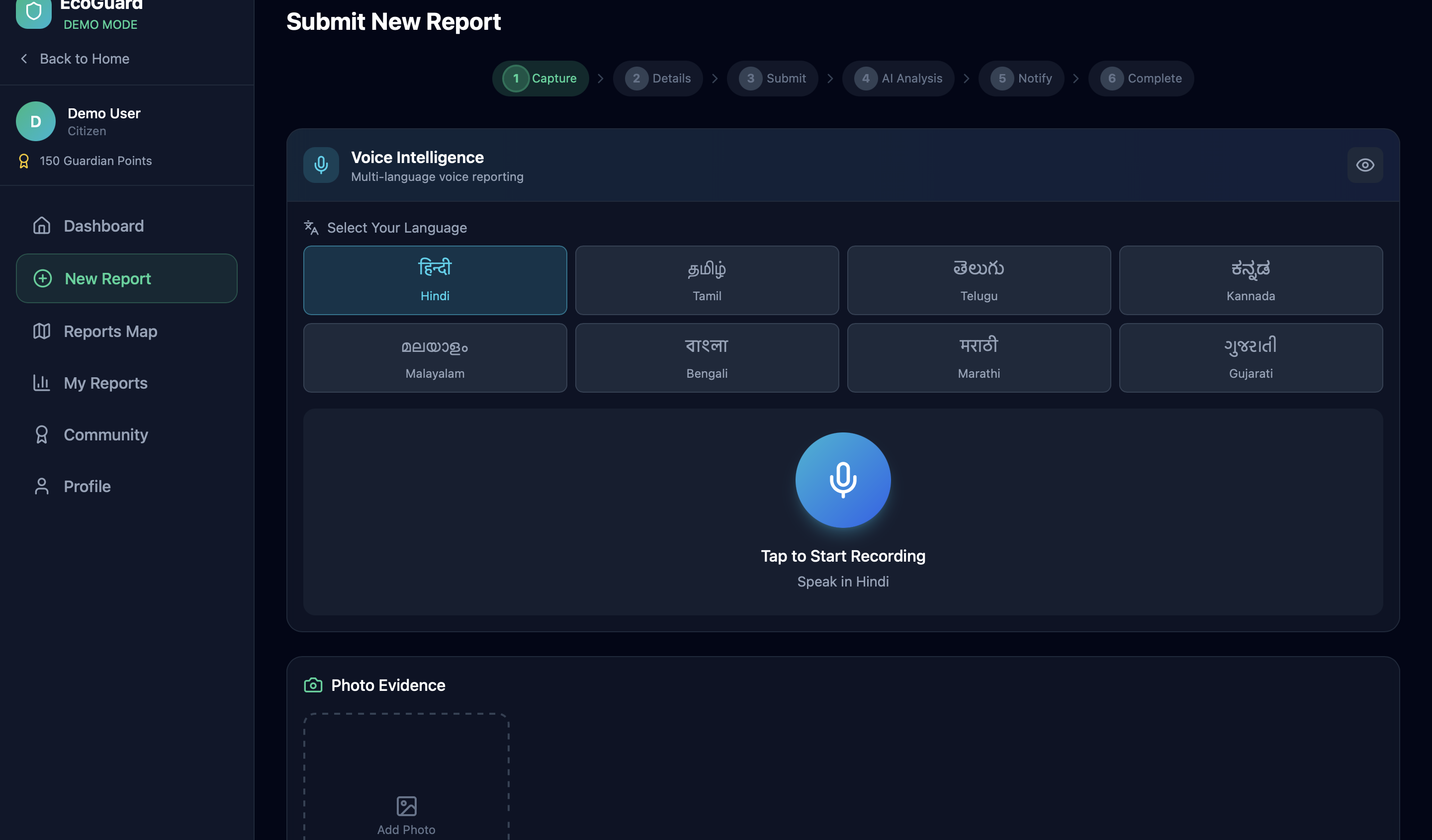
guardian making a report
-
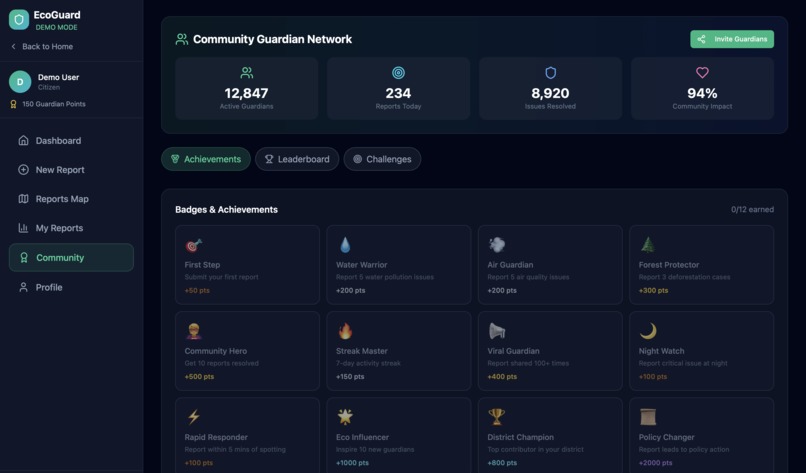
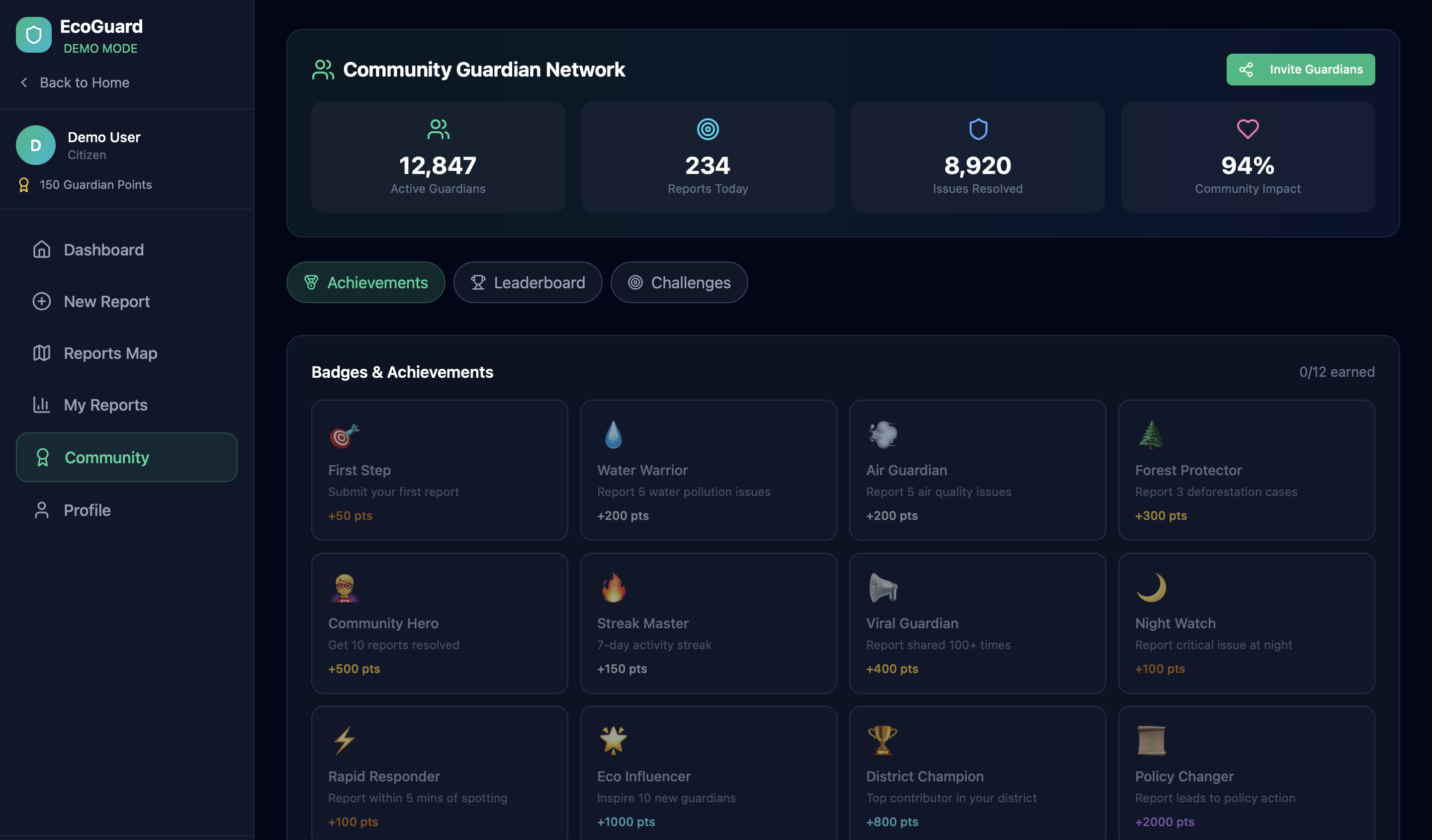
community of guardians
-
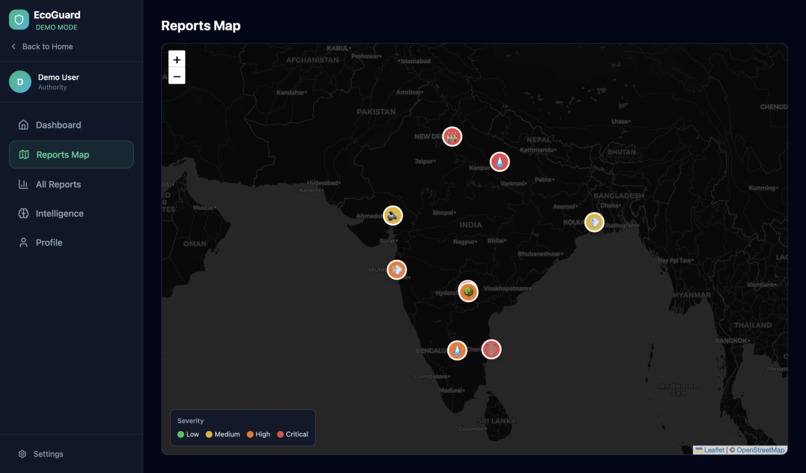
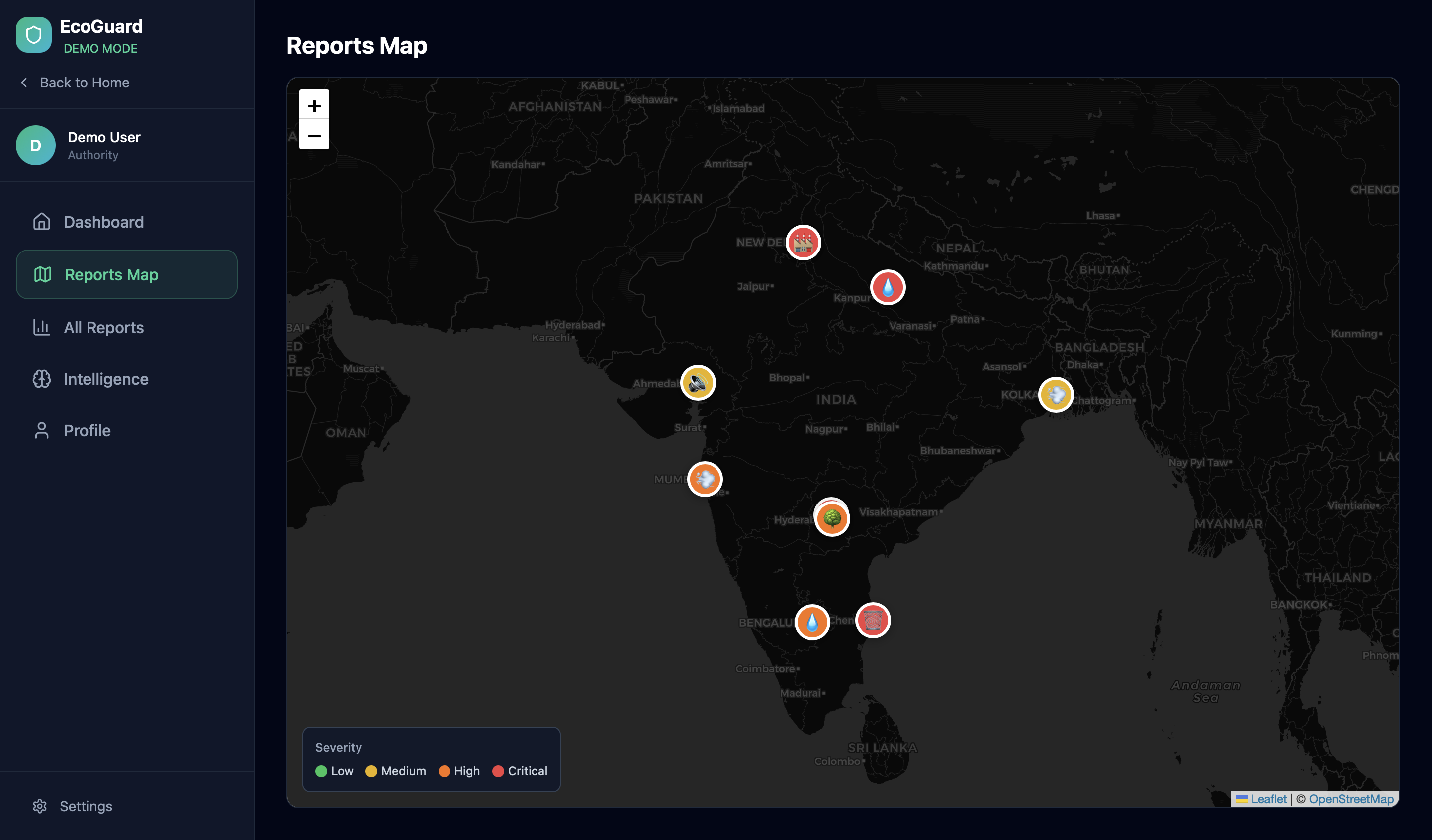
Map view of all reports
Inspiration
Urban India faces serious environmental problems like air pollution, water contamination, and illegal waste dumping. People witness these issues daily, but there’s no fast, simple way to report them or track action.
Traditional monitoring systems are slow and limited, which created the need for a real-time, citizen-powered platform.
With the rise of AI tools like voice recognition and image analysis, it became possible to build a smart and inclusive solution — that’s what sparked EcoGuard AI.
What It Does
EcoGuard AI turns everyday people into environmental protectors.
- Users can report issues by uploading photos with GPS, sending voice messages in local languages, or typing descriptions with a severity level.
- The system uses AI to instantly analyze the problem, detect the type of threat, rate its danger, and give safety instructions.
- Reports are automatically routed to the right authorities and local community groups.
- The platform tracks progress and shows users the status of their complaints.
- It also generates awareness content like safety guides and posters.
How We Built It
EcoGuard AI was built using Base44 to rapidly design and deploy a working prototype within hackathon time limits.
- Frontend and backend were created using Base44’s no-code/low-code environment, enabling fast, responsive web and mobile-friendly interfaces.
- AI models were integrated via APIs to handle environmental threat analysis and multi-language voice processing.
- Image and voice data were processed through Base44-connected services to generate real-time insights and safety recommendations.
- Automation workflows were built inside Base44 to route reports, trigger notifications, and manage tracking.
- Development followed an MVP-first approach, focusing on reporting, AI analysis, and alerts.
- Free and scalable tools were used to keep the system lightweight, low-cost, and easy to deploy.
Challenges We Ran Into
- Limited real-world data made it hard to fully validate AI predictions inside the Base44 environment.
- Configuring accurate multi-language voice support through Base44 integrations was challenging.
- Location-based routing required careful spatial mapping inside Base44.
- Balancing speed vs reliability in real-time workflows was difficult.
- Real authority integrations were simulated inside Base44 since this was a prototype.
- Media uploads and real-time processing created performance and storage constraints.
Accomplishments We’re Proud Of
- Built a fully working end-to-end prototype using Base44 in a hackathon timeline.
- Enabled multi-input and multi-language reporting for real-world accessibility.
- Designed a complete citizen → authority → community workflow using Base44 automations.
- Delivered a real, demo-ready product, not just a concept.
- Proved that Base44 can power scalable, real-impact solutions.
What We Learned
- Real-world problem solving requires strong user and environmental domain understanding, not just features.
- Designing AI workflows inside Base44 taught us how to balance speed and accuracy.
- We learned that trust and usability are critical for adoption.
- Handling media made us appreciate resource-efficient design.
- An MVP-first mindset helped us build faster and iterate better.
What’s Next for EcoGuard AI
EcoGuard AI is just the beginning.
- Launch pilot deployments in small cities with NGOs and municipalities.
- Improve AI accuracy using feedback loops.
- Add predictive intelligence to detect environmental risks early.
- Expand language, voice, and accessibility features.
- Build community engagement tools like dashboards and gamified actions.
- Create real integrations with government and NGO systems.
- Scale across regions and develop sustainable partnerships and funding models.
Built With
- base44


Log in or sign up for Devpost to join the conversation.