-
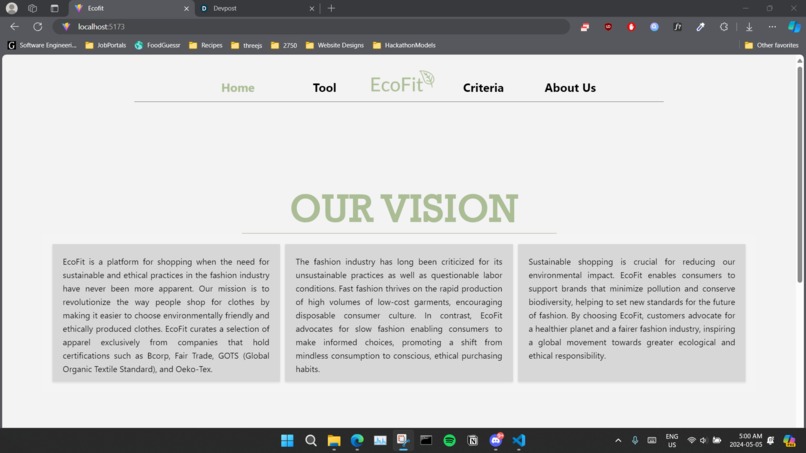
Home Page
-
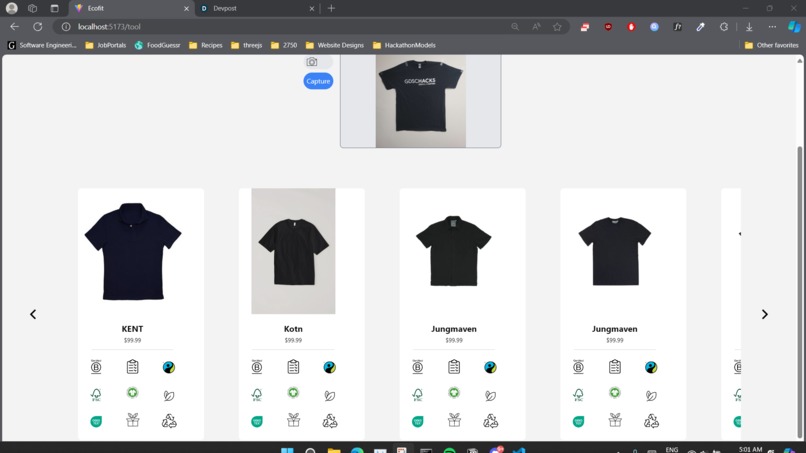
Clothing Tool
-
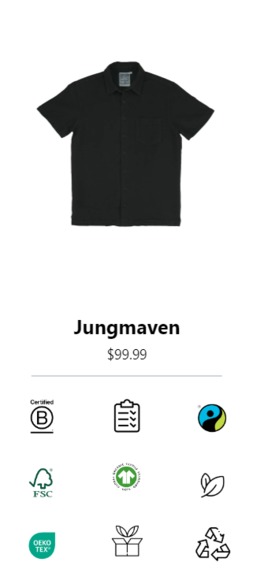
Clothing Card
-
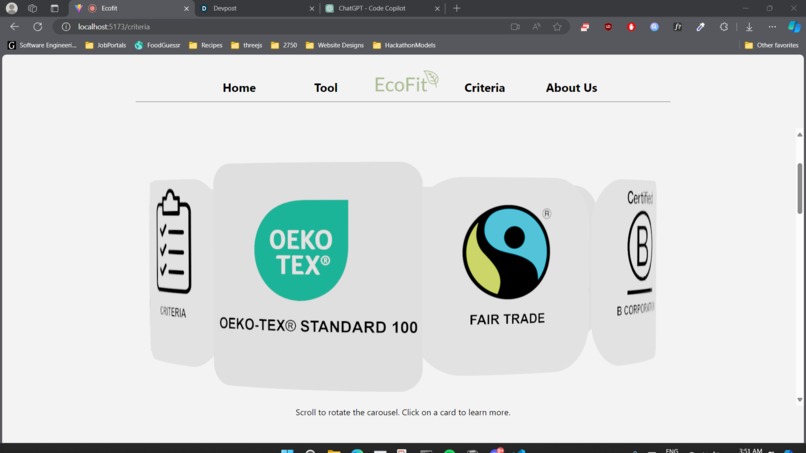
Badges
-
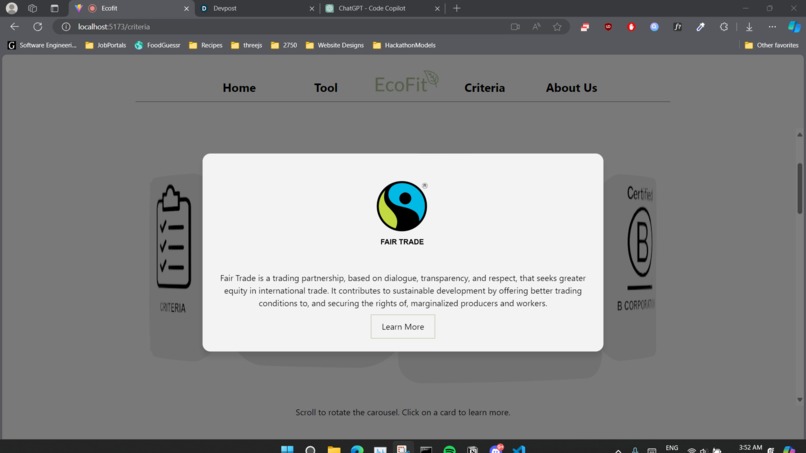
Badges-Click
Inspiration
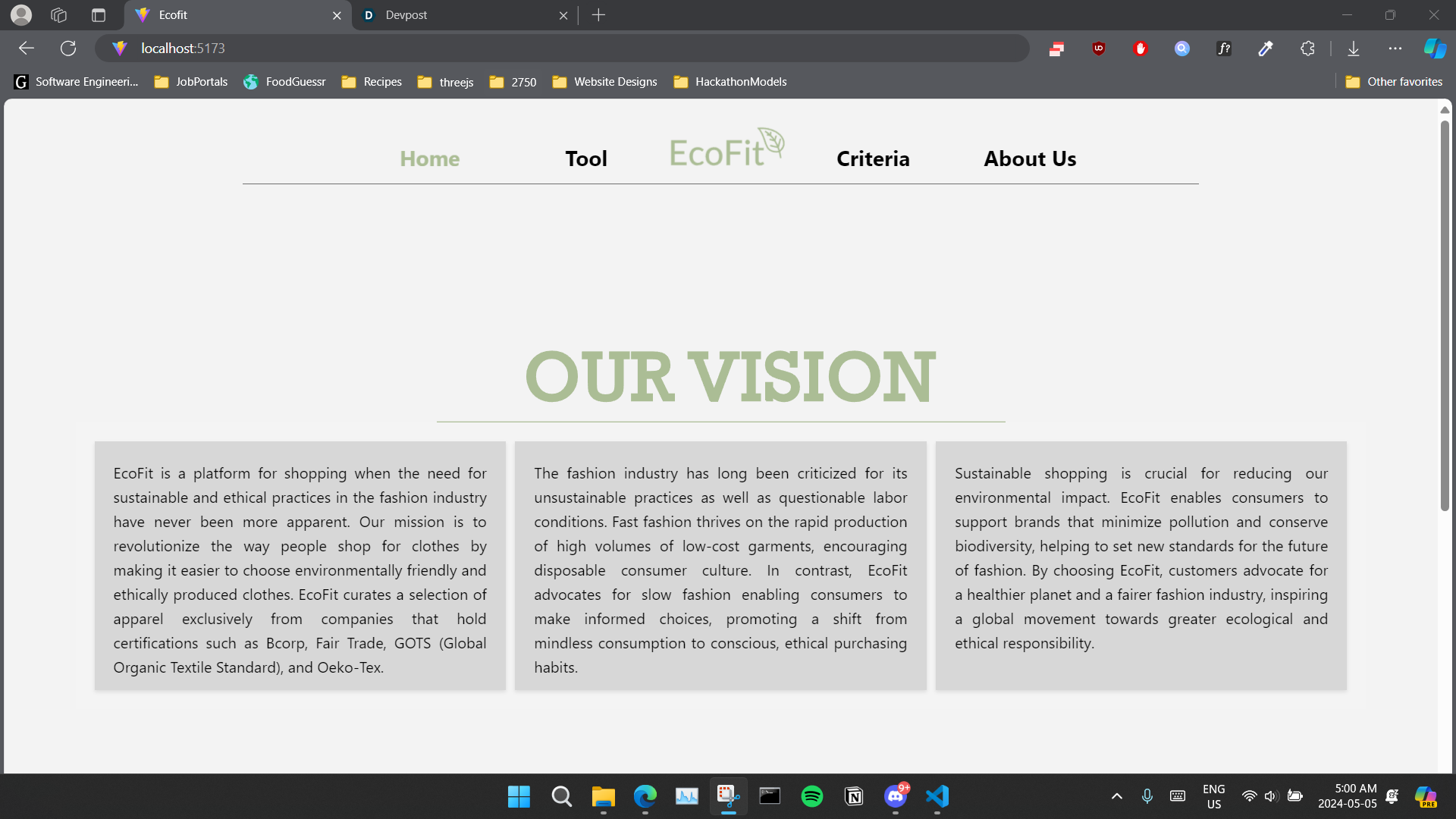
EcoFit is inspired by the fashion industry’s deep-rooted issues—its environmental toll and unethical labor practices. Founded by Carsten and Dev, EcoFit was created as a beacon of awareness against the unethical and unsustainable practices rampant in fast fashion giants like Shein, YesStyle, and H&M. The fashion industry's alarming production of 92 million tonnes of textile waste in 2020 underscored the need for a radical change. By emphasizing slow fashion, EcoFit aims to shift consumer behavior from mindless consumption to conscious, ethical purchasing. Our platform enables users to enjoy fashion without compromising the health of our planet or the rights of its people. This pivotal shift not only furthers environmental sustainability but also bolsters fair labor practices, driving substantial improvements in global ecological and ethical standards.
What it does
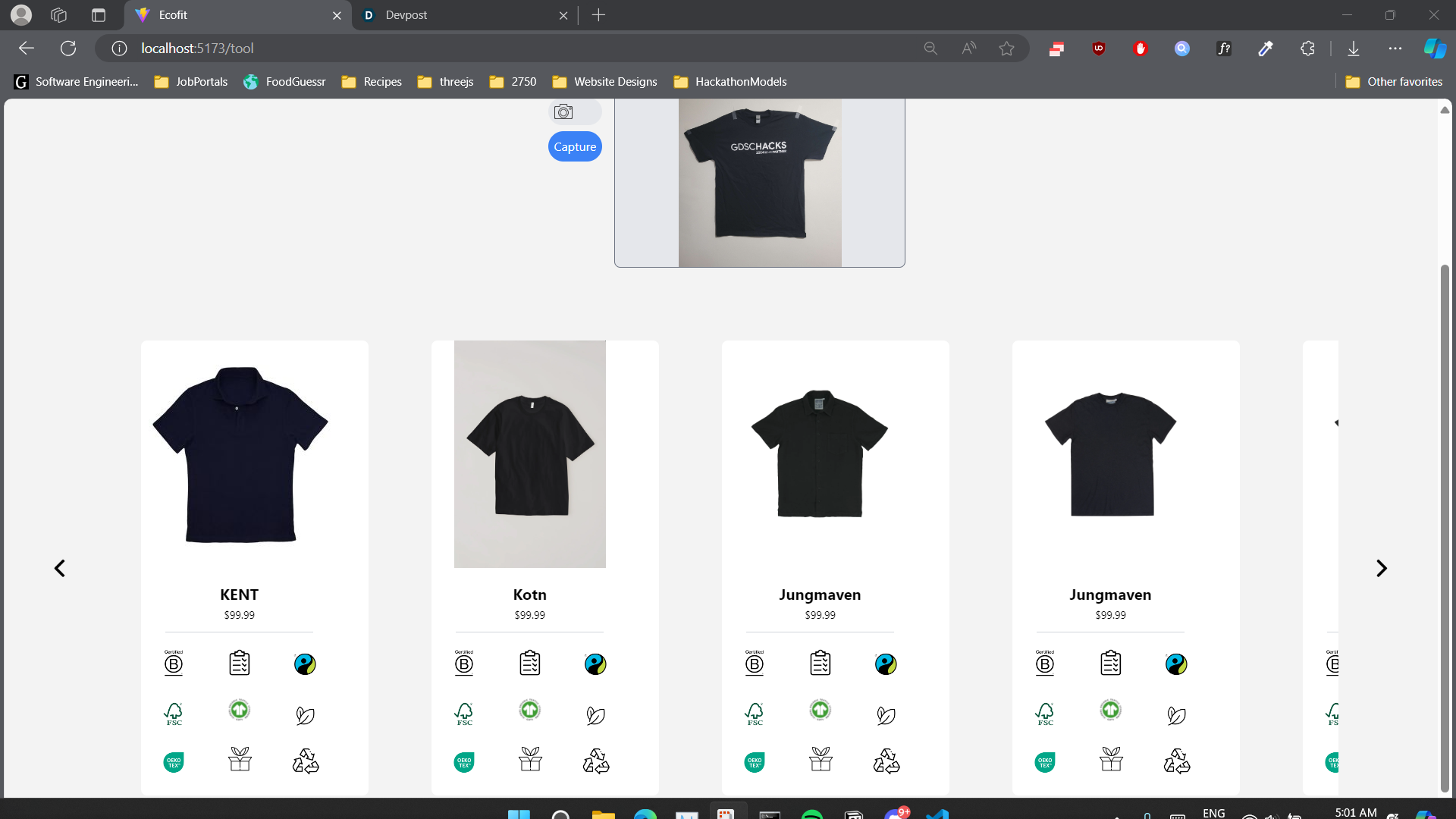
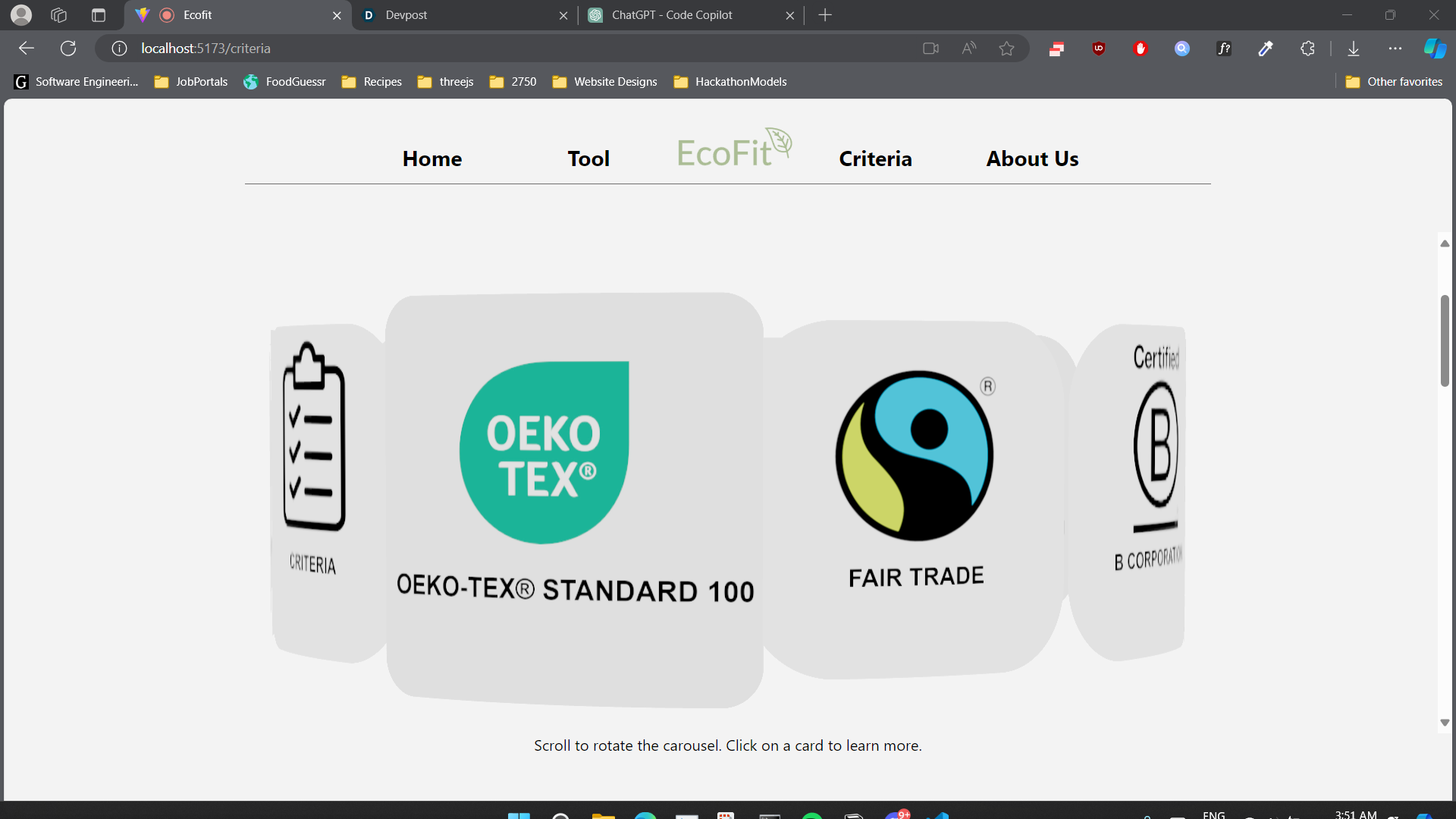
EcoFit empowers users with innovative technology to shop sustainably without the guesswork. Our platform features an image recognition function that allows users to either upload a photo of an apparel item or take a new picture directly through the app. This smart feature then searches our extensive database for similar items exclusively from brands that possess reputable sustainable certifications like OEKO-TEX 100 and GOTS.
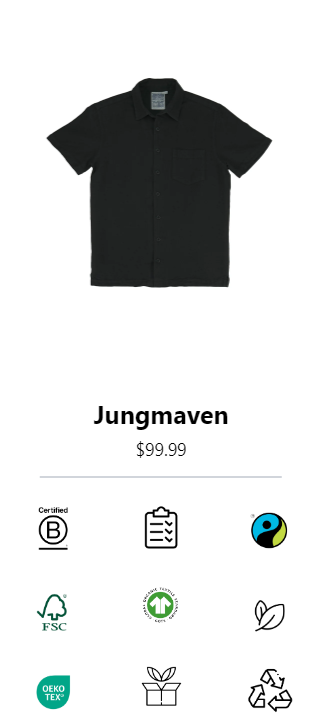
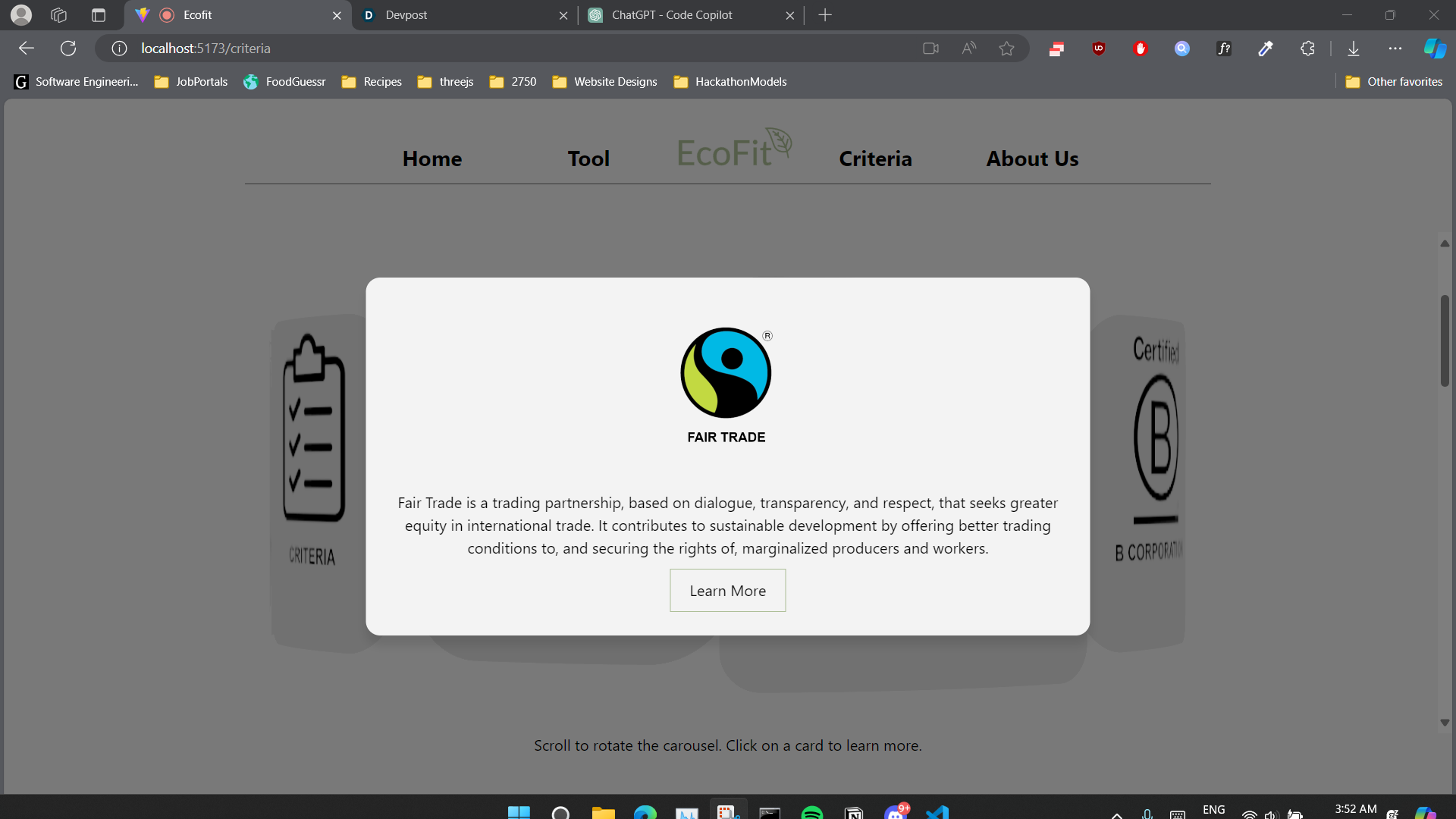
Once a match is found, EcoFit provides not only a direct link to the product but also a detailed display of all its certifications. This transparency ensures that users are fully informed about the ethical and environmental standards of the products they choose, fostering trust and promoting conscious consumerism. Through this technology, EcoFit makes it easier than ever for anyone to make ethical fashion choices that align with their values and lifestyle.
How we built it
Frontend For the frontend, we utilized React to build a responsive and intuitive user interface. To enrich the visual interactions, we integrated react-three-fiber (r3f) for implementing 3D elements, adding to the user experience. Additionally, Framer Motion was employed to add smooth and natural animations, giving the application a fluid feel that enhances user engagement and usability. Backend On the backend, Python was our primary programming language, known for its robustness and versatility. We utilized MongoDB to handle our extensive database of products and companies. This NoSQL database offers the scalability and flexibility required to manage large sets of unstructured data efficiently.
Challenges we ran into
One of the major technical challenges on the frontend was the implementation of react-three-fiber (r3f), specifically when creating custom geometries.
On the backend, the main challenge was the machine learning model used for image recognition. Training this model was a time-intensive process that required handling of a large dataset of images. The complexity increased as we needed to ensure the model's accuracy in recognizing and matching fashion items from user-uploaded photos.
Accomplishments that we're proud of
Our proudest accomplishment is seeing EcoFit transform from an idea into a platform that actively promotes sustainable and ethical consumerism. It's incredibly rewarding to know that our work helps individuals make more informed choices that are better for the planet and for the people involved in the production of their clothing.
What we learned
For us, working with Three.js was for the most part. a new venture. While we did have some experience, using threeJS brought a steep learning curve. We tackled the complexities of creating custom geometries and interactive 3D elements for the first time. The implementation of image recognition technology was another area where we faced significant challenges. Learning to effectively match user-uploaded images with our product database involved understanding the nuances of machine learning models geared towards image processing.
What's next for EcoFit
As we look to the future, EcoFit is poised for significant growth and further innovation. Our roadmap is focused on enhancing our platform's capabilities and extending our impact in sustainable fashion. Here are our key objectives:
Enhancing Image Recognition Capabilities We plan to continue training our machine learning model, improving its accuracy and efficiency. By refining our image recognition technology, we aim to provide even faster and more precise matches between user-uploaded images and sustainable products in our database. This will not only enhance user experience but also ensure that our recommendations are as relevant and helpful as possible.
Expanding Certification Criteria Another major goal is to expand our list of recognized certifications. Currently, we focus on standards like OEKO-TEX 100 and GOTS, but we intend to include more certifications that reflect a commitment to both environmental and social responsibility. By doing so, we will offer a wider range of options to our users, supporting even more brands that are doing meaningful work towards sustainability.
Continuing to Spread Awareness Education and awareness are at the heart of EcoFit’s mission. We will keep working to spread awareness about the importance of sustainable and ethical fashion.
Built With
- api
- css
- framer-motion
- html
- javascript
- keras
- machine-learning
- mongodb
- python
- react
- tailwind
- tensorflow
- three.js


Log in or sign up for Devpost to join the conversation.