-
-
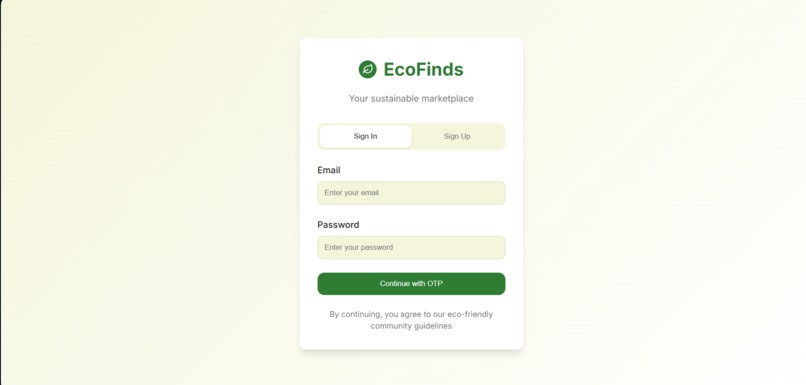
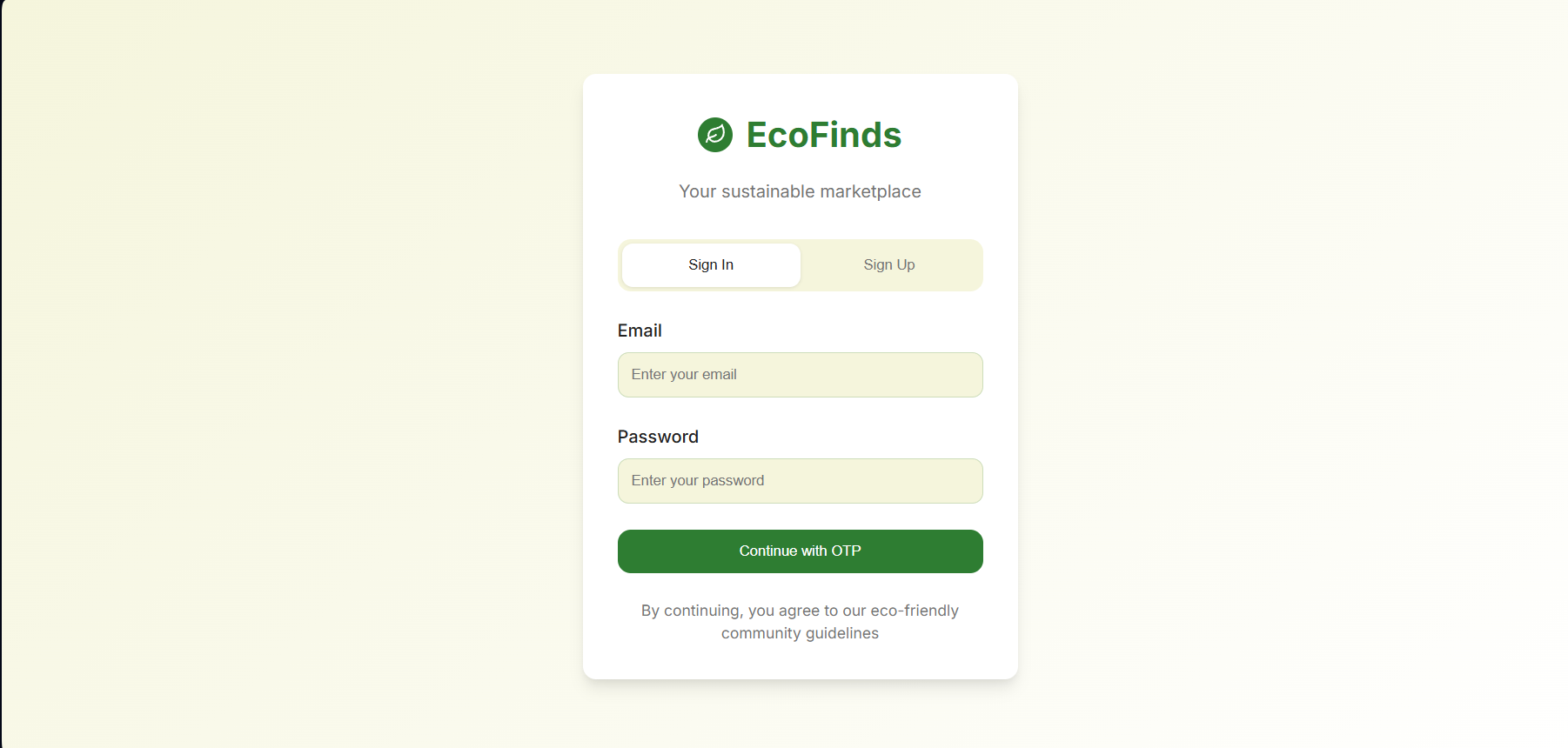
Login Page
-
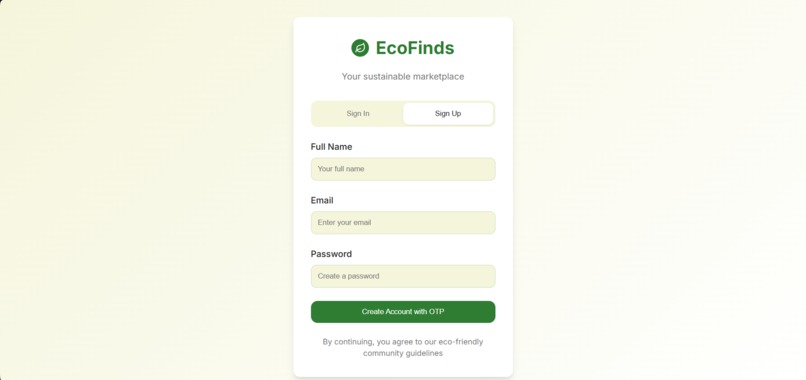
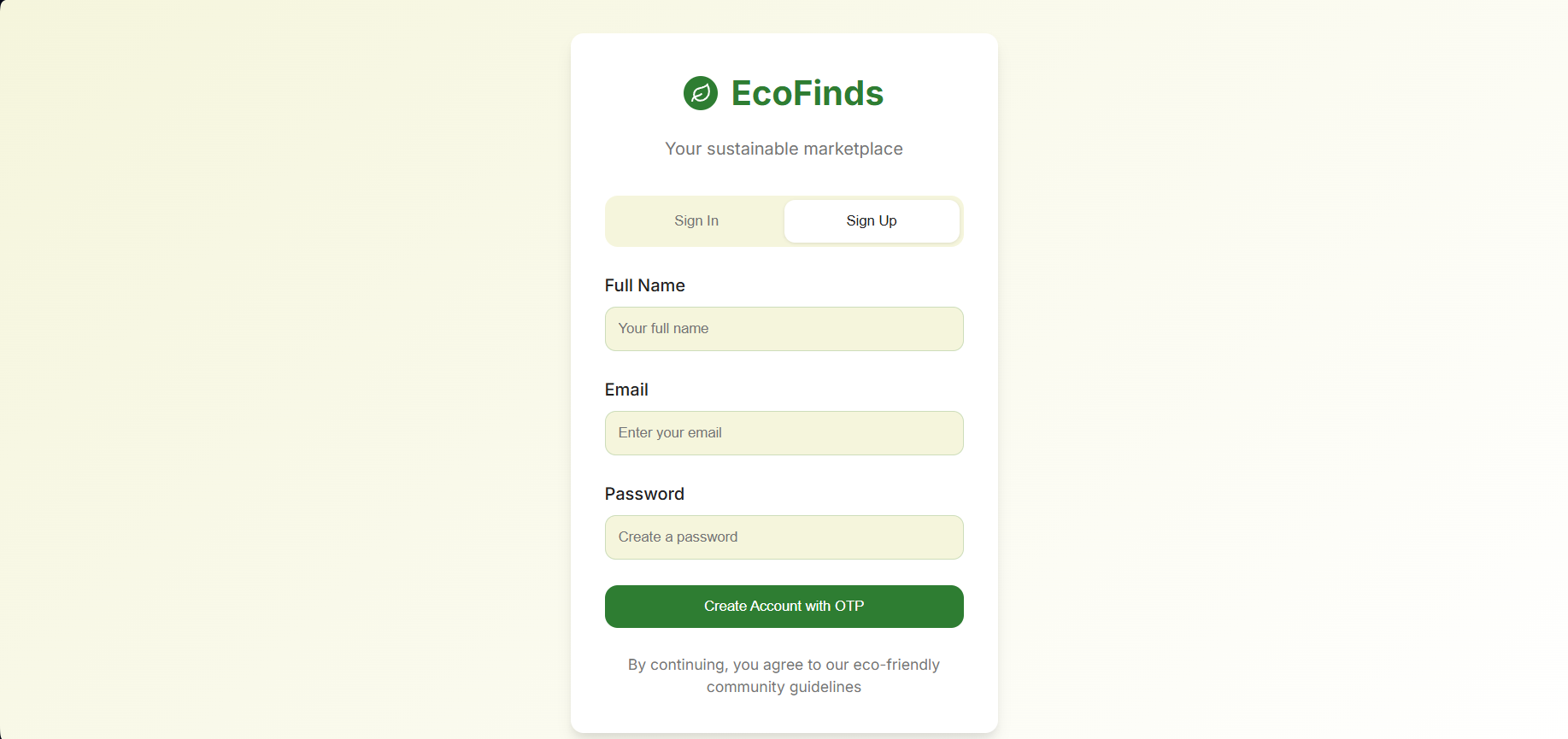
Signup Page
-
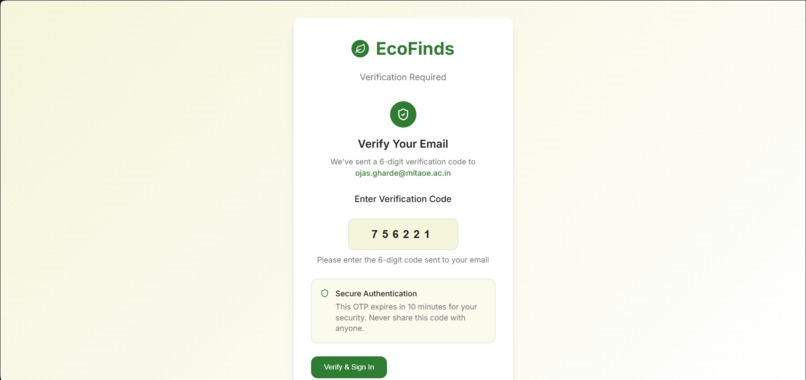
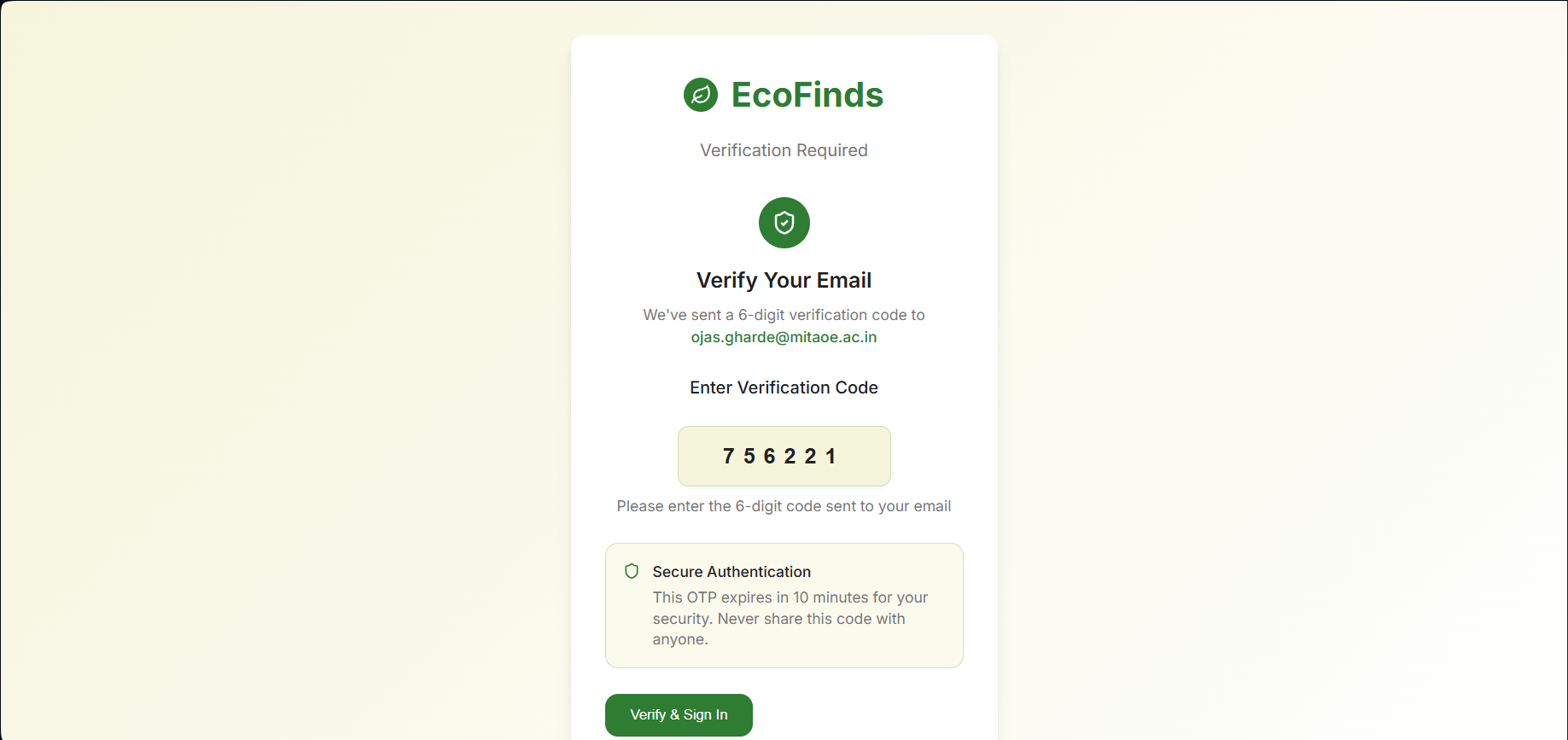
OTP Verification Page
-
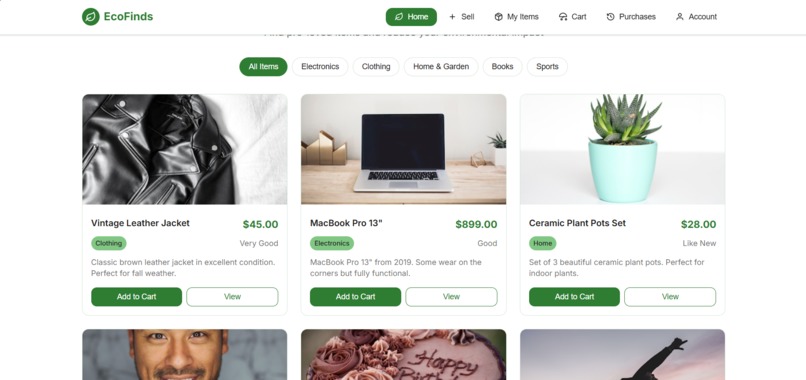
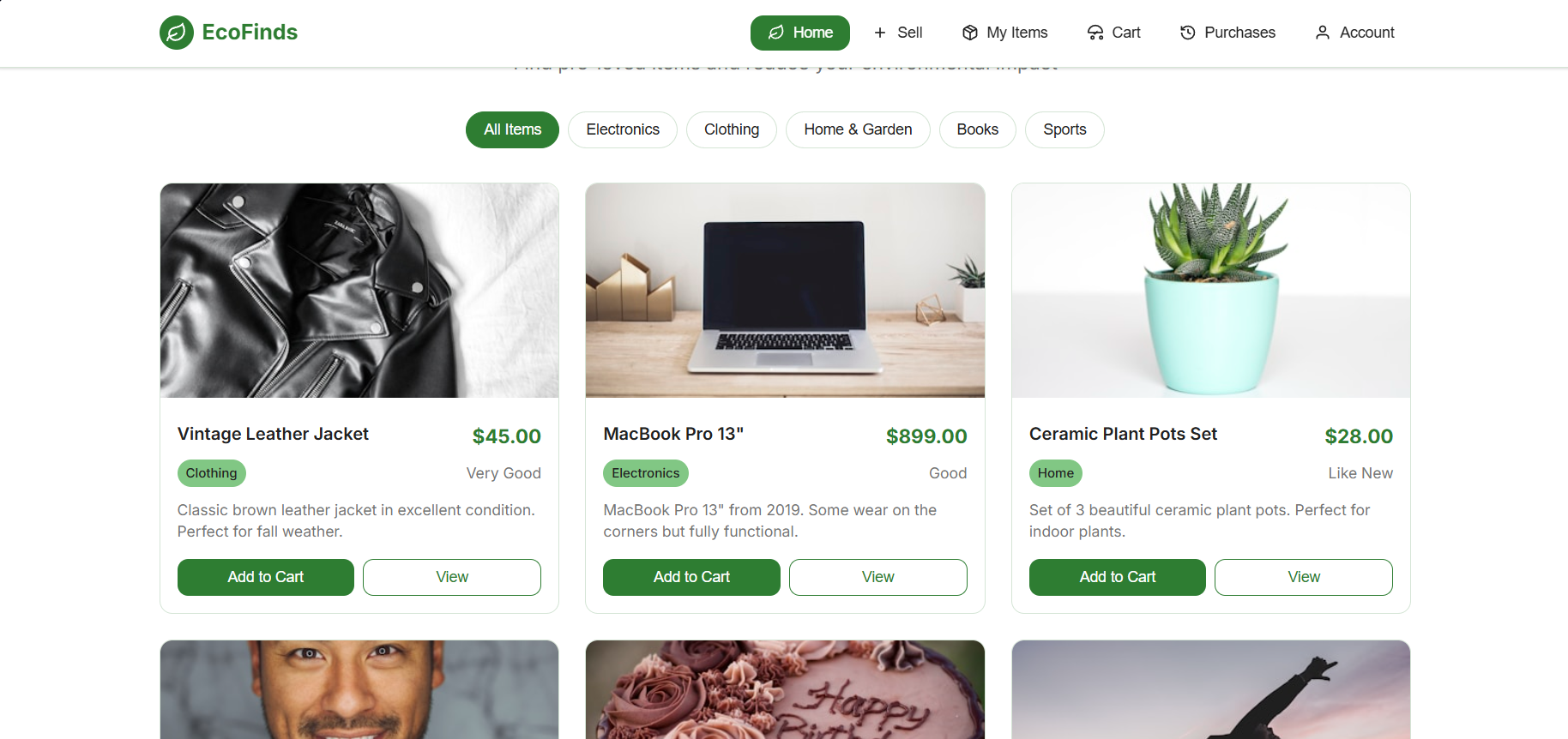
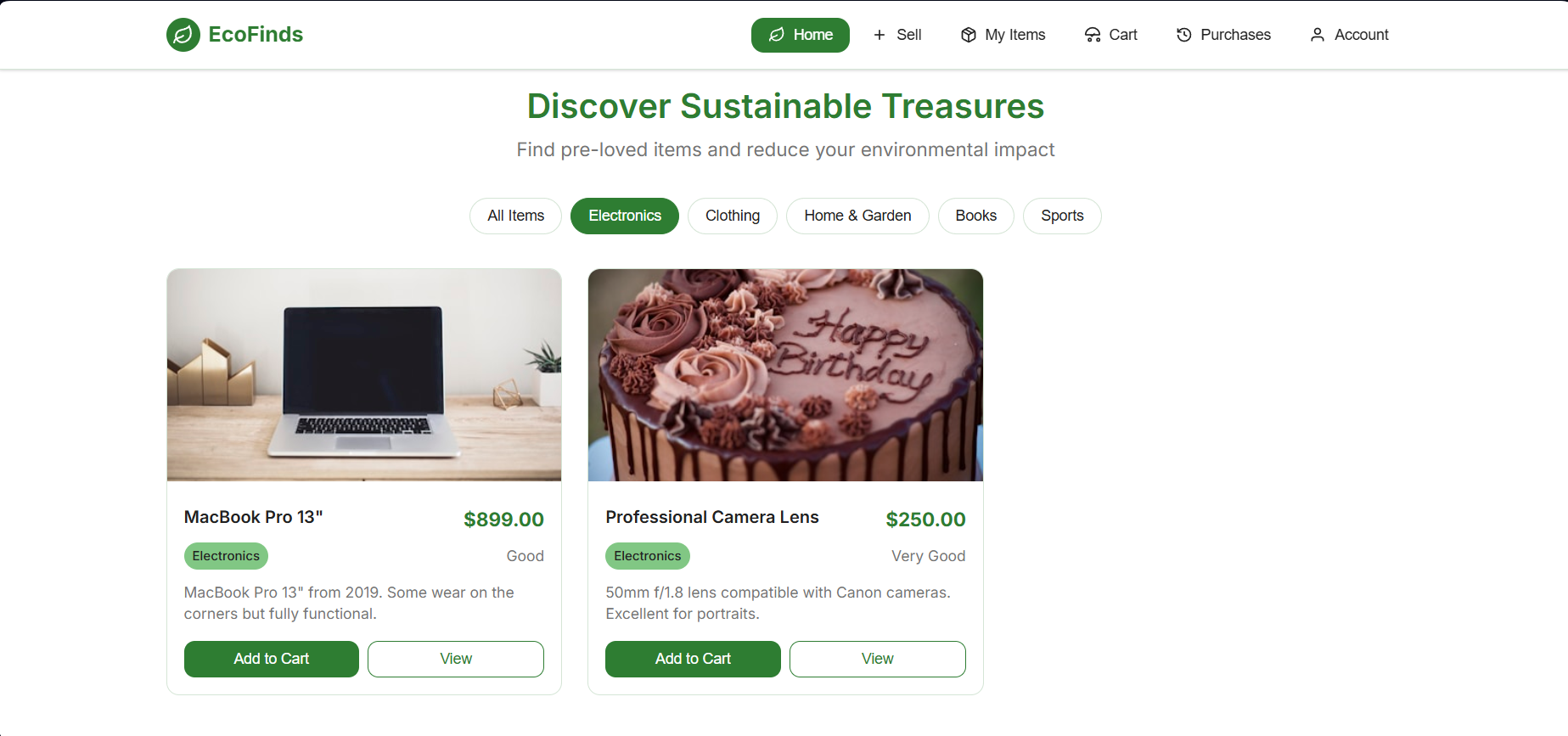
Home Page
-
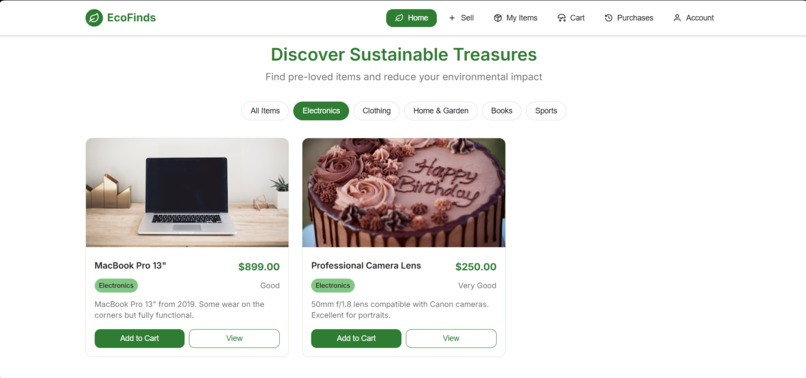
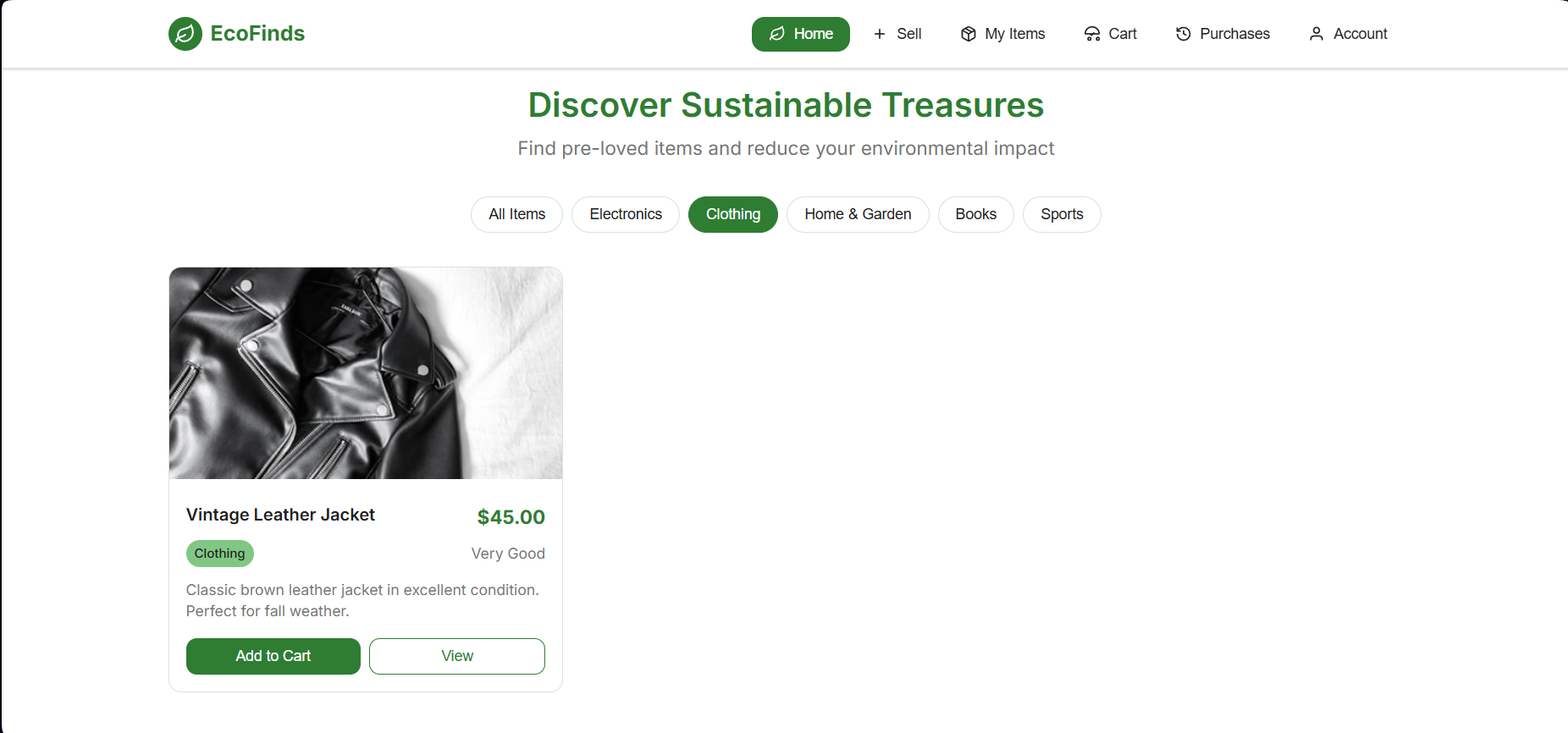
Filtering System
-
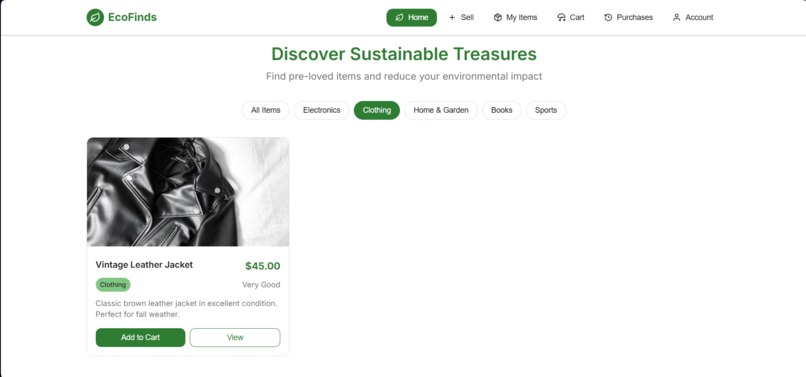
Filtering System
-
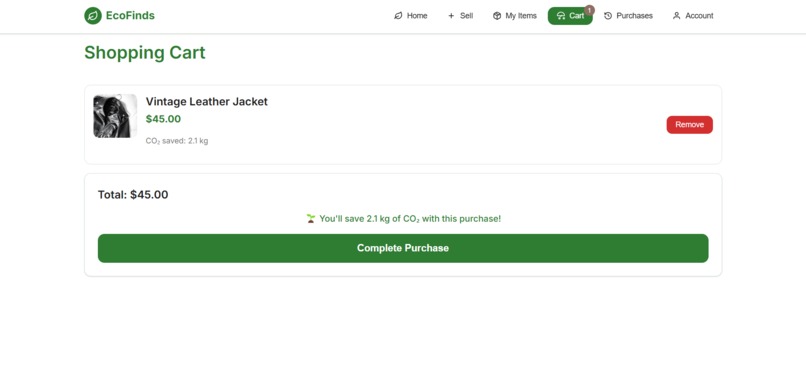
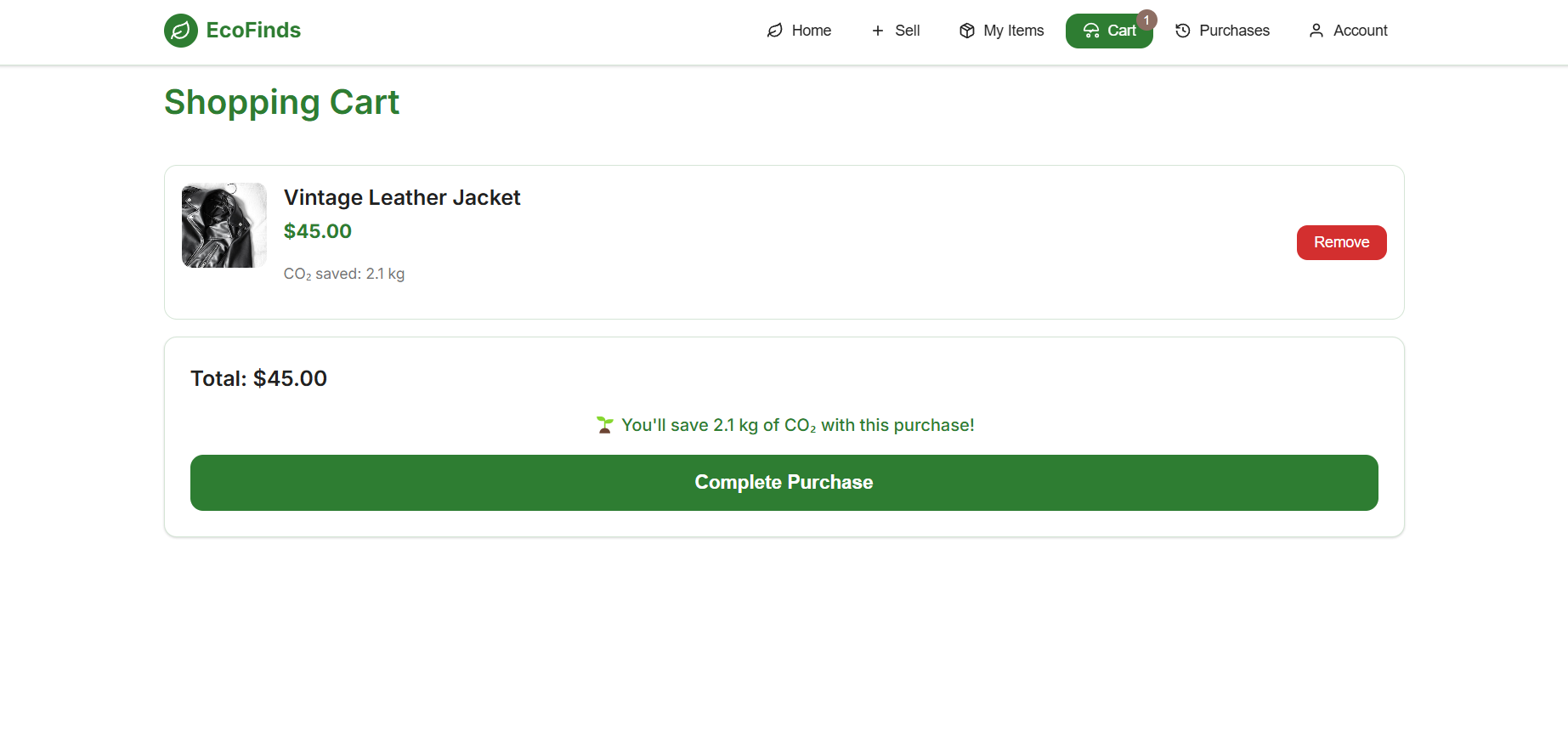
Your Cart
-
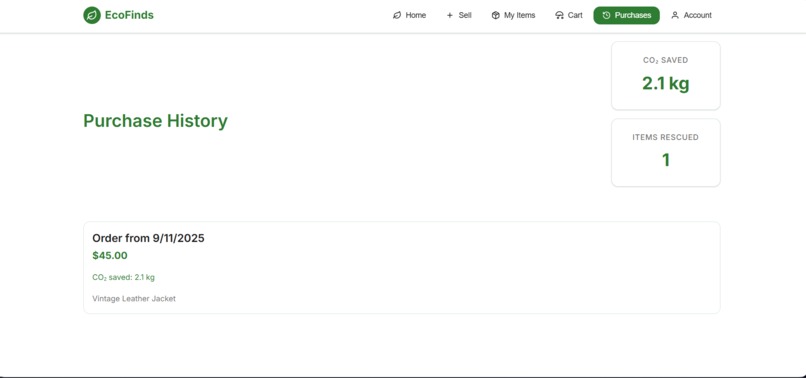
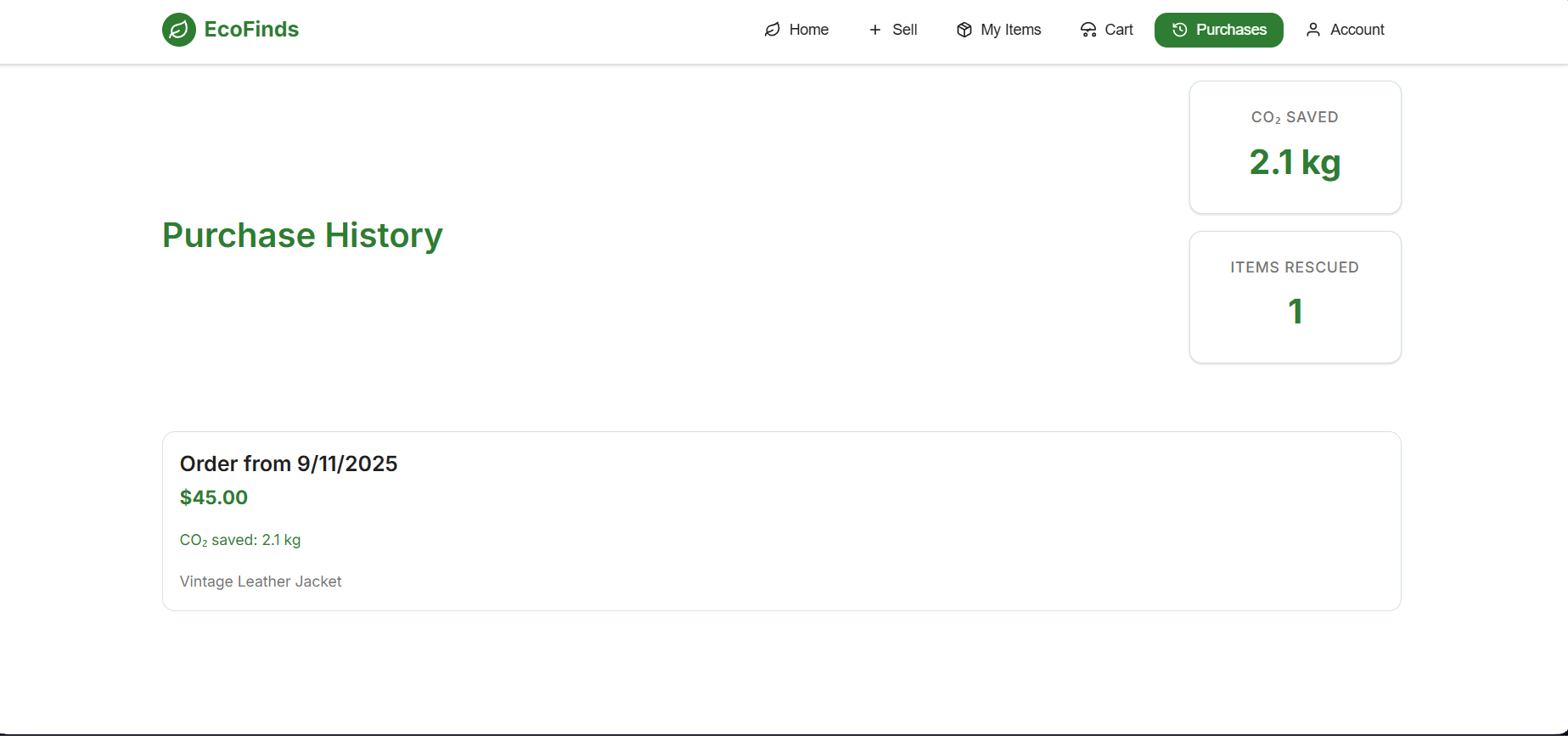
Purchase Pag
EcoFinds – Sustainable Second-Hand Marketplace
Inspiration
The idea for EcoFinds was sparked by witnessing the overwhelming amount of usable goods—especially fast fashion, electronics, and household items—that end up in landfills. We were inspired by the growing movement of conscious consumers who want to reduce waste but struggle to find a trustworthy and user-friendly second-hand marketplace. Our goal was to create a digital space that not only simplifies buying and selling used items but also empowers people to make sustainable choices without sacrificing convenience or security.
What it does
EcoFinds is an eco-conscious online marketplace that connects buyers and sellers of second-hand goods. The platform allows users to list, browse, and purchase pre-owned items with ease. It incorporates essential features to build trust, such as OTP-based login, seller verification, and transparent user reviews. By giving products a second life, EcoFinds helps reduce waste, supports circular consumption, and fosters a community committed to sustainability.
How we built it
We developed EcoFinds using a modern MERN stack:
- Frontend: Built with React for a responsive, intuitive user interface.
- Backend: Developed in Node.js with Express to handle API requests and business logic.
- Database: MongoDB (via MongoDB Compass) to store user data, product listings, and transaction records.
- Authentication: Implemented OTP-based login using a simple email-based verification system. We used Ethereal for email testing and prepared for real-world SMTP integration.
- Data Models: Designed structured models for Users, Products, and Transactions to ensure scalability and clarity.
- Security & Trust: Focused on login verification and honest reviews to build a sense of community and safety.
Challenges we ran into
- Building Trust: One of the biggest hurdles was ensuring users would feel safe transacting with strangers. We tackled this with OTP login and seller verification mechanisms.
- Database Setup: Initially, working with MongoDB locally and structuring the relationships between data models was a learning curve.
- Email System: Balancing simplicity for the prototype (via Ethereal) with the need for real-world functionality required extra planning and testing.
- Feature Prioritization: Given time and resource constraints, we had to focus on core functionality and leave out features like integrated payments for future versions.
Accomplishments that we're proud of
- Built a fully functional prototype that reflects our mission of sustainability and simplicity.
- Designed a user experience that is both intuitive and secure, especially for a second-hand marketplace.
- Established a solid backend foundation with proper data modeling and secure login.
- Created a system that encourages users to make eco-friendly choices in a practical way.
What we learned
- Technical Skills: Improved our understanding of full-stack development with the MERN stack.
- Sustainability in Tech: Learned how digital platforms can contribute meaningfully to environmental goals.
- User Experience Design: Realized how crucial it is to balance usability, trust, and functionality in marketplaces.
- Project Management: Gained experience in scoping a project realistically and focusing on high-impact features.
What's next for EcoFinds – Sustainable Second-Hand Marketplace
We’re excited to continue growing EcoFinds. Our next steps include:
- Payment Integration: Secure payment gateways to enable seamless transactions.
- Mobile Optimization: Build a responsive mobile app for greater accessibility.
- Enhanced Verification: Expand trust features with identity checks, item condition verification, and dispute resolution.
- Community Features: Introduce forums, tips for eco-living, and social sharing to deepen user engagement.
- Sustainability Tracking: Show users the environmental impact of their purchases (e.g., CO₂ saved, waste reduced).
EcoFinds isn’t just an app—it’s a movement. By making sustainability convenient and rewarding, we’re redefining the future of conscious consumption.

Log in or sign up for Devpost to join the conversation.