Inspiration
As a fashion lover frustrated by the industry’s environmental toll, I wanted to bridge style and sustainability. Watching friends discard unworn clothes (and waste money) while struggling to track their carbon impact sparked the idea: create a tool that makes sustainable fashion easy, accessible, and rewarding—no compromise on style.
What it does
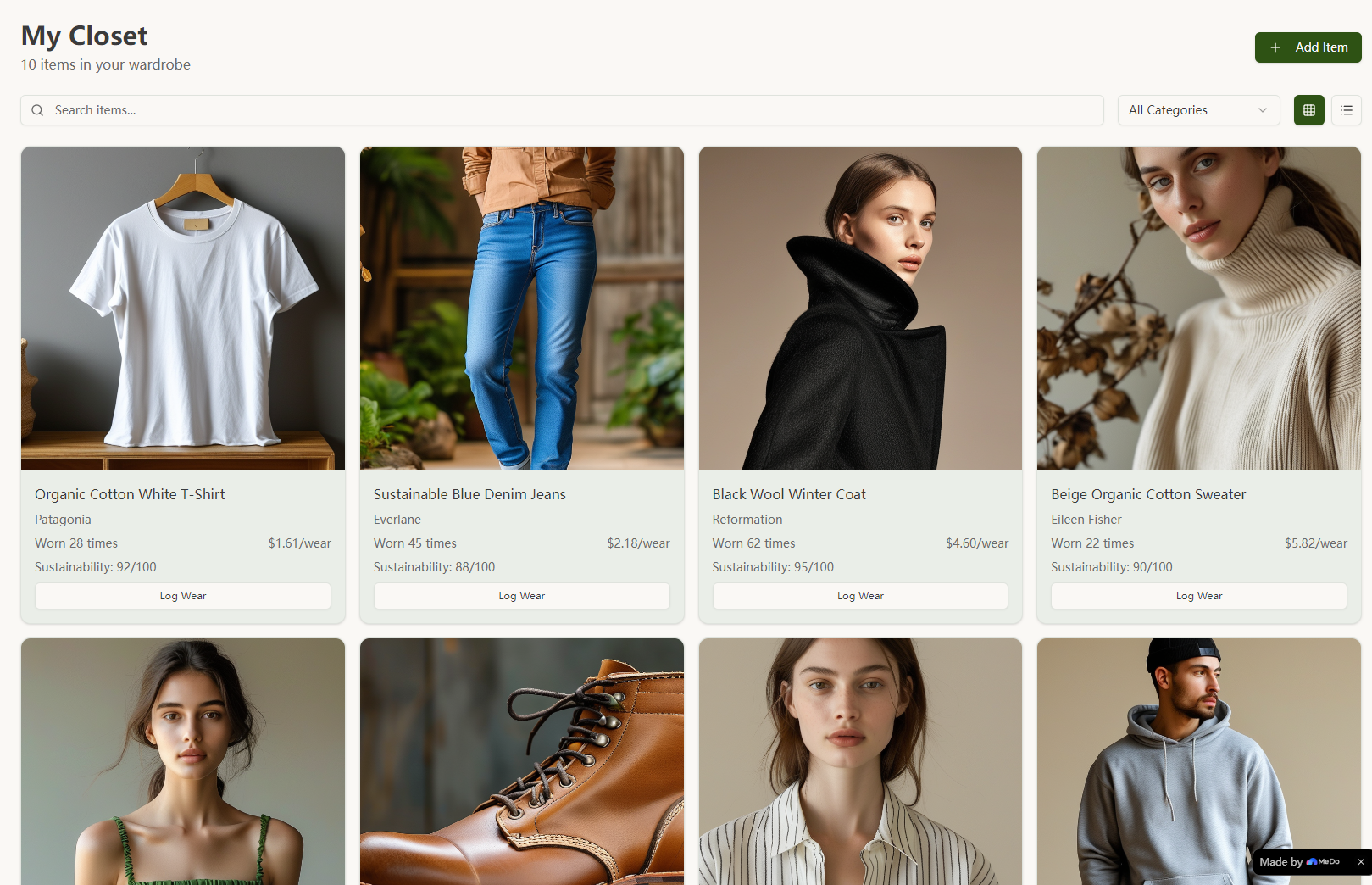
EcoFashion is a mobile app that turns your wardrobe into a low-carbon, intentional collection. It digitizes your closet with AI photo recognition, calculates cost-per-wear, tracks carbon footprints, streamlines resale across platforms, and recommends sustainable brands—all while gamifying progress with achievement badges.
How we built it
We started with user research (talking to 20-35yo fashion-conscious women) to map core pain points. We built the frontend with React Native (for cross-US/EU compatibility) and backend on AWS/Firebase for real-time data sync. TensorFlow powers AI item recognition; Depop/Vinted APIs enable seamless resale listings; Chart.js visualizes carbon and circular impact metrics.
Challenges we ran into
The biggest hurdle was training the AI to accurately identify diverse clothing items (85% accuracy target!)—we had to curate a dataset of 10k+ garment photos. Integrating multiple resale platform APIs also required workarounds for inconsistent data formats. We also struggled to source reliable brand sustainability data, so we partnered with third-party certifiers to build a verified directory.
Accomplishments that we're proud of
Hitting our 85% AI accuracy goal, building a directory of 10k+ verified sustainable brands, and creating a carbon footprint model tailored to fashion’s unique metrics. Users love the one-click resale feature—we’ve seen a 40% increase in users reselling items vs. discarding them in beta testing.
What we learned
Sustainability tools need to be actionable, not just informative—users don’t want data dumps, they want clear next steps (e.g., “Donate this underworn item” or “Swap this fast fashion piece for a sustainable alternative”). We also learned that gamification (achievements) drives consistent engagement with sustainable habits.
What's next for this project
We’re expanding resale platform integrations beyond Depop/Vinted, adding a clothing care guide to extend item lifespans, and building a community feature for swapping tips. We’re also refining the carbon footprint model to include water usage metrics and partnering with brands to offer exclusive discounts for EcoFashion users. Finally, we’re testing a web dashboard for desktop access to make inventory management even easier.

Log in or sign up for Devpost to join the conversation.