
Inspiration
Across homes, schools, and hospitals — water and electricity are wasted every day because devices run unnecessarily: lights left on, taps running, or pumps operating longer than needed. In resource-limited areas like Burundi, every drop and every watt matter. We wanted to build a low-cost, offline AI system that can see, think, and act — without internet, cloud, or expensive hardware — making automation accessible to everyone.
What it does
EcoEye is an AI vision automation system that brings intelligence to basic infrastructure. It uses a simple camera and microcontroller to recognize human activity and automatically control devices like lights, water pumps, or fans through relays.
🟢 In Hospitals:
Detects when someone enters a ward → turns on lights/fans automatically.
Activates water taps or sanitation pumps without touch, reducing infection risk.
🏫 In Schools or Offices:
Shuts down lights and devices when classrooms or offices are empty.
Helps manage energy efficiently and save costs.
🚰 In Public or Rural Areas:
Controls community water pumps to avoid overflow or wastage.
Supports irrigation or hygiene systems that only run when needed.
Everything works locally and offline, ensuring privacy, low cost, and resilience — even without internet access.
How we built it
Used Arduino Mega as the main controller.
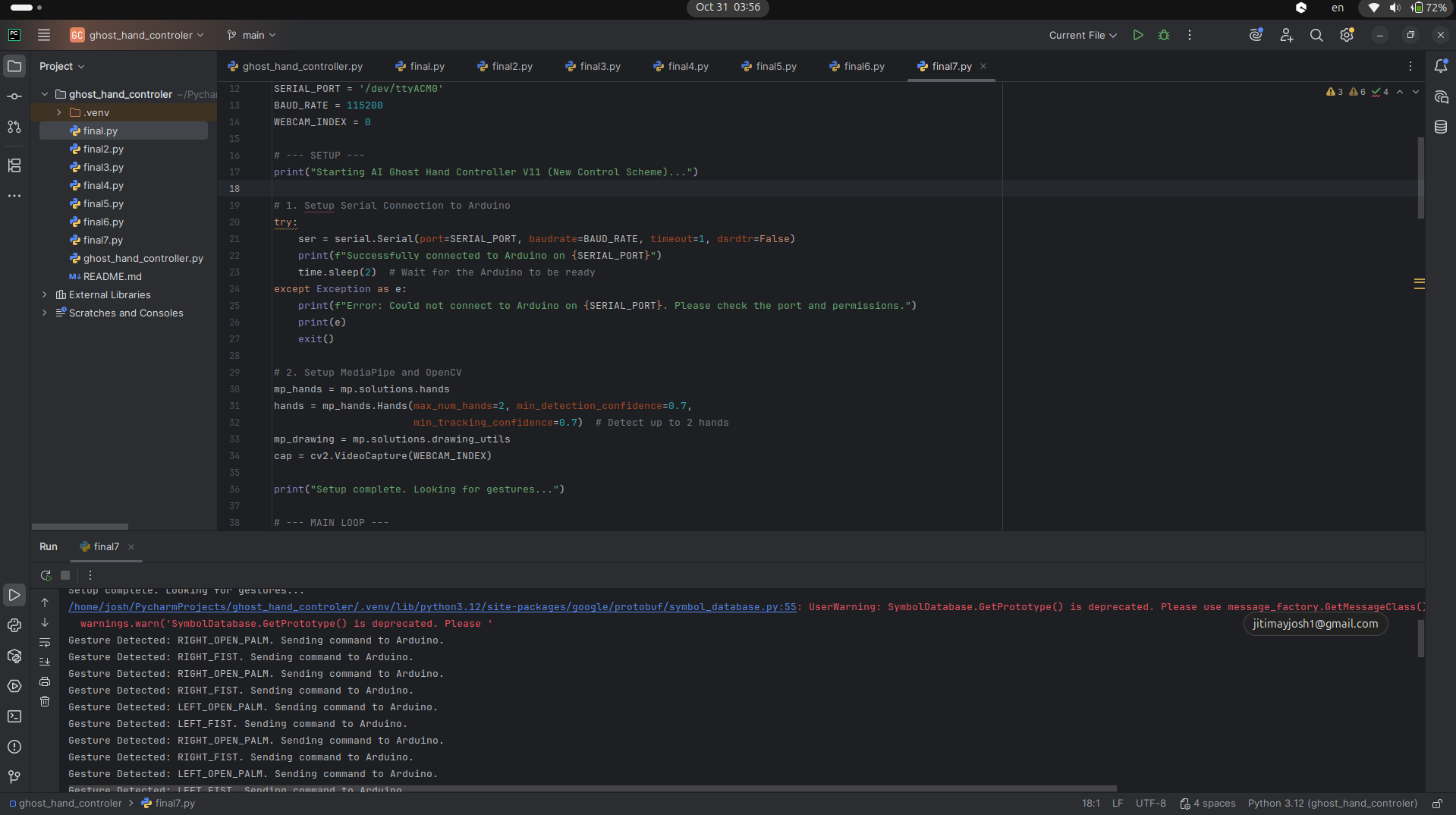
The ESP32-CAM (or laptop-based computer vision) detects people or gestures.
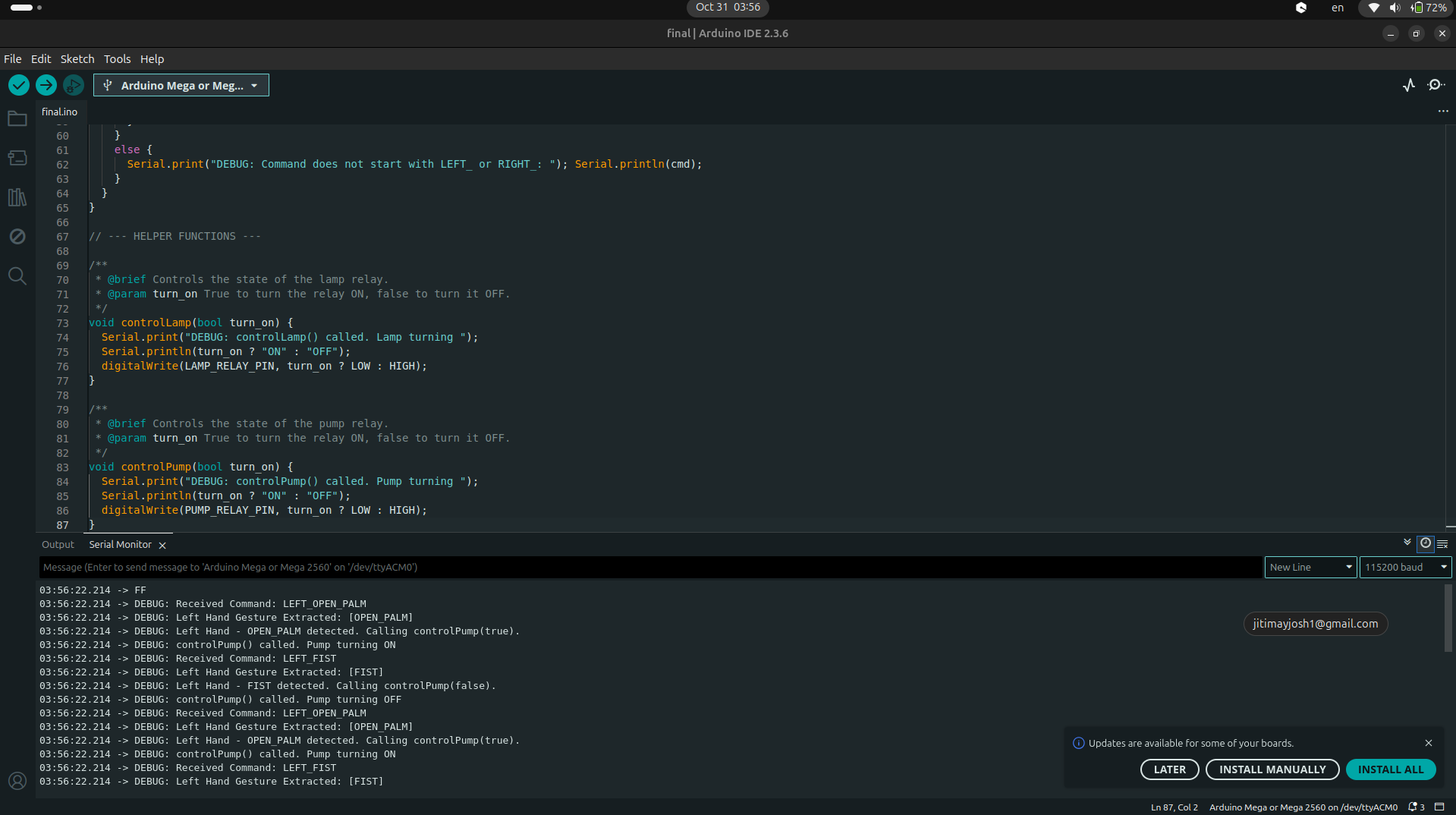
Detection signals are sent to Arduino through GPIO triggers.
Arduino controls an 8-channel relay module, which switches devices like a lamp and a water pump.
All powered by a 12V/5V supply with isolation for safety.
The system can be extended with servos or motors via PCA9685 for more automation tasks.
Challenges we ran into
Used Arduino Mega as the main controller.
The ESP32-CAM (or laptop-based computer vision) detects people or gestures.
Detection signals are sent to Arduino through GPIO triggers.
Arduino controls an 8-channel relay module, which switches devices like a lamp and a water pump.
All powered by a 12V/5V supply with isolation for safety.
The system can be extended with servos or motors via PCA9685 for more automation tasks.
Accomplishments that we're proud of
Built a working prototype that responds to human presence through AI vision.
Integrated AI + electronics into a single, seamless automation system.
Created a scalable offline automation platform that can help communities save resources.
Demonstrated how AI can run locally on low-cost hardware.
What we learned
How to optimize AI vision for embedded or offline use.
How to safely control high-power devices through relays and microcontrollers.
Importance of design simplicity — fewer components, more reliability.
Real-world impact matters more than complexity — practical AI wins.
What's next for EcoEye – AI Vision Automation for a Sustainable Future
Add tinyML learning so the system can adapt to user behavior.
Create a mobile dashboard to monitor energy and water use.
Expand to industrial and agricultural automation.
Make a plug-and-play kit for schools and local innovators to build their own AI-powered smart systems.

Log in or sign up for Devpost to join the conversation.