Inspiration
The inspiration for EcoExplore came from my growing awareness of the negative environmental impact of mass tourism. With over 87% of travelers wanting to make sustainable choices but only 39% succeeding, I saw a gap in the market for an accessible tool that helps people plan eco-friendly and affordable travel. I was driven by the desire to make travel more responsible while supporting local communities and reducing the environmental footprint of tourism.
What it does
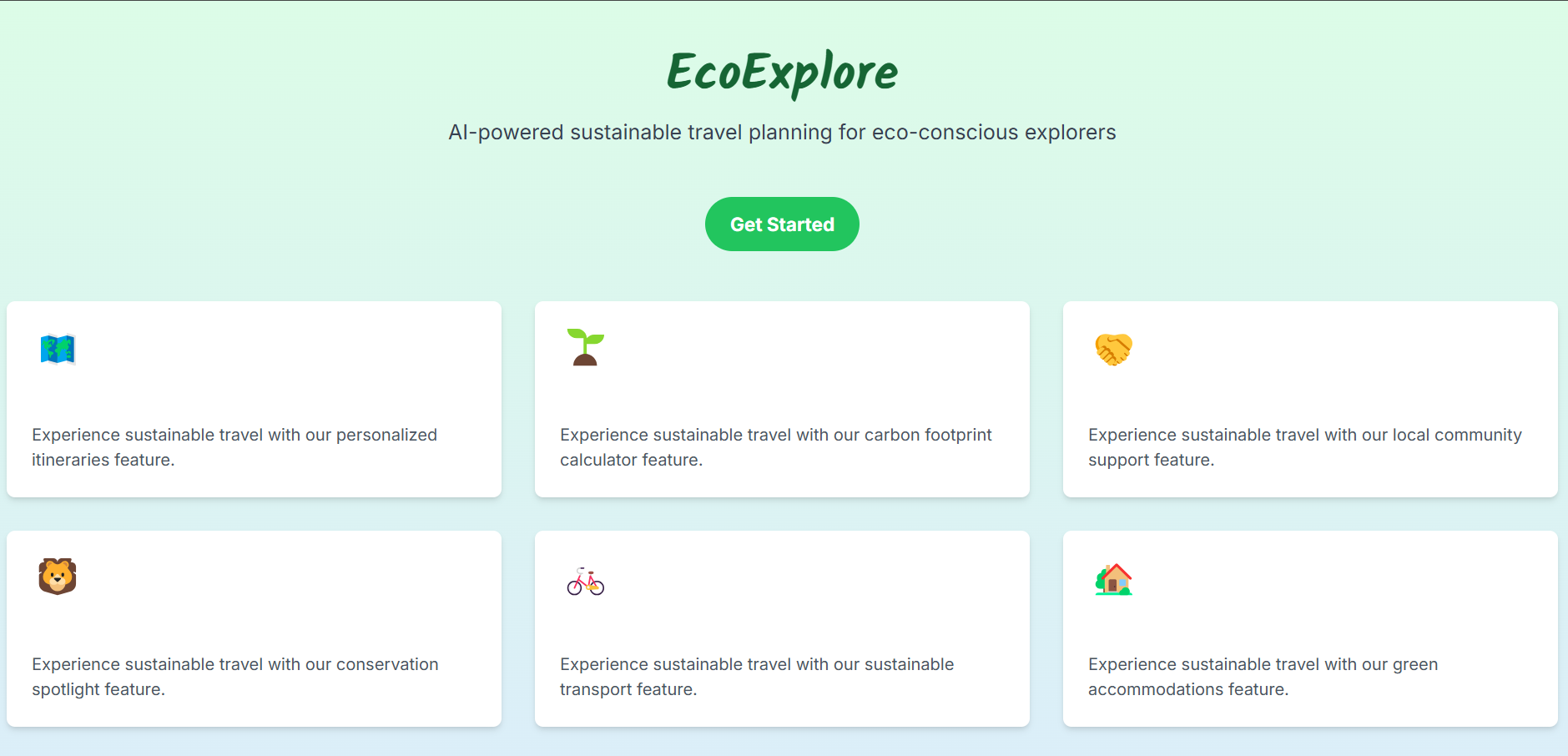
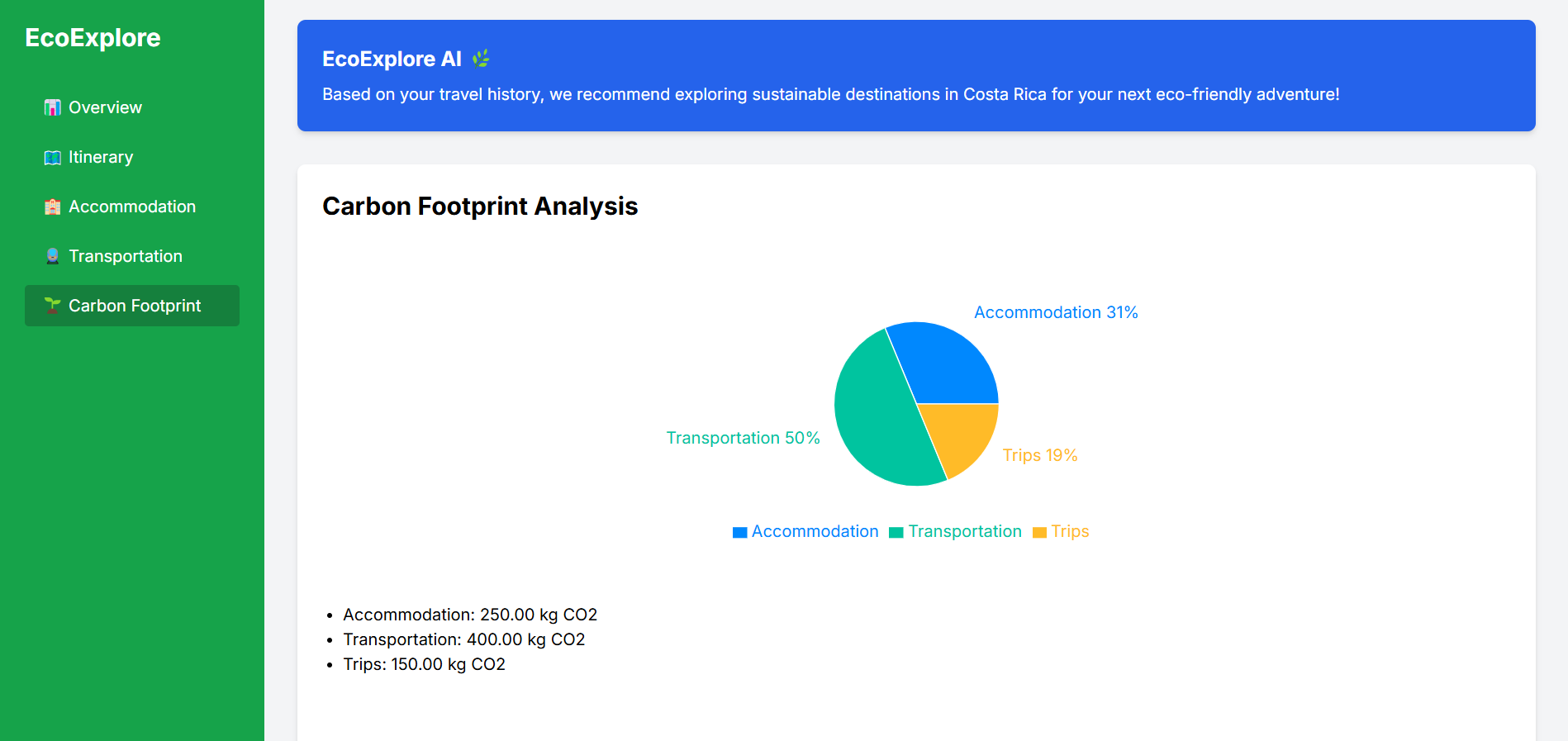
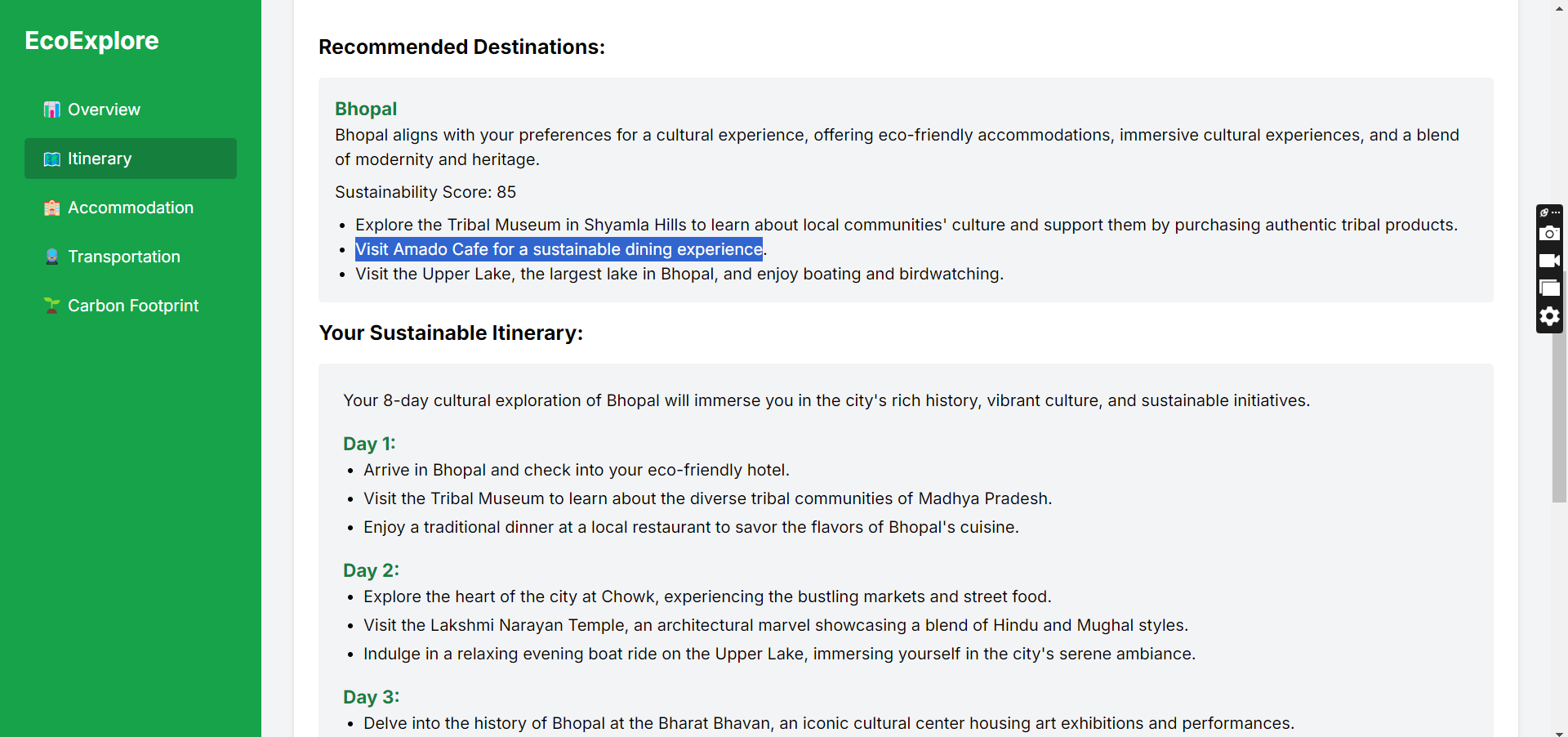
EcoExplore is an AI-powered web application designed to create personalized, sustainable travel itineraries. It helps users plan eco-friendly vacations that minimize environmental impact while supporting local businesses. Key features include personalized travel plans, a carbon footprint calculator, green transport recommendations, sustainable accommodations, and a spotlight on local, community-driven tourism initiatives.
How I built it
I built EcoExplore using a Retrieval-Augmented Generation (RAG) pipeline to ensure the generation of accurate, sustainable travel itineraries. The platform begins by capturing user preferences through an intuitive front-end interface designed with React.js and Next.js. These preferences are processed by the backend, built with Next.js API routes, which interacts with a vector database to retrieve relevant, curated travel data. This retrieved data is then fed into the Gemini AI model, which generates personalized travel plans grounded in real-world, eco-friendly options. I used this RAG architecture to avoid common AI pitfalls, such as hallucinations, ensuring every recommendation aligns with sustainability goals. The backend integrates seamlessly with the database and AI pipeline, dynamically updating user metrics like carbon savings and trip details.
Challenges I ran into
Implementing the RAG pipeline was one of the biggest challenges. As it was my first time working with this architecture, understanding its components—vector databases, data retrieval, and integration with the Gemini model—required extensive research. I encountered issues with data inconsistencies, which affected the accuracy of AI recommendations, and spent significant time cleaning and curating the sustainable travel database. Integrating the pipeline with the backend while ensuring real-time updates and user-friendly features was another technical hurdle. Despite these challenges, overcoming them provided valuable learning and shaped the final product.
Accomplishments that I'm proud of
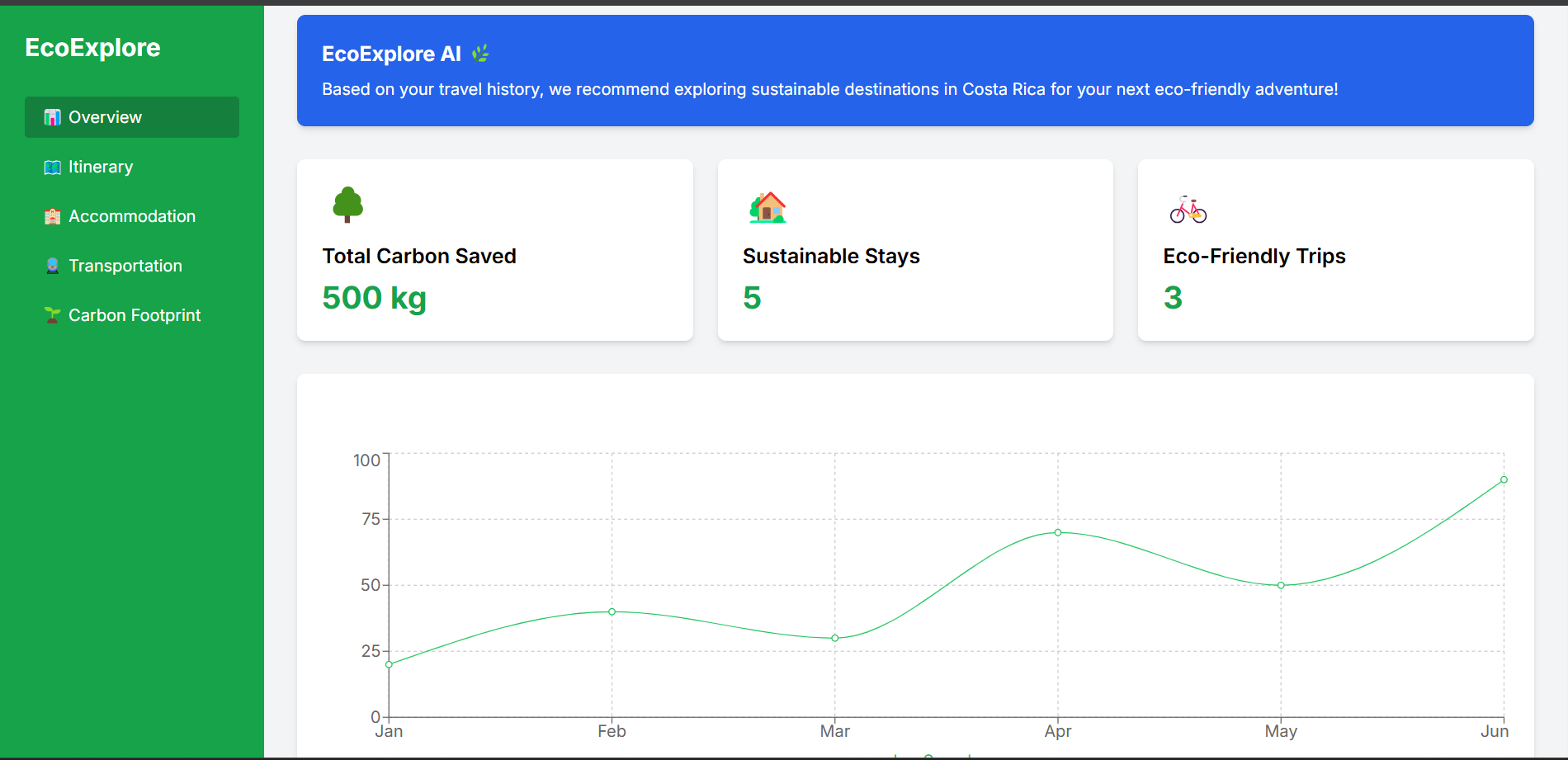
I'm particularly proud of successfully implementing the RAG pipeline for the first time, which posed a steep learning curve. This achievement ensures that the AI not only delivers highly personalized itineraries but also supports small, local businesses and promotes eco-friendly travel. Additionally, I'm proud of creating an engaging dashboard that tracks user progress, visually showcasing their contributions to sustainable travel.
What I learned
I learned the importance of balancing AI-generated content with real-world data to ensure the relevance and accuracy of recommendations. I also discovered the power of integrating multiple sustainability metrics to provide users with clear insights into how their choices impact the environment. Working with AI models and building an ecosystem of sustainable businesses gave me valuable insights into the potential of tech to drive positive change in the travel industry.
What's next for EcoExplore
In the future, I plan to expand EcoExplore by adding virtual reality previews of sustainable travel experiences, allowing users to explore destinations before booking. I aim to continuously improve the AI's recommendations, learning from user preferences and incorporating more diverse eco-friendly options. Additionally, I plan to partner with more local tourism initiatives, expand my carbon tracking features, and refine the platform to make sustainable travel even more accessible to everyone.

Log in or sign up for Devpost to join the conversation.