-
-
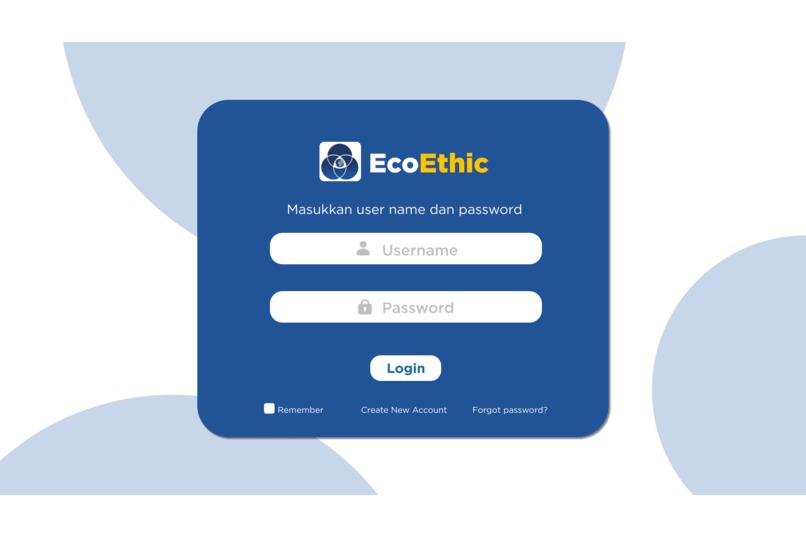
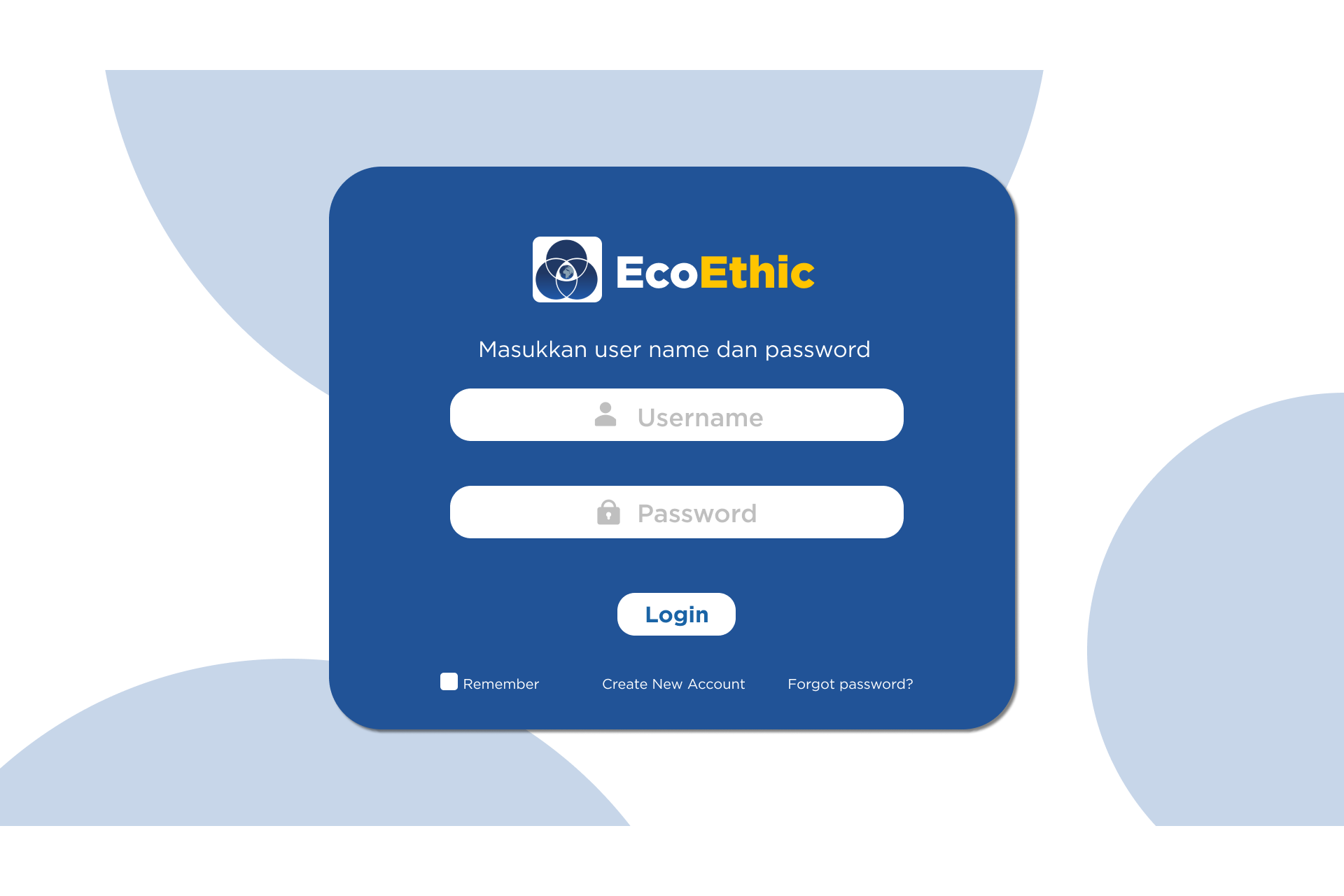
Create EcoEthic account using a Google acc to connect with EcoEthics. Account security standards are also maintained with a firewall
-
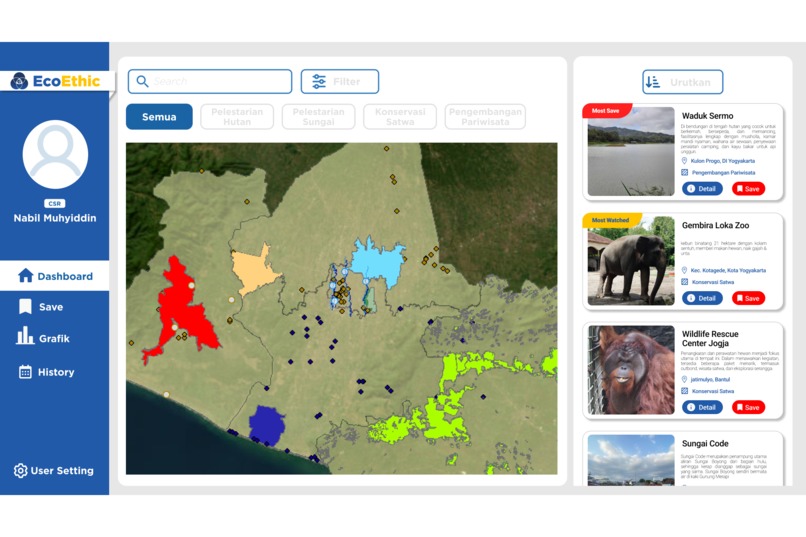
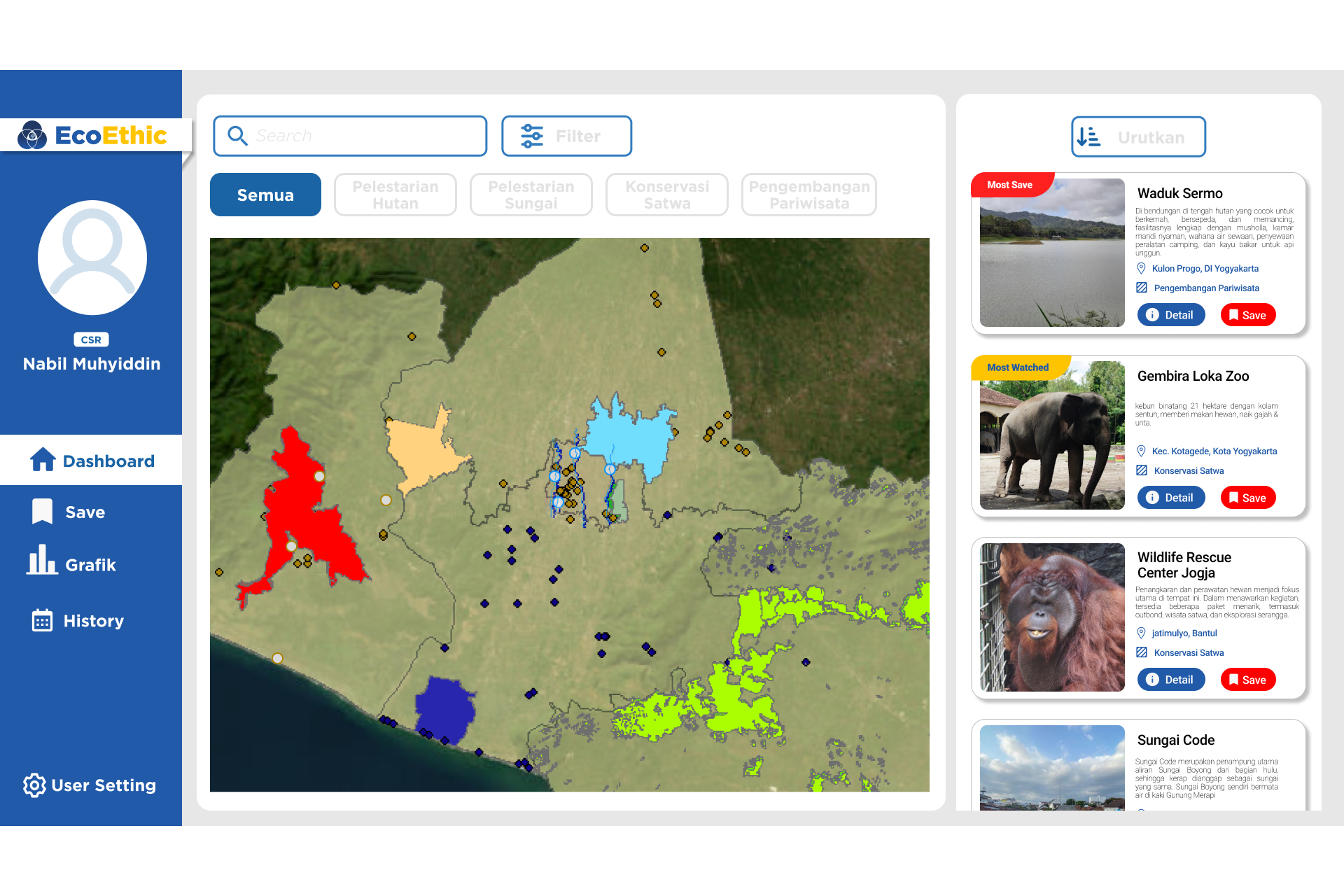
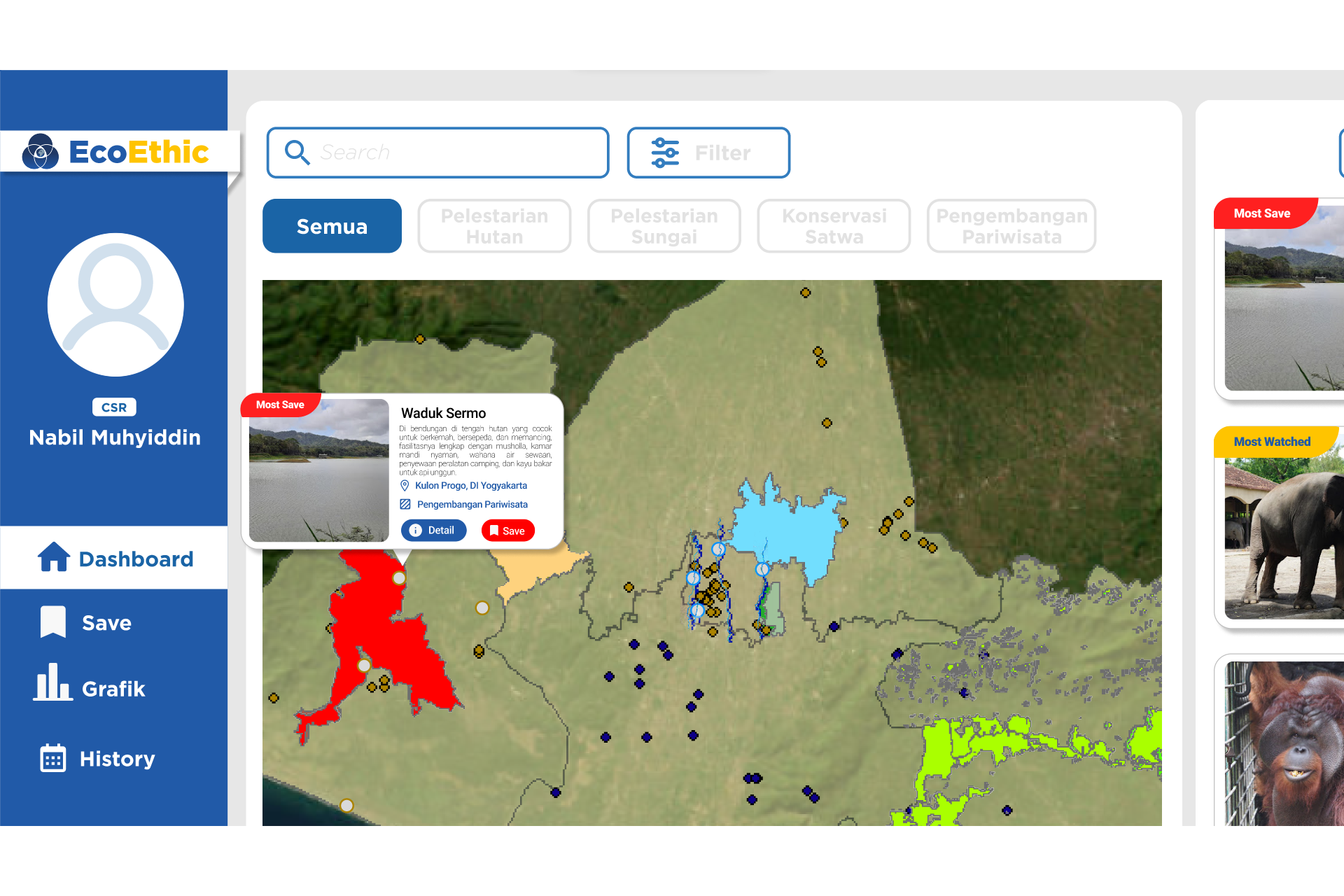
Dashboard with sidebar containing collection of features. Recommended places on the right of the screen and map in the middle.
-
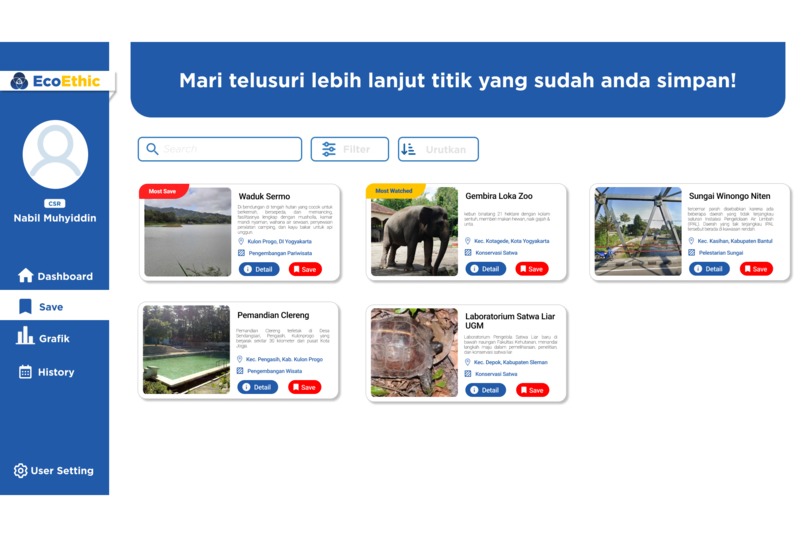
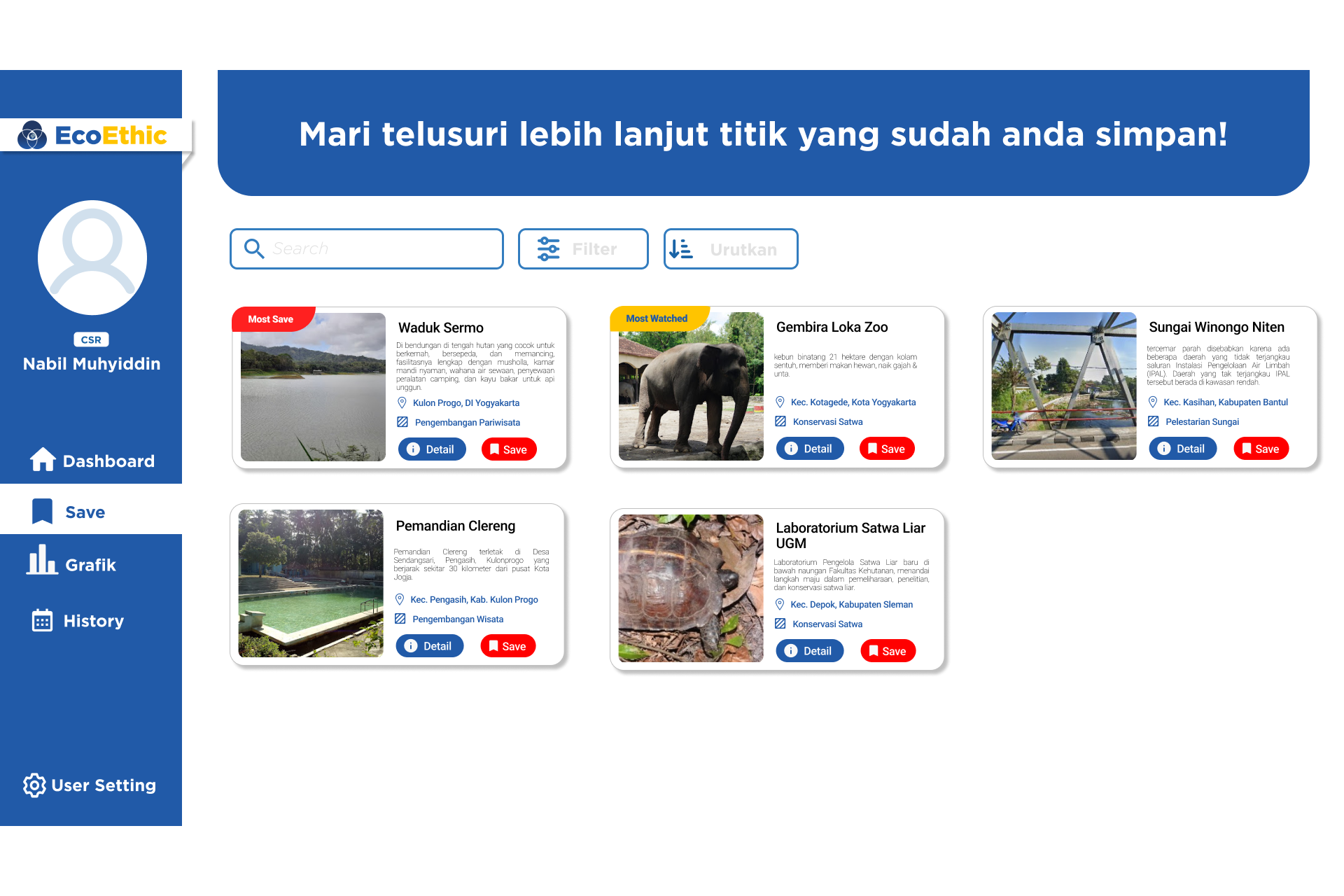
Minimizing losing track of searches, there is a feature to save unlimited locations.
-
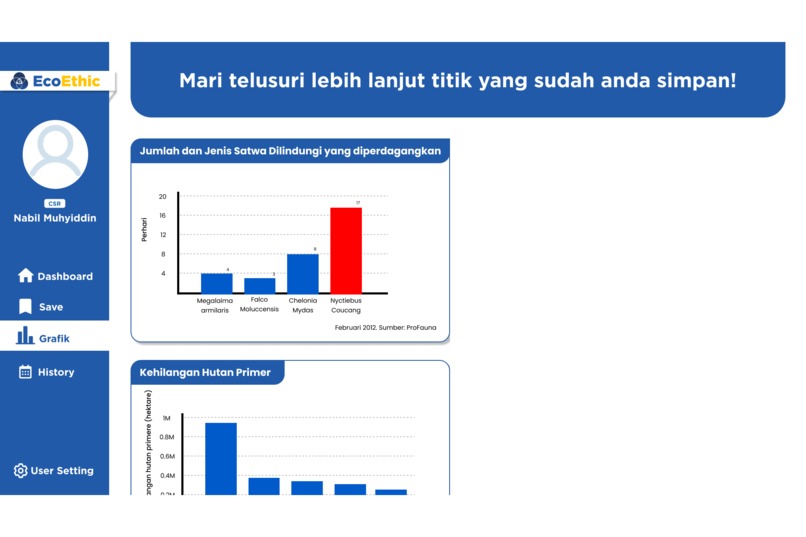
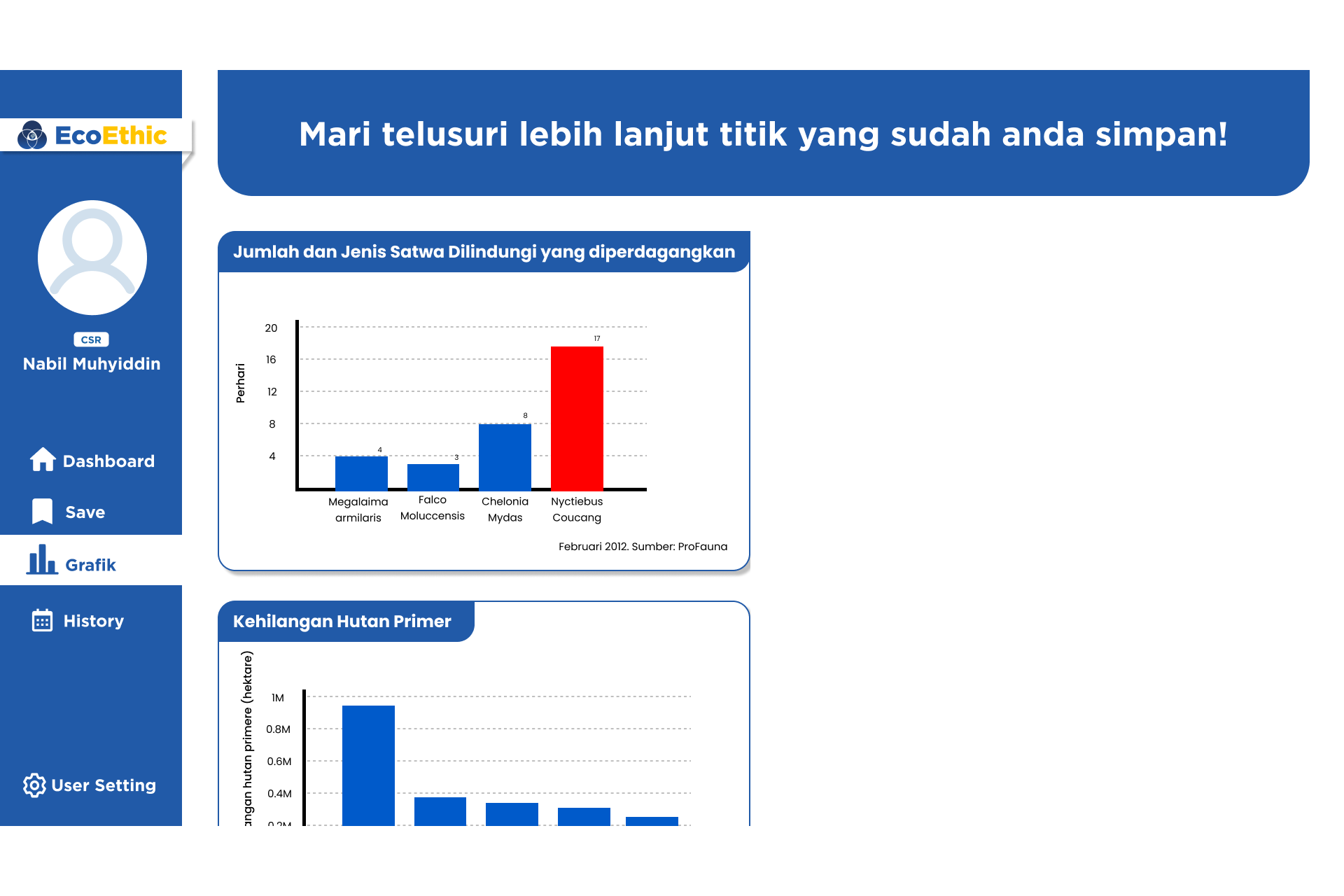
Make wise decisions for CSR with accurate graphs
-
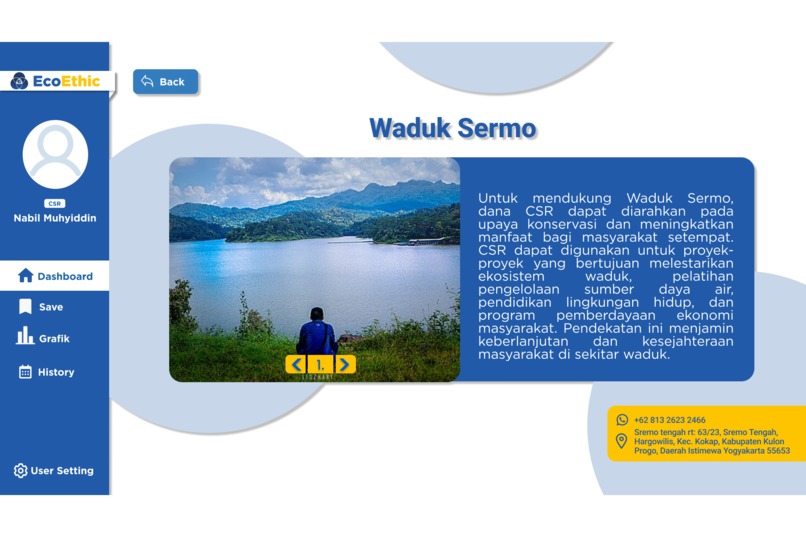
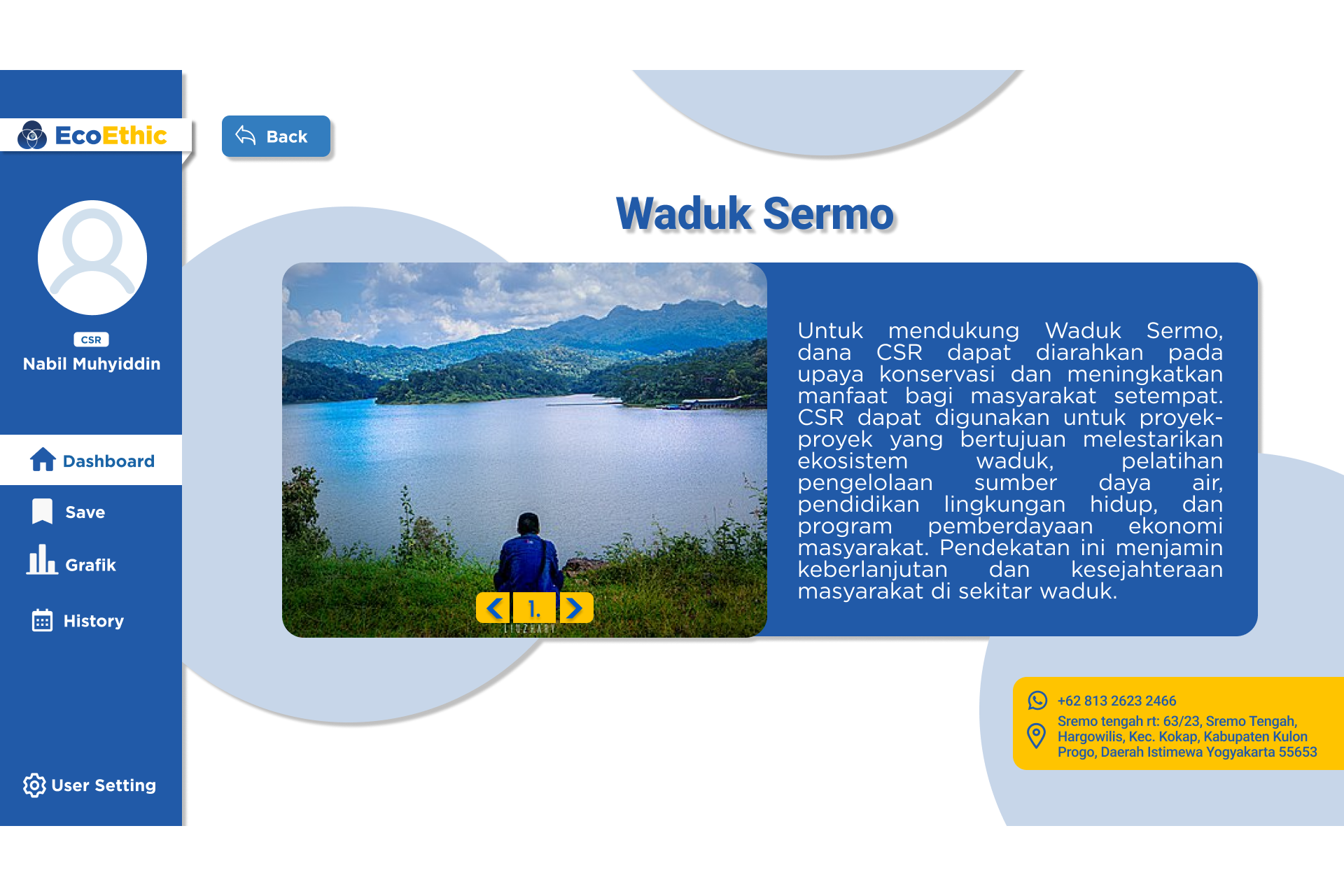
The details of each tagging area are also equipped with important data
-
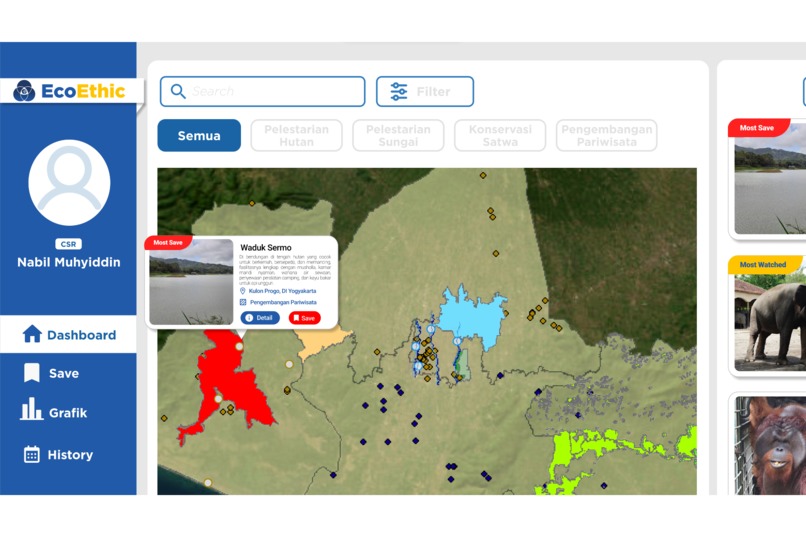
Popup tagging in each area, plus there are also filter and sorting features to make things easier for users.
Inspiration
The EcoEtics project is living proof that the role of companies in creating equitable positive social impact across different regions is crucial. The initiative inspires companies to adopt smarter and more informed Corporate Social Responsibility (CSR) strategies. Using in-depth data and analysis, companies can understand the diverse needs and challenges in different regions. Active collaboration with stakeholders such as governments, NGOs and local communities is also key to success. Beyond providing financial assistance, companies can commit to creating sustainable and inclusive change. By doing so, companies can carry out their social responsibilities more effectively and fairly, contributing to the overall betterment of society.
What it does
The EcoEtics project has a primary focus on mapping areas that have the potential to receive Corporate Social Responsibility (CSR) with equitable coverage. The aim is to avoid the centralization of CSR funds in the same region over and over again, and instead, ensure that different regions can benefit from a company's CSR initiatives in a fair and comprehensive manner. With this approach, the project seeks to create equity in the allocation of CSR funds, avoid concentration of funds in one region, and help other regions to benefit comparably. This is in line with the principles of more inclusive and sustainable CSR, which seeks to achieve a more equitable positive impact across different communities. As such, the project aims to create equity in resource allocation and support equitable development across areas in need.
How we built it
The way we built this project was by utilizing a combination of technologies provided by ESRI companies, such as ArcGIS Pro and ArcGIS Online Story Maps. ArcGIS Pro played a key role in the process of creating our story maps and website. In this stage, we catered to the needs of the company and the target area by conducting an in-depth analysis. This analysis aimed to identify areas of high risk and understand the factors contributing to that risk. Using the powerful geospatial analysis tools available in ArcGIS Pro, we were able to gain a deeper understanding of the situation in these areas, which in turn helped us make smarter CSR fund allocation decisions. Further, we utilized ArcGIS Online Story Maps to explain the rationale behind the company's allocation of CSR funds to high-risk areas. In this case, the features provided by Story Maps were used to create a strong visual story. This story included text, images and maps, which helped us to clearly and effectively explain to the company and stakeholders why the CSR fund allocation decisions were made as they were. This aims to create transparency in the CSR decision-making process and gain wider buy-in from relevant parties.
Challenges we ran into
Develop a sentence one of the main challenges we faced in the EcoEtics project was convincing companies to adopt and use the initiatives we had created. We realized that in order to achieve the initial goal of the project, which is equitable development and conservation of the region, we need the cooperation and active participation of companies as key partners.
Accomplishments that we're proud of
The EcoEtics project is expected to achieve several milestones. One of them is how the EcoEtics project has managed to allocate Corporate Social Responsibility (CSR) funds more equitably to various regions, creating a broader and fairer impact in high-risk areas. Through in-depth geospatial analysis, the project was also able to better understand the risks in different regions, leading to more informed decision-making in the allocation of CSR funds. In addition, the project created transparency in the CSR decision-making process, providing companies and stakeholders with a better understanding of how and why funds were allocated. Through collaboration with third parties, strong partnerships were established, which strengthened the effectiveness of the project and helped achieve greater impact. The use of ArcGIS Online Story Maps enabled the creation of persuasive visual stories, explaining the rationale behind the allocation of CSR funds and the resulting impact. All these achievements signify that the EcoEtics project has the potential to create significant positive change in various regions and has committed the company to long-term sustainability.
What we learned
From the EcoEtics project, we learned a number of valuable lessons. We realized that in-depth data analysis is key in making decisions on CSR fund allocation, and geospatial data has a central role in understanding local conditions. We also understood that transparency is a key factor in gaining support from companies and stakeholders. Collaboration with third parties such as government, NGOs, and local communities proves the importance of partnerships in achieving significant impact. We emphasize the importance of committing to sustainability in areas where CSR funds are allocated. The use of visual stories, such as those generated by ArcGIS Online Story Maps, is an effective tool to explain and promote CSR initiatives. However, we also recognize that influencing change in the way companies allocate CSR funds can be a challenge that requires a thoughtful approach and effective communication. These learnings will form a strong foundation for future projects, and we will continue to be committed to creating positive and sustainable social impact in various regions.
What's next for Ecoethics
The next step for Ecoethics is to maximize the potential of the features provided by ESRI, with a focus on developing more accurate geospatial data analysis and high-risk area identification capabilities. The project will also expand partnerships with various third parties, adopt the latest technologies, improve monitoring and evaluation systems, and develop visual storytelling features to explain CSR impacts more persuasively. In addition, the project will further emphasize community inclusion and participation in CSR fund allocation decision-making. With these efforts, Ecoethics aims to achieve positive and sustainable social impact in different regions more effectively and fairly.


Log in or sign up for Devpost to join the conversation.