-
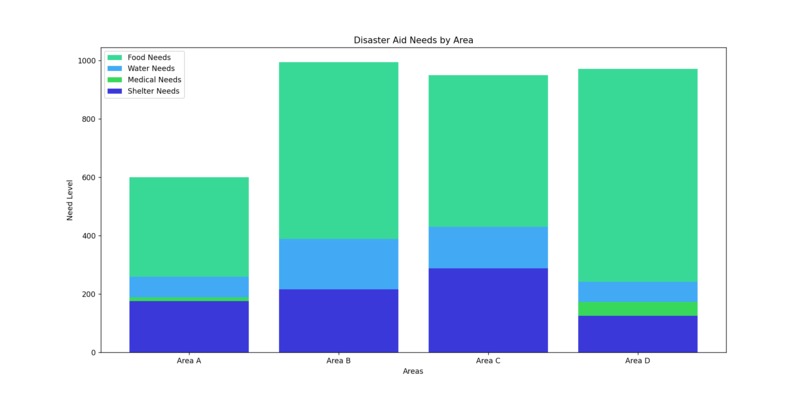
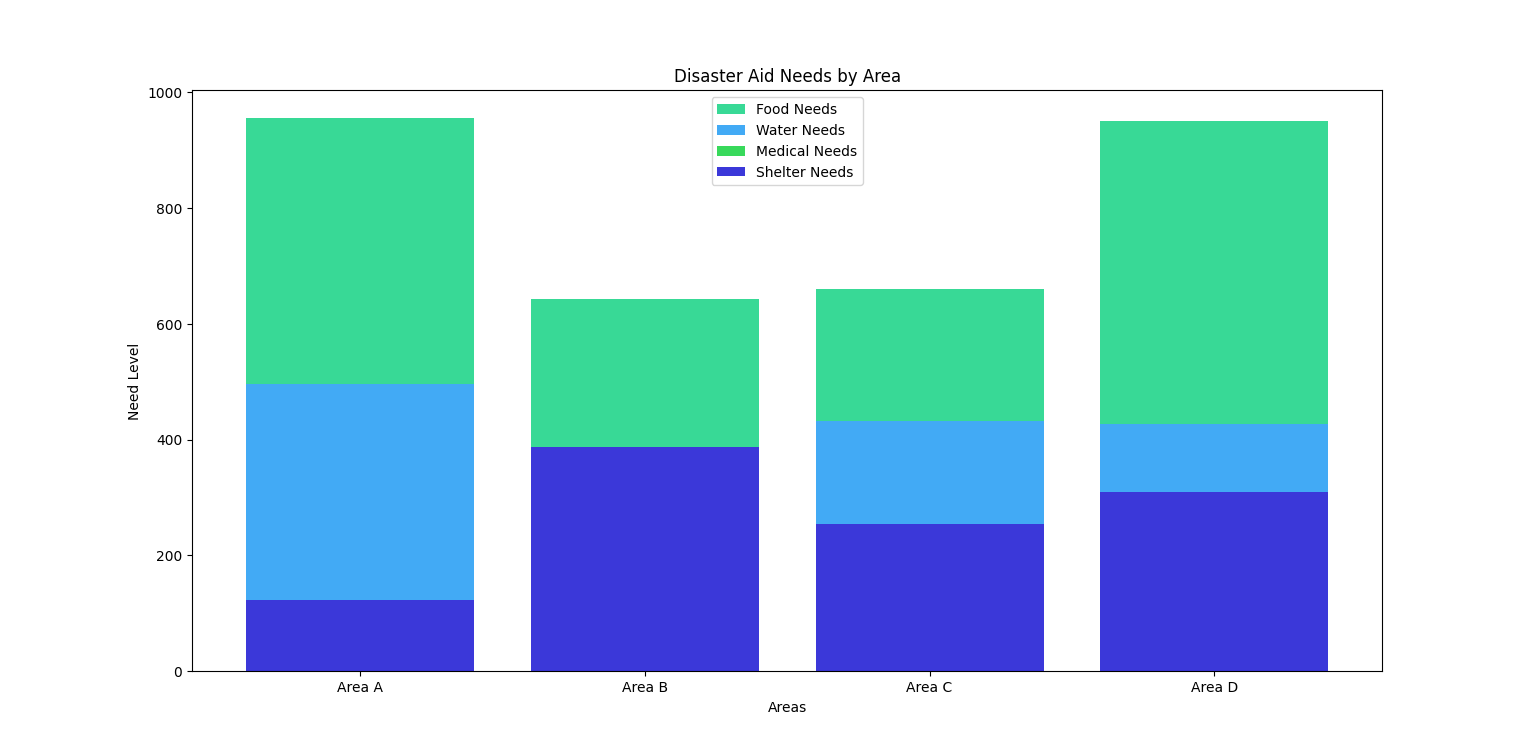
Visual example 1 for first Python Code
-
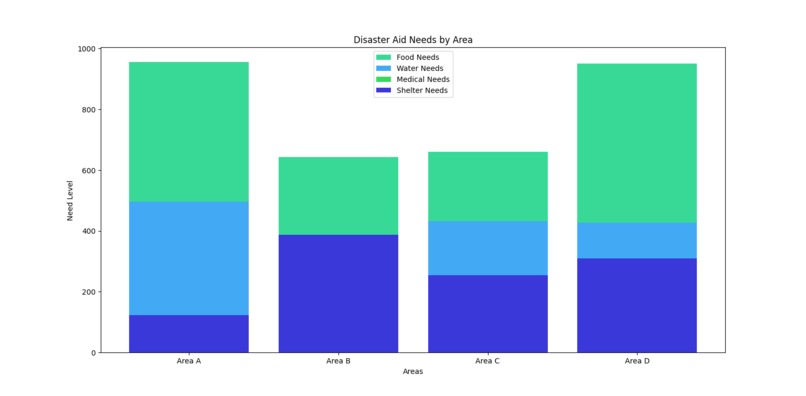
Visual Example 2 for first Python Code
-
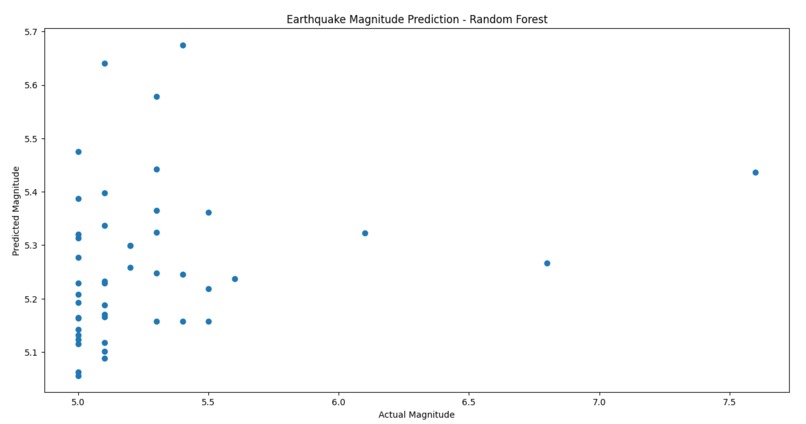
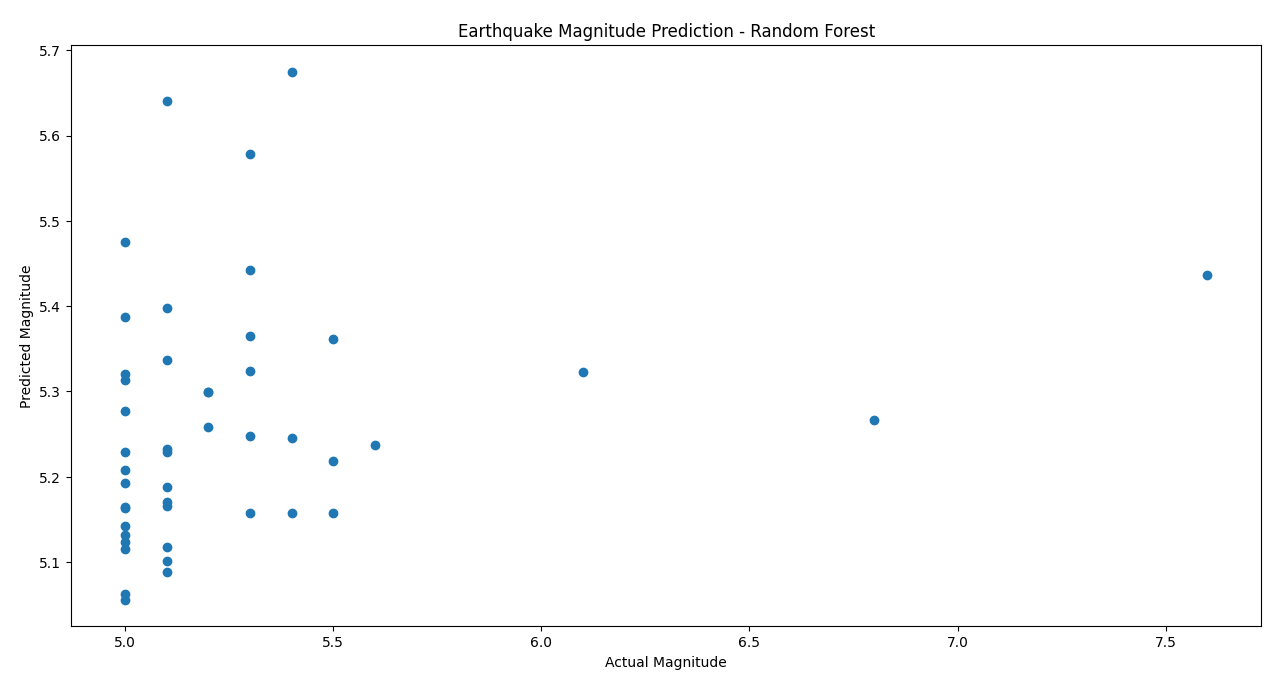
Visual Example for second Python Code
-

Console results for magnitude for second Python Code

Inspiration
Disasters affect humans in many detrimental ways, so I wanted to create some basic AI models that help out humans during these tough times, and are ideas that have the potential to be further improved. I also wanted to improve more of my knowledge in Python, and this gave me the perfect opportunity to do so that helps the community too.
What it does
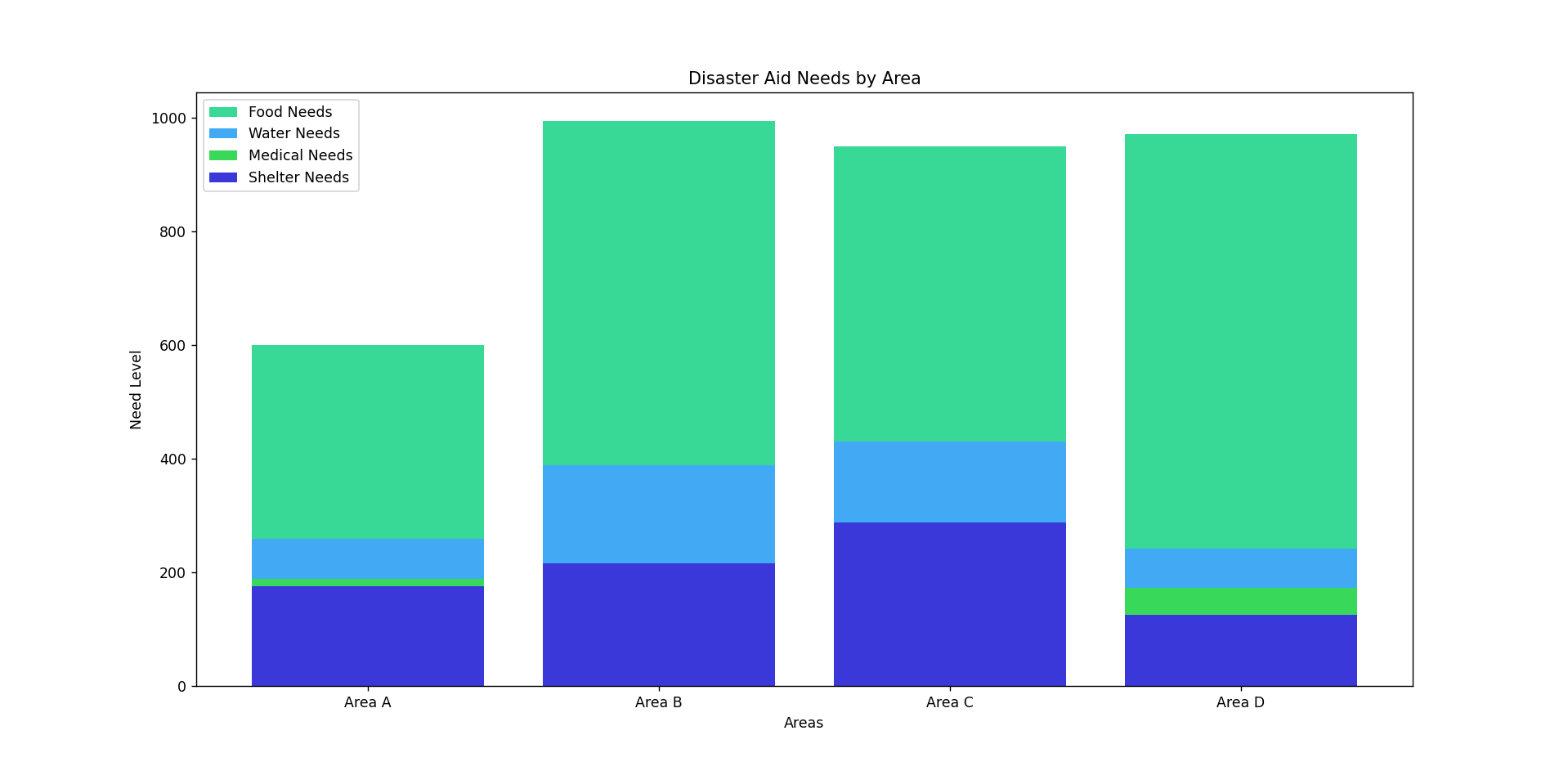
There are two AI models as a part of the project. The first is a model of an AI that can allocate resources based off of the data given to it. Here, there are 4 areas and a limited number of resources to distribute, along with the number of resources each area needs. The model distributes these resources and updates the current resources to account for the loss, and repeats this every 5 seconds to maintain a blockchain and record resource distribution. The model then provides a visual to understand how the AI distributes the resources amongst the different areas. The second code is an AI model that predicts the magnitudes of future earthquakes. This is done by sending a GET request to an earthquake API, obtained from USGS, and using specific data like longitudes, latitudes and depth of past earthquakes to create a new dataset. This data is then trained using a Random Forest Regression model to predict magnitudes, and plots the predicted magnitudes vs the actual magnitudes of past earthquakes. It can also predict the magnitude of a potential earthquake in a specific area with coordinates.
How we built it
All of this code was built on Python, using PyCharm as an IDE. The USGS (US Geological Services) earthquake API was used as well for the second project. The libraries used include random, time, matplotlib, requests, pandas, and sklearn. If you would like a more detailed explanation of the code, the document below explains it better (added to the try it out part).
Challenges we ran into
Because I would consider myself a beginner in Python, I didn't really know how to create models as complex as this, and it took a very long time to understand how all the components work. It also took me a ridiculously long time to figure out why some of the columns from the database were not working as they should, and that was because of naming issues.
Accomplishments that we're proud of
I'm proud that something like this is my first AI model coded with Python, and I'm proud at myself for spending the time pouring over videos and websites to try making a project like this :)
What we learned
I learnt a lot about the potential AI has to revolutionize various fields, including disaster management, and a future where AI can help contribute to lives in a positive way. I also learnt more about technology and how Python can be used to create even the most imaginative ideas and I'm glad for the opportunity this hackathon gave me.
What's next for EcoEmergency
I would love to create a website or app for this and make it usable by the public, and include more information about the potential of AI during disaster management. I would also like to make this website or app interesting to all age groups, with vibrant graphics and cool animations.
Built With
- pycharm
- python
- usgs-earthquake-api

Log in or sign up for Devpost to join the conversation.