-
-
-
-
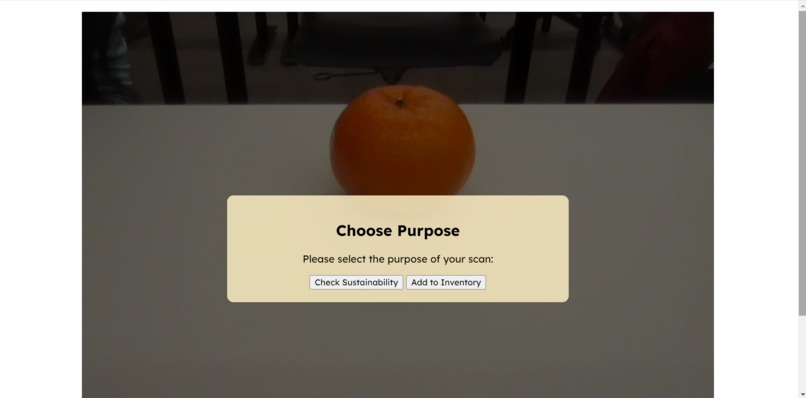
Homescreen
Inspiration
This project was inspired by our experiences with food waste. As university students, we are often busy and sometimes forget what food is in our fridge, or buy whatever food will get us by during exam season. Taking a moment to reflect on these decisions made us realize that the food we consume and how we interact with it has an outstanding impact on our environment. We want people to take every purchasing decision seriously, since every bite wasted is a bite that could have gone to someone in need.
What it does
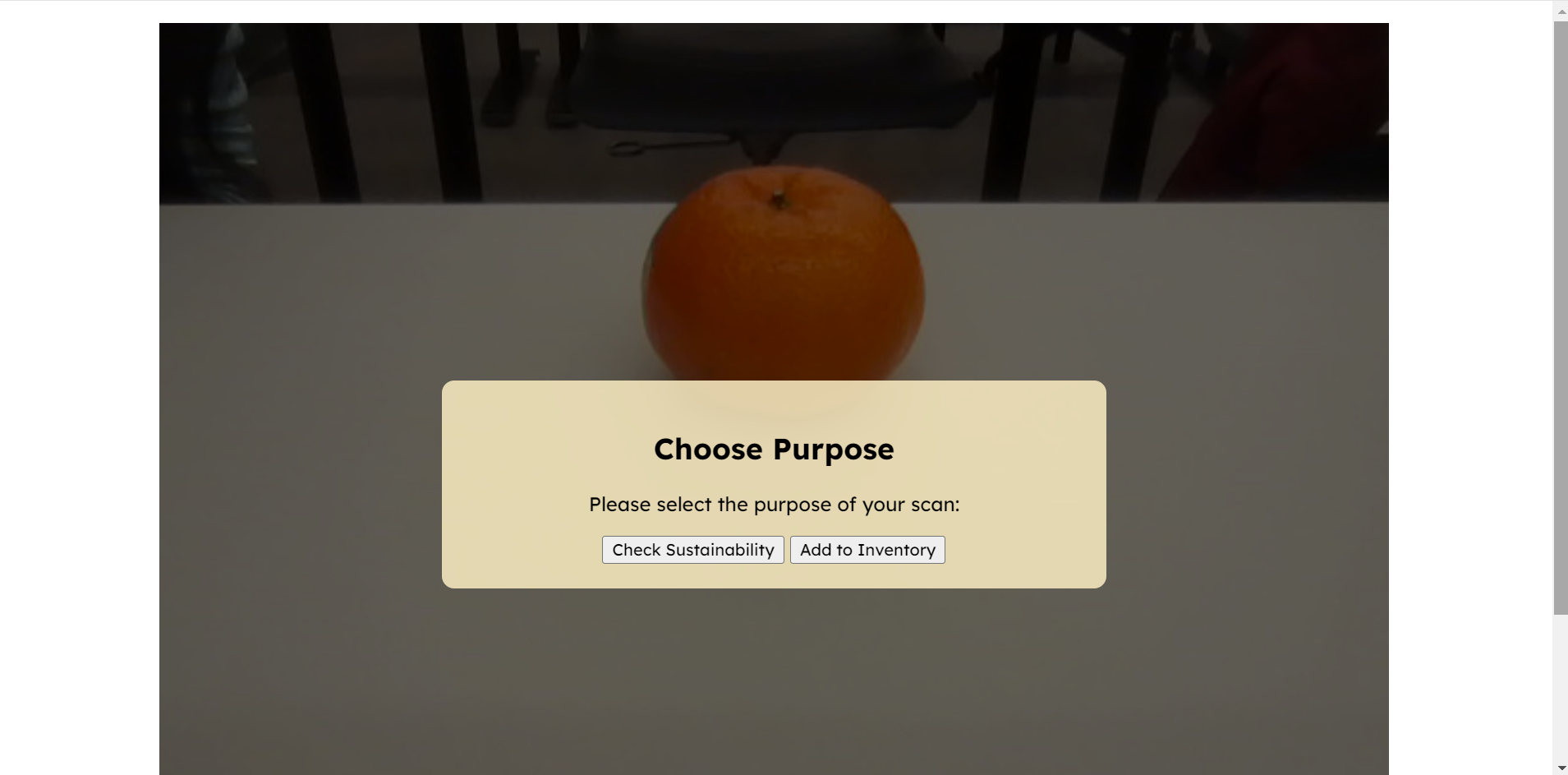
Ecoscore can be accessed by browser on a laptop. Upon opening, users will be given the option to start scanning or add an item to inventory. If scan mode is selected, the camera is opened and users can place a food item in view. A picture will automatically be taken. This image is then processed, the food item is identified, and a corresponding "Eco-Score" out of 5 will be displayed. The Eco-Score factors in carbon emissions and water consumed during production, comparing it with the data from other items
How we built it
We built the basic user interface (front end) using HTML, CSS, and JavaScript. The back-end involves the machine learning model we built using TensorFlow. We fed in hundred of pictures of different food items to allow the model to become an accurate predictor. Then, we created the algorithm for developing an ecoscore.
Challenges we ran into
Like any ambitious project, EcoEats faced its share of challenges. From creating the machine learning model to predict the food item, ecoscore generator based on that food item, and integrating the features together on both the front-end and back-end, overcoming these hurdles demanded creative problem-solving and a steadfast commitment to our mission.
Accomplishments that we're proud of
We are proud that we were able to delve into these new technologies. We are proud of everything we have learned. We did not have any experience training image detection models and are happy to say that we have now done so! We are proud of our dedication to this despite being really tired too...
What we learned
We learned more about developing and training machine learning models, different ways to design a webapp to be visually appealing and user friendly. We also discovered new technologies, our strengths and weaknesses (e.g. front-end, design, etc.) and that 36 hours is less time than you think!
What's next for EcoEats
We would also like to be able to give users the option of adding food items to their own databases to suggest them healthy recipes.


Log in or sign up for Devpost to join the conversation.