Inspiration
Drexel University's 2,000+ tons of annual waste contribute to air pollution, litter, and health hazards, fueling respiratory illnesses like asthma, allergies, and mental health struggles due to polluted, cluttered campuses. We were driven to create a solution that empowers students to combat these health risks, improving air quality, physical well-being, and campus cleanliness to foster a healthier community.
What it does
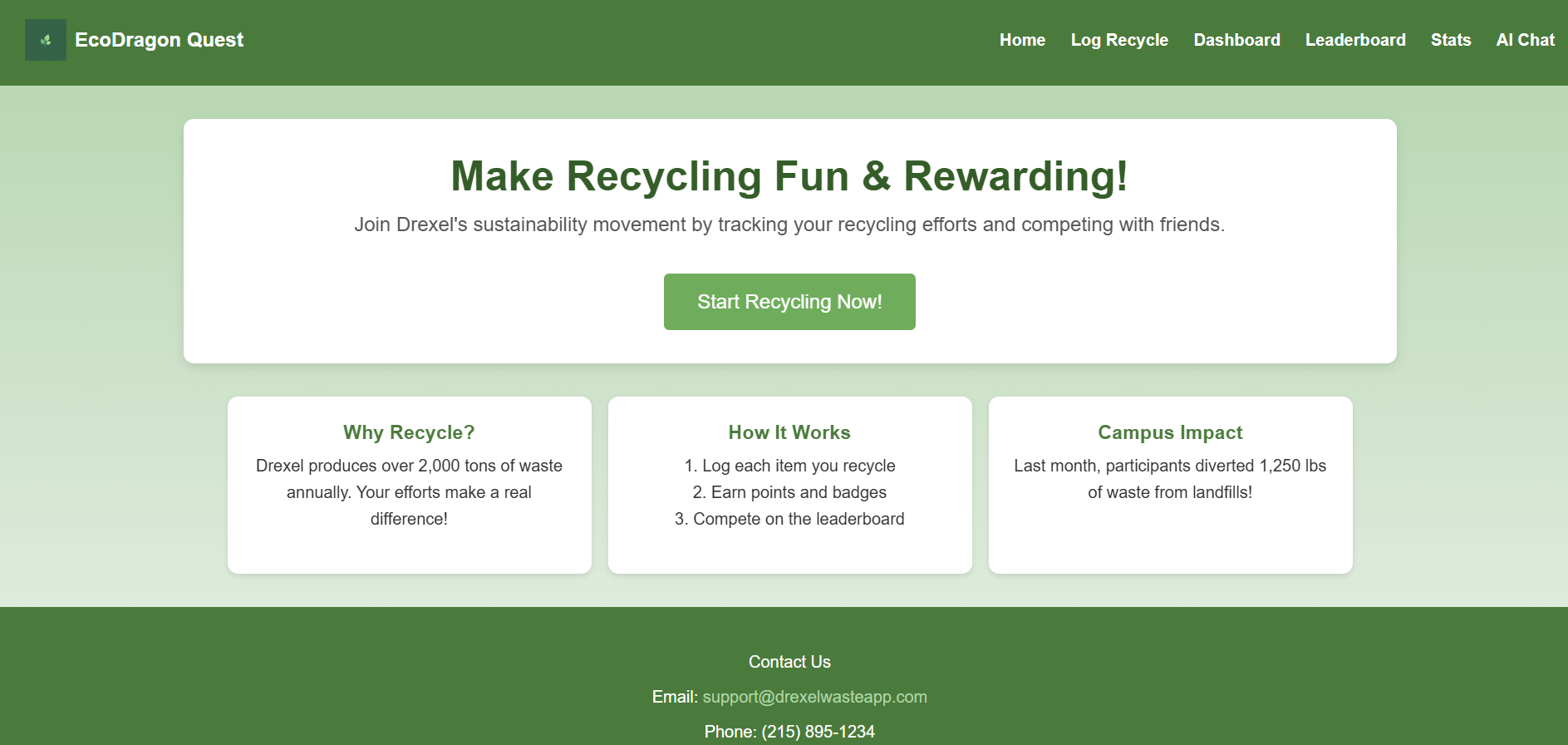
EcoDragon Quest is a web app designed to reduce health risks from air pollution and campus waste by gamifying recycling. Users log recycled items or weights, earning points and badges while competing on a leaderboard. A health feedback metric (e.g., “By recycling 2.3 lbs, you contributed to 0.02% cleaner air”) shows immediate air quality improvements, reducing risks of lung diseases and allergies. A health benefits chart visualizes gains in air quality, lung health, and mental well-being, while a Gemini AI chat answers questions like “How does recycling reduce asthma triggers?” The app promotes cleaner campuses, enhancing physical and mental health.
How we built it
We used HTML5, CSS3, and JavaScript to create a responsive, health-focused UI with animations and audio feedback. Chart.js drives visualizations, including a health benefits chart linking recycling to reduced respiratory and mental health risks. Google’s Gemini API powers an AI chat for health-related recycling education. A waste calculator and health feedback metric quantify air quality gains (e.g., 100 lbs recycled = 1% cleaner air), emphasizing medical outcomes like better lung function and stress reduction over waste diversion.
Challenges we ran into
-Balancing point systems for item-based and weight-based recycling. -Finding credible sources for air quality improvements (100 lbs = 1% cleaner air) to reflect medical benefits without real-time pollution data. -Designing a health benefits chart that clearly ties recycling to lung health and mental well-being. -Integrating health feedback without cluttering the UI, ensuring focus on health outcomes.
Accomplishments that we're proud of
-Interactive waste calculator incentivizes bulk recycling. -Engaging UI with animations, audio, and large, clear charts. -Flexible logging system (items and weights) updating unified stats. -Health feedback metric showing air quality gains, motivating users to reduce respiratory risks. -Health benefits chart visualizing improvements in lung health, air quality, and mental well-being. -Gamified system fostering habits that enhance physical well-being and campus cleanliness.
What we learned
-Connecting recycling to specific health outcomes, like fewer asthma attacks or reduced anxiety from cleaner spaces. -Crafting visualizations to highlight medical benefits (e.g., % improvement in air quality). -Using gamification to drive health-focused behavior change, reducing pollution-related illnesses. -Leveraging APIs to deliver education on pollution’s health impacts.
What's next for EcoDragon Quest
-Add IoT bins to track recycling accurately, enhancing health impact data (e.g., PM2.5 reductions). -Integrate real-time air quality monitoring to provide precise feedback on lung health benefits. -Launch campus-wide health campaigns as a current freshman senator with the help of the Civic Engagement Chair under the Undergraduate Student Government Association and the EcoReps student organization to reduce respiratory illnesses, allergies, and stress, creating a cleaner, healthier Drexel.

Log in or sign up for Devpost to join the conversation.