-

Plan Routes
-

Dashboard
-
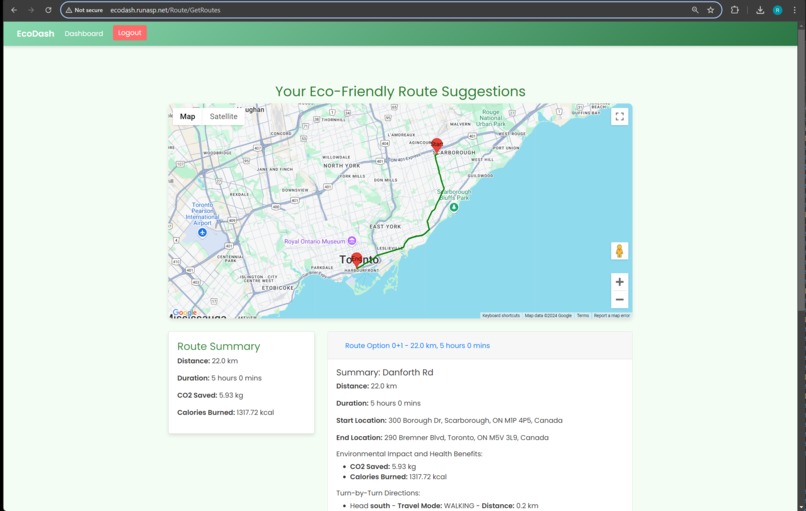
Find Routes
-
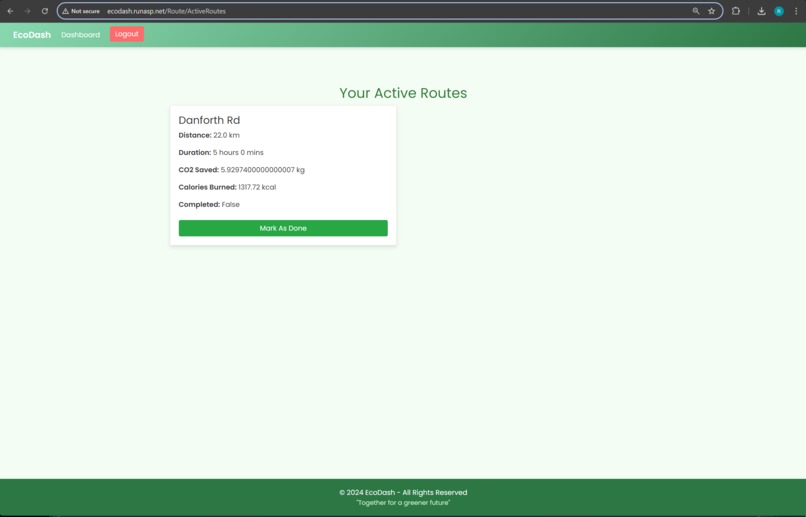
Active Routes
-
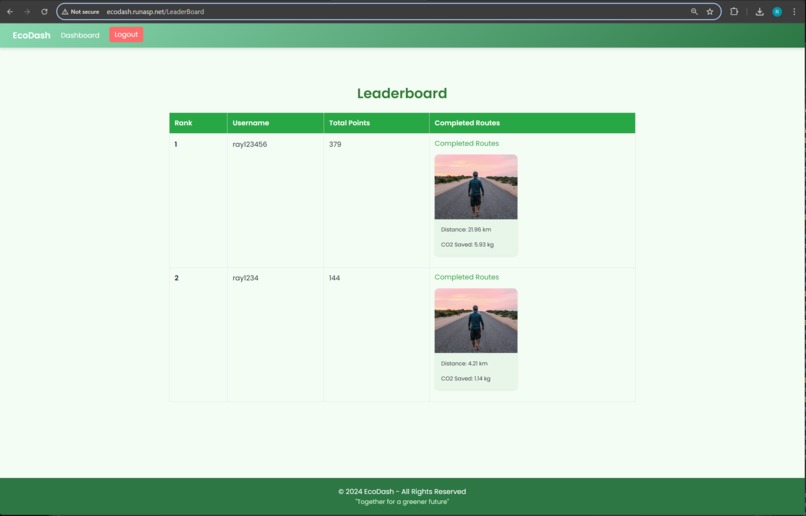
Leaderboard
-
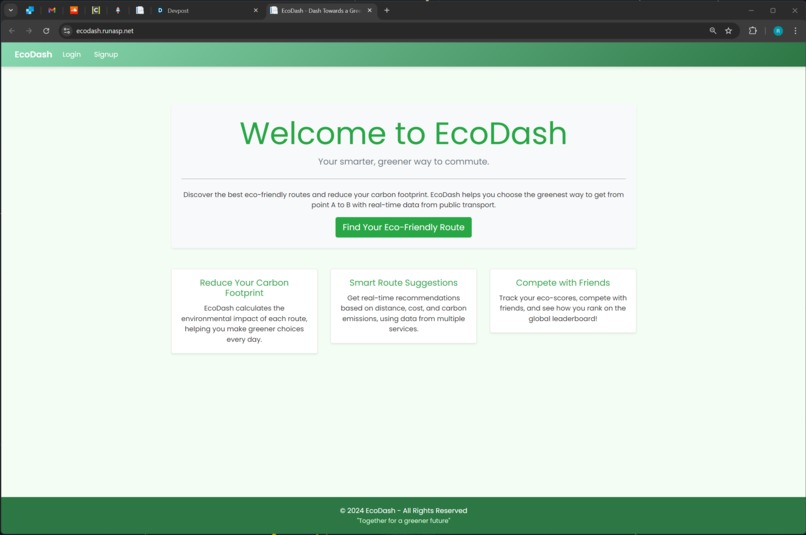
Index
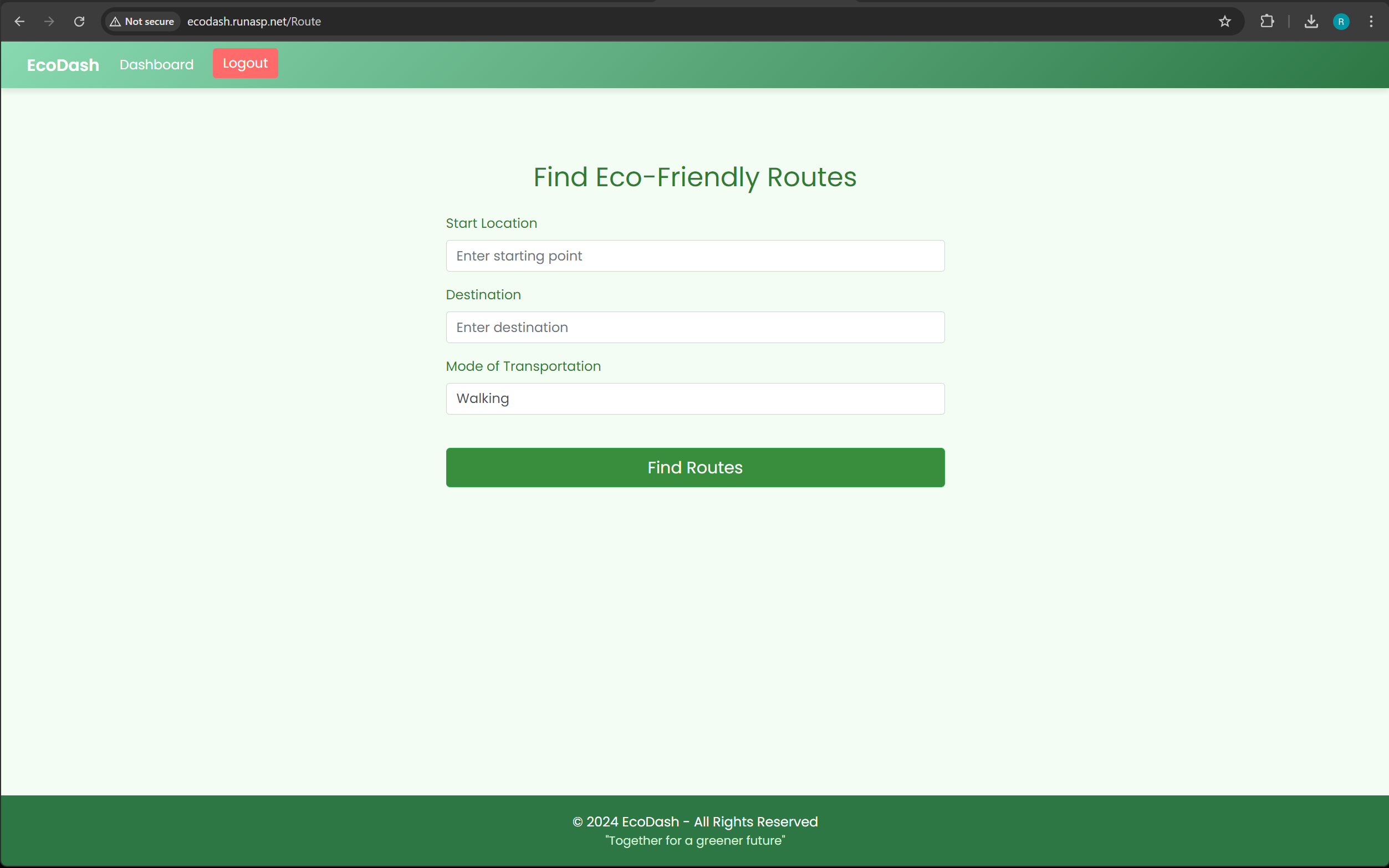
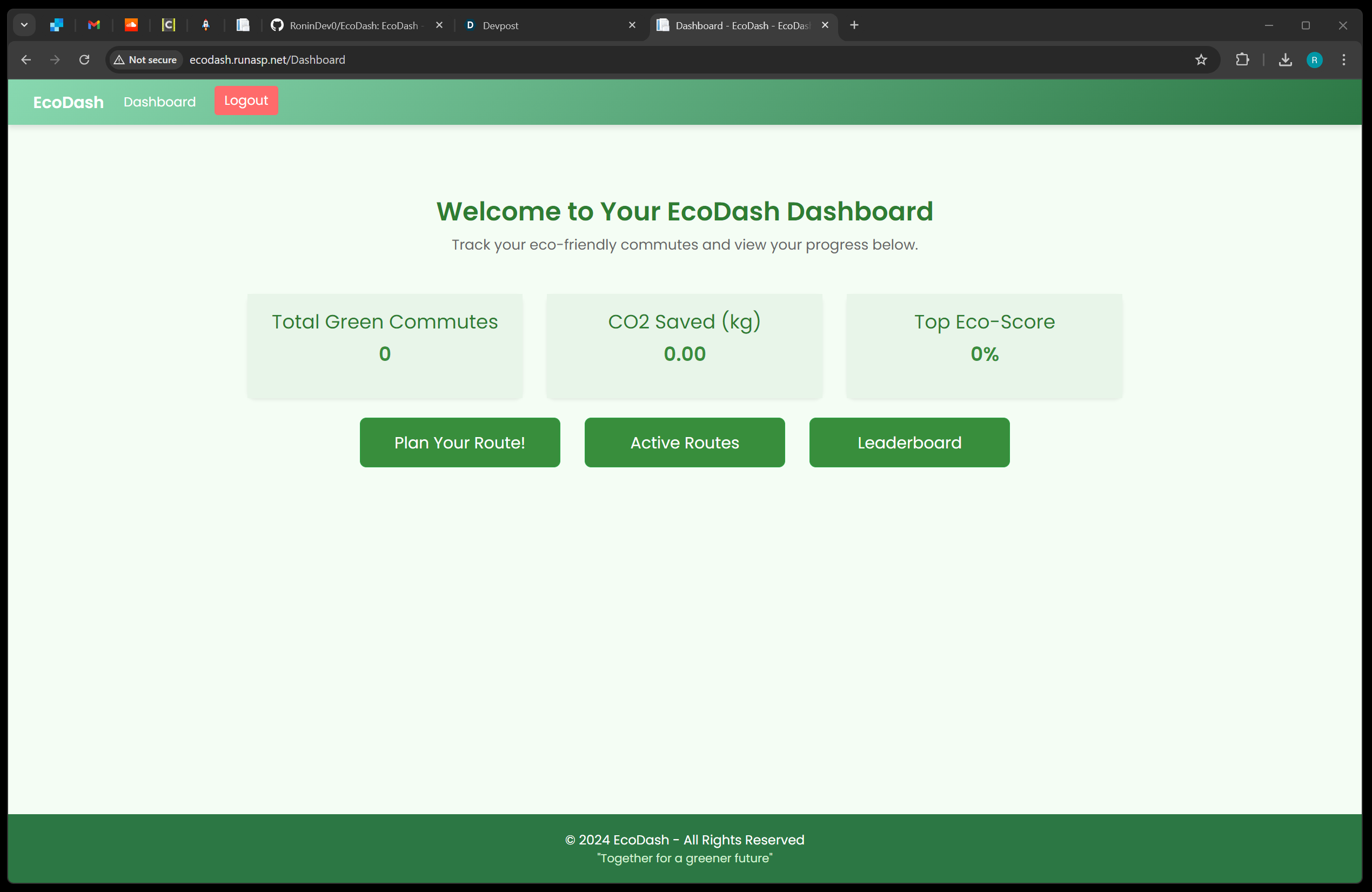
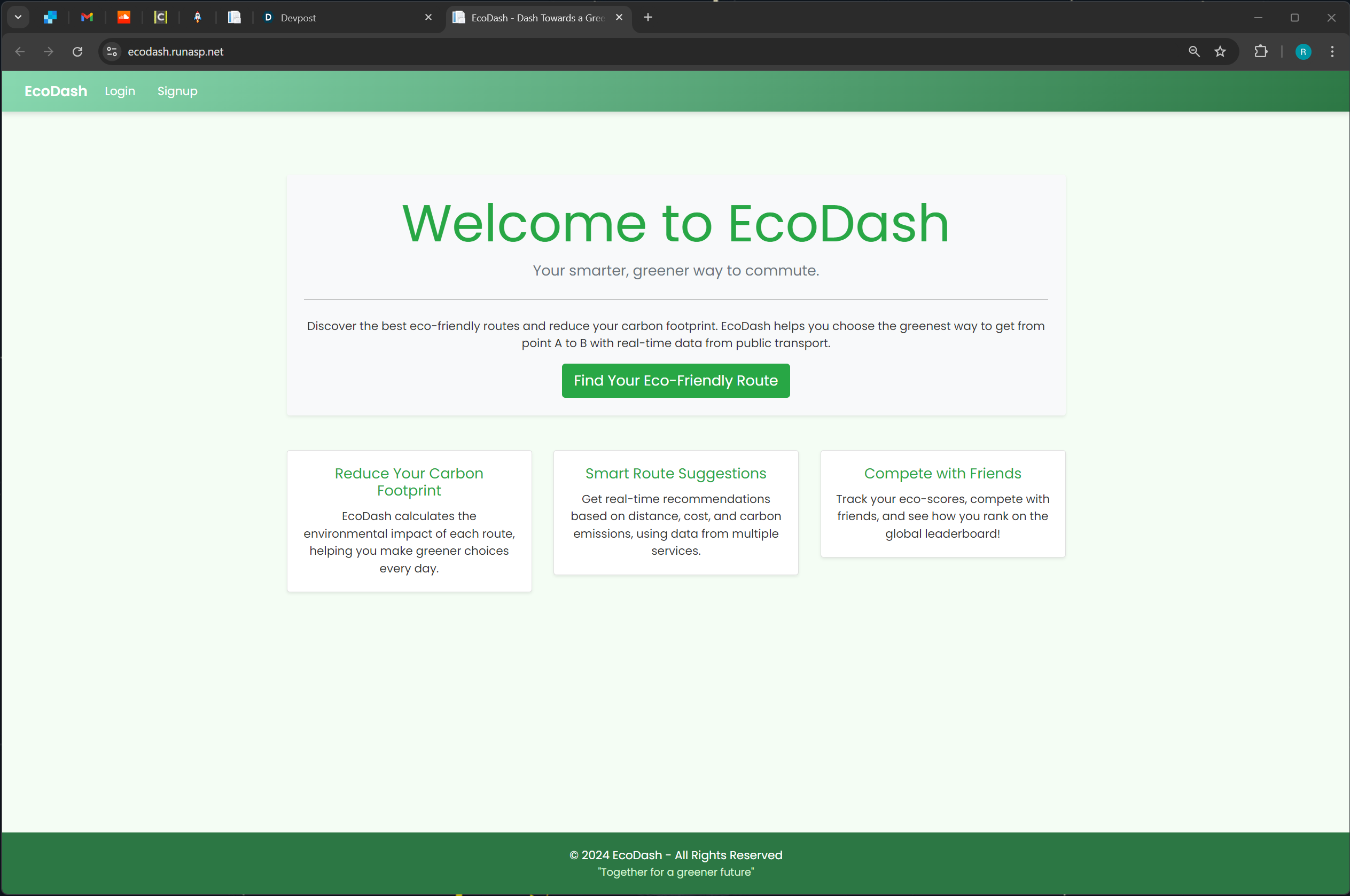
1. Inspiration EcoDash was born from the desire to promote sustainability and environmental consciousness in our daily commutes. With climate change at the forefront of global issues, we wanted to create a solution that would help individuals make smarter, eco-friendly transportation choices.
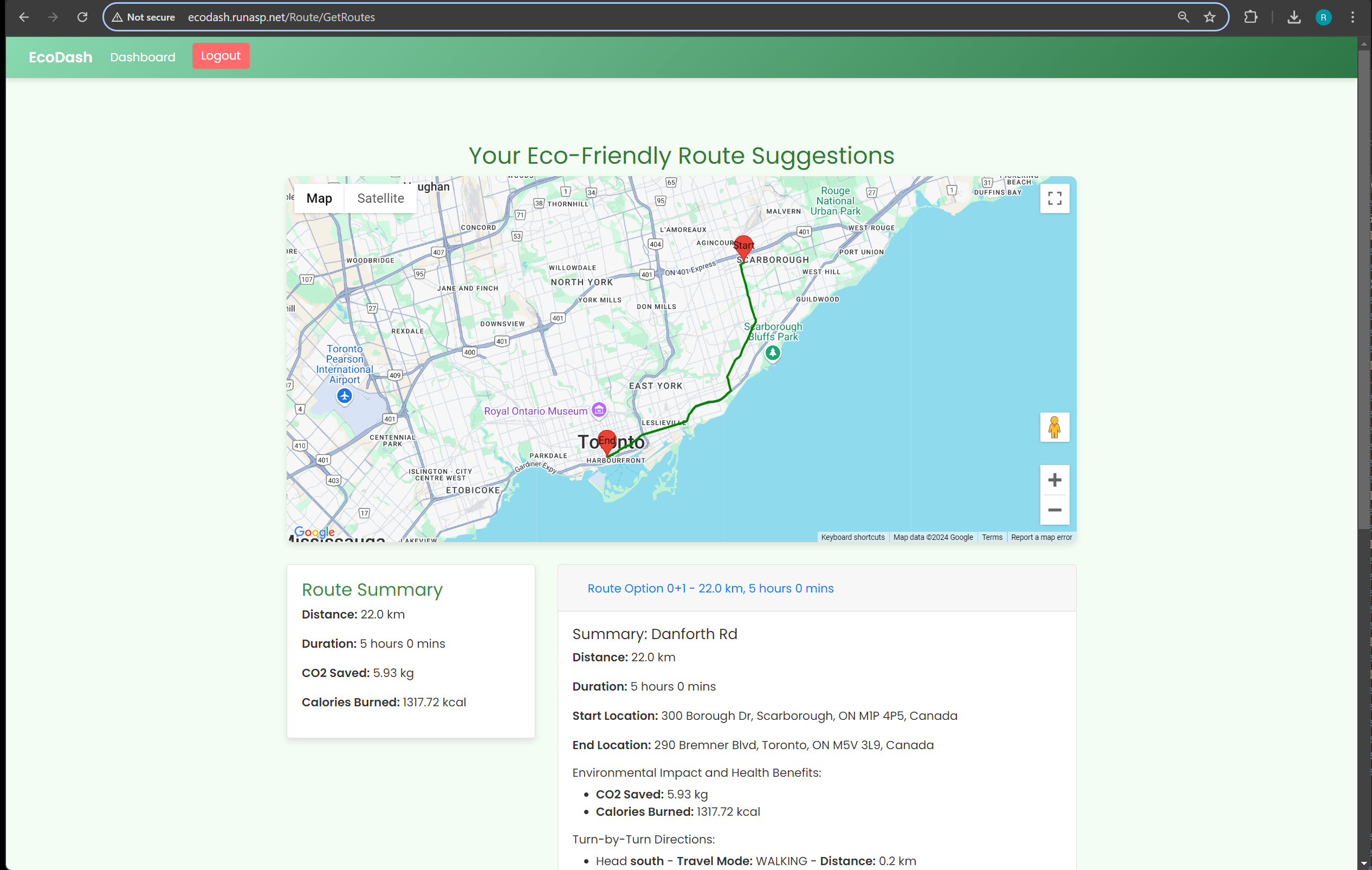
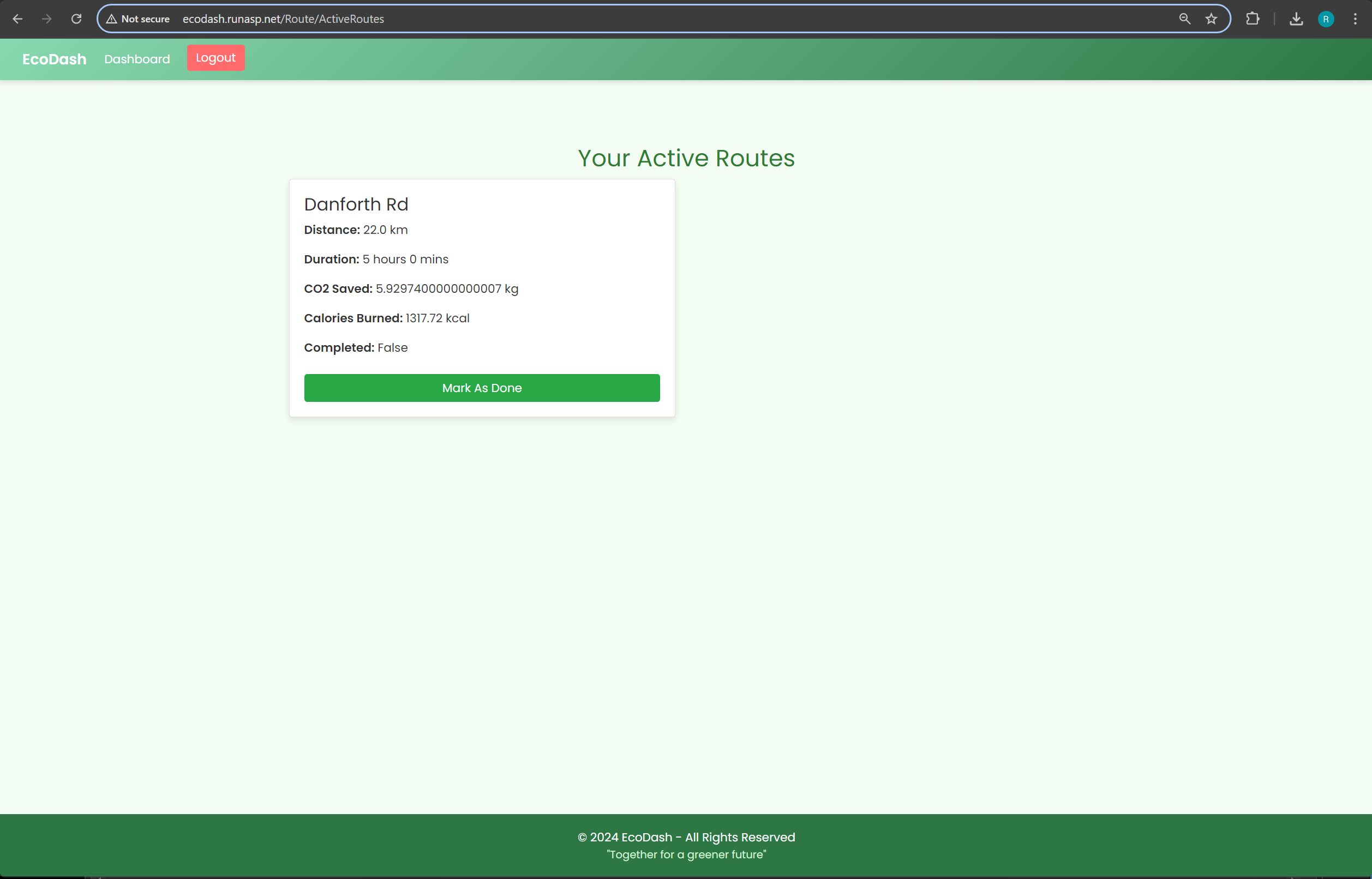
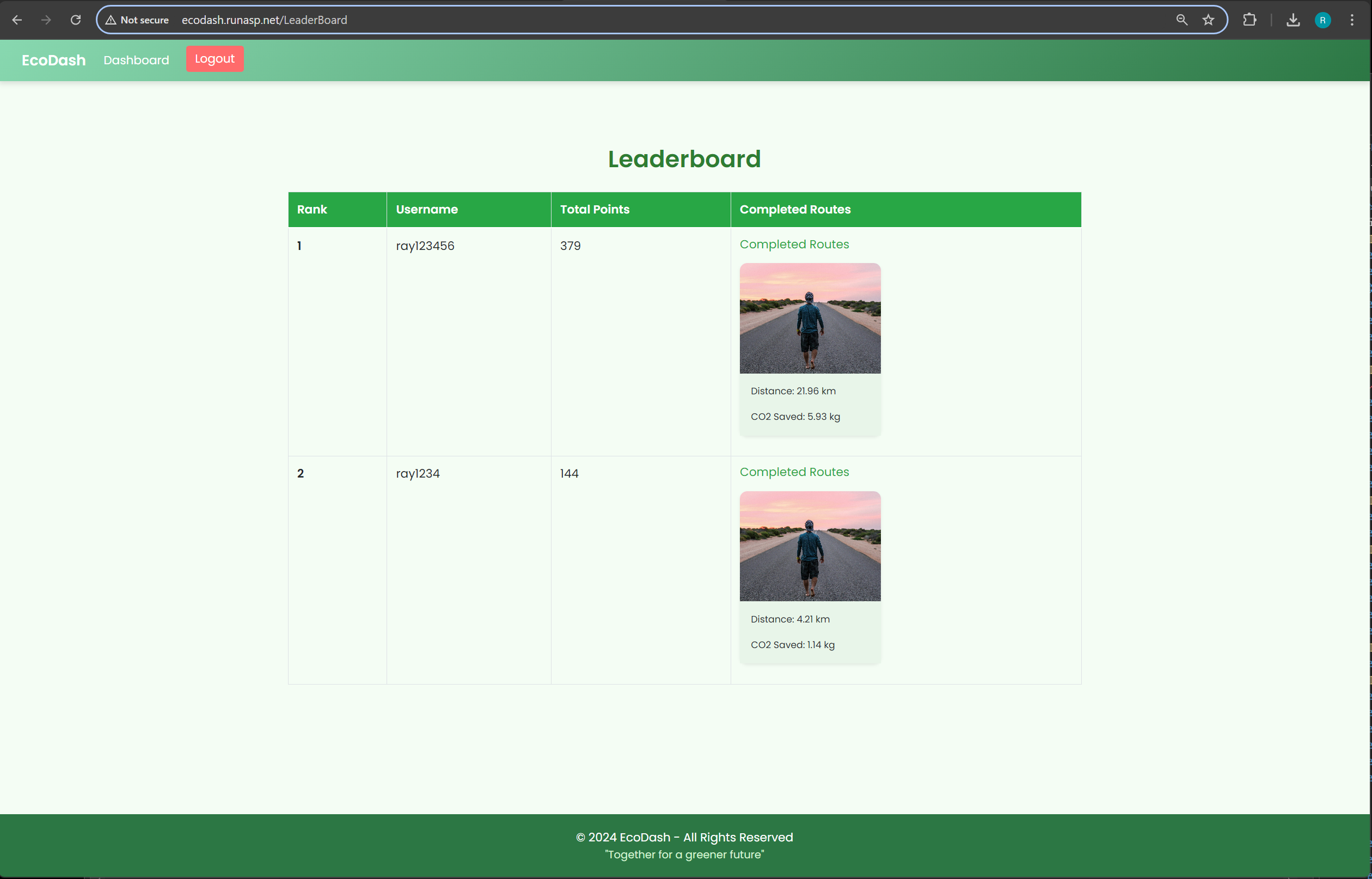
2. What it does EcoDash helps users plan eco-friendly commutes by providing real-time route suggestions from various transport services, including walking, biking, and public transit. It calculates and tracks the CO2 saved and calories burned during commutes, making it easy for users to visualize their contribution to a greener planet. The app also features a leaderboard and allows users to upload images from completed routes, further enhancing engagement and competition among eco-conscious users.
3. How we built it EcoDash was built using ASP.NET for the backend, integrating MongoDB as the database to store routes, user data, and image uploads. The system uses GridFS for storing images and tracks real-time data via APIs from various transport services. For the frontend, we used HTML, CSS, and Bootstrap to provide a clean and user-friendly interface. The app dynamically calculates CO2 savings and calorie counts based on the chosen mode of transport and tracks user progress through leaderboards.
4. Challenges we ran into One of the biggest challenges we encountered was integrating multiple transport service APIs and ensuring the accuracy of real-time data. Balancing the calculations for CO2 savings and calories burned across different modes of transport also required fine-tuning to ensure consistency. Additionally, we ran into issues with image uploads and ensuring that the files were correctly associated with users and routes, which required an optimized use of MongoDB GridFS.
5. Accomplishments that we're proud of We’re particularly proud of successfully creating a seamless user experience that encourages eco-friendly behavior. The implementation of the leaderboard and image upload features brought a social and engaging aspect to the app, which we believe will keep users coming back. Our ability to combine real-time route planning, data aggregation, and gamification to promote environmental awareness is something we’re very proud of.
6. What we learned Through this project, we learned a lot about handling complex data integration, optimizing API calls, and ensuring scalability for future users. We also gained insights into user engagement strategies through gamification and how they can be applied to drive positive behavior, especially in areas like sustainability and environmental impact.
7. What's next for EcoDash We plan to expand EcoDash by integrating more transport services and adding additional metrics, such as time saved and monetary savings. We also aim to develop a mobile app to make it more accessible for users on the go. Additionally, introducing personalized suggestions for users based on their past behavior and creating partnerships with organizations promoting sustainability are on our roadmap for the future.


Log in or sign up for Devpost to join the conversation.