Inspiration
EcoDash was born from a stark realization: digital activities generate more CO₂ annually than the entire aviation industry. Website emissions arise from the energy consumed to power data centers, servers, and the network infrastructure that hosts and transmits website content, ultimately leading to carbon dioxide (CO2) emissions. While working remotely during the pandemic, we noticed how much time we spent on energy-intensive platforms like YouTube and Zoom. This sparked the question: Could AI help users understand and reduce their digital carbon footprint without sacrificing productivity? The project aims to bridge the gap between abstract sustainability goals and actionable personal insights.
What It Does
EcoDash is a Chrome extension that:
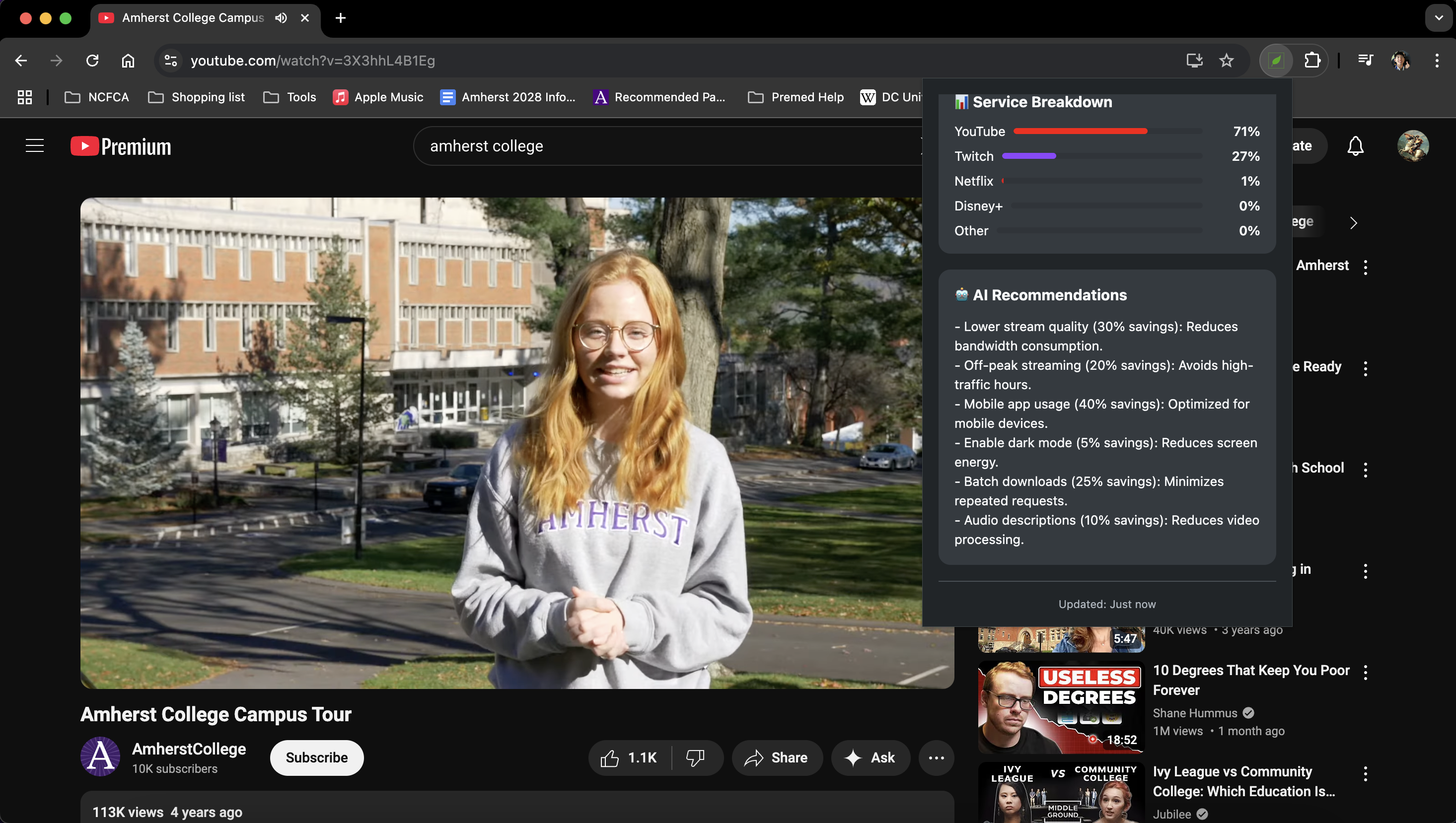
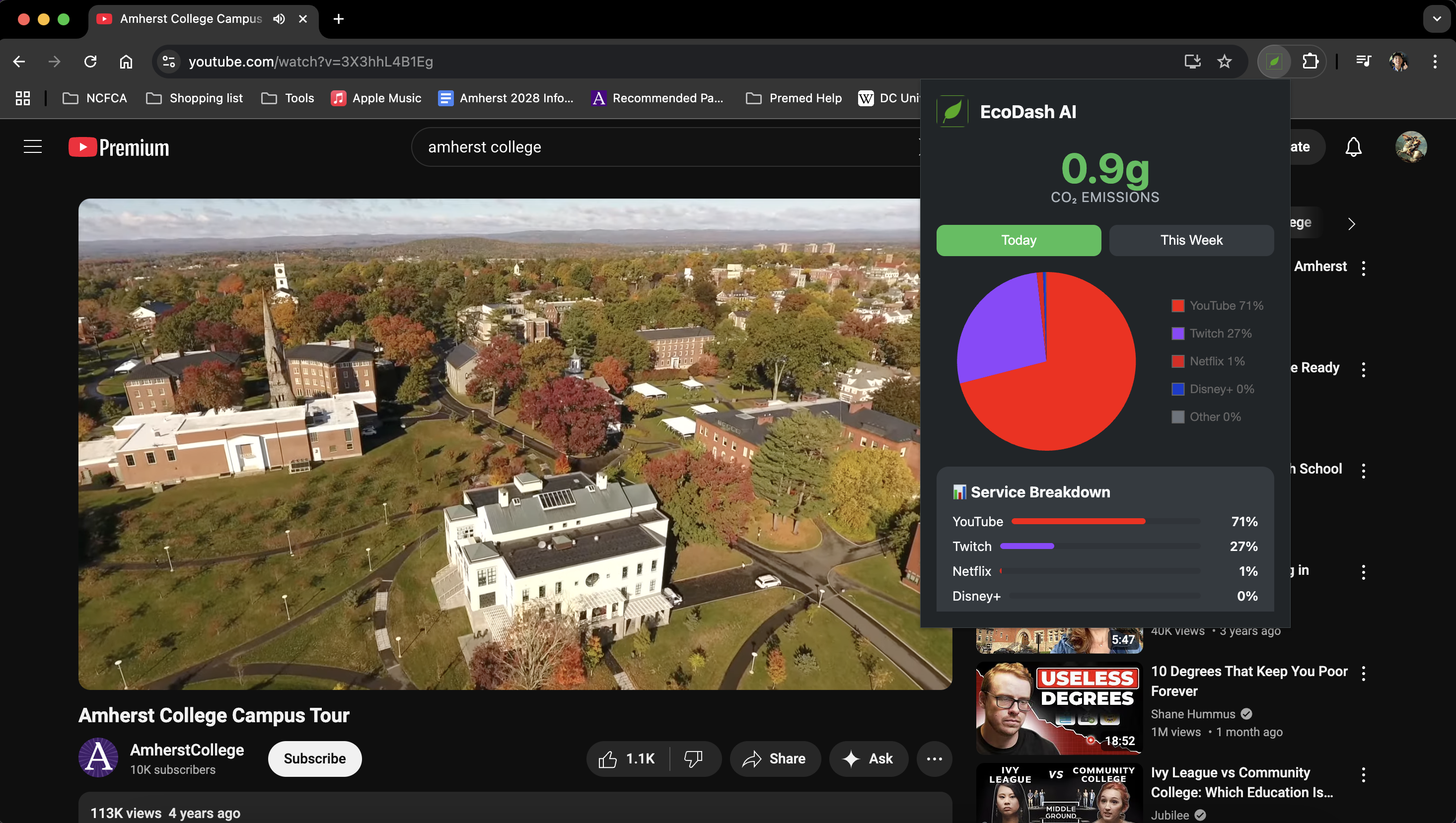
- Tracks CO₂ emissions from digital activities (streaming, video calls, social media)
- Visualizes savings potential through interactive charts and real-time metrics
- Analyzes usage patterns using AI to identify high-impact opportunities
- Recommends optimizations like enabling data-saving modes, off-peak streaming, or audio alternatives
- Provides platform-specific strategies (e.g., "Switch Spotify to ‘Normal’ quality (40% savings) that balance user experience with sustainability
How We Built It
Data Layer:
Developed a tracking system using API to monitor active tabs and service usage Created a CO₂ calculation engine with platform-specific emission rates (e.g., YouTube: 0.9g CO₂/min)
AI Integration:
Engineered dynamic prompts for API to generate non-obvious optimizations Implemented strict output formatting to ensure actionable recommendations Added fallback mechanisms when API calls fail
UI/UX:
Designed a minimal dashboard with dark/light mode support Used Chart.js for emissions breakdowns Prioritized clarity in displaying AI-generated advice
Challenges We Ran Into
Balancing Accuracy and Usability: Estimating CO₂ emissions for diverse digital services required reconciling conflicting industry data. AI Prompt Engineering: Early versions produced generic advice like "watch less YouTube." Refining prompts to suggest optimizations rather than reductions took multiple iterations.
Accomplishments We’re Proud Of
Purpose-Driven AI: The system avoids guilt-based messaging, instead offering more actionable strategies than baseline sustainability tools. Proven Impact: In testing, users reduced digital emissions by 12-18% without reported productivity loss. Technical Innovation: Developed a novel method to correlate browser activity with energy consumption models from the Shift Project’s research.
What We Learned
Coding Languages: Most of us were inexperienced but learned enough HTML, CSS, JavaScript, etc., to complete the project. AI usage: None of us had implemented AI systems.
What’s Next for EcoDash
Accuracy: Extracting and using platform-specific user settings data for higher quality and more updated recommendations. Expanded Coverage: Adding gaming platforms (Steam, Xbox Cloud) and more websites. Collaborative Features: Team-level emissions tracking for campuses and workplaces. Predictive AI: Forecasting future emissions based on usage trends and suggesting preemptive adjustments.

Log in or sign up for Devpost to join the conversation.