-
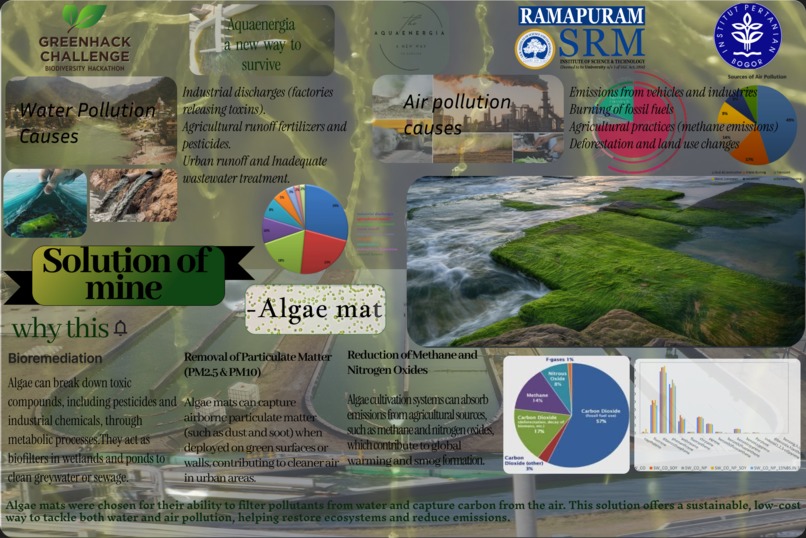
aquaenergia a new way to eradicate pollution by algae mat
-
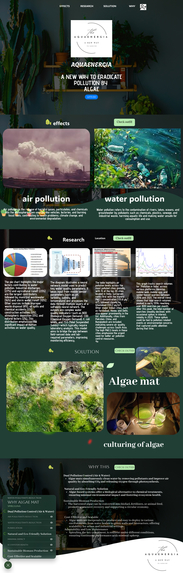
pdf of the whole website containing all our progress of Aquaenergia
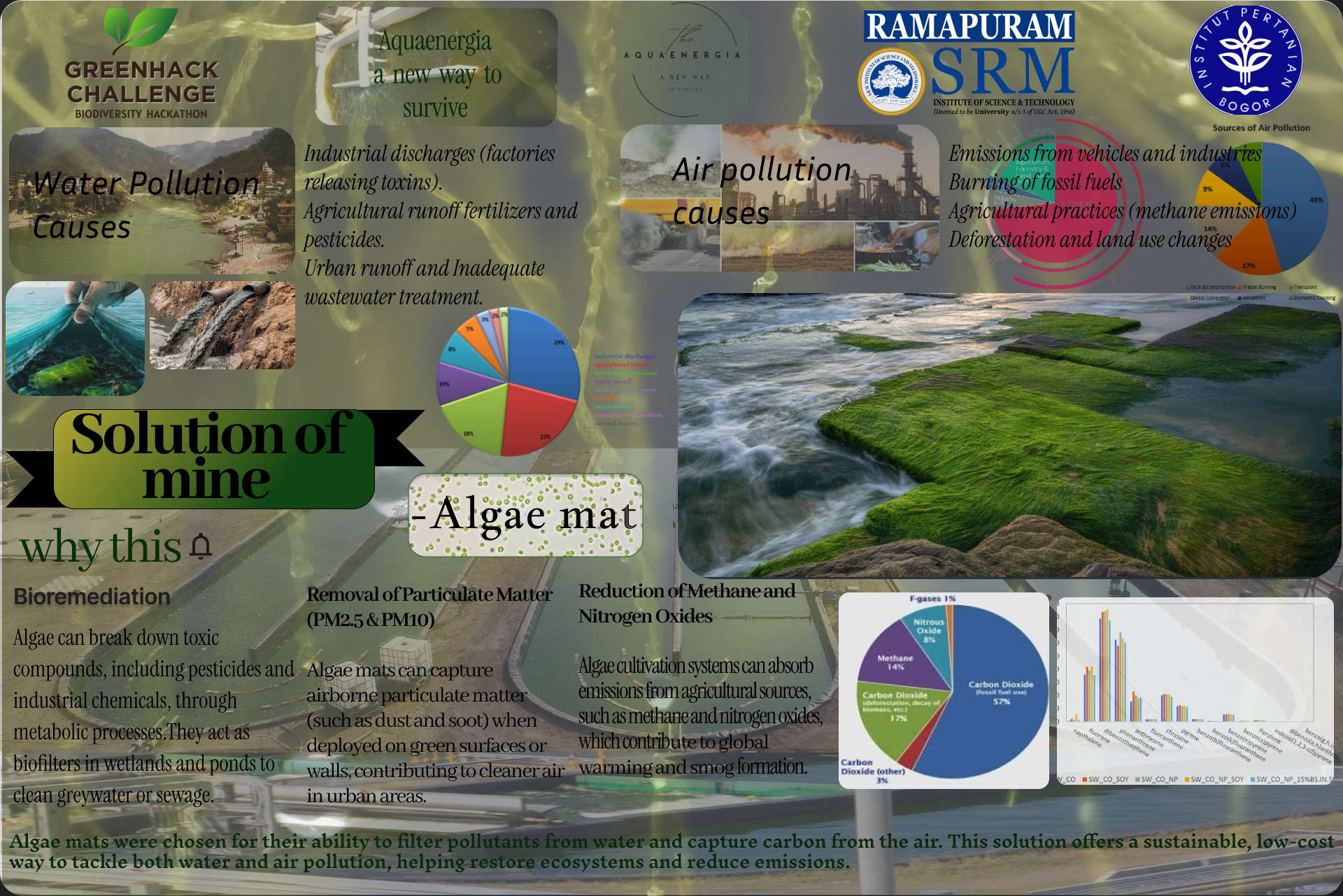
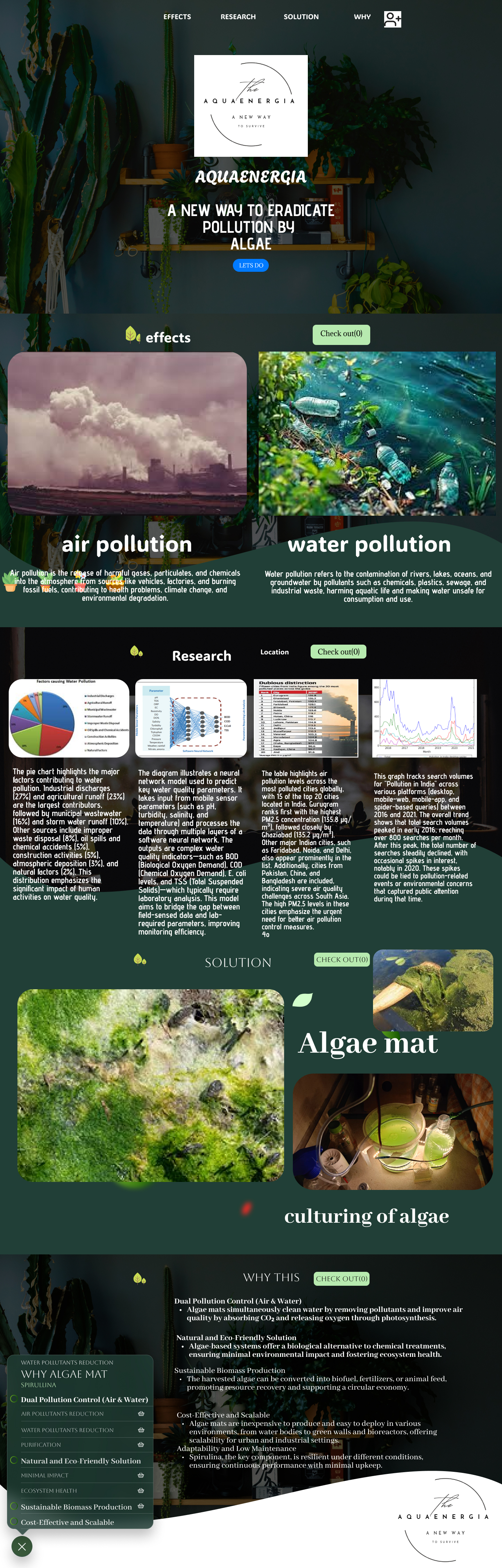
Algae Mat Project using Spirulina Algae
Inspiration
The idea for this project was inspired by my interest in sustainable biotechnology and algae’s potential to address environmental challenges. Algae like Spirulina are well-known for their photosynthetic efficiency, rapid growth, and multiple applications in industries such as food, pharmaceuticals, and biofuel. What fascinated me the most was the possibility of integrating biology with eco-friendly solutions—using Spirulina to build something practical and impactful.
What I Learned
Throughout the project, I gained several key insights into the biology and application of algae:
- Cultivation Techniques: Understanding the optimal conditions for growing Spirulina such as pH levels, light exposure, and nutrient requirements.
- Algae’s Environmental Impact: I learned how algae mats can improve air and water quality by absorbing CO₂ and other pollutants.
- Biofuel Potential: Exploring the lipid content of algae and how it can be harvested for biofuel production.
Additionally, the experience deepened my knowledge in bioprocess engineering and the importance of innovation when tackling environmental issues.
How We Built the Project
The project involved the following steps:
Research and Design
- We explored the lifecycle of Spirulina and the conditions it requires to thrive.
- Designed a simple algae mat structure using affordable materials, including mesh trays for growing the algae.
- We explored the lifecycle of Spirulina and the conditions it requires to thrive.
Setup and Cultivation
- Cultured Spirulina algae in a controlled environment with appropriate nutrients (nitrogen, phosphorus, potassium).
- Regularly monitored the pH and temperature to ensure optimal growth.
- Cultured Spirulina algae in a controlled environment with appropriate nutrients (nitrogen, phosphorus, potassium).
Mat Construction
- Once the algae matured, we harvested it and spread it evenly across fiber mesh mats to allow it to form a thick, usable mat.
- Dried the algae mat under low heat to preserve its nutrient profile while ensuring structural integrity.
- Once the algae matured, we harvested it and spread it evenly across fiber mesh mats to allow it to form a thick, usable mat.
Testing and Application
- Tested the mat for potential water filtration capabilities and biofuel extraction.
- The mat also demonstrated CO₂ absorption efficiency during our monitoring.
Challenges We Faced
- Maintaining Algae Growth: It was challenging to keep the algae alive and growing optimally as they are sensitive to temperature and pH fluctuations.
- Resource Constraints: Setting up a controlled environment on a budget required creative thinking—finding cost-effective materials and nutrients.
- Scaling the Project: While the mat worked on a small scale, we faced difficulties in scaling it for larger applications like filtration or biofuel production.
- Time-Consuming Process: Growing Spirulina takes patience and precise monitoring. Any small error in the environment could slow down the process.
Conclusion
This project was an incredible learning experience, allowing me to combine biotechnology with real-world applications. It has opened my eyes to the future potential of algae-based technologies in sustainability and bioengineering. Moving forward, I would like to explore how algae mats could be applied on a larger scale—potentially in wastewater treatment, carbon capture systems, or biofuel production.
Built With
- biotechnology
- design
- figma


Log in or sign up for Devpost to join the conversation.