-
-
-

results
-
simulator
-
dashboard
-
gemini ai analyzer

🌿 EcoCode AI
Inspiration
As software systems and AI workloads continue to grow, inefficient code increases energy consumption and contributes to digital carbon emissions. While developers often optimize for speed and scalability, the environmental impact of software is rarely considered.
We built EcoCode AI to make software sustainability measurable, understandable, and actionable for developers.
What it does
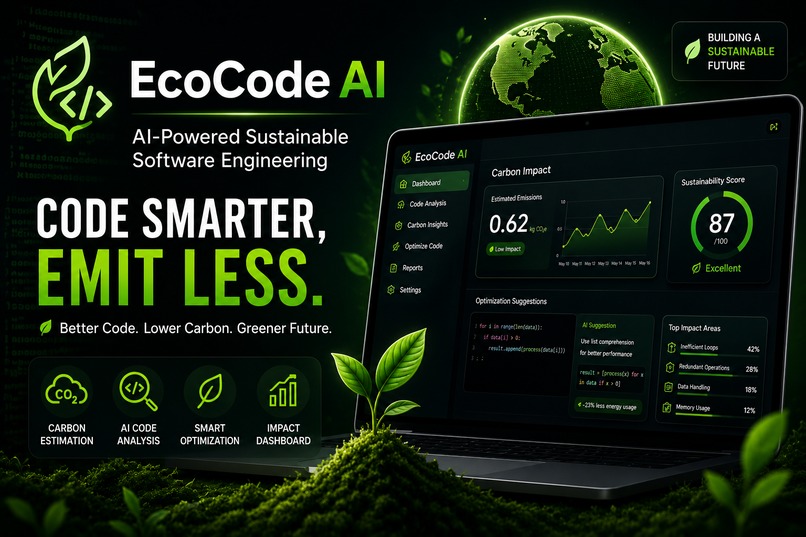
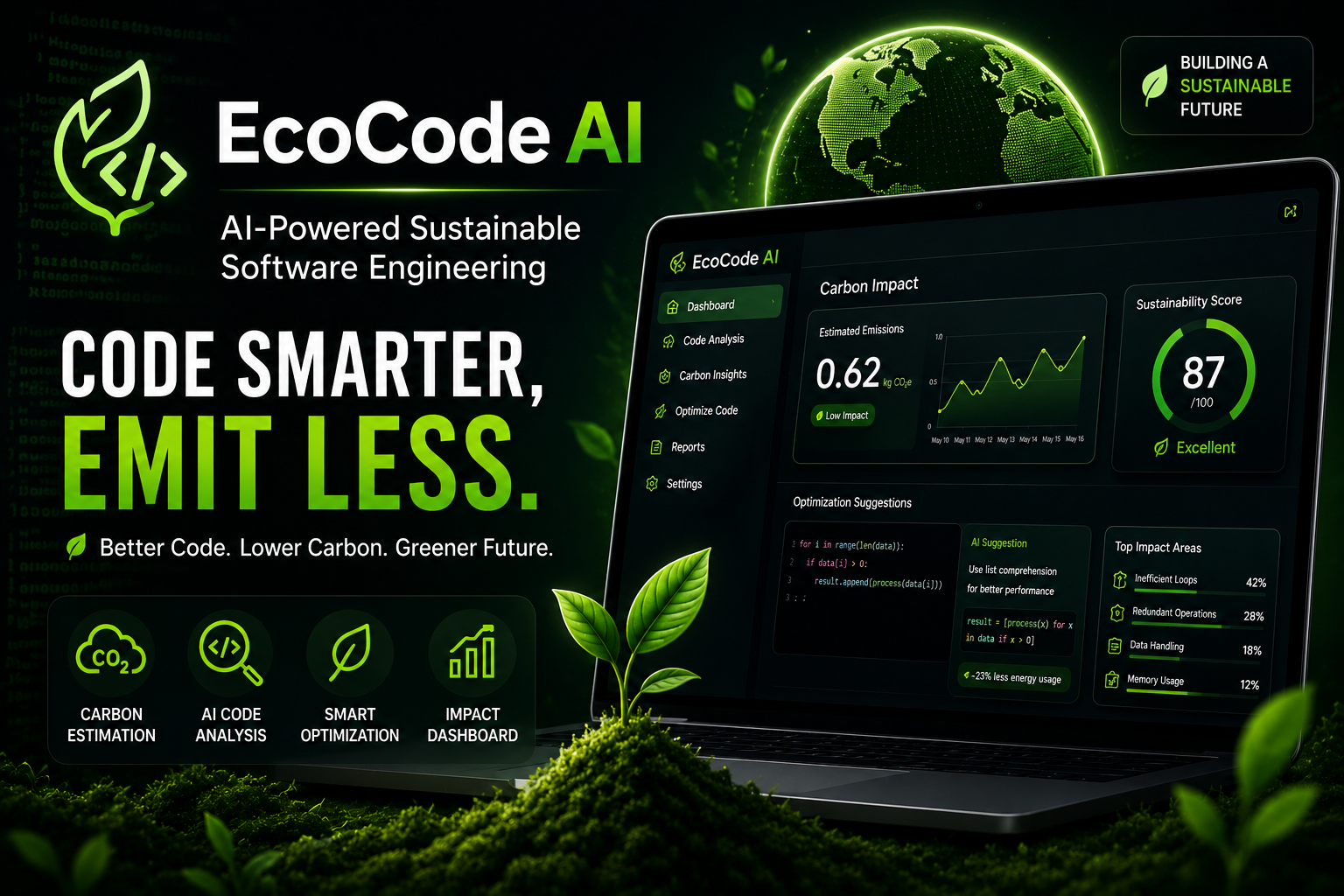
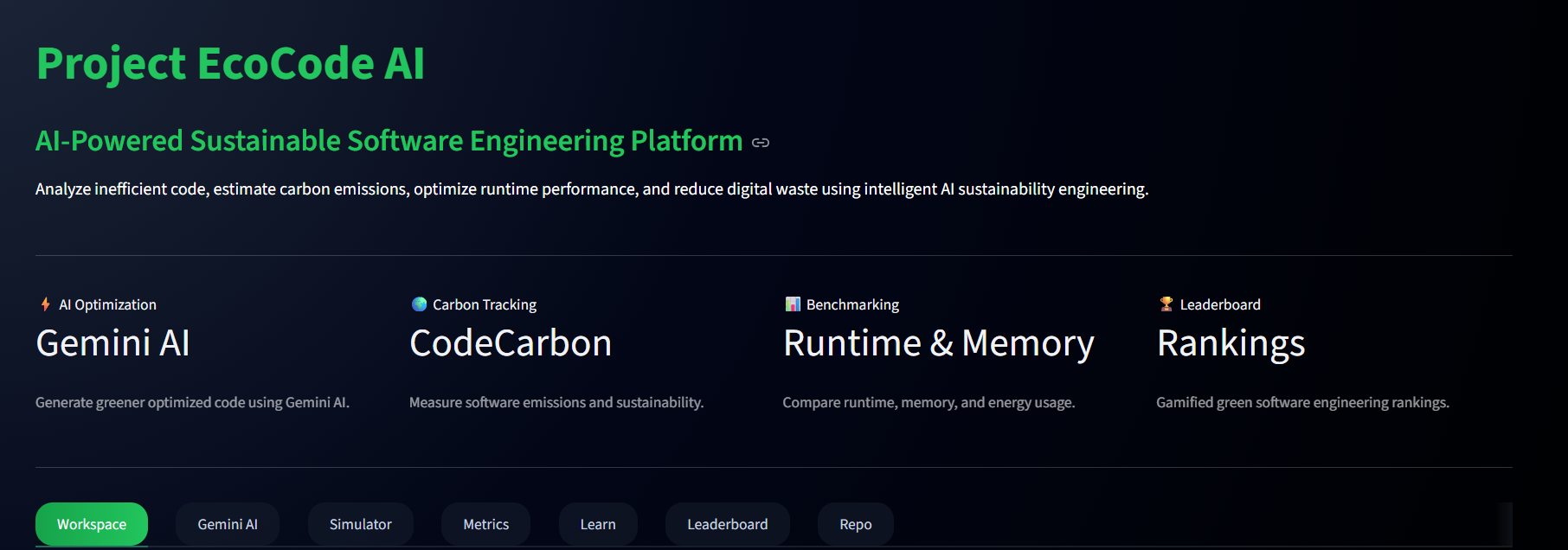
EcoCode AI is an AI-powered sustainable software engineering platform that analyzes Python code and GitHub repositories to detect inefficient execution patterns and estimate environmental impact.
The platform provides:
- Estimated CO₂ emission tracking
- Runtime and memory analysis
- Code complexity analysis
- AI-powered optimization suggestions
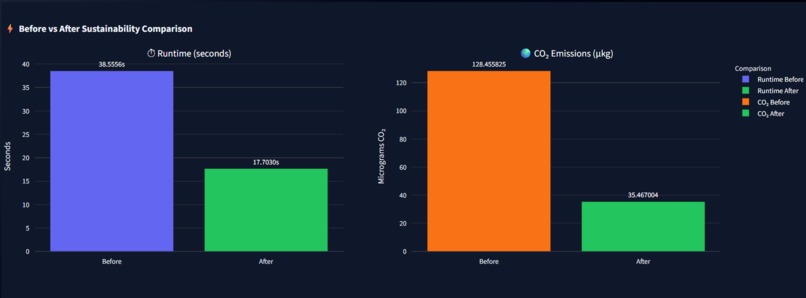
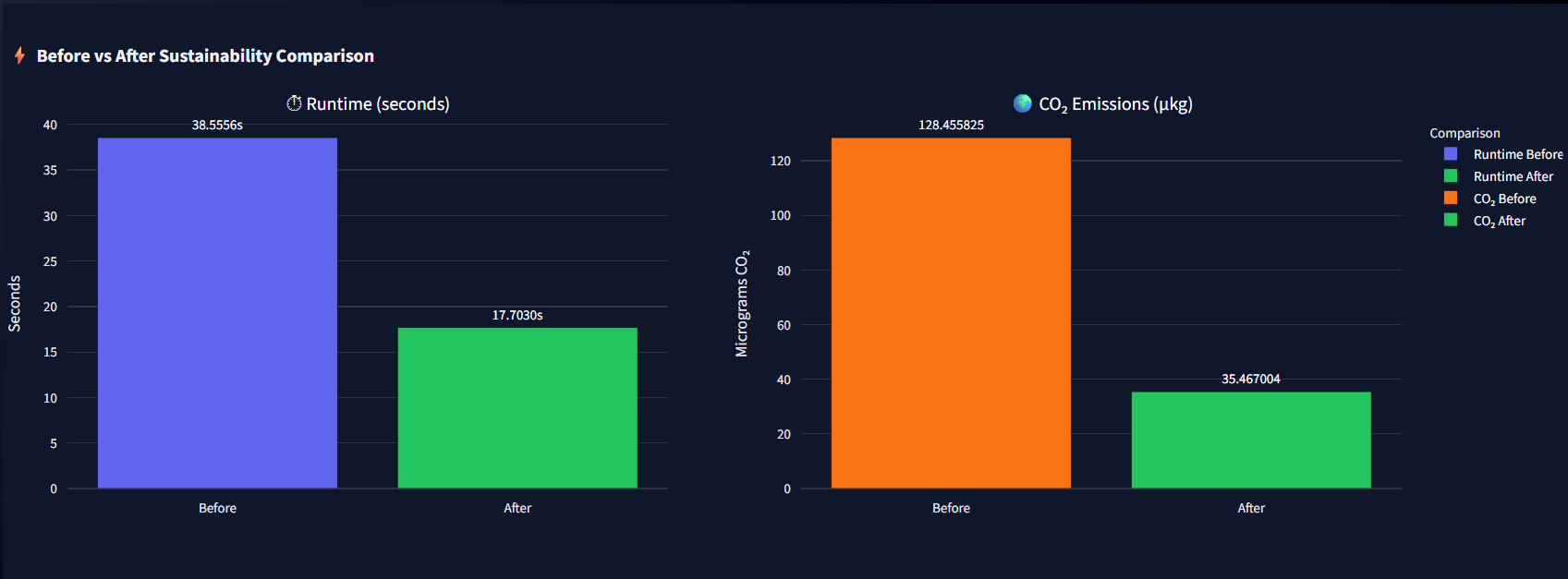
- Before-vs-after performance comparison
- Repository sustainability scanning
- Green Score generation
- Secure sandboxed code execution
EcoCode AI helps developers write greener, more efficient software systems.
How we built it
We built EcoCode AI using:
- Python
- Streamlit
- Plotly
- Google Gemini AI
- AST (Abstract Syntax Tree) Analysis
- Radon
- psutil
- tracemalloc
Static analysis is powered using Python AST parsing and Radon complexity metrics. Runtime monitoring uses psutil and tracemalloc for measuring CPU and memory usage.
We also implemented a secure sandboxed execution engine using isolated subprocesses with timeout protection to safely run untrusted code.
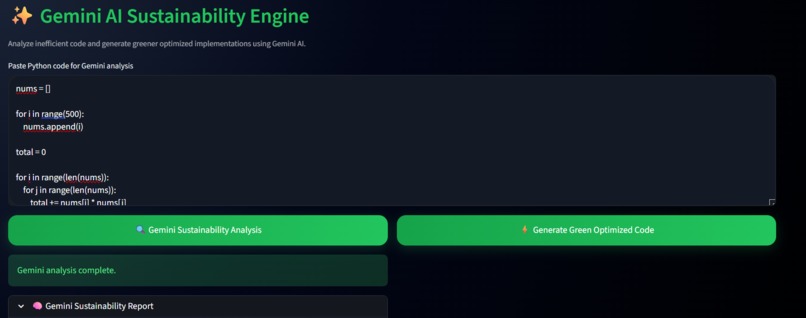
Google Gemini AI is used for:
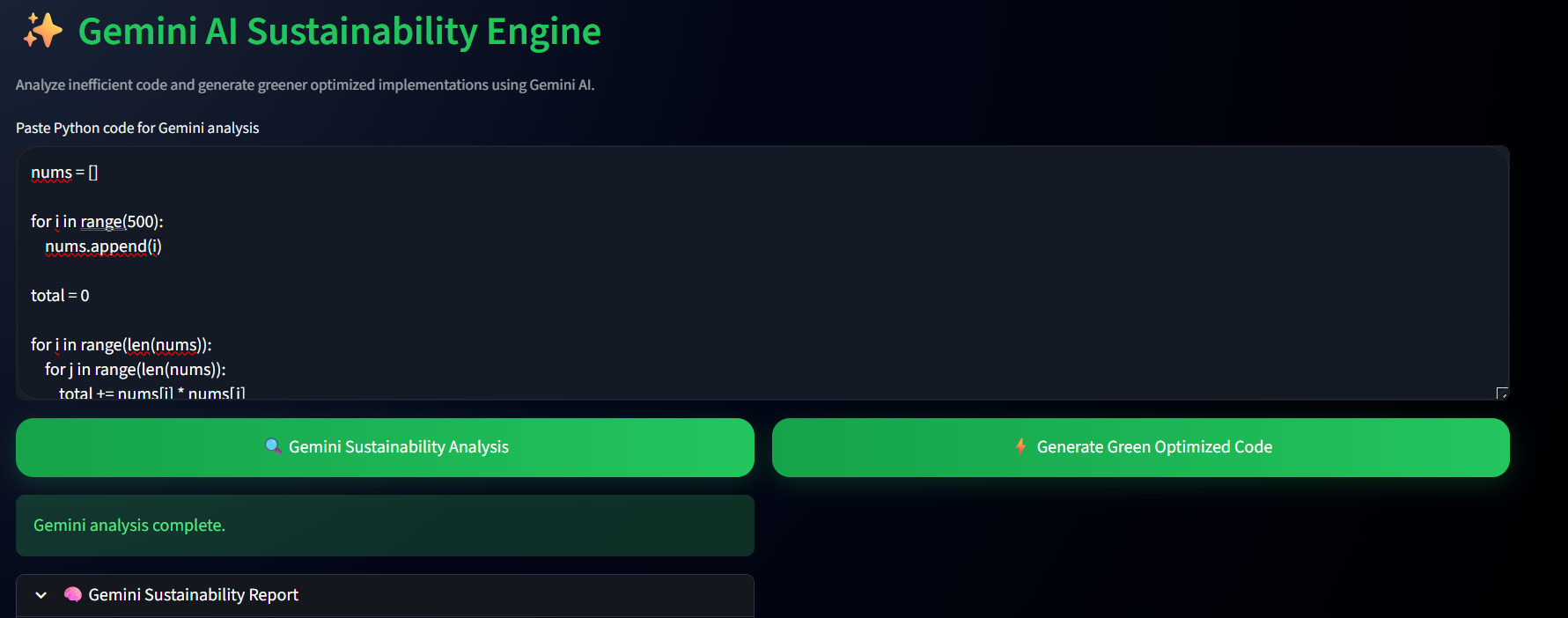
- sustainability analysis
- code optimization suggestions
- explainable AI-generated refactoring
Challenges we ran into
One of the biggest challenges was securely executing untrusted code while accurately measuring runtime and resource usage.
We also faced challenges in:
- estimating sustainability impact for short-running scripts
- creating meaningful optimization comparisons
- ensuring AI-generated optimizations remained understandable and transparent
- balancing performance improvements with safe execution
Accomplishments that we're proud of
We are proud of building a fully working AI-powered sustainability platform that transforms invisible software inefficiencies into measurable insights.
Some accomplishments include:
- real-time sustainability benchmarking
- AI-powered optimization engine
- repository-wide sustainability analysis
- secure sandboxed execution system
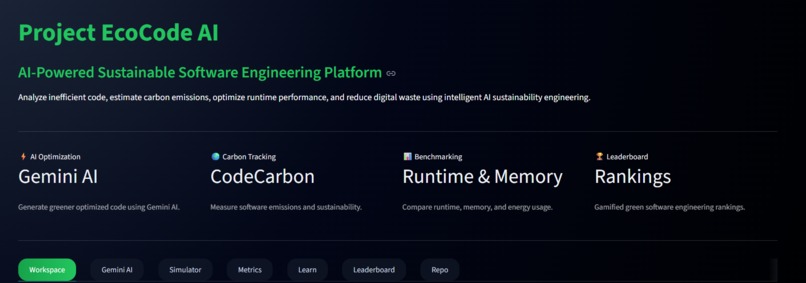
- interactive sustainability dashboard
- transparent Green Score system
What we learned
We learned that sustainable software engineering is deeply connected to efficient software engineering.
Reducing unnecessary computation not only improves performance and scalability, but also lowers digital carbon emissions and energy usage.
We also learned more about:
- AI-assisted developer tooling
- runtime benchmarking
- secure code execution
- sustainability-focused system design
What's next for EcoCode AI
We plan to expand EcoCode AI with:
- support for multiple programming languages
- CI/CD integration
- IDE extensions
- cloud workload sustainability analysis
- real-time engineering sustainability dashboards
- team-wide carbon tracking systems
Our long-term goal is to make sustainability a core software engineering metric alongside performance, scalability, and reliability.


Log in or sign up for Devpost to join the conversation.