-
-
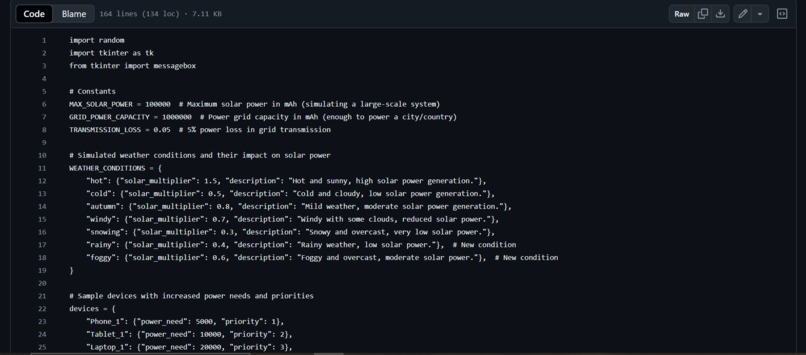
Eco Charge code snippet

Inspiration
The EcoCharge AI Optimized Solar Charging system was inspired by the increasing demand for sustainable and renewable energy solutions, particularly solar power. With the rapid rise in the number of electronic devices and the global push for greener energy, I wanted to create a system that efficiently manages solar energy to charge devices, optimizing energy use. The integration of AI is meant to make the system smarter by predicting power needs based on weather patterns and device usage, leading to more intelligent energy allocation.
What it does
The EcoCharge system simulates the management of solar energy to charge electronic devices, such as smartphones, tablets, and laptops. It incorporates AI algorithms to optimize the distribution of available solar energy by:
Simulating Solar Power Generation: The system adjusts solar power generation based on different weather conditions, like sunlight, clouds, and temperature. Intelligent Grid Management: It ensures that devices are charged based on their power demands and available energy, while also maintaining an efficient power grid. Real-Time Monitoring: Users can monitor and manage charging in real-time through an interactive GUI, providing insights into power generation and consumption.
How I built it
AI Integration: I used machine learning models to predict power needs and optimize energy allocation based on historical weather data and usage patterns. Solar Power Simulation: I developed a weather simulator that mimics real-world conditions affecting solar power generation. Grid Management: A dynamic grid system was created to allocate power between devices while considering the charging priority and available solar energy. User Interface: I built a GUI using Tkinter that allows users to interact with the system, simulating power allocation, generating reports, and observing real-time charging processes.
Technologies Used
Python: Main language for the backend, using libraries like Tkinter for the GUI and machine learning libraries like TensorFlow or scikit-learn. AI & Machine Learning: Used to optimize power distribution based on environmental and usage data. Tkinter: For creating the user interface. Simulation Models: For weather patterns and power generation.
Challenges I ran into
Weather Prediction Accuracy: Simulating real-world weather conditions accurately was a challenge. The solution involved fine-tuning the model based on historical data, but it still required constant testing and refinement. Balancing Power Distribution: Efficiently distributing limited power resources when there’s insufficient solar energy for all devices was difficult. Ensuring fairness while maintaining priority charging for critical devices added complexity. Real-Time Data Processing: Optimizing the system to handle real-time monitoring and adjustments without delays or lags in performance. AI Model Optimization: Integrating machine learning into the system required significant tuning to ensure that predictions for energy needs were accurate, especially when dealing with fluctuating weather conditions.
Accomplishments that I am proud of
AI-Driven Optimization: Successfully integrating AI to make power distribution smarter, predicting energy needs for various devices based on real-time and historical data. Efficiency in Power Management: Developed an efficient algorithm to balance energy usage, ensuring that critical devices always get priority charging while minimizing power wastage. Interactive User Interface: Built a user-friendly interface that provides real-time feedback on the solar energy system’s performance, enabling users to monitor power generation and device charging easily. Solar Power Simulation: Created a realistic simulation of solar power generation based on varying weather conditions, allowing for accurate power management in dynamic environments.
What I learned
AI and Machine Learning: I gained valuable experience in using machine learning to predict and optimize real-world systems like energy management, which was a huge learning curve. Real-World Data Integration: It taught me how to use historical data to predict future trends, which is essential for creating accurate simulations and optimizing processes. Power Management Strategies: The project deepened my understanding of how to allocate power resources efficiently, especially when resources are limited. User-Centered Design: I learned the importance of creating intuitive user interfaces that simplify complex systems, making it accessible to non-technical users.
What's next for EcoCharge AI Optimized Solar Charging
Enhanced AI Capabilities: Integrate more advanced machine learning algorithms to better predict power generation and consumption patterns, improving the efficiency of the system over time. Real-Time Weather Integration: Implement real-time weather data from APIs to improve the accuracy of solar generation simulations. Cross-Platform Support: Make the system available on multiple platforms, including mobile devices, to provide more flexibility in managing solar energy remotely. Scalability: Expand the system to handle larger solar setups, such as commercial buildings, integrating more devices and providing detailed analytics. IoT Integration: Introduce Internet of Things (IoT) capabilities to connect the system with other smart devices for a more holistic energy management solution.
Built With
- local
- machine
- python
- scikit-learn
- sqlite
- tensorflow
- tkinter

Log in or sign up for Devpost to join the conversation.