

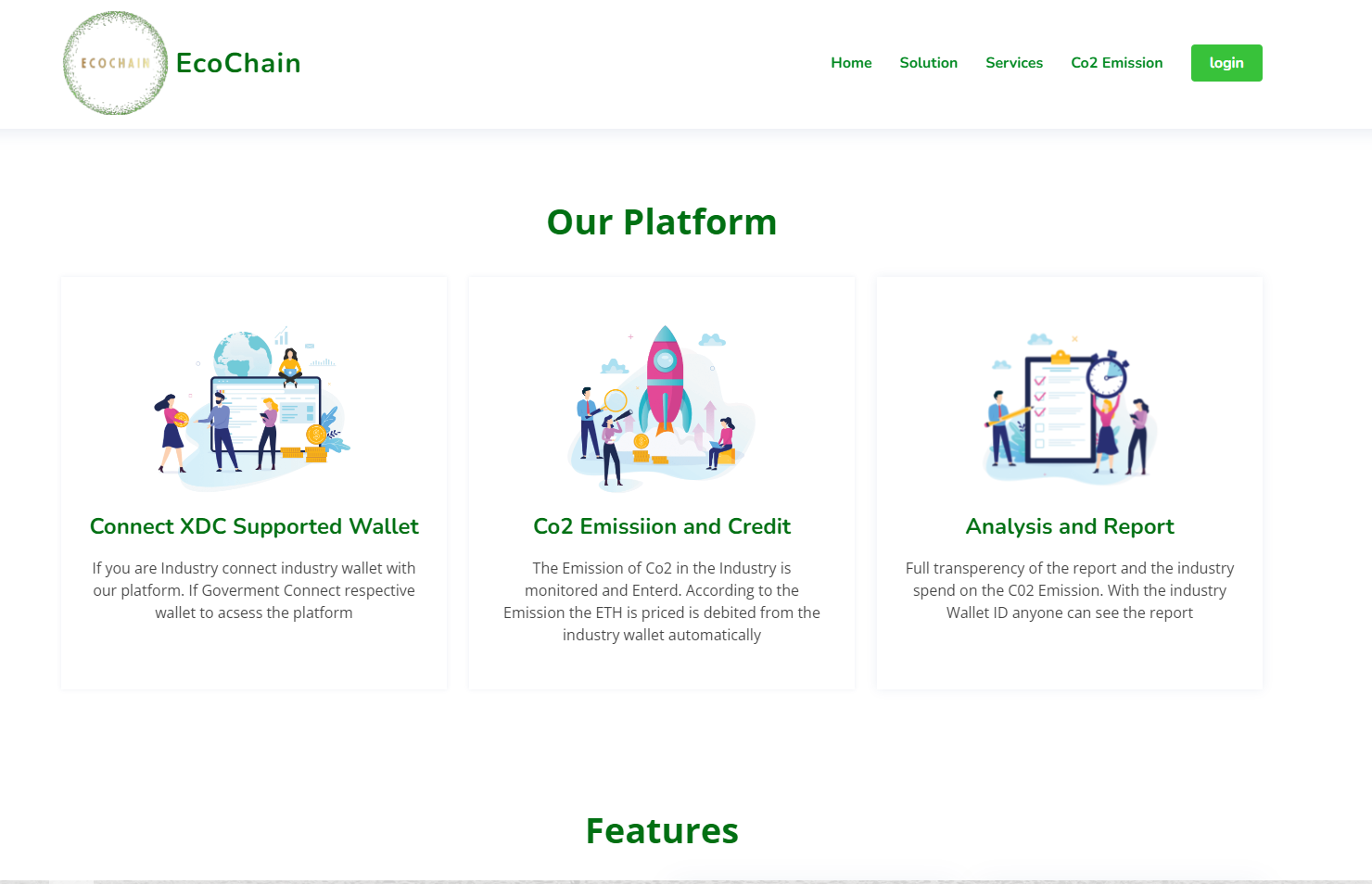
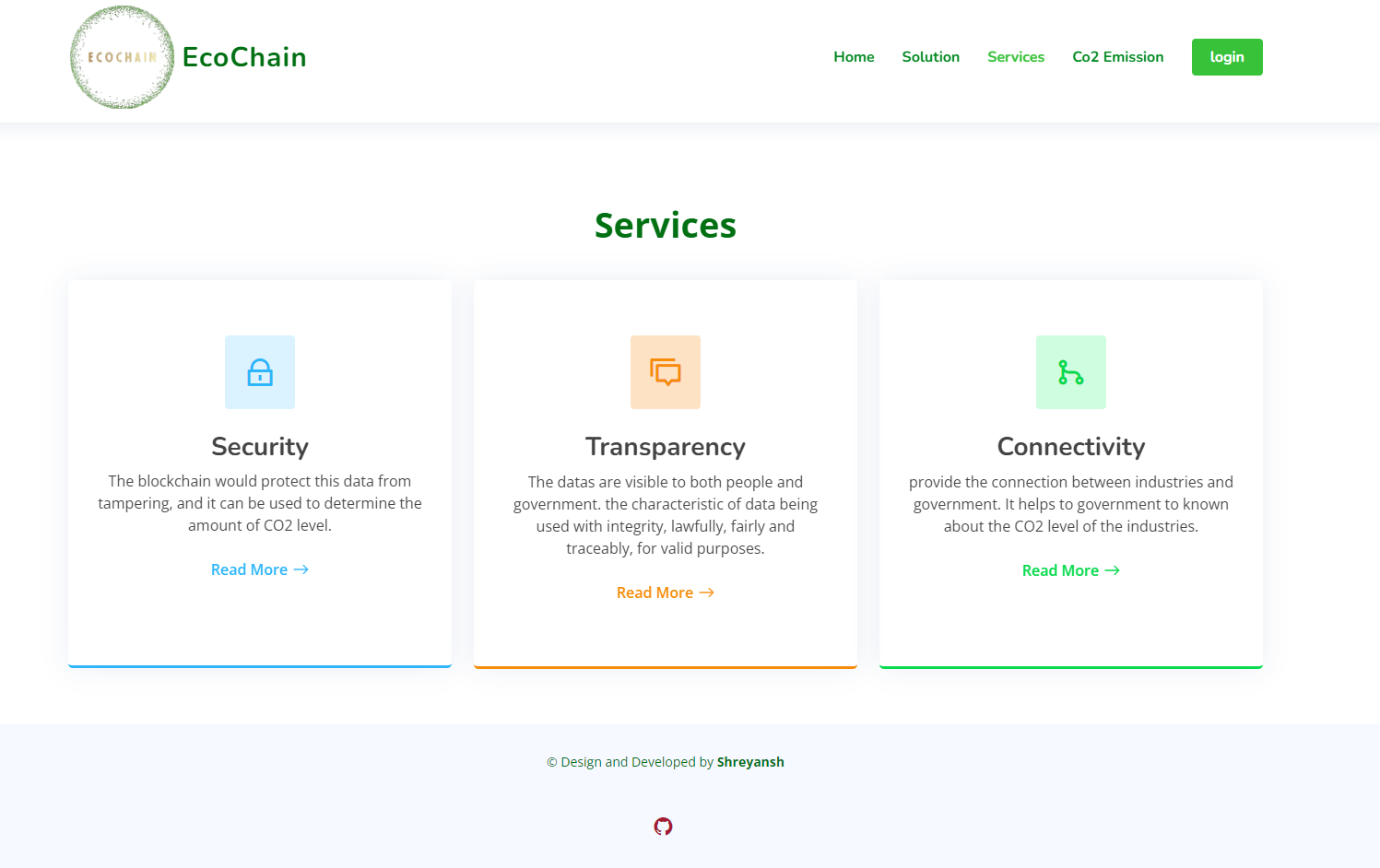
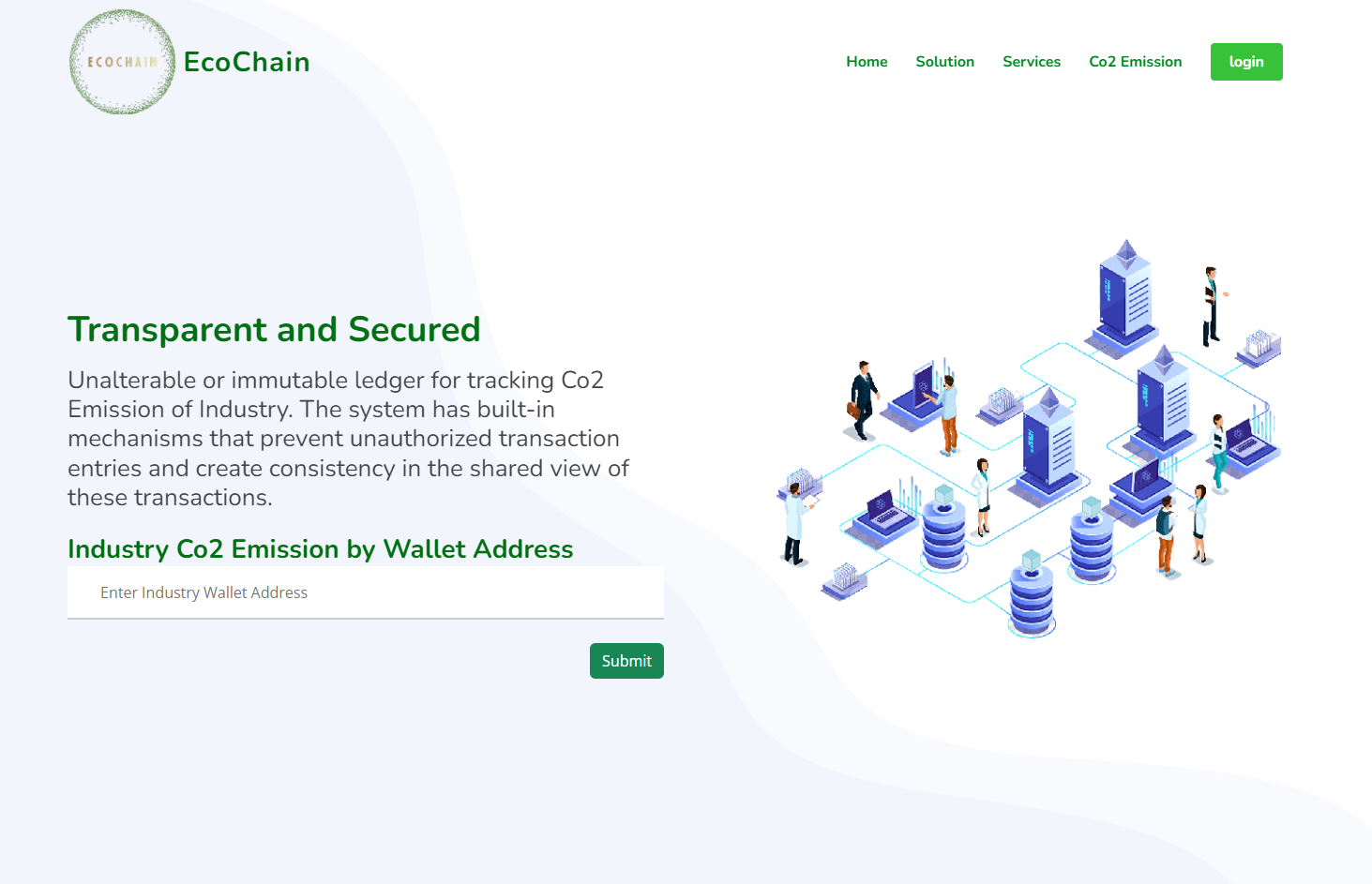

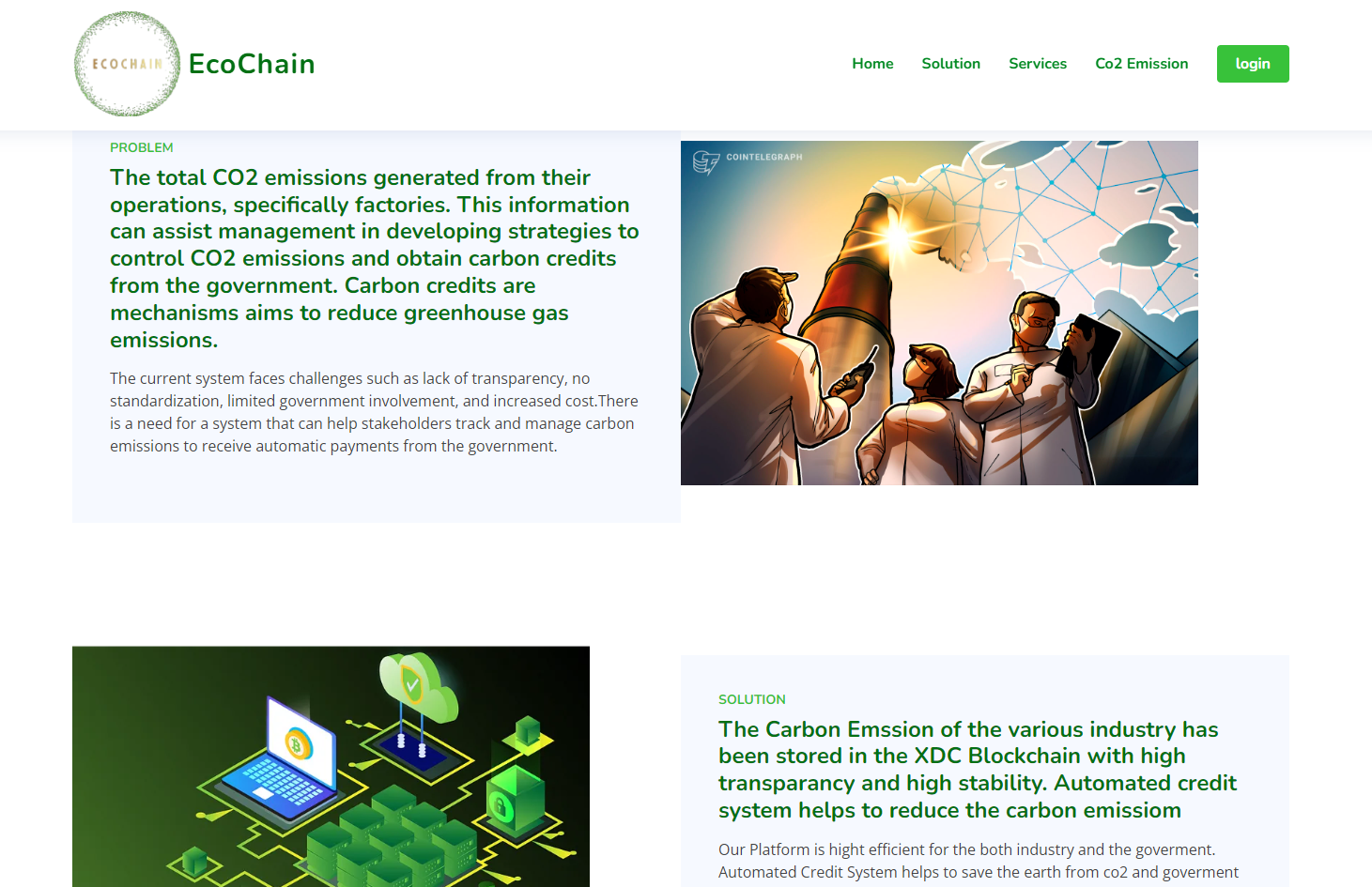
Factories generate significant CO2 emissions, impacting the environment. Management can leverage this information to develop strategies for emission control and acquire carbon credits from the government. Carbon credits serve as mechanisms to reduce greenhouse gas emissions. These credits are traded in a marketplace, although transparency remains an issue. Greater awareness and utilization of CO2 carbon credits are essential for sustainable practices.
How we built it
Our project leverages Web3 technology to revolutionize the carbon credits market by providing a transparent, secure, and decentralized platform for tracking and trading carbon credits. By integrating with Ethereum (or Polygon), we ensure the immutability and traceability of carbon emissions data. Smart contracts automate the verification and issuance of carbon credits, reducing fraud and increasing efficiency. Additionally, Ethereum's (or Polygon's) robust ecosystem and active developer community offer extensive support and scalability for our platform. This project not only promotes environmental sustainability but also demonstrates the powerful applications of blockchain technology in creating trust and transparency in carbon markets.
Challenges we ran into
Data Integrity and Trust: Ensuring the integrity of environmental data recorded on the blockchain is crucial. Scalability: As the ecochain grows and more environmental data is recorded, scalability becomes a challenge. Interoperability: Integrating with existing environmental monitoring systems and data sources requires interoperability standards. Tokenomics: Designing an effective token economy to incentivize eco-friendly behavior and participation in the ecochain ecosystem is essential.
Built With
- ether.js
- ethereum
- express.js
- ipfs
- polygon
- postgresql
- solidity

Log in or sign up for Devpost to join the conversation.