-
-
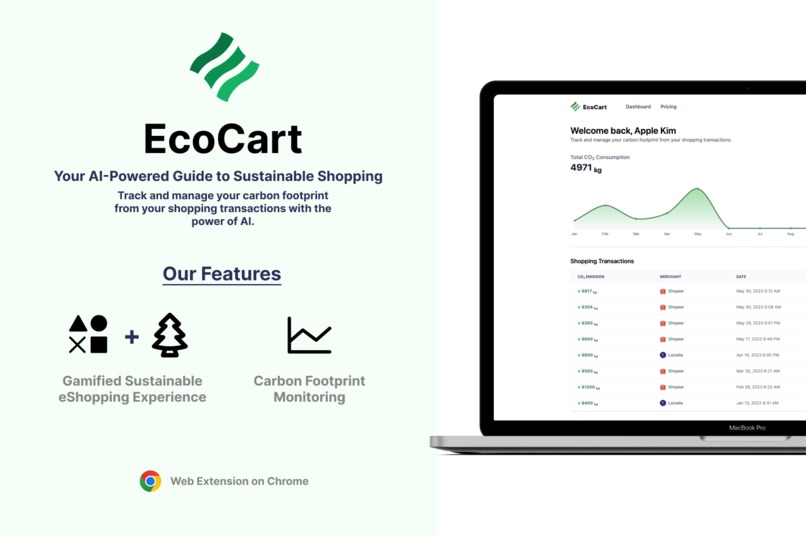
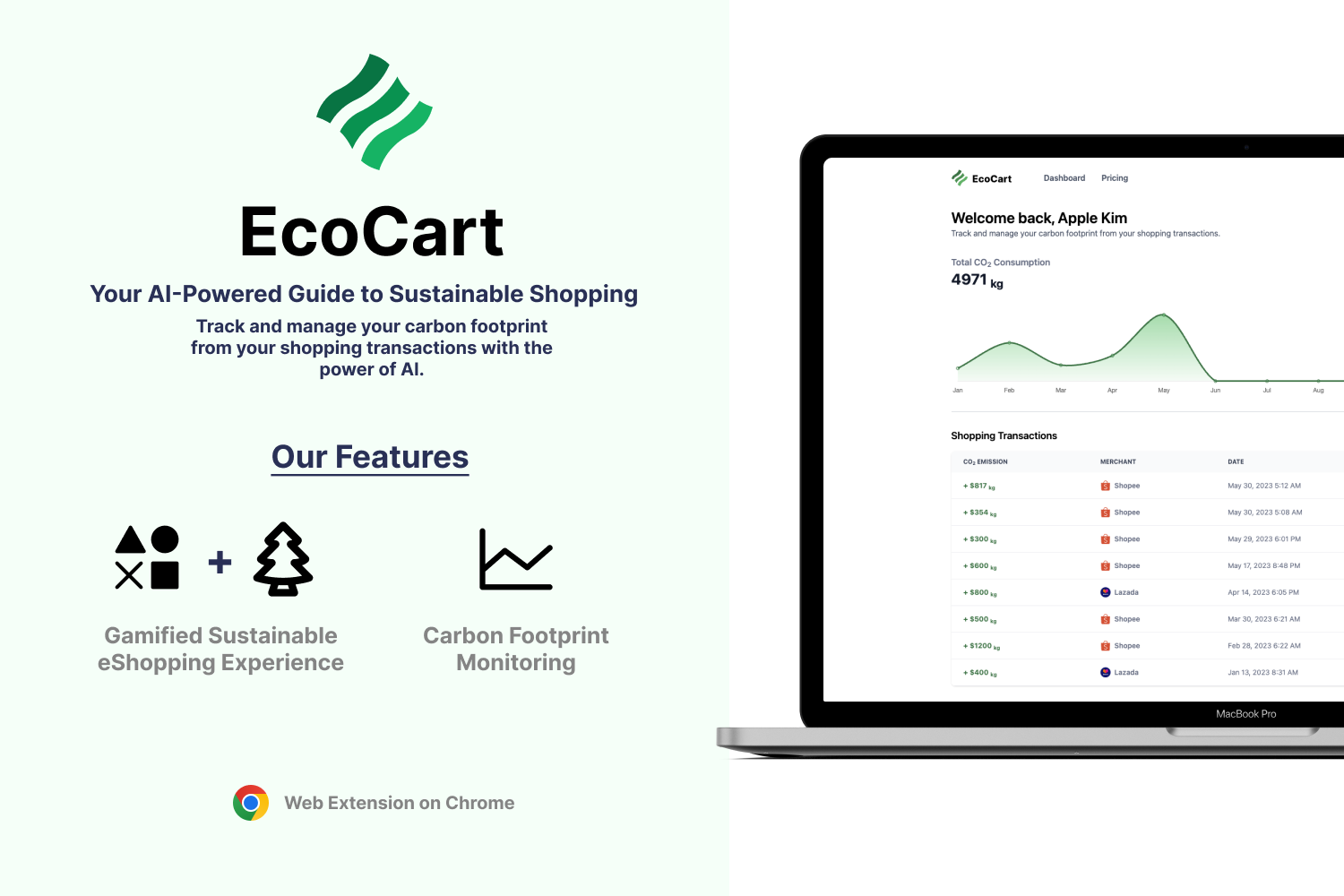
EcoCart | Your AI-Powered Guide to Sustainable Shopping
-
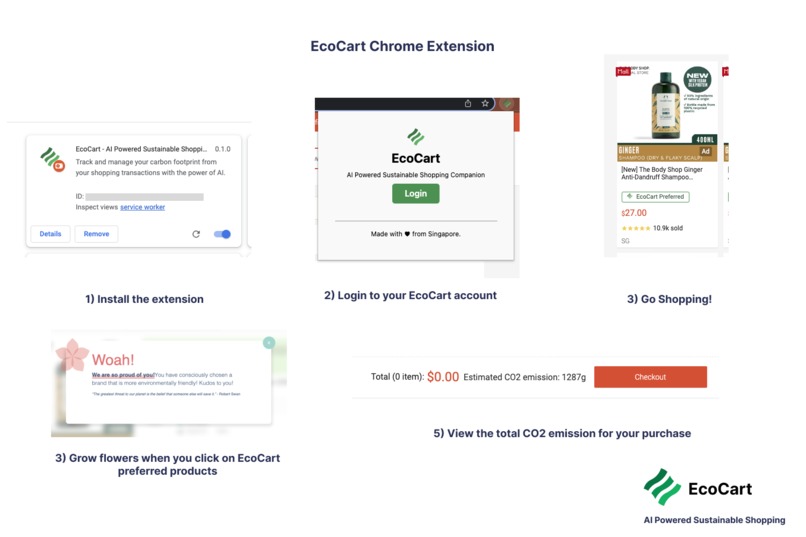
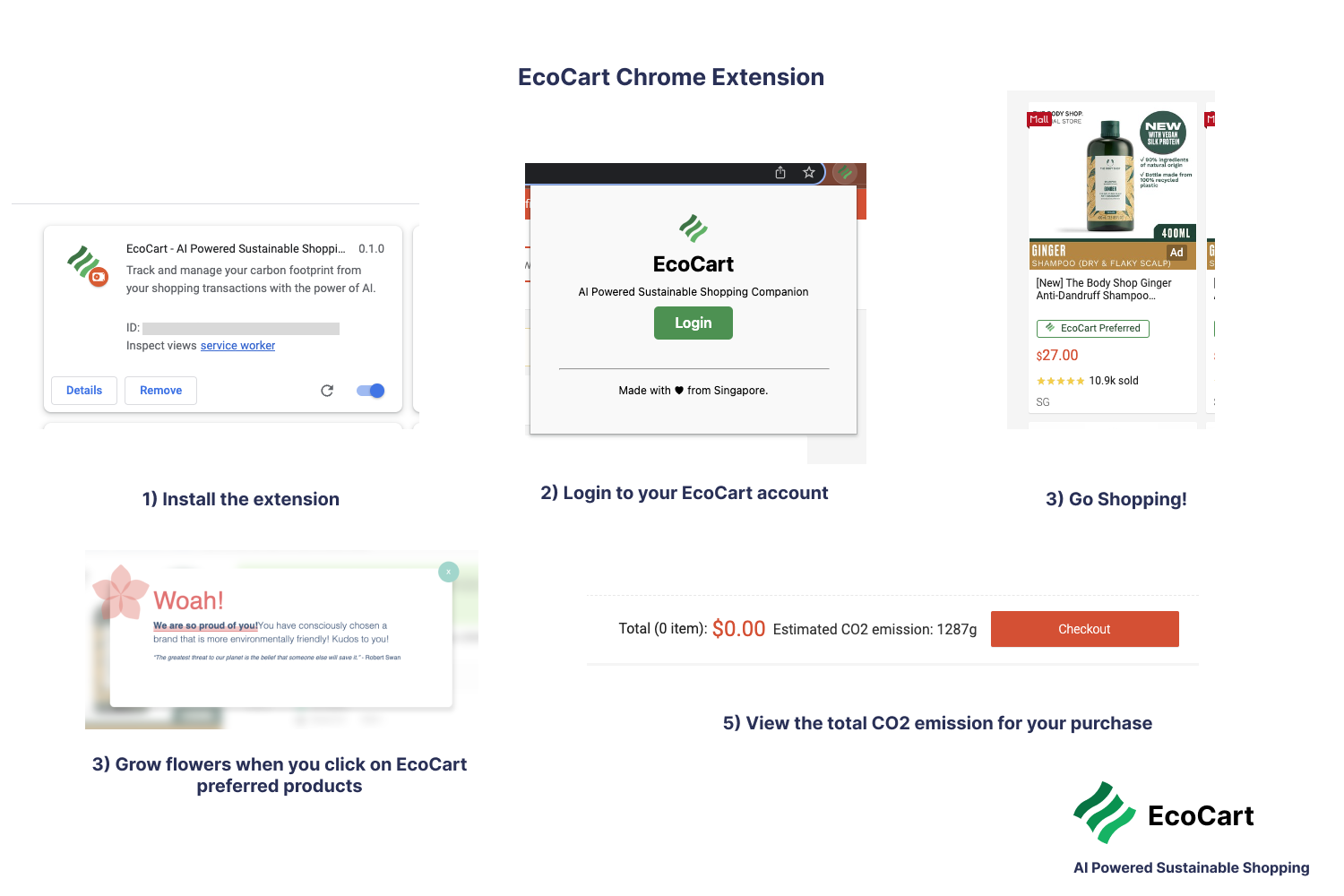
EcoCart | Chrome Extension
-
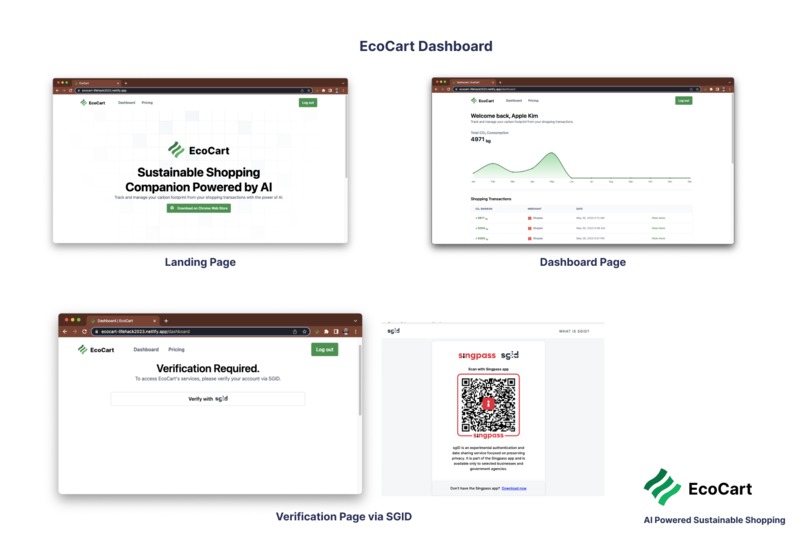
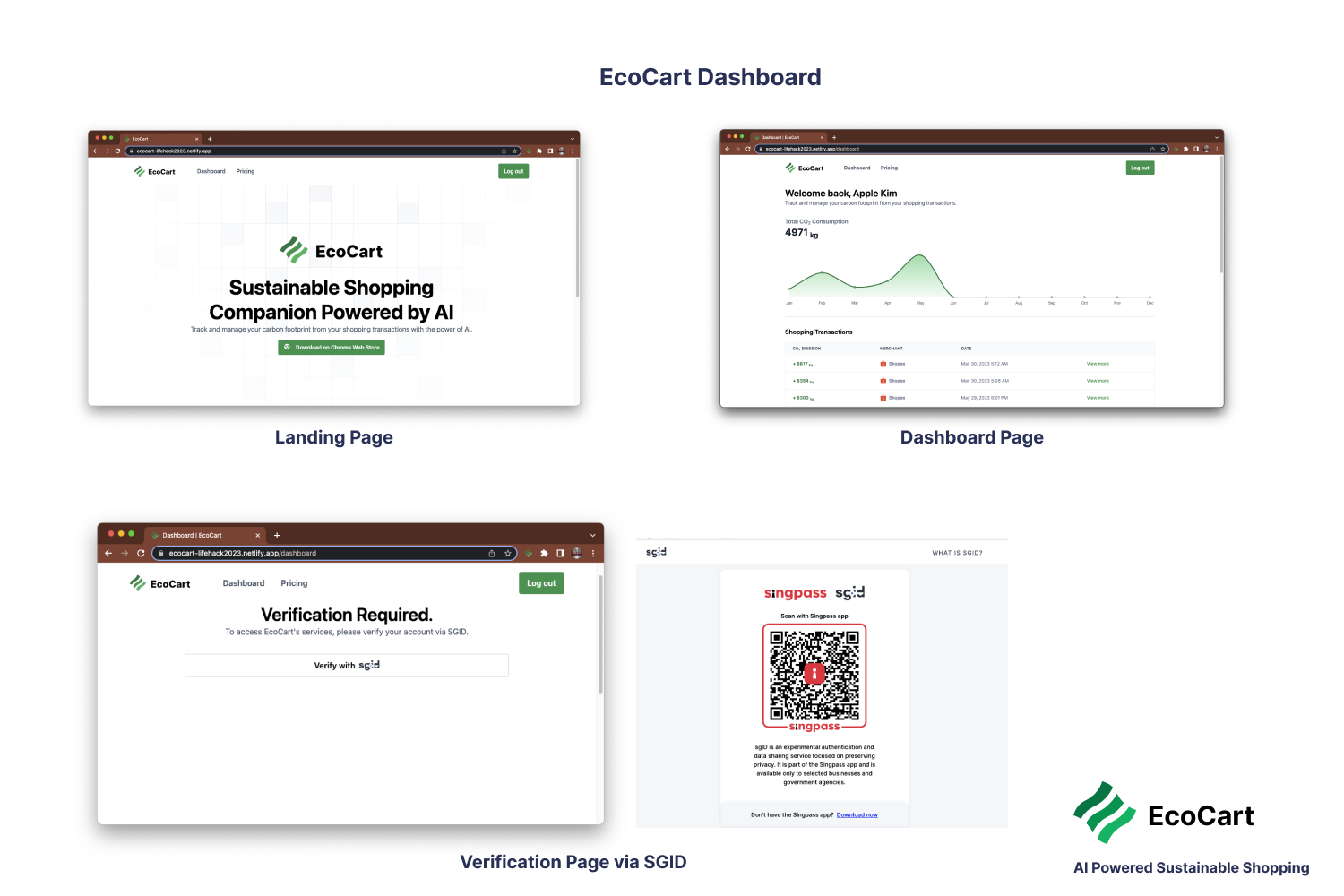
EcoCart | Dashboard Web App
Hackonomics fit
Eco Cart connects everyday shopping choices to environmental externalities. It helps people see the carbon impact behind an online purchase, compare more sustainable alternatives, and learn how repeated consumption decisions add up. The browser extension captures purchases where they happen, while the dashboard turns the results into understandable charts, recommendations, and progress.
Prior work disclosure
Eco Cart is pre-existing authorized team work created for LifeHack 2023. It was previously submitted to LifeHack 2023, EcoHack, CatalystXAI, Build for Impact, and the Africa Digital ID Hackathon 2026. This Hackonomics entry reuses the existing concept, code, interface, repository, video, screenshots, and documentation. We are not claiming that those materials were created during Hackonomics.
What it does
Eco Cart is an AI-assisted sustainable-shopping companion with two connected surfaces:
- A browser extension records purchases made on supported ecommerce sites.
- A dashboard estimates their environmental impact, shows progress over time, and suggests lower-impact alternatives.
The product is designed to make the economics of consumption visible at the moment a user can still change a decision. Instead of presenting sustainability as an abstract score, it links each purchase to a personal history and gives users practical next actions.
Inspiration
Most online stores optimize for conversion, price, and convenience. The environmental cost of a purchase is usually hidden, even when a shopper wants to make a better choice. We built Eco Cart to reduce that information gap and make conscious consumption easier to understand and practice.
How we built it
Eco Cart combines a Next.js dashboard with a Chrome extension built on Manifest V3. The extension captures relevant transaction information from ecommerce flows. The dashboard stores and presents the user's history, generates charts, and surfaces AI-assisted sustainability insights.
The project uses Supabase for application data and authentication, OpenAI for AI-assisted analysis, AWS and Netlify services for supporting infrastructure, Tailwind CSS and Untitled UI for the interface, and SGID integration experiments to strengthen account authenticity.
Challenges we ran into
- Chrome-extension hot reloading was unreliable during development.
- Supabase Google authentication required extra work inside a browser-extension context.
- Vite bundling introduced extension-specific bugs that did not appear in a normal web app.
- Turning product data into a useful sustainability signal required balancing clarity with the limits of available data.
Accomplishments that we're proud of
- Built a working dashboard and browser-extension prototype.
- Connected purchase capture to a visible personal impact history.
- Created a polished interface that makes the data understandable without requiring specialist knowledge.
- Added gamified progress and alternatives so the product encourages action instead of only reporting a score.
What we learned
We learned how to connect a Next.js application and a Manifest V3 extension, implement Supabase authentication in an extension environment, build functional charts with Chart.js, and translate a broad sustainability goal into concrete feedback for shoppers.
What's next
- Support more marketplaces, including Carousell and Taobao.
- Improve product-impact data and explain the confidence behind each estimate.
- Add a rewards model for sustained lower-impact choices.
- Explore a SaaS offering for merchants that want to surface sustainability information directly in their shopping flows.
Built With
- amazon-web-services
- chrome
- chromewebstore
- netlify
- nextjs
- ogp-sgid
- openai
- sgid
- tailwindcss
- untitled-ui


Log in or sign up for Devpost to join the conversation.