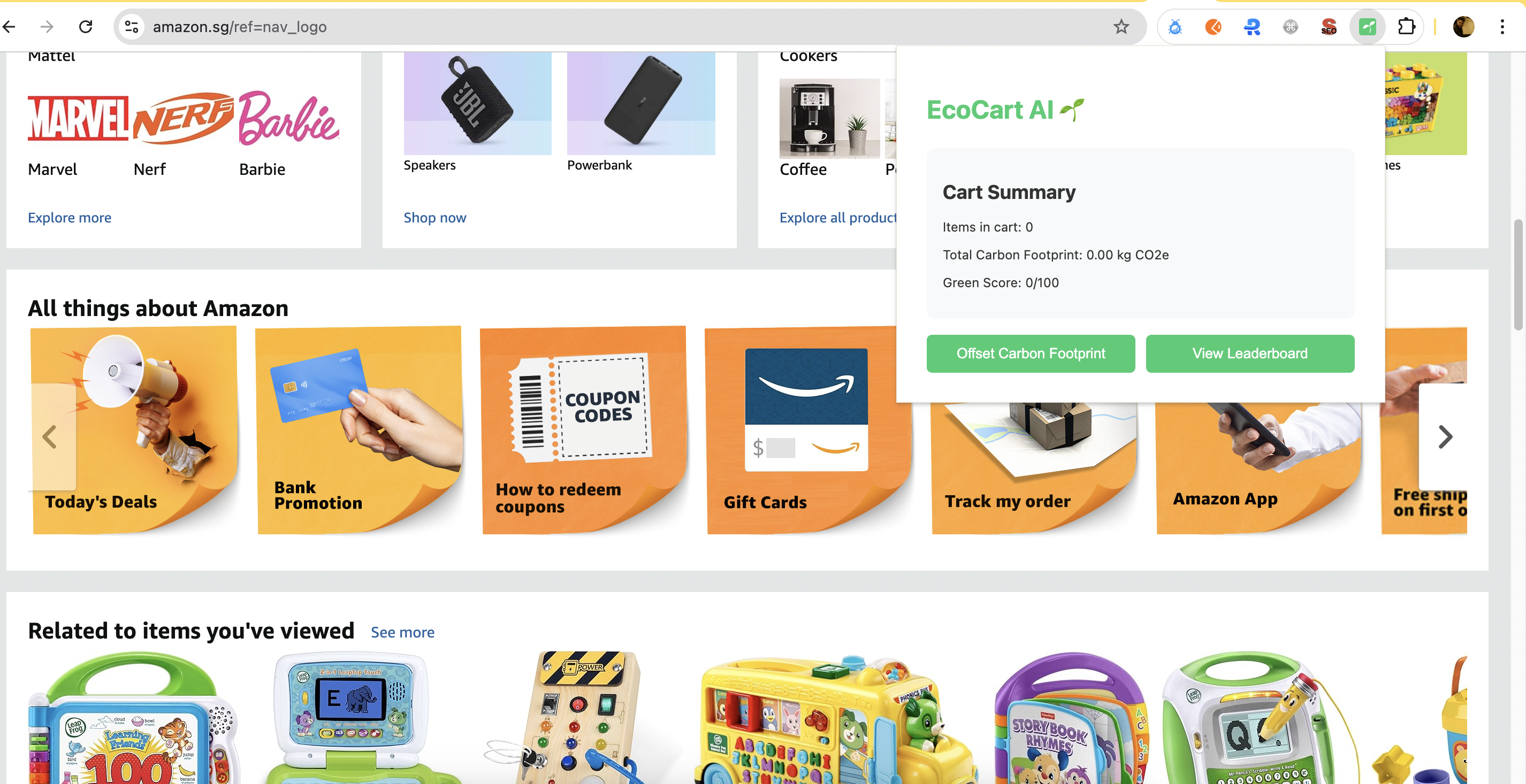
EcoCart AI 🌱
Inspiration
The idea for EcoCart AI was born from a growing concern about the environmental impact of online shopping. As e-commerce continues to grow exponentially, so does its carbon footprint. I was particularly inspired by:
The United Nations Sustainable Development Goals (SDGs), specifically:
- Goal 12: Responsible Consumption and Production
- Goal 13: Climate Action
- Goal 9: Industry, Innovation, and Infrastructure
- Goal 17: Partnerships for the Goals
The increasing awareness of consumers about sustainable shopping practices
The potential of AI to make complex environmental impact calculations accessible to everyday shoppers
The opportunity to gamify sustainable shopping and make it more engaging
What it does
EcoCart AI is a Chrome extension that transforms your online shopping experience into a sustainable one by:
- 🔍 Detecting items in your shopping cart on major e-commerce sites (Amazon, Flipkart, Walmart)
- 🤖 Analyzing environmental impact using AI
- 📊 Calculating carbon footprint for each item
- 🌿 Suggesting eco-friendly alternatives
- 🌳 Offering carbon offset options
- 🏆 Tracking your "Green Score" and progress
The extension provides real-time feedback as you shop, helping you make more environmentally conscious purchasing decisions.
How we built it
We built EcoCart AI using a modern tech stack and modular architecture:
Core Technologies
- TypeScript for type safety
- React for UI components
- TensorFlow.js for AI capabilities
- Chrome Extension APIs for browser integration
Architecture
Content Script Layer
- Cart detection on e-commerce sites
- Product information extraction
- Real-time DOM monitoring
Service Layer
- Product analysis service
- Carbon footprint calculator
- Eco-alternatives finder
UI Layer
- Popup interface
- Cart overlay
- Progress tracking
Background Layer
- State management
- API communication
- Event handling
Challenges we ran into
Technical Challenges
Cross-Site Compatibility
- Different e-commerce sites have varying DOM structures
- Solution: Implemented site-specific selectors and fallback mechanisms
Performance Optimization
- Real-time analysis of cart items
- Solution: Implemented caching and batch processing
AI Integration
- Complex environmental impact calculations
- Solution: Used TensorFlow.js for efficient client-side processing
State Management
- Maintaining consistent state across extension components
- Solution: Implemented a robust storage system with Chrome's storage API
Design Challenges
User Experience
- Making environmental data accessible and understandable
- Solution: Created intuitive visualizations and clear recommendations
Gamification
- Balancing engagement with educational value
- Solution: Implemented a scoring system that rewards sustainable choices
Accomplishments that we're proud of
- Successfully implemented real-time cart detection and analysis
- Created an intuitive and user-friendly interface
- Developed a robust AI-powered environmental impact analysis system
- Built a scalable architecture that can support multiple e-commerce platforms
- Integrated carbon offset options to help users reduce their environmental impact
- Implemented a gamification system that makes sustainable shopping engaging
What we learned
Technical Skills
Chrome Extension Development
- Manifest V3 architecture
- Content script injection and DOM manipulation
- Background service workers
- Browser storage and state management
TypeScript and React
- Type safety and interface design
- React hooks and state management
- Component architecture for browser extensions
AI and Environmental Impact
- Carbon footprint calculation methodologies
- Product sustainability scoring
- Machine learning for product analysis
Development Practices
Modern JavaScript tooling
- Webpack configuration for browser extensions
- Babel transpilation
- TypeScript compilation
- Asset management
Testing and Quality Assurance
- Cross-browser compatibility
- Performance optimization
- Error handling and logging
What's next for EcoCart AI
Enhanced AI Capabilities
- More accurate product analysis
- Personalized recommendations
- Learning from user behavior
Expanded Platform Support
- More e-commerce sites
- Mobile browser support
- Native app integration
Community Features
- User reviews and ratings
- Social sharing
- Community challenges
Advanced Analytics
- Detailed environmental impact reports
- Shopping habit analysis
- Carbon footprint tracking
Partnerships
- Integration with carbon offset providers
- Collaboration with sustainable brands
- API access for third-party applications
Built With
- cromeextension
- javascript
- natural-language-processing
- react
- tailwind
- tensorflow
- typescript
- webpack
Log in or sign up for Devpost to join the conversation.