-
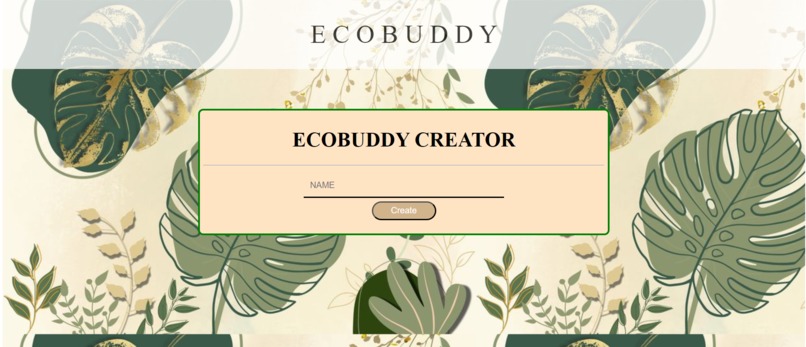
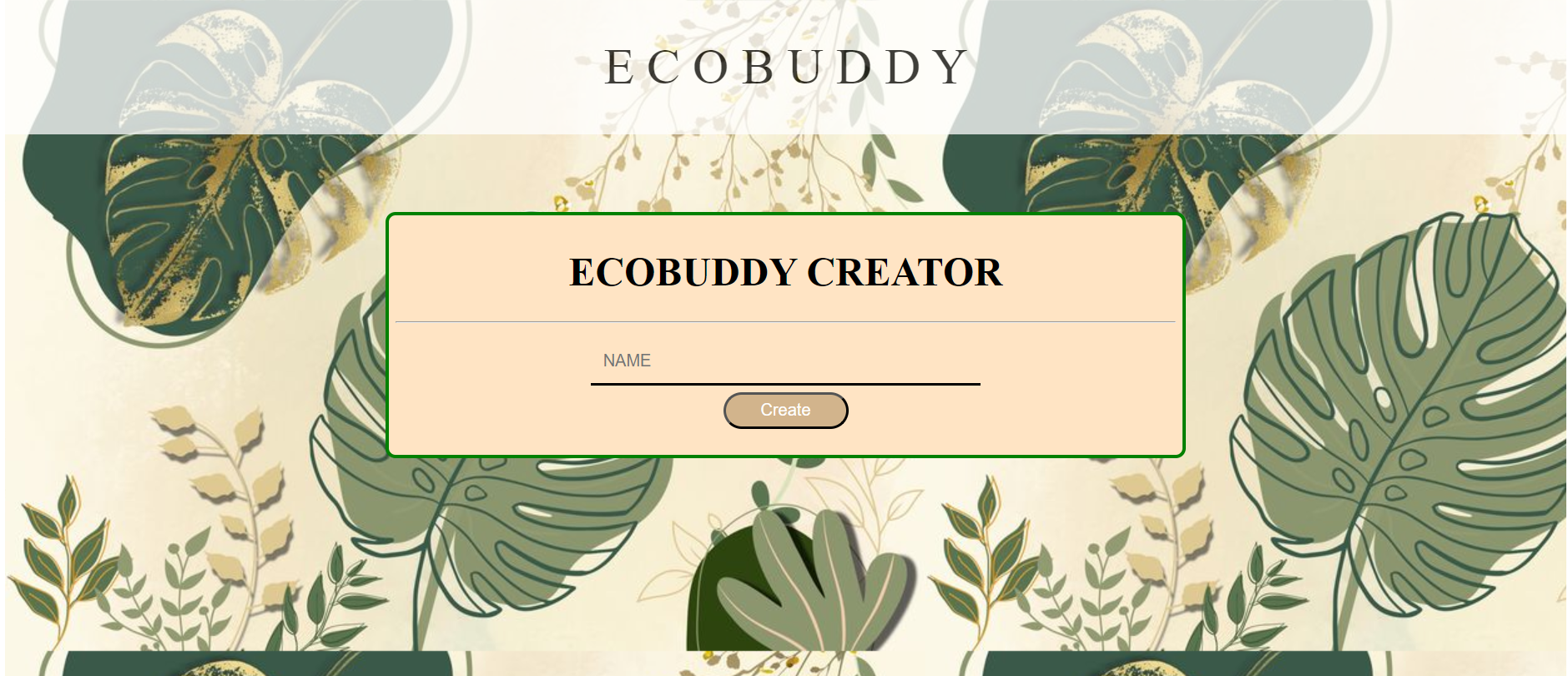
When the application is first deployed, users will be promoted to enter a name for their EcoBud. Once created, they will navigate to home.
-
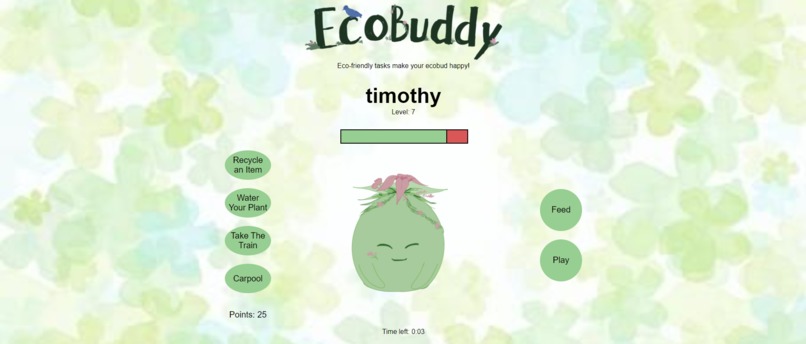
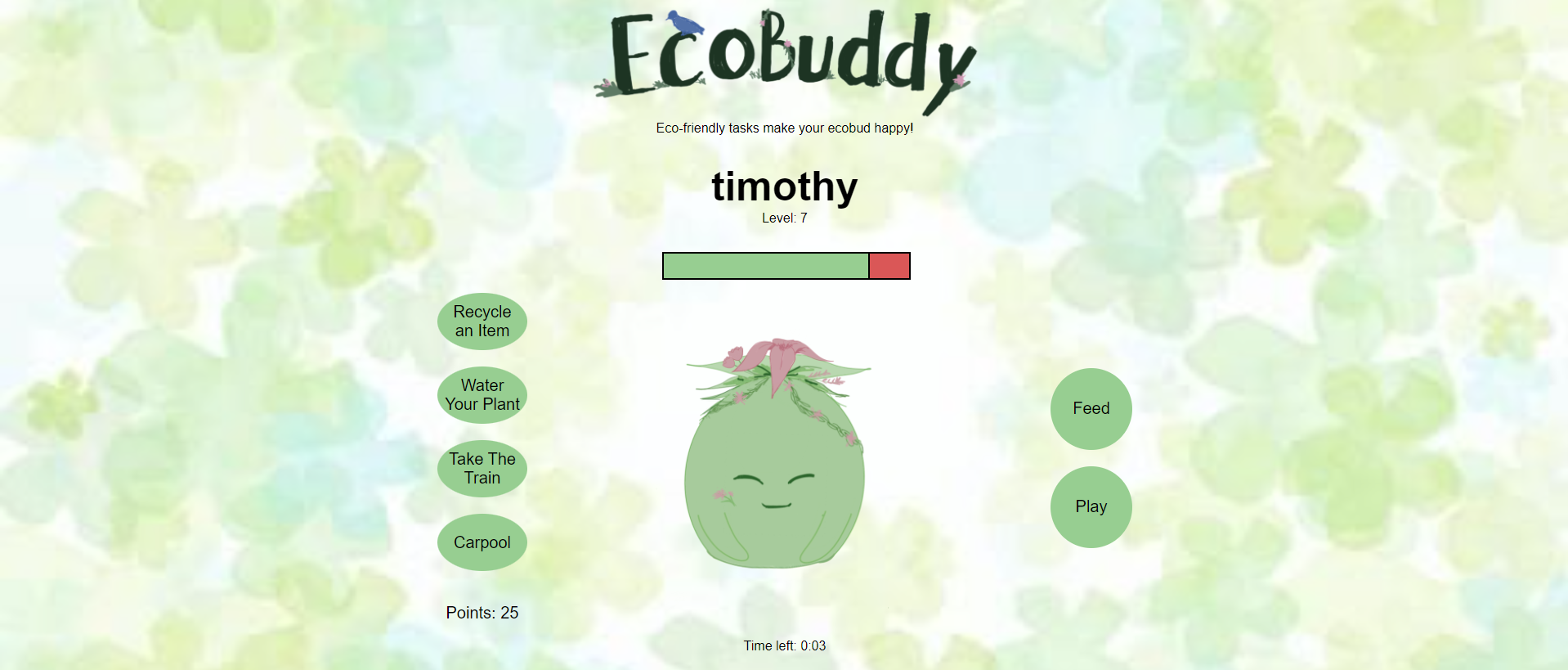
Our home page allows users to interact and nourish their EcoBud through completing task listed on the left.
-
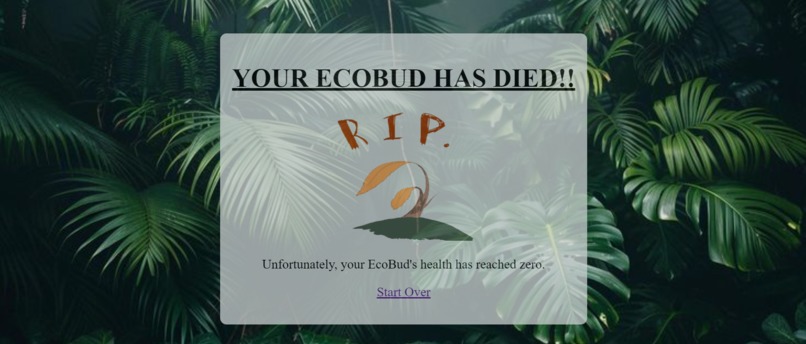
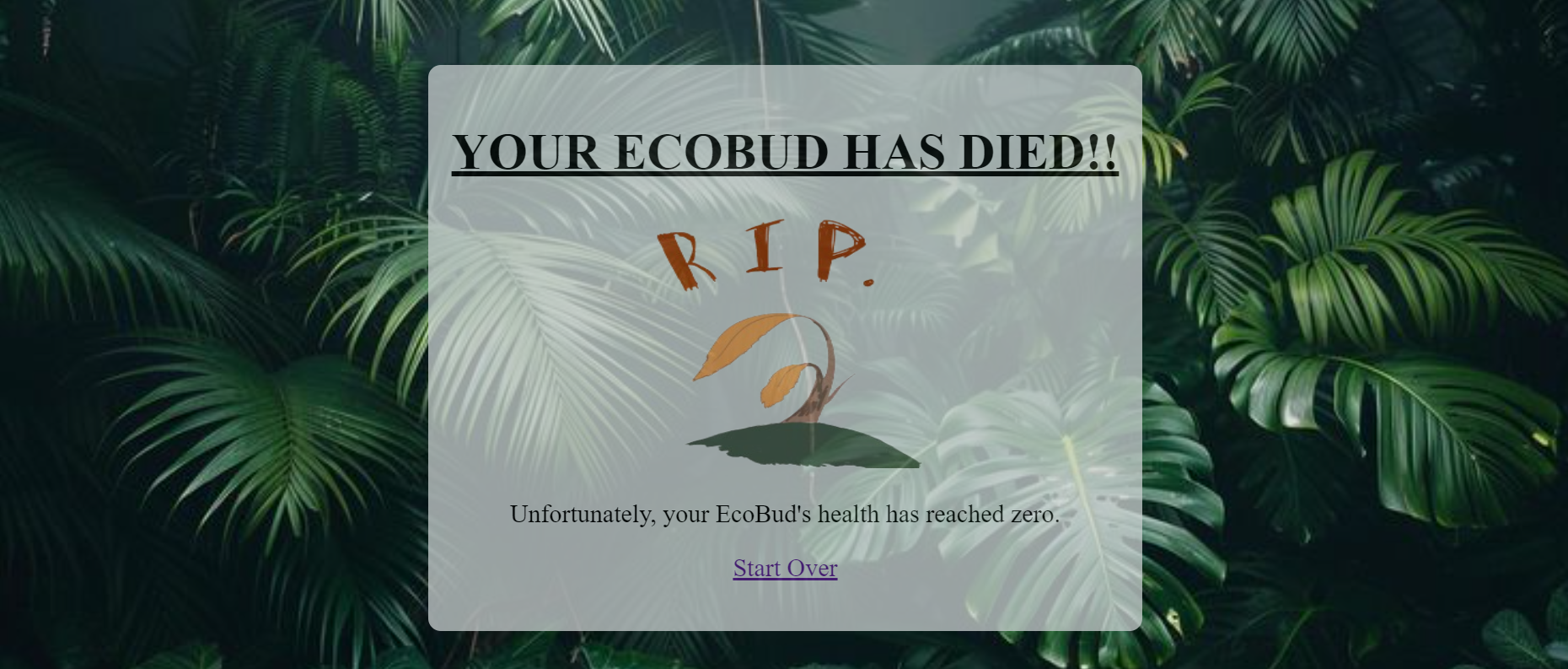
This screen is displayed if the health of the the EcoBud reaches zero. The "start over" link will let the user name a new pet and try again.
Inspiration
Seeing how increasingly important the topic of climate change has become and how devastating its impact on today's environment is, we wanted to make an app that helped people be more mindful of their carbon footprint and their daily activities that contribute to it positively and negatively. We know sometimes doing such a task can get tedious, so we decided to add a fun twist. We were inspired by the nostalgic toy, the Tamagotchi, to make a virtual pet called an Ecobud and create a reward system for recording your daily tasks.
What it does
It keeps track of specific daily activities you do that increase your carbon footprint. Each time you enter an activity, the Ecobud gives a message, and you increase its health points along with its happiness.
How we built it
The UI for Ecobuddy was created using simple HTML and CSS. With the use of Python, Flask, and JavaScript we were able to implement backend functionality to make our application more interactive for the user. Chatbot features were created with the use of Ollama as well as LangChain.
Challenges we ran into
We had trouble deciding which framework and languages would be best for the features of our program. We also had tons of great ideas and not enough time to execute them all, meaning we had to prioritize our most important features and put all our work and time into perfecting them.
Accomplishments that we're proud of
We are proud of our UI design and our implementation of the backend features to make the web app interactive. We are also proud of the EcoBud avatar design and and the background elements that we created.
What we learned
Through this project, we explored different web development tools and frameworks during both the research and creation part of the process, such as React and Flask. We further developed our skills and understanding in languages we were a bit familiar with beforehand, but now have a much better understanding of such as HTML, python, and Javascript. We even attempted implementing LLM with our Ecobud so that the Ecobud could regularly give useful/relevant facts to the user whenever they entered a daily task.
What's next for EcoBuddy
We want to eventually implement a diverse cast of EcoBuddies that our users can choose from. We also want to improve the user interface so that it is more sleek and streamlined. When it comes to features, we would like to finally succeed in implementing LLM with the EcoBud, include more daily activities, add specific statistics that are retained even after the user switches off the application, and make the amount of points added after each daily activity vary depending on authentic research and databases on CO2 emissions.

Log in or sign up for Devpost to join the conversation.