🌱 The Inspiration
This project began with something deeply personal. One of our team members grew up with asthma. Childhood memories weren’t just about play and laughter they were also about the fear of running out of breath. Every change in the weather felt like a gamble: a dusty wind could mean a sleepless night, a hot afternoon could trigger an attack, and no one could really explain why.
As we grew older, we realized it wasn’t just an individual struggle millions of young people live with the same invisible battle, and climate change is making it worse. Rising heat, longer pollen seasons, smoke from burning waste all of these silently attack vulnerable lungs. Yet, most patients and families don’t connect these dots.
We asked ourselves: What if technology could become a friend, a guide, and a shield? That question gave birth to EcoBreath AI.
What it does
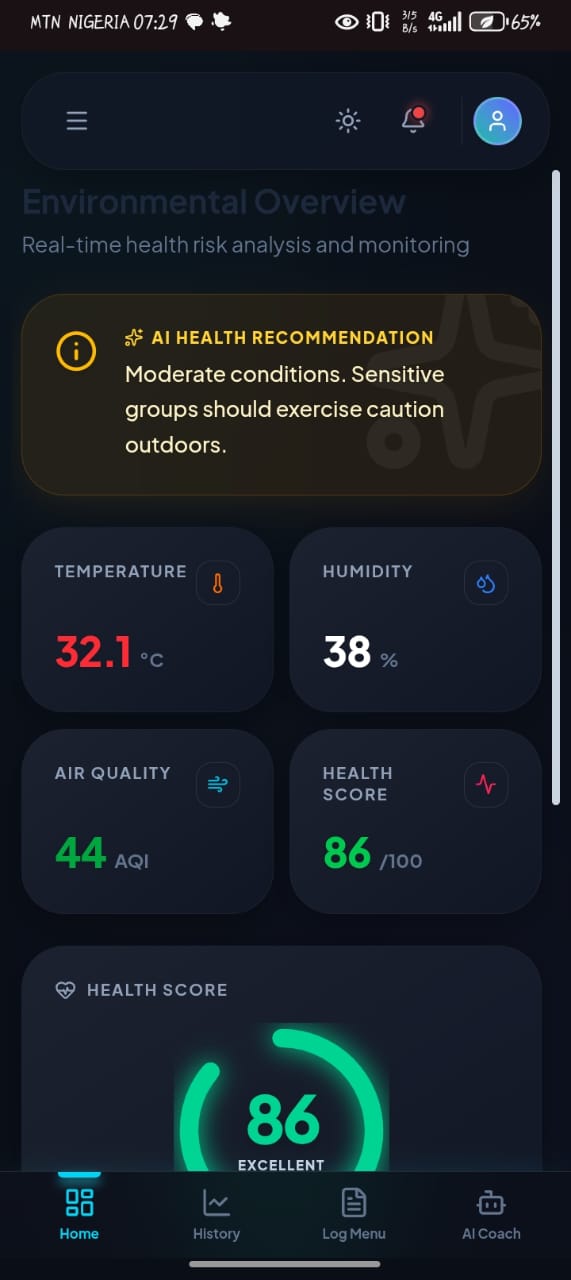
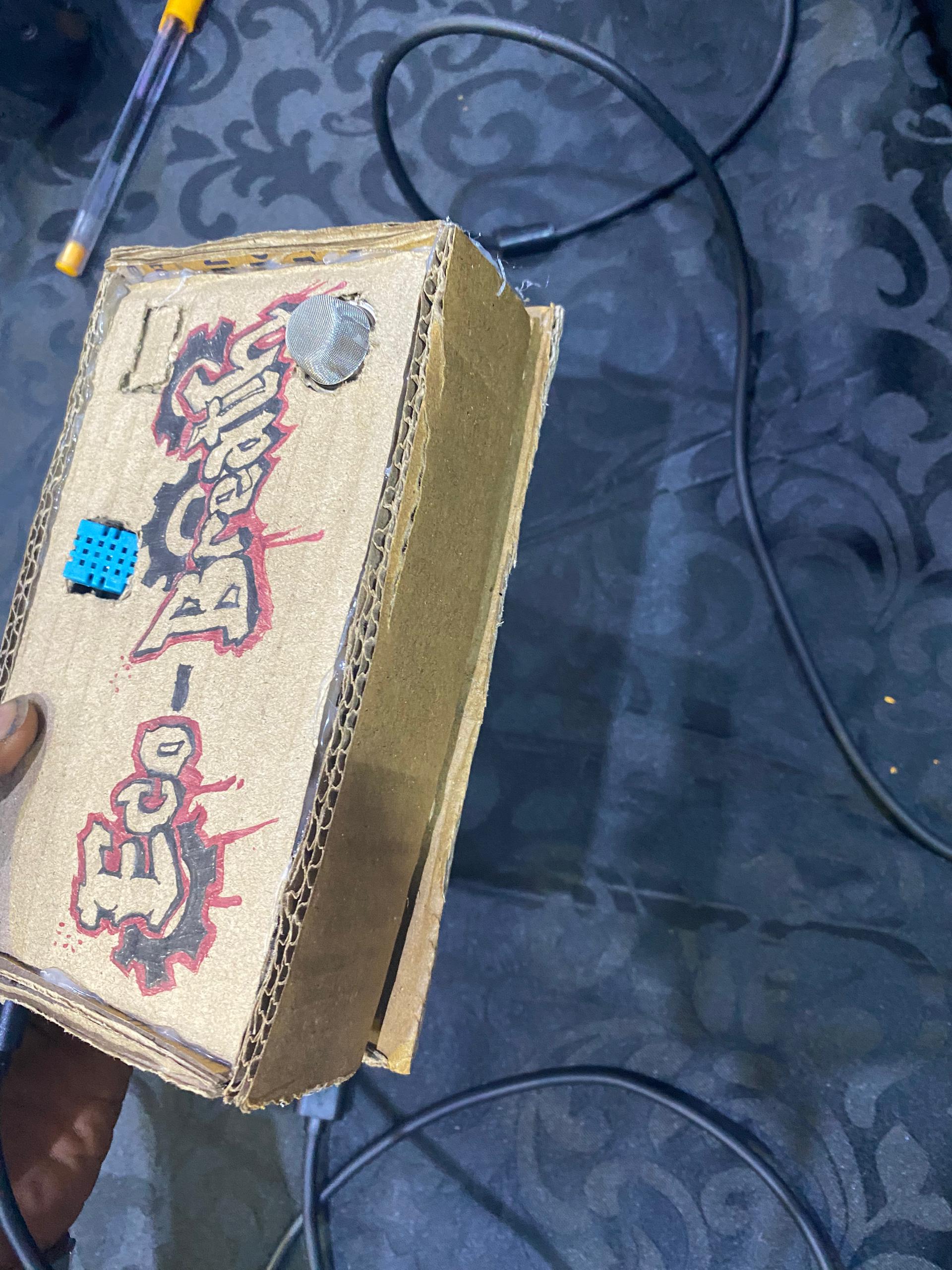
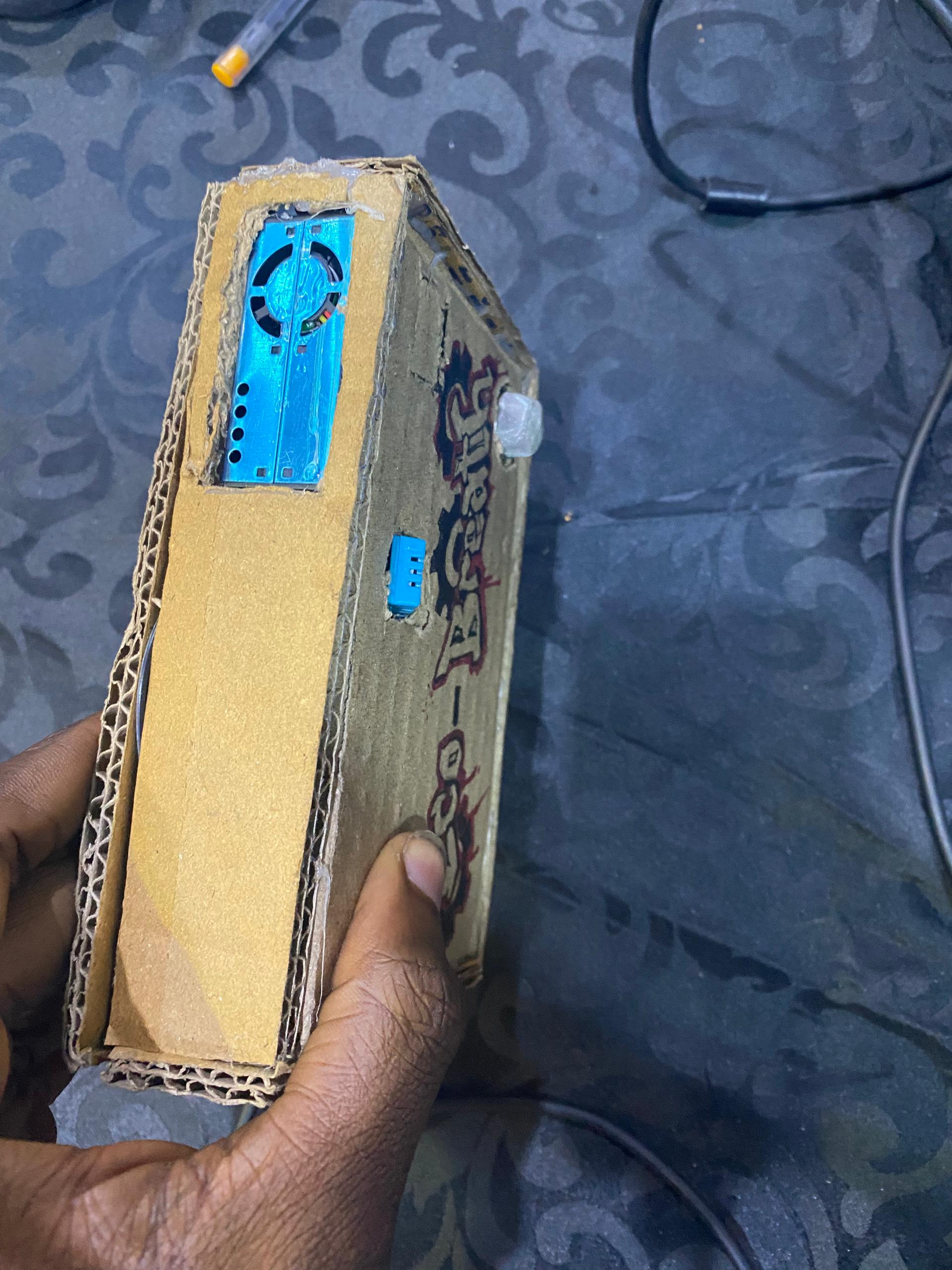
EcoBreathe AI is a smart environmental health monitoring system that collects real-time air and weather data from a mini IoT device and external APIs, analyzes the data using an AI risk engine, and provides early warnings to prevent health problems. The system monitors:
- Temperature
- Humidity
- Air quality (pollution levels) Using this data, EcoBreathe AI predicts:
- Heat stress risk
- Respiratory/asthma risk
- Overall environmental health score Users receive:
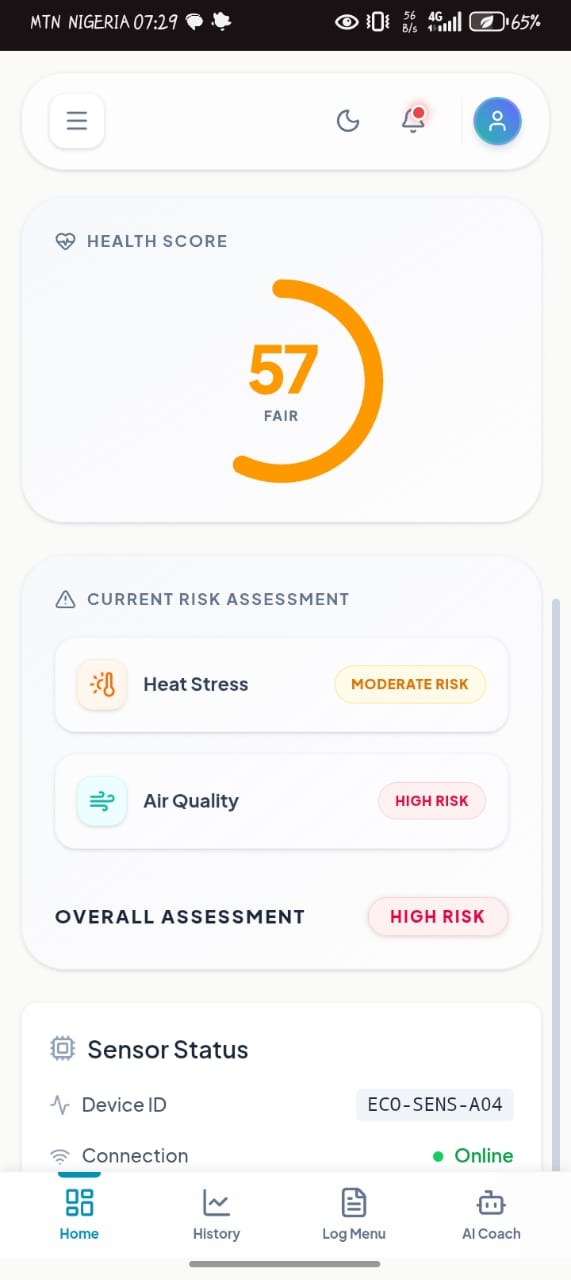
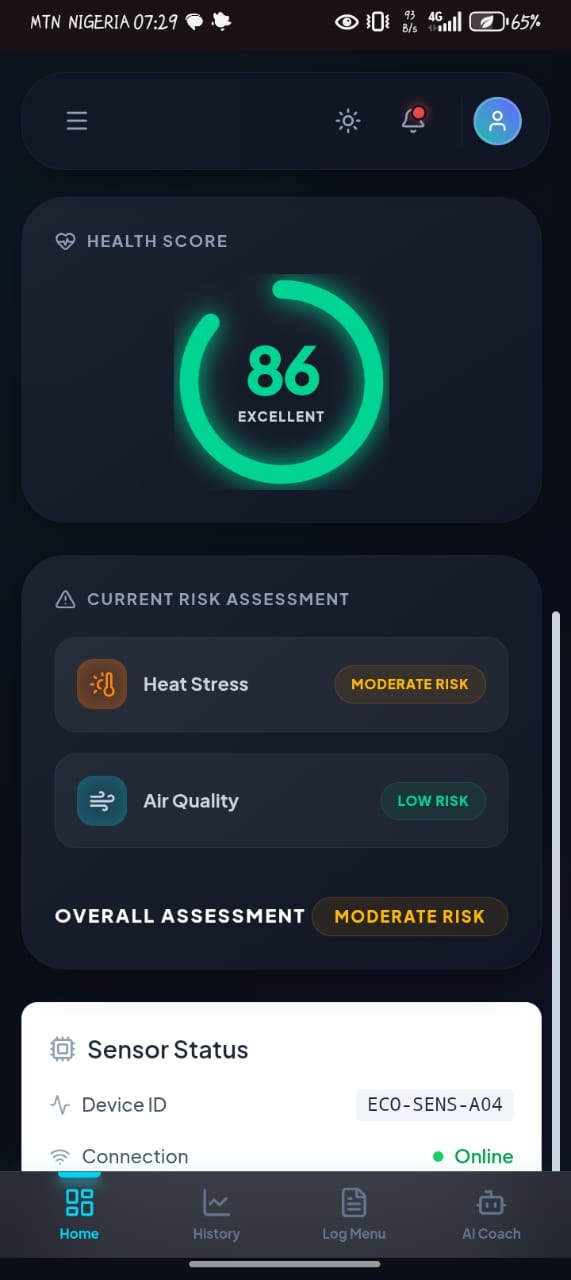
- Real-time dashboard updates
- Risk levels (Low, Medium, High)
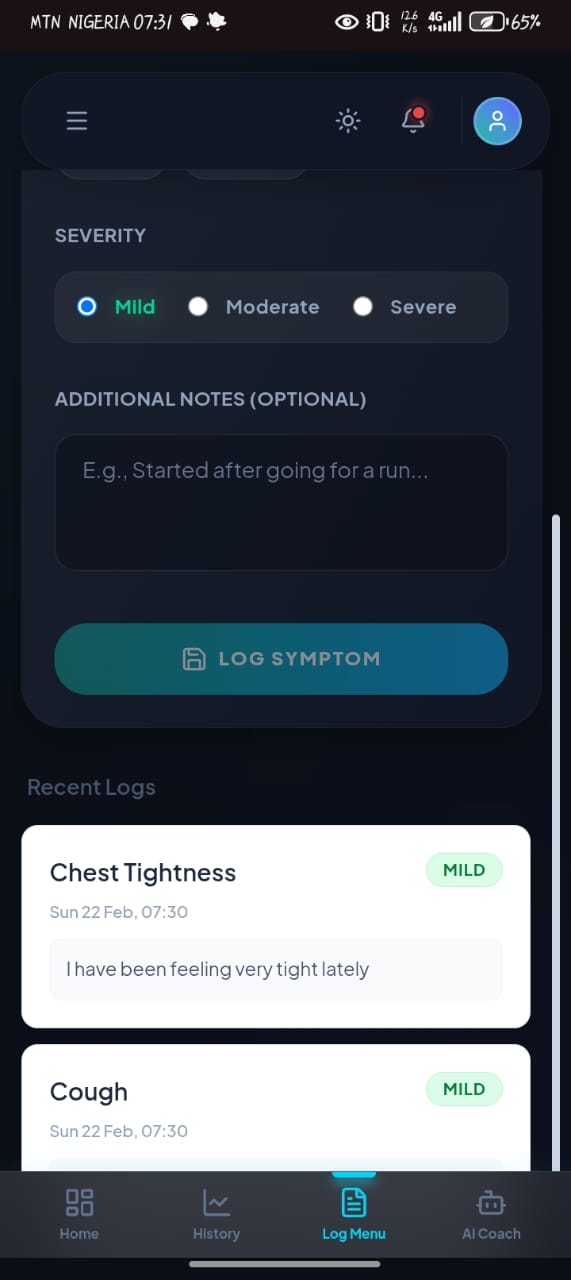
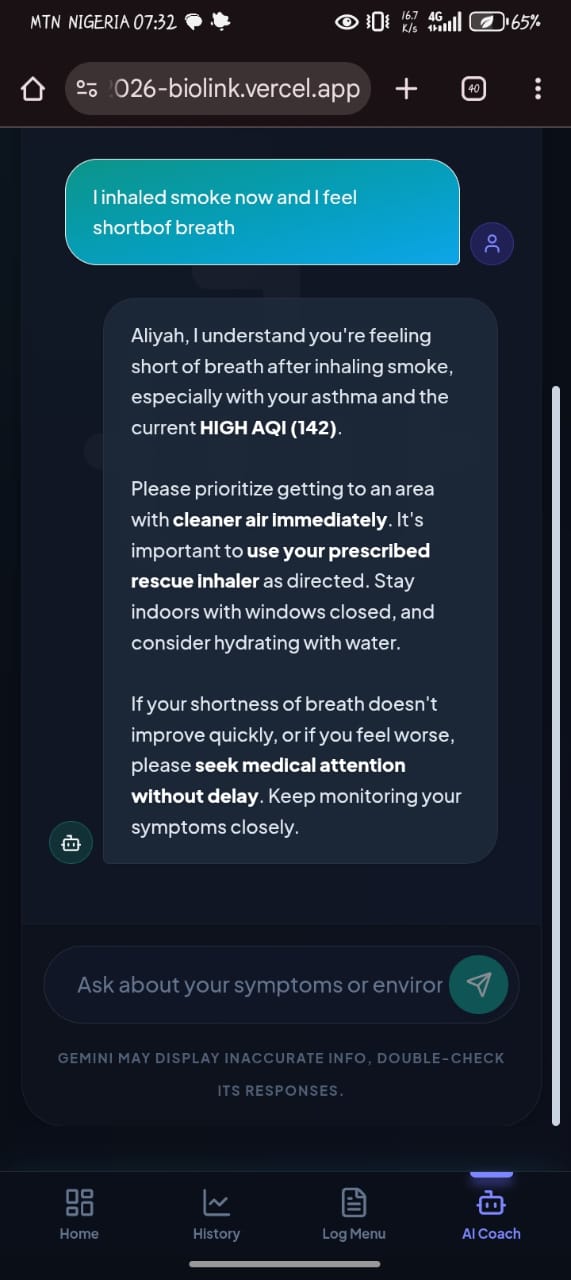
- Preventive recommendations such as:
- Stay hydrated
- Improve ventilation
- Avoid outdoor activity
- Wear a mask The goal is to move healthcare from reaction to prevention through data.
How we built it
Hardware
*ESP32 microcontroller
*DHT22 sensor (temperature & humidity)
*MQ135 / PM sensor (air quality)
*Real-time data transmission via WiFi
Backend
*Python (Fast API)
*Sqlite
*REST APIs for sensor data and dashboard
AI Layer
*Rule-based health risk engine
Calculates:
Heat stress risk
Air quality risk
Environmental Health Score (0–100)
Generates preventive recommendations
Frontend
React + Tailwind CSS
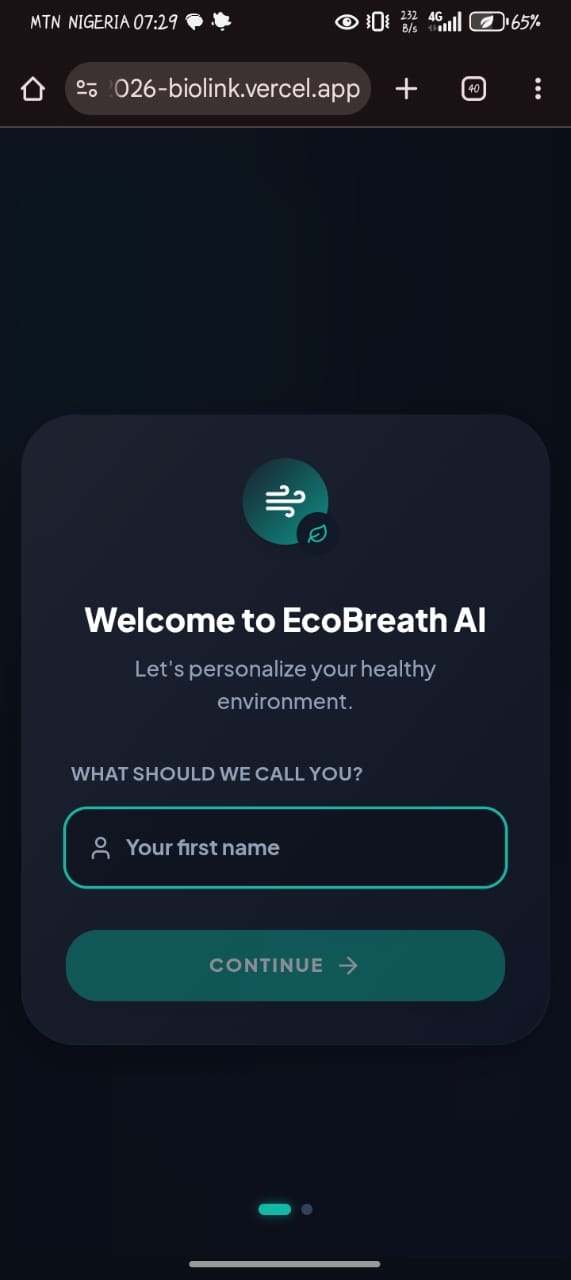
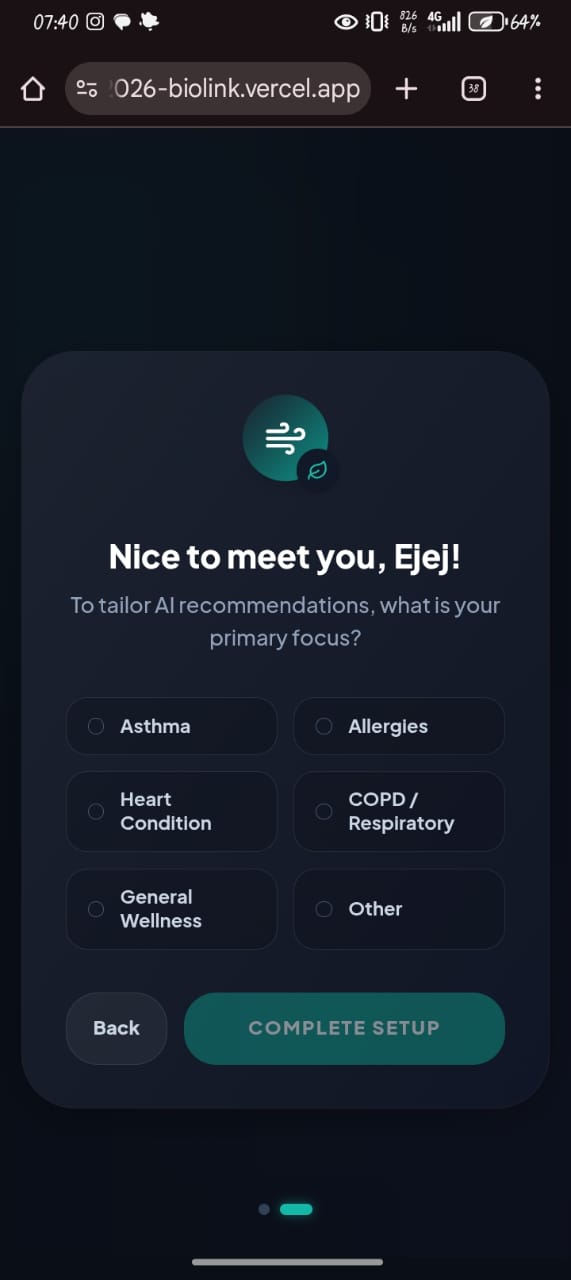
Real-time dashboard
Risk indicators (Green / Yellow / Red)
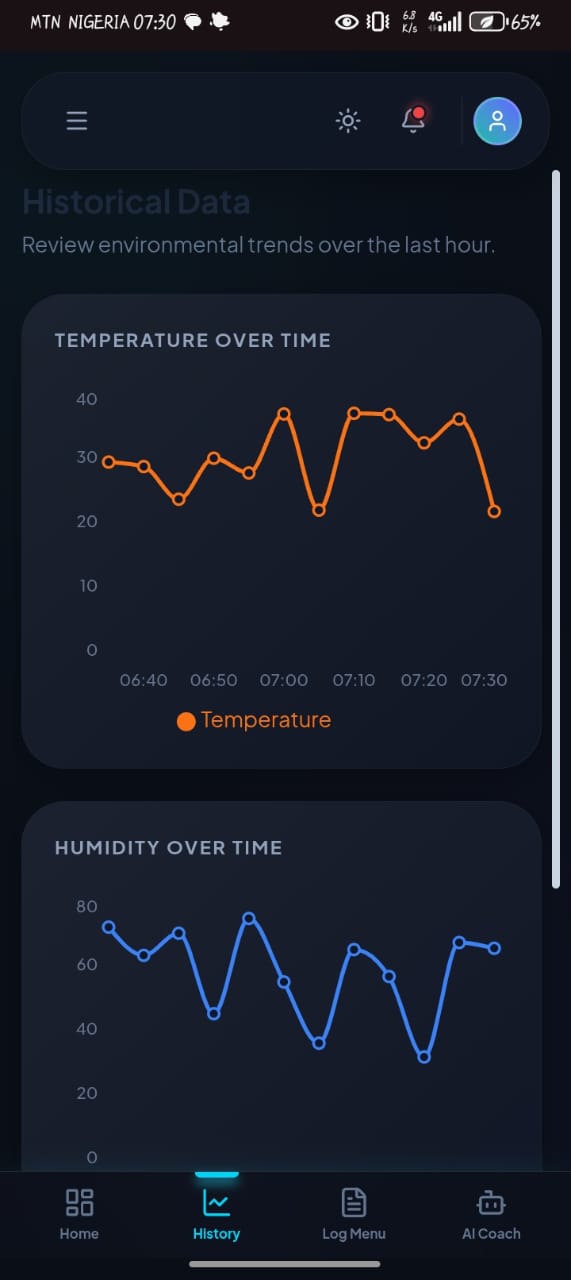
Historical charts and device status
Gemini SDK
External Data
Weather and air quality APIs used as fallback and context
Challenges we ran into
Like asthma itself, building this wasn’t always easy.
- Designing a simple but meaningful health risk model within limited time
- Managing time across hardware, backend, frontend, and AI integration during the hackathon
- Normalizing weather and air quality data was tougher than expected.
- And the hardest challenge? Making science feel human.
But every obstacle reminded us why this mattered. Because behind the code, there were kids who would one day open the app and feel a little less alone.
Accomplishments that we're proud of
*Successfully built a working IoT + AI health prevention system *Real-time environmental monitoring with live dashboard *A functional AI risk prediction engine *Hardware and software fully integrated *A solution that addresses a real public health problem in urban environments
What we learned
This project taught us that building technology is not only about code it’s about compassion. We learned to listen to patients’ fears, to translate complex climate science into words a child can understand, and to imagine technology not as a cold machine, but as a warm companion.
Mathematically, we learned to model triggers like: $\text{Asthma Risk} = f(\text{AQI}, \text{Pollen}, \text{Humidity}, \text{Temperature})$ But emotionally, we learned something even deeper: that every data point is a life, a story, a child who just wants to run and laugh without gasping for air.
What's next for EcoBreathe AI
EcoBreath AI is not just a hackathon project. It’s a promise that technology can do more than predict; it can protect. That AI can be more than smart; it can be kind.
If even one asthmatic patient feels safer stepping outside tomorrow because of what we built, then every late night and every bug we fixed was worth it.
Built With
- c++
- css
- esp32
- fastapi
- iot
- openweather
- python
- react
- restapi
- tailwind
- typescript


Log in or sign up for Devpost to join the conversation.